Hairy Fungus Beetles Identification Guide
Typhaea stercorea
Hairy fungus beetles are tiny, light brown, fuzzy beetles that eat mold on damp grain, pet food, and other stored products. Finding them usually means something in the pantry or storage area has gotten wet and started to spoil.
Taxonomy
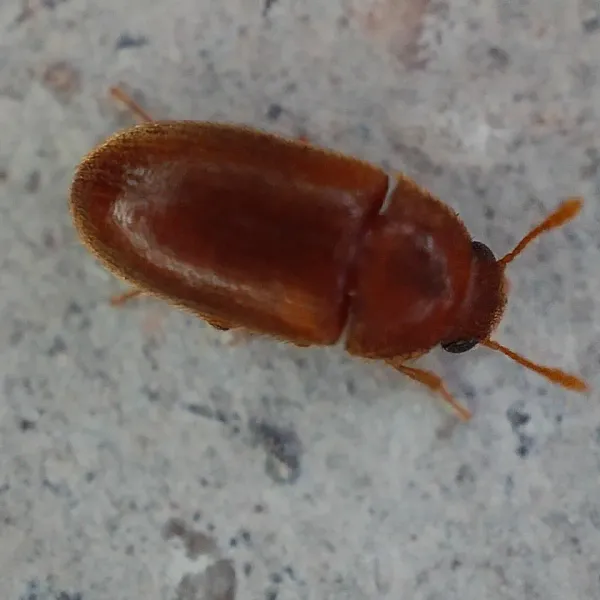
Hairy Fungus Beetles Coloration
Common color patterns to help identify hairy fungus beetles
Hairy Fungus Beetles
Seasonal Activity
When hairy fungus beetles are most active throughout the year

Where Hairy Fungus Beetles Are Found
Hover over states to see their names. Green regions indicate where hairy fungus beetles have been reported.
Hairy Fungus Beetle Identification Guide
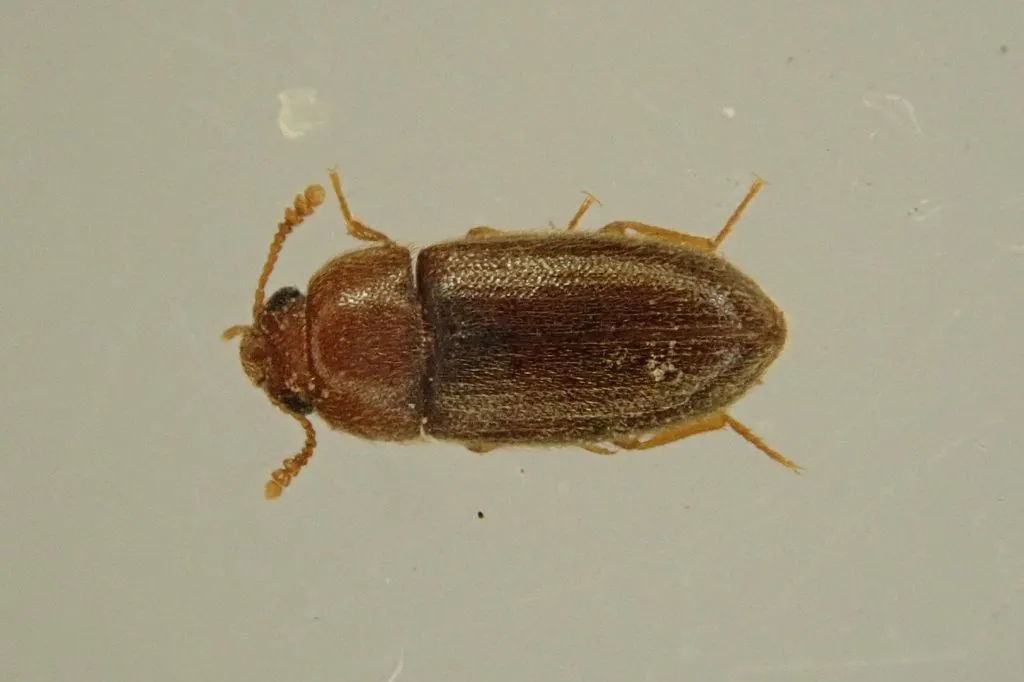
The hairy fungus beetle is a tiny beetle that eats mold. It is common in grain bins, feed rooms, and chicken houses. It shows up in homes when birdseed, pet food, or dry goods get damp. If you see one, think “moisture” first, not “pantry pest.”
Physical Characteristics
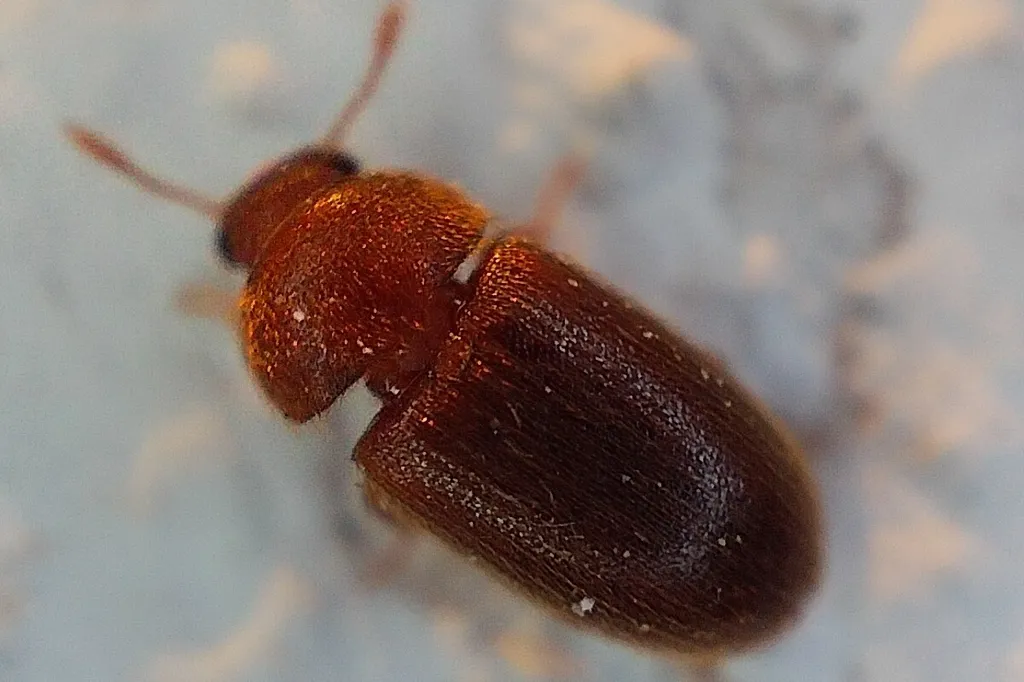
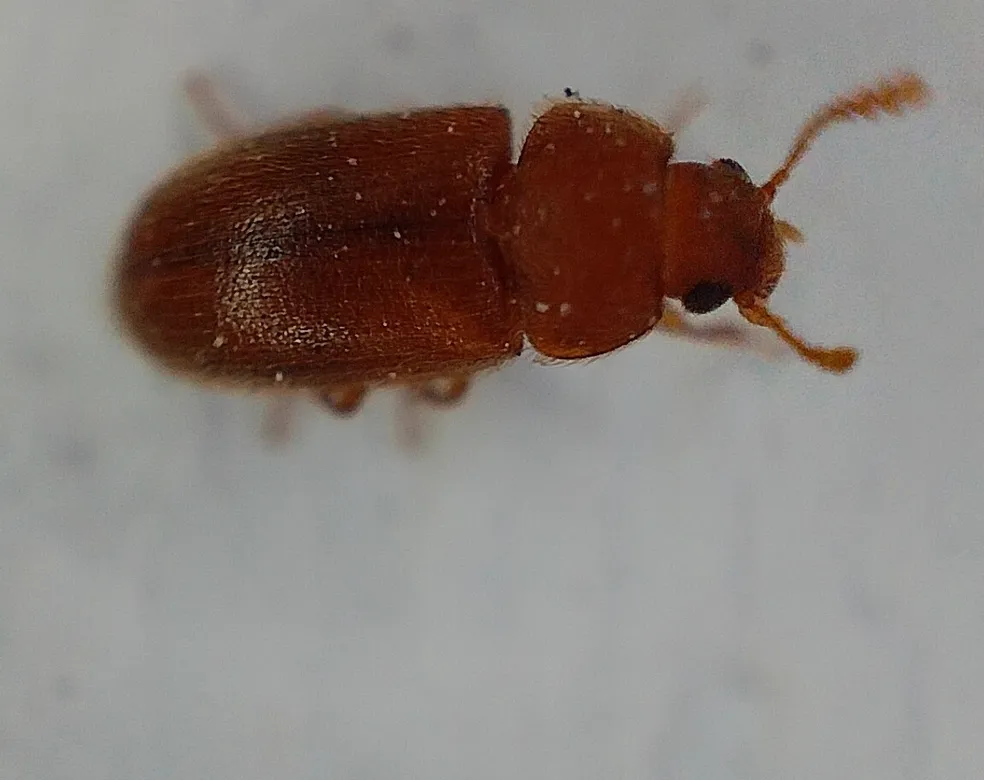
- Size: About 2 to 3.5 mm long, roughly the size of a sesame seed.
- Shape: Oval and slightly flattened, with rounded wing covers.
- Color: Even light brown to reddish-brown, with no spots or stripes.
- Hairs: Short golden hairs cover the whole body. Under a magnifier, the hairs on the wing covers run in neat rows. This fuzzy look gives the beetle its name.
- Antennae: Short, with a three-segment club at the tip.
- Head: Visible from above, sticking out in front of the thorax.
The larvae are slender and cream-colored with a darker head. They live inside the moldy material and are rarely noticed.
How to Tell Them Apart
Several small brown beetles show up in kitchens and pantries:
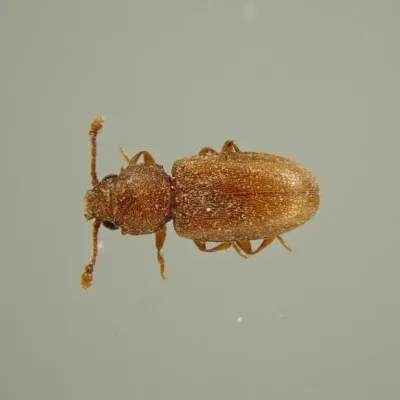
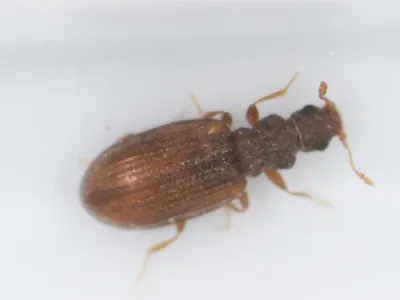
- Foreign grain beetles are also mold feeders, but they are flatter and have a small knob on each front corner of the thorax.
- Plaster beetles (minute brown scavenger beetles) are smaller, often under 2 mm. Their bodies look ridged and pitted, not fuzzy.
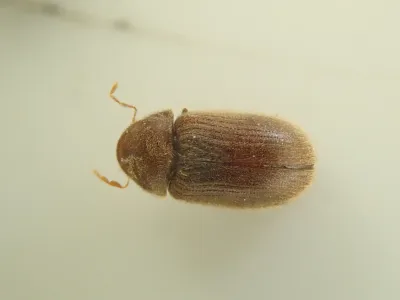
- Drugstore beetles and cigarette beetles are rounder and humped. Their heads tuck down out of sight.
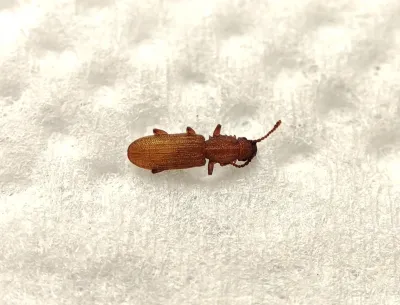
- Sawtoothed grain beetles are long and narrow, with six saw-like teeth on each side of the thorax.
Getting the ID right matters. Drugstore and sawtoothed grain beetles eat dry food. Hairy fungus beetles only eat food that is already spoiling.
Common Species
The hairy fungus beetle belongs to the family Mycetophagidae. Most beetles in this family live outdoors on fungi under bark and in rotting wood. A few show up in stored food in North America:
- Typhaea stercorea: the hairy fungus beetle. It is by far the most common one in stored food and grain.
- Litargus balteatus: sometimes found in moldy stored food and dried fruit.
- Mycetophagus quadriguttatus: a spotted relative found in moldy grain and feed.
Hairy Fungus Beetle Behavior and Biology
Habitat
Hairy fungus beetles live all over the world, including all of North America. Outdoors they live in hay, compost, leaf litter, manure, and bird and wasp nests. Indoors and on farms they live in:
- Grain bins and feed rooms, mostly right after harvest when grain is damp
- Chicken houses, in litter and spilled feed
- Mills, warehouses, and dried fruit storage
- Home pantries, garages, and basements where birdseed, pet food, or grain has gotten wet
Diet
Both adults and larvae eat mold, not the grain itself. Experts call them “secondary” pests because they follow spoilage instead of causing it. They have been found on moldy corn, wheat, rice, peanuts, cocoa, dried fruit, tobacco, and hay. Large numbers still dirty food with bodies, shed skins, and droppings. They can also spread mold spores as they move.
Life Cycle
Hairy fungus beetles go through four stages: egg, larva, pupa, and adult. Females lay eggs loose in or near moldy food. In warm, humid air (about 77°F), they grow from egg to adult in about three to five weeks. Below about 63°F, growth nearly stops. That is why problems peak in late summer and early fall. They tend to fade in cool, dry homes.
Behavior
Adults run fast and fly well. They can fly from compost or hay into barns, garages, and homes. You may see a few near windows or lights even when no food in the house has them.
Treatment Methods for Hairy Fungus Beetles
The best way to stop hairy fungus beetles is to remove what feeds them. Sprays alone will not fix it. New beetles keep coming as long as mold is there.
- Find the source: Check birdseed, pet food, grass seed, dried beans, and grain. Look in garages, basements, and under sinks. Watch for clumps, a musty smell, or a fuzzy film.
- Remove moldy products: Bag and throw out anything with beetles or mold. Do not try to save it.
- Clean thoroughly: Vacuum shelves, corners, and cracks where crumbs collect. Wipe surfaces and let them dry before you restock.
- Control moisture: Fix leaks, run a dehumidifier, and keep indoor humidity below about 50 percent. Store feed and seed off concrete floors.
- Store food well: Keep dry goods in airtight glass or thick plastic bins. Buy pet food and birdseed in amounts you will use within a few weeks.
- Reduce outdoor sources: Keep compost, hay, and manure away from doors, garages, and feed storage.
On farms and in warehouses, licensed applicators may use heat or EPA-registered fumigants on bulk grain. This kills the beetles that are there. It will not stop new ones if the grain stays damp.
If small beetles keep showing up and you cannot find the source, a pro can help track down hidden moisture. Learn more about our pest control in Northern Virginia and Maryland, or browse other pantry pests. Booklice and mold mites often show up in the same damp spots. They point to the same moisture problem.
References
Other Pantry Pests
Explore other species in the pantry pests family
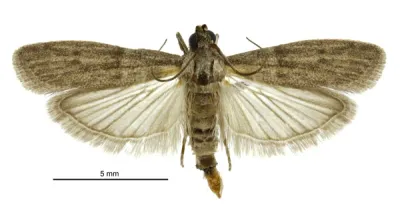
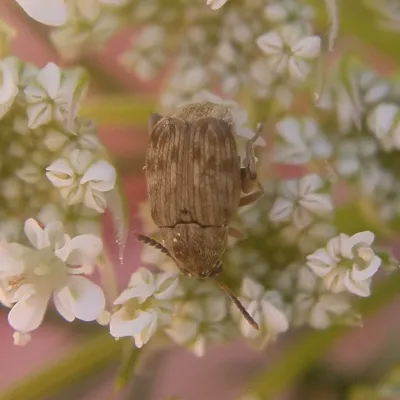
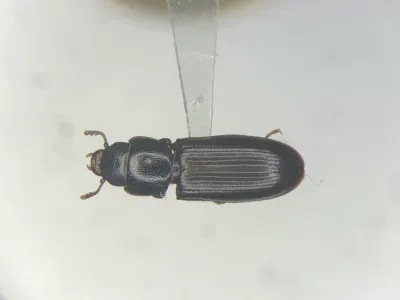
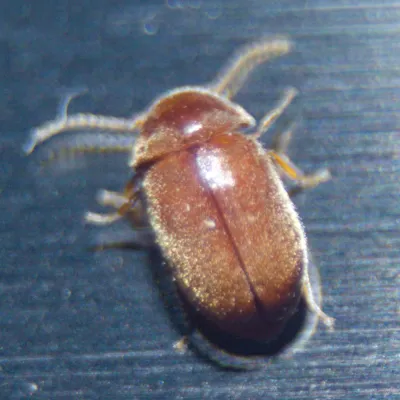
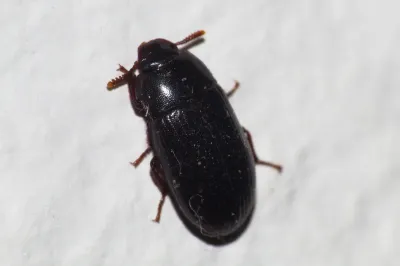
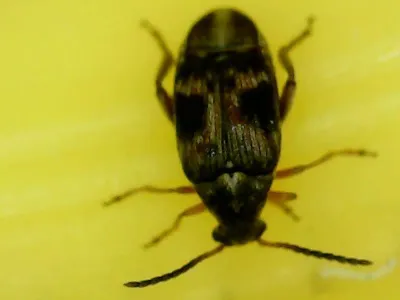
Commonly Confused With
Hairy Fungus Beetles are often mistaken for these similar pests
Where Hairy Fungus Beetles Are Found
Hover over states to see their names. Green regions indicate where hairy fungus beetles have been reported.
Common Questions about Hairy Fungus Beetles
What are hairy fungus beetles?
+
Hairy fungus beetles (Typhaea stercorea) are tiny brown beetles covered in fine hairs. They are about 2 to 3.5 mm long. Both the adults and larvae eat mold, not the food itself. They show up in damp grain, birdseed, pet food, hay, and other stored products that have started to spoil.
Why do I have hairy fungus beetles in my pantry?
+
They are almost always a sign of moisture. Something stored in your pantry, garage, or basement got damp and grew mold, and the beetles moved in to feed on it. Common sources include old birdseed, dog food, grain, and dried beans kept in humid spots.
Are hairy fungus beetles harmful?
+
Hairy fungus beetles do not bite, sting, or damage your home. They also do not attack dry, sound food. The real concern is the moldy food they point to. Any product with beetles in it should be thrown out, because the mold itself may not be fit to eat.
Can hairy fungus beetles fly?
+
Yes. Adults are strong fliers and fast runners. They can fly in from compost piles, hay, or bird nests outdoors, and they may be drawn to lights. This is one reason they can show up in a home that has no infested food at all.
How do I get rid of hairy fungus beetles?
+
Find and throw out the moldy product, then fix the moisture problem. Vacuum shelves and cracks, store dry goods in airtight containers, and keep indoor humidity under about 50 percent. Once the mold is gone, the beetles have nothing to eat and the problem fades.
What is the difference between hairy fungus beetles and foreign grain beetles?
+
Both are tiny brown mold feeders found in damp homes. Hairy fungus beetles are more oval and visibly fuzzy, with rows of fine hairs on the wing covers. Foreign grain beetles are flatter and have a small bump on each front corner of the thorax. Both point to a moisture problem.
Do hairy fungus beetles infest dry pasta or flour?
+
Not usually. They cannot thrive on clean, dry food. They feed on mold, so they only build up in products that are damp or already spoiling. If you find them in flour or pasta, check whether the package got wet or was stored near a leak.

With five years of hands-on experience in the pest control industry, George Schulz is a registered technician with the Virginia Pest Management Association and a proud third-generation professional in a family business that's been protecting homes for over 58 years. He manages and trains a team of service pros while also leading internal research efforts—recently spearheading a deep-dive review of thousands of documents on pest control materials to hand-pick the most kid and pet friendly, most effective solutions tailored specifically for homes in the DC metro area.
Local Hairy Fungus Beetles Help
Dealing with hairy fungus beetles at home? Our licensed technicians provide pest control across Northern Virginia and Maryland.
