Checkered Beetles Identification Guide
Cleridae
Checkered beetles are fuzzy, brightly banded beetles that hunt bark beetles and wood borers on trees and logs. They sometimes come indoors on firewood but do not harm wood, food, or furniture.
Taxonomy
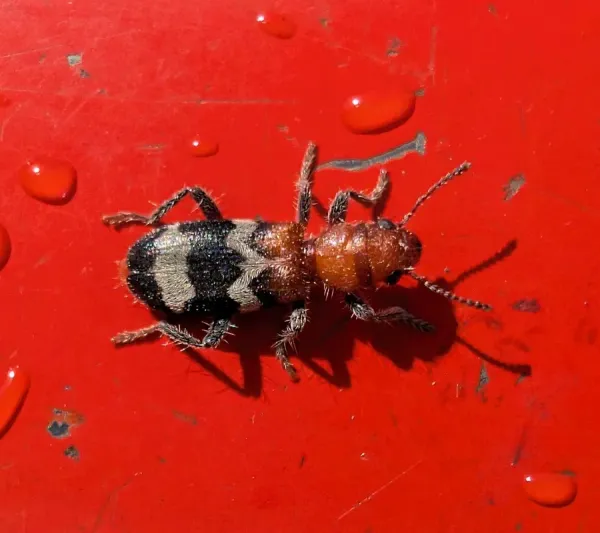
Checkered Beetles Coloration
Common color patterns to help identify checkered beetles
Checkered Beetles
Seasonal Activity
When checkered beetles are most active throughout the year

Where Checkered Beetles Are Found
Hover over states to see their names. Green regions indicate where checkered beetles have been reported.
Checkered Beetle Identification Guide
Checkered beetles make up a large beetle family called Cleridae. There are more than 3,000 kinds worldwide and a few hundred in North America. Most of them hunt other bugs. They live on tree trunks, logs, and flowers. People notice them because they are bright, fuzzy, and look like nothing else on the woodpile.
Physical Characteristics
- Size: 3 to 24 millimeters long. Most are 5 to 12 millimeters (about 1/4 to 1/2 inch).
- Shape: Long, narrow, and tube-like
- Hair: Short, stiff hairs cover the body and legs
- Thorax: The part behind the head is often narrower than the wing covers, so the beetle looks slim and pinched
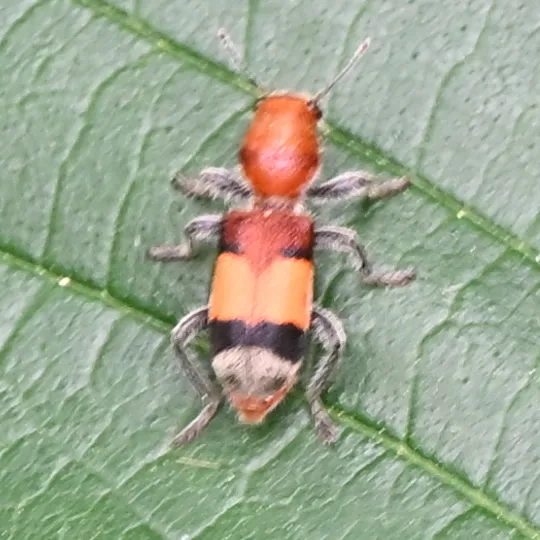
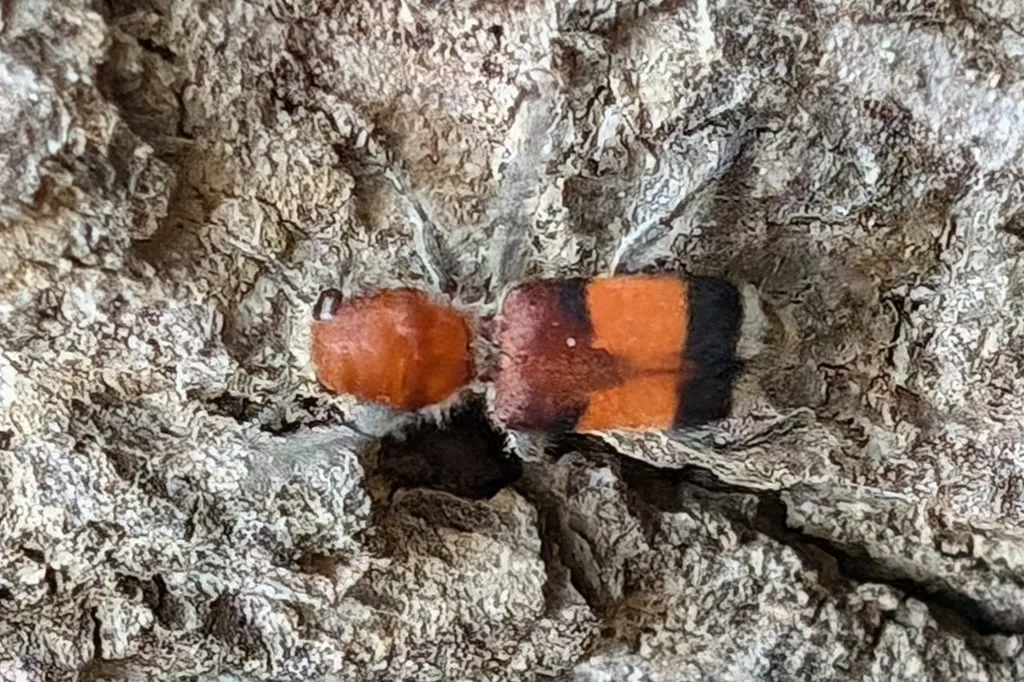
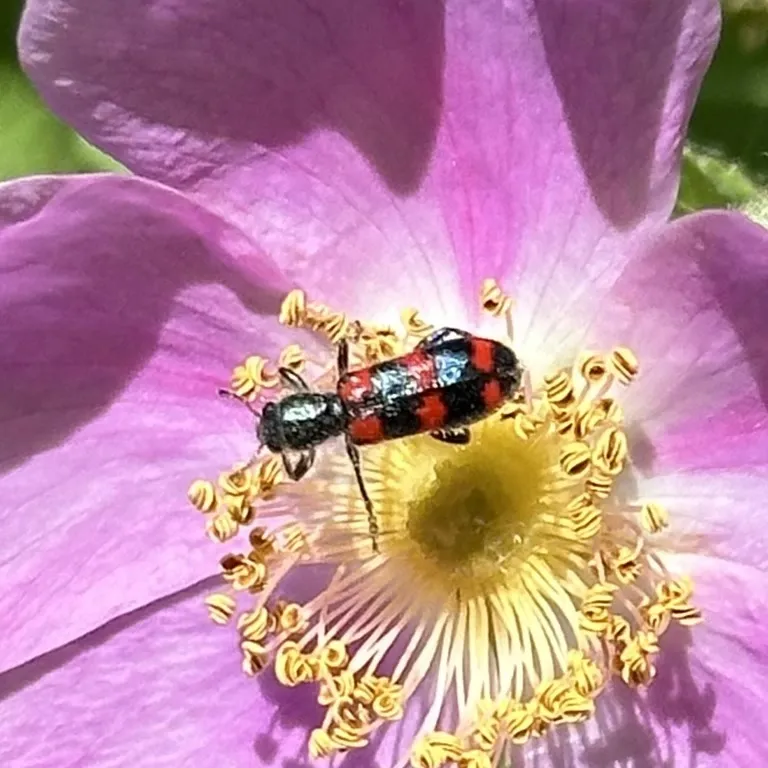
- Color: Often bright red, orange, or shiny blue, with black, cream, or yellow bands. The checkered pattern on the wing covers gives the family its name.
- Head: Big, bulging eyes on a head about as wide as the thorax
- Antennae: Short to medium. They may be thin, saw-toothed, or end in a small club.
Their fuzzy red and black look can pass for a velvet ant. But velvet ants have no wing covers and a pinched ant waist. Blister beetles are also long and bright. Their bodies are soft, and the head sits on a thin “neck.” Longhorn beetles are often bigger, with antennae as long as the body or longer.
Common Species
- Orange-banded checkered beetle (Enoclerus ichneumoneus): A common eastern kind, about 8 to 10 millimeters long. It is orange-red with a black band and a cream band near the tip. It hunts bark beetles on oaks, pines, and other trees.
- Southern pine beetle predator (Thanasimus dubius): Reddish-brown in front, black behind, with wavy pale bands. It is a top hunter of the southern pine beetle in the East and South.
- Black-bellied and red-bellied clerids (Enoclerus lecontei, Enoclerus sphegeus): Key hunters of pine beetles in western forests.
- Red-blue checkered beetle (Trichodes nuttalli): A red and dark blue beetle often seen on flowers. Its larvae grow up inside bee and wasp nests.
- Ham beetles (Necrobia species): The pantry exception. The red-legged ham beetle and its kin eat pet food, cured meat, cheese, and other high-protein foods.
Checkered Beetle Behavior and Biology
Habitat
Checkered beetles live where trees grow, from southern Mexico to the Canadian north woods. Adults run fast over bark, logs, and stumps. Some visit flowers. A few, such as Cymatodera beetles, fly at night and come to porch lights.
Indoors, they most often turn up in two places:
- Near firewood. Larvae ride in on logs from dead or dying trees. Warm rooms speed up their growth, so adults crawl out in winter.
- Near lights and doors in summer. Night-flying species follow porch lights inside.
Diet
Most checkered beetles hunt as both adults and larvae. The USDA Forest Service notes that they eat bark beetle adults and grubs. Adults find infested trees by smell. They follow the scent signals bark beetles use to call each other. Then they catch adult bark beetles on the bark. The larvae crawl into tunnels under the bark and eat the grubs.
They also eat ambrosia beetles and the grubs of other wood-boring beetles. Forest experts count them among the natural enemies of tree pests.
Ham beetles are the exception. They feed on dried meat, fish, cheese, nuts, and dry pet food. They also eat other insects they find in those foods.
Life Cycle
Checkered beetles have four life stages: egg, larva, pupa, and adult.
- Eggs: Females lay small, white, cigar-shaped eggs in bark cracks on trees that borers have attacked.
- Larvae: Larvae are often pink, red, or yellow and covered in fine hairs. They have hard hooks at the tail. They move through borer tunnels and eat grubs for weeks or months.
- Pupae: Some larvae pupate inside the tree. Others drop to the base of the tree and build a small cell in the soil.
- Adults: Adults emerge in spring and summer, mate, and search for new infested trees.
Most kinds have one generation a year. In the South, some can fit in more than one.
Treatment Methods for Checkered Beetles
Checkered beetles do not harm homes. So control focuses on the source and on the insect they may be hunting.
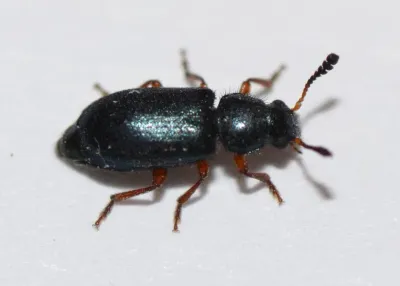
- Identification: First, know which beetle you have. A shiny blue beetle with red legs in the pantry is a ham beetle, not a firewood beetle. A pest pro can also tell a checkered beetle from wood borers that do harm wood.
- Firewood storage: Keep firewood outside, off the ground, and at least 20 feet from the house. Bring in only what you will burn that day. Logs from dead trees often carry bark beetles, borers, and the checkered beetles that hunt them. Our guide to termites in firewood has more storage tips.
- Sealing up: Seal gaps under doors, fix torn window screens, and caulk cracks around windows. Yellow bulbs in outdoor lights draw fewer night-flying bugs to your doors.
- Removal indoors: Catch stray beetles with a cup or vacuum them up. A few beetles from firewood rarely call for indoor sprays.
- Inspect for wood borers: If checkered beetles keep showing up near floors, trim, or furniture, they may be hunting powderpost beetles in the wood. A pest pro will look for tiny exit holes and fine, powdery sawdust to confirm the real problem.
- Pantry cleanup for ham beetles: Throw out infested pet food or cured meat. Vacuum shelves and keep food in sealed containers. See our pantry pest control page for how we handle stored-food pests in homes.
References
- Checkered Beetles (Coleoptera: Cleridae), University of Florida IFAS
- Southern Pine Beetle, Forest Insect & Disease Leaflet 49, USDA Forest Service
- Mountain Pine Beetles: A Century of Knowledge, Control Attempts, and Impacts (RMRS-GTR-353), USDA Forest Service
- Redlegged Ham Beetle, Necrobia rufipes, UF/IFAS Featured Creatures (EENY-811)
- The Checkered Beetles (Coleoptera: Cleridae) of the Maritime Provinces of Canada, Zootaxa 1385 (Majka, Nova Scotia Museum of Natural History)
Other Other Pests
Explore other species in the other pests family
Commonly Confused With
Checkered Beetles are often mistaken for these similar pests
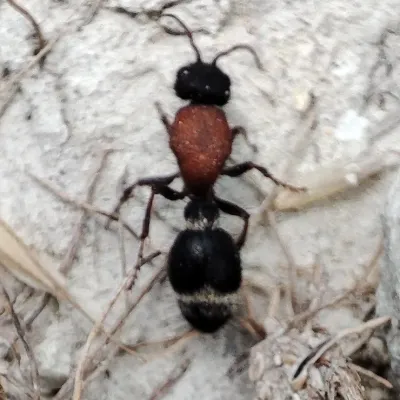
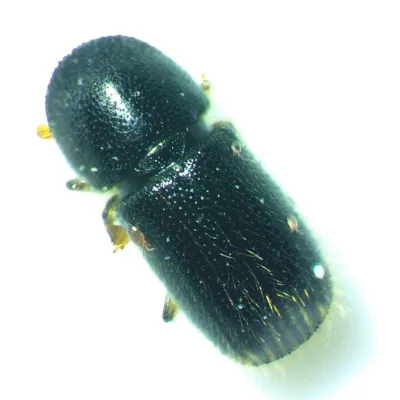
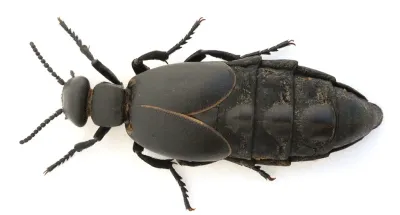
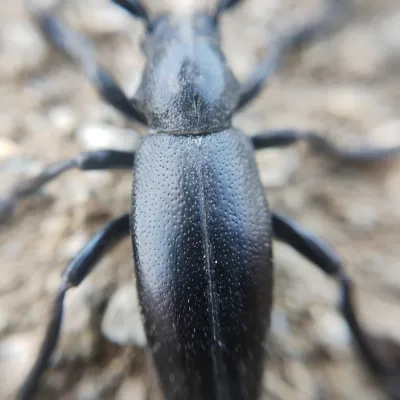
Where Checkered Beetles Are Found
Hover over states to see their names. Green regions indicate where checkered beetles have been reported.
Common Questions about Checkered Beetles
What does a checkered beetle look like?
+
Most checkered beetles are long, thin, and covered in short, stiff hairs. Many are bright red, orange, or blue with black, cream, or yellow bands. The part behind the head is narrow, so they look slim and almost ant-like. Most are 5 to 12 millimeters long.
Are checkered beetles harmful?
+
No. Nearly all checkered beetles hunt other bugs, mostly bark beetles and wood borer grubs. They do not chew wood, harm furniture, or infest your home. The one group that causes trouble indoors is the ham beetles. They feed on pet food, cured meat, and cheese.
Do checkered beetles bite?
+
Checkered beetles do not go after people. A large one may nip if you pick it up. They have no venom and are not known to spread disease. If your skin reacts after any bug contact, see a doctor. This is general information, not medical advice.
Why are checkered beetles in my house in winter?
+
Firewood is the most common reason. The larvae live under bark, where they hunt bark beetles and borers. When you bring logs inside, the warmth wakes them up early and adults crawl out. Some kinds also fly to porch lights on summer nights and slip in through open doors or torn screens.
Will checkered beetles infest my home's wood?
+
No. Checkered beetles do not eat wood. If you keep finding them near trim, floors, or furniture, they may be hunting another bug, such as powderpost beetles. In that case, the wood borer is the real concern and is worth an inspection.
What is the difference between a checkered beetle and a ham beetle?
+
Ham beetles are checkered beetles too. They are in the same family. But unlike their tree-dwelling kin, ham beetles eat stored foods high in protein and fat. The red-legged ham beetle is small and shiny blue, with orange-red legs. If you find it in a pantry or near pet food, treat it as a pantry pest.
How do I get rid of checkered beetles indoors?
+
Catch stray beetles in a cup or vacuum them up. Then remove the source. Keep firewood outside and only bring in what you will burn that day. Seal gaps around doors and fix window screens. If beetles keep showing up away from firewood, have a pest pro identify the beetle and look for the bug it is hunting.

With five years of hands-on experience in the pest control industry, George Schulz is a registered technician with the Virginia Pest Management Association and a proud third-generation professional in a family business that's been protecting homes for over 58 years. He manages and trains a team of service pros while also leading internal research efforts—recently spearheading a deep-dive review of thousands of documents on pest control materials to hand-pick the most kid and pet friendly, most effective solutions tailored specifically for homes in the DC metro area.
Local Other Pests Help
Dealing with other pests at home? Our licensed technicians provide pest control across Northern Virginia and Maryland.
