Red-Legged Ham Beetles Identification Guide
Necrobia rufipes
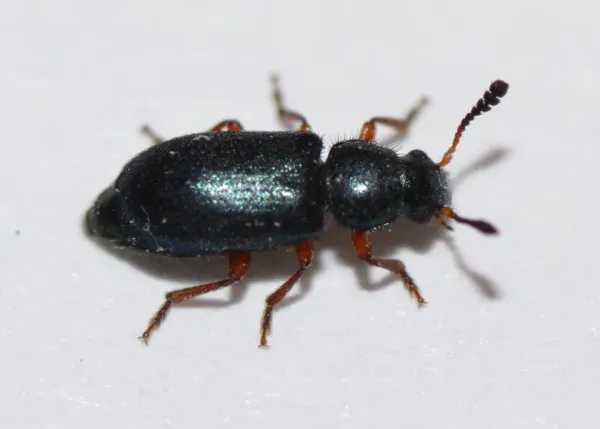
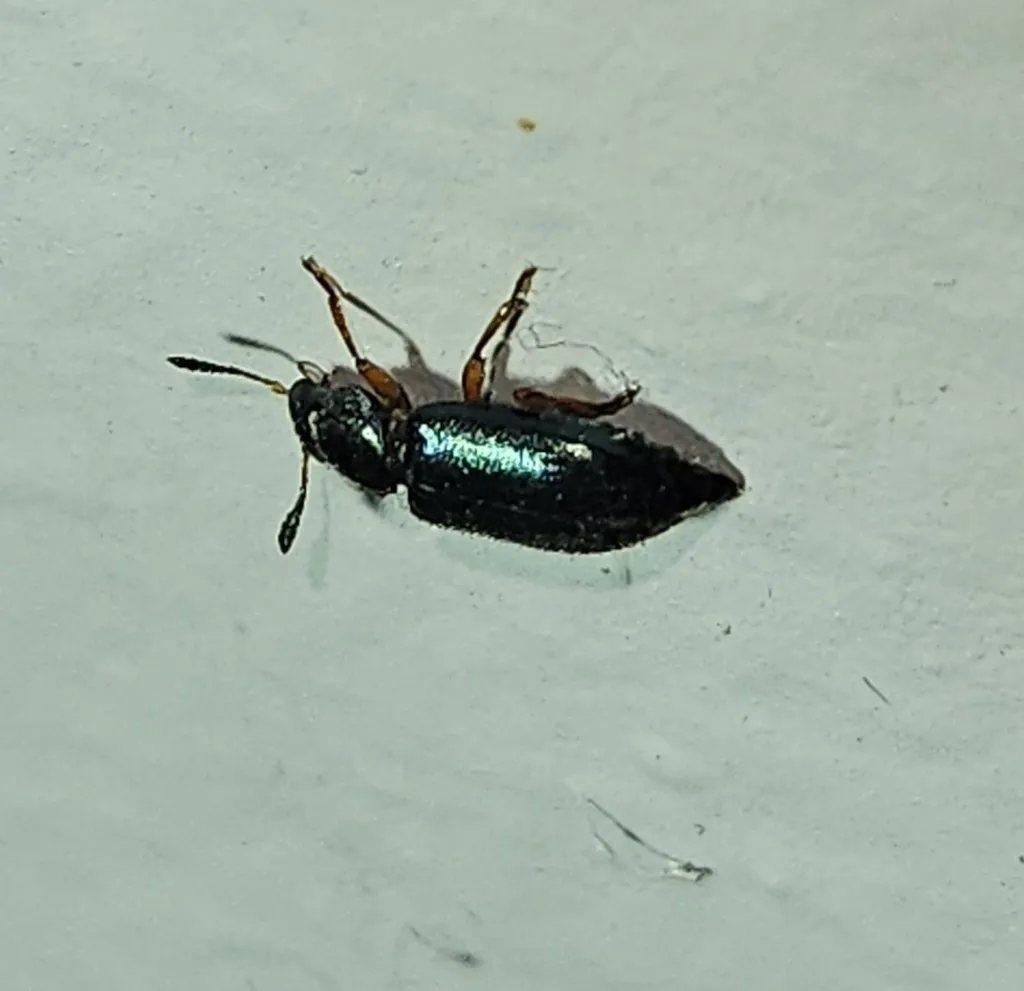
Red-legged ham beetles are small, shiny metallic blue-green beetles with bright orange-red legs. They infest high-protein, high-fat stored foods like dry pet food, cured ham, dried fish, cheese, and nuts.
Taxonomy
Red-Legged Ham Beetles Coloration
Common color patterns to help identify red-legged ham beetles
Red-Legged Ham Beetles
Seasonal Activity
When red-legged ham beetles are most active throughout the year

Where Red-Legged Ham Beetles Are Found
Hover over states to see their names. Green regions indicate where red-legged ham beetles have been reported.
Red-Legged Ham Beetle Identification Guide
Physical Characteristics
The red-legged ham beetle (Necrobia rufipes) is one of the most colorful pantry pests you can find in a home. Most stored-food beetles are dull brown. This one stands out.
Key features to look for:
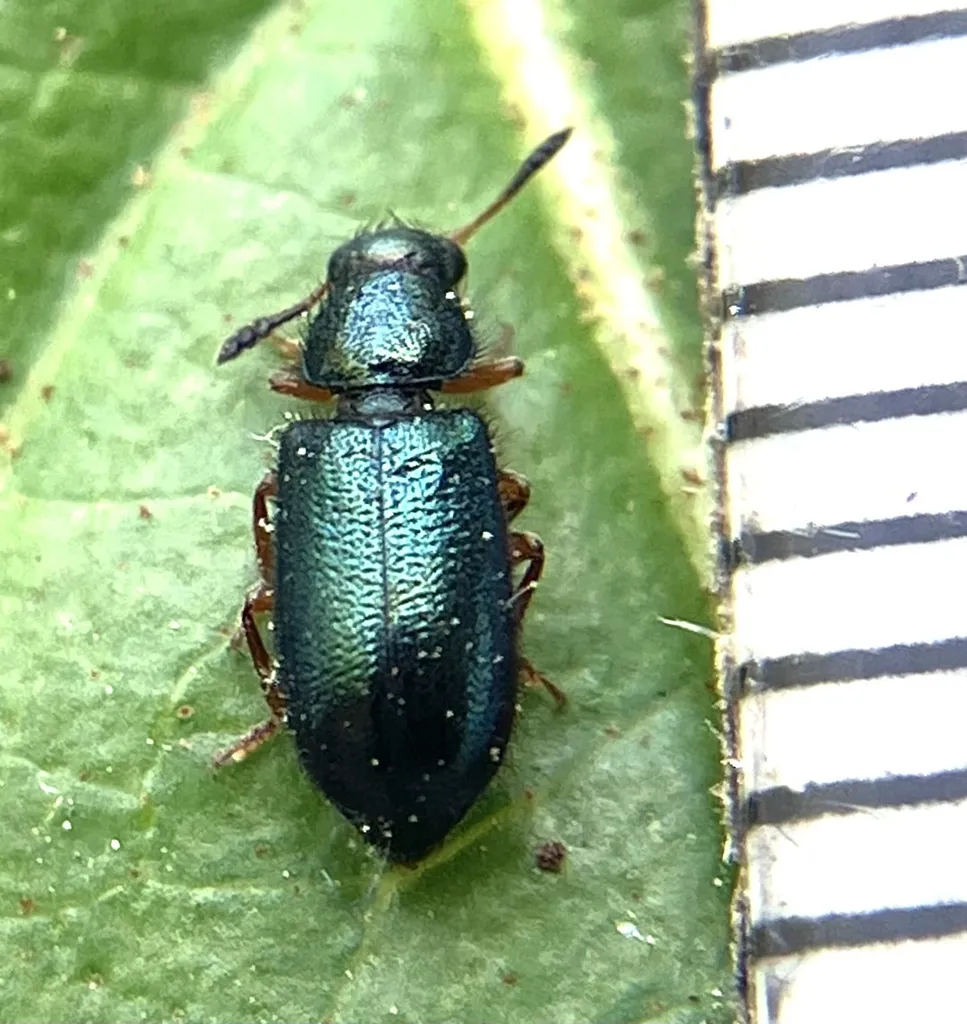
- Size: About 3.5 to 6 millimeters long, with most adults close to 4.5 millimeters (about 3/16 of an inch)
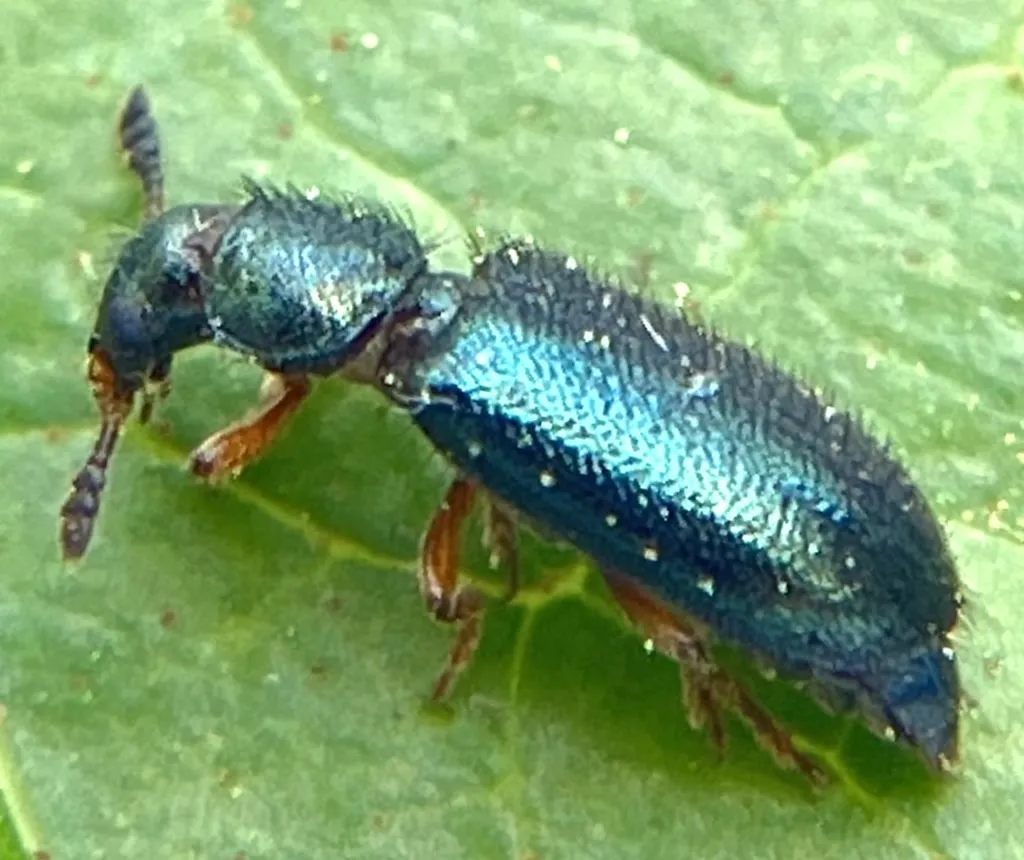
- Color: Shiny metallic blue or blue-green head, thorax, and wing covers
- Legs: Bright orange-red, which gives the beetle its name
- Antennae: Reddish, ending in a dark club made of the last three segments
- Body shape: Long and narrow, with a rounded thorax that is slimmer than the wing covers. The tip of the abdomen often sticks out past the wing covers.
- Hairs: Short, stiff, bristle-like hairs cover the body
Adults can fly and often take off when disturbed. They avoid light, so they may run for cover when you open a cabinet or lift a pet food bag.
Larval Appearance
The larvae do most of the damage. They grow to about 10 millimeters long. The body is tan-brown to dirty white with fine pale hairs. The head is dark reddish-brown, and the tail end is dark and hardened with two small, upturned spines. Larvae have three pairs of legs near the head and stay hidden inside the food they eat.
Common Species
The red-legged ham beetle belongs to the checkered beetle family, Cleridae. Most of its relatives hunt bark beetles on trees, but ham beetles moved into stored food. Two close relatives look similar:
- Red-shouldered ham beetle (Necrobia ruficollis): Same blue body, but the thorax and the base of the wing covers are reddish.
- Black-legged ham beetle (Necrobia violacea): Also called the cosmopolitan blue bone beetle. It is blue like the red-legged ham beetle, but its legs and antennae are dark blue or black.
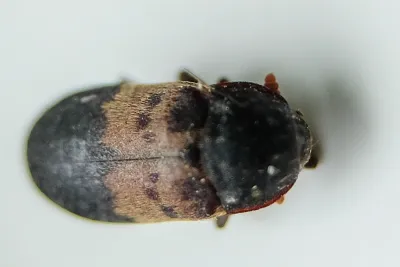
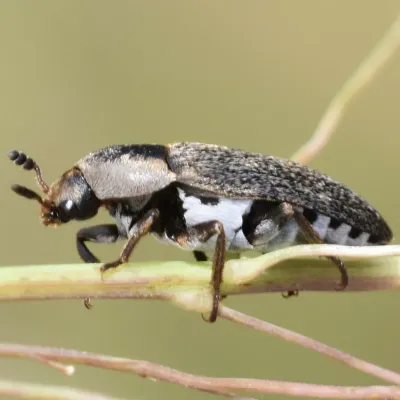
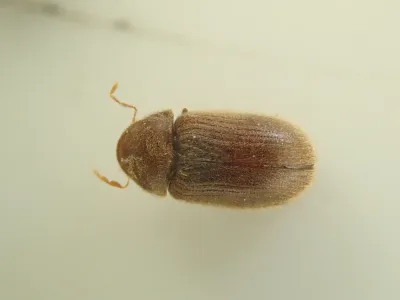
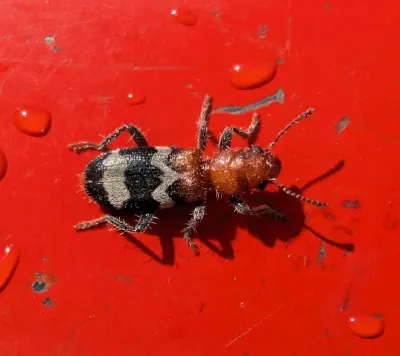
Other pests eat the same foods but look very different. Larder beetles are bigger and dark with a pale yellow band. Hide beetles are dark brown to black with white undersides. Drugstore beetles and cigarette beetles are tiny, rounded, and reddish-brown, and they prefer dry plant foods like flour and spices.
Red-Legged Ham Beetle Behavior and Biology
Habitat
This beetle lives all over the world. In North America, it is most common in warm places and in heated rooms where food is kept. Indoors, it can breed all year. It needs warmth to grow. Its larvae do not develop well below about 72°F, and cold storage below 60°F stops it.
In homes, look for it in:
- Pantries and kitchen cabinets
- Garages, basements, and mudrooms where bulk pet food is kept
- Spots where dried meats, jerky, or hunting trophies are stored
It is also a known pest in pet food plants, pet stores, ham curing plants, and museums.
Diet
Red-legged ham beetles eat both stored food and other insects. They look for foods high in protein and fat, such as:
- Dry dog and cat food, which is now one of their most common hosts
- Dry-cured ham, bacon, jerky, and dried fish
- Aged and hard cheeses
- Cashews, coconut (copra), and other oily nuts and seeds
- Bone meal, dried egg, and dried figs
- Animal skins and taxidermy mounts
They also eat other insects. Adults and larvae feed on the eggs and larvae of cheese skippers and dermestid beetles. They will even eat their own species. In cured meats and cheese, they often show up alongside cheese mites.
Life Cycle
Red-legged ham beetles have four life stages: egg, larva, pupa, and adult.
- Eggs: Females lay clusters of tiny, white, rice-shaped eggs in dry cracks on or near food. Eggs hatch in about four to five days in warm conditions.
- Larvae: Newly hatched larvae eat their eggshells, then tunnel into the food. They molt two to three times over several weeks.
- Pupae: The last larval stage spins a silky chamber, often mixed with food crumbs for cover, inside the food or in a nearby crack. The pupal stage lasts about 3 to 14 days.
- Adults: Adults mate within days. A female can live up to a year and lay 100 to 3,000 eggs.
Under warm conditions, one generation can finish in about six weeks. In cooler months, larvae and adults slow down and may overwinter near their food.
Signs of a Red-Legged Ham Beetle Infestation
- Small, shiny blue beetles with red legs on shelves, walls, or windowsills near stored food
- Beetles crawling on or flying out of a pet food bag
- Holes chewed through thin cardboard or paper packaging
- Tunnels, crumbly residue, or cast skins in cured meat, cheese, or kibble
- Silky pupal cases tucked into shelf cracks or the seams of food bags
Treatment Methods for Red-Legged Ham Beetles
The first step is always to remove the food the beetles live in. Spraying alone rarely works while infested food is still in the house.
- Find the source: Check every bag of dry pet food, treat, jerky, cured meat, nut, and cheese product. Look inside folds and seams. Check bulk bins and any food stored in garages or basements.
- Discard infested food: Seal it in a plastic bag and take it outside to the trash right away.
- Deep clean: Vacuum shelves, corners, and cracks where larvae and pupal cases hide. Empty the vacuum outside, then wipe surfaces with soapy water.
- Store food in sealed containers: Ham beetles can chew through thin cardboard. Use hard plastic, glass, or metal containers with tight lids for pet food and other high-protein foods.
- Use cold: Freezing small items for several days can kill hidden eggs and larvae. Keep cured meats and aged cheese cold, since the beetles cannot develop at low temperatures.
- Monitor: Sticky traps with a lure made for pantry beetles can help you spot new activity early.
- Treat cracks when needed: In stubborn cases, a pro may treat cracks in storage areas with an EPA-registered product labeled for pantry pests. Large problems in food plants or warehouses sometimes need fumigation by a licensed company.
If you are dealing with moths, weevils, or other beetles in your kitchen as well, our pantry pest control page explains how we approach stored-food pests in homes.
References
- Redlegged Ham Beetle, Copra Beetle, Necrobia rufipes, UF/IFAS Featured Creatures (EENY-811)
- Insects and Mites Infesting Cured Fish: Necrobia rufipes, Food and Agriculture Organization of the United Nations
- Stored Product Pests in the Pantry, University of Kentucky Entomology (EF612)
- Pantry Pests, University of California Agriculture and Natural Resources
Other Pantry Pests
Explore other species in the pantry pests family
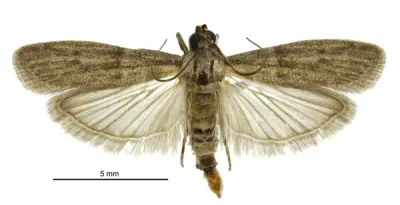
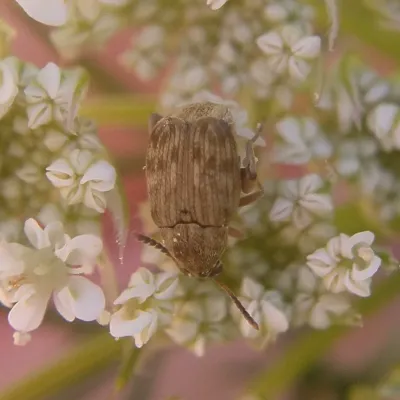
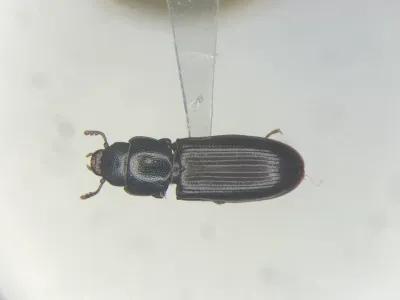
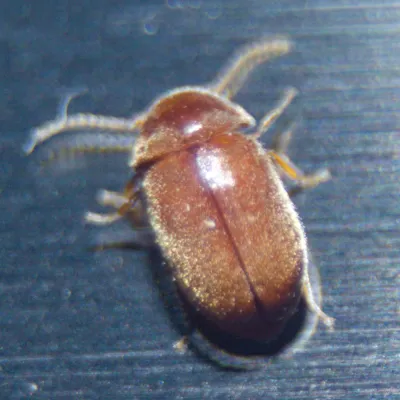
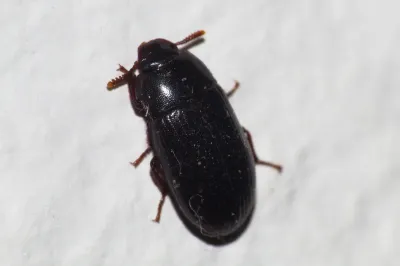
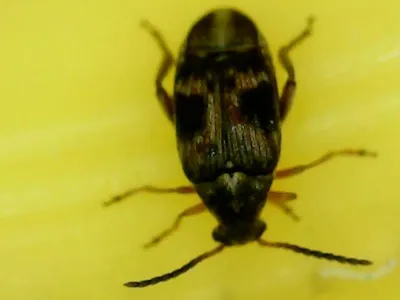
Commonly Confused With
Red-Legged Ham Beetles are often mistaken for these similar pests
Where Red-Legged Ham Beetles Are Found
Hover over states to see their names. Green regions indicate where red-legged ham beetles have been reported.
Common Questions about Red-Legged Ham Beetles
What does a red-legged ham beetle look like?
+
Adults are about 3.5 to 6 millimeters long, or roughly 3/16 of an inch. The head, thorax, and wing covers are a shiny metallic blue or blue-green. The legs are bright orange-red, and the reddish antennae end in a dark, three-segment club. The body is covered in short, stiff hairs.
Why are red-legged ham beetles in my house?
+
They almost always arrive in or are drawn to high-protein, high-fat foods. Dry dog and cat food is the most common source in homes today. Cured ham, jerky, dried fish, aged cheese, nuts, coconut, and bone meal can also host them. Adults are strong fliers and can also find their way in from outdoors in warm weather.
Do red-legged ham beetles bite people?
+
No. They do not bite people or pets, and they are not known to spread disease. The problem is food loss and contamination. Larvae tunnel into meat, cheese, and pet food, leaving waste and cast skins behind.
Can I eat ham or pet food that had ham beetles in it?
+
Throw away any food with live beetles, larvae, tunnels, or webbing. Infested products are contaminated and can hide eggs and larvae you cannot see. Bag the food tightly and take it outside so the beetles do not spread to other items.
How long do red-legged ham beetles live?
+
Adult females can live up to 12 months, and some adults survive more than a year in cool conditions. A female can lay anywhere from about 100 to 3,000 eggs in her lifetime. That high egg output is why a small problem can grow fast in a warm pantry.
What is the difference between a ham beetle and a larder beetle?
+
Both feed on dried meats and pet food, but they look very different. The red-legged ham beetle is small, shiny blue-green, and has orange-red legs. The larder beetle is larger, dark brown to black, and has a pale yellowish band with dark spots across its wing covers.
How do I get rid of red-legged ham beetles?
+
Find and throw out the infested food first, usually a bag of dry pet food or a cured meat. Vacuum shelves and cracks, then wipe them clean. Store pet food, nuts, and dried meats in hard plastic or glass containers with tight lids. If beetles keep showing up after cleanup, a pest professional can help track down hidden sources.

With five years of hands-on experience in the pest control industry, George Schulz is a registered technician with the Virginia Pest Management Association and a proud third-generation professional in a family business that's been protecting homes for over 58 years. He manages and trains a team of service pros while also leading internal research efforts—recently spearheading a deep-dive review of thousands of documents on pest control materials to hand-pick the most kid and pet friendly, most effective solutions tailored specifically for homes in the DC metro area.
Local Red-Legged Ham Beetles Help
Dealing with red-legged ham beetles at home? Our licensed technicians provide pest control across Northern Virginia and Maryland.
