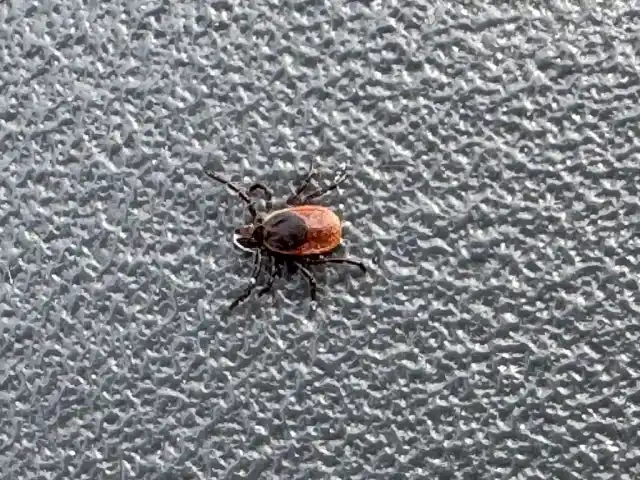

If a tick head is left in your skin, usually nothing serious happens. The part left behind is almost always the tick’s mouthparts, not its whole head. According to the CDC, your body will push those mouthparts out over time as the skin heals. It also doesn’t raise your risk of Lyme disease. The main thing to watch for is a local skin infection.
I’m George Schulz, the third generation of my family at Better Termite & Pest Control. We treat yards for ticks across Northern Virginia and Maryland, and “I think the head is still in there” is one of the most common worries I hear. I’m not a doctor, though, and this isn’t medical advice. Everything health-related below comes from the CDC, state health departments, medical references, and published research.
What Is Actually Left Behind?
A tick doesn’t really have a head the way we think of one. The front part is a small feeding unit, and that’s what gets stuck. The biggest piece is the hypostome, a short, barbed tube the tick pushes into your skin.
Ticks also glue themselves in place. A 2026 case report in Cureus describes how ticks anchor with a barbed hypostome plus a cement made from their saliva. The barbs point backward, like a fishhook. That’s why a twist or a quick yank can snap the tick in half and leave the front end behind.
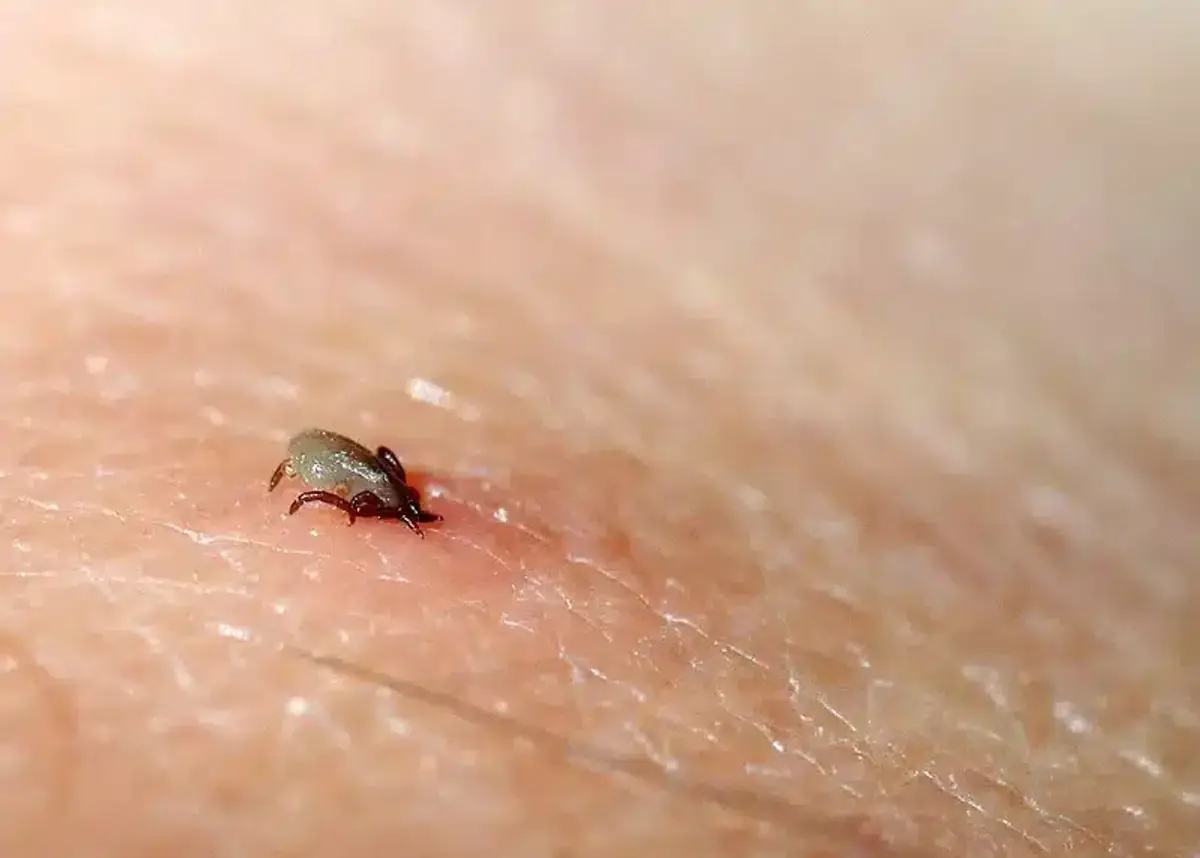
The good news is that a broken-off front end can’t keep feeding. Once the body is gone, nothing is left to pump anything into the bite.
Does a Tick Head Left In Raise Your Lyme Disease Risk?
No. This is the part most people worry about, so it’s worth being clear.
The University of Rhode Island’s TickEncounter program says there’s no greater risk of disease just because part of the tick is still in your skin. The germs flow from the tick’s salivary glands, which sit further back in the body. When the tick breaks, that connection breaks too.
What actually matters for disease is how long the tick was feeding before you pulled it off. The risk of germs passing to you goes up the longer a tick stays attached. So if you got the body off quickly, you did the important part, even if a speck stayed behind.
TickEncounter notes the two most common breaking points during removal are at the base of the hypostome and at the head capsule. Either way, the part left in your skin has been cut off from the salivary glands.
They also point out that squeezing the back end of the tick during removal is riskier than leaving mouthparts behind. That’s why fine-tipped tweezers at the skin line beat fingers or wide tweezers.
What Can Happen If a Tick Head Is Left In?
Most of the time, the spot heals like any small splinter. There are a few things that can go wrong, though, and they’re all local to the skin.
- Irritation. The bite may stay red, itchy, or a little sore for a few days. That’s common.
- Skin infection. Any break in the skin can let bacteria in. The Merck Manual notes that partial removal of a tick may cause infection. It also tells patients to come back if pain, swelling, or redness develops at the site.
- A lingering bump (granuloma). Sometimes the body walls off a foreign piece with a firm bump. A 2025 case report in Insects describes a tick bite granuloma that was still causing itching and burning nine weeks after a tick was pulled off by hand. The authors say a hypostome fragment left in the skin can trigger this kind of reaction. This is uncommon, and a doctor can remove a stubborn piece if it comes to that.
How to Tell If the Tick Head Is Still in Your Skin
Not sure if anything stayed behind? Here’s how to check.
If you saved the tick, look at its front end. Use a magnifying glass or your phone’s camera zoom. If the front looks broken, ragged, or missing, part of it probably stayed in your skin. If you can see the small mouthparts sticking out of the front, it likely came out whole.
Wash the area and look at it in bright light. Retained mouthparts usually look like a tiny dark speck or sliver right in the center of the bite. It may feel like a splinter when you run a finger over it.
A normal tick bite often leaves a small red bump with nothing in the middle. It usually fades in a day or two. A dark speck in the center, or a bump that gets bigger, more painful, or stays hard for weeks, is different. That’s the kind of spot to keep an eye on.
If you’re still unsure after checking, that’s okay. Treat it as if a piece stayed in and watch the spot.
What to Do If the Tick Head Is Stuck
The CDC’s guidance is short. You can try to remove the mouthparts with tweezers. However, if they won’t come out easily, leave them alone and let your skin heal.
Here’s how I’d handle it, based on that advice:
- Wash the area with soap and water or rubbing alcohol.
- Try once with clean, fine-tipped tweezers. Grab only what you can see, and lift it out.
- Stop if it doesn’t come easily. Don’t dig with a needle, a pin, or your fingernails. That tears the skin and lets bacteria in.
- Keep it clean while it heals, and keep your hands off it.
- Watch the spot for a few weeks for the warning signs above.
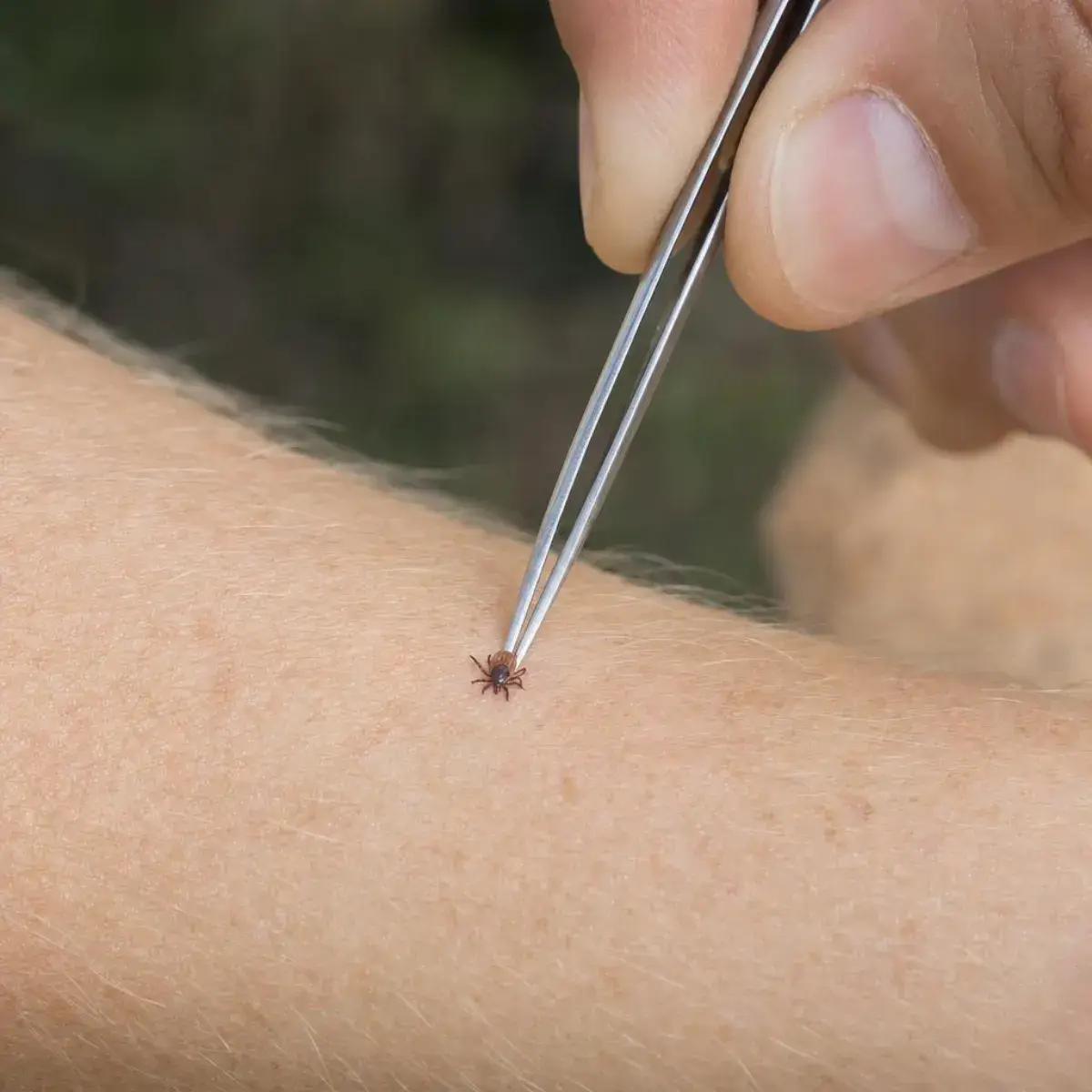
The best fix, of course, is not breaking the tick in the first place. Grip it right at the skin with fine-tipped tweezers and pull straight up, slowly. Don’t twist, burn, or smother it. My full tick removal guide walks through each step.
Ticks are a personal thing for my family. I’ve had relatives deal with Lyme disease. Once it goes a while without being caught, it can be very hard to treat. That’s why I tell customers the same thing every time: getting the body off fast matters far more than a little piece left in the skin.
I check myself constantly. There’s a property in Fort Hunt we’ve serviced for years with a creek and thick woods behind the house. One summer I walked out of there and found 15 or 16 ticks on me by the time I got home. To this day I lift my pant legs and check before I leave that yard.
The best way to avoid a stuck tick head is to run into fewer ticks to begin with.
Why the Bite Matters More Than the Head
Here in the DC area, the tick that worries doctors most is the blacklegged (deer) tick. It’s the one that spreads Lyme disease. The Virginia Department of Health says Lyme is common in the suburbs of northern and western Virginia. In Maryland, the state health department reported more than 3,000 Lyme cases statewide in 2024.
We also see plenty of lone star ticks and American dog ticks around here. Their bites carry their own risks, which I cover in what happens after a lone star tick bite.
So after any tick bite, broken head or not, watch for these signs over the next month:
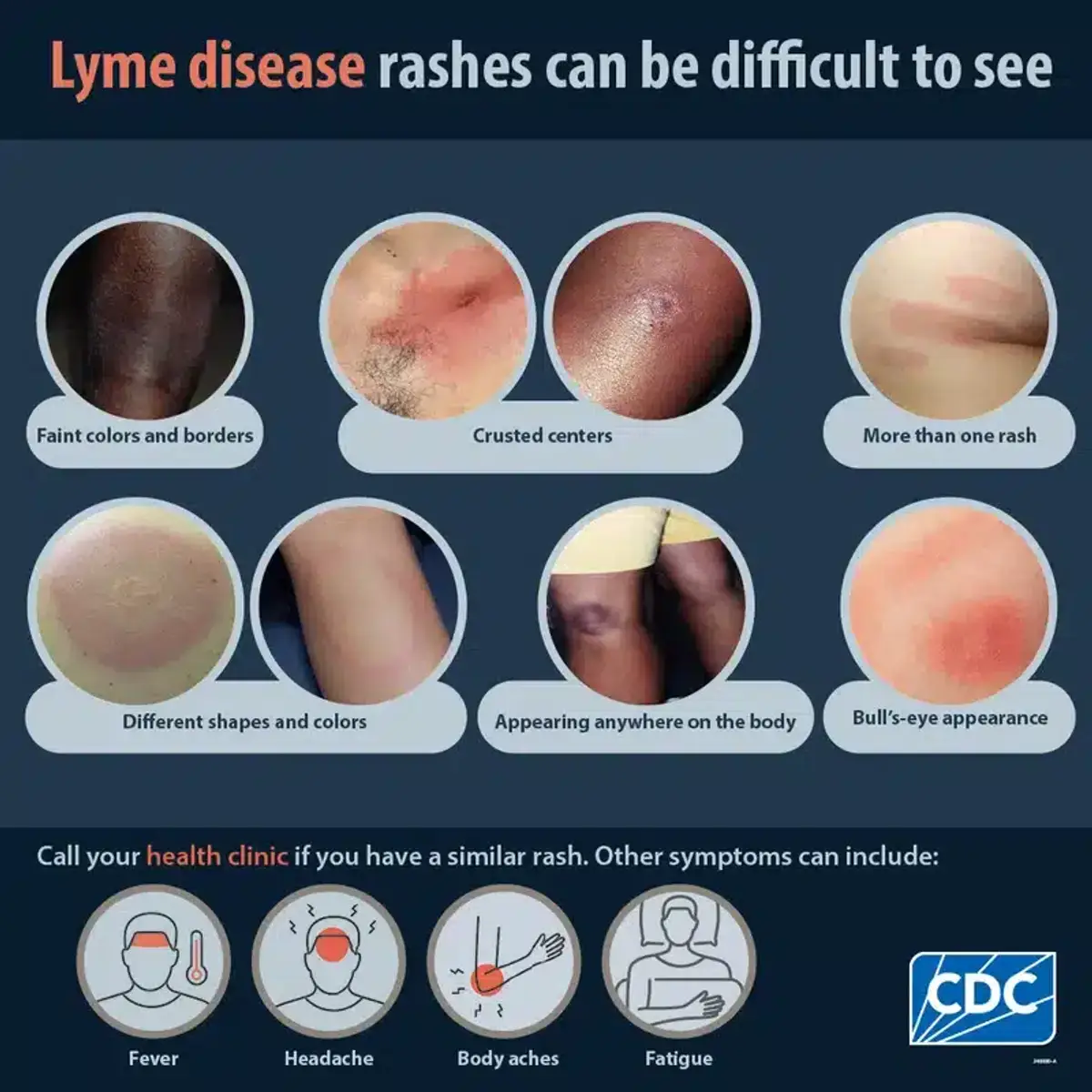
- A red rash that grows outward over several days, sometimes with a clear center.
- Fever, chills, headache, fatigue, or body aches.
- Joint pain or swollen lymph nodes.
The CDC says the Lyme rash shows up 3 to 30 days after the bite. It also doesn’t appear in everyone. For the full list of warning signs, see my guide on when to be concerned about a tick bite.
What If a Tick Head Is Left in Your Dog?
The advice for pets is basically the same. The Merck Veterinary Manual says that if the mouthparts can’t easily be removed with clean tweezers, you should leave them alone and let the skin heal. It also says the chance of a local infection from leftover mouthparts is minor compared with the risk of disease from a tick that stays attached.
Keep the spot clean and check it for a few days. Call your vet if it swells, oozes, or your dog seems sick or lethargic. If your dog keeps bringing ticks inside, check out our guide to flea vs. tick problems on pets and in the yard.
How to Stop the Next Tick Bite
The fewer ticks in your yard, the fewer bites you have to worry about. Ticks hang out in shade, tall grass, leaf litter, and brushy edges where the lawn meets the woods. Keeping the grass short and the leaf litter cleared helps more than most people realize.
After that, a recurring yard treatment cuts down the ticks that are already there. Our tick control service targets the shady, overgrown spots where ticks wait for a host. Additionally, our mosquito control program can be paired with it so the whole yard is covered during the warm months. If you’re curious when the risk peaks here, my tick season guide breaks it down by month.
The Bottom Line
A tick head left in your skin is usually just a few tiny mouthparts. Try once with clean tweezers. If it won’t budge, leave it, keep it clean, and let your skin push it out. It doesn’t raise your Lyme risk. However, see a doctor for spreading redness, swelling, pus, a lingering bump, or any rash or fever in the weeks after the bite.
If ticks keep showing up on you, your kids, or your dog, the problem is probably in your yard. Better Termite & Pest Control has served the DC area for 58 years, and we’ve earned 1800+ reviews along the way. Call us at 703-683-2000 or email info@bettertermite.com with questions or for a free estimate.