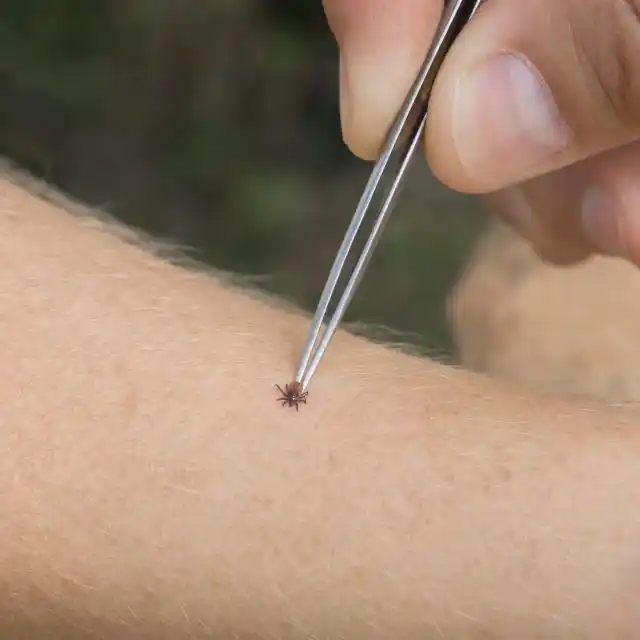

Tick removal takes about a minute, and all you need is a pair of fine-tipped tweezers. Here’s the method the CDC recommends:
- Grab the tick as close to the skin as you can with clean, fine-tipped tweezers.
- Pull straight up with steady, even pressure. Don’t twist or jerk it.
- Get rid of the tick by sealing it in a bag or container, wrapping it in tape, flushing it, or dropping it in rubbing alcohol. Never crush it with your fingers.
- Clean the bite and your hands with soap and water, rubbing alcohol, or hand sanitizer.
- Check the rest of your body for more ticks.
I’m George Schulz, the third generation of my family at Better Termite & Pest Control. We treat yards for ticks across Northern Virginia and Maryland, so I get a lot of “I just found a tick, now what?” questions. Below, I’ll cover what not to do, what to do if part of the tick stays in, how to handle a tick on your dog, and when to call a doctor.
How to Remove a Tick, Step by Step
Speed matters more than anything else here. According to the CDC, a blacklegged tick generally has to be attached more than 24 hours before it can pass on the Lyme disease bacterium. So if you find one, don’t wait to look up a fancy method. Grab the tweezers and get it off.
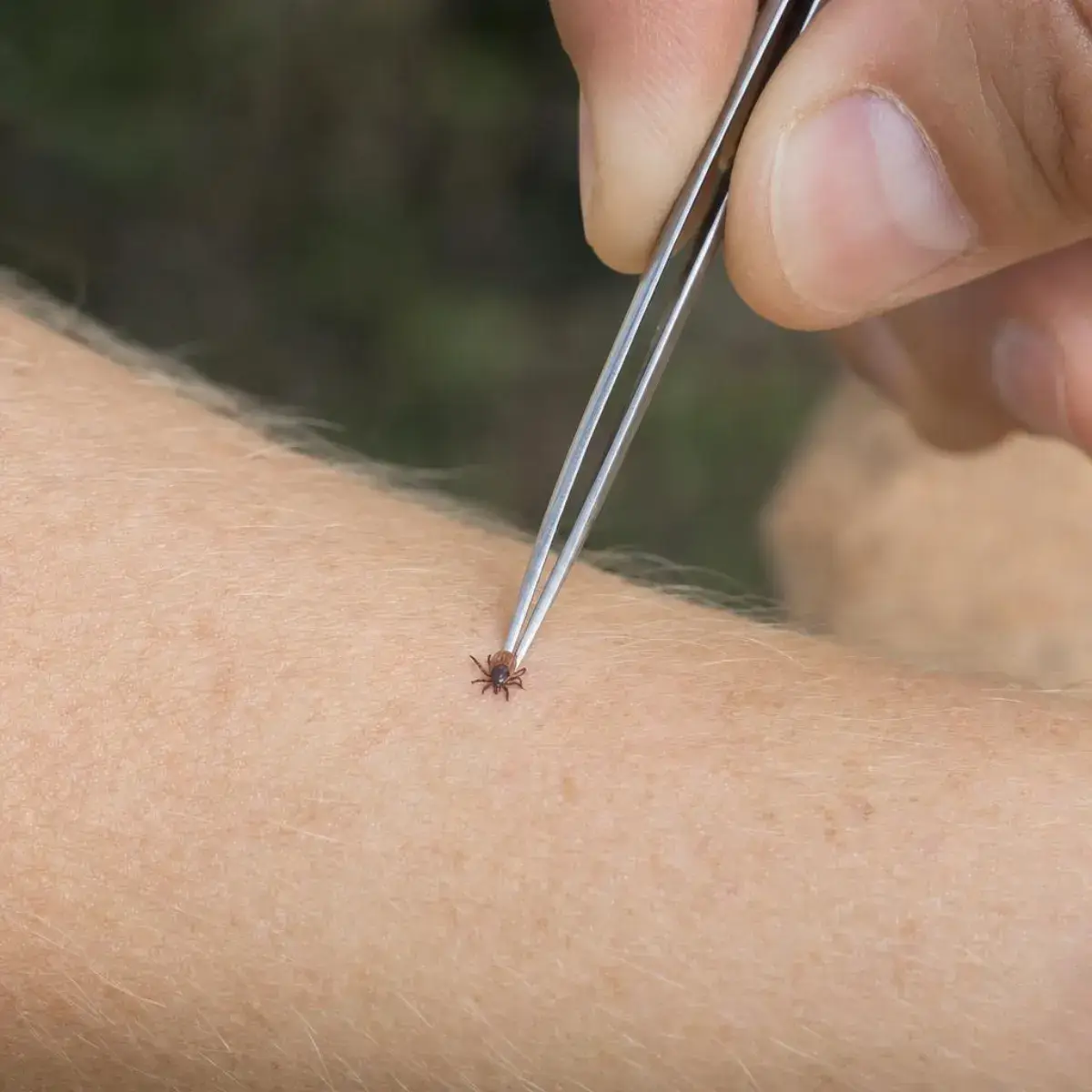
Here is each step in a little more detail.
Fine-tipped tweezers work best. The flat, wide-tipped kind in most bathroom drawers tends to grab the body instead of the mouthparts. That squeezes the tick. Wipe the tips with rubbing alcohol first if you have it.
Get the tips down as close to your skin as you can. You want to hold the tick by its mouthparts, right where it enters the skin. Basically, you’re gripping the “neck,” not the “belly.” Especially with a tiny nymph, take a second to line this up.
Pull upward with slow, steady, even pressure. Don’t twist, rock, or yank it. The tick’s mouthparts are barbed, so it may take a few seconds before it lets go. Additionally, don’t squeeze the body while you pull.
Don’t crush it between your fingers. Instead, seal it in a plastic bag or small container. If you might want it identified later, put the bag in the freezer and write the date on it. Otherwise, you can flush it or drop it in rubbing alcohol.
Wash the bite and your hands with soap and water or rubbing alcohol. Then check the rest of your body, because where there’s one tick, there may be more. Look under your arms, behind your knees, around your waist, in your belly button, behind your ears, and along your hairline.
What Not to Do When Removing a Tick
You’ve probably heard some of these tricks from a parent or a camp counselor. They don’t work, and they can backfire. The CDC advises against using heat, petroleum jelly, nail polish, or other products to make a tick “back out.” Those irritate the tick, which may push more of its fluids into the bite.
Skip these common tick removal myths:
- Don’t hold a hot match or lighter to the tick.
- Don’t smother it with petroleum jelly, nail polish, or essential oils.
- Don’t twist or jerk it out.
- Don’t squeeze the body with your fingers or with wide tweezers.
- Don’t wait for it to fall off on its own.
Also, don’t pull a tick off with bare fingers if you can avoid it. Your fingernails tend to pinch the body, which is exactly what you’re trying not to do.
What If the Tick’s Head Is Stuck?
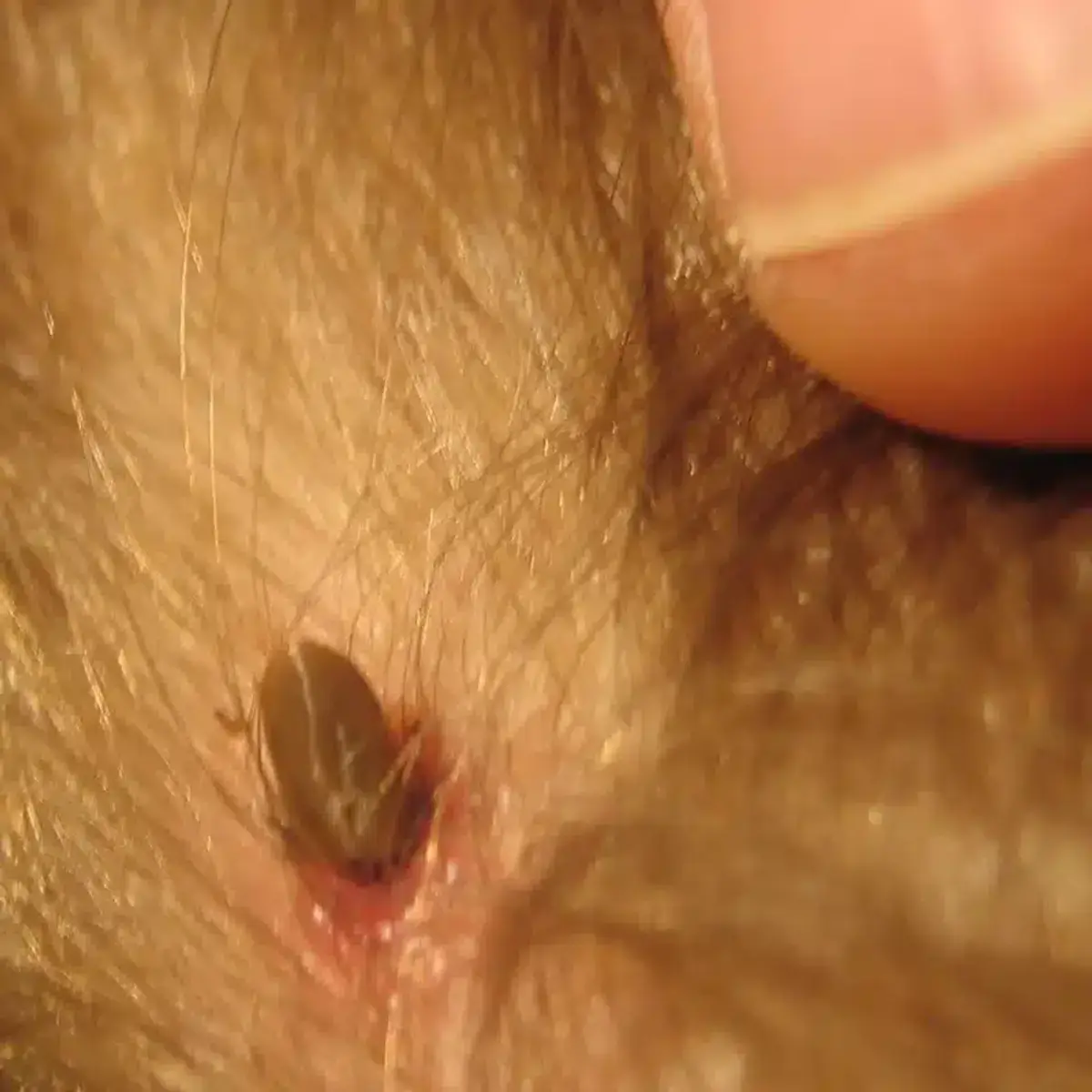
This is the most common worry I hear. First, the good news: the part left behind is almost always the mouthparts, not the whole head. Once the body is off, the tick can’t keep feeding.
Try to lift the mouthparts out with clean tweezers, the same way you’d go after a splinter. If they don’t come out easily, stop. Don’t dig at your skin with a needle. Just clean the spot and leave it alone. Your skin will push the pieces out as it heals.
Tick Removal Tools vs. Tweezers
You’ll see tick keys, tick hooks, and card-style removers at every hardware store. Some people like them for pets. However, the Merck Veterinary Manual says plain fine-tipped tweezers are the most effective tool for tick removal.
My take: keep a good pair of fine-tipped tweezers in your first-aid kit, your car, and your hiking bag. If you already own a tick key and it works for you, that’s fine. The rule doesn’t change. Get under the tick at the skin and lift steadily, without crushing the body.
How to Remove a Tick From a Dog
Dogs pick up ticks more often than we do, because they run through the tall grass and brush along the edge of the yard. The method is basically the same as for people.
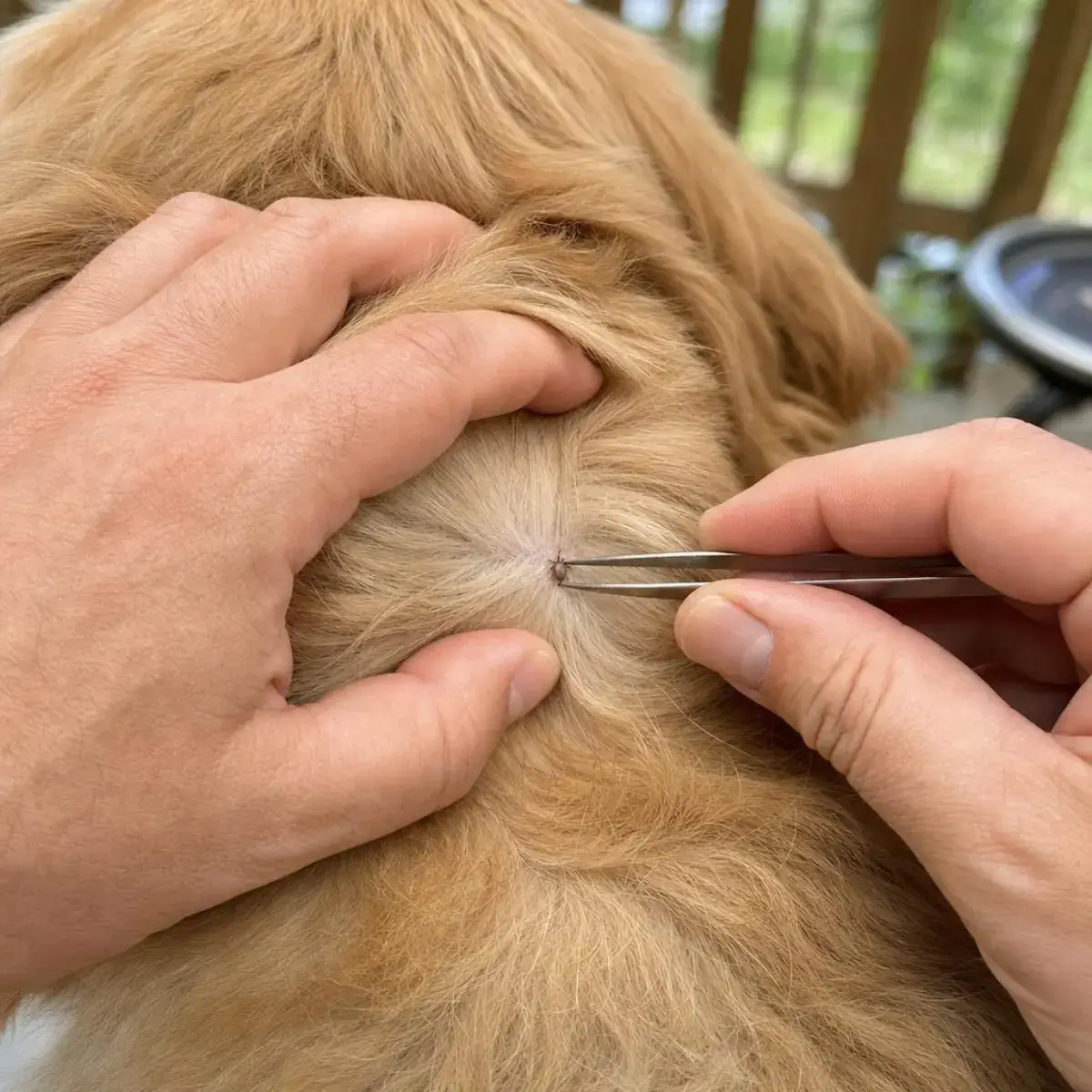
Use the tabs below for the steps, the spots to check, and the signs that mean a trip to the vet.
- Put on disposable gloves if you have them.
- Part the fur with one hand so you can see exactly where the tick enters the skin.
- Grip the tick at the skin with fine-tipped tweezers.
- Pull straight up with steady pressure. Don’t twist.
- Clean the spot with a pet-friendly antiseptic, then wash your hands.
- Give your dog a treat. It helps with the next one.
Ticks like thin skin and warm, hidden spots. Run your fingers slowly over your dog and feel for small bumps. Check:
- Inside and around the ears
- Around the eyes and on the head
- Under the collar
- In the armpits and groin
- Between the toes
- Under the tail
Watch the bite spot for a few days. Call your vet if it turns red or swollen, or if your dog seems tired, stops eating, or starts limping. Your vet can also recommend a tick preventive that fits your dog.
If your dog keeps coming in with ticks, one of them may be the brown dog tick. Unlike most ticks around here, the brown dog tick can live and breed indoors. Our flea vs. tick guide covers how to tell what your pet is bringing home.
What to Do After You Remove a Tick
Most tick bites don’t lead to any illness. Still, it’s worth paying attention for the next month.
Figure Out What Kind of Tick It Was
The type of tick matters, because different ticks carry different diseases. In Northern Virginia, the ones people find most are the blacklegged (deer) tick, the lone star tick, and the American dog tick. Our tick identification chart shows them side by side.
If you live in Fairfax County, the health department offers free tick identification. You can send a photo, drop the tick off, or mail it in. Keep in mind they identify the species only. They don’t test the tick for disease, and they don’t give medical advice.
Watch for Symptoms
The CDC says to see a doctor if you get a rash or fever within several weeks of removing a tick. According to the Virginia Department of Health, the Lyme disease rash can appear 3 to 30 days after a tick bite, usually within about a week. It often spreads outward and can clear in the center, like a bull’s-eye.
If you want the details on why speed matters so much, here’s what the research shows.
Transmission risk rises the longer a tick stays attached. The CDC’s guidance for Lyme disease is that a blacklegged tick generally needs to be attached for more than 24 hours to pass on the bacterium. The Virginia Department of Health puts it at “at least 30 hours” in its Lyme disease fact sheet.
Nymphs are the tricky part. They’re about the size of a poppy seed, so they’re easy to miss during a quick check. That’s a big reason a careful same-day tick check makes such a difference. Other tick-borne illnesses don’t all follow the same timeline, so the best habit is simple: remove any tick the moment you find it.
Ticks aren’t just a textbook topic for our team. We run into them on the job all summer.
I learned the value of a tick check the hard way. On a road trip once, I had to pull over and step into a field for a few minutes. When I walked back out, I had four ticks on my leg. It was just a few minutes in tall grass.
My coworker Daren, one of our registered technicians, has an even better story. There’s a property we service in Fort Hunt with a creek and thick woods behind the house, plus a lot of deer and fox traffic. One summer he left that job and counted 15 or 16 ticks on himself by the time he got home. To this day, he checks his pant legs every time he leaves that yard. June through August, when deer tick nymphs are out, is the worst of it.
Lyme disease is personal for our team, too. I have a family member who’s dealt with it, and it has seriously affected their health and diet. That’s why I push quick removal and a real tick check so hard.
How to Stop Finding Ticks in the First Place
Tick removal handles the one tick on your arm. It doesn’t do anything about the ticks still waiting in your yard. If you keep finding them after yard work, after the kids play outside, or on the dog every evening, the source is usually close to home.
Everyday Habits That Help
The CDC’s prevention guidance recommends a few simple habits:
- Shower within two hours of coming inside. The CDC notes this has been shown to lower your risk of Lyme disease, and it helps wash off unattached ticks.
- Tumble dry your clothes on high heat for 10 minutes to kill any ticks riding on them.
- Do a full-body check after time outside, including in your own backyard.
- Treat boots and outdoor gear with permethrin, which lasts through several washings.
Yard Changes That Help
Ticks don’t do well in short, sunny grass. They gather in shade, leaf litter, tall grass, brush, and along the edge where your lawn meets the woods. Virginia Tech’s extension entomologists recommend keeping grass and underbrush mowed and thinned.
Daren tells customers the same thing. The single biggest thing a homeowner can do, beyond professional treatment, is keep the yard well kept and the grass low. Rake out leaf litter along fence lines and beds. Cut back overgrown shrubs and low limbs. Keep swing sets and patios away from the wooded edge.
When It’s Time for Professional Tick Control
Some yards just have too much going for ticks: woods on two sides, a creek, and deer walking through every night. In those cases, mowing only goes so far.
Our tick control program targets the spots where ticks actually live. We treat the lawn and the wooded edge through the season. We also place tick tubes, which hold treated cotton that mice carry back to their nests. That knocks out young ticks feeding on the mice before they grow up. Tick treatment is part of our mosquito and tick program, and pricing starts at $75 per service depending on yard size. We work out of our Alexandria and Reston offices and serve homes across Northern Virginia and suburban Maryland, including Fairfax and Centreville.
All the products we use are EPA approved and have passed through our internal research team, which removed nine of the harshest products from our programs. Each one is something we’d feel comfortable using around our own homes and pets.
The Bottom Line on Tick Removal
Good tick removal comes down to three things: fine-tipped tweezers, a grip right at the skin, and a slow, steady pull. Skip the matches and petroleum jelly. Save the tick, clean the bite, and keep an eye out for a rash or fever over the next few weeks.
If ticks keep showing up on you, your kids, or your dog, the problem is probably in your yard. Better Termite & Pest Control has served the DC area for 58 years, and we’ve earned 1800+ reviews along the way. Call us at 703-683-2000 or email info@bettertermite.com with questions or for a free estimate.