
TLDR: Six types of ticks are found in Maryland, but three cause most bites: black-legged (deer) ticks, American dog ticks, and lone star ticks. Tick season peaks April through September, with the worst stretch May through August, and adult deer ticks stay active through the winter on warm days. Protect yourself with light-colored clothing, EPA-registered repellents, and thorough tick checks after being outdoors. For yard control, keep grass short, create dry barriers near wooded areas, and consider pro perimeter treatments.
Maryland sits right in the heart of tick country. Several species overlap here, and the case counts keep climbing. The Maryland Department of Health recorded more than 3,000 Lyme disease cases in 2024, and Governor Moore proclaimed May 2026 Tickborne Disease Awareness Month.
If you’ve ever walked into a field and found ticks crawling up your legs minutes later, you know how fast these pests find you. I had this happen during a road trip when I stopped to walk through what looked like a normal field. Within minutes, I found four ticks on my leg. That moment showed me how easy it is to run into ticks in Maryland, not just in deep forests, but in everyday spots like grassy areas and open fields.
I’m a licensed pest control tech, and our tick calls spike every spring across the DMV. Below: which ticks live in Maryland, when each one is out, how to tell them apart, and how to keep them off your family.
Types of Ticks in Maryland
The University of Maryland Extension lists six tick species in Maryland. Three of them make up nearly all the ticks people find on themselves. The other three are rare here, stick mostly to dogs, or feed mostly on deer and farm animals.
| Species | How to spot it | Main diseases | When it bites people |
|---|---|---|---|
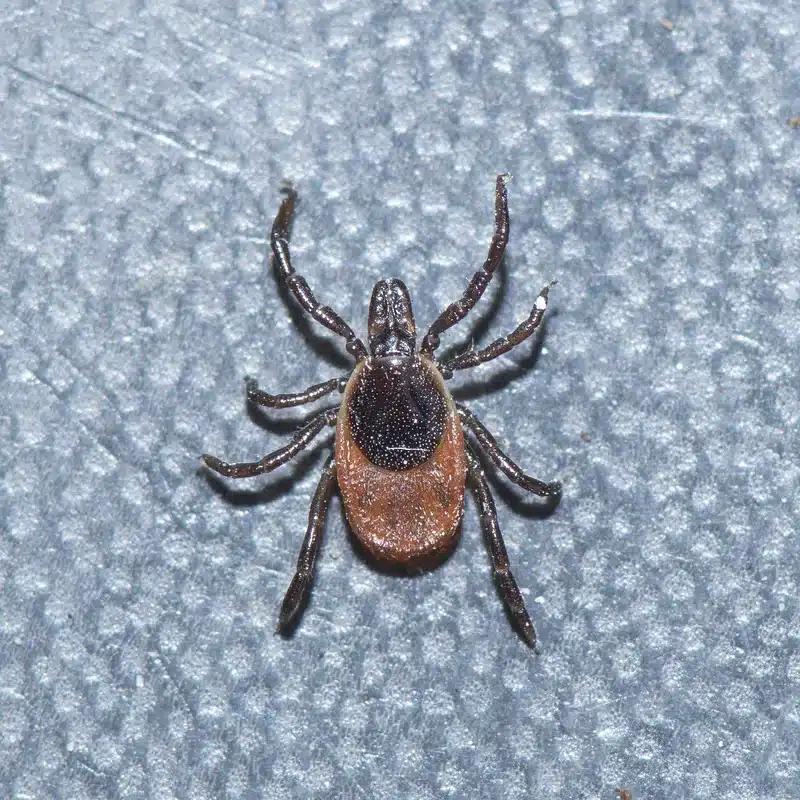
| Black-legged (deer) tick | Small, dark brown to black shield; female has a red-orange body | Lyme, anaplasmosis, babesiosis, Powassan | Nymphs May to Aug; adults Oct to May on warm days |
| American dog tick | Larger, brown with white or gray markings on the shield | Rocky Mountain spotted fever, tularemia | Adults April to early Aug |
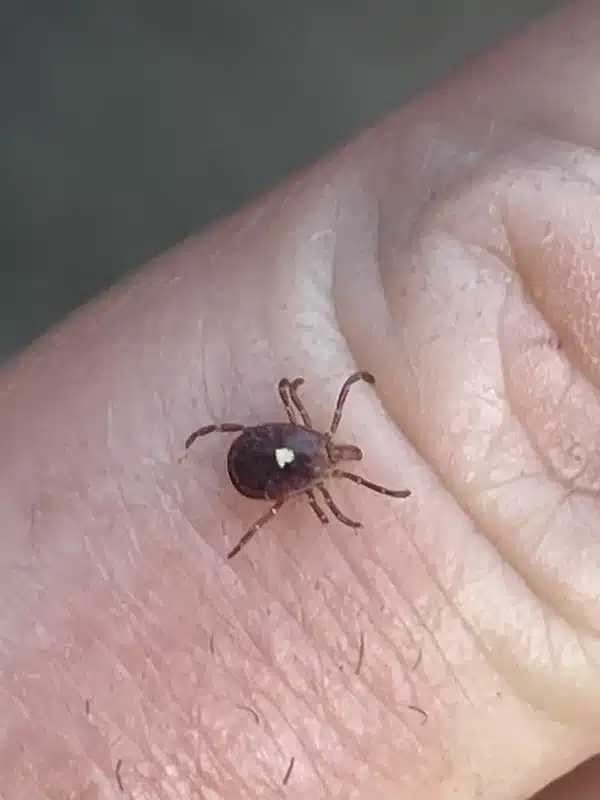
| Lone star tick | Female has one white dot on her back | Ehrlichiosis, STARI, alpha-gal syndrome | Adults April to late Aug; nymphs May to early Aug |
| Brown dog tick | Plain reddish-brown, no markings | Mostly dog diseases; rarely bites people | Year-round, can live indoors |
| Gulf Coast tick | Brown with silver-white lines on the shield | Rickettsia parkeri spotted fever | Not common in Maryland |
| Asian longhorned tick | Tiny, plain reddish-brown, about 2.5 mm | Not yet linked to U.S. human illness | Warm months; mostly on deer and livestock |
Black-legged Ticks (Deer Ticks)
Black-legged ticks are the main carriers of Lyme disease in Maryland. They measure about 3 mm when unfed and can grow to 10 mm after a blood meal. Adults come out in fall and stay active through winter and early spring on any day warm enough, which is why people find them on deer-hunting trips in November.
The most dangerous stage is the nymph, which is active from May through August. Nymphs are only about 2 mm, roughly the size of a sesame seed, making them very hard to spot.
The University of Maryland Extension says nymphs pose the highest risk because they are so small that people often miss them. Their tiny size, combined with peak activity during warm weather when people spend more time outside, creates ideal conditions for disease spread.
American Dog Ticks
American dog ticks are larger than deer ticks, measuring about 5 mm unfed and growing up to 15 mm when full. They are the main carriers of Rocky Mountain spotted fever in Maryland, along with tularemia and tick paralysis.
These ticks are most active from April through early August. Adults prefer to attach to larger hosts like dogs and people, while nymphs feed on small rodents from May through July.
Lone Star Ticks
Yes, there are lone star ticks in Maryland, and they bite people at all life stages. Females are easy to spot by the single white dot on their backs. They measure 4 to 6 mm when unfed and are active from April through late August.
What makes lone star ticks stand out is their link to alpha-gal syndrome, a condition that can make you allergic to red meat. They also spread ehrlichiosis. These ticks have been moving north and are now found across Maryland, including western counties.
Other Ticks Found in Maryland
Brown dog ticks are the one Maryland tick that can live its whole life inside a house. They feed almost only on dogs, so an indoor problem usually starts with a dog that picked them up at a kennel or on a trip. They rarely bite people.
Gulf Coast ticks are a southern species. UMD Extension calls them not very common in Maryland. They like open grassland and coastal uplands and can carry Rickettsia parkeri, a milder cousin of Rocky Mountain spotted fever.
Asian longhorned ticks are the newcomer. The first one in Maryland was confirmed on a deer in Washington County in 2018. They are small and plain reddish-brown, about the size of a sesame seed as adults.
According to University of Maryland Extension, female Asian longhorned ticks can lay eggs without mating, up to 2,500 eggs each in late spring and early summer. That is how one tick can fill a pasture. They mostly feed on wildlife and livestock. They will bite pets and people, but researchers don’t know yet if they can spread U.S. diseases to humans.
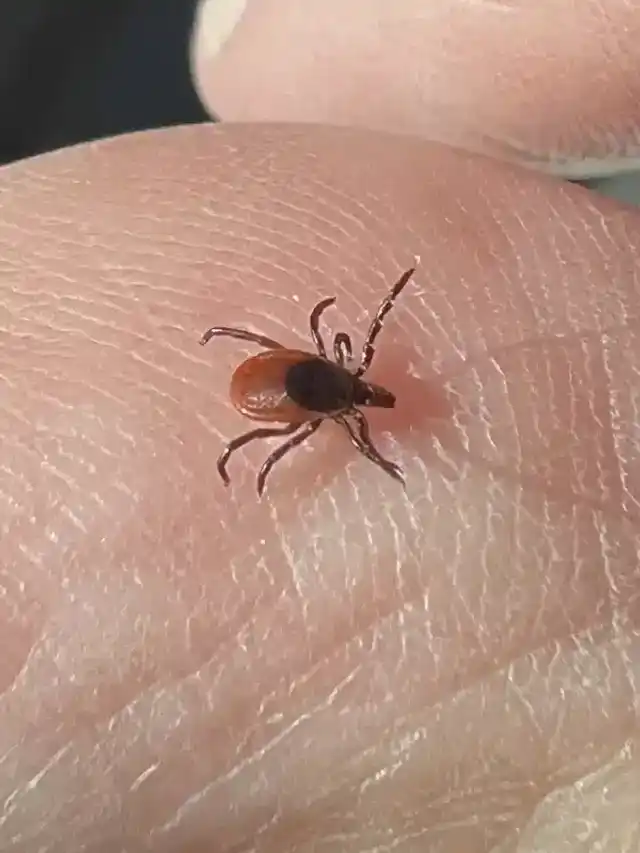
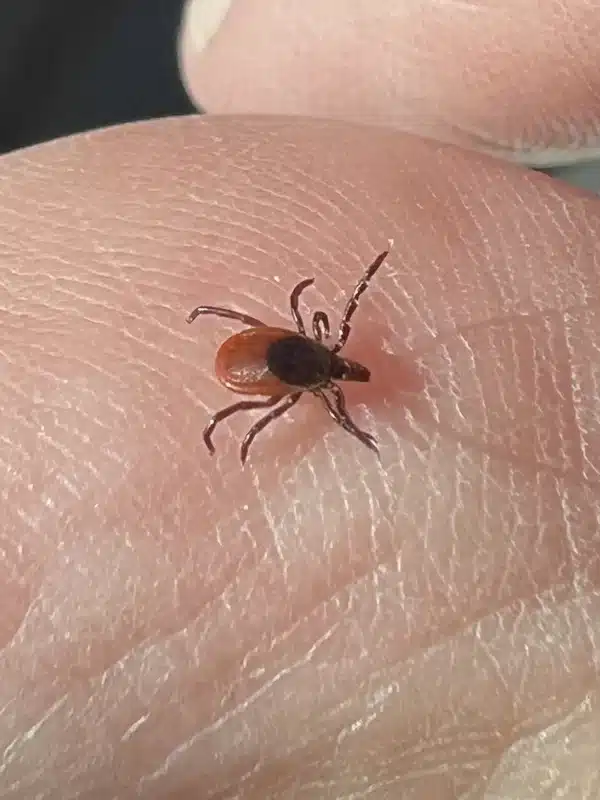
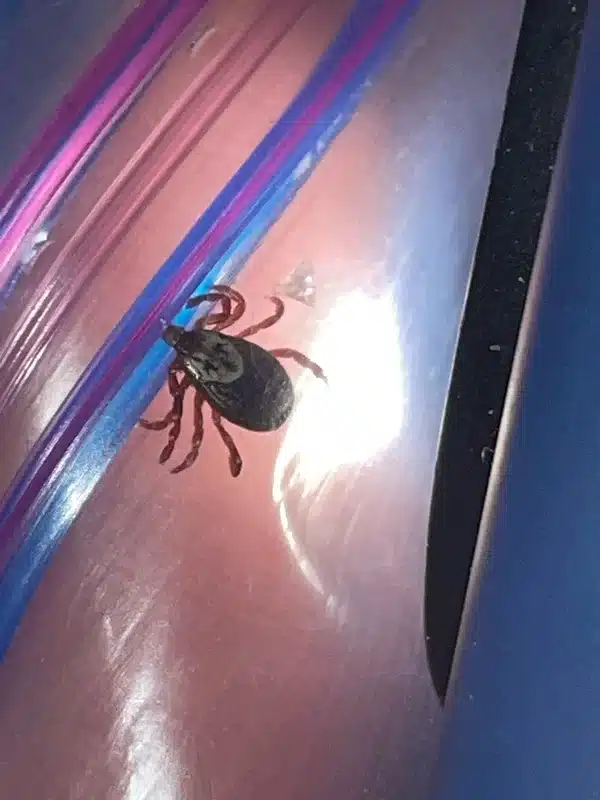
The photos below show the three ticks you’re most likely to pull off yourself or your kids in Maryland.


When Is Tick Season in Maryland?
Tick season in Maryland peaks from April through September. The riskiest stretch is May through August, when deer tick nymphs are out. They are about the size of a sesame seed, so most people never see the one that bites them. According to Southern Maryland reporting on tick season, that is why bite risk peaks in late spring and early summer.
It never fully shuts off, though. Adult deer ticks come out in the fall and stay active through the winter on any day that gets to about 40 degrees. Here is how the year breaks down, using the activity months from UMD Extension:
| Months | What’s active | Risk to people |
|---|---|---|
| December to February | Adult deer ticks on mild days | Low, but not zero |
| March to April | Adult deer ticks; dog and lone star adults start in April | Rising |
| May to August | Deer tick nymphs, lone star nymphs and adults, dog tick adults | Highest |
| September | Larvae; lone star adults winding down | Moderate |
| October to November | Adult deer ticks at their fall peak | Moderate, especially for hunters and hikers |
So “tick season” depends on the tick. Summer is lone star and dog tick season. Fall and early spring are adult deer tick season. If you only check yourself from June to August, you miss the adult deer ticks that hunters and leaf-rakers pick up in October and November.
Tick Identification: Life Stages and Size
All ticks go through four life stages: egg, larva, nymph, and adult. Knowing these stages helps you figure out what you’re looking at and how much risk it poses.
Larvae have six legs and are about 1 mm, roughly the size of a poppy seed. They stay in leaf litter and feed on small rodents. Larvae usually don’t spread disease because they haven’t had a chance to pick up germs yet.
Nymphs have eight legs and measure 2 to 3 mm, about the size of a sesame seed. They live in leaf litter and low plants. Nymphs pose the highest risk to people because they are so hard to spot.
Adults also have eight legs and range from 3 to 5 mm unfed, about the size of an apple seed. When full of blood, females can swell to 10 mm or more. Adults are easier to see but still spread serious diseases.
How to Tell Maryland Ticks Apart
For an unfed adult, look at the back first:
- One white dot on a brown body: female lone star tick.
- White or gray streaks on a larger brown tick: American dog tick.
- Red-orange body with a black shield, or a tiny all-dark tick: black-legged (deer) tick.
- Plain reddish-brown, no markings: brown dog tick or Asian longhorned tick. Where you found it helps. Inside with the dog points to brown dog ticks. Out in a pasture or on deer points to longhorned ticks.
Nymphs are harder, because most of them are just small and brown. If it came off a person between May and August and is the size of a sesame seed, treat it like a deer tick nymph and save it in a sealed bag in case you get sick. Our tick identification chart has side-by-side photos. And if the “tick” is bright red and running across a windowsill, it is probably a clover mite, not a tick.
Tick-Borne Diseases in Maryland
The diseases carried by ticks in Maryland can have lasting health effects. Knowing the symptoms helps you get medical care fast.
Lyme Disease
Lyme disease is the most common tick illness in Maryland. The state recorded more than 3,000 cases in 2024, according to the Maryland Department of Health. Black-legged tick nymphs and adults spread it.
The Maryland Department of Health reports that some western Maryland counties now show tick infection rates around 40%. This makes Maryland a hotspot for Lyme disease, with rates much higher than the national average in some areas.
Early signs include fever, chills, headache, fatigue, and often a “bull’s-eye” rash. If left untreated, Lyme disease can cause joint, heart, and nervous system problems.
Rocky Mountain Spotted Fever
Rocky Mountain spotted fever comes mainly from American dog ticks. While less common than Lyme, it can be fatal without quick treatment. Signs include sudden fever, headache, and muscle aches, often followed by a spotted rash. Learn more in our American dog tick guide.
Ehrlichiosis
Lone star ticks spread ehrlichiosis, which causes flu-like signs including fever, headache, and muscle aches. Cases tend to cluster in southern Maryland and Eastern Shore wooded areas where lone star tick numbers are highest.
Alpha-Gal Syndrome
Alpha-gal syndrome is a delayed allergic response to red meat triggered by lone star tick bites. The reaction can happen 3 to 6 hours after eating red meat and may include hives, swelling, and stomach problems. More cases are being found as awareness grows.
High-Risk Areas for Ticks in Maryland
Not all outdoor areas carry the same tick risk. Knowing where ticks are most likely to be helps you take the right steps.
Western Maryland
Western Maryland’s forested ridges in Allegany and Garrett counties have some of the highest tick activity in the state. The Maryland Department of Natural Resources found that about 40% of collected ticks in these areas carry Lyme disease.
Suburban Areas
The suburban Piedmont region, including Carroll and Howard counties, creates ideal edge habitat where ticks do well. These areas combine deer paths with landscaping features like barberry shrubs that give ticks good cover. In Howard County, the wooded slopes around Patapsco Valley State Park are a big reason our tick and mosquito control in Ellicott City focuses on the line where the lawn meets the woods, not just the open grass.
Southern Maryland and Eastern Shore
Sandy soils and pine woods in southern Maryland and the Eastern Shore create good conditions for lone star ticks. These areas also support the small mammals that serve as tick hosts during their early life stages.
Micro-Habitats
Within any area, ticks gather in specific spots including leaf litter, stone walls, woodpiles, overgrown lawn edges, and tall grasses. These spots give them the moisture and shelter they need while putting them in position to latch onto passing hosts.

Proper Tick Removal
If you find a tick on your skin, proper removal matters. The longer a tick stays attached, the higher the chance of disease spread.
Use fine-tipped tweezers to grasp the tick as close to your skin as you can. Pull upward with steady, even pressure. Don’t twist or jerk. Avoid crushing the tick’s body because this can push infected fluids into the bite.
After removal, clean the area and your hands with soap and water or alcohol. You can get rid of the tick by placing it in alcohol, sealing it in a bag, wrapping it in tape, or flushing it.
Never use matches, nail polish, or petroleum jelly to try to remove a tick. These methods can cause the tick to release more infected saliva into your skin.
Watch the bite site for 30 days. Look for signs like fever, rash, or flu-like illness. Contact your doctor if you notice anything unusual. Our tick removal guide walks through each step, plus what to do with a tick stuck on your dog.
Tick Prevention for Maryland Residents
The best defense against tick diseases is stopping bites before they happen. Several methods work together to cut your risk.
Clothing
Wear light-colored clothes so you can spot ticks. Long sleeves and pants create barriers. Tuck pants into socks for extra protection.
Repellents
Use EPA-registered repellents with DEET, picaridin, IR3535, or oil of lemon eucalyptus at 30% or higher concentration. For children under 3, avoid products with oil of lemon eucalyptus or PMD. Always follow label directions.
CDC research shows that DEET and picaridin repellents can provide 7 to 10 hours of protection against tick attachment when used as directed.
Permethrin
Treat clothing and gear with 0.5% permethrin spray, which kills ticks on contact. Treated clothing stays effective through several washes.
On the Trail
Stay in the center of paths and avoid brushing against plants where ticks wait for hosts. Sit on rocks rather than logs when you can. Avoid walking through tall grass or leaf litter.
Mowing and Cleanup
Keep grass cut to less than 4 inches. Remove leaf litter and brush from around your home. Clear tall weeds and brush piles where small mammals shelter.
Dry Barriers
Create a 3-foot strip of gravel or wood chips between your lawn and wooded areas. This dry zone discourages ticks from crossing into your yard.
Deer Management
Use fencing or deer-resistant plants to keep deer away from your yard. Deer are main hosts for adult ticks, so less deer activity means fewer ticks.
Habitat Changes
The University of Maryland Extension says smart landscaping combined with personal protection works better than just spraying the whole yard.
These prevention steps cover the basics. Here’s a quick list to keep handy.
- Clothing: Light colors, long sleeves and pants, tuck pants into socks
- Repellents: DEET or picaridin at 30% or higher
- Permethrin: Treat clothing and gear before outdoor activities
- Trails: Stay centered, avoid brushing against plants
- Yard: Mow often, create dry barriers, manage deer access
- After outdoors: Shower within 2 hours, do a full body check, dry clothes on high heat for 10 minutes
Post-Outdoor Tick Checks
Thorough tick checks after being outdoors are a must. You can pick up ticks even in areas where you don’t expect them.
Shower within two hours of coming inside when you can. Warm water and scrubbing help remove ticks that haven’t attached yet. Put outdoor clothes in the dryer on high heat for 10 minutes to kill any hidden ticks.
Check your whole body, paying special attention to your scalp and hairline, armpits, waistband area, behind the knees, groin area, and around the ears. For children, also check behind the ears and along the hairline.
Don’t forget to check your pets after they’ve been outside. Ticks can move from pets to people, and pets can bring ticks into your home.
Professional Tick Control for Maryland Properties
While personal protection matters, pro tick control can cut tick numbers on your property. Licensed techs can apply targeted treatments that create barriers around your home.
Pro treatments focus on the transition area between your maintained lawn and natural plants, where ticks are most likely to meet people. We do targeted treatments during peak tick activity in spring and fall.
Our approach includes granular treatments in March and November when tick numbers spike, plus monthly sprays from April through October along the areas where landscaping meets natural terrain. We also use tick tubes with permethrin-treated cotton that mice collect for nesting. This kills young ticks feeding on these hosts. Our mosquito and tick service starts at $75 per visit, and it goes up with yard size. A seasonal plan brings the per-visit cost down.
Daren, one of our registered technicians, says the hardest spot in a tick yard is often the kids’ play area. He can’t spray a slide or swing set directly, so he backs up to it and sprays out, away from it. That leaves the shaded ground under it untreated, and ticks don’t care where the spray stopped. On those yards he now spreads a granular product around the play set instead. He’s also kicked apart leaf piles left up against a house and found dog ticks all through them. Clearing those piles does more than most homeowners expect, and it makes every treatment work better.
For areas like Silver Spring, Rockville, and College Park, pro treatment is especially helpful because suburban growth creates ideal habitat for multiple tick species.


Special Notes for Maryland Pet Owners
Pet owners face extra challenges because dogs and cats easily pick up ticks and bring them inside. Year-round vet tick prevention products are key.
After walks or outdoor time, comb through your pet’s fur. Pay close attention to the ears, neck, and areas where the collar sits. Check between toes and around the tail where ticks often attach.
Keep dogs out of tall grass when you can. Check our tick identification guide so you can recognize the different species you find on your pets.
Brown dog ticks can set up inside homes, especially heated ones during winter. If you think ticks are living indoors, pro help may be needed because these problems are hard to fix without the right treatment.
Pets can also get tick diseases, including Lyme disease and ehrlichiosis. Watch for signs like low energy, loss of appetite, or limping, and call your vet if you notice changes.
Outdoor Activities and Tick Exposure
Hikers, hunters, trail runners, and other outdoor fans face higher tick exposure. Knowing how to protect yourself during these activities helps you enjoy Maryland’s outdoor spaces.
For hiking and trail running, permethrin-treated socks and gaiters give great protection for your lower legs where most tick contact happens. Stay on well-kept trails when you can.
Turkey and deer hunters spend long hours in prime tick habitat during peak seasons. Use the “tick check buddy system” to spot ticks in hard-to-see areas. Check during breaks rather than waiting until the end of the day.
Campers and fishers near tidal creeks should know that ticks wait on waist-high marsh grass, especially around popular spots where people brush against plants.
Emerging Tick Threats
Maryland’s tick picture has shifted in the last decade, and three changes stand out.
Lyme cases are up. The state went from about 2,000 reported cases a year earlier in the decade to more than 3,000 in 2024. Better testing explains some of that. Not all of it.
Lone star ticks are moving west. They used to be a southern Maryland and Eastern Shore problem. Now they turn up in western counties too, which brings ehrlichiosis and alpha-gal syndrome to places that didn’t see much of either.
Asian longhorned ticks are established. Since the first Maryland find in 2018, they have spread through deer and livestock areas. So far they matter more to farmers than to doctors, but UMD researchers are still watching whether they can carry human disease here.
One tick can also carry more than one germ. A deer tick can pass Lyme and anaplasmosis or babesiosis in the same bite, and the symptoms overlap. If you get sick after a bite, tell your doctor about the tick so they test for more than Lyme.
When to Call a Pro
At Better Termite & Pest Control, our licensed techs can treat your property’s tick zones, set up seasonal barriers, and help you build a year-round prevention plan. With 58+ years in the DC metro area and 1800+ reviews, we know the local tick species and what works against them.
We’ve removed nine of the harshest chemicals from our programs and use products we’d use in our own homes.
If you have questions about tick ID, prevention, or pro tick control for your Maryland property, call us at 703-683-2000 or email info@bettertermite.com. We’ll check your property and put together a plan that fits your needs.