
Yes, there are ticks in Virginia, and plenty of them. The Virginia Department of Health counts 16 tick species in the state. Only a few bite people often: the blacklegged (deer) tick, the lone star tick, and the American dog tick. The Gulf Coast tick and the newer Asian longhorned tick round out the list.
I’ve spent five years as a licensed technician treating yards across Northern Virginia, and tick questions come up all summer long. Below, I’ll walk you through which ticks live where in Virginia, when they’re active, and what the state’s disease numbers actually show.
The Ticks You’ll Find in Virginia
Here’s a quick look at the ticks that matter most for people and pets in Virginia. Tap any species name for photos and a full ID guide in our tick library.
| Tick | Where in Virginia | Most Active | Main Health Concerns |
|---|---|---|---|
| Lone star tick | Statewide, most common below 1,600 ft | Late winter through summer | Ehrlichiosis, alpha-gal syndrome, STARI |
| Blacklegged (deer) tick | Coast, Piedmont, and mountains; suburban woods with deer | Nymphs: late spring to early summer. Adults: fall through early spring | Lyme disease, anaplasmosis, babesiosis |
| American dog tick | Statewide, heavier in the west | Early spring to mid-summer | Rocky Mountain spotted fever, tularemia |
| Gulf Coast tick | Coastline, with new pockets in northern VA | April to September, peak in June | Rickettsia parkeri spotted fever |
| Asian longhorned tick | Western half, Blue Ridge, and northern VA | Spring through summer | Mainly a livestock and pet pest so far |
| Brown dog tick | Kennels and homes with dogs | Year-round indoors | Rocky Mountain spotted fever |
1. Lone Star Tick
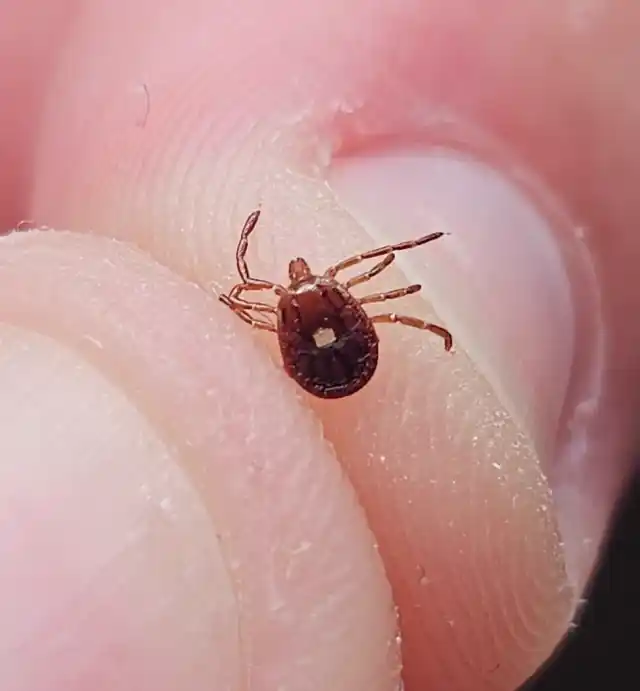
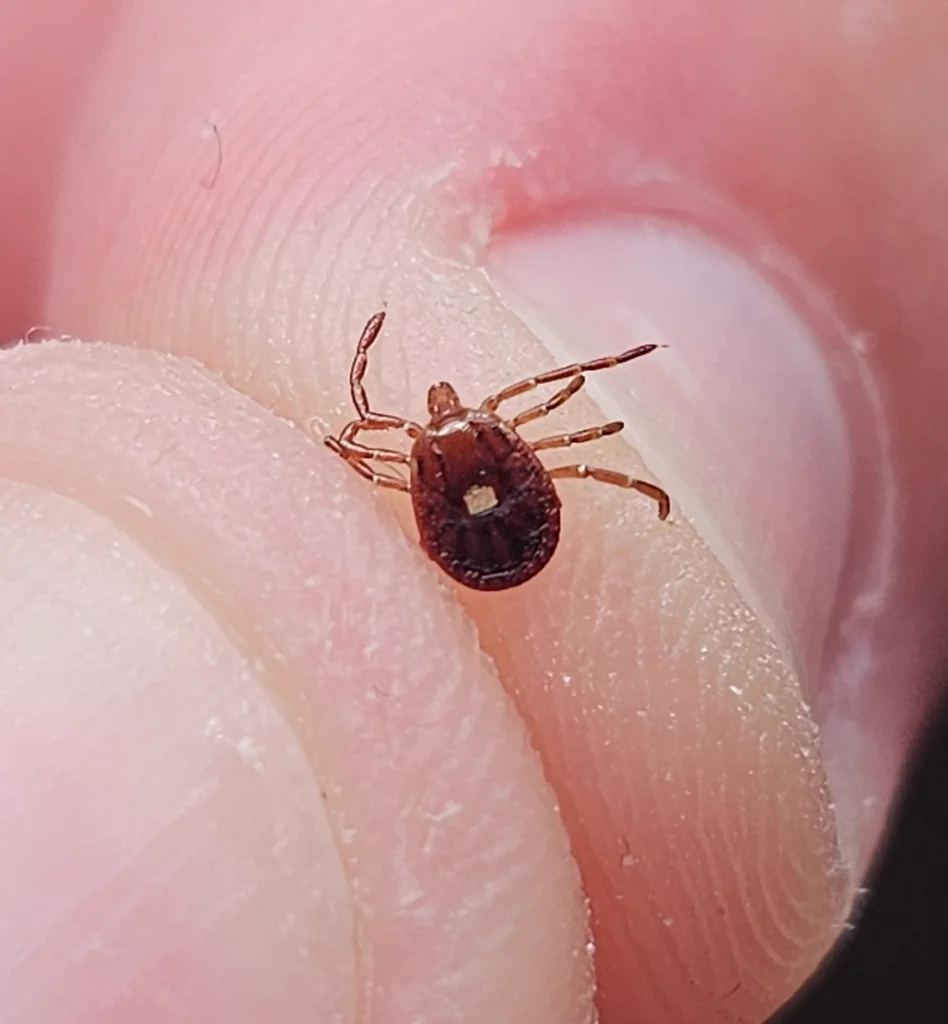
The lone star tick is the tick most Virginians run into. Adult females are easy to spot because of the single white dot on their backs. They’re aggressive, too. Instead of waiting on a grass blade, they’ll crawl toward you.
According to Fairfax County’s health department, it’s the most commonly found tick in the county. VDH says it lives throughout Virginia, usually below about 1,600 feet. So it’s thickest in the Piedmont, Hampton Roads, and the DC suburbs.
Lone star ticks spread ehrlichiosis, tularemia, and STARI. More importantly for many Virginians, their bites are linked to alpha-gal syndrome, the red meat allergy. More on that below.
2. Blacklegged Tick (Deer Tick)
The blacklegged tick is the one behind Lyme disease. VDH lists it in the coastal, Piedmont, and mountain regions. It’s most common in suburban forests with lots of deer, which describes a huge share of Northern Virginia.
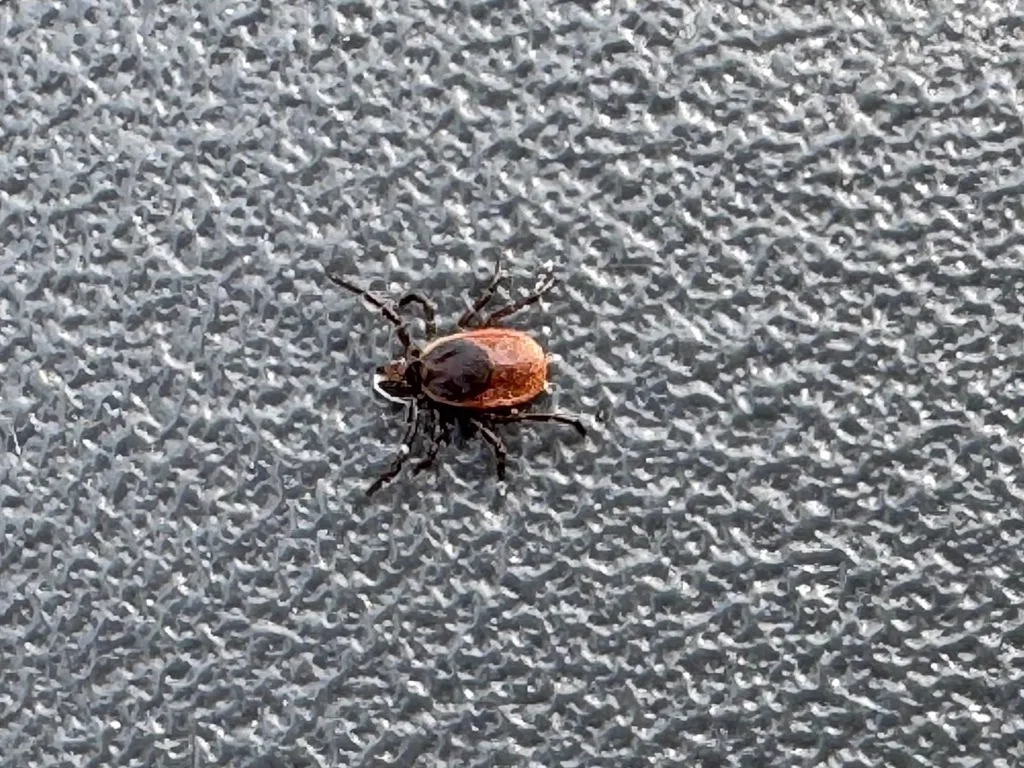
The nymphs are the real problem. They’re about the size of a poppy seed and active in late spring and early summer. Adults bite in the fall, on warm winter days, and in early spring. Besides Lyme, deer ticks can carry anaplasmosis, babesiosis, Borrelia miyamotoi, and Powassan virus.
3. American Dog Tick
The American dog tick is larger, with a brown body and white or cream markings on its shield. VDH says it’s found statewide, and Virginia Tech notes it’s heaviest west of the Blue Ridge. Adults are out from early spring to mid-summer.
These ticks love grassy fields, trail edges, and leaf litter. They’re the main carrier of Rocky Mountain spotted fever in the state. They can also spread tularemia and cause tick paralysis in dogs.
4. Gulf Coast Tick
The Gulf Coast tick is more common along Virginia’s coastline. However, it’s been moving inland. A 2018 peer-reviewed study found newly established populations in southeastern and northern Virginia. Adults were collected from April through September, with a peak in June. It carries Rickettsia parkeri, a milder form of spotted fever.
5. Asian Longhorned Tick
The Asian longhorned tick is the newcomer. Virginia Tech Extension says it was found in Virginia in 2018. It’s now mostly in the western half of the state, along the Blue Ridge, and in the north. So far, no human pathogens have turned up in U.S. populations. However, it can swarm livestock and pets in huge numbers because females reproduce without mating.
6. Brown Dog Tick
The brown dog tick is the one tick that can live and breed indoors. It usually shows up in homes and kennels with dogs. VDH names it, along with the American dog tick, as a Rocky Mountain spotted fever carrier in Virginia.
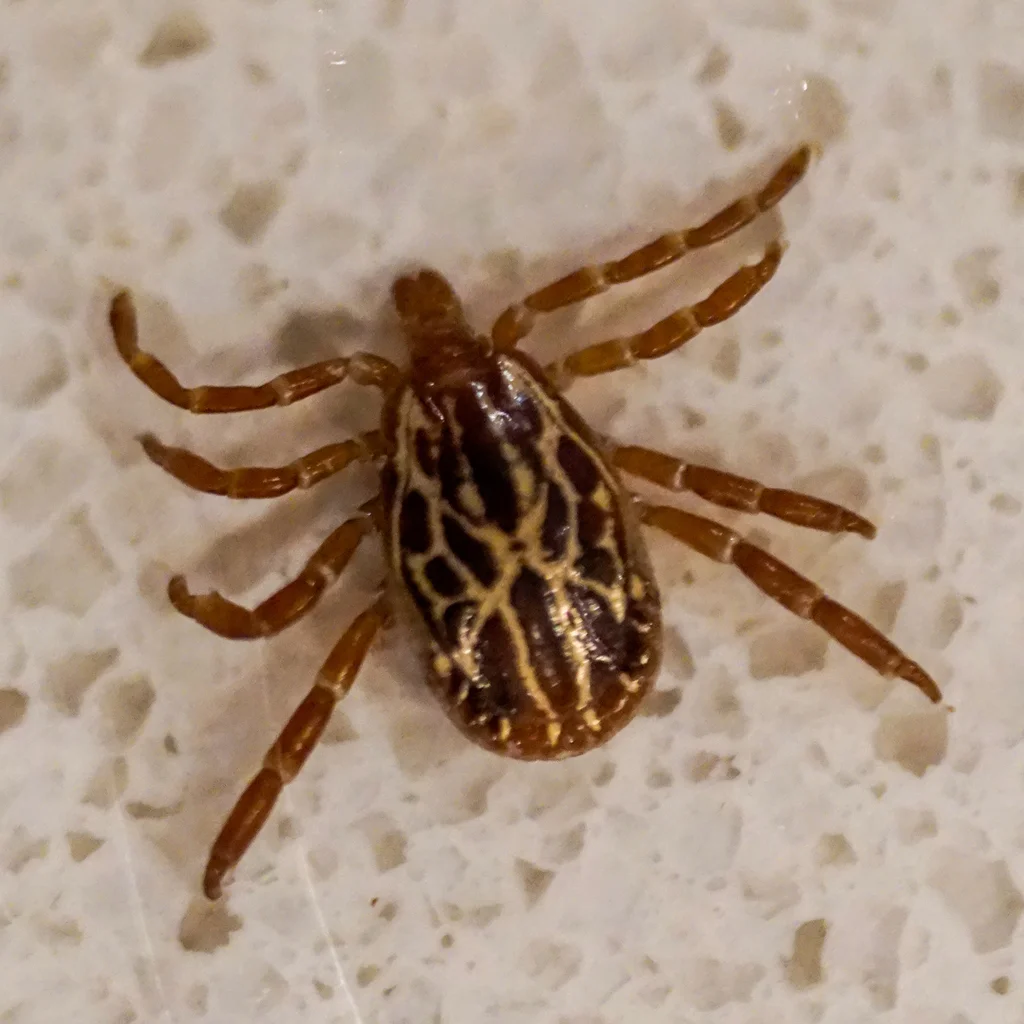
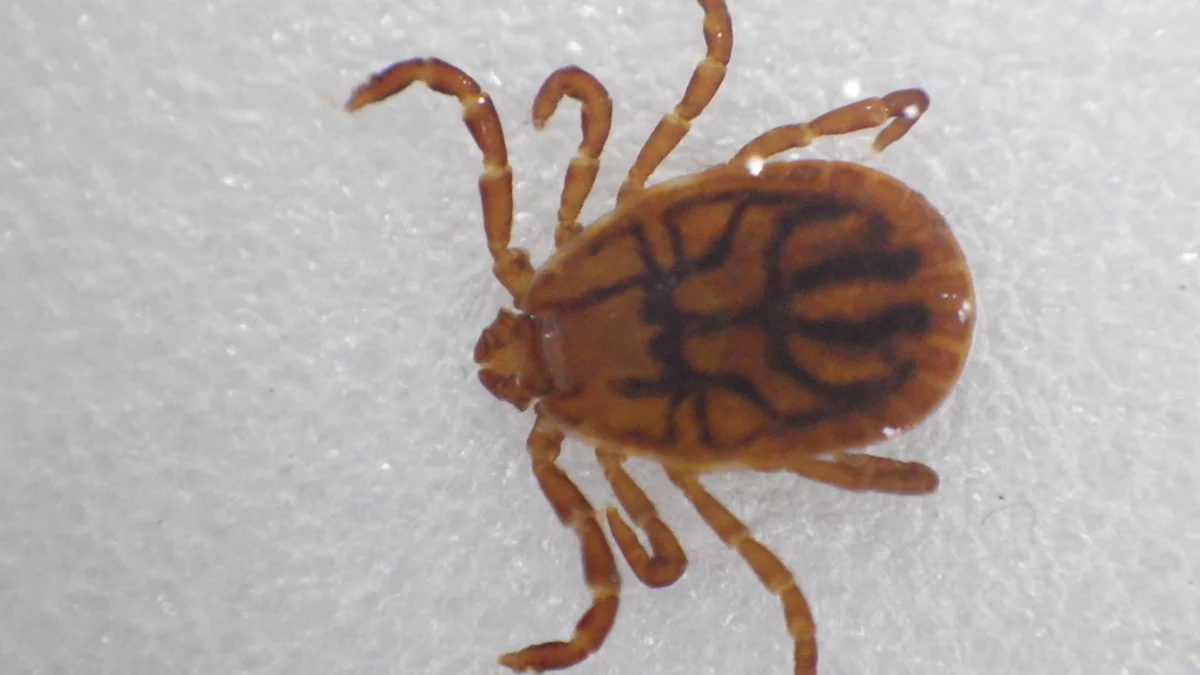

If you need more help telling them apart, our tick identification chart compares sizes and markings, and our guide to what a tick looks like covers the life stages. Also, keep in mind that tiny red clover mites fool a lot of people. Customers often think clover mites are ticks, because both are arachnids and look alike.
Where Ticks Are Worst in Virginia
Ticks live in every part of Virginia. That said, the mix of species and diseases changes as you move across the state.
- Northern Virginia: Wooded suburbs with lots of deer create perfect deer tick habitat. VDH says Lyme disease is most common in the suburban northern and western parts of the state. Lone star ticks are also everywhere here.
- Shenandoah Valley and the west: Deer ticks, American dog ticks, and Asian longhorned ticks are all common. Western counties like Frederick share the same high Lyme pressure. If you live near Stephenson, you’re in the thick of it.
- Piedmont and Southside: Lone star ticks dominate. This is also where alpha-gal syndrome rates are highest.
- Hampton Roads and the Eastern Shore: Lone star ticks and Gulf Coast ticks are the big ones. The Eastern Shore also had locally acquired babesiosis cases in 2023.
In any region, ticks gather in the same kinds of spots in a yard. Think shaded edges where lawn meets woods, leaf litter, tall grass, stone walls, woodpiles, and overgrown shrub beds.
The worst tick property I’ve seen is a home we still service in Fort Hunt, in Fairfax County. It has a creek and thick woods behind the house, and the yard gets really overgrown. There’s a lot of deer and fox traffic through there, too.
One summer I walked off that property and had 15 or 16 ticks on me by the time I got home. That was June through August, which is peak time for deer tick nymphs. To this day, I lift my pant legs and check when I leave that house, because I know they’re there like clockwork. When you get that much wildlife and that much cover, ticks are going to be there.
That yard is extreme, but the pattern holds across Virginia. Woods, water, wildlife, and tall cover add up to ticks. If your property checks two or three of those boxes, it’s worth a closer look.
When Is Tick Season in Virginia?
Ticks in Virginia are most active from March through October. However, there’s no true off-season. Fairfax County health officials note that blacklegged ticks are active on warm winter days above 40°F. Here’s how a typical year plays out.
Adult deer ticks are out on mild days. Lone star adults start moving as the ground warms. This is a good time to clear leaf litter before the season ramps up.
Nymphs of all the major species start questing. American dog ticks are out in grassy areas. VDH says Lyme disease transmission peaks in May and June.
This is the worst stretch for bites. Tiny deer tick nymphs are at their peak, lone star ticks are everywhere, and Gulf Coast ticks peak in June.
Lone star larvae hatch in big clusters, often called “seed ticks.” One brush against a clump can leave dozens of tiny bites.
Adult deer ticks become active again in the fall and stay out on any warm winter day. Hunters and hikers should keep checking.
Tick-Borne Diseases in Virginia
Ticks in Virginia spread more disease than most people realize. The VDH 2023 annual report is the latest full-year data from the state. Here’s what it shows.
| Disease | 2023 Virginia Cases | Main Tick |
|---|---|---|
| Lyme disease | 1,747 | Blacklegged tick |
| Ehrlichiosis and anaplasmosis | 132 | Lone star tick (ehrlichiosis), blacklegged tick (anaplasmosis) |
| Spotted fever rickettsiosis | 92 | American dog tick, Gulf Coast tick, brown dog tick |
| Babesiosis | 11 | Blacklegged tick |
| Tularemia | 4 | Lone star tick, American dog tick |
Lyme Disease
Lyme disease is by far the most common. In 2023, Virginia reported 1,747 cases, compared to a previous five-year average of about 1,000. Part of that jump comes from a 2022 change in how cases are counted, so it’s not all new spread. Still, the long-term trend is clearly up.
Early signs include fever, headache, fatigue, and often a bull’s-eye rash. Left untreated, Lyme can affect the joints, heart, and nerves. I’ve had family members deal with Lyme. When it isn’t caught early, it’s a long, hard road.
VDH’s Lyme disease fact sheet says nymphs cause most infections because they’re so small and easy to miss. Transmission peaks in May and June but can happen year-round. Fairfax County adds a telling detail: only 23% of confirmed tick-borne disease patients in the county remembered finding a tick before they were diagnosed. In other words, most people never see the tick that made them sick.
Alpha-Gal Syndrome
Alpha-gal syndrome is a delayed allergy to red meat triggered by lone star tick bites. Reactions often hit 3 to 6 hours after eating beef or pork. Virginia is one of the hardest-hit states. A CDC report on alpha-gal found that Bedford County, Virginia had 1,511 suspected cases from 2017 to 2022. That’s the second-highest count of any county in the nation.
Spotted Fever and Ehrlichiosis
Spotted fever rickettsiosis cases rose to 92 in 2023, up from 69 the year before. Almost half of those patients were 60 or older. Ehrlichiosis comes mainly from lone star ticks and causes fever, headache, and muscle aches. Both respond well to antibiotics when caught early, so don’t wait on symptoms after a bite.
Rare but Serious: Heartland and Powassan
Heartland virus and Powassan virus are rare, but both have a Virginia connection. The CDC documented a fatal Heartland virus case in 2021 that was likely picked up on a Virginia property. Powassan virus is carried by deer ticks. Neither one has a specific treatment, which is one more reason to prevent bites in the first place.
How to Protect Yourself From Virginia Ticks
You can’t avoid ticks entirely in Virginia. However, a few habits cut your risk a lot.
- Use repellent. Choose an EPA-registered product with DEET, picaridin, or IR3535, and follow the label.
- Treat your gear. Permethrin-treated clothing and shoes kill ticks on contact.
- Dress for it. Light colors make ticks easier to spot. Tuck pants into socks in tall grass.
- Stay in the middle of trails. Ticks wait on grass and brush at the edges.
- Skip the leaf piles. Sit on rocks or benches, not logs or leaf litter.
- Check during breaks. Don’t wait until the end of the day to look.
- Check yourself. Look at your scalp, behind the ears, armpits, waistband, and behind the knees.
- Dry your clothes on high heat. Ten minutes in the dryer kills ticks hiding in your clothes.
- Check your pets. Look at ears, necks, and between toes. Dogs carry ticks right onto the couch.
If you do find an attached tick, grab it close to the skin with fine-tipped tweezers and pull straight up. Don’t twist it, burn it, or smother it with petroleum jelly.
Professional Tick Control in Northern Virginia
Personal habits protect you on the trail. At home, though, the goal is to knock down the number of ticks where your family actually spends time. That’s what our tick control program is built around.

Here’s how it works:
- A property walk first. Your technician finds the hot spots: wood lines, shaded beds, fence lines, stone walls, and ground cover.
- Granular applications in spring and fall. These typically go down in March and November to hit peak tick activity in leaf litter.
- Targeted sprays from April through October. We treat the band where your lawn meets natural areas, timed around blooming plants.
- Tick tubes. These hold treated cotton that mice carry back to their nests. That knocks out young ticks before they grow up.
Tick service runs on the same schedule as our mosquito control program, so most families bundle the two. We service homes across the region, from Fairfax and Gainesville out to Remington.
All the products we use are EPA approved and have passed through our internal research team, which removed nine of the harshest products from our programs. Each one is something we’d feel comfortable using in our own homes.
The Bottom Line
So, are there ticks in Virginia? Absolutely. Lone star ticks, deer ticks, and American dog ticks are the big three, and they’re active most of the year. Lyme disease is common in Northern and western Virginia, and alpha-gal is a real concern across the Piedmont.
Better Termite & Pest Control has been protecting homes in the DC area for 58 years, and we’ve earned 1800+ reviews along the way. If ticks are taking over your yard, call us at 703-683-2000 or email info@bettertermite.com. Our licensed technicians will walk your property and build a plan that fits it.