Dogwood Borer Identification Guide
Synanthedon scitula
The dogwood borer is a wasp-like moth. Its larvae tunnel under the bark of dogwoods and other trees. It is one of the worst pests of yard dogwoods in the eastern U.S.
Taxonomy
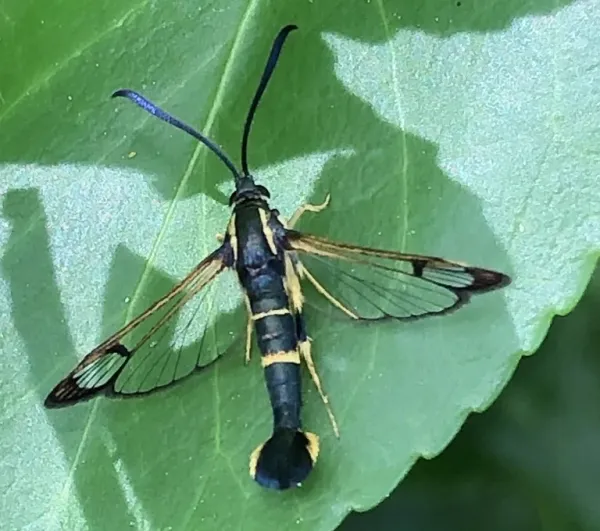
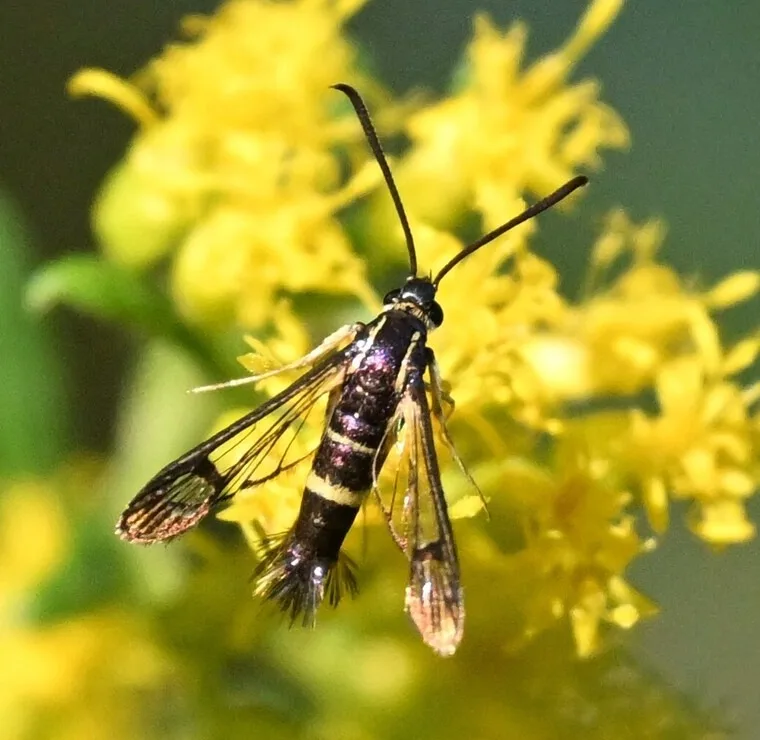
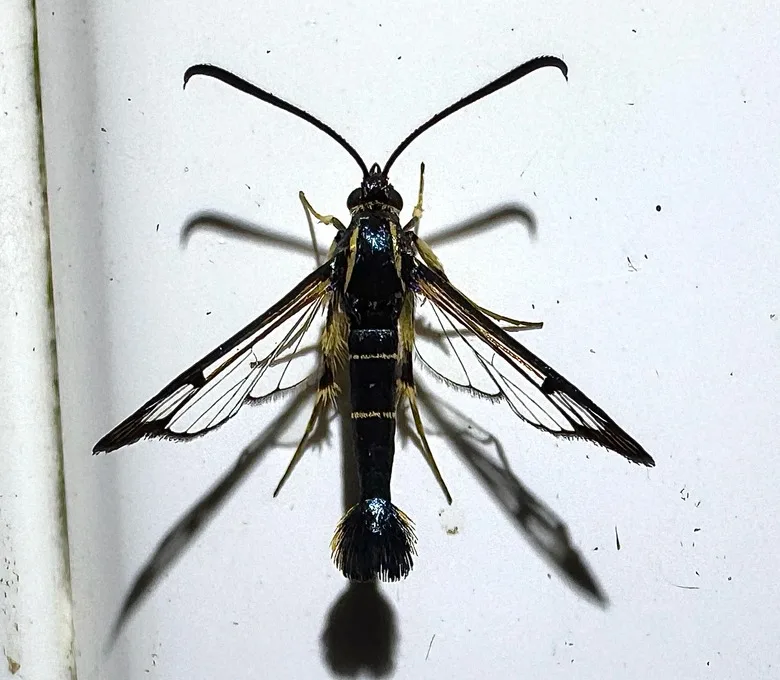
Dogwood Borer Coloration
Common color patterns to help identify dogwood borer
Dogwood Borer
Seasonal Activity
When dogwood borer are most active throughout the year

Where Dogwood Borer Are Found
Hover over states to see their names. Green regions indicate where dogwood borer have been reported.
Dogwood Borer Identification Guide
Physical Characteristics
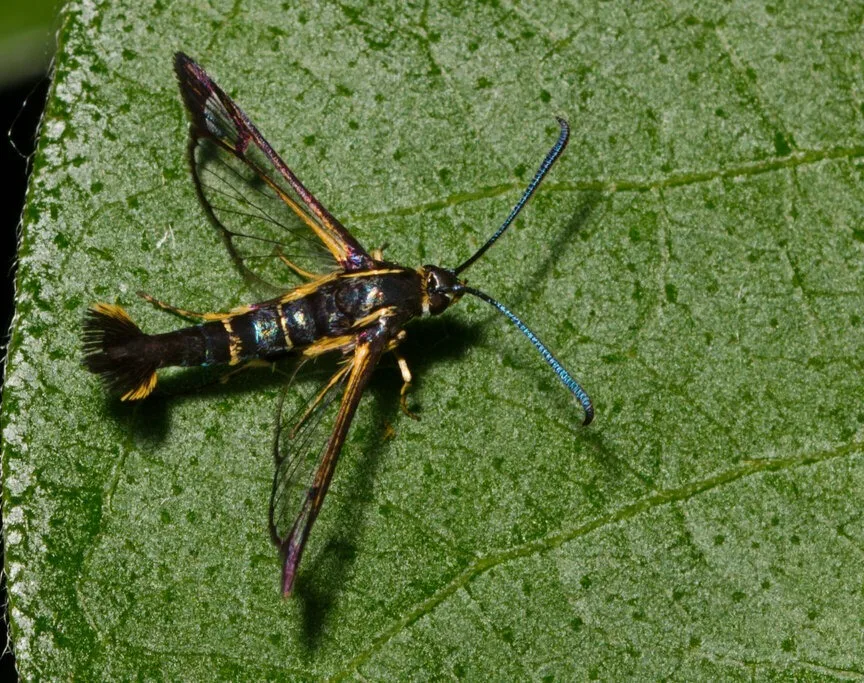
The dogwood borer is a clearwing moth in the family Sesiidae. At first glance, most people think it is a small wasp. This disguise protects the moth from birds. It cannot sting.
Key features of the adult moth:
- Size: About half an inch long, with a wingspan of about 18 to 22 mm.
- Body: Shiny blue-black with thin yellow bands across the abdomen. Females have a wider yellow band on the fourth segment.
- Wings: Mostly clear, like a wasp’s, with dark edges and veins.
- Tail: A black, fan-shaped tuft of scales at the tip of the abdomen.
- Legs: Marked with bright yellow.
The larva does all of the damage. It is a cream-colored caterpillar with a reddish-brown head. It grows to a bit over half an inch (about 15 mm) long. You will rarely see it, because it lives under the bark.
How to Tell It Apart From Look-Alikes
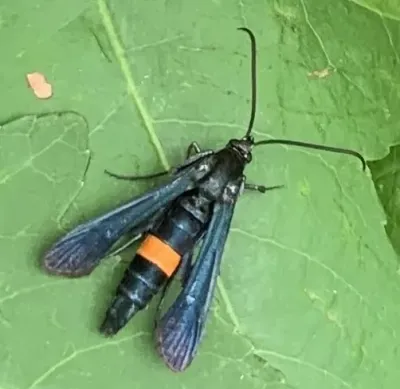
- Peachtree borer moths are close cousins. They are larger, and females have a wide orange band. Their larvae feed at the soil line of peach and plum trees. Dogwood borer larvae feed higher up, in wounds and knots.
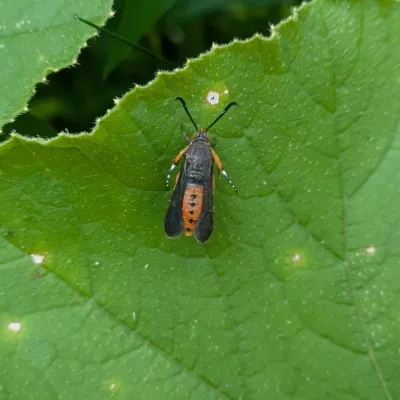
- Squash vine borers are another clearwing moth. They have an orange body and attack squash and pumpkin vines, not trees.
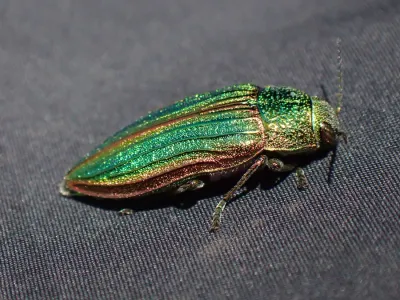
- Flat-headed borers and round-headed borers are beetle larvae. They leave oval or round exit holes. Dogwood borers leave rough, swollen bark and sawdust tied with silk instead.
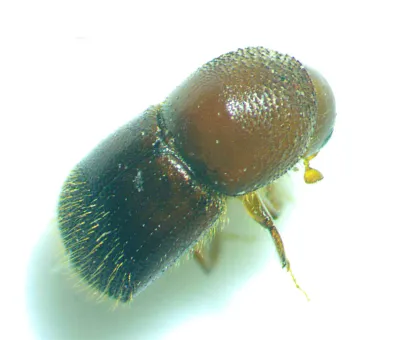
- Ambrosia beetles also attack stressed dogwoods. They leave tiny pin-sized holes and push out thin “toothpicks” of packed sawdust.
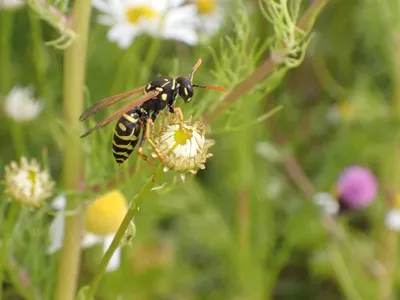
- Paper wasps have a narrow waist and folded, smoky wings. The dogwood borer has a thick waist and clear, spread wings.
Common Species
The dogwood borer belongs to the genus Synanthedon, which has several tree-boring relatives in North America:
- Lesser peachtree borer (Synanthedon pictipes): Attacks the upper trunk and limbs of stone fruit trees.
- Rhododendron borer (Synanthedon rhododendri): Tunnels in rhododendron and azalea stems.
- Oak borer (Paranthrene asilipennis): A related clearwing that bores into oak trunks.
Dogwood Borer Behavior and Biology
Habitat and Host Plants
Dogwood borers are native to eastern North America. They range from southeastern Canada to Florida and west to Texas. They are common in yards across Northern Virginia, Maryland, and DC.
Flowering dogwood (Cornus florida) is the main host. Yard trees are hit much harder than wild dogwoods in the woods. Kousa dogwood seems to resist attack. Other hosts include:
- Apple, cherry, and plum
- Pecan and other hickories
- Oak, beech, birch, and elm
- Willow, mountain ash, hazel, and chestnut
- Blueberry
Diet and Damage
The larvae feed on the inner bark. This thin layer carries water and food through the tree. As larvae tunnel, they cut those supply lines.
Females lay eggs one at a time on the bark. They prefer wounds, cracks, and cankers. That is why trees nicked by mowers and trimmers get attacked so often. On apple trees, larvae feed in burr knots. These are knobby growths on the lower trunk of dwarf trees.
Signs of an infestation include:
- Reddish-brown, sawdust-like frass held together with silk
- Loose, peeling, or sloughing bark on the lower trunk
- Swollen, knotty, or gall-like areas on the trunk
- Leaves that turn red early in late summer
- Branch dieback and thin canopy
- Empty amber pupal skins sticking out of the bark
Young trees are often killed in a season or two. Older trees decline slowly and become open to disease.
Life Cycle
The dogwood borer usually has one generation per year. In cooler areas some larvae take two years. Farther south, there may be more than one generation.
- Eggs: Tiny, oval, and pale yellow, laid singly on bark. They hatch in about 8 to 9 days.
- Larvae: New larvae bore into the bark right away. They feed through summer and fall. They rest in their tunnels over winter and feed again in spring.
- Pupae: Larvae pupate in a silk-and-frass cocoon near the bark surface.
- Adults: Moths push out of the bark, leaving the pupal skin behind. In Virginia and Maryland, adults fly from about May through September.
Unlike most moths, adults fly during the day. They are quick, wasp-like flyers and are most active early and late in the day.
Treatment Methods for Dogwood Borers
Dogwood borers are a tree problem, not a household pest. They do not damage homes or come indoors on purpose. The best help comes from a certified arborist or your local extension office. Tree borer control often combines these steps:
- Prevent wounds: Keep mowers and trimmers away from trunks. A ring of mulch around the base helps. Stake new trees so wind does not crack the bark.
- Keep trees healthy: Water during drought. Plant dogwoods in part shade. Prune out dead or diseased branches.
- Choose resistant trees: Kousa dogwood and its hybrids appear to resist dogwood borers.
- Time bark treatments: Arborists may spray a long-lasting insecticide on the lower trunk before eggs hatch. Lure traps show when male moths are flying, which helps with timing.
- Remove badly damaged trees: A dying tree can keep producing moths that attack nearby dogwoods.
Wrapping trunks is not a reliable fix. Some studies found that vinyl tree wraps increased attacks on young dogwoods.
Our home pest control plans focus on pests that invade the house. If the “wasp” you spotted turns out to be a real nest near your home, we can help with wasp control.
References
- Dogwood Borer, EENY-374, University of Florida IFAS Extension
- Dogwood Borer Fact Sheet, Cornell University
- Dogwood Borer, UConn Home & Garden Education Center
- Dogwood Borer, University of Georgia Extension
- Dogwood Borer, Publication 444-217, Virginia Cooperative Extension
- Synanthedon scitula, UMass Extension Insect and Mite Guide
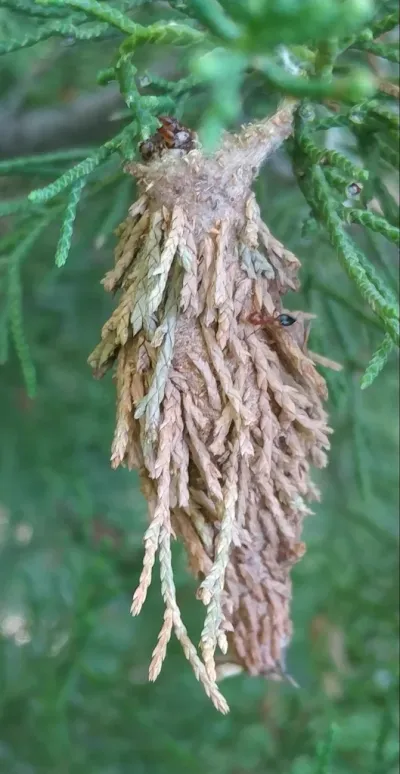
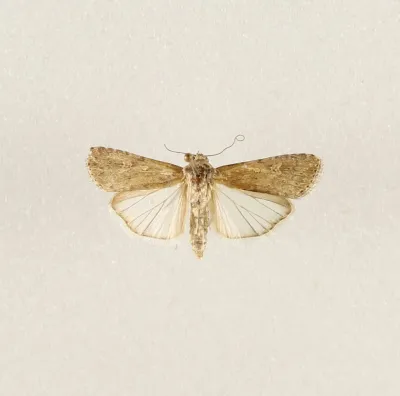
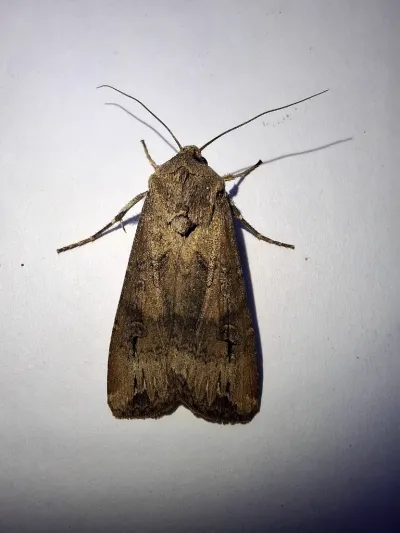
Other Moths
Explore other species in the moths family
Commonly Confused With
Dogwood Borer are often mistaken for these similar pests
Where Dogwood Borer Are Found
Hover over states to see their names. Green regions indicate where dogwood borer have been reported.
Common Questions about Dogwood Borer
What does a dogwood borer look like?
+
The adult is a small moth about half an inch long. It has a shiny blue-black body with thin yellow bands. Its wings are mostly clear with dark edges, and it has a fan-shaped tuft at the tail. Most people think it is a small wasp. The larva is a cream-colored caterpillar with a red-brown head. It lives under the bark.
Do dogwood borers sting?
+
No. Dogwood borers are moths, not wasps. Their wasp-like look is a disguise that helps them avoid birds. They cannot sting or bite people or pets.
How do I know if my dogwood has borers?
+
Check the lower trunk and any old wounds. Look for red-brown sawdust held together with silk. Bark may be loose or peeling. The trunk may have swollen, knotty bumps. Leaves may turn red early, and branches may die back. Empty amber skins sticking out of the bark mean adults have already left.
What trees do dogwood borers attack besides dogwood?
+
Flowering dogwood is the main host. Dogwood borers also attack apple, cherry, plum, pecan, oak, beech, birch, willow, elm, and blueberry.
When are dogwood borer moths active?
+
In Virginia and Maryland, adult moths fly from about May through September. Activity peaks in early summer. Larvae live under the bark all year. They start feeding again in spring once it warms past about 45 to 50°F.
Can dogwood borers kill a tree?
+
Yes. Larvae can tunnel around the trunk and cut off water and food. Young or newly planted dogwoods are often killed. Older trees tend to decline slowly over several years. Weak trees are also more open to disease.
Who should I call about dogwood borers?
+
Call a certified arborist or your local extension office. Dogwood borers are a tree problem, not a household pest. A tree care plan may include pruning, trunk protection, and well-timed bark treatments.

With five years of hands-on experience in the pest control industry, George Schulz is a registered technician with the Virginia Pest Management Association and a proud third-generation professional in a family business that's been protecting homes for over 58 years. He manages and trains a team of service pros while also leading internal research efforts—recently spearheading a deep-dive review of thousands of documents on pest control materials to hand-pick the most kid and pet friendly, most effective solutions tailored specifically for homes in the DC metro area.
Local Moths Help
Dealing with moths at home? Our licensed technicians provide pest control across Northern Virginia and Maryland.
