Two-Lined Chestnut Borer Identification Guide
Agrilus bilineatus
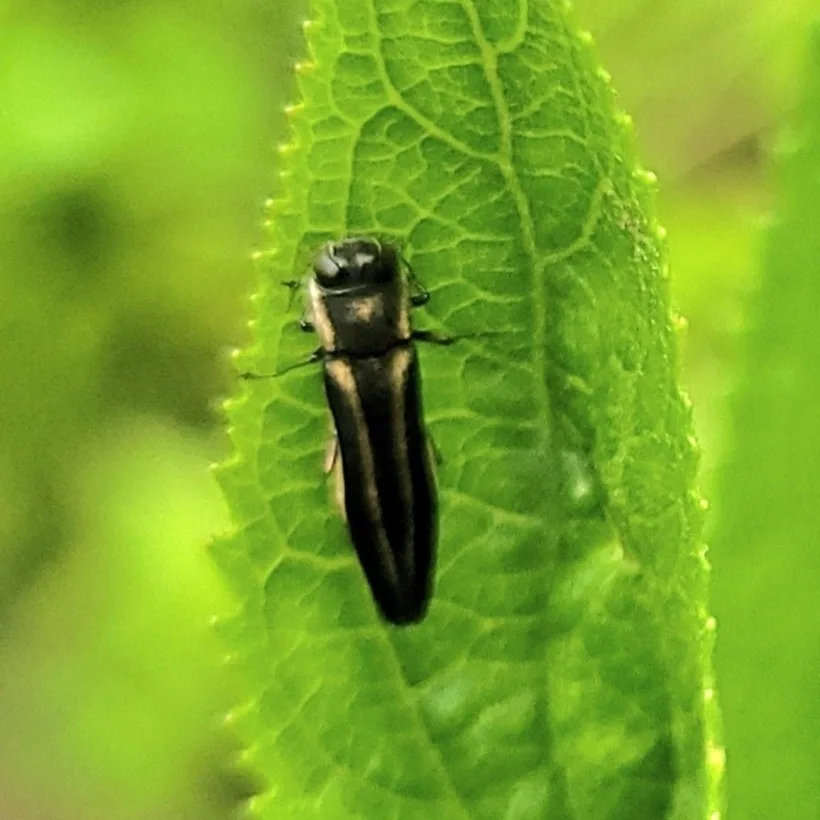
The two-lined chestnut borer is a slender black jewel beetle with two faint gold stripes. Its larvae tunnel under the bark of stressed oaks and are a leading cause of oak decline and death in eastern yards.
Taxonomy
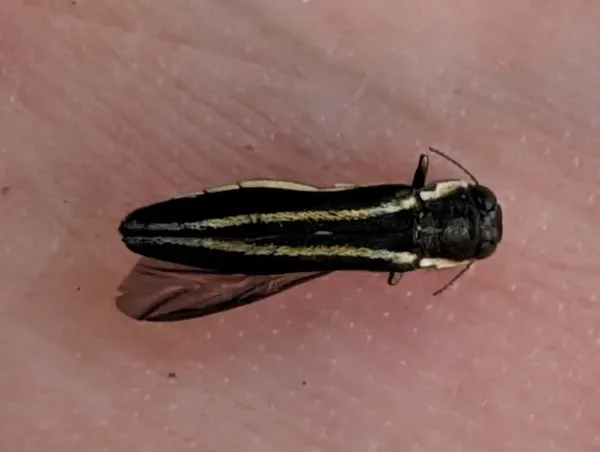
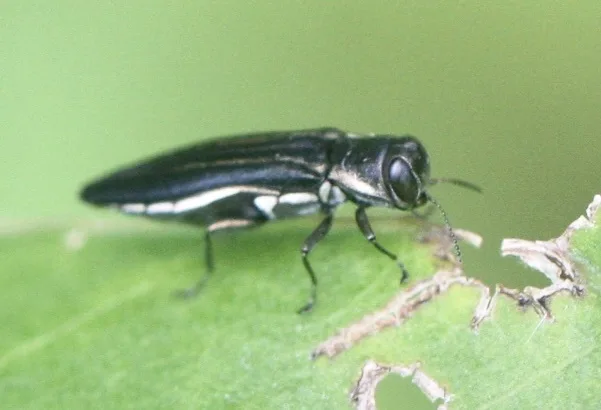
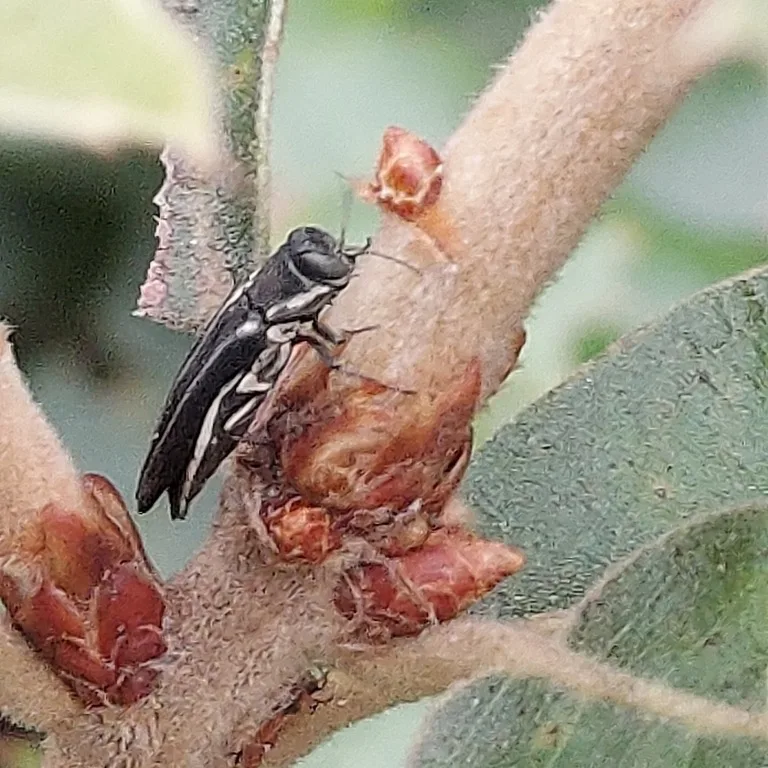
Two-Lined Chestnut Borer Coloration
Common color patterns to help identify two-lined chestnut borer
Two-Lined Chestnut Borer
Seasonal Activity
When two-lined chestnut borer are most active throughout the year

Where Two-Lined Chestnut Borer Are Found
Hover over states to see their names. Green regions indicate where two-lined chestnut borer have been reported.
Two-Lined Chestnut Borer Identification Guide
The two-lined chestnut borer is one of the most common reasons a mature oak in Virginia or Maryland browns out from the top and dies over two or three summers. It is a native beetle, and it almost always picks trees that are already stressed. Once inside, its larvae girdle branches and trunks from under the bark.
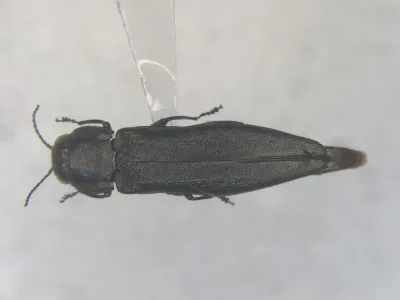
It belongs to the metallic wood-boring beetle family, the same group described on our flatheaded borers page. It is also a close cousin of the invasive emerald ash borer.
Physical Characteristics
Adults are small and easy to miss:
- Size: about 5 to 13 mm long (roughly 1/5 to 1/2 inch), narrow and bullet-shaped
- Color: black to bluish-black, sometimes with a faint green or bronze sheen
- Markings: two thin, pale gold lines, one running down each wing cover. The lines can be faint or worn, so a beetle without bright stripes may still be this species.
- Head: blunt, with large eyes and short, saw-toothed antennae
Larvae are cream-white, flat, legless grubs up to about 1 inch long. The segment behind the head is widened, and the tail end has two tiny pincer-like points. They are never seen unless bark is peeled away.
Common Species
Several related Agrilus beetles leave the same D-shaped holes, so the host tree is the best clue:
- Two-lined chestnut borer (Agrilus bilineatus): oaks and American chestnut
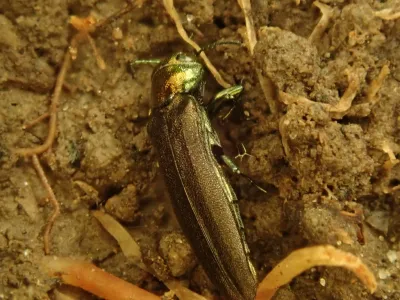
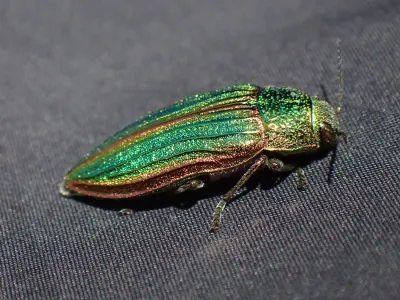
- Emerald ash borer (Agrilus planipennis): ash only. Bright metallic green, no stripes.
- Bronze birch borer (Agrilus anxius): birch only. Dull bronze, no stripes.
- Goldspotted oak borer (Agrilus auroguttatus): oaks in California. Gold spots instead of lines.
Two-Lined Chestnut Borer Behavior and Biology
Habitat
This beetle lives wherever oaks grow in the eastern half of the continent, from the Gulf states to southern Canada. It is common in suburban yards, wooded lots, and parks across Northern Virginia and Maryland. Yard oaks are often at higher risk than forest oaks because of root damage from construction, paved surfaces, compacted soil, and lawn grading.
Diet
Adults chew small notches in oak leaves for a week or so before mating. That feeding does little harm. The larvae do the real damage. They feed in the inner bark and outer sapwood, the thin living layer that moves water up from the roots and sugars down from the leaves.
Life Cycle
- Spring: Larvae finish growing in small chambers in the outer bark and turn into pupae.
- Late April through August: Adults chew out through D-shaped holes. In the Mid-Atlantic, emergence peaks from late May through June.
- Summer: Females lay small clusters of eggs in bark cracks on stressed trees. Eggs hatch in one to two weeks.
- Summer through fall: Larvae bore in and carve winding, zigzag tunnels packed with fine frass. Several tunnels can ring a branch and kill it.
- Winter: Larvae rest inside the bark. Most finish in one year. In cool areas or on vigorous trees, some take two.
How It Finds a Weak Oak
Stressed oaks release scent chemicals that females can detect. That is why attacks pile up after a dry summer, a spongy moth or other caterpillar outbreak, or a construction project that cut roots. The borer is rarely the first problem. It is often the last one, turning a struggling tree into a dead one.
Signs on a Tree
- Leaves that turn brown and wilt in July or August but stay attached, starting high in the crown
- Branch dieback that moves downward over the next one to two years
- D-shaped exit holes, about 1/8 to 1/5 inch wide, in the bark of affected limbs
- Winding tunnels filled with sawdust under loose or peeling bark
- Woodpecker flaking on the trunk as birds dig for larvae
- Clumps of water sprouts on the trunk below the dead zone
Dieback alone does not prove a borer problem. Oak wilt, drought, and root rot cause similar symptoms, and more than one may be present at once.
Treatment Methods for Two-Lined Chestnut Borers
Better Termite & Pest Control does not treat two-lined chestnut borers. They live inside living trees, so this is a tree-care problem rather than a household pest problem. If an oak on your property is browning out, call an ISA-certified arborist or your county extension office. They can confirm the cause, check for oak wilt, and tell you whether the tree is worth trying to save.
These are the approaches that generally help against this borer:
- Fix the stress first. Water oaks deeply during dry spells, about an inch a week. Spread a wide ring of mulch over the root zone in place of turf. Keep vehicles, trenching, and grade changes off the roots.
- Act early. Trees with light, recent dieback have the best odds. Oaks that have lost most of their crown rarely recover.
- Systemic treatments on high-value trees. Arborists sometimes apply EPA-registered systemic insecticides as a trunk injection, soil treatment, or bark spray, timed for spring before adults are active. A licensed applicator following the label keeps the impact low. These products protect living tissue but do not repair tissue already killed.
- Remove dead and dying wood. Take down badly infested trees or limbs and chip, burn, or dispose of the wood before the next spring emergence. This keeps local numbers from building up and threatening nearby oaks.
- Handle firewood with care. Burn oak firewood from an infested tree before the following summer, and keep it local.
Beetles coming out of wood inside your house are a different insect. Start with our guides to old house borers and powderpost beetles, and reach out about our pest control services. We also handle termites, which eat structural wood and leave no exit holes at all.
Similar Species and Look-Alikes
- Emerald ash borers. Same genus, same D-shaped holes, but bright green and found only on ash.
- Flatheaded borers. The broader family name. The flatheaded appletree borer also attacks stressed young oaks, but it is broader, dark bronze, and has no stripes.
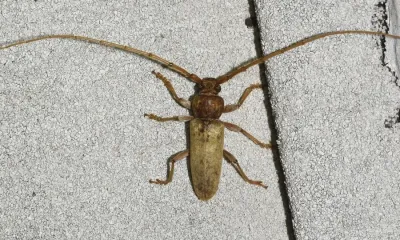
- Red oak borers. A large longhorn beetle of red oaks. Its grubs bore deep into the trunk and leave round holes 3/8 to 1/2 inch wide, low on the trunk.
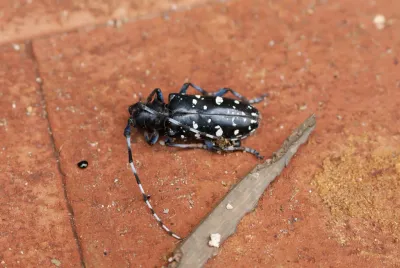
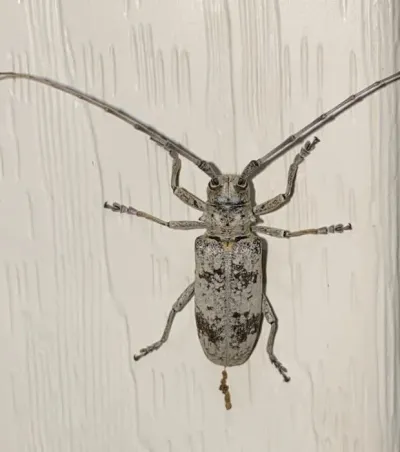
- White oak borers. A longhorn of young white oaks. It leaves wet sap streaks and round, 1/2-inch holes near the ground rather than small D-shaped holes.
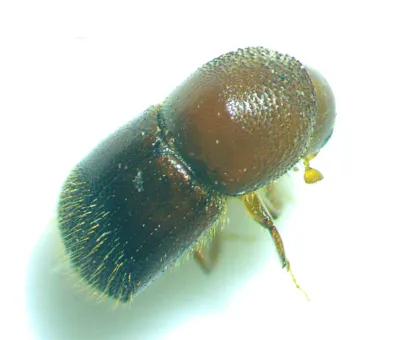
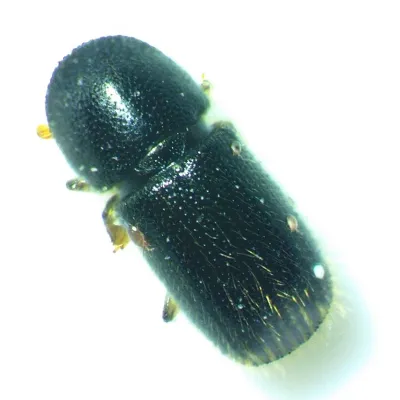
- Bark beetles. Tiny, round-bodied beetles that leave pinholes and branching tunnels, mostly in pines.
References
- NC State Extension: Twolined Chestnut Borer
- Natural Resources Canada: Twolined Chestnut Borer
- University of Wisconsin Extension: Two-Lined Chestnut Borer
- University of Minnesota Extension: Bronze Birch Borer and Twolined Chestnut Borer
- University of Illinois Extension: Home, Yard, and Garden Pest Newsletter
- University of Maryland Extension: Borer Insects on Trees
- USDA Forest Service: Forest Pest Insects in North America, A Photographic Guide
Other Wood Boring Beetles
Explore other species in the wood boring beetles family
Commonly Confused With
Two-Lined Chestnut Borer are often mistaken for these similar pests
Where Two-Lined Chestnut Borer Are Found
Hover over states to see their names. Green regions indicate where two-lined chestnut borer have been reported.
Common Questions about Two-Lined Chestnut Borer
What is a two-lined chestnut borer?
+
It is a small native jewel beetle (Agrilus bilineatus) found across eastern and central North America. The adults are harmless leaf nibblers. The larvae are the problem. They tunnel under the bark of oaks and cut off the flow of water and food, which can kill branches and, over two or three years, the whole tree.
Why is it called a chestnut borer if it attacks oaks?
+
It was named when American chestnut was a common forest tree. Chestnut blight wiped out most mature chestnuts in the early 1900s, so today the beetle is found almost entirely in oaks. Red, black, white, and bur oaks are all hosts.
Does the two-lined chestnut borer attack healthy trees?
+
Rarely. It is a secondary pest, which means females seek out oaks that are already weakened. Drought, root damage from construction, soil compaction, heavy caterpillar defoliation, and disease all make an oak attractive. The beetle then speeds up a decline that was already under way.
What are the signs of two-lined chestnut borer damage?
+
The first sign is usually brown, wilted leaves that stay on branches high in the crown in mid to late summer. Dieback then moves down the tree over the next year or two. Look for small D-shaped exit holes about 1/8 inch wide in the bark, and winding tunnels packed with fine sawdust under loose bark.
Can an infested oak be saved?
+
Sometimes, if the borer is caught early and the stress behind it is fixed. An ISA-certified arborist can judge how much of the crown is lost. Trees with light dieback may recover with deep watering, root protection, and in some cases a systemic insecticide. Oaks with most of the crown dead usually need to come down.
Will two-lined chestnut borers get into my house or firewood?
+
They do not infest framing, floors, or furniture. They can survive for a season in fresh oak firewood cut from an infested tree and emerge the next spring. Burn oak firewood before the following summer and do not haul it long distances.
Does Better Termite treat two-lined chestnut borers?
+
No. This borer lives inside living trees, which is tree care rather than household pest control. An ISA-certified arborist or your county extension office is the right first call. We do treat insects that attack the home itself, such as termites and carpenter ants.

With five years of hands-on experience in the pest control industry, George Schulz is a registered technician with the Virginia Pest Management Association and a proud third-generation professional in a family business that's been protecting homes for over 58 years. He manages and trains a team of service pros while also leading internal research efforts—recently spearheading a deep-dive review of thousands of documents on pest control materials to hand-pick the most kid and pet friendly, most effective solutions tailored specifically for homes in the DC metro area.
Local Two-Lined Chestnut Borer Help
Dealing with two-lined chestnut borer at home? Our licensed technicians provide pest control across Northern Virginia and Maryland.
