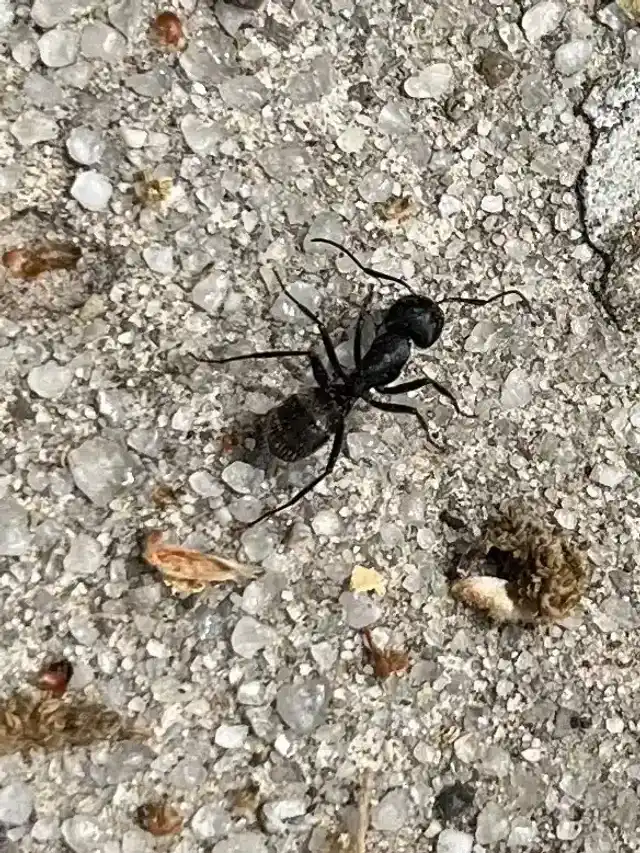

Carpenter ants and the small black ants on your kitchen counter are different insects. Carpenter ant workers are about 1/4 to 1/2 inch long, have one smooth arch along the back, and nest in damp or rotting wood. Common black house ants, like odorous house ants and little black ants, are about 1/8 inch or smaller and nest in soil, mulch, or wall voids without harming wood.
Ants are one of the most common complaints we get in the spring around the DC metro area, and most homeowners first notice them in the kitchen or bathroom. The table below is the quick version. The sections after it walk through each clue, including the big black ants that are not carpenter ants.
Carpenter Ant vs Black Ant: Side-by-Side
| Feature | Carpenter Ants | Common Black House Ants |
|---|---|---|
| Worker size | 1/4 to 1/2 inch (6-13 mm) | About 1/16 to 1/8 inch (1.5-3.3 mm) |
| Size within one colony | Mixed small and large workers | All about the same size |
| Thorax (side view) | One smooth, even arch | Uneven or bumpy |
| Nodes at the waist | One | One (odorous house ant) or two (little black ant) |
| Color | Dull black, fine golden hairs on the abdomen; some local species are red and black | Shiny black or dark brown |
| Smell when crushed | No strong odor | Odorous house ants smell like rotten coconut |
| What they leave behind | Coarse sawdust (frass) with insect parts | Nothing in wood |
| Nests | Damp or rotting wood, tree stumps, wall voids | Soil, mulch, masonry cracks, wall voids |
| Damage | Hollow out wet or decayed wood | None to wood; they get into food |
Size: The Most Obvious Clue
Size is the fastest way to tell the two apart. According to University of Maryland Extension, the carpenter ant workers homeowners usually see are 1/4 to 1/2 inch long, and winged queens reach 3/4 inch. A regular black ant like the odorous house ant is only 2.4-3.3 mm, roughly the size of a grain of rice.
Carpenter ants also come in two sizes within the same colony. You’ll see both small (minor) and large (major) workers on the same trail. Little black ants are the same size across their whole workforce.
Other Physical Differences
While size is the clearest sign, a few other traits help confirm your ID.
Body Shape and Color
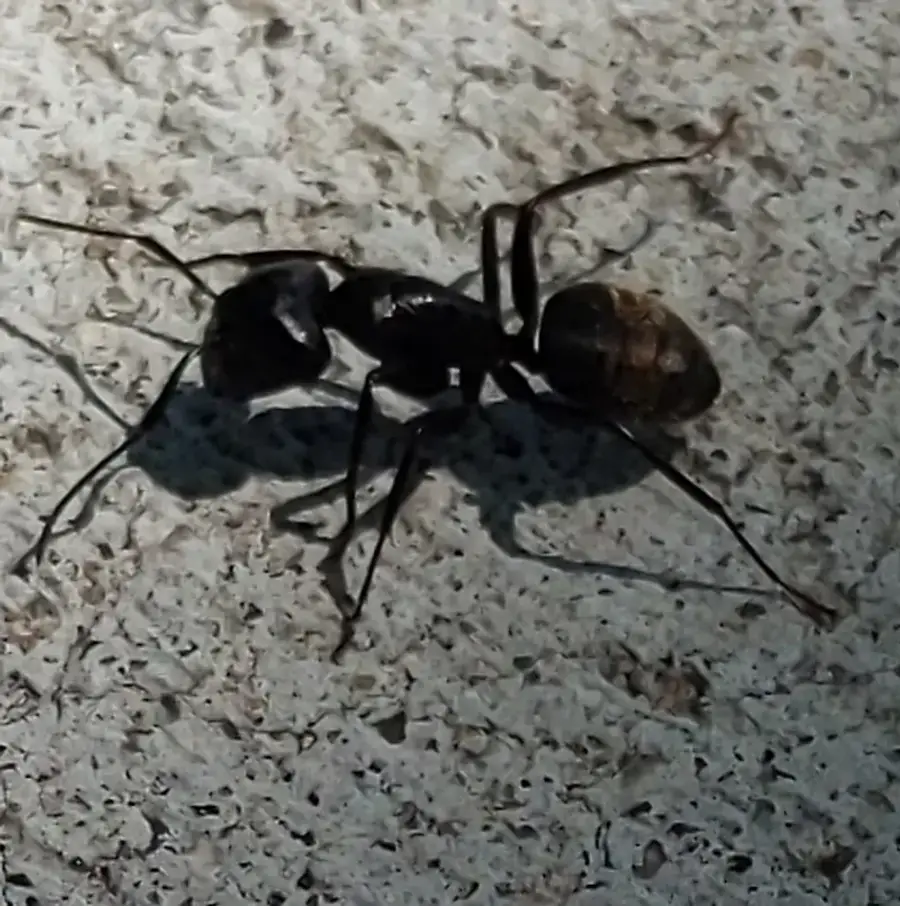
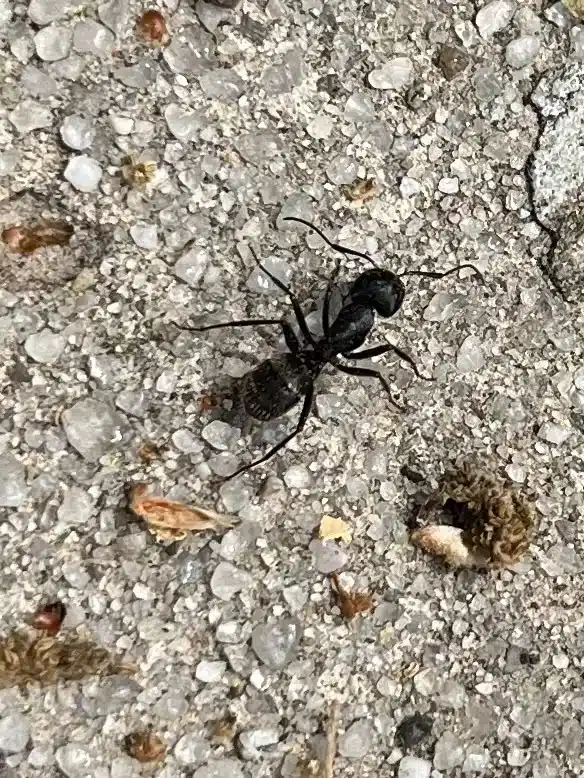
Carpenter ants have a dull black color and an evenly rounded middle section (the thorax). Seen from the side, the top of the thorax is one smooth arch with no dip. Their bodies look thick and solid. Some carpenter ant species in our area are red and black.
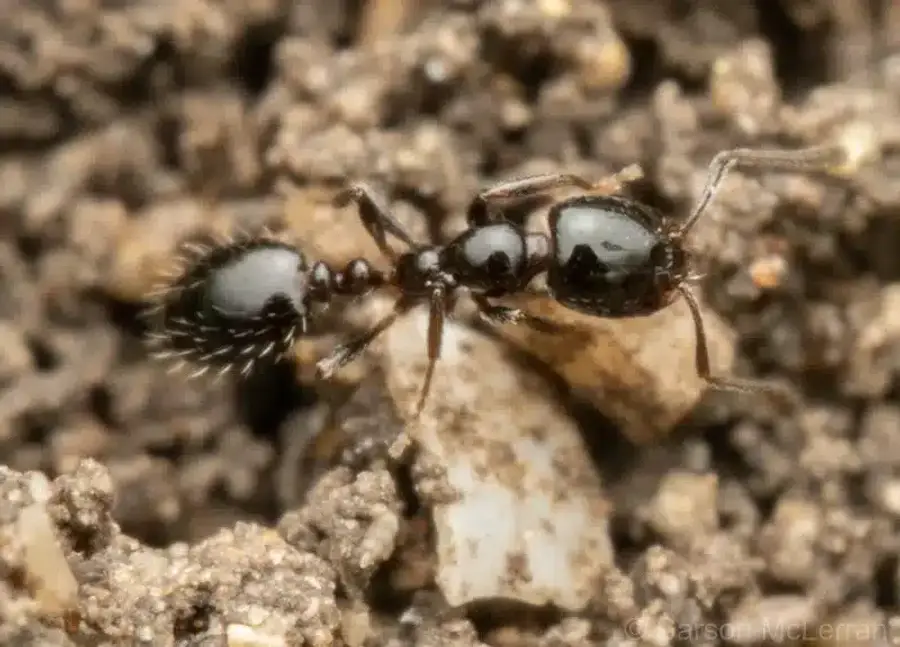
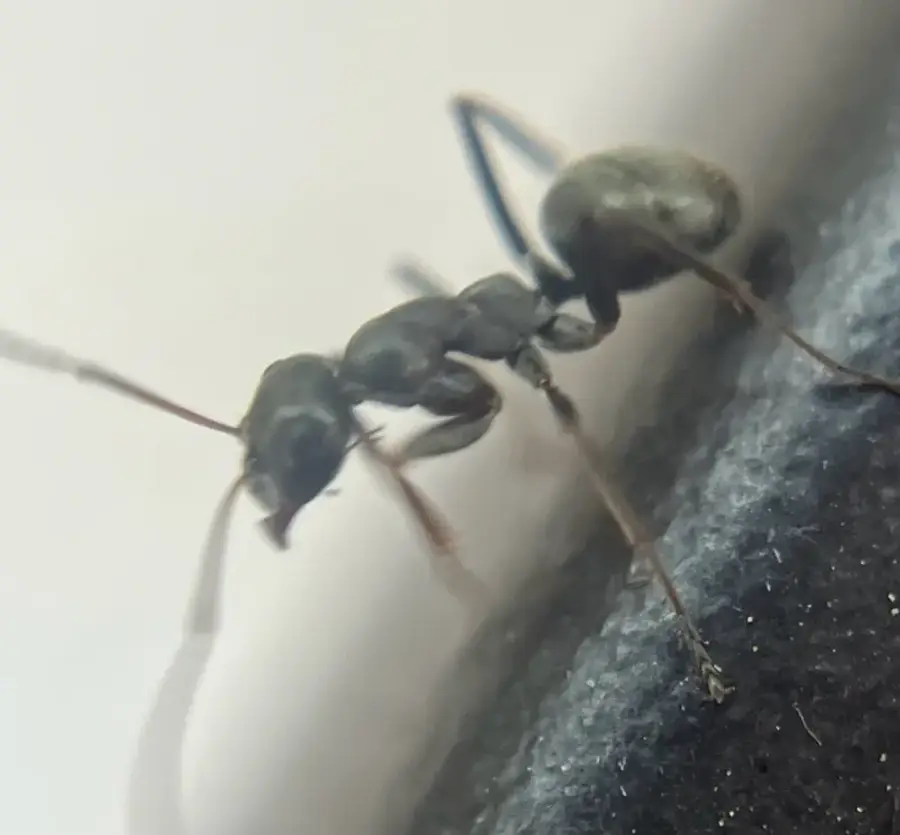
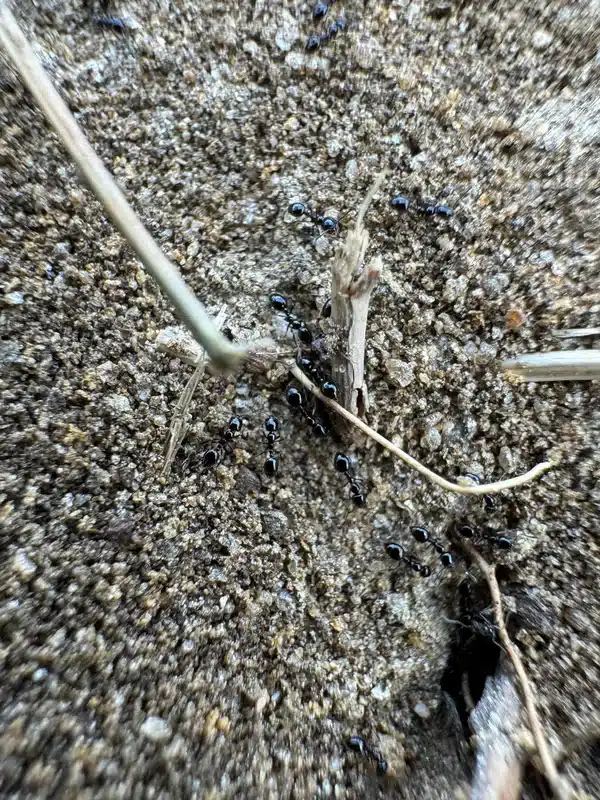
Regular black ants like odorous house ants are shiny brown-black with a bumpy middle section. Little black ants are jet-black and glossy with a smooth, arched back.
The Petiole Test
Look at the narrow part between the middle body and the abdomen (called the petiole). Carpenter ants and odorous house ants have one node. Little black ants have two. This detail helps when you’re not sure about size.
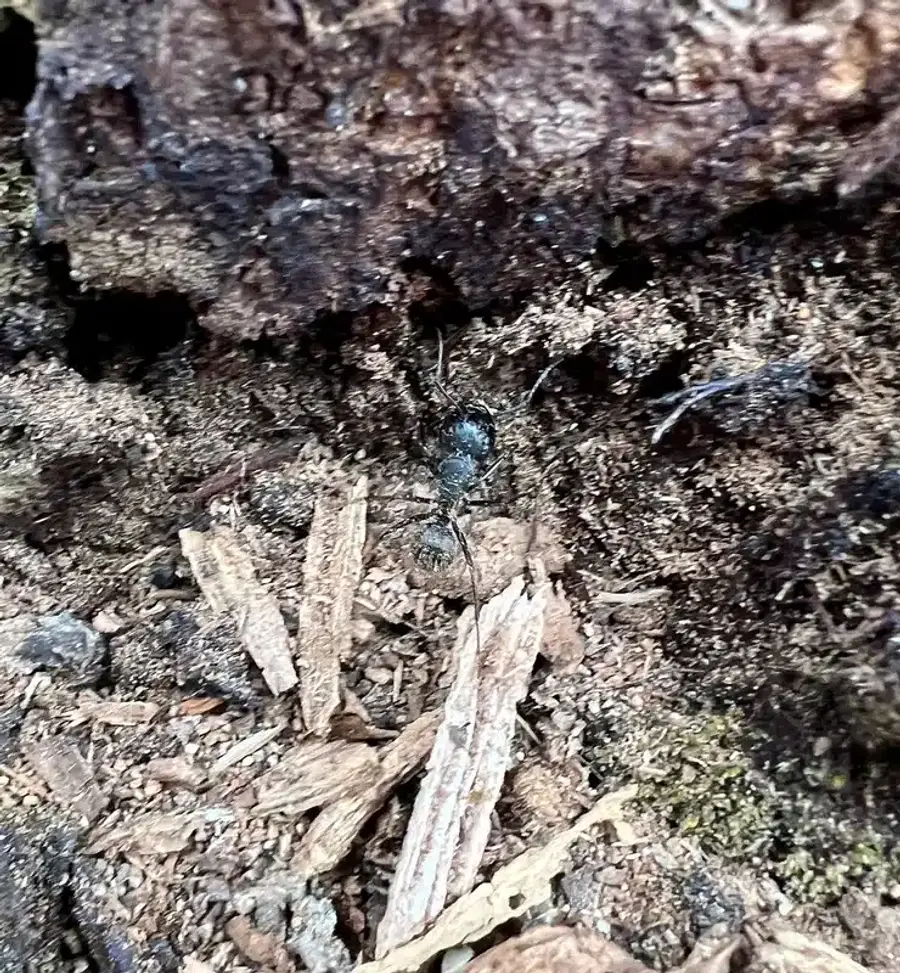
These photos show the key visual differences between the two types.
Are All Big Black Ants Carpenter Ants?
No. The most common look-alike is the field ant (Formica). Field ants are large, some are solid black, and they get mistaken for carpenter ants all the time. NC State’s urban entomology program lists field ant workers at 1/8 to 3/8 inch, so the bigger ones overlap with small carpenter ant workers.
Look at the ant from the side. A carpenter ant’s thorax is one even curve. A field ant’s thorax dips in the middle, so it looks like two bumps. Field ants also nest in soil and build mounds in lawns. They don’t tunnel into wood and don’t often come indoors.
Two other names come up when people search for black ants:
- Black garden ant: this is a European species (Lasius niger). The closest match in Virginia and Maryland lawns is the cornfield ant, which is brown and well under 1/4 inch.
- Pavement ants: dark brown to black, about 1/8 inch, with two nodes at the waist. They push small piles of sand out of cracks in sidewalks, driveways, and slabs.
Wood Damage: The Critical Difference
This is where the difference matters most. Carpenter ants dig into wood to build their nests. Regular black ants don’t touch wood at all.
Signs of Carpenter Ant Damage
Carpenter ant tunnels follow the wood grain and have smooth, sanded-looking walls. Unlike termite damage, these tunnels have no mud or fecal pellets. Instead, you’ll find coarse sawdust mixed with insect parts, called frass, pushed out through small holes. This frass often piles up below kick-out holes or behind baseboards.
Daren, one of our registered technicians, separates carpenter ant damage from termite damage by what’s left in the tunnel. Carpenter ant galleries are smooth and empty because the ants carry the debris out. Termite damage has mud in it, and old termite damage still has dried mud left behind.
According to University of Maryland Extension, coarse sawdust that looks like pencil shavings means a carpenter ant nest is close by. Penn State Extension adds that carpenter ants rarely tunnel into sound wood. They go after moist, rotting wood, and a nest that spreads into a building’s timbers rarely causes structural damage. UMD notes the exception: tunneling in key timbers can be serious, but nest sites rarely grow past a few square feet.
Carpenter ant damage usually shows up in areas with moisture problems: leaky roofs, damaged window sills, bathroom sub-floors, and porch columns. Regular black ants pose no risk to your home’s structure at all.
One carpenter ant house Daren worked had rotted trim and fascia boards all the way around it, and flashing that let water run down behind the wood instead of over it. The owners expected a treatment to end it. Daren’s answer: “Until you fix the wood rot or the moisture issue, they’re going to still keep coming. It doesn’t matter how much chemical.” He didn’t see a real structural concern from the ants on that job. The rot was the problem, and the ants were the sign of it.
Nesting Habits
Knowing where these ants live explains why treatment differs so much.
Carpenter ants run complex colonies with one main nest (often in a tree stump or wall void) plus multiple satellite nests. The satellite nests are what you usually find inside your home. These colonies take several years to mature. Penn State Extension notes a colony usually has about 2,000 to 3,000 workers before it produces winged swarmers.
In our area, main nests often form in hardwood trees like oak and maple that have rot. The satellite nests then set up in moisture-damaged wood inside the home.
Odorous house ants make many small, shallow nests with lots of queens per colony. These colonies can top 10,000 workers and move often when disturbed. Little black ants nest in soil, cracks in masonry, and mulch. Colony sizes range from hundreds to thousands.
Neither of these species damages wood. Their risk is limited to getting into food and being a general nuisance.
Here’s what each type looks like up close so you can compare.

Seasonal Activity Patterns
Both carpenter ants and regular black ants become active in early spring in Virginia and Maryland, but their patterns differ.
Carpenter ants swarm mostly from April through June here, and Penn State Extension puts their peak foraging from May through July. Regular black ants like odorous house ants swarm from May through July and stay active through the warmer months.
Across the DMV, Daren says odorous house ants and carpenter ants are the two ants he sees most. So if you have “black ants” in a Northern Virginia or Maryland house, it is usually one of those two, and the size check above settles it. Our ant season guide covers what it means when you see them early in spring or late in fall.
How to Identify Which Ant You Have
When we inspect for ants, we use a few checks homeowners can try too.
Nighttime tracking: Carpenter ants do most of their foraging after dark, along trails on tree trunks, branches, and fence lines. Penn State Extension notes the parent nest is usually within 100 yards of the house. A flashlight at night shows these trails better than a daytime look.
The honey card test (for small black ants): University of Tennessee Extension suggests putting index cards with a smear of honey every 10 to 20 feet around the foundation, checking them after 40 minutes, and following the ants back to the nest. Their rule of thumb is to bait where more than 10 odorous house ants show up on one card.
The smell test: Odorous house ants give off a blue-cheese or rotten coconut smell when crushed. Carpenter ants don’t have a notable odor. This is the quickest way to settle odorous house ant vs carpenter ant.
Treatment Approaches
The treatment plan for carpenter ants vs black ants changes a lot based on the species and where they’re nesting.
Carpenter Ant Treatment
For carpenter ants, we focus on finding and treating the nest directly when possible. This often means injecting products like boric acid or silica aerogel into the nest site. Baits with hydramethylnon or avermectin work well for satellite nests and trails.
Perimeter sprays alone only give short-term relief. The moisture and wood decay issues behind the problem must be fixed, or the ants will come back. Homes that back onto mature woods are the classic case. In Montgomery County that means lots near Seneca Creek State Park and in Washingtonian Woods, where our Gaithersburg ant control work starts with the dead limbs, stumps, and soft sill plates that carpenter ants move into.
Regular Black Ant Control
For odorous house ants and little black ants, we combine cleaning, sealing, and baiting. These ants prefer sweet liquid baits with low levels of boric acid (under 1%).
Because these species form large colonies with many queens, baits alone rarely give a lasting fix. We usually combine baiting with direct nest treatments where we can reach them.
Prevention
Whether you’re dealing with carpenter ants or black ants, moisture control is the base of prevention.
- Moisture Control: Fix all leaks. Keep 6 inches of clearance between soil and siding. Make sure drainage works around your foundation.
- Tree Care: Prune branches that touch your roof or siding. These act as highways for carpenter ants.
- Wood Care: Replace any moisture-damaged wood right away. Seal cracks in wooden parts of your home.
- Regular Checks: Look in crawl spaces, basements, and other areas for frass or rustling sounds.
- Call a Pro: If you spot large black ants or sawdust near wood, get help right away.
For carpenter ants, fix moisture sources by repairing leaks, insulating sweating pipes, and keeping soil away from siding. For all ant types, clean up food sources, seal cracks around foundations, and manage plants near your home’s perimeter.
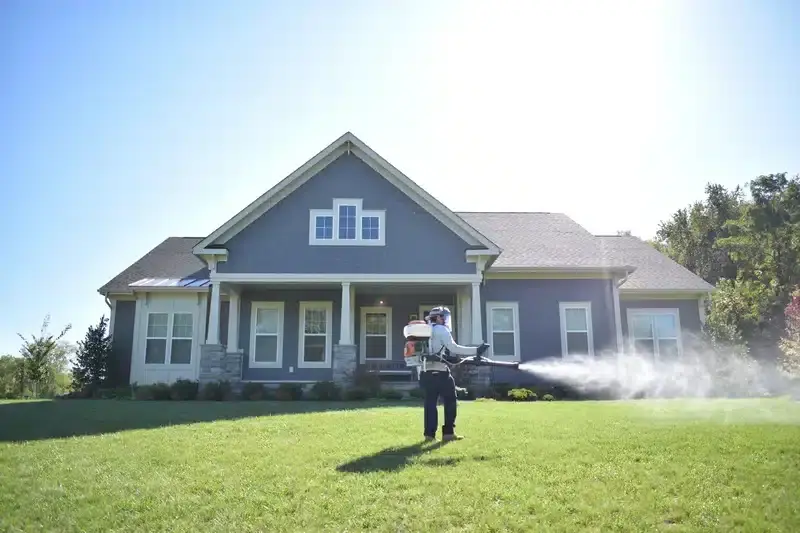
When to Call a Professional
While homeowners can handle small ant issues with store-bought products, some cases need expert help.
Call right away if you see ants that match carpenter ant size (6mm+), especially if you notice wood damage or hear chewing sounds in walls. Carpenter ant colonies often have multiple nest sites that are hard to find without training and the right tools.
For any ant type, if baits and sprays haven’t worked after two weeks, it’s time for professional treatment. We use products not available to homeowners and have the know-how to identify the species and find all nesting spots. If it turns out to be carpenter ants, our carpenter ant service page walks through what that treatment actually looks like.
Knowing the difference between carpenter ants and regular black ants can save you real money and stress. Regular black ants are mostly a nuisance. Carpenter ants point to moisture problems and can cause costly structural damage if ignored.
If you’re dealing with ants in your Virginia or Maryland home, don’t wait. Call us at 703-683-2000 or email us at info@bettertermite.com. We’ve been serving the DC metro area for over 50 years and can get your ant problem under control fast.