Silky Ants Identification Guide
Formica subsericea
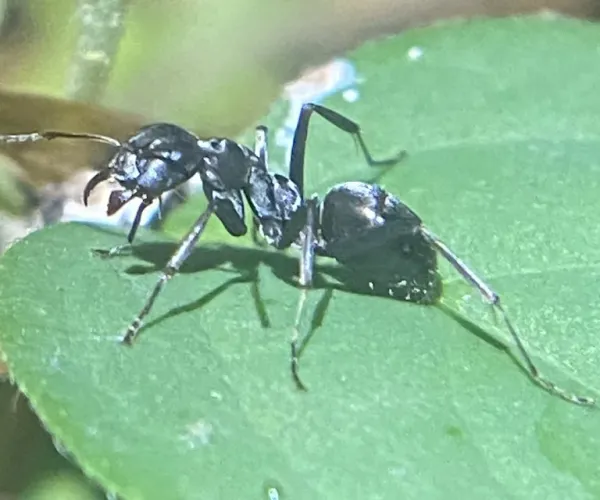
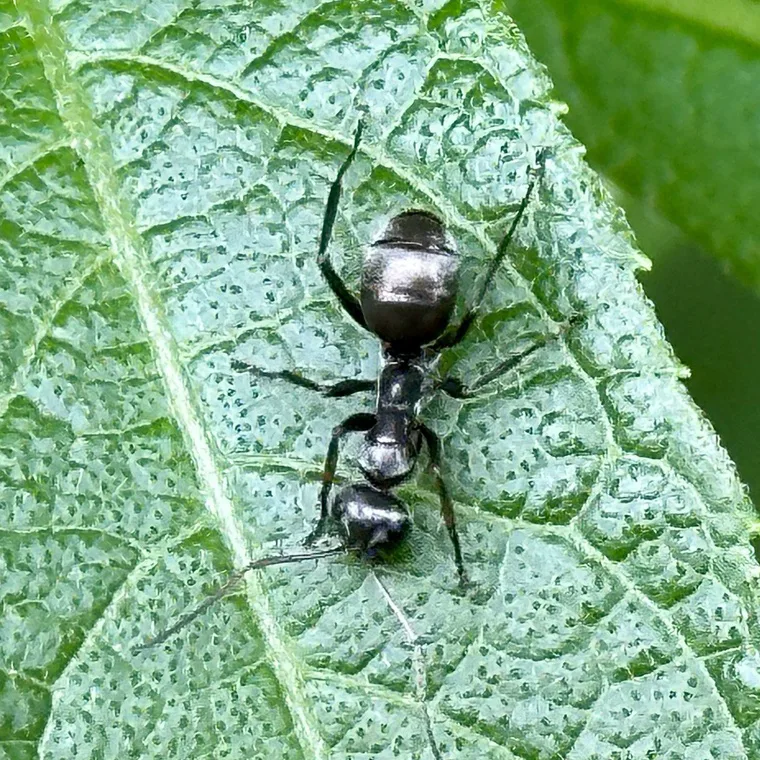
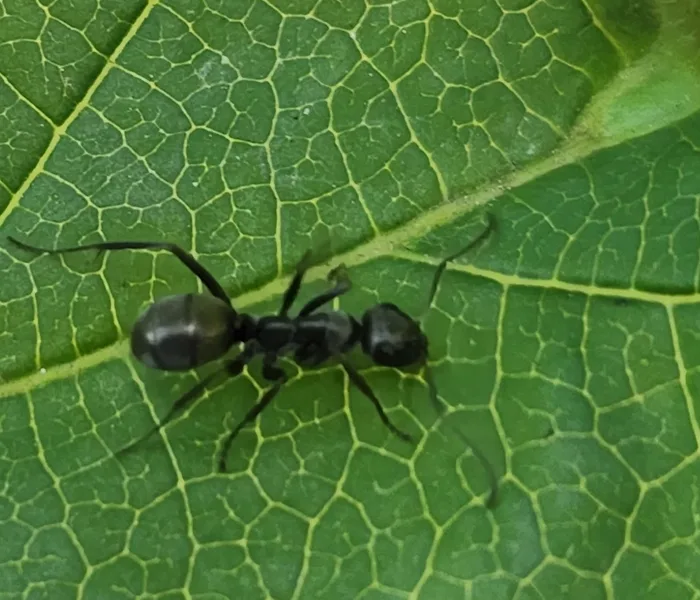
Silky ants, also called silky field ants, are shiny black ants with a silvery sheen on their abdomen. They nest in soil in sunny lawns and garden beds across eastern North America and rarely come indoors.
Taxonomy
Silky Ants Coloration
Common color patterns to help identify silky ants
Silky Ants
Seasonal Activity
When silky ants are most active throughout the year

Where Silky Ants Are Found
Hover over states to see their names. Green regions indicate where silky ants have been reported.
Silky Ants Identification Guide
Silky ants (Formica subsericea) are one of the most common ants in eastern North America. Many people call them silky field ants. They nest in soil, usually in sunny lawns, garden beds, and field edges. You will most often see them running fast across sidewalks, patios, and plants on warm days.
They belong to a large group of field ants in the genus Formica. Silky ants are the dark, shiny members of that group. They are not a wood-destroying pest, so they pose little risk to your home.
Physical Characteristics
- Size: Workers are about 4 to 7.5 mm long (roughly 1/6 to 1/4 inch). Workers in one colony can vary in size. Queens are larger.
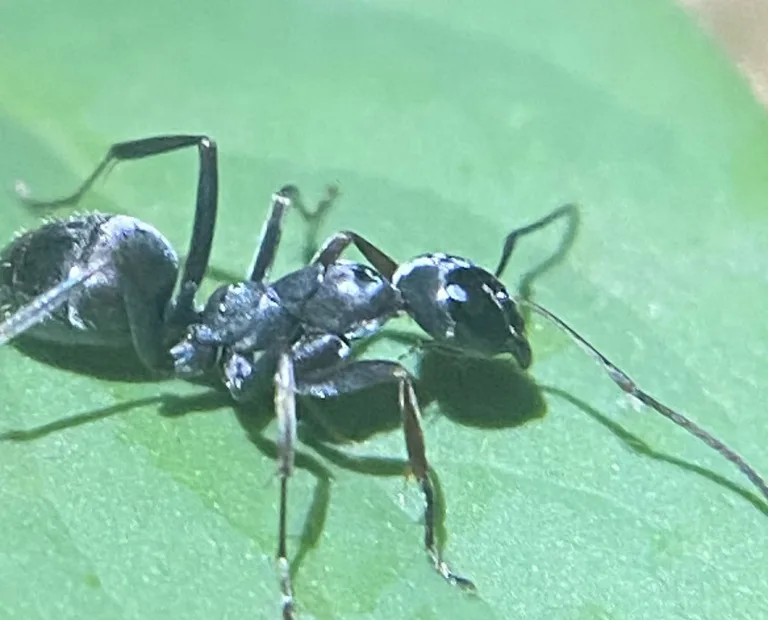
- Color: Black to very dark brown, with brownish legs and antennae.
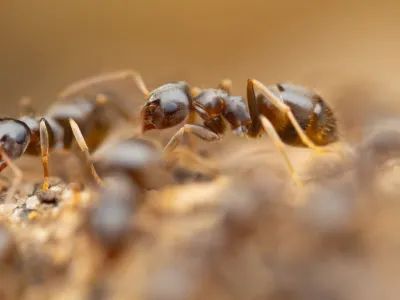
- Silky sheen: Fine, flat hairs cover the abdomen. In sunlight they give it a silvery-gray, satin-like shine. This is the easiest clue in the field.
- Uneven back: Seen from the side, the thorax has a clear dip in the middle. Carpenter ants have a smooth, evenly curved back instead.
- One node: A single small bump (the petiole) connects the thorax to the abdomen.
- No stinger: Like all Formica ants, they defend themselves by biting and spraying formic acid.
Similar and Related Species
Silky ants belong to the Formica fusca group, a set of dark, shiny field ants that are hard to tell apart without a microscope. Related species in North America include:
- Formica fusca – a dark field ant found mainly across Canada and the northern U.S.
- Formica podzolica – a dark field ant of northern and western sandy soils.
- Formica argentea – a silvery-haired field ant of the West and northern states.
For a homeowner, these species look and act much the same. Here is how silky ants compare with the ants they are most often mistaken for:
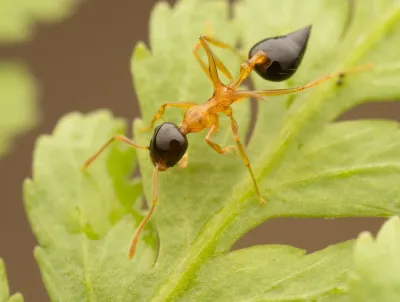
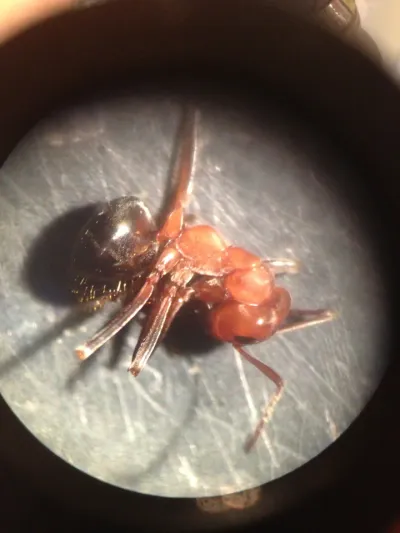
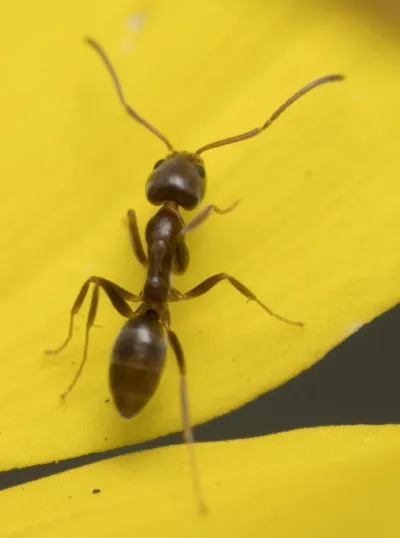
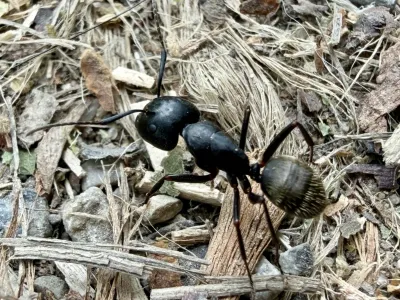
- Black carpenter ants – Bigger (6 to 13 mm), with a smooth, evenly arched back and yellowish hairs on the abdomen. They nest in wood and can damage homes. Silky ants nest in soil.
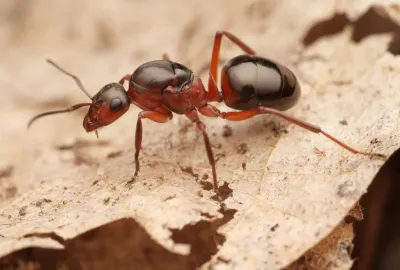
- Allegheny mound ants – A related Formica ant with a reddish head and thorax. They build large mounds that can reach 3 feet tall. Silky ant mounds are small and low.
- Cornfield ants – Also nest in lawns, but they are much smaller (2.5 to 4 mm), dull brown, and leave small soil craters instead of shiny workers running in the open.
- Other field ants – Many Formica species are red, orange, or two-toned. An all-dark field ant with a silver shine on the abdomen is very likely a silky ant.
Silky Ant Behavior and Biology
Habitat and Nesting
Silky ants like open, sunny ground. Common nest sites include:
- Lawns and the edges of turf
- Garden beds and mulch
- Under rocks, pavers, and landscape timbers
- Along driveways and sidewalks
- Meadows and forest edges
Nests go well below the surface. Above ground, you may see a low mound of loose soil, a ring of soil around an opening, or a small pile of grass bits. Nests are often hidden under stones or logs and may have more than one entrance.
Diet and Foraging
Silky ants eat both sugar and protein:
- Honeydew from aphids, scale insects, and treehoppers. Workers climb shrubs and trees to collect it.
- Live insects such as caterpillars and small flies.
- Dead insects and other small scraps.
- Flower nectar.
Workers search for food alone rather than in tight trails. They move quickly and scatter when disturbed. They rarely raid kitchens the way odorous house ants or pavement ants do.
Colony Life and Life Cycle
Like all ants, silky ants grow in four stages: egg, larva, pupa, and adult. A colony has one or more queens and many female workers. Colonies can last for years.
Silky ants have an unusual role in nature. Other ant species take advantage of them:
- Slave-making ants raid silky ant nests and carry off their pupae. The stolen ants grow up and work for the raiders’ colony.
- Mound-building Formica queens, including the Allegheny mound ant, often start new colonies inside fusca-group nests. Silky ant workers raise the new queen’s young until her own workers take over.
Because of this, a large mound in your yard may have started as a silky ant nest.
Seasonal Activity
In Virginia, Maryland, and DC, silky ants follow a clear yearly pattern:
- December through February: Inactive, deep underground.
- March and April: Workers appear on warm, sunny days.
- May through August: Peak activity. Winged queens and males leave the nest to mate, most often in early to mid summer.
- September through November: Activity slows as the weather cools.
Learn more about the yearly cycle in our guide to ant season.
How We Treat for Silky Ants
Silky ants are an outdoor ant, and a few mounds far from the house often do not need treatment. We treat them when nests sit against the foundation, workers keep showing up inside, or mounds are in play areas and walkways.
- Inspection: Our technician walks the property to find nests, foraging areas, and entry points. We look under pavers, along edging, and in mulch beds next to the house. We also check shrubs for aphids and scale insects, since those feed the ants.
- Interior treatment: If workers are coming inside, we apply a non-repellent material to cracks, crevices, and entry points where activity is found. Ants do not avoid non-repellents. They carry the material back and share it with the rest of the colony.
- Exterior treatment: We apply a non-repellent perimeter treatment around the foundation. Nests close to the home can be treated directly so the product moves into the soil tunnels where the queens live.
- Ongoing protection: Most ant materials last about 90 days, so our ongoing plans include regular return visits to reapply and inspect. If ants come back between visits, you get unlimited free callbacks.
- Prevention tips: Keep mulch a few inches back from the foundation. Control aphids on nearby shrubs. Seal gaps around doors, pipes, and siding. Move stones and landscape timbers away from the house walls.
We use EPA-registered products and apply them according to the label. For homes with lawn mounds and indoor ants, see our ant control service.
References
- Formica subsericea – Mississippi Entomological Museum, Mississippi State University
- Field Ants – University of Wisconsin–Madison Extension
- Field Ant – Iowa State University Extension Yard and Garden
- Featured Insect: Field Ants (Formica spp.) – NC State Urban Entomology
- Field Ants – Utah State University Extension IPM
Other Ants
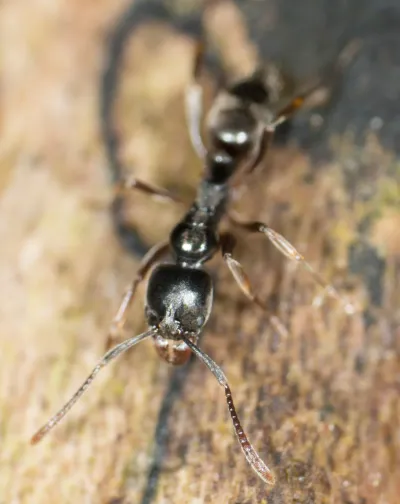
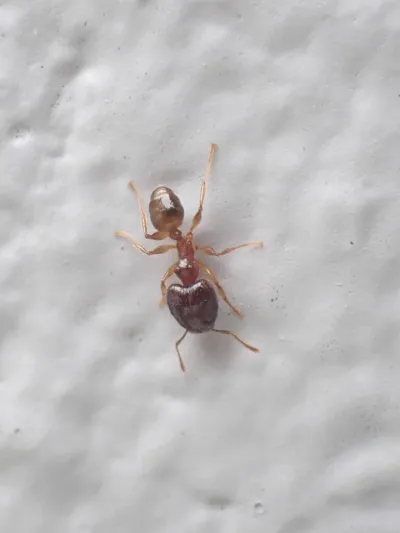
Explore other species in the ants family
Commonly Confused With
Silky Ants are often mistaken for these similar pests
Where Silky Ants Are Found
Hover over states to see their names. Green regions indicate where silky ants have been reported.
Common Questions about Silky Ants
What is a silky ant?
+
A silky ant is a medium-sized black ant in the Formica genus. Its name comes from the fine, flat hairs that give its abdomen a silvery, satin-like shine. It is one of the most common field ants in the eastern United States and southern Canada.
Are silky ants the same as carpenter ants?
+
No. Silky ants nest in soil, while carpenter ants tunnel into wood. Silky ants are also smaller. Look at the ant from the side: a silky ant's back has a clear dip in the middle, while a carpenter ant's back is one smooth, even curve.
Do silky ants bite or sting?
+
Silky ants have no stinger. They can bite if you handle them or dig into their nest, and they can spray formic acid. The bite is mild and usually causes only brief irritation. Most of the time they run away instead of fighting.
Do silky ants damage homes?
+
No. Silky ants do not chew wood or harm a home's structure. The main problems are small mounds in lawns and garden beds and the occasional worker that wanders inside. Winged ants may also show up indoors briefly during summer mating flights.
Why do I see silky ants on my plants?
+
Silky ants collect honeydew, a sweet liquid made by aphids and other sap-feeding insects. They often climb plants and trees to reach it, and they guard those insects from predators. Lots of silky ants on a shrub usually means it has an aphid problem.
When are silky ants most active?
+
In the Mid-Atlantic, silky ants are busiest from May through August. They come out on warm days in early spring and slow down in fall. Winged queens and males usually fly to mate in early to mid summer.
Do I need to treat silky ants in my yard?
+
Not always. A few small mounds away from the house usually cause little harm, and the ants help turn over soil and eat other insects. Treatment makes sense when nests sit next to the foundation, workers keep coming inside, or mounds are in high-use areas.

With five years of hands-on experience in the pest control industry, George Schulz is a registered technician with the Virginia Pest Management Association and a proud third-generation professional in a family business that's been protecting homes for over 58 years. He manages and trains a team of service pros while also leading internal research efforts—recently spearheading a deep-dive review of thousands of documents on pest control materials to hand-pick the most kid and pet friendly, most effective solutions tailored specifically for homes in the DC metro area.
Local Ants Help
Dealing with ants at home? Our licensed technicians provide ant control across Northern Virginia and Maryland.
