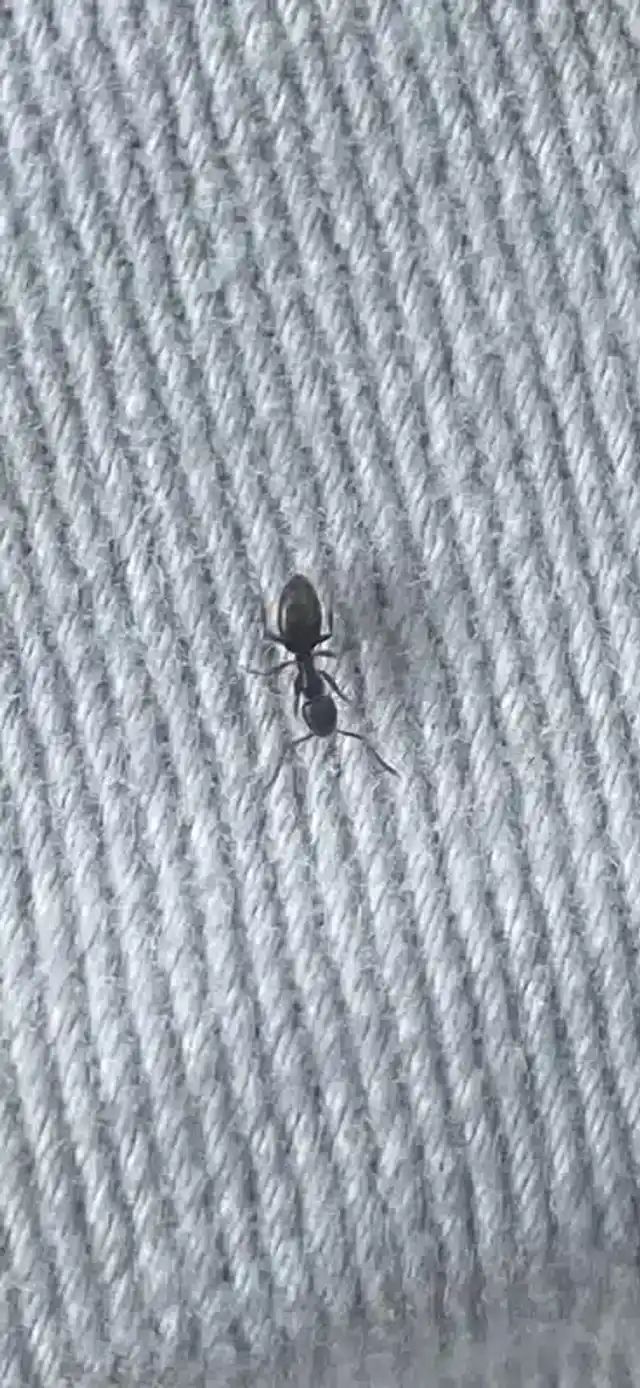

Finding ants marching across your bathroom tile can be surprising and annoying. After all, bathrooms aren’t known for food crumbs or sugary spills. But these tiny invaders have good reasons for showing up, and knowing why helps you get rid of them for good.
Ants in bathroom areas are especially common during ant season when warm weather brings more activity. In my years working with homeowners across the DC metro area, bathroom ant calls are among the most frequent when temps start rising.
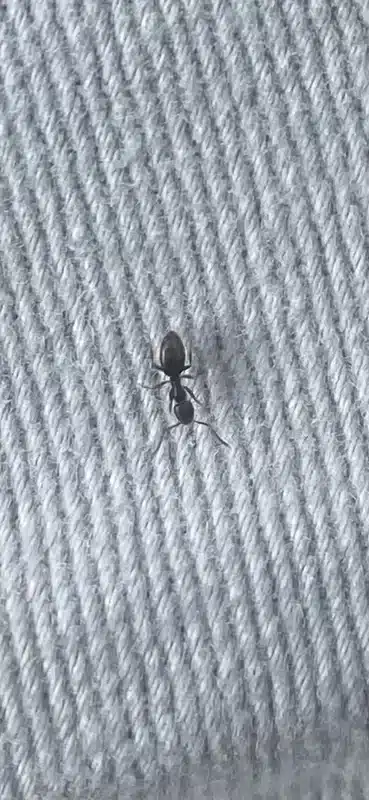
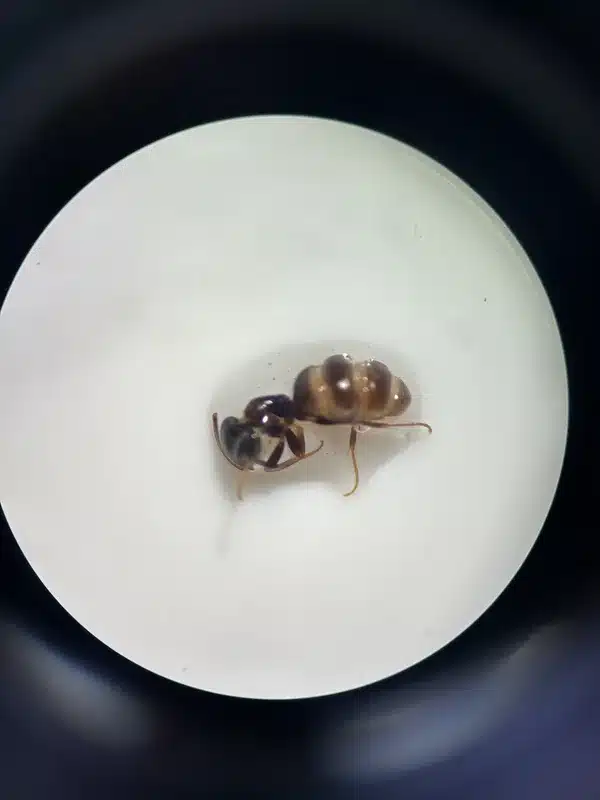

The type of ant you have changes the treatment plan, so getting the ID right matters.
Why Bathrooms Draw Ants
Your bathroom gives ants everything they need. Water is the main draw. Most ant species need steady moisture to keep their colonies going. Bathrooms stay more humid than other rooms, making them a perfect target.
Many bathroom products also attract ants. Glycerin in toothpaste and mouthwash gives them sugar. Dead skin cells and hair provide protein. Even tiny residues left on counters or around drains can serve as food.
The warmth and moisture in bathrooms also help chemical trails work better. This means ants can communicate more easily with their colony, which leads to larger groups following the same paths into your bathroom.
Common Bathroom Ant Species
Several ant species commonly invade bathroom spaces in Virginia, Maryland, and DC homes. Knowing which type you have helps pick the best treatment.
Size: 2.4-3.3mm. Color: Small and brown. Key sign: Rotten coconut smell when crushed. Bathroom habit: Nest in wall voids near hot water pipes. According to the University of Maryland Extension, odorous house ants are the most commonly submitted household ant to their diagnostic lab.
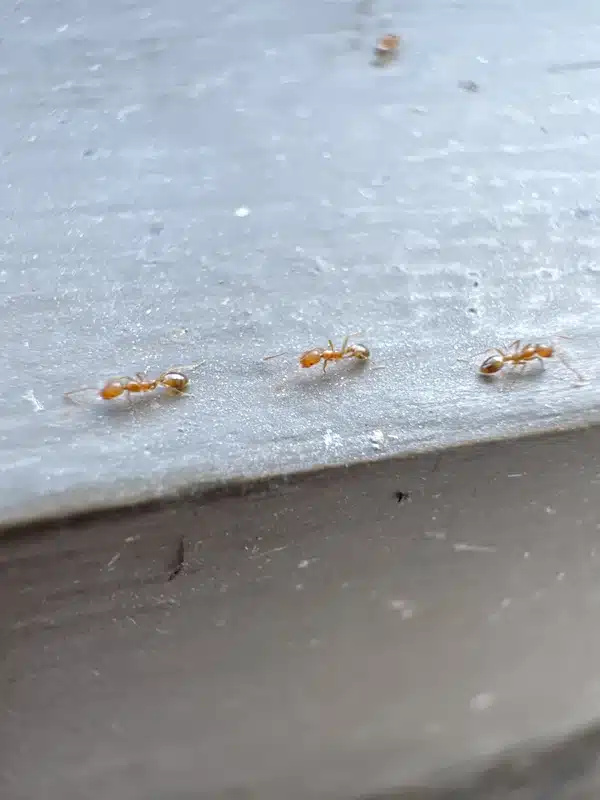
Size: 1.5-2mm. Color: Yellow to amber. Key sign: Form multiple colonies. Bathroom habit: Travel along plumbing lines between rooms. Pharaoh ants are especially tough because repellent sprays cause their colonies to split into even more spots.
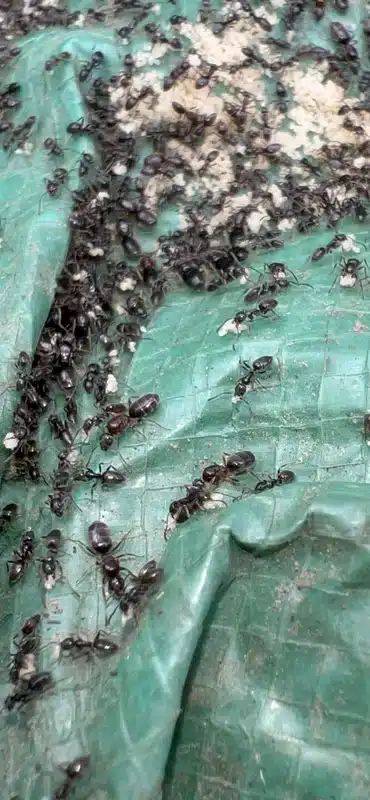
Size: 6-13mm. Color: Black to brown. Key sign: Wood damage and sawdust piles. Bathroom habit: Set up satellite colonies in water-damaged wood under bathtubs, shower pans, or flooring. Carpenter ants don’t eat wood but dig galleries in it. Learn to spot the signs of carpenter ants early.
Size: Small. Color: Yellow. Key sign: Nests in damp, rotting wood. Bathroom habit: Their presence usually points to hidden moisture problems rather than them causing the damage themselves.
Ants in the Shower, Tub, Sink, and Drains
Most bathroom ant calls we get describe the same picture: a line of ants along the tub edge, around the shower drain, or circling the sink basin in the morning. The fixtures are where the water is, so that is where the trail ends.
Ants rarely travel up through the drain itself. The P-trap under a sink or tub holds standing water that blocks the pipe. What people see as ants coming out of the drain is almost always ants entering through the unsealed gap where that drain pipe passes through the floor or the wall, then walking the last few inches over the fixture. Hair and soap buildup inside the drain cover keeps them coming back, so clearing drains is part of the fix.
Ants in the bathtub or a smooth sink basin are often stuck rather than nesting. They walked down for water and could not climb the glazed surface again. That is a useful clue: it means the trail starts above or behind the fixture, not below it.
Plumbing and Moisture Issues That Draw Ants
Hidden water leaks create the perfect setup for ant colonies near your bathroom. Even small drips from supply lines or faucets can keep wood moisture above 20 percent. That’s the point where many ant species start nesting in softened materials.
Condensation on cold water pipes gives ants another water source. Failed grout or caulk around shower areas lets water seep behind tiles, creating hidden wet zones that attract ants.
Bathroom exhaust fans that don’t run long enough after showers keep humidity high. This lets ants thrive even without a direct water source. Poor drainage around exterior foundations can also bring moisture inside, reaching bathroom areas.
How Ants Get Into Your Bathroom
Ants are great at finding tiny entry points that homeowners miss. They can squeeze through gaps as small as 0.4 millimeters.
Common Entry Points
Unsealed spaces where pipes go through floors or walls give ants easy access. These gaps around supply lines, drain pipes, and vent connections often lack proper sealing.
Hairline cracks in tile grout may seem minor but give small ants a way in. Gaps around baseboards, window frames, and door trim also serve as paths from wall voids or the outdoors.
According to Virginia Tech Extension, pavement ants often use foundation cracks, especially in homes with concrete slab construction.
Outdoor Pathways
Plants touching your home’s exterior create bridges that let ants reach upper-level bathrooms. Ivy, shrubs, or tree branches that touch siding give ants paths to soffit vents or other openings near bathroom areas.
How to Get Rid of Bathroom Ants
Getting rid of ants in bathroom areas means tackling both the current problem and the conditions that drew them in. The best results come from combining several methods.
Fix Moisture First
Before any treatment can really work, you have to cut the excess moisture. Fix leaking faucets, supply lines, and drain connections right away. Re-grout shower areas where water can get behind tiles.
Run bathroom exhaust fans for at least 30 minutes after showers. Consider adding a dehumidifier if your bathroom stays above 60 percent humidity.
Use Baits, Not Sprays
Ant baits work better than sprays because they target the whole colony, not just the workers you see. Place gel or enclosed baits along active ant trails where you’ve seen steady activity.
Good baits use slow-acting ingredients that give worker ants time to carry the bait back to the colony before it kicks in.
According to Penn State Extension, the most effective ant baits use slow-acting ingredients like boric acid, hydramethylnon, or fipronil. These give workers enough time to carry the bait back and share it with other colony members, including larvae and the queen, before the poison takes effect. This delayed action is what makes colony elimination possible.
Don’t clean surfaces where you’ve placed baits for at least a week. Seeing more ants at first is normal as more workers follow trails to pick up the bait.
- Be patient: Don’t clean bait areas for 7 days. More ants means the bait is working.
- Place baits on trails: Put them where ants actually walk, not where you hope they’ll go.
- Use multiple types: Both gel and enclosed baits cover different ant preferences.
- Skip the sprays: Never spray near bait stations. It contaminates them and scatters the colony.
What NOT to Do
Don’t spray ants in bathroom areas with aerosol products. These kill visible workers but leave colonies alive. Worse, they often cause colonies to split into multiple spots, spreading the problem.
A spotless bathroom with ants every morning
A homeowner called about five to ten ants appearing by the sink faucet every morning in a bathroom that was, by any standard, spotless. The first inspection found no leaks, no crumbs, and properly sealed windows.
- Obvious sources ruled out: no visible leaks, clean surfaces, sealed windows
- The discovery: a small gap behind the vanity where the supply line entered the wall
- The hidden problem: condensation from the AC unit above was dripping down inside the wall cavity
The lesson I took from that job: the moisture that draws ants is usually the moisture you cannot see. Pulling the vanity is worth more than another round of spray.
Are Bathroom Ants Dangerous?
For the most part, no. Odorous house ants and pavement ants are a nuisance and nothing more. Pharaoh ants are the exception worth knowing about: they forage across drains, trash, and other contaminated surfaces and can carry bacteria onto clean ones. The risk in a home is low, but it is a reason not to let a pharaoh ant problem run for months in a room where you brush your teeth.
Carpenter ants carry a different warning. They do not eat wood, but they hollow galleries in lumber that has already been softened by water. Finding them around a tub or subfloor is not proof of major damage, and it is a strong signal to go looking for the leak that softened the wood in the first place.
Natural Options and What They Actually Do
Plenty of homeowners want to try something gentler before calling anyone. Some of it works, within limits.
Research published in Discover Applied Sciences found that spearmint, lemongrass, and rosemary essential oils repelled and killed destroyer ants in lab tests, likely by disrupting the pheromone trails ants use to navigate. That makes them a reasonable option for a minor, early problem.
A workable mix is 10 to 20 drops of peppermint oil and half a teaspoon of dish soap in about a cup of water, wiped along trails and entry points. The catch is that the oils break down fast and need reapplying every few days, and wiping a trail does nothing to the colony that made it.
Boric acid baits sit in between. Mixed with sugar or cornmeal they do reach the colony, and our guide to using borax for ants covers the ratios. Place them where ants actually walk, and keep them out of reach of children, pets, and anywhere they could contaminate personal care items.
Prevention: Keeping Ants Out for Good
Long-term prevention takes steady maintenance and attention to what draws ants to bathrooms.
Seal Entry Points
Use silicone caulk to seal gaps around pipe openings, baseboards, and window frames. For bigger voids, push in backer rod before applying caulk so the material doesn’t fall through.
Check and replace worn weatherstripping around bathroom doors and windows each year. Even small gaps let tiny ant species like pharaoh ants squeeze in.
Fix Your Exterior
Keep plants trimmed at least 18 to 24 inches from your home’s exterior walls. This removes the bridges that let ants reach bathroom areas from outdoor colonies.
Make sure water drains away from your foundation. Water that pools near walls can lead to moisture getting inside, which draws ants to bathrooms.
Daily Cleaning Habits
Wipe bathroom counters and sinks daily to remove residues that draw ants. Pay attention to areas around toothbrush holders, soap dispensers, and other items where buildup happens.
Wash and fully dry bathmats and towels on a regular basis. Damp fabric gives ants the moisture they’re looking for.
When to Call a Pro
Some bathroom ant problems need professional help for lasting results.
Call if activity continues after multiple treatments. If you still see ant trails after two full bait cycles (about 3 to 4 weeks), a pro assessment is needed.
Large carpenter ants inside your bathroom, especially winged ones, mean there are established colonies in your home’s structure. These need professional treatment to find and eliminate hidden nests.
Multiple ant species or repeated return visits often point to underlying moisture problems that need professional diagnosis. Licensed technicians can use moisture meters to find hidden issues that DIY approaches miss.
Our Approach to Bathroom Ants
When we get calls about bathroom ants, our technicians start with a full inspection of both inside and outside areas. We check for moisture issues, find entry points, and figure out which ant species we’re dealing with.
We use non-repellent treatments that let ants carry materials back to their colonies naturally. This targets the root of the problem, not just the symptoms.
For carpenter ant situations with structural damage, we pair moisture repairs with targeted treatments to stop the problem from coming back.
DC Metro Area Challenges
Homes in Virginia, Maryland, and DC face specific issues that make bathroom ant problems worse. The humid climate keeps average July humidity around 68 percent, which extends ant seasons and increases moisture risks.
Many older homes in our area have plumbing setups that create ideal ant habitat. Shared walls in DC row homes and Maryland townhomes let colonies spread between units, requiring coordinated treatment.
Clay-heavy soils in areas like Chantilly hold moisture near foundations. Poor drainage in developing areas like South Riding pushes outdoor ant colonies to look for water sources inside. We see the same thing when we do ant control in Loudoun County, where irrigated mulch beds keep the ground damp right up against the foundation. Knowing when ants come out seasonally helps you prepare before problems start.
Professional Treatment Options
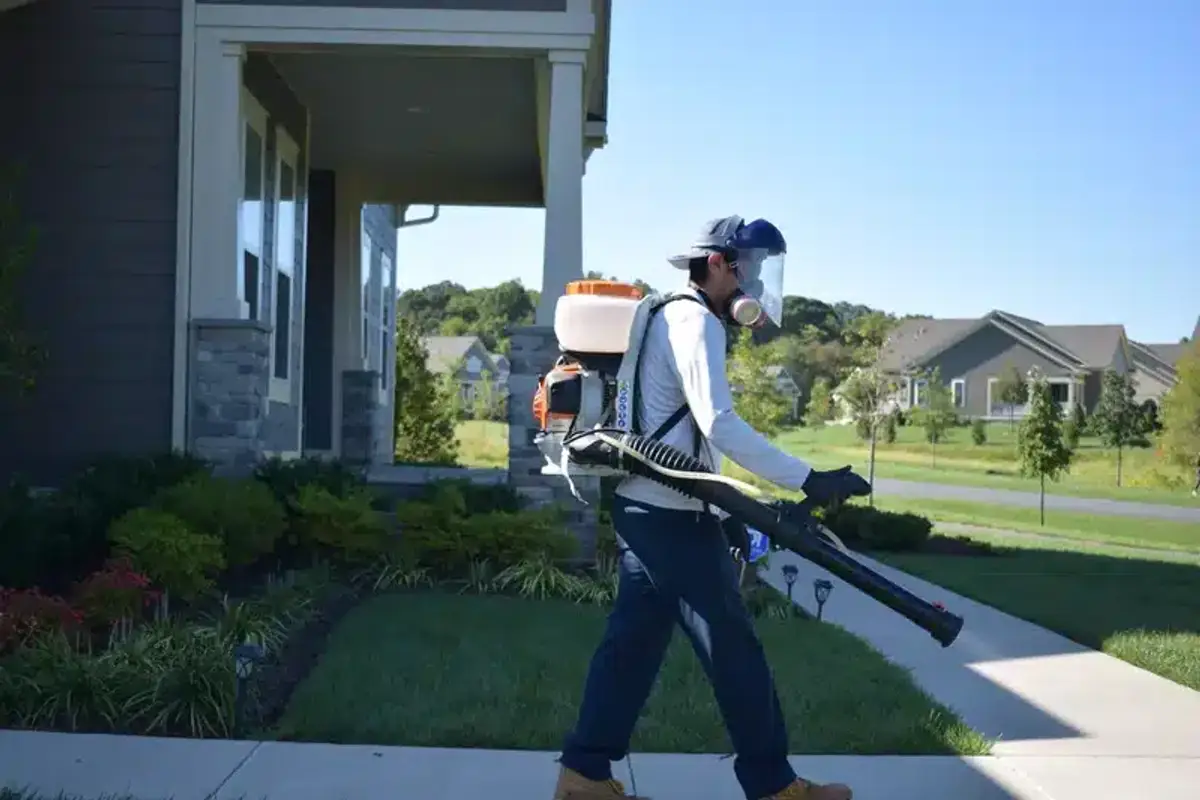
Our bathroom ant treatments involve both interior and exterior applications. Interior work focuses on crack and crevice applications using non-repellent materials that ants carry back to their nests.
Exterior perimeter treatments create barriers around your foundation. These target outdoor colonies before they can set up satellite nests in bathroom areas.
For carpenter ant cases, we may apply dusts or foams directly to nesting sites. This means finding exact colony locations, often using moisture meters to spot water-damaged areas.
Our tri-annual maintenance programs (three treatments per year) provide ongoing protection against seasonal ant activity. Regular service keeps barriers in place for year-round control.
If you also notice ants in your kitchen, the colony may be bigger than expected. Call us at 703-683-2000 or email info@bettertermite.com to schedule an inspection.