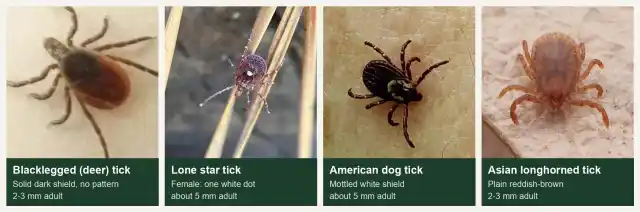

Here is the short version. The four ticks people in Virginia and Maryland find most are the deer tick (small, plain dark back), the lone star tick (a white dot on the female), the American dog tick (white mottled marks on the shield), and the newer Asian longhorned tick (small, plain reddish-brown). The chart below puts each one side by side with its size, its marks, and what it can carry.
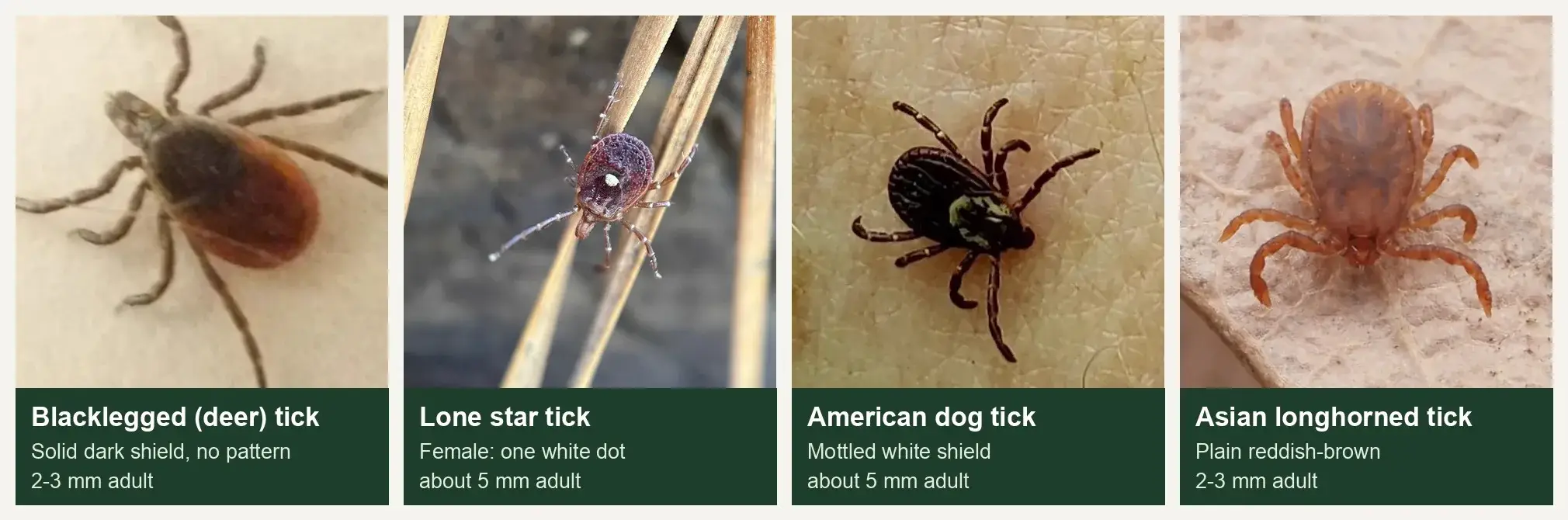
Tick Identification Chart by Species
Adult sizes below come from Virginia Tech’s Insect Identification Lab. Disease lists come from the Virginia Department of Health and the CDC.
| Species | Adult size (unfed) | What to look for | Mouthparts / festoons | Main diseases |
|---|---|---|---|---|
| Blacklegged (deer) tick | 2-3 mm | Plain dark shield; female’s rear half is orange-red; black legs | Long and thin / no festoons | Lyme disease, anaplasmosis, babesiosis, Powassan virus |
| Lone star tick | About 5 mm or less | Female has one white dot mid-back; male has faint white marks on the rear edge | Long / festoons present | Ehrlichiosis, tularemia, STARI, Heartland virus, alpha-gal syndrome |
| American dog tick | About 5 mm | Brown body with mottled white or cream shield | Short and stout / festoons present | Rocky Mountain spotted fever, tularemia |
| Brown dog tick | Similar to a dog tick, but slimmer | Plain reddish-brown, no white marks | Short, with a hexagon-shaped base / festoons present | Rocky Mountain spotted fever (mainly the Southwest) |
| Asian longhorned tick | 2-3 mm | Plain reddish-brown, no white marks | Short and squat / festoons present | Still being studied in the U.S.; a livestock pest here |
| Gulf Coast tick | Similar to a dog tick | Ornate silver shield like a dog tick | Long and rectangular / festoons present | Rickettsia parkeri (Tidewater fever) |
The quickest split: if the back is plain and dark with no pattern at all, think deer tick. If there is white on it, it is a lone star, a dog tick, or a Gulf Coast tick. If it is plain reddish-brown and tiny, and you found a lot of them on a pet or in tall pasture grass, think Asian longhorned.
Why the Species Matters Here
I found four ticks on my leg after stepping into a field for a couple of minutes on a road trip. I didn’t need to know what they were to pull them off. I did need to know to decide what to watch for over the next month, because a deer tick and a dog tick don’t carry the same diseases.
Daren, one of our registered technicians, has a worse one. He services a home in Fort Hunt with a creek and thick woods out back and a yard that gets overgrown in summer. One visit he got home and counted 15 or 16 ticks on himself. That was between June and August, which he says is the worst stretch for deer tick nymphs. There is a lot of deer and fox traffic through that yard, and he still lifts his pant legs and checks every time he goes there.
Tick Size Chart by Life Stage
Hard ticks go egg, six-legged larva, eight-legged nymph, then adult. Each stage needs a blood meal, and size jumps at every step. The table uses the adult sizes from Virginia Tech and the nymph size from VDH. Seed comparisons are for a flat, unfed tick.
| Species | Larva (6 legs) | Nymph (8 legs) | Adult female, unfed | Adult female, fully fed |
|---|---|---|---|---|
| Deer tick | Grain of sand | Under 1/16 inch; poppy seed | 2-3 mm; sesame seed | Swollen, gray-tan, several times its flat size |
| Lone star tick | Grain of sand (seed ticks) | Sesame seed | About 5 mm; apple seed | Swollen, gray; about 3x the weight of a fed deer tick |
| American dog tick | Grain of sand | Sesame seed | About 5 mm; apple seed | Swollen, gray, several times its flat size |
The deer tick nymph is the one that gets people. VDH notes it is less than 1/16 of an inch long, which is easy to mistake for a freckle. University of Minnesota Extension warns that fed ticks are hard to identify because their size and color change so much, so check the shield and mouthparts before trusting size.
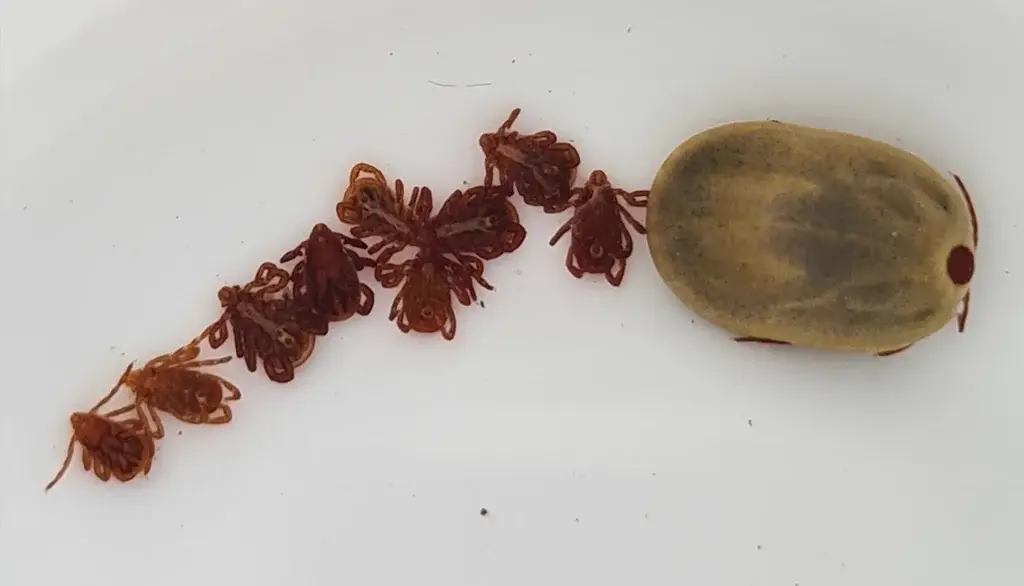
Lone Star Tick Size Compared to a Deer Tick
An adult lone star tick is about 5 mm long. An adult deer tick is 2-3 mm. So side by side, the lone star is close to twice as long and noticeably wider. The nymphs follow the same pattern: a lone star nymph is about sesame-seed size, and a deer tick nymph is closer to a poppy seed.
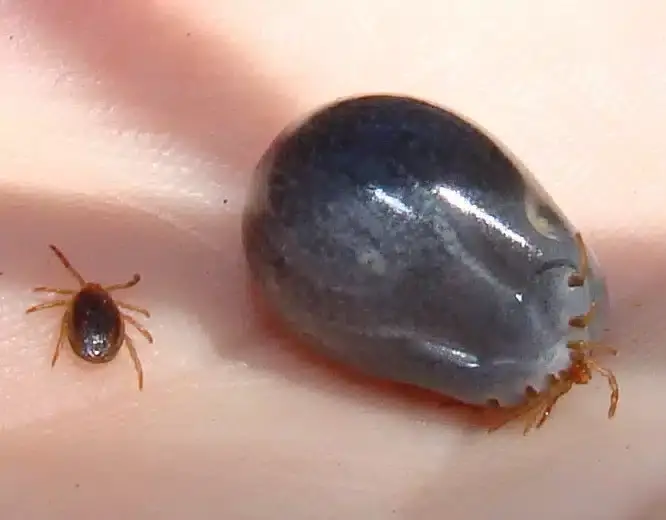
Size alone can fool you, though. A partly fed deer tick can be bigger than a flat lone star. Check the back. The lone star female’s white dot and the lone star’s festoons (the little rectangles along the rear edge) settle it.
Tick Size Chart by Day of Feeding
A tick does not stay the size on the chart once it bites. It starts flat and dark, then swells and turns gray or tan as it fills. How long that takes depends on the species.
A 2023 study in the Journal of Medical Entomology timed adult females feeding on white-tailed deer. Blacklegged (deer) tick females took about 6 days to finish feeding and weighed about 0.20 g when full. Lone star females took about 11 days and reached about 0.63 g, roughly three times heavier.
Here is a rough guide for a deer tick female, which is what most size-by-day charts show:
- Day 1: Still flat. Looks like the chart photo, with the head buried.
- Days 2-3: The rear body starts to round out and lighten.
- Days 4-5: Clearly swollen and gray-brown. Legs look small for the body.
- Day 6 or so: Full and ready to drop off.
Use this as a rough clue, not a timer. What matters most is to get it off, save it, and write down the date. For what an attached tick looks like on skin, see our guide on what a tick looks like.
Tick Species in Virginia and Maryland, With Photos
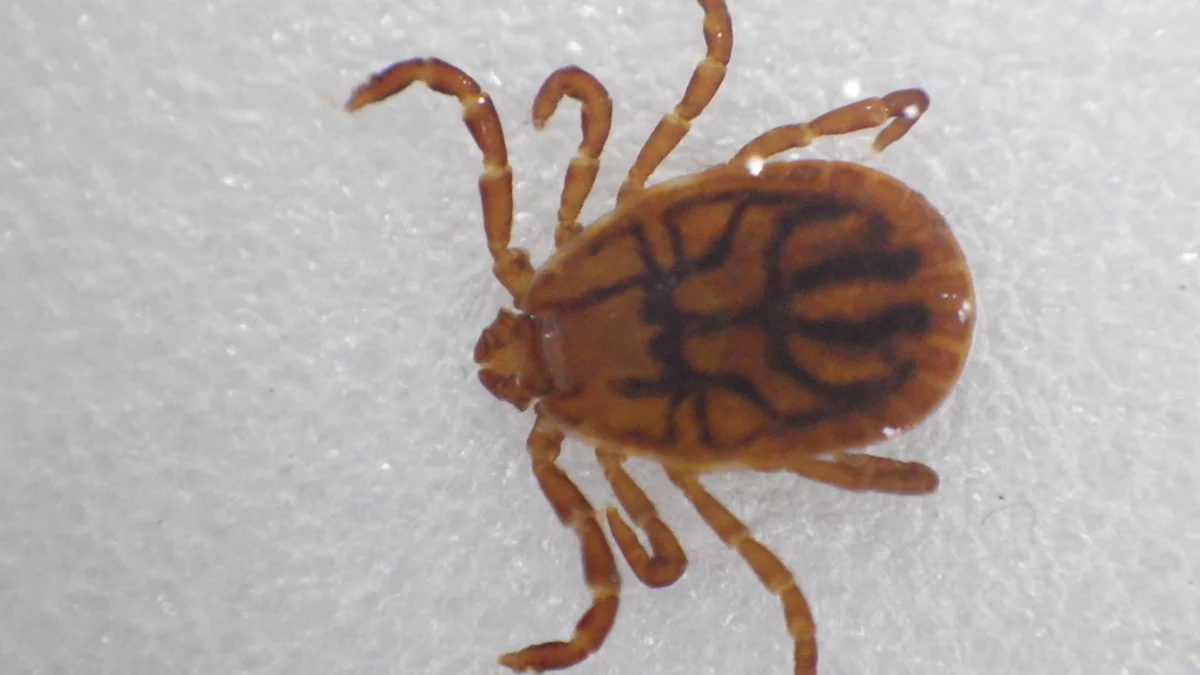

Blacklegged Tick (Deer Tick)
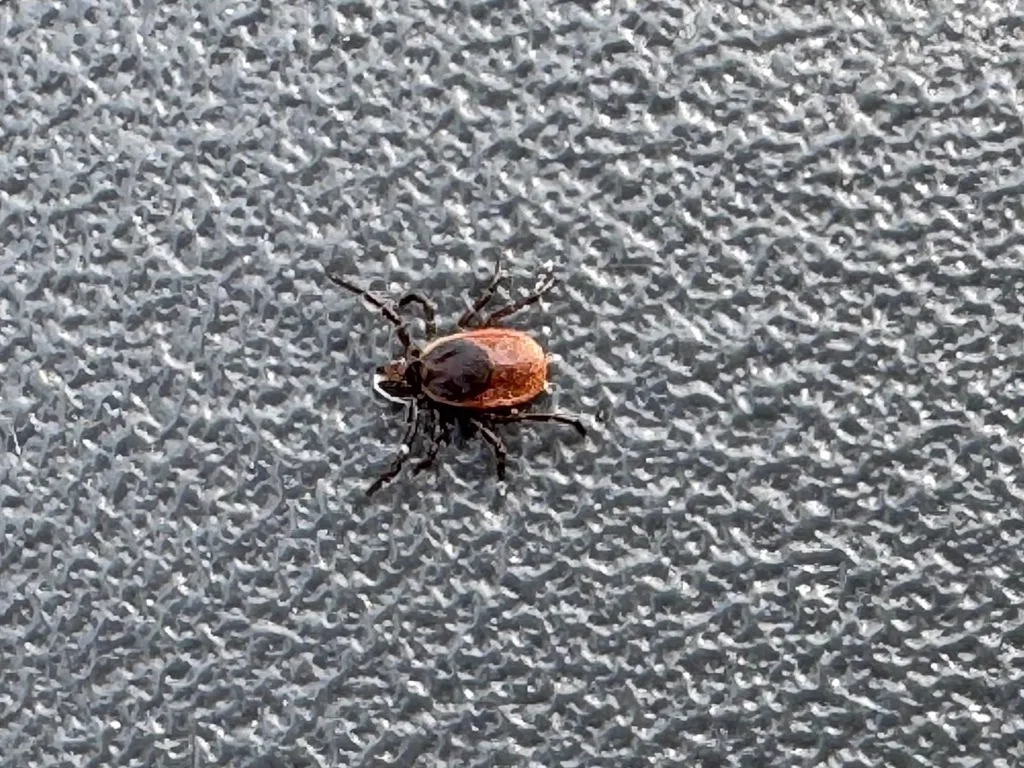
The blacklegged tick has a solid dark shield and long, thin mouthparts. Females are orange-red on the back half. Males are dark all over and look like a tiny watermelon seed. There are no festoons.
Nymphs quest from late spring into summer, and they are the stage behind most Lyme cases because they are so hard to see. Adults are out in fall and on warm winter days. The CDC lists Lyme disease, anaplasmosis, babesiosis, and Powassan virus among the diseases this tick spreads.
Lone Star Tick
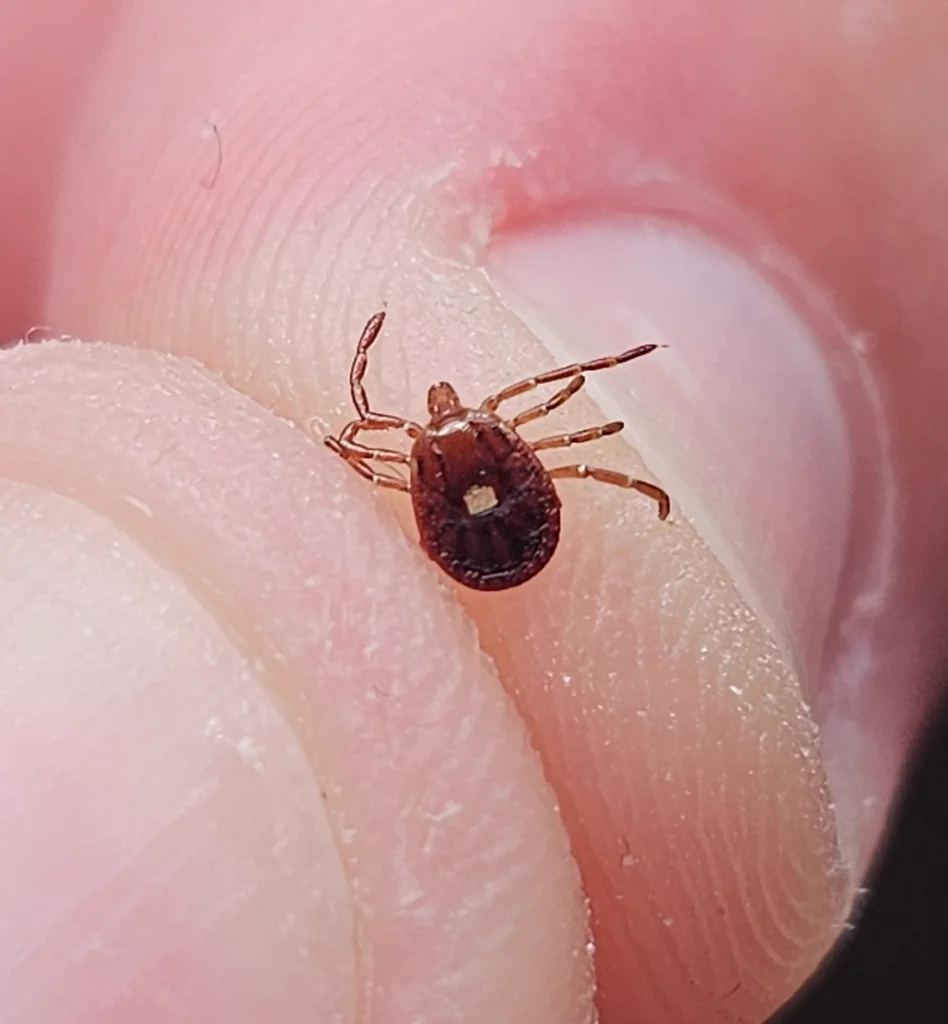
Female lone star ticks are the easiest to name, thanks to the single white dot on the back. Both sexes have long mouthparts, eyes, and festoons. They move fast and walk toward you instead of just waiting on a grass blade.
From July through September you can run into clusters of larvae, called seed ticks, that cover a pant leg in seconds. Virginia Tech notes lone stars are very common in the Piedmont and Coastal Plain, which covers most of Northern Virginia. They carry ehrlichiosis, tularemia, and Heartland virus, and their bites are linked to alpha-gal syndrome, a red meat allergy.
American Dog Tick
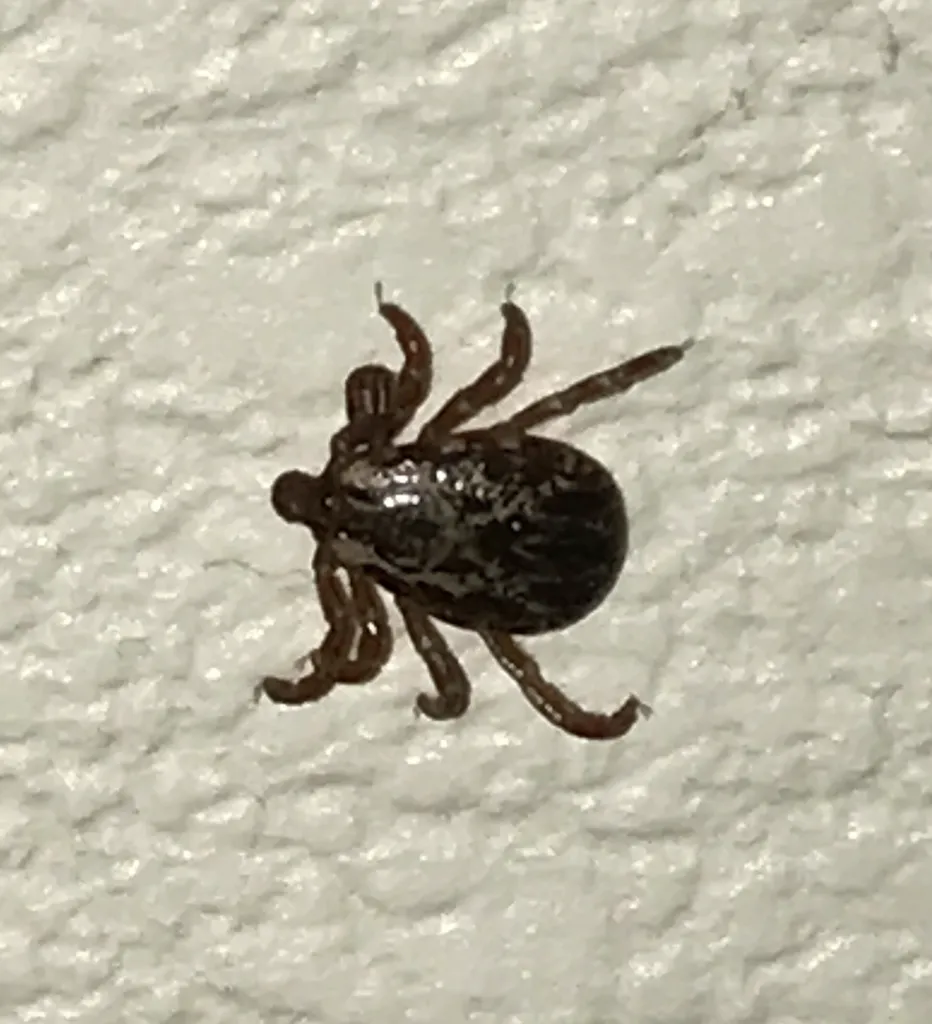
The American dog tick has a mottled cream pattern on its shield, short mouthparts, and festoons. It likes open fields, trail edges, and roadsides more than deep woods. Adults bite people mostly from April through August.
This species can carry Rocky Mountain spotted fever and tularemia. Daren finds dog ticks all over leaf piles when he kicks them away from a foundation. Leaf litter is their favorite spot.
Brown Dog Tick
The brown dog tick is plain reddish-brown with no white marks. It is the one tick here that can finish its whole life cycle indoors, so it shows up in kennels, basements, and dog beds.
It mostly bites dogs but will bite people when numbers get high. Getting rid of it means treating the dog and the house together: hot-wash the bedding, vacuum and steam the furniture, and treat the cracks where it hides.
Asian Longhorned Tick
The Asian longhorned tick is small and plain reddish-brown. In the U.S., females reproduce without mating, so one tick can start a large local population. Virginia Tech says it was first found in Virginia in 2018 and is mostly in the western half of the state and the north.
It rarely bites people so far. It mostly shows up in big numbers on livestock, dogs, and wildlife, and researchers are still working out what it can spread to humans.
Gulf Coast Tick
The Gulf Coast tick looks a lot like an American dog tick, with a silvery ornate shield. VDH points to its long, rectangular mouthparts as the way to tell them apart. It is the main carrier of Rickettsia parkeri, which VDH calls Tidewater fever, in eastern Virginia.
How to Read a Tick Identification Chart
Most tick diagrams label three parts: the mouthparts, the scutum (the hard shield behind the head), and the festoons (small rectangles along the back edge). Here is how to use them, in order:
- Count the legs. Six legs is a larva. Eight legs is a nymph or adult.
- Look at the scutum. Plain dark is a deer tick. One white dot is a lone star female. Mottled white is a dog tick or Gulf Coast tick. Plain reddish-brown is a brown dog tick or Asian longhorned tick.
- Check the rear edge for festoons. Deer ticks have none. Most of the others do.
- Look at mouthpart length. Deer, lone star, and Gulf Coast ticks have long ones. Dog ticks and Asian longhorned ticks have short ones.
- Compare size last. Feeding changes size a lot, so size is the weakest clue.
One mix-up we see all the time: clover mites. Daren says nine times out of ten when a customer thinks they have ticks on a patio or windowsill, it’s clover mites. They are bright red, far smaller than a tick, and they run. A tick on a wall moves slowly.
Seasonal Tick Chart for the Mid-Atlantic
| Months | What is active | What it means for you |
|---|---|---|
| March-April | Adult lone star and dog ticks start questing; deer tick adults on warm days | Start tick checks after yard work |
| May-July | Deer tick and lone star nymphs peak | Highest bite risk, and the ticks are the hardest to see |
| July-September | Lone star larvae (seed ticks); Asian longhorned clusters on livestock | Clusters of tiny ticks on legs after tall grass |
| October-December | Deer tick adults peak for fall mating | Lyme risk continues after the first frost |
Disease Risks by Tick Species
Knowing the species tells you what to watch for. It doesn’t replace a doctor, but it gives the doctor a head start.
Maryland reported 2,463 Lyme disease cases in 2023 and more than 3,000 in 2024, nearly triple the 2020 count, according to Maryland Department of Health figures reported by The Baltimore Banner. The same May 2026 report cited CDC data showing emergency visits for tick bites up more than 25% from the year before.
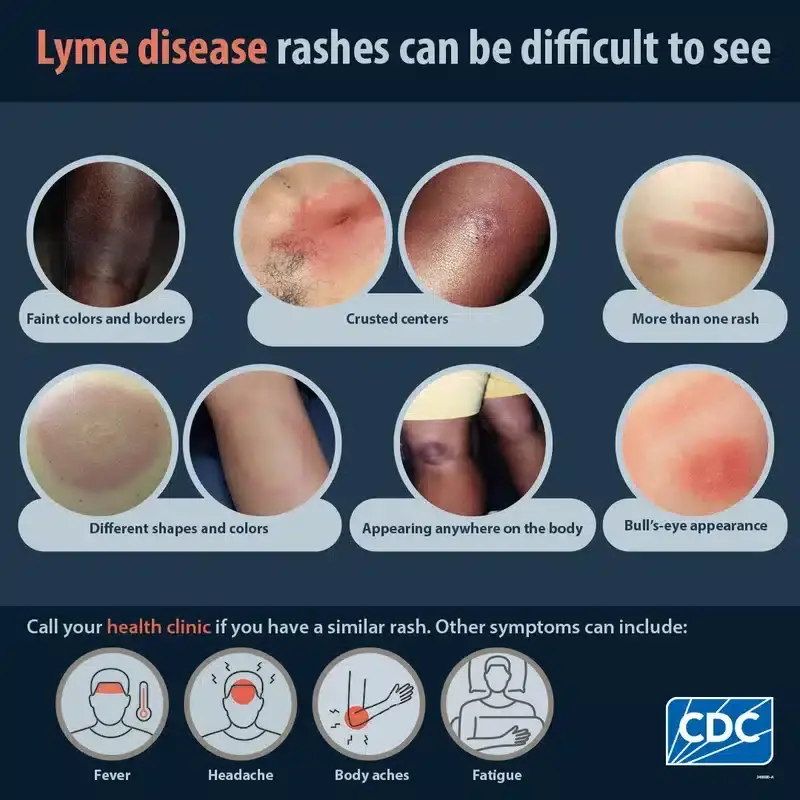
Most of those Lyme cases start with a deer tick nymph nobody saw. The first sign is often a rash, and it doesn’t always look like a bullseye.
Virginia has seen rising babesiosis cases, a deer tick disease, with 17 confirmed or probable cases prompting a health department alert in 2025. Virginia also began tracking alpha-gal syndrome as a reportable disease in July 2025, after years of only anecdotal reports tied to lone star tick bites.
This one is personal for our team. I have a family member who was hit hard by Lyme disease, and it changed how they eat and live. Daren has family who have had it too. His point is that once Lyme goes a while without being caught, it gets much harder to treat.
Free Tick Identification Help
The Virginia Department of Health runs a tick survey where residents can send in a tick to be identified. The University of Rhode Island’s TickEncounter field guide also has photos of each species unfed, partly fed, and fully fed.
Tick Removal and When to Worry About a Bite
Use fine-tipped tweezers and grab the tick as close to the skin as you can. Pull straight up with steady pressure. Don’t twist or jerk. The CDC’s after-a-bite guidance covers the steps.
Skip heat, petroleum jelly, and nail polish. They take longer and irritate the tick while it is still attached.
After removal, clean the bite and your hands. Save the tick in a sealed container with alcohol and write the date. Watch the spot for the next 30 days, and see a doctor if you get a rash, fever, or flu-like symptoms.
Keeping Ticks Out of Your Yard
Personal Protection
EPA-registered repellents with DEET, picaridin, IR3535, or oil of lemon eucalyptus work on ticks. Permethrin-treated clothing and shoes add a second layer, since ticks usually climb on at the ankles.
Yard Work That Helps Most
Daren tells customers that keeping the grass low and the yard cleaned up does more than most people expect. Ticks gather in shade, thick brush, overgrown shrubs, low branches, tall grass, and leaf litter. He has even turned them up in mulch beds during termite inspections.
- Rake leaf litter away from the house and play areas
- Keep the lawn short and cut back brush where the yard meets the woods
- Put a 3-foot strip of wood chips or gravel between lawn and woods
- Stack firewood off the ground and away from the house
- Discourage deer with fencing or plant choices
For a look at a tick that often gets mislabeled, see our post on the grey tick.
Professional Tick Treatment
Tick pressure here peaks in spring and fall. Our LawnShield program uses granular applications, typically in March and November, to reach the leaf litter where adult ticks overwinter. From April through October we spray the ecotone, the edge where lawn meets woods, where ticks wait for a host. You can see how the visits work on our tick control page. Mosquito and tick service starts at $75 per visit, and pricing goes up with yard size.
For pets, ask your vet about oral or topical tick preventives. For brown dog ticks, treat the pet and the indoor space at the same time.
Professional Tick Control in Northern Virginia and Maryland
Our family has run this business for 58 years, and our team has more than 300 years of combined experience. We’ve watched tick numbers and tick diseases climb across the region over that time.
We don’t lock customers into contracts, and our unlimited callbacks mean we come back if ticks do. Call 703-683-2000 or email info@bettertermite.com for a tick assessment.