
A termite inspection in Maryland is a visual check for termites and other wood-eating insects. It must be done by a company licensed by the Maryland Department of Agriculture (MDA). For a home sale or a mortgage, Maryland wants the results on its own state form, the MD-1. Many people expect the national NPMA-33 form instead. For homeowners who just want to know if they have termites, the inspection is simpler, and with us it’s free.
I’m George Schulz, third generation at Better Termite, and I’ve helped over 100 customers with termite requests. Maryland is a little different from Virginia on paperwork. So below, I’ll walk through the two kinds of inspections, the Maryland rules, what we check, and what it costs.
Two Kinds of Termite Inspection in Maryland
Most confusion starts here. People search for a “termite inspection in Maryland” for two very different reasons. Basically, one is about protecting a home you live in. The other is about paperwork for a sale.
| Homeowner Inspection | Real Estate Inspection (MD-1) | |
|---|---|---|
| Who asks for it | You, the homeowner | Buyer, lender, VA, or the contract |
| Why | You saw signs or want protection | A sale or a mortgage |
| Paperwork | Findings and a treatment plan | Form MD-1, with a diagram |
| Who can do it | MDA-licensed company | MDA-licensed company |
| Cost with us | Free | Call 703-683-2000 for pricing |
The on-site work looks similar for both. The big difference is the report. For a sale, the report is a formal state document that goes into the closing file. For a homeowner, the goal is simply to find out what’s going on and what to do next.
Who Can Do a Termite Inspection in Maryland
In Maryland, you can’t just hire a handyman to check for termites. State law counts “inspection” and “detection” as pest control. So any business that does them must be licensed.
The Maryland Department of Agriculture says every business that offers pest inspections must be licensed. Additionally, employees doing the work must be certified applicators or registered pest control technicians. Termite work falls under the state’s wood destroying insects category.
We’re members of the Maryland Pest Management Association, the NPMA, and the VPMA. Our family has been in this industry for 58 years, and our team has about 300 years of combined experience.
Termite Inspections for Maryland Home Sales
If you’re buying or selling, this is the section that matters most. Maryland’s rules for real estate inspections are more specific than a lot of people realize.
Maryland Uses the MD-1, Not the NPMA-33
In most states, the termite report for a closing is the NPMA-33. Maryland is different. The NPMA’s forms guidance lists Maryland as one of 14 states that requires its own state form instead.
That state form is the MD-1. Under Maryland regulation COMAR 15.05.01.14, termite inspections for a sale or a home loan must use Form MD-1. The report has to include:
- Whether wood-destroying insects are present, and any visible evidence with specific locations
- Visible damage to the structure
- Signs of previous treatment
- Areas that could not be inspected, and why
- Conditions that invite infestation, like wood touching soil
- A diagram of the structure showing where evidence was found
The inspector also has to probe or sound the wood they can reach. That covers the outside, the inside, the basement, the crawl space, and attached structures. Licensed firms keep a copy of each report for two years.
When a Termite Inspection Is Required
Maryland regulations set how a real estate termite inspection must be done. They don’t say every sale needs one. In practice, though, most buyers end up with one because of their loan or contract.
The biggest example is a VA loan. The VA’s local requirements page says wood-destroying insect information is required for the entire state of Maryland. The same is true for DC and Virginia. Other lenders and many purchase contracts ask for a termite inspection too, especially on older homes.
Ask your lender early whether they need a termite report and how recent it must be. Then schedule it alongside your home inspection so the timeline stays on track. When the MD-1 comes back, read the findings, the damage notes, and the inaccessible areas list, not just the checkbox at the top.
If you’re selling to a buyer using a VA loan, expect the termite report to come up. Clearing clutter from the basement, garage, and crawl space entrance gives the inspector better access. Additionally, it cuts down on the “could not inspect” notes that make buyers nervous.
Make sure the report your client receives is an MD-1 from an MDA-licensed firm. If a report shows up on a different form for a Maryland property, ask the inspecting company about it before closing.
For a deeper look at negotiating after a report, see our guide to a termite inspection for a home purchase.
What a Maryland Termite Inspection Covers
Whether it’s for a sale or for your own peace of mind, a good termite inspection follows a pattern. Here’s how our registered technicians work through a home.
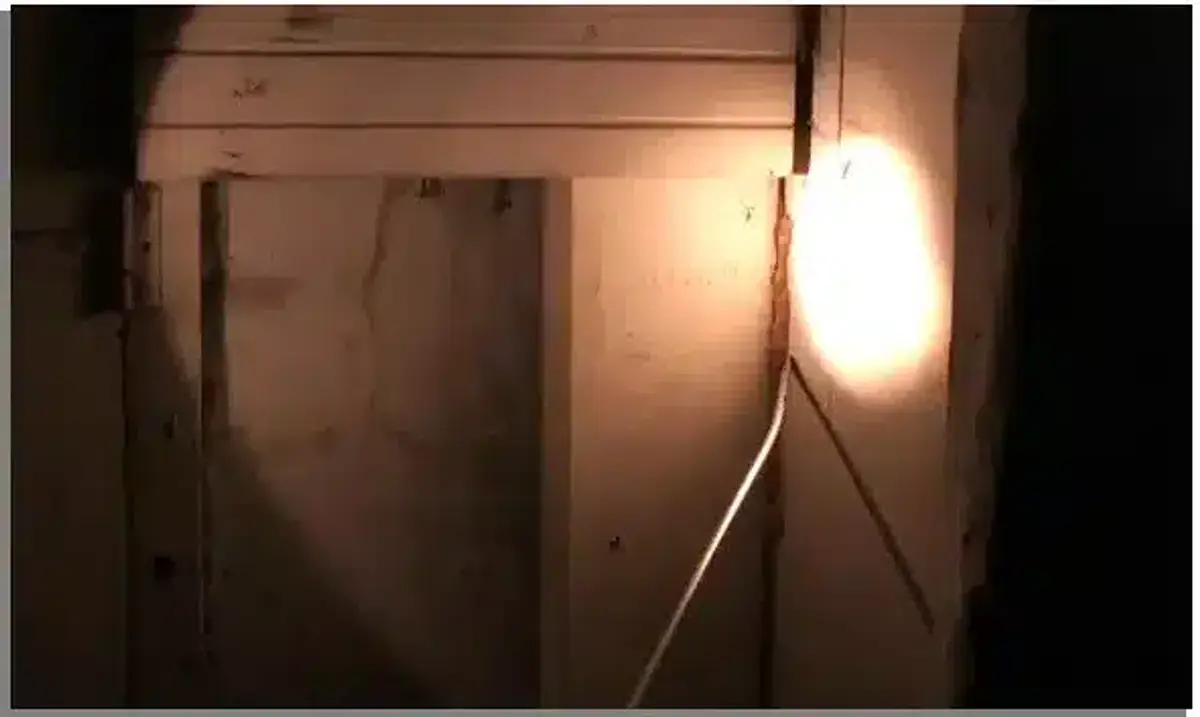
We work from the outside in. Here are the steps.
We walk the outside of the house and look below eye level along the foundation. Stoops, porches, chimneys, and mulch beds get extra attention, because soil and wood meet there. We’re looking for mud tubes, damaged wood, and conditions like wood touching soil.
Many Maryland homes have basements or crawl spaces. We check the band board and sill plate, where the wood frame sits on the foundation. We also probe accessible wood and look for tubes running up the foundation walls.
Garages, decks, and additions are common trouble spots. Seams where a newer structure meets the original house give termites hidden paths inside.
Inside, we look at window sills, door frames, and baseboards for bubbling paint or soft wood. We also check for piles of shed wings near windows, which often point to a spring swarm.
For a real estate inspection, the findings go on the MD-1 with a diagram. For a homeowner inspection, we explain what we found and your options, whether that’s protection, treatment, or nothing at all.
Every home is a little different, so the order can change. Still, those are the spots where we find termites most.
Daren, one of our registered technicians with almost 10 years in the field, says he finds termites most often in mulch beds, then at the band board and sill plate in the basement, then in the garage. Outside, chimneys and stoops are his top two spots. “That’s why I always start my inspection on one side of the stoop and work my way around the whole house,” he says.
One of the hardest cases he’s had involved a basement where everything was covered by drywall at the band board and sill plate. The homeowners had just remodeled with brand-new flooring. He couldn’t see where the termites were coming from. So he had to warn them the fix might mean drilling into that new floor. Finished basements are common in Maryland, and this is exactly why they’re tricky to inspect.
Termite Pressure in Maryland
Termites are not a rare problem here. According to University of Maryland Extension, the termites native to Maryland are subterranean termites in the genus Reticulitermes. They live in the soil and travel up into homes through mud tubes.
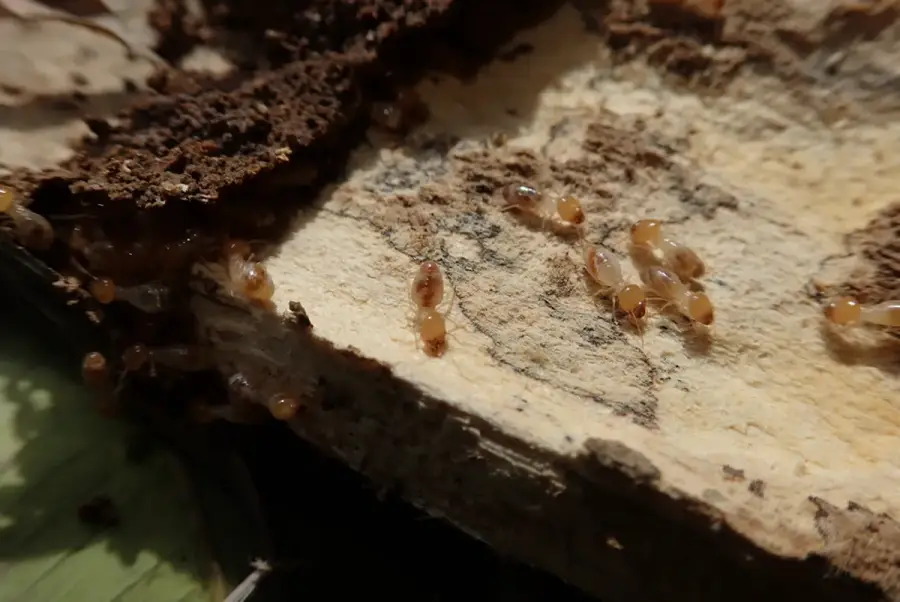
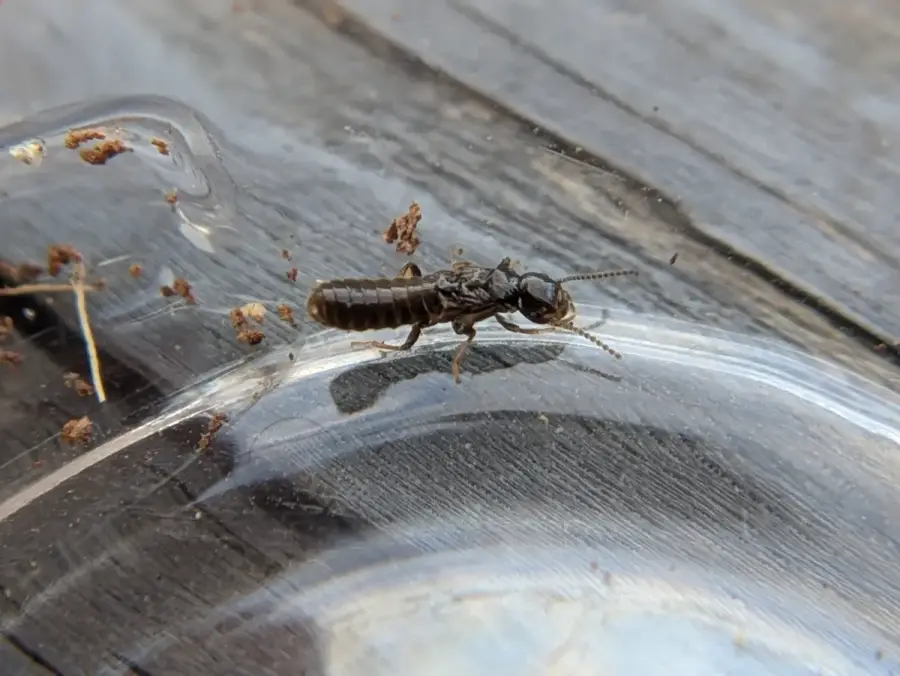
Signs that should prompt a termite inspection in Maryland include:
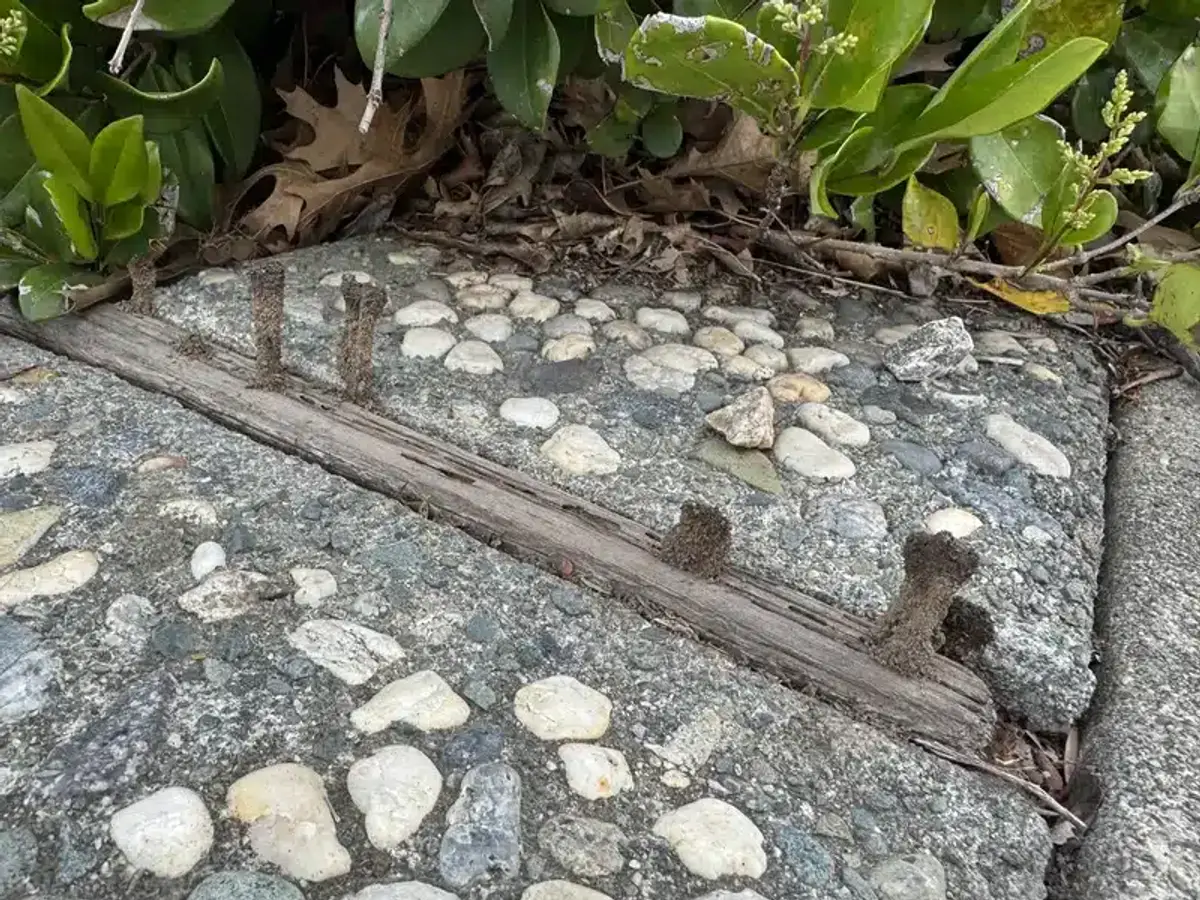
- Mud tubes about 1/4 inch wide on the foundation or exposed wood
- Piles of small, see-through wings on floors, window sills, or in spider webs
- Blistered or bubbling paint on wood trim
- Soft or hollow-sounding wood near the foundation
If you’re not sure what you’re seeing, our guides on termite mud tubes and termite swarmers have photos. Also, not all soft wood is termites. Check out termite damage vs. wood rot before you panic.
Subterranean termites need moisture, so workers stay inside soil, wood, and their mud tubes. They rarely come out into the open. This is why the first visible sign is often a swarm of winged termites or a pile of shed wings, rather than the workers doing the damage. UMD Extension notes that termites must work in a home for quite a while to cause structural damage, so you usually have time to get a proper inspection and compare options.
If you’ve spotted any of these signs, don’t wait for the damage to show. A trained eye can usually tell you what’s going on in one visit.
What a Termite Inspection Costs in Maryland
Here’s how pricing works with us:
- Homeowner termite inspection: free for homeowners who suspect activity or want to talk about protection.
- MD-1 report for a closing: a separate, formal document. Call 703-683-2000 for current pricing.
- Ongoing protection: if you want termite protection after the inspection, our Sentricon plans start around $35/month for an average DMV home, plus a one-time $200 setup fee on the first visit.
In my experience, it’s often cheaper and less stressful to protect a home with Sentricon before there’s a problem. For severe infestations, we sometimes add a targeted liquid treatment. You can read more about options on our termite control page, or learn how a termite bond works if you’re buying.
What Happens If the Inspection Finds Termites
Finding termites doesn’t have to end a sale or ruin your week. Here’s what usually happens next:
- The report documents it. For a sale, the MD-1 notes the evidence, the location, and any visible damage.
- Treatment gets planned. A licensed company recommends a treatment, like bait stations or a liquid barrier.
- Damage gets assessed. A termite inspection is not a structural report. If there’s visible damage, a contractor should look at it.
- The deal gets worked out. Buyers and sellers usually negotiate treatment, repairs, or price.
If you get a report you disagree with, the MDA suggests talking with the inspecting firm first, then getting a second opinion from another licensed company.
Getting a Termite Inspection in Maryland
We inspect homes across Maryland communities, including Montgomery County, Prince George’s County, and Anne Arundel County. That includes towns like Bethesda, Germantown, Kensington, Gaithersburg, and Laurel.
A termite inspection in Maryland comes down to three things. Use an MDA-licensed company, make sure a real estate report is on the MD-1, and read what the inspector could not see. Whether you’re closing on a house or just found wings on a window sill, a good inspection gives you real answers.
If you have questions or want to schedule a termite inspection, call us at 703-683-2000 or email info@bettertermite.com. One of our licensed technicians will walk you through your options.