
How Much Does Termite Treatment Cost?
For most single-family homes, the first termite treatment runs $1,000 to $2,000. The annual renewal after that runs about $200 to $300. Those figures come from Mississippi State University Extension, and they match what I see quoted around the DMV. Big homes, heavy infestations, and hard-to-reach foundations push you to the top of that range or past it.
Our pricing works differently. We don’t sell one-time termite jobs. Sentricon protection starts around $35/month plus a one-time $200 setup fee on the first visit, and the inspection is free.
Termite Cost at a Glance
| What you’re buying | Typical price |
|---|---|
| Inspection | Free for homeowners |
| WDI / VA letter | Call (703) 683-2000 |
| Liquid barrier | $1,000-$3,200 |
| Bait system | $1,500-$3,000 |
| Fumigation | $1,200-$3,800+ |
| Annual renewal | $200-$300 |
| Our Sentricon plan | From $35/mo + $200 setup |
Measured another way: liquid barriers are quoted at $3-$16 per linear foot of foundation, bait systems at $7-$12 per linear foot, and fumigation at $1-$4 per square foot (HomeGuide 2026 cost guide). The first-treatment and renewal figures come from Mississippi State University Extension.
What Drives the Cost
Several factors affect what you’ll pay. Every home and infestation is different.
- How bad the infestation is (localized vs widespread)
- Type of termite (subterranean vs drywood)
- Home size and layout (crawl space vs slab)
- Soil conditions and moisture near the structure
- How easy it is to access the foundation for trenching or drilling
Access matters more than most people expect. A tight or packed crawl space takes longer to inspect and longer to treat. That shows up in the price.
Termite Inspection Cost
A termite inspection runs $75 to $200 at companies that charge for it. The price usually scales with home size or the linear feet of foundation. Plenty of companies, us included, inspect for free if you are worried about activity or shopping for protection.
One inspection is almost always a paid product: the WDI letter. That is the wood-destroying-insect form lenders and the VA require at a closing. It is a separate document with a signed NPMA-33 form, priced on its own. Call us at (703) 683-2000 for the current price. If you are buying a home, our termite inspection guide for Virginia covers what the inspector looks at.
What an inspector checks: mud tubes on foundation walls, hollow wood when tapping trim, winged swarmers near lights, and live termites in soil or probe holes. For what to watch for between visits, see our termite prevention guide.
Treatment Options and Costs
Liquid Barrier Treatments
Liquid treatments involve trenching and drilling around the foundation to apply termiticide. Non-repellent liquids let termites contact the barrier, then carry poison back to the colony.
Cost: $3-$16 per linear foot of foundation. For an average home with 200 ft of perimeter, expect $1,000-$3,200 for the initial treatment. Annual renewals run $200-$300.
Best for: Subterranean termites. Quick protection. Works well for severe infestations where you need fast results.
Bait Systems (Sentricon)
Bait stations are placed every 10-20 ft around your home. Termites feed on the bait, carry slow-acting poison back to the colony, and cause it to collapse over months.
Cost: $7-$12 per linear foot, or $1,500-$3,000 for initial setup elsewhere. Our Sentricon plan folds that into a monthly rate instead: from $35/month plus the $200 setup fee. Many programs include a termite bond that covers damage repair if termites break through while you’re under contract.
Best for: Prevention and early-stage problems. Long-term colony elimination. Lower stress than liquid treatments.
Fumigation (Tenting)
Whole-structure fumigation kills drywood termites inside all wood. You’ll need to leave the home for 2-3 days. Tenting does NOT prevent subterranean termite reinfestation. You’ll still need a barrier or bait system after.
Cost: $1-$4 per square foot. A 1,200 sq ft home may cost $1,200-$2,500. A 2,500 sq ft home can run $2,200-$3,800. Complex rooflines push costs higher.
Best for: Widespread drywood termite problems inside walls that you can’t reach with other methods.
The price tag hides one real difference. A liquid treatment keeps working whether or not you renew. Mississippi State University Extension notes that a properly treated building can stay protected for years even if the annual fee goes unpaid. A bait system stops protecting you the day the contract lapses. So baits buy you early detection and an easier install. Liquids buy you residual.
Here’s how costs break down by how serious the infestation is.
Cost by Severity
| Severity | Treatment Type | Cost Range |
|---|---|---|
| Localized (spot treatment) | Targeted application | $200-$600 |
| Moderate infestation | Liquid barrier or bait | $1,000-$3,000 |
| Severe/full structure | Liquid + bait or tenting | $2,500-$5,000+ |
Yearly and Preventive Termite Protection Cost
“Termite treatment cost” is really two numbers. One is what you pay to get termites out. The other is what you pay each year to keep them out. Over ten years of owning a house, the second number is the bigger one.
On a conventional liquid job, the renewal is $200 to $300 a year. On a bait system you pay for the stations to be checked and rebaited, so the yearly figure is usually higher.
Our version is a monthly plan:
- Sentricon termite protection: from $35/month plus a one-time $200 setup fee on the first visit. That covers the stations, the bait, and one full termite inspection a year.
- TriGuard with Sentricon: $69/month. It adds three general pest visits a year for ants, spiders, crickets and mice.
- No long-term contract. Cancel any time and we pull the stations, since Sentricon can only be maintained by a licensed professional.
Prevention is cheaper for one plain reason: termites hide. A station hit in the yard is a much smaller event than finding mud tubes in a sill plate three years later.
Treatment Cost vs Damage Cost
The numbers make a clear case for treating early rather than waiting.
The National Pest Management Association reported in March 2026 that termites cause an estimated $6.8 billion in U.S. property damage each year, and that standard homeowners policies almost universally exclude it. In the same survey, fewer than half of homeowners (45%) believed prevention costs less than repair, and only 36% could name the common signs of an infestation.
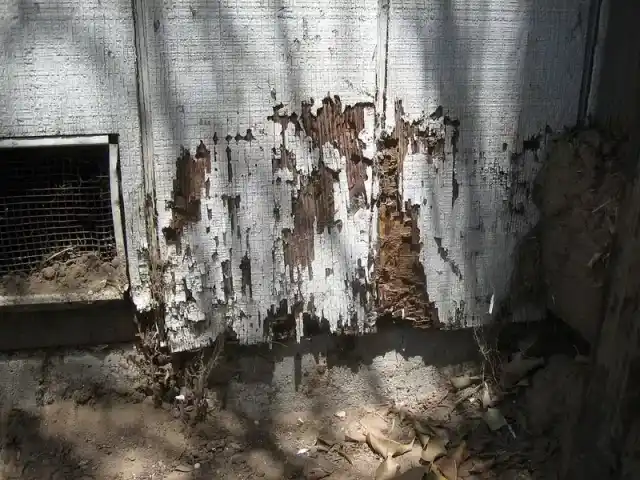
Repairs are the part nobody budgets for. Daren, one of our registered technicians, worked a single-family house in Kingstowne. The termites had tubed up from under the back deck into the bay window. He tapped it with a screwdriver and went right through the paint. The whole bay window had to be replaced. It had been going on at least a year. Nobody caught it until a crew came to redo the deck, and one of those workers had had termites at his own house.
That job is the whole argument for annual inspections. The treatment was routine. The carpentry was not.
Rutgers Cooperative Extension makes the same point. Prevention is easier and cheaper than dealing with an infestation after it starts. Termite control alone costs the U.S. more than $1.5 billion a year.
Termite Species and Treatment
The type of termite you have affects both treatment method and cost.
According to the University of Georgia, subterranean termites are found in every state except Alaska. This makes them the most common termite threat for American homeowners.
In our region, subterranean termites are the main concern. They nest underground and need soil moisture. Treatment uses liquid barriers or bait systems.
Drywood termites live inside wood above ground. They’re less common here but may need fumigation. Formosan termites are rare in our area but very aggressive if introduced.
What Termite Treatment Costs in the DMV
Northern Virginia, Maryland and DC sit in the second-highest termite pressure band in the country. Prices here reflect volume, not scarcity. Two local conditions move the number on a specific house.
The first is crawl spaces. Much of the older housing in Alexandria, Arlington and inside the Beltway sits on a crawl space instead of a slab. Crawl spaces are where I find the worst damage. A colony can feed on a band board or sill plate for years with nothing showing upstairs. Treating one costs more than treating a slab home. Inspecting one is often the only reason the damage gets caught.
The second is landscaping against the foundation. Mulch beds, an HVAC pad, and a leftover stump all trap moisture. They also create a warm-to-cool temperature gradient. Termites are blind, so they use that gradient to find food. Clearing those spots before treatment lowers the risk and can shorten the job.
If you want a local number rather than a national range, we’ll come out and give you one. See Northern Virginia Termite Control or Alexandria Termite Control.
DIY vs Professional
Professional technicians use calibrated injection tools, EPA-registered termiticides, and proper application methods that consumer products can’t match. For more on treatment methods, see how to kill termites and how to get rid of termites. Wondering how long you’re covered after the work is done? Read how long termite treatment lasts.
Preventive Plans and Warranties
Many termite programs include:
- Annual inspection by registered technicians
- Unlimited callbacks for retreatment if termites return
- No long-term contracts (cancel anytime with notice)
- Coverage for treatment materials and labor
A termite bond covers damage repair if termites break through while you’re under contract. The home has to have a current treatment in place to qualify, and the price depends on the home and the bond type.
Choosing a Termite Company
Ask for the renewal price in writing, not just the first-year price. The first number is the one every company advertises. The renewal is the one you pay for the next ten years.
Conditions That Raise Cost
Some home conditions increase both termite risk and treatment cost:
- Earth-to-wood contact on decks or siding
- Mulch piled against the foundation
- Stumps or firewood stored near the house
- Poor drainage or HVAC units trapping moisture
- Packed crawl spaces that block access
Fixing these issues lowers termite activity and can reduce treatment needs.
Our Recommendation
I’ve helped more than 100 customers with termite problems, from proactive stations to severe active jobs. When we catch it early, a bait system like Sentricon usually costs less and tears up less of the property. Severe subterranean jobs sometimes need a targeted liquid treatment with a product like Premise or Termidor for a faster fix. Once in a while we do both, because the termites never find the stations.
Every product we use is EPA registered and reviewed by our internal research team. We use only products we’d use in our own homes.
Related Guides
- Termite Prevention & Control
- How Long Does Termite Treatment Last?
- Sentricon FAQs
- How Termites Spread Through Neighborhoods
- What Are Flying Termites?
- How Much Does Pest Control Cost?
- Termites
Ready to protect your home? Call us at 703-683-2000 or email info@bettertermite.com for a free estimate.