Green June Beetles Identification Guide
Cotinis nitida
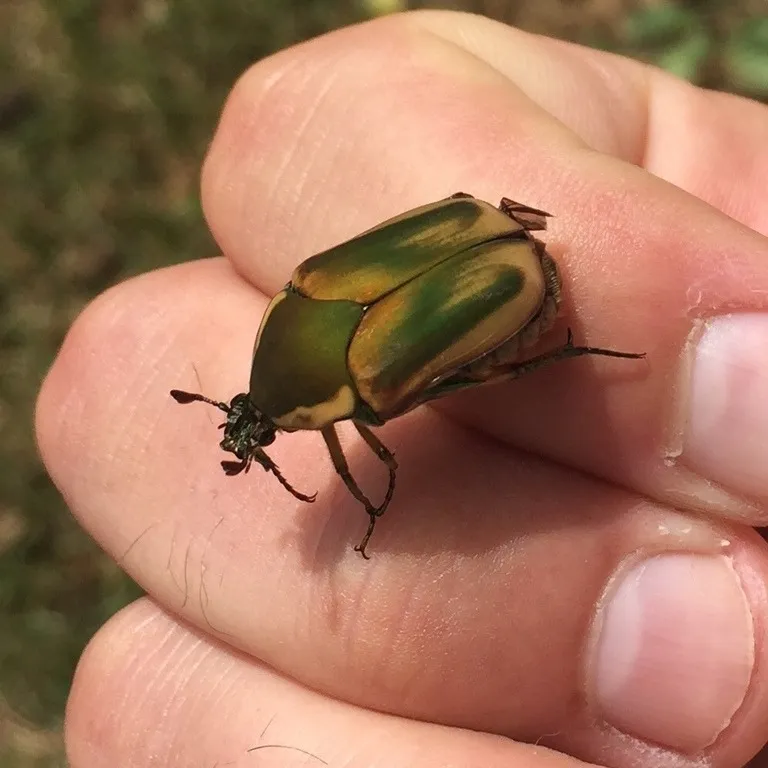
Green June beetles are large, velvety green scarab beetles with gold-edged wing covers that buzz low over lawns in July and August. Adults feed on ripe fruit, and their grubs tunnel in lawns with rich, organic soil.
Taxonomy
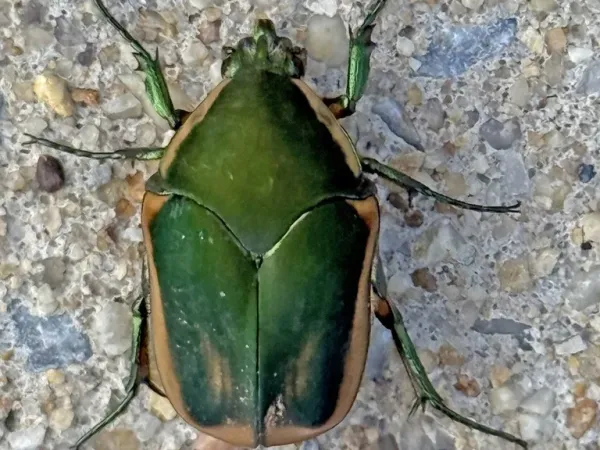
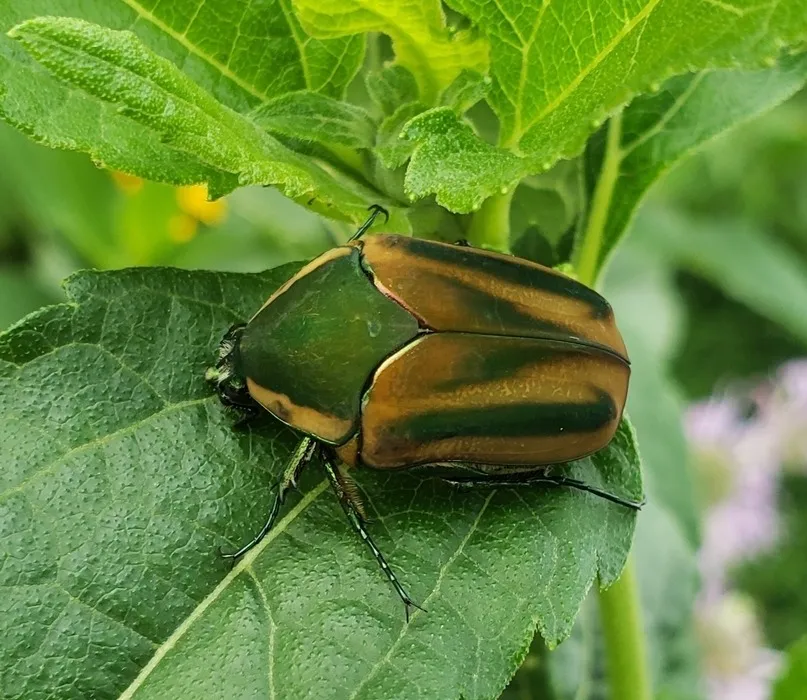
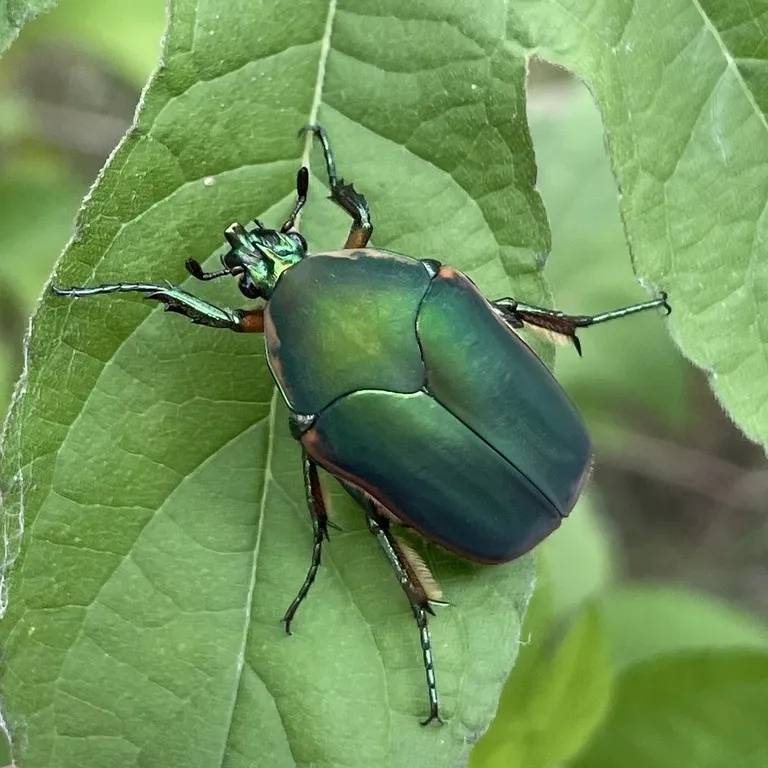
Green June Beetles Coloration
Common color patterns to help identify green june beetles
Green June Beetles
Seasonal Activity
When green june beetles are most active throughout the year

Where Green June Beetles Are Found
Hover over states to see their names. Green regions indicate where green june beetles have been reported.
Green June Beetle Identification Guide
Physical Characteristics
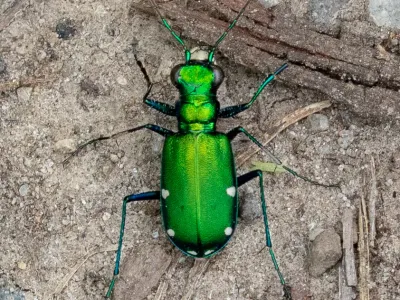
Green June beetles are some of the biggest beetles in eastern yards. Adults are about 3/4 to 1 inch long and half an inch wide. The body is broad and flat on top, like a shield.
Look for these features:
- Color: The back is a dull, velvety green, not a mirror-like shine. The edges of the wing covers are gold, tan, or bronze. Some beetles have reddish-brown wing covers with green stripes.
- Underside: The belly and legs are a bright, shiny metallic green or gold.
- Head: A small, flat horn sticks out from the front of the head.
- Flight: Adults fly low over lawns during the day and buzz loudly, like a bumble bee.
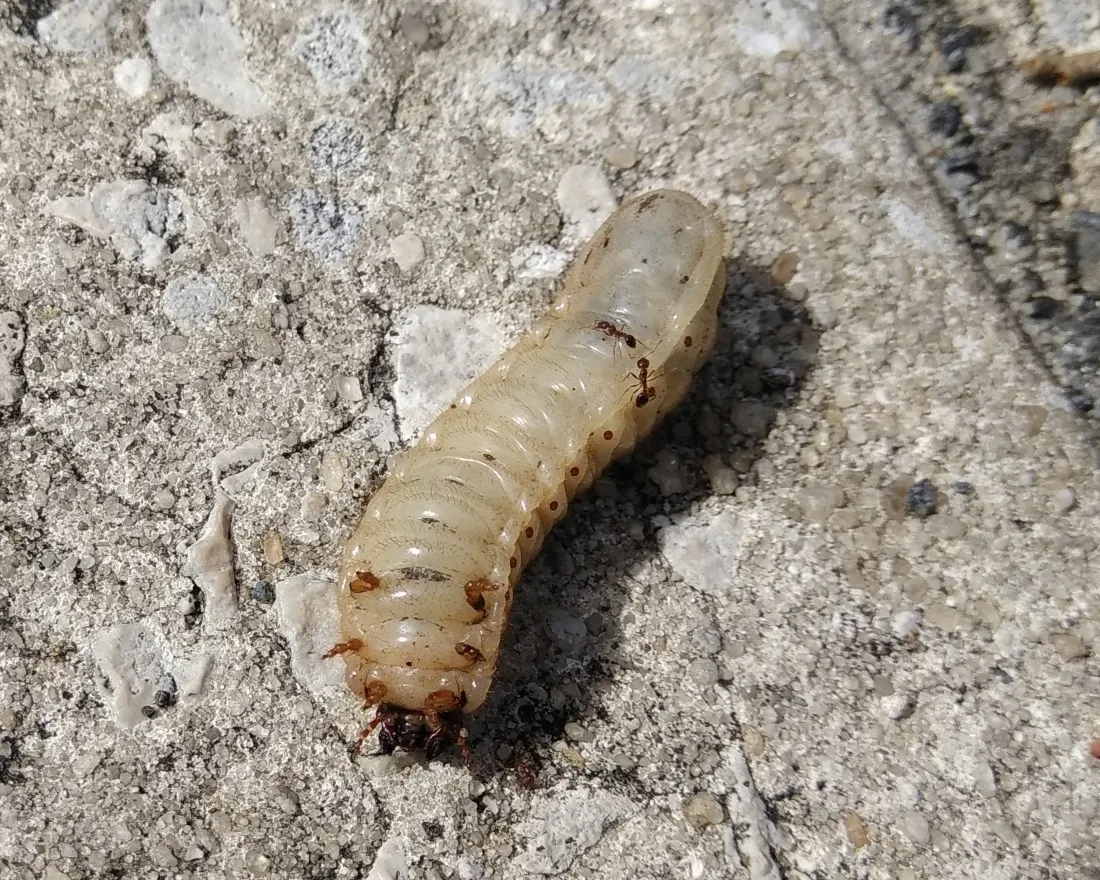
The grubs are easy to spot too. They are thick, cream-colored, and can grow up to 2 inches long. Unlike other lawn grubs, they flip over and crawl on their backs with their legs in the air.
How to Tell Them Apart From Look-Alikes
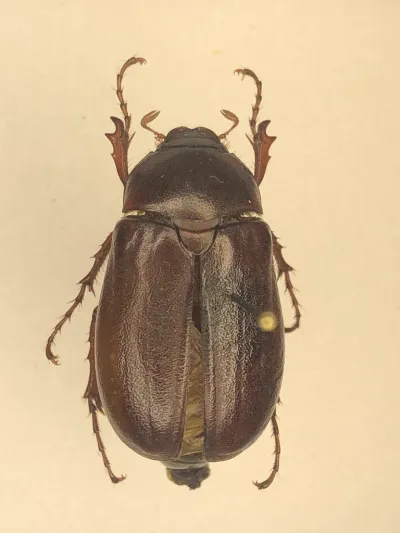
- June bugs (Phyllophaga spp.) are brown, rounder, and fly at night toward porch lights. Green June beetles are green and mostly fly during the day.
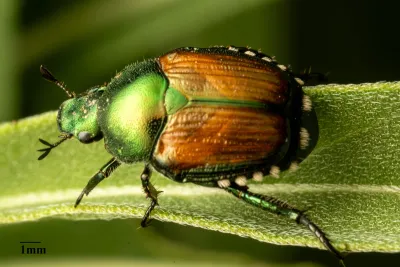
- Japanese beetles (Popillia japonica) are less than half the length. They have a shiny green head, copper wing covers, and small white hair tufts along the sides.
- Other white grubs hold a tight C-shape and crawl on their bellies. Green June beetle grubs are larger and crawl upside down.
Common Species
- Green June Beetle (Cotinis nitida): Found across the eastern United States, from New York and Massachusetts south to Florida and west to Nebraska, Kansas, and Texas. Records in Canada are rare and limited to southern Ontario.
- Figeater Beetle (Cotinis mutabilis): A close western relative found in the Southwest and Mexico. It looks very similar and is a known pest of figs and other soft fruit.
Green June Beetle Behavior and Biology
Habitat
Green June beetles do best in rich soil full of rotting plant matter. Older lawns, pastures, compost piles, and gardens fed with manure are top spots for eggs. Adults gather near fruit trees, berry patches, and grape vines in mid to late summer.
Diet
Adults eat fruit. They go after ripe, soft fruit like figs, peaches, grapes, berries, and early apples. They also drink tree sap and sometimes chew leaves. NC State Extension notes that in some regions they are called “fig-eaters.”
Grubs mainly eat rotting plant matter in the thatch and top layer of soil. They eat far fewer roots than Japanese beetle grubs. So they usually do less harm to a healthy lawn.
Life Cycle
Green June beetles have one generation per year.
- Eggs: Females lay clusters of 10 to 30 eggs in moist, organic soil in July and August. Eggs hatch in 10 to 15 days.
- Grubs: Larvae feed and grow through three stages. The last stage builds a soil case and spends the winter underground.
- Pupae: Grubs pupate in late spring inside an earthen cell.
- Adults: New beetles come out in late June or July and live for several weeks.
Tunneling and Surface Activity
Grubs dig vertical tunnels and push up small mounds of loose soil. These mounds look like earthworm castings. After heavy rain, grubs often come to the surface at night. Homeowners may find dozens or hundreds of them on sidewalks and driveways the next morning.
Grubs attract hungry wildlife. Skunks, raccoons, and moles may dig up lawns to eat them. Blue-winged wasps and other scoliid wasps hunt the grubs and lay eggs on them. These natural enemies help keep big outbreaks rare.
Treatment Methods for Green June Beetles
Green June beetles are a lawn and garden pest. They do not infest homes. Most yards need little or no treatment. When numbers are high, mix several steps together for the best results.
Protect Fruit
- Harvest early: Pick fruit as soon as it ripens. Remove fallen, rotting, or split fruit that draws beetles in.
- Use netting: Cover small fruit trees, grapes, and berry bushes with fine netting during July and August.
- Hand-pick adults: Knock beetles into a bucket of soapy water early in the morning, when they move slowly.
- Skip bait traps near fruit: University of California experts warn that fruit-scented traps can pull more beetles into your yard.
Manage Grubs in Lawns
- Check before you treat: If you do not see turf damage, NC State Extension says no action is really needed.
- Manage rotting matter: Turn or cover compost piles. Go easy on manure near lawns.
- Keep turf healthy: Mow high, water during dry spells, and remove heavy thatch.
- Targeted products: These grubs come up to the surface. NC State Extension notes that some lawn products work on them when applied in late summer, while grubs are small. Always follow the label. Do not spray plants in bloom where bees feed.
When to Call a Professional
Green June beetles are an outdoor pest, but the same summer season brings ants, stink bugs, and other pests into homes. Our general pest control plans cover common household invaders across Northern Virginia, Maryland, and DC.
References
- Green June Beetle in the Landscape, NC State Extension
- Green June Beetle (MF3600), Kansas State University Research and Extension
- Green June Beetle, Penn State Extension
- Green June Beetle, Virginia Tech Fruit Entomology
- Green Fruit Beetle (Figeater), University of California Agriculture and Natural Resources
- Japanese Beetles in the Urban Landscape, University of Kentucky Entomology
Other Other Pests
Explore other species in the other pests family
Commonly Confused With
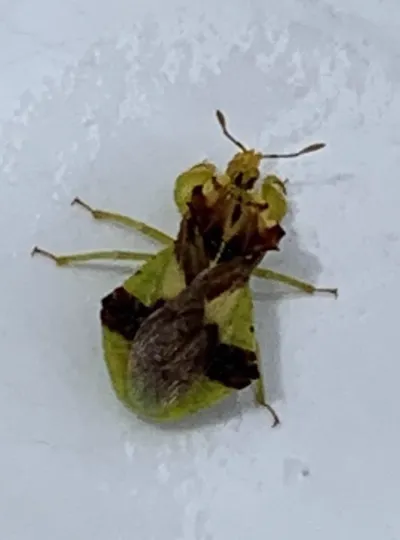
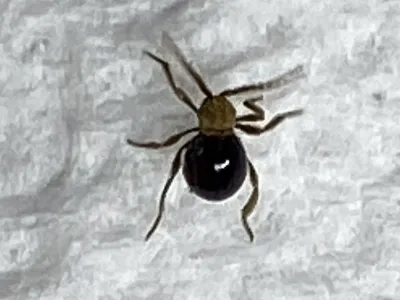
Green June Beetles are often mistaken for these similar pests
Where Green June Beetles Are Found
Hover over states to see their names. Green regions indicate where green june beetles have been reported.
Common Questions about Green June Beetles
Are green June beetles harmful to people or pets?
+
No. Green June beetles do not bite, sting, or carry disease. They can feel prickly because of their spiny legs, and their loud buzzing flight can startle people, but they pose no health risk.
What is the difference between a green June beetle and a Japanese beetle?
+
A green June beetle is about an inch long, flat on top, and a dull, velvety green with gold or tan edges. A Japanese beetle is under half an inch long, shiny metallic green on the head with copper wing covers, and has small white hair tufts along its sides.
Why are there big white grubs crawling on my driveway?
+
Those are almost always green June beetle grubs. They come to the surface at night, especially after heavy rain, and crawl on their backs with their legs in the air. They often end up stranded on sidewalks and driveways by morning.
Do green June beetles damage lawns?
+
Sometimes. The grubs feed mostly on decaying organic matter, not live roots, but their tunneling pushes up small mounds of soil and can loosen young grass. Damage is most common in older lawns and pastures with high-organic soil or manure.
Why are green June beetles eating my fruit?
+
Adults love ripe, soft fruit such as figs, peaches, grapes, and berries. They often start on fruit that birds or other insects have already opened, then gather in groups to feed on the sugary pulp.
When do green June beetles come out?
+
In the Mid-Atlantic, adults appear in late June and peak in July and August. They fade out by September. The grubs live in the soil the rest of the year and may surface on warm, wet nights in spring and fall.
Are green June beetles the same as figeater beetles?
+
They are close relatives in the same genus. The figeater beetle (Cotinis mutabilis) lives in the Southwest and Mexico, while the green June beetle (Cotinis nitida) lives in the eastern United States. Some people in the South also call green June beetles fig-eaters.

With five years of hands-on experience in the pest control industry, George Schulz is a registered technician with the Virginia Pest Management Association and a proud third-generation professional in a family business that's been protecting homes for over 58 years. He manages and trains a team of service pros while also leading internal research efforts—recently spearheading a deep-dive review of thousands of documents on pest control materials to hand-pick the most kid and pet friendly, most effective solutions tailored specifically for homes in the DC metro area.
Local Other Pests Help
Dealing with other pests at home? Our licensed technicians provide pest control across Northern Virginia and Maryland.
