Oriental Beetles Identification Guide
Anomala orientalis
Oriental beetles are small, mottled scarab beetles from Asia. Adults do little harm, but their C-shaped white grubs eat grass roots and are a leading cause of lawn grub damage in the Northeast and Mid-Atlantic.
Taxonomy
Oriental Beetles Coloration
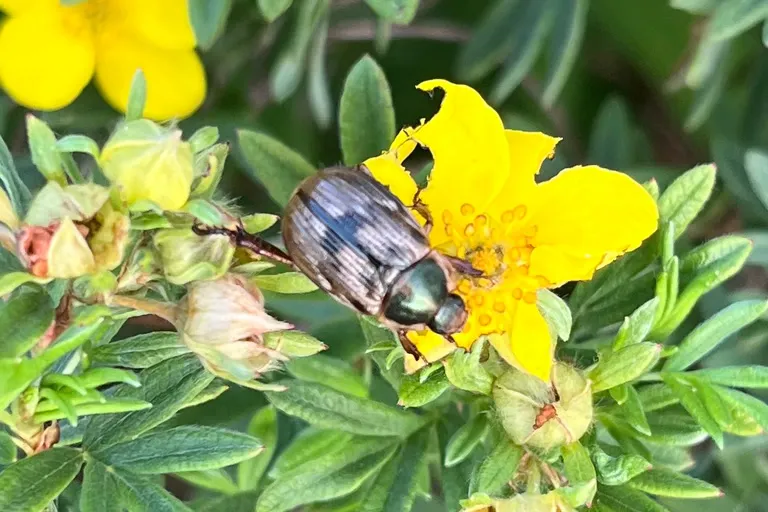
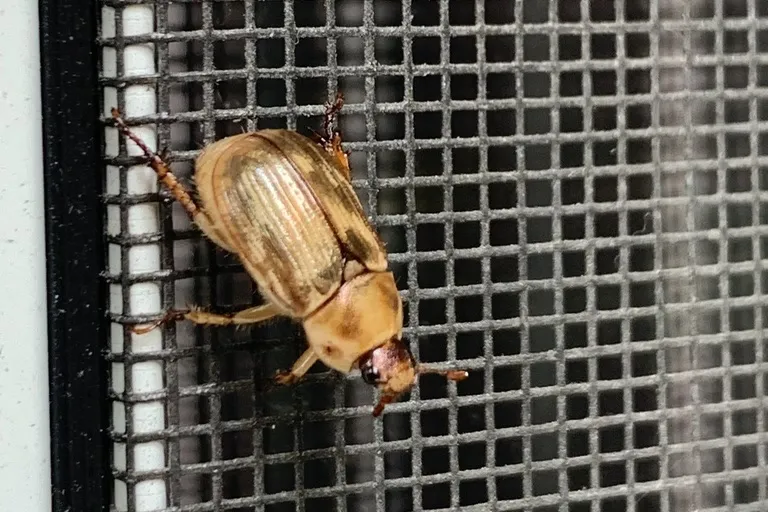
Common color patterns to help identify oriental beetles
Oriental Beetles
Seasonal Activity
When oriental beetles are most active throughout the year

Where Oriental Beetles Are Found
Hover over states to see their names. Green regions indicate where oriental beetles have been reported.
Oriental Beetle Identification Guide
The oriental beetle (Anomala orientalis) is a small scarab beetle from Asia. Some books call it Exomala orientalis. It was first found in Connecticut around 1920. It likely came in on nursery plants. Today it is one of the most common lawn grubs from New England south to Maryland and Virginia.
Most homeowners never notice the adults. They notice brown, dying grass in late summer, or skunks digging up the yard. The grubs underneath are often oriental beetles.
Physical Characteristics
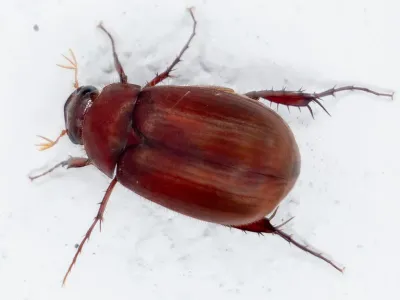
- Size: Adults are 8 to 11 mm long (about 3/8 inch). That is a bit smaller than a Japanese beetle and much smaller than a June bug.
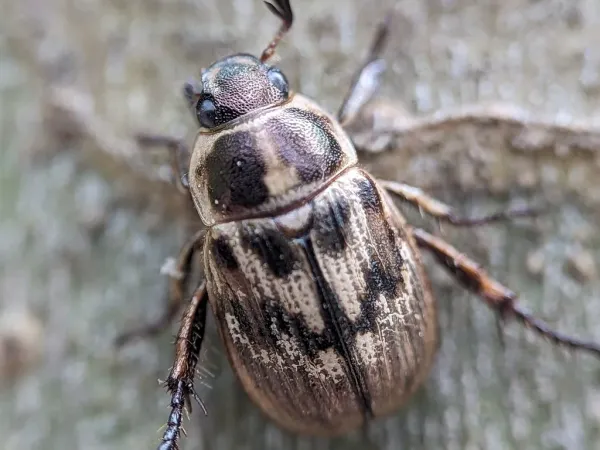
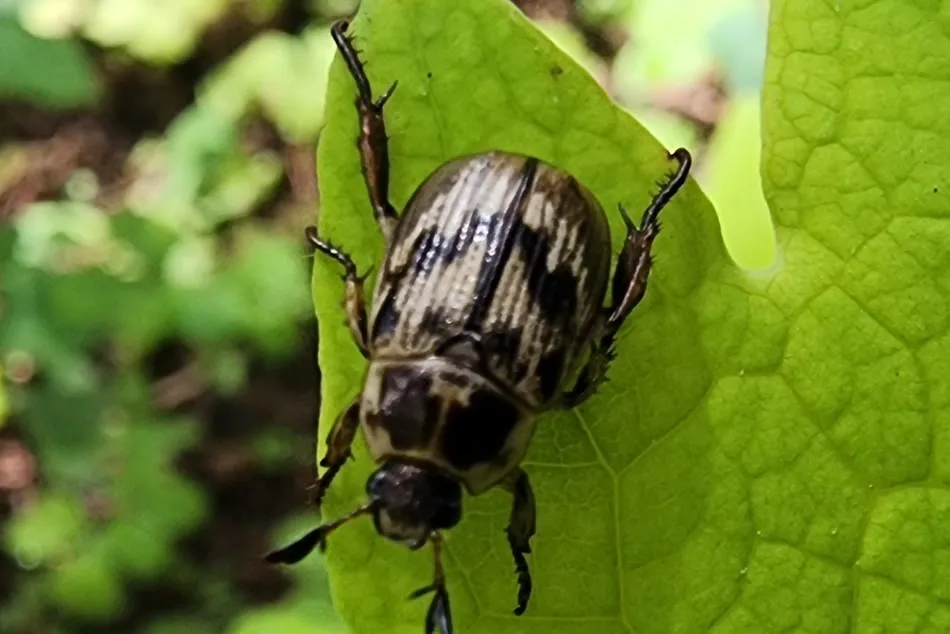
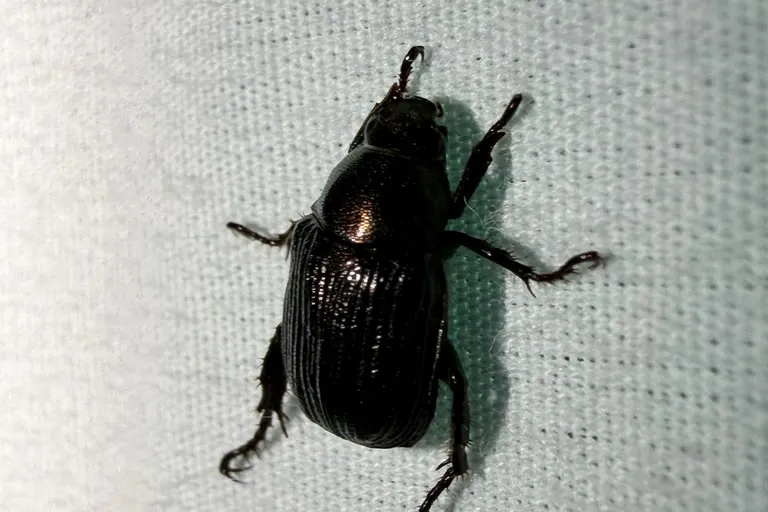
- Color: Most adults are straw-colored or tan with uneven black or dark brown blotches. The markings vary a lot. Some beetles are almost solid black, and a few are plain tan with barely any marks.
- Shape: The body is oval and slightly flat on top. The wing covers have fine lengthwise grooves.
- Antennae: Like other scarabs, they have short antennae that end in a small club of flat plates.
- Grubs: The larvae are creamy white, C-shaped grubs with a tan to brown head and three pairs of legs. Full-grown grubs reach about 3/4 to 1 inch long.
The best way to identify the grub is the raster. This is the pattern of hairs and spines under the last body segment. Oriental beetle grubs have two short, parallel rows of spines, like a tiny zipper. You will need a hand lens to see it.
Common Species Confused With Oriental Beetles
Several scarab beetles share lawns with the oriental beetle in North America:
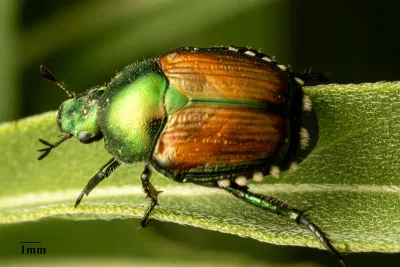
- Japanese beetle (Popillia japonica): metallic green head and copper wing covers. Adults feed heavily on leaves in daylight. Grubs have a V-shaped raster.
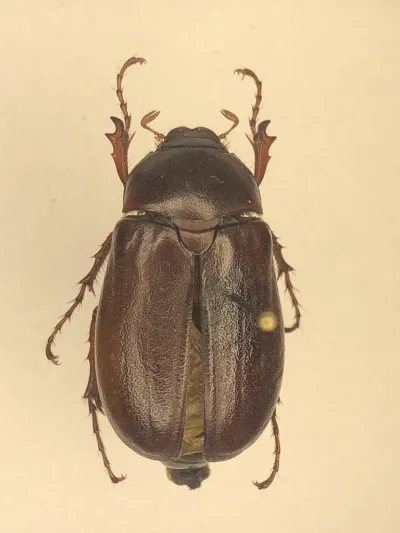
- Asiatic garden beetle (Maladera formosae): similar size, but a solid cinnamon-brown color with a velvety, dull finish. Also active at night.
- Masked chafers (Cyclocephala spp.): tan beetles with a dark band across the head. Their grubs have no clear rows on the raster.
- European chafer (Amphimallon majale): larger, light brown beetle found mostly in the Northeast, the Great Lakes states, and Ontario.
- June bugs (Phyllophaga spp.): larger, reddish-brown beetles that crash into porch lights in late spring.
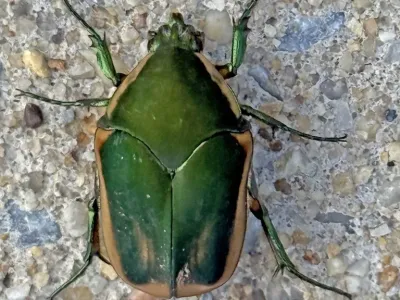
- Green June beetles (Cotinis nitida): large, velvety green beetles that fly by day in mid-summer.
For more on telling grubs apart, see our guides to white grubs and beetle larvae.
Oriental Beetle Behavior and Biology
Habitat
Oriental beetles live wherever there is grass. Home lawns, parks, golf courses, and sod farms are all common sites. In the Northeast they also infest nurseries, blueberry fields, and cranberry bogs. Females like moist, well-kept lawns for laying eggs. A lawn that is watered all summer can draw more of them.
Diet
Grubs eat grass roots. Lawns of tall fescue, Kentucky bluegrass, and ryegrass are all at risk. Grubs also eat the roots of some nursery plants and berry bushes.
Adults eat very little. They sometimes visit flowers such as roses, phlox, and petunias at night, but the damage is minor. This is a big difference from Japanese beetles, which strip leaves in broad daylight.
Life Cycle
Oriental beetles have one generation per year in most of their range.
- Adults (mid-June to early August): Beetles dig out of the soil in mid-June in Maryland and Virginia. Females give off a scent that draws males, and mating happens near the ground at dusk.
- Eggs (July to August): Females burrow a few inches into the soil to lay eggs. Eggs hatch in about two to three weeks.
- Fall grubs (August to October): Young grubs feed just under the soil surface. This is when lawn damage is worst and when grubs are easiest to control.
- Winter: When the soil cools, grubs move deeper, often 6 inches or more, and rest until spring.
- Spring grubs (April to May): Grubs move back up and feed for a few weeks. Then they form a small cell in the soil and turn into pupae.
Signs of an Infestation
- Irregular brown patches of grass in late August through October that do not green up with water
- Turf that feels spongy and peels back like a loose carpet
- White, C-shaped grubs in the top 1 to 2 inches of soil
- Skunks, raccoons, crows, or moles digging in the lawn
- Small, mottled beetles on porch lights, screens, and window sills in June and July
Treatment Methods for Oriental Beetles
Oriental beetle control targets the grubs, not the adults. Spraying adult beetles does little to protect your lawn. Treatment works best when it is timed to the grub life cycle.
Monitoring
Check for grubs in early to mid-August, when young grubs are feeding near the surface. Cut three sides of a one-foot square of sod, about 2 inches deep, and fold it back. Count the grubs. Check several spots, especially in sunny areas and places that browned last year. Many university guides use about 8 to 10 or more oriental beetle grubs per square foot as the point where treatment is worth it.
Preventive Treatments
Preventive grub products go on the lawn from late spring to mid-summer, before eggs hatch. These EPA-registered products soak into the root zone. They kill young grubs as soon as they start to feed. This approach makes the most sense for lawns that had grub damage in past years.
Curative Treatments
Curative products kill grubs that are already feeding. They work best in late August and September, while grubs are still small and near the surface. Water the lawn with about half an inch of water after applying so the product reaches the root zone. Large spring grubs are harder to kill and do less damage, so spring treatment is rarely needed.
Biological Control
Some tiny worms called nematodes (Heterorhabditis bacteriophora) attack grubs in the soil. They can cut grub numbers when applied to moist soil in late summer. Results vary more than with standard products. Milky spore disease, often sold for Japanese beetles, does not work well against oriental beetle grubs.
Lawn Care Practices
- Keep turf thick and healthy with proper mowing height and fertilizer, so roots can outgrow light grub feeding.
- Avoid heavy watering in July, when females are laying eggs.
- Reseed or re-sod damaged areas in early fall once grubs are under control.
Product labels and state rules change often. Always read and follow the label, or work with a licensed lawn care company. Oriental beetles that wander indoors are harmless and can be swept up or vacuumed.
References
- University of Florida IFAS Extension - Oriental Beetle, Anomala orientalis
- Rutgers NJAES - Insect Management in Turfgrass: White Grubs (FS1009)
- UMass Amherst Landscape, Nursery and Urban Forestry - Anomala (Exomala) orientalis
- Cornell University Grub ID - Oriental Beetle
- Purdue Extension - Managing White Grubs in Turfgrass (E-271)
- Rutgers Nursery Pest Management - Oriental Beetle
Other Other Pests
Explore other species in the other pests family
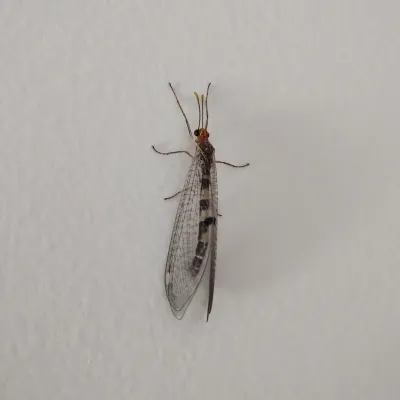
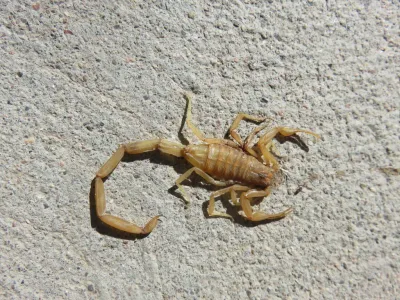
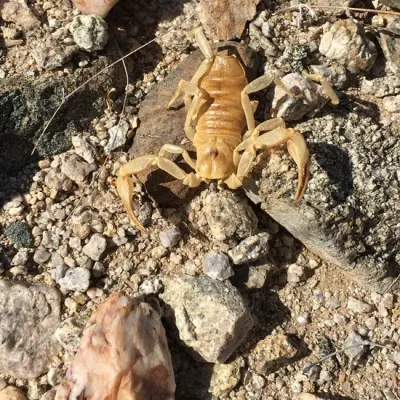
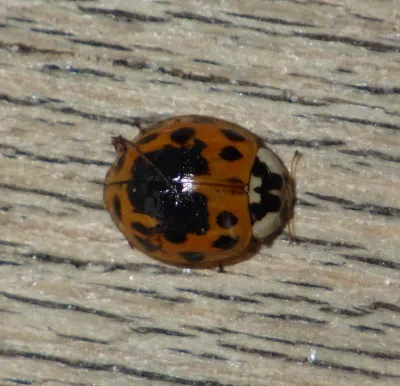
Commonly Confused With
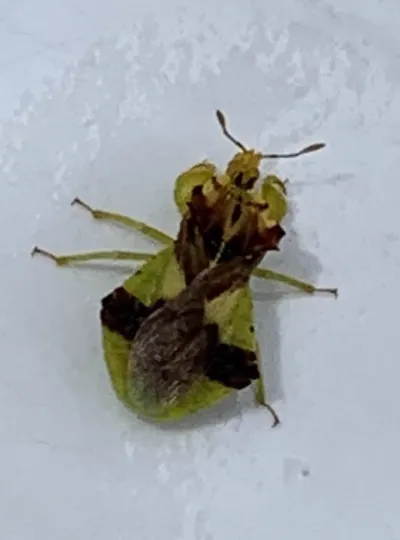
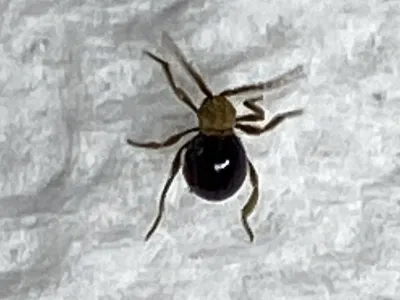
Oriental Beetles are often mistaken for these similar pests
Where Oriental Beetles Are Found
Hover over states to see their names. Green regions indicate where oriental beetles have been reported.
Common Questions about Oriental Beetles
What does an oriental beetle look like?
+
Adult oriental beetles are about 3/8 inch long with an oval body. Most are straw-colored with irregular black or dark brown blotches on the wing covers and the shield behind the head. Some adults are almost solid black, and a few are plain tan. They do not have the shiny green head of a Japanese beetle.
Are oriental beetles harmful?
+
The adults are mostly harmless. They feed very little and do not bite or sting people or pets. The real problem is the grub stage, which eats grass roots under the soil and can kill patches of lawn in late summer and early fall.
When do oriental beetles come out?
+
In the Mid-Atlantic, adults come out of the soil in mid-June and stay active through July, with a few lingering into August. They are most active at dusk and at night, which is why people often find them on porches, screens, and window sills near lights.
How can I tell oriental beetle grubs from other lawn grubs?
+
All lawn grubs are white, C-shaped, and have a brown head and six legs. To tell them apart, look at the underside of the last body segment with a magnifying glass. Oriental beetle grubs have two short, parallel rows of spines there. Japanese beetle grubs have a V-shaped pattern instead, and masked chafer grubs have no clear rows at all.
How many grubs per square foot is too many?
+
Healthy, well-watered turf can handle a few grubs without showing damage. Many university guides suggest treating when counts reach about 8 to 10 or more oriental beetle grubs per square foot. Cut a one-foot square of sod about two inches deep, peel it back, and count the grubs you find.
Why are animals digging up my lawn?
+
Skunks, raccoons, crows, and moles all eat white grubs. When a lawn has a heavy grub population, these animals tear up the turf to reach them. Digging damage in late summer or fall is often the first sign homeowners notice of a grub problem.
Do oriental beetle traps work?
+
Pheromone traps catch many male oriental beetles, but they do not lower grub numbers in your lawn. Females still mate and lay eggs. Traps are best used to learn when adults are flying so you can time grub control.

With five years of hands-on experience in the pest control industry, George Schulz is a registered technician with the Virginia Pest Management Association and a proud third-generation professional in a family business that's been protecting homes for over 58 years. He manages and trains a team of service pros while also leading internal research efforts—recently spearheading a deep-dive review of thousands of documents on pest control materials to hand-pick the most kid and pet friendly, most effective solutions tailored specifically for homes in the DC metro area.
Local Other Pests Help
Dealing with other pests at home? Our licensed technicians provide pest control across Northern Virginia and Maryland.
