Black Vine Weevil Identification Guide
Otiorhynchus sulcatus
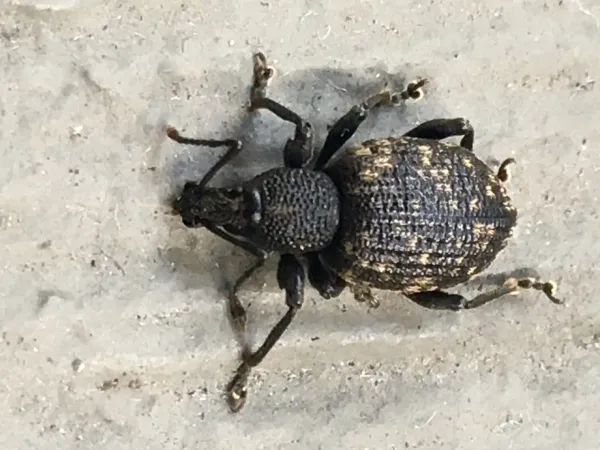
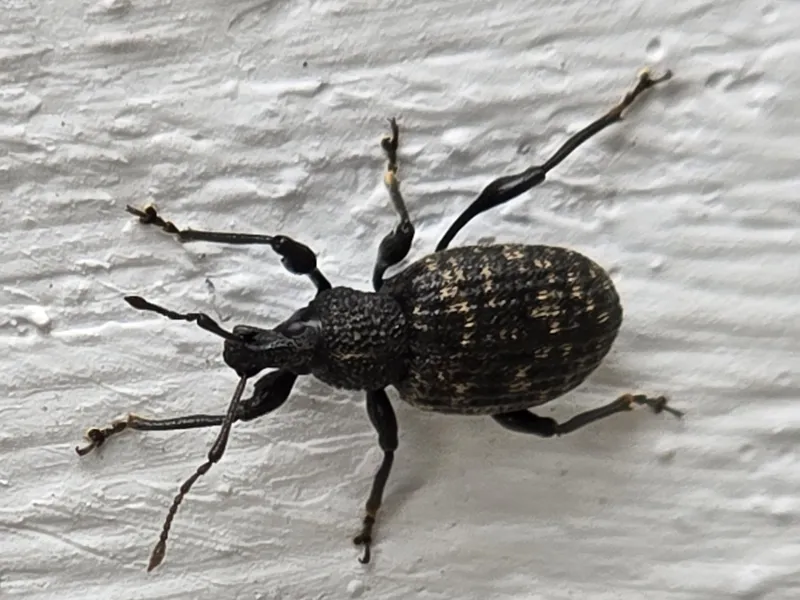
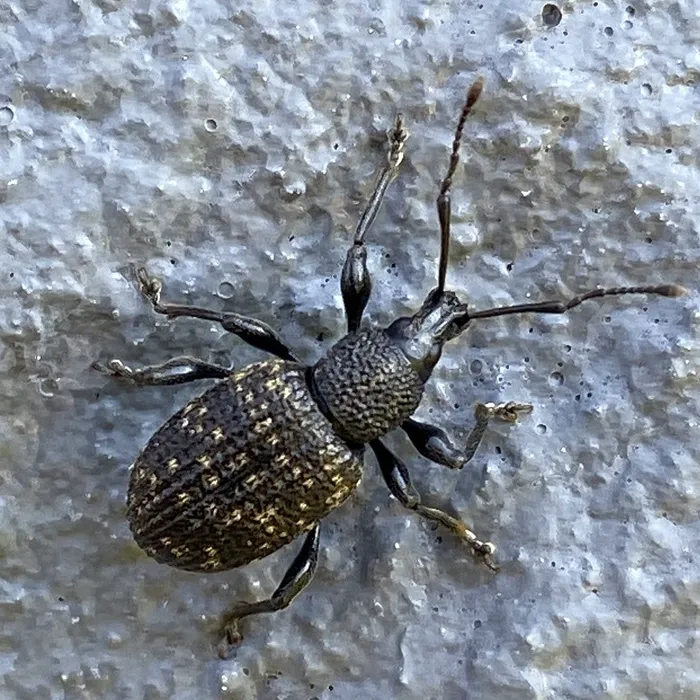
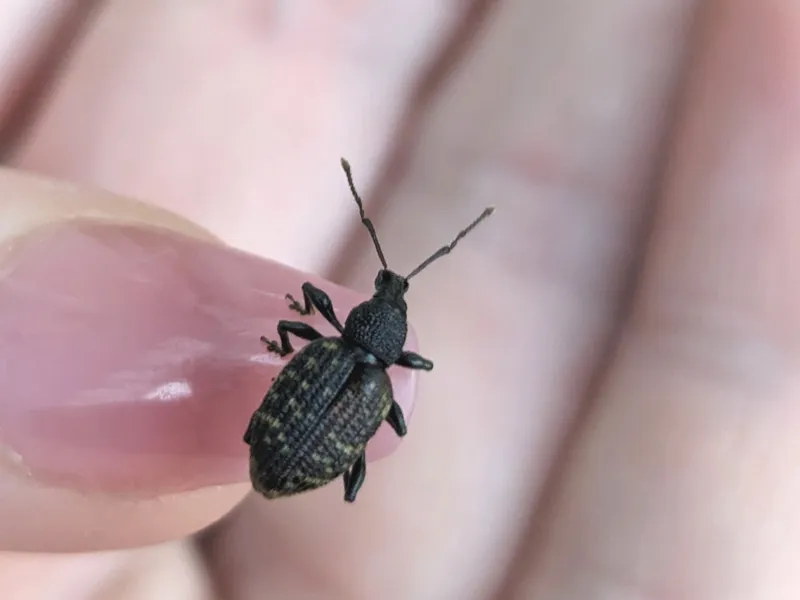
Black vine weevils are flightless, half-inch snout beetles with gold-flecked wing covers. Adults notch the leaves of yews, rhododendrons, and azaleas at night, their grubs eat the roots, and they often wander into homes from foundation plantings in late summer and fall.
Taxonomy
Black Vine Weevil Coloration
Common color patterns to help identify black vine weevil
Black Vine Weevil
Seasonal Activity
When black vine weevil are most active throughout the year

Where Black Vine Weevil Are Found
Hover over states to see their names. Green regions indicate where black vine weevil have been reported.
Black Vine Weevil Identification Guide
The black vine weevil is a snout beetle from Europe that has lived in North America for more than a century. It is a plant pest first. Adults chew leaves, and the grubs eat roots. But homeowners often meet it in a different way: a slow black beetle crawling across a wall or floor on a late-summer evening.
Physical Characteristics
- Size: 8 to 13 millimeters long, or close to 1/2 inch
- Color: Dull black to very dark brown, with small patches of gold or yellowish scales scattered across the back
- Shape: Pear-shaped. The rear half is wide and rounded, and the part behind the head is narrow.
- Wing covers: Rough, with rows of tiny pits and ridges running lengthwise. They are fused shut, so the weevil cannot fly.
- Snout: Short and broad, not long and thin
- Antennae: Elbowed, with a small club at the tip
- Movement: Slow and steady. When disturbed, it often pulls in its legs and plays dead.
The grub stage looks very different. Larvae are legless, cream-white, and curled into a C shape, with a brown head. They live in the soil and grow to about 1/2 inch.
How It Differs From Look-Alikes
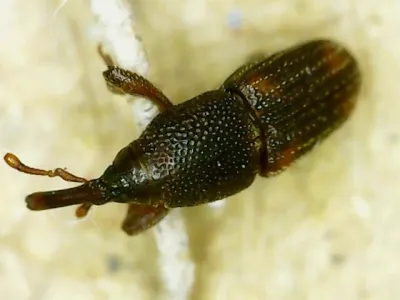
- Weevils in the pantry: The grain weevils covered in our general weevil guide are tiny, about 1/8 inch, and live inside stored food. A black vine weevil is four times longer and never infests food.
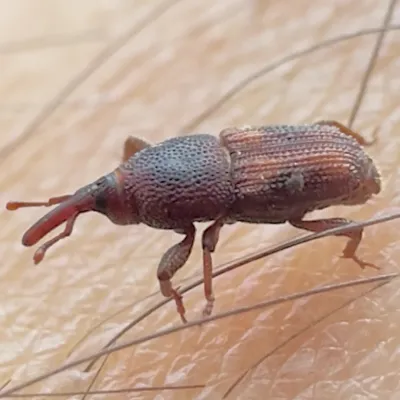
- Rice weevils: Reddish-brown with four pale spots and a long, thin snout. They can fly. Find them in rice, cereal, or flour, not on baseboards near the back door.
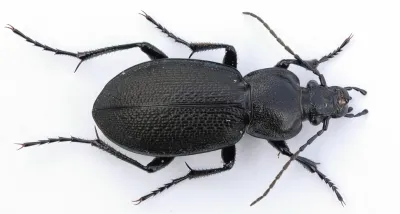
- Ground beetles: Also black and also wander in from mulch at night. But ground beetles are shiny, run fast, and have no snout.
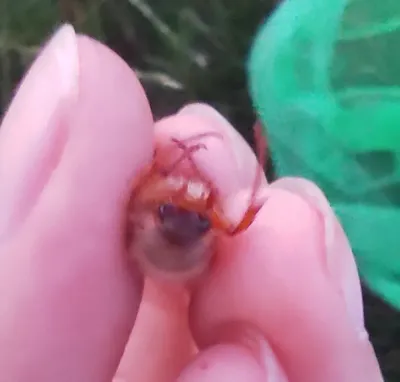
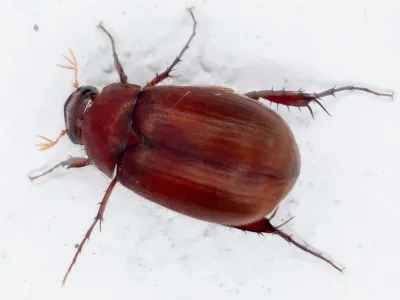
- Asiatic garden beetles: Also notch leaves at night, but they are cinnamon-brown, round, and fly to porch lights.
- White grubs: The C-shaped larvae of June beetles and Japanese beetles have three pairs of legs near the head. Black vine weevil grubs have no legs.
Common Species
- Black vine weevil (Otiorhynchus sulcatus): The largest and most damaging of the group. Only females are known in North America, and each one can lay eggs without mating.
- Strawberry root weevil (Otiorhynchus ovatus): A close cousin about half the size, roughly 1/4 inch. It is the root weevil most likely to invade homes in large numbers, often during hot, dry spells in early summer.
- Rough strawberry root weevil (Otiorhynchus rugosostriatus): In between the two in size, brown to black, with a rougher surface.
Black Vine Weevil Behavior and Biology
Habitat
Black vine weevils live in landscape beds, nurseries, and gardens. They are most common in foundation plantings of yew, rhododendron, and azalea. During the day, adults hide in mulch, leaf litter, under loose bark, and beneath pots. At night they climb into plants to feed.
That daytime hiding spot is why they end up indoors. Mulch beds sit right against the foundation. Adults that crawl out of the mulch in search of shade and moisture can slip under doors, through gaps around windows, or into crawl spaces and garages.
Diet
The black vine weevil has a huge menu. Penn State Extension lists more than 100 host plants. Common targets in North American yards include:
- Yew (Taxus)
- Rhododendron and azalea
- Euonymus and Japanese holly
- Hemlock (roots)
- Hosta, astilbe, and other perennials
- Strawberries, grapes, and potted plants such as begonia and cyclamen
Adults chew rounded notches into leaf edges. This damage looks bad but rarely kills a plant. The grubs do the real harm. They eat fine roots and then strip bark from the main roots and crown, which can kill young or potted plants.
Life Cycle
There is usually one generation per year.
- Adults emerge in late spring and early summer. All are female.
- Feeding period: Each adult feeds on leaves for about 3 to 4 weeks before she can lay eggs.
- Eggs: A single female can lay up to 500 eggs in the soil near host plants through summer.
- Grubs: Eggs hatch in about 10 to 14 days. Grubs feed on roots for 8 to 10 months, and most spend the winter in the soil.
- Pupae: Grubs pupate in the soil in spring, and the cycle starts again.
Penn State Extension notes that a few adults also survive the winter, sometimes inside homes.
Seasonal Pattern Indoors
Colorado State University Extension notes that black vine weevils are most often seen inside in late summer and early autumn. This is when adult numbers peak and they start looking for shelter. Indoor sightings drop off sharply once nights get cold.
How We Treat for Black Vine Weevils
Black vine weevils that wander inside cannot breed and cause no harm to your home. Plant damage outside is a separate problem. Our pest plans do not treat shrubs, soil, or roots for grubs. That work belongs to a licensed lawn and landscape professional or your local extension office.
Here is what we can do and what you can do.
- Inspection: If weevils keep showing up, we confirm what you have. Many black beetles look alike. A pest pro can tell a vine weevil from a ground beetle, a carpet beetle, or a cockroach nymph, and point out where they are getting in.
- Perimeter treatment: Black vine weevils cannot fly, so they walk to your house. Our TriGuard pest control plan protects against ground-crawling pests with an EPA-registered treatment around the outside of the home, focused on the foundation, doors, and windows. Colorado State notes that indoor sprays do little for root weevils, while treating outside cracks and entry points may help limit them. The plan comes with unlimited free callbacks if they come back between visits.
- Sealing entry points: Add door sweeps, fix gaps in weather stripping, and caulk cracks around windows and where pipes and wires enter.
- Mulch and plant care: Pull mulch back 6 inches or more from the foundation and keep it 2 to 3 inches deep. Avoid overwatering beds near the house.
- Indoors: Vacuum or sweep up stray weevils. There is no need to spray inside.
- Protecting your shrubs: Inspect new plants for grubs before you buy them. Handpick adults at night. University of California experts recommend grub-killing nematodes, tiny worms sold at garden centers, on warm, moist soil from midsummer through fall to target the grubs.
References
- Black Vine Weevil, Penn State Extension
- Black Vine Weevil Management Guidelines, University of California Agriculture and Natural Resources
- Root Weevils, Colorado State University Extension Fact Sheet 5.551
- Black Vine Weevil in Virginia, Virginia Cooperative Extension (444-210)
- Black Vine Weevil, The Morton Arboretum
Other Other Pests
Explore other species in the other pests family
Commonly Confused With
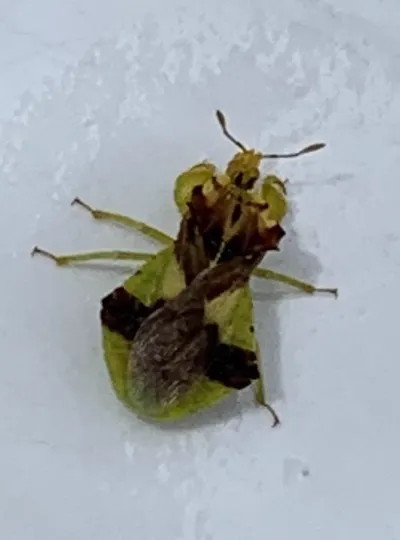
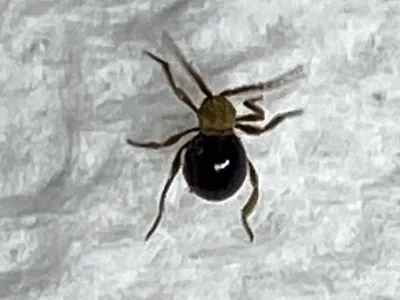
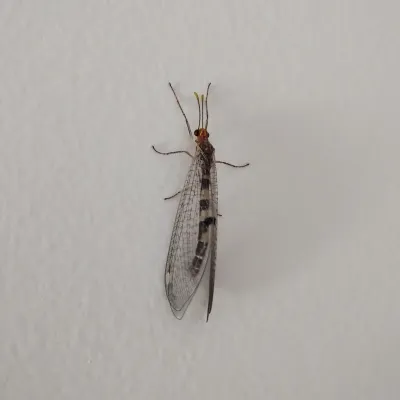
Black Vine Weevil are often mistaken for these similar pests
Where Black Vine Weevil Are Found
Hover over states to see their names. Green regions indicate where black vine weevil have been reported.
Common Questions about Black Vine Weevil
Why are black vine weevils in my house?
+
They wander in by accident from shrubs and mulch beds next to the foundation. Colorado State University Extension notes that black vine weevils are most often seen indoors in late summer and early fall, and they seem drawn to shade and moisture. They are not looking for food inside. A few adults may also spend the winter indoors.
Do black vine weevils bite or damage the house?
+
No. Black vine weevils do not bite people or pets, spread disease, eat food, or chew wood, fabric, or drywall. Indoors they are only a nuisance. The real damage happens outside, where the grubs eat the roots of landscape plants.
Can black vine weevils breed indoors?
+
No. They need living plant roots in soil to lay eggs and raise grubs. Weevils that get inside cannot start an indoor population. Houseplants in pots are the one exception, because the grubs can live in potting soil.
How do I know if black vine weevils are eating my shrubs?
+
Look for half-moon notches chewed into the edges of leaves, often low on the plant and close to the trunk. Yews, rhododendrons, azaleas, euonymus, and Japanese holly are favorites. Check plants with a flashlight an hour or two after dark to find the adults. If a shrub wilts or yellows for no clear reason, dig near the roots for white, C-shaped grubs.
Can black vine weevils fly?
+
No. Their wing covers are fused shut, so they can only walk. That is why they show up near the ground, on lower siding, and around doors. It is also why they spread mostly through infested nursery plants and potting soil.
What is the difference between a black vine weevil and a rice weevil?
+
Size and location. A black vine weevil is about half an inch long, black with gold flecks, and has a short, broad snout. A rice weevil is about one-eighth of an inch, reddish-brown, and has a long, thin snout. Rice weevils live in stored grain in the pantry. Black vine weevils walk in from the yard and wander across floors and walls.
How do I get rid of black vine weevils inside?
+
Vacuum them up or sweep them outdoors. Indoor sprays do little, because the weevils are coming from outside. Seal gaps under doors and around windows and pull mulch a few inches back from the foundation. If many keep coming in, a perimeter treatment around the outside of the house can cut down the number that reach your doors.

With five years of hands-on experience in the pest control industry, George Schulz is a registered technician with the Virginia Pest Management Association and a proud third-generation professional in a family business that's been protecting homes for over 58 years. He manages and trains a team of service pros while also leading internal research efforts—recently spearheading a deep-dive review of thousands of documents on pest control materials to hand-pick the most kid and pet friendly, most effective solutions tailored specifically for homes in the DC metro area.
Local Other Pests Help
Dealing with other pests at home? Our licensed technicians provide pest control across Northern Virginia and Maryland.
