
Asiatic Garden Beetles Identification Guide
Maladera formosae
Asiatic garden beetles are small, cinnamon-brown scarab beetles from Asia. Adults chew leaves and flowers at night and swarm porch lights in summer, while their white grubs feed on grass and plant roots.
Taxonomy
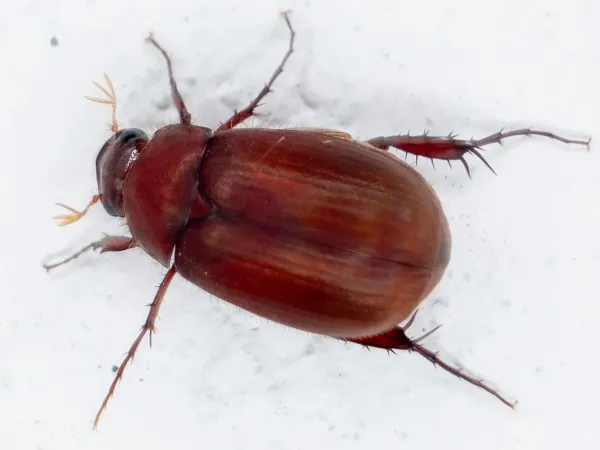
Asiatic Garden Beetles Coloration
Common color patterns to help identify asiatic garden beetles
Asiatic Garden Beetles
Seasonal Activity
When asiatic garden beetles are most active throughout the year

Where Asiatic Garden Beetles Are Found
Hover over states to see their names. Green regions indicate where asiatic garden beetles have been reported.
Asiatic Garden Beetle Identification Guide
The Asiatic garden beetle (Maladera formosae) is a small scarab beetle from Japan, China, and nearby parts of eastern Asia. For decades it was called Maladera castanea, and many guides still use that name. It was first found in New Jersey in the early 1920s. Since then it has spread across much of the eastern United States. That includes Maryland, Virginia, and Washington, D.C.
Most people meet this beetle in one of two ways. Dozens of small brown beetles gather at the porch light on a July night. Or the basil is shredded by morning with no bug in sight.
Physical Characteristics
- Size: Adults are 8 to 11 mm long, about 3/8 inch. Several extension guides compare them to a coffee bean in size and shape.
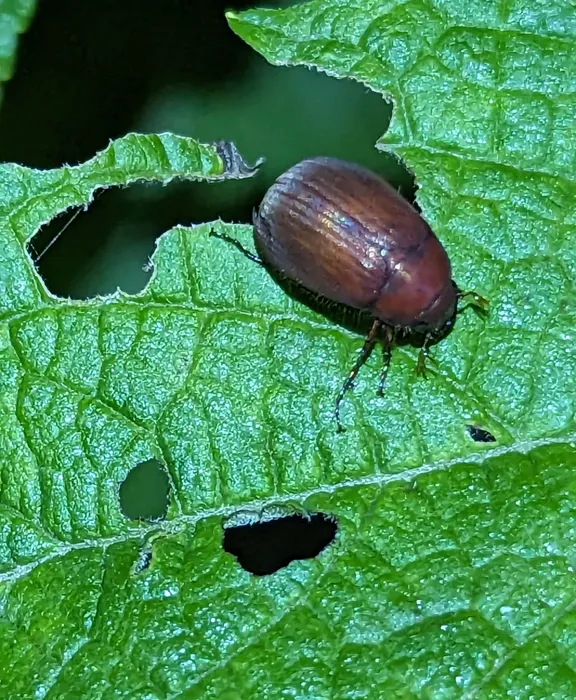
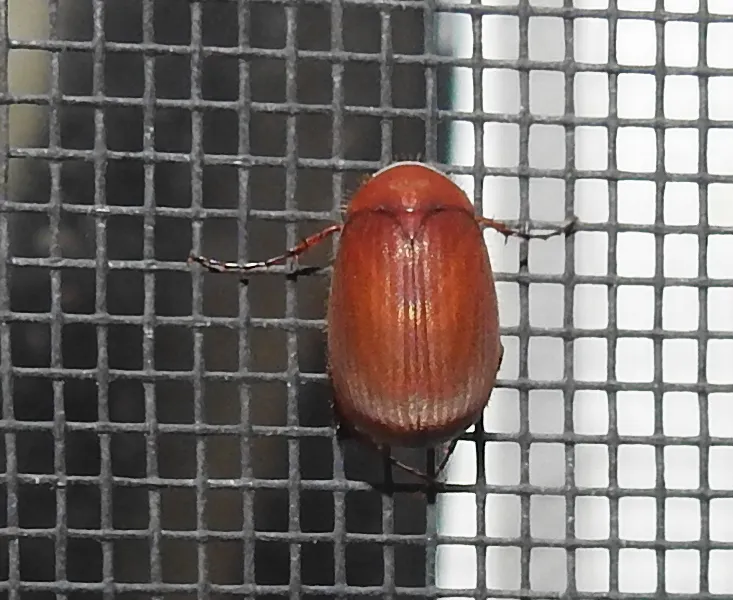
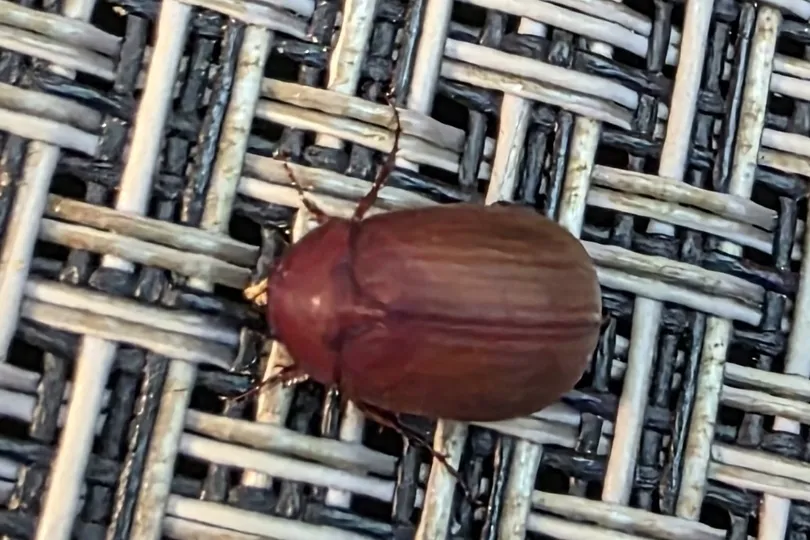
- Color: Solid cinnamon-brown to reddish-brown with no spots or bands. The surface looks dull and velvety. In bright light it can show a faint rainbow sheen.
- Shape: The body is oval and rounded. The wing covers have fine lengthwise grooves and stop a little short, so the tip of the abdomen shows.
- Legs and antennae: The hind legs are broad and flattened, and the legs carry small spines. The short antennae end in a small fan of plates, like other scarabs.
- Grubs: The larvae are creamy white, C-shaped grubs with a brown head and six legs. They grow to about 3/4 inch. A clue is the pair of puffy, pale “cheeks” on each side of the mouth. The underside of the last body segment has a single curved row of short spines.
Common Species Confused With Asiatic Garden Beetles
Several other scarab beetles share lawns and gardens with the Asiatic garden beetle in North America:
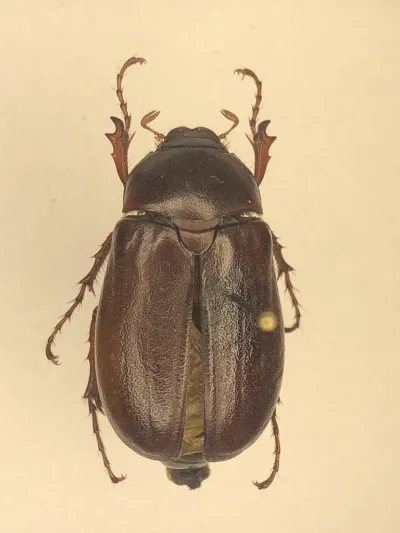
- June bugs (Phyllophaga spp.): also brown and drawn to lights, but much larger (3/4 to 1 inch) and glossy. Most fly in May and June.
- Oriental beetles (Anomala orientalis): about the same size, but straw-colored with dark, mottled blotches. Some are nearly black.
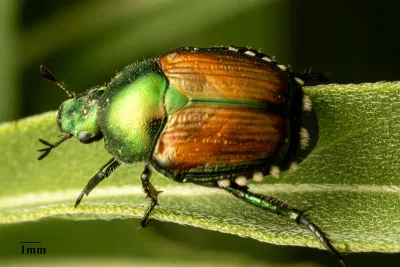
- Japanese beetles (Popillia japonica): metallic green head and copper wing covers with white tufts along the sides. They feed in daylight, not at night.
- Masked chafers (Cyclocephala spp.): tan to yellow-brown beetles with a darker band across the head. Also fly to lights in summer.
The grubs of all these beetles look alike to the naked eye. See our guides to white grubs and beetle larvae for tips on telling them apart.
Asiatic Garden Beetle Behavior and Biology
Habitat
Asiatic garden beetles live in lawns, gardens, fields, and weedy edges. Grubs grow in the soil under grass and weeds. Adults hide in the soil during the day. They come out after dark to feed. They fly well and move between yards easily.
Diet
Adults feed on more than 100 kinds of plants. Favorites include basil, roses, chrysanthemums, dahlias, asters, and sunflowers. They also feed on vegetables, fruit plants, shrubs, and young trees. They chew ragged notches in leaf edges. In a few nights they can strip soft plants down to the veins.
Grubs eat the roots of grasses, weeds, and many crops. In farm fields they can damage corn, soybeans, and sweet potatoes. In home lawns they are usually a minor pest. Turf often needs a high grub count before it shows damage.
Life Cycle
Asiatic garden beetles have one generation per year in most of their range.
- Adults (late June to September): Beetles come out of the soil from late June into July. Numbers peak in July and August. Adults usually live about a month, but some last well into September.
- Eggs (July to August): Females dig a few inches into the soil and lay eggs in small clusters. Eggs hatch in about 10 days to two weeks.
- Fall grubs (August to October): Young grubs feed on roots near the surface until the soil cools.
- Winter: Grubs move 6 inches or more down into the soil and rest.
- Spring grubs (April to May): Grubs move back up and feed again, then pupate in the soil in late May and June.
Signs of Asiatic Garden Beetles
- Ragged holes and chewed leaf edges on basil, roses, and flowers that appear overnight
- Many small brown beetles on porch lights, screens, and doors on summer nights
- Beetles found feeding on plants after dark with a flashlight, but none during the day
- In heavy infestations, thin or brown patches of turf with white grubs in the top few inches of soil
Treatment Methods for Asiatic Garden Beetles
Asiatic garden beetles are a garden and lawn pest, not a household pest. Control means keeping adults off plants and keeping grub numbers low.
Protecting Garden Plants
- Handpick at night. Go out an hour or two after dark with a flashlight and knock beetles into a bucket of soapy water. Repeat every few nights during July and August.
- Use row covers. Lightweight fabric row covers keep beetles off basil, vegetables, and flowers during peak flight.
- Reduce lighting. Beetles are drawn to lights. Turn off porch and yard lights near the garden, or switch to yellow bulbs, to draw fewer beetles.
- Clean up in fall. Remove weeds and garden debris where grubs can develop.
Managing Grubs in Turf
Check for grubs in late summer. Cut a one-foot square of sod a few inches deep, peel it back, and count the grubs. Asiatic garden beetle grubs usually need to be dense before lawns suffer. Cornell and Maine extension guides use about 18 to 20 grubs per square foot as the point where treatment makes sense.
When grubs need control, EPA-registered grub products work best in late summer. At that time the grubs are small and feed near the surface. Tiny grub-killing worms called nematodes can also cut grub numbers when put on moist soil. Healthy, thick turf with good mowing and watering habits can outgrow light feeding.
Always read and follow product labels, or work with a licensed lawn care professional. Beetles that wander indoors are harmless and can be swept up or vacuumed. If other insects are getting inside, our general pest control service covers many of the insects that do move into living spaces.
References
- UNH Extension - Asiatic Garden Beetle Fact Sheet
- University of Maine Cooperative Extension - Asiatic Garden Beetle
- Ohio State University Buckeye Yard & Garden onLine - Asiatic Garden Beetle, Maladera formosae
- Cornell University Grub ID - Asiatic Garden Beetle
- Purdue Extension - Managing White Grubs in Turfgrass (E-271)
- Florida Department of Agriculture - Pest Alert: The Asiatic Garden Beetle
Other Other Pests
Explore other species in the other pests family
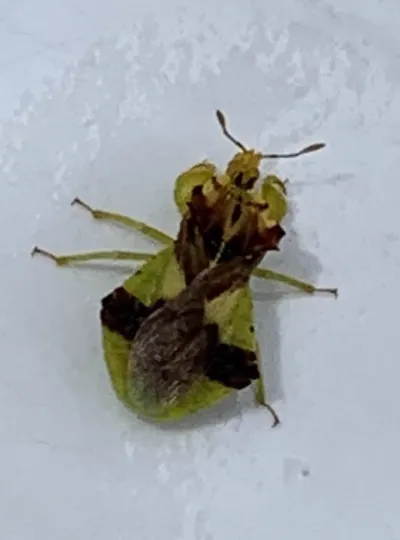
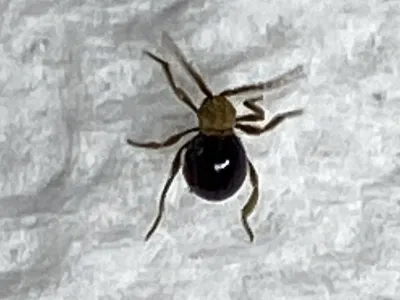
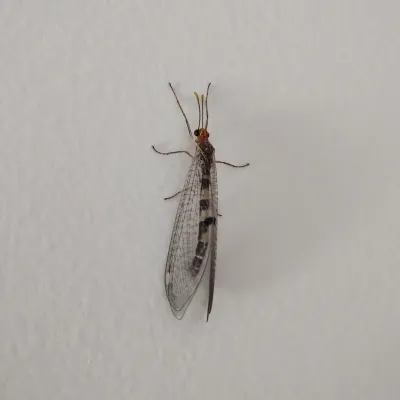
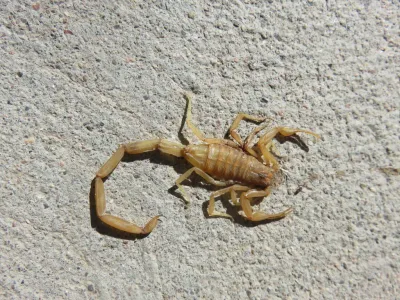
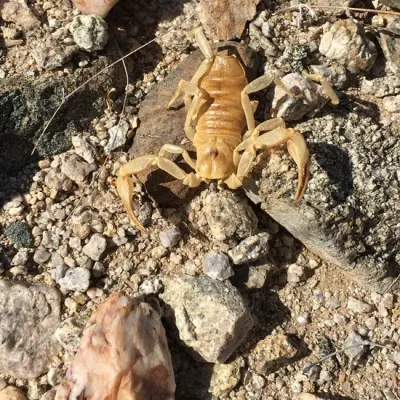
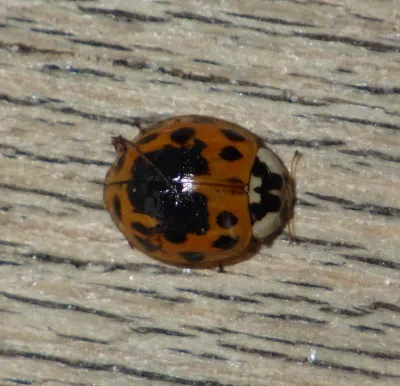
Commonly Confused With
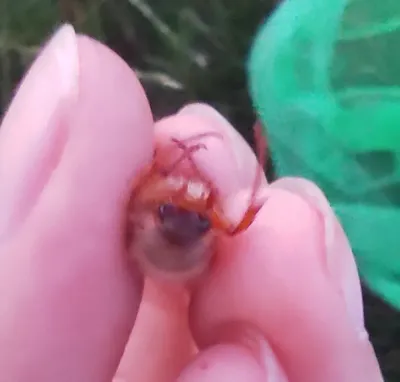
Asiatic Garden Beetles are often mistaken for these similar pests
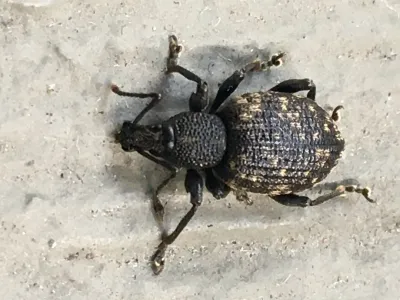
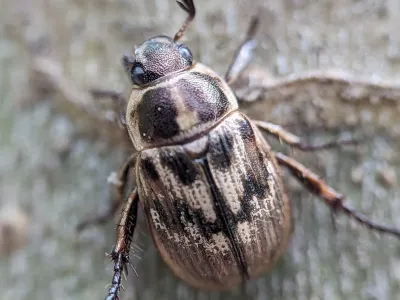
Where Asiatic Garden Beetles Are Found
Hover over states to see their names. Green regions indicate where asiatic garden beetles have been reported.
Common Questions about Asiatic Garden Beetles
What does an Asiatic garden beetle look like?
+
Adults are about 3/8 inch long, oval, and about the size and shape of a coffee bean. They are a solid cinnamon or reddish-brown with a dull, velvety finish that can show a faint rainbow sheen in bright light. They have no spots or stripes, and the tip of the abdomen sticks out a little past the wing covers.
Why are there small brown beetles at my porch light?
+
In July and August, the small brown beetles that pile up under porch lights and on screens are often Asiatic garden beetles. They hide in the soil during the day and fly at night, and they are strongly drawn to lights. They also come in through open doors and gaps in screens.
Are Asiatic garden beetles harmful?
+
They do not bite, sting, or spread disease, and they cannot hurt your home. The damage is to plants. Adults chew ragged holes in leaves and flowers at night, and basil, roses, mums, and dahlias are favorites. Their grubs feed on grass roots, but they usually need to be very dense before a lawn shows damage.
Why are my basil leaves being eaten overnight?
+
If basil or other soft plants look shredded in the morning and you never see a bug during the day, Asiatic garden beetles are a likely cause. Go out an hour or two after dark with a flashlight. You will often find the small brown beetles feeding on the leaf edges.
How is an Asiatic garden beetle different from a June bug?
+
Both are brown scarab beetles that fly to lights at night. June bugs are much larger, often 3/4 inch to 1 inch long, and shinier. Asiatic garden beetles are less than half that size, with a dull, velvety look. They also show up later, peaking in July and August rather than May and June.
How do I get rid of Asiatic garden beetles in my garden?
+
Handpick beetles at night and drop them into soapy water. Cover prized plants like basil with lightweight row covers in July and August, and turn off or reduce outdoor lights near the garden. If grubs are damaging turf, target them in late summer when they are small and near the surface.
Do Asiatic garden beetles get inside the house?
+
Some do. Beetles drawn to porch and window lights can slip in through open doors and torn screens. They do not breed or feed indoors, and they are harmless. Sweep or vacuum them up, fix screens, and keep doors closed in the evening.

With five years of hands-on experience in the pest control industry, George Schulz is a registered technician with the Virginia Pest Management Association and a proud third-generation professional in a family business that's been protecting homes for over 58 years. He manages and trains a team of service pros while also leading internal research efforts—recently spearheading a deep-dive review of thousands of documents on pest control materials to hand-pick the most kid and pet friendly, most effective solutions tailored specifically for homes in the DC metro area.
Local Other Pests Help
Dealing with other pests at home? Our licensed technicians provide pest control across Northern Virginia and Maryland.
