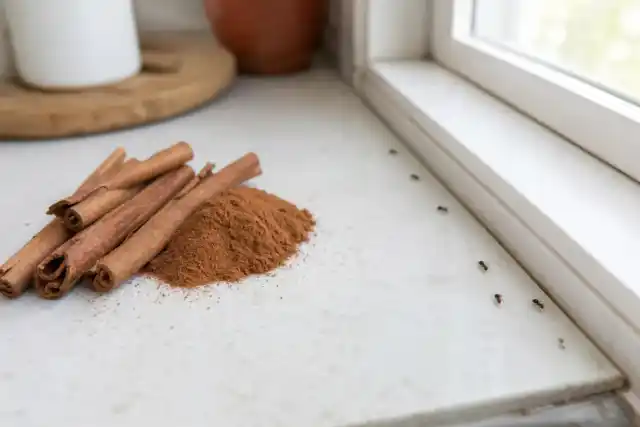

Yes, cinnamon deters ants, but only for a short time and only right where you put it. In lab tests, cinnamon oil kept ants away from treated spots. Ground cinnamon from the spice rack is much weaker, and it fades within days. Neither one reaches the nest, so the ants come back once the scent wears off.
Ants are one of the most common calls we get every spring here in Northern Virginia. Most homeowners first spot them in the kitchen or bathroom, and a line of cinnamon on the window sill is one of the first things people try. As a licensed technician at Better Termite, I’ll tell you what I tell customers. Cinnamon can buy you a quiet day or two. It won’t end the problem.
Why Cinnamon Deters Ants (For a While)
Ants get around by smell. When a worker finds food, it lays down a scent trail back to the nest. The rest of the colony follows that trail. That’s why you see ants marching single file across your counter.
Cinnamon gets its strong smell mostly from a compound called cinnamaldehyde. When you put cinnamon across an ant trail, two things happen. First, the strong scent covers up the trail, so the ants lose their way. Second, the compound bothers the ants, so they tend to avoid the treated spot.
However, both effects only last as long as the scent does. Cinnamaldehyde evaporates, and powder gets disturbed. Once it fades, the ants pick the trail right back up.
What the Research Says About Cinnamon and Ants
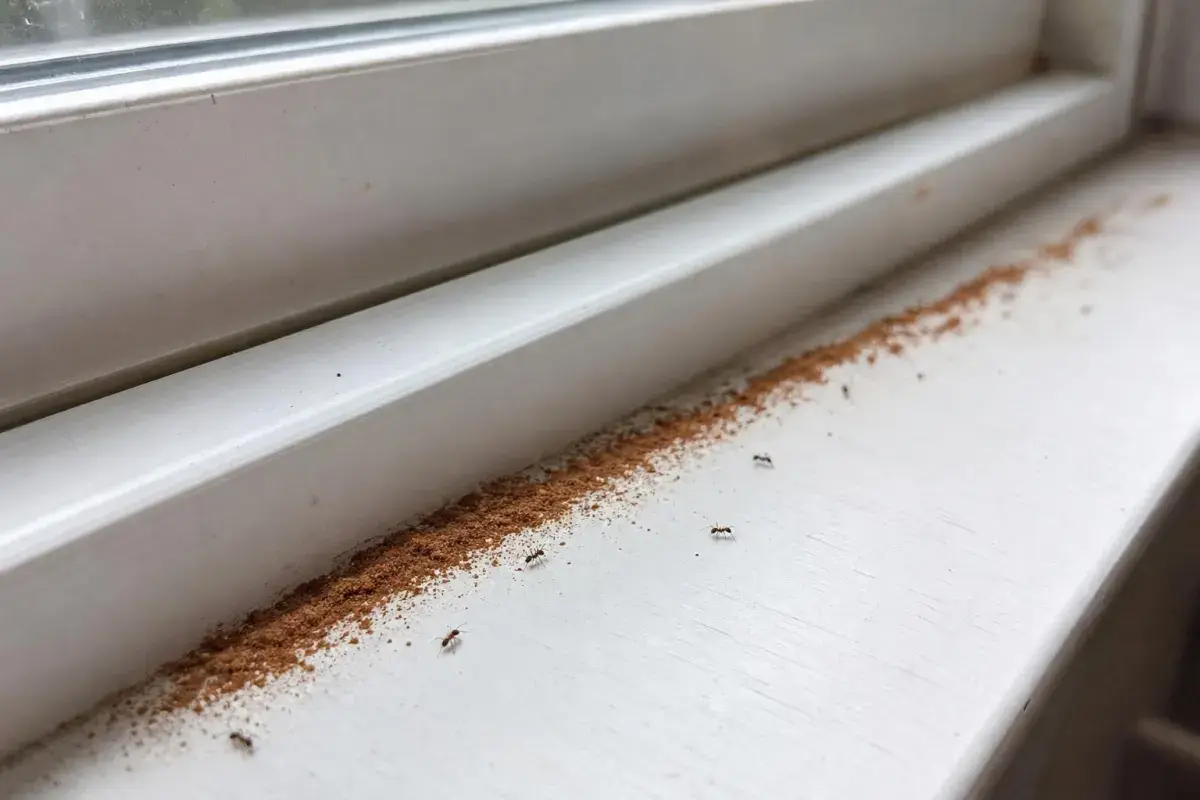
The honest answer is that there isn’t much research, and almost none of it tests the ground cinnamon in your pantry. Still, the studies that exist point the same way. Cinnamon oil deters ants at the right strength, but it doesn’t solve anything long term.
Cinnamon oil kept Argentine ants out of a nest site
University of Georgia researchers tested five essential oils, including cinnamon oil, on Argentine ants. They treated a spot the ants liked to nest in, then counted how many ants moved in. Fresh cinnamon oil repelled the ants at every strength they tested: 0.1%, 1% and 10%.
Then they let the treated spots age for a week. The weak 0.1% mix stopped working. The 1% and 10% mixes still kept ants out. Keep in mind, a lab dish doesn’t get wiped down, mopped or walked on. A real kitchen counter does.
Strong cinnamon leaf oil killed fire ants in the lab
In a 2008 lab study published in Bioresource Technology, researchers tested a cinnamon leaf oil on red imported fire ants. That oil was about 80% cinnamaldehyde. At 2%, it knocked down half the ants in under two hours in an open setup, and much faster in a closed one.
That sounds promising, but it doesn’t translate to your spice rack. The study used a concentrated oil applied straight to the ants. Ground cinnamon is a dried bark powder with far less of that compound in it.
Ground cinnamon on a fire ant mound backfired
The best real-world test I found came from Texas A&M AgriLife. An entomologist sprinkled a tablespoon of ground cinnamon on a fire ant mound and checked it several times over about a month. The cinnamon-treated mound actually had more ant activity than the untreated control mound. The same testing found other kitchen remedies, like coffee grounds and club soda, didn’t control fire ants either.
Every study above measured what happened to the ants that touched or smelled the cinnamon. None of them showed cinnamon wiping out a colony.
That’s the key point. The workers you see on the counter are a small slice of the colony. The queen, the eggs and most of the workers stay hidden in a wall, under a slab or out in the yard. A repellent moves foragers around. It doesn’t remove the colony that keeps producing them.
Does Cinnamon Kill Ants?
Generally, no. Not the way most people use it.
A concentrated cinnamon leaf oil killed fire ants in the lab, as noted above. But a sprinkle of ground cinnamon is a very different thing. The Texas field test is a good reminder: a tablespoon of powder on a mound didn’t slow the colony at all.
Even when cinnamon oil does kill some ants on contact, it only gets the foragers you can see. The queen keeps laying eggs, so the colony replaces them. For that reason, think of cinnamon as a deterrent, not a killer.
How Long Does Cinnamon Deter Ants?
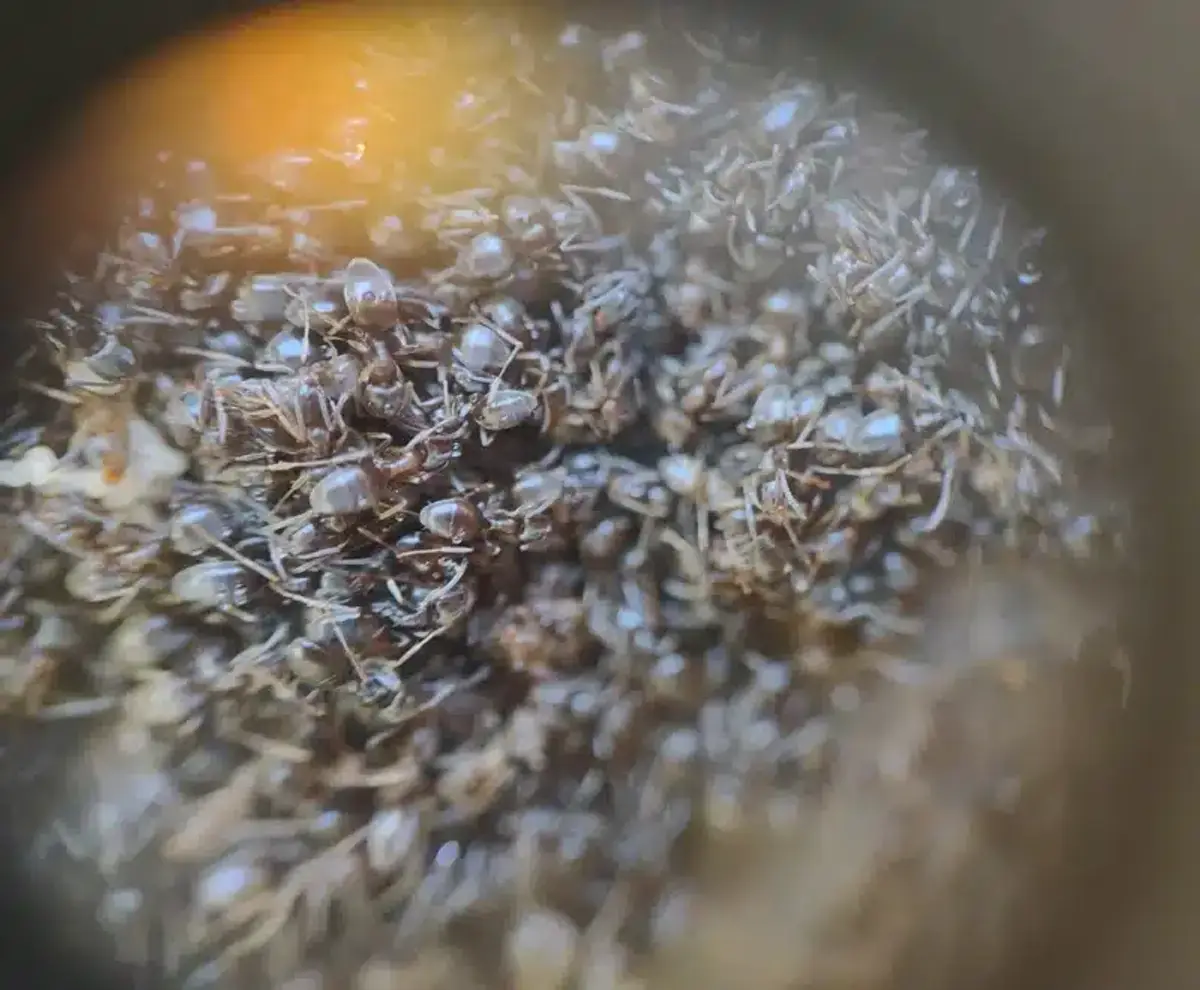
Plan on a few hours to a few days, not weeks. There’s no solid research on how long ground cinnamon lasts on real household surfaces. Here’s what we do know:
- In the lab, weak cinnamon oil stopped working after about a week of aging. Stronger mixes lasted longer.
- Ground cinnamon has far less active compound than the oil, so expect it to fade faster.
- Wiping counters, sweeping, foot traffic, sunlight and airflow all wear it down.
So if you use cinnamon, reapply it every few days and after you clean the spot.
Which Ants Does Cinnamon Work On?
This is where the evidence gets thin. The cinnamon studies only tested Argentine ants and fire ants. Neither one is the ant most people around here are fighting.
The University of Maryland Extension lists the common indoor ants in our region as carpenter ants, pharaoh ants, odorous house ants, acrobat ants, field ants and pavement ants. Across the DMV, odorous house ants and carpenter ants are the ones our technicians see most.
As far as I could find, no published study has tested cinnamon on those species. It will probably make them avoid a treated spot for a short time, since most ants follow scent trails. But I can’t point you to proof.
| Ant | Tested with cinnamon? | What to expect |
|---|---|---|
| Argentine ants | Yes, lab study with cinnamon oil | Repelled while the oil is fresh |
| Fire ants | Yes, oil in the lab and powder on a mound | Oil killed some in the lab; powder didn’t slow a mound |
| Odorous house ants | No | Likely short-term avoidance only |
| Pavement ants | No | Likely short-term avoidance only |
| Carpenter ants | No | Won’t fix the wet, rotted wood they nest in |
| Pharaoh ants | No | Repellents can make them split into more colonies |
That last row matters. The UMD Extension warns that pharaoh ant colonies can break apart and start new colonies when they’re stressed by repellents or dusts. So if you have tiny, pale yellow ants in a kitchen or bathroom, skip the cinnamon entirely.
Why Cinnamon Won’t Get Rid of an Ant Problem
Cinnamon works on the ants you can see. An ant problem, however, lives where you can’t see it. Here’s why it falls short:
- It never reaches the queen. As long as she keeps laying eggs, new workers keep showing up.
- It pushes ants around. Blocking one trail often just sends them through the next gap over.
- It ignores why they came. Ants come inside for food, water and shelter. Leaks, wood rot and mulch piled against the house keep drawing them in, no matter how the kitchen smells.
Daren, one of our technicians, says the worst ant house he ever worked was a slab home. Wood rot around the outside was drawing ants in, and the trails around the house were three or four ants wide. On top of that, the owners kept adding mulch against the foundation every year, which held moisture right where the ants wanted it.
Those homeowners had dealt with ants on and off for about 10 years. They never connected the ants to the rot and the mulch. Once Daren explained what was drawing them and the wood rot got fixed, the problem stopped.
No amount of cinnamon on the counter would have changed that. The moisture and the rotted wood were what kept the ants coming.
How to Use Cinnamon for Ants (If You Want to Try It)
Cinnamon is fine as a short-term barrier for a small, new problem. For example, it can help keep a few ants off a window sill while you figure out where they’re coming from. If you want to try it, here’s the approach that lines up best with the research.
Wipe the ant trail with warm, soapy water first. Soap removes the scent trail the ants are following. On its own, that can break up a line of ants for a while.
The lab work that held up used cinnamon oil at 1% or stronger. At home, roughly 1 teaspoon of cinnamon oil in 2 cups of water gets you close to 1%. Add a few drops of dish soap so the oil mixes in, and shake before each use. Wear gloves when you mix it, and test a hidden spot first, since oil can mark some surfaces. Ground cinnamon works too, but expect it to fade faster.
Spray, wipe or sprinkle where ants get in: window sills, door thresholds, gaps along baseboards, and spots where pipes come through the wall. Don’t put cinnamon on or near any ant bait you’ve set. It can keep the ants away from the bait, which is the one thing you want them to find.
Reapply every few days and after you clean. Then watch closely. If the ants just show up a few feet away, or they’re back within a week, the colony is still going strong. At that point, it’s time for bait or a professional.
You may also see cinnamon in store-bought ant sprays. Here’s what that label means.
If you have pets, take one more step before you start sprinkling.
What Works Better Than Cinnamon for Ants
If cinnamon is a speed bump, these are the things that actually solve an ant problem. Especially for ants that keep coming back, you’ll want to combine a few:
- Baits. Workers carry slow-acting bait back to the nest and share it, so it reaches the queen. Our guide to borax for ants explains how that works and how to set baits up.
- Cleanup. Wipe up crumbs and sugar spills, rinse recycling, and store food in sealed containers. Ants that find nothing to eat lose interest.
- Moisture fixes. Repair leaks, cracked tub grout and rotted trim. Carpenter ants in particular follow water damage.
- Yard changes. Pull mulch back a few inches from the foundation and trim plants that touch the house.
- Professional treatment. For a colony that won’t quit, a technician can use non-repellent products that ants carry back to the nest without noticing.
Other home remedies have the same limits. We break down whether baking soda kills ants and whether peppermint oil repels ants in separate guides.
When to Call a Professional
Cinnamon is a reasonable thing to try for a few ants on day one. But it’s time to call us if:
- The ants come back within a week, no matter how often you reapply.
- You see big black ants, or piles of sawdust-like debris near wood. That can mean carpenter ants are nesting in wet wood.
- You have tiny, pale yellow ants that might be pharaoh ants.
- The trail leads into a wall, under the slab, or somewhere you can’t reach.
Our ant control service treats the colony and looks for the moisture, rot or entry points that brought the ants in. We serve homes across Northern Virginia and Maryland, including ant control in Alexandria, Fairfax, Springfield, Woodbridge and Sterling. If you’re dealing with small trailing ants in the kitchen, our sugar ant control page covers how we handle them.
All the products we use are EPA approved and have passed review by our internal research team. Each one is something we’d feel comfortable using in our own homes.
The Bottom Line on Cinnamon and Ants
Cinnamon does deter ants, but only briefly. Cinnamon oil works better than ground cinnamon, and the stronger the mix, the longer it lasts. Still, neither one reaches the queen or fixes the reason ants came inside. Use it as a stopgap while you clean up, fix leaks and set baits.
If the ants keep coming back, give us a call at 703-683-2000 or email info@bettertermite.com. We’re happy to answer questions or set up an estimate.