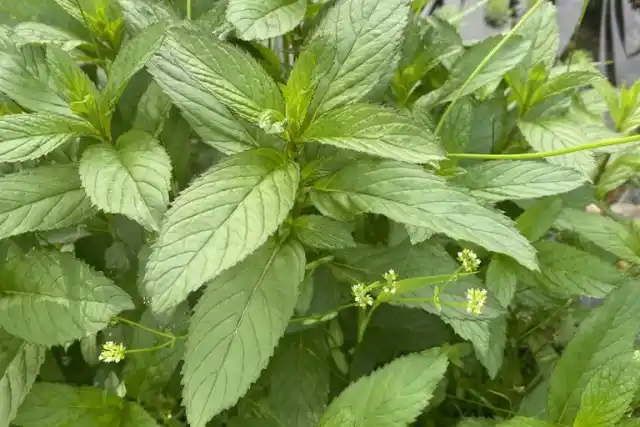

Yes, peppermint oil repels ants, but only for a short time and only where you apply it. Lab studies show ants avoid surfaces treated with peppermint oil, and it can kill some ants on contact. However, the scent fades within days, and it never reaches the colony or the queen. So it can clear a window sill, but it won’t end an ant problem.
Ants are one of the most common complaints we get in the spring here in Northern Virginia. In my experience, most homeowners first notice them in the kitchen or bathroom. A peppermint spray is one of the first things many people reach for. It can buy you a day or two, but it won’t stop the ants from coming back.
Why Ants Avoid Peppermint Oil
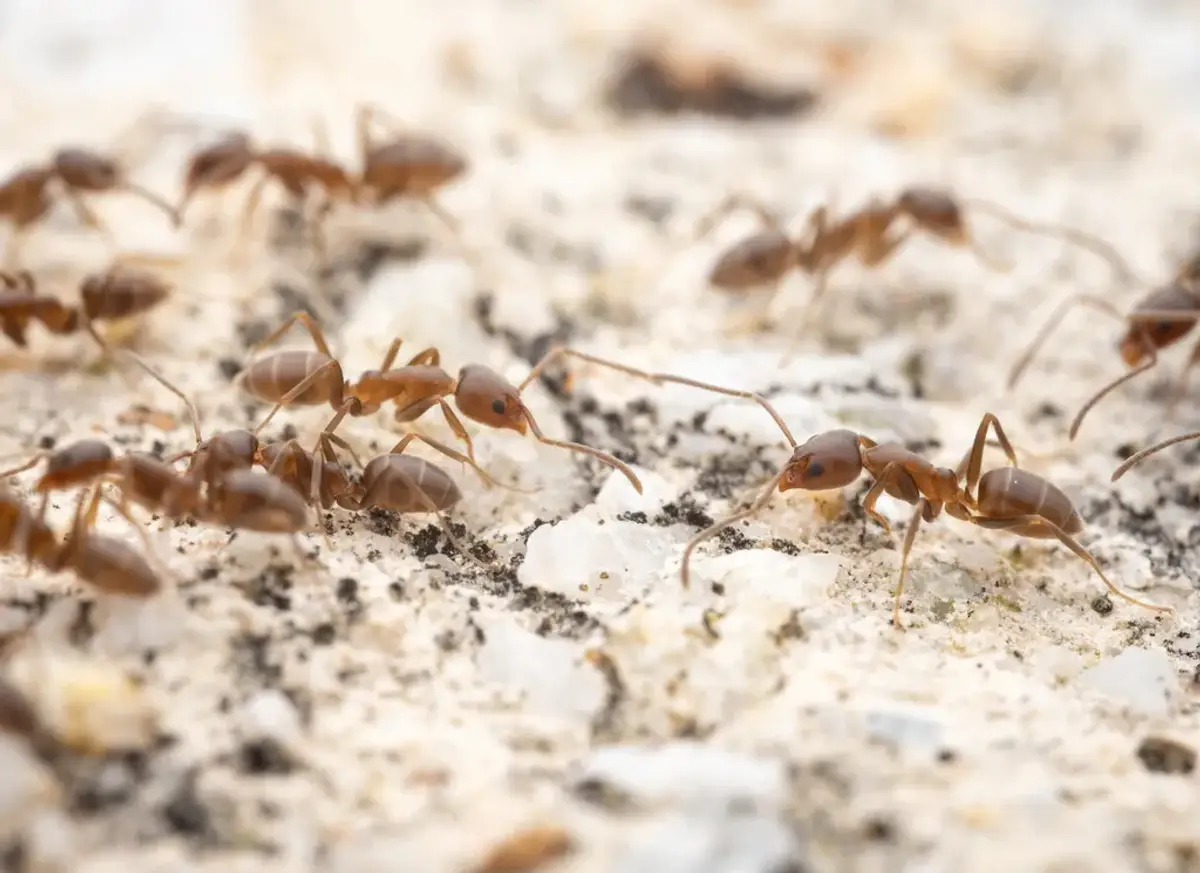
Ants find their way around by smell. When a worker finds food, it leaves a scent trail back to the nest, and the rest of the colony follows it. That is why you see ants marching in a neat line across your counter.
Peppermint oil is packed with strong-smelling compounds, mostly menthol. When you spray it on a trail, two things happen. First, the scent covers up the trail, so the ants lose their way. Second, the oil irritates the ants, so they steer clear of the treated spot.
The catch is that both effects depend on the oil still being there. Peppermint oil is volatile, which means it evaporates. As it fades, the ants come right back to the trail.
What the Research Says About Peppermint Oil and Ants
The honest answer is that research here is limited. Only a handful of lab studies have tested peppermint oil on ants. Also, they focus on two species, Argentine ants and fire ants. Still, the results line up well.
It kept Argentine ants out of a nest site
In a 2024 University of Georgia study published in the journal Insects, researchers put home remedies inside a moist nest site that Argentine ants prefer. Then they counted how many ants moved in over four hours. Tansy, cucumber peels and soybean extract did nothing, even at much higher amounts. The researchers used 1% peppermint oil as their known repellent for comparison, and it kept the ants out while those home remedies did not. Fresh rosemary and spearmint leaves helped some, too.
It repelled ants, and killed some on contact
A study from the USDA Agricultural Research Service tested oil-treated barriers against Argentine ants and fire ants. Both species crossed peppermint-treated barriers less often than untreated ones. Peppermint oil also killed about 90% of Argentine ants that stayed on treated surfaces for 24 hours. However, it did not kill fire ants in any meaningful number.
The effect fades with time
Researchers testing five essential oils on Argentine ants found that fresh peppermint oil repelled them at every strength. After the treated surfaces aged for seven days, though, the weak 0.1% mix stopped working. The 1% and 10% mixes still held up in the lab. Keep in mind, a lab dish doesn’t get wiped down, rained on or baked by the sun.
The most telling study is on fire ant mounds. In a 2004 study in the Journal of Economic Entomology, granules soaked in 2% mint oil repelled and killed fire ant workers. Treated mounds that had been broken open were abandoned within five days. But the ants didn’t die off. On mounds left intact, the ants simply built new satellite mounds nearby within two days.
That pattern matters for your house, too. A repellent moves ants. It doesn’t remove them. If the colony is healthy, the workers just find a new route or a new nest spot.
Does Peppermint Oil Kill Ants?
Sometimes, on direct contact. As noted above, peppermint oil killed most Argentine ants kept on treated surfaces in the lab, but it barely affected fire ants. So it depends on the species.
More importantly, contact killing only gets the ants you can see. Those foragers are a small slice of the colony. The queen, the eggs and most of the workers stay tucked inside a wall, under a slab or out in the yard. Because the queen keeps laying eggs, the colony simply replaces the workers you sprayed.
How Long Does Peppermint Oil Repel Ants?
Plan on a few hours to a few days, not weeks. There’s no solid research on how long peppermint oil lasts on real household surfaces. What we do know:
- University of California pest experts say plant oils like peppermint work well on contact but don’t last long after they dry.
- In lab tests, a weak mix stopped repelling after about a week of aging.
- Wiping counters, mopping, sunlight and airflow all speed up the fade.
For that reason, if you use peppermint oil, reapply it every few days and after you clean the treated spot.
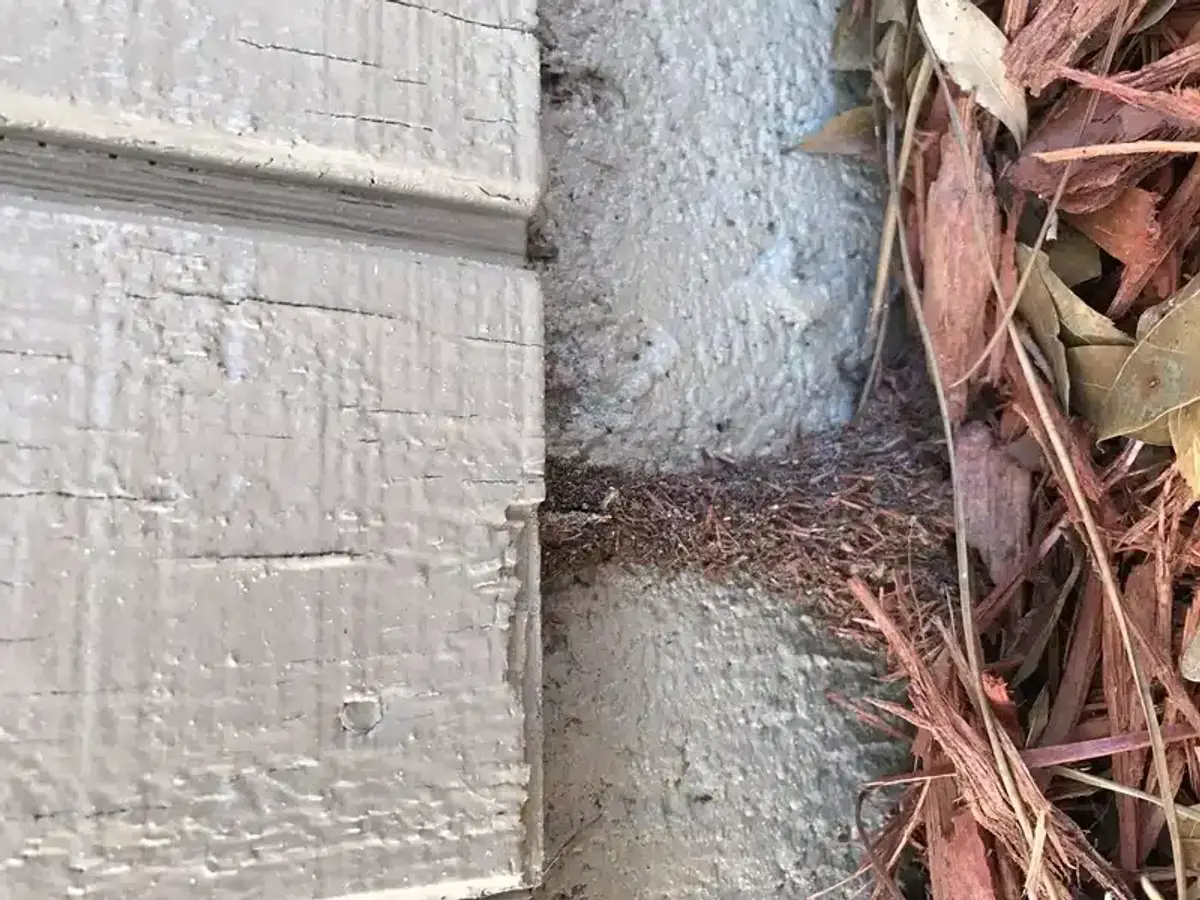
If the ants keep returning no matter how often you spray, the colony is the real target.
Which Ants Does Peppermint Oil Work On?
This is where the evidence gets thin. The studies above only tested Argentine ants and fire ants. Neither is the ant most people around here are fighting.
According to the University of Maryland Extension, common ants that get into homes in our region include carpenter ants, pharaoh ants, odorous house ants, acrobat ants, field ants and pavement ants. Daren, one of our technicians, says odorous house ants and carpenter ants are the ones he sees most across the DMV.
As far as I could find, no published study has tested peppermint oil on those species. It will probably make them avoid a treated spot for a while, since most ants rely on scent trails. But I can’t point you to proof that it works on them.
Here’s a quick breakdown:
| Ant | Tested with peppermint oil? | What to expect |
|---|---|---|
| Argentine ants | Yes, several lab studies | Repelled, and many killed on contact |
| Fire ants | Yes | Repelled, but rarely killed; colonies relocate |
| Odorous house ants | No | Likely short-term avoidance only |
| Pavement ants | No | Likely short-term avoidance only |
| Carpenter ants | No | Won’t fix the wet, rotted wood they nest in |
| Pharaoh ants | No | Repellents can make them split into more colonies |
That last row is important. The UMD Extension warns that pharaoh ant colonies can break apart and form new colonies when they’re stressed by repellent sprays or dusts. So if you have tiny, pale yellow ants in a kitchen or bathroom, skip the peppermint spray entirely.
Why Peppermint Oil Won’t Get Rid of an Ant Colony
Peppermint oil works on the ants you see. An ant problem, however, lives where you can’t see it. Here’s why a spray alone falls short:
- It never reaches the queen. As long as she keeps laying eggs, new workers keep showing up.
- It pushes ants around. Blocking one trail often just sends ants through the next gap over.
- It ignores the reason they’re inside. Ants come in for food, water and shelter. Leaks, cracked grout and wet wood keep them coming no matter what the house smells like.
That’s also why University of California experts call baits “a key tool” for managing ants. Workers carry slow-acting bait back to the nest and share it, so it reaches the queen. We cover how that works in our guide to borax for ants.
Daren, one of our licensed technicians, remembers an ant house he and Lawrence couldn’t crack at first. The team tried all sorts of things. Another tech even pulled the outlet covers and dusted behind them. As Daren put it, that “kind of pushed [the ants] to another area.”
Finally, Lawrence suggested checking the bathtub upstairs. The grout around the tub was cracked and leaking moisture down into the kitchen next to it. That water was what kept the ants there. Once they found it, the problem made sense.
Daren says cracked grout and caulk around a tub is now one of the first things he checks on an ant job. The same lesson applies to peppermint oil. Moving the ants isn’t the same as fixing why they came.
How to Use Peppermint Oil for Ants (If You Want to Try It)
Peppermint oil is fine as a short-term barrier for a small, new problem. For example, it can help keep a handful of ants off a window sill while you track down where they’re coming from. If you want to try it, this is the approach that lines up best with the research.
Wipe the ant trail with warm, soapy water first. Soap removes the scent trail the ants are following, which on its own can break up a line of ants for a while.
The lab studies that worked used about 1% peppermint oil. At home, that’s roughly 1 teaspoon of pure peppermint oil in 2 cups of water, plus a few drops of dish soap so the oil mixes in. Shake before each use. Test it on a hidden spot first, because oil can stain or mark some surfaces.
Spray or wipe the places where ants get in: window sills, door thresholds, gaps along baseboards, and the spot where a pipe comes through the wall. A cotton ball dabbed with oil can sit in a tight corner. Don’t spray it on or near any ant bait you’ve set, because it can keep ants away from the bait.
Reapply every few days and after you clean. Then watch closely. If the ants just show up a few feet away, or they’re back within a week, the colony is still thriving. At that point, it’s time for bait or a professional.
Store-bought peppermint sprays follow the same rules as a homemade mix.
If you have pets, take one more precaution before you start spraying.
What Works Better Than Peppermint Oil for Ants
If peppermint oil is a speed bump, these are the things that actually solve an ant problem. Especially for a colony that keeps coming back, you’ll want to combine a few:
- Use baits, not just sprays. Set slow-acting ant bait along the trail and let the ants take it. Don’t spray near it.
- Take away the food. Wipe up sugar and grease, rinse recycling, and store pet food in sealed bins. Our guide to ants in the kitchen covers the usual hot spots.
- Fix the moisture. Leaks under sinks, cracked tub grout, clogged gutters and wet wood draw ants in. This is the whole ballgame for carpenter ants.
- Pull mulch back from the foundation. Thick mulch against the house gives ants a moist place to nest right next to your walls.
- Seal the obvious gaps. Caulk around windows, doors and utility lines where you’ve seen ants coming in.
For more prevention ideas, see our full guide on how to keep ants away. The same short-term pattern shows up with other pests, too, as we found when we dug into whether peppermint oil repels roaches and whether peppermint oil repels spiders.
When to Call a Professional
Peppermint oil is worth a try for a few stray ants. However, it’s time to call a pro if:
- The ants keep coming back after a week or two of DIY.
- You see ants in more than one room.
- You find large black ants, sawdust-like debris, or ants near wet wood. Those can be carpenter ants.
- You see tiny pale ants in the kitchen or bathroom, which may be pharaoh ants.
- You see winged ants indoors in late winter or spring.
Our ant control service starts with an inspection to find the trails, the nest and the moisture issue feeding them. Then we treat with non-repellent products that ants don’t avoid. Because the ants carry the product back and share it, it reaches the colony. Our plans start around $49 a month, plus a $200 setup fee on the first visit. All the products we use are EPA approved and have passed through our internal research team. Each one is something we’d feel comfortable using in our own homes. If you’d like a lower-impact approach, ask about our eco-friendly pest control options.
We’ve been in the pest control business for 58 years and have earned 1,800+ reviews across our locations. We help homeowners with ants across Northern Virginia and Maryland, including Alexandria, Reston, Arlington, Annandale, Burke and Rockville.
The Bottom Line on Peppermint Oil and Ants
Peppermint oil does repel ants. Lab studies back that up, and it can kill some ants on contact. But it’s a short-term barrier, not a cure. It fades within days, it’s only been tested on a couple of ant species, and it never reaches the queen. Use it to buy time while you find the food, water and gaps that brought the ants inside. For a problem that keeps coming back, baits or a professional treatment will get to the colony.
If you have questions about ants in your home or want an estimate, call us at 703-683-2000 or email info@bettertermite.com. We’re happy to help.