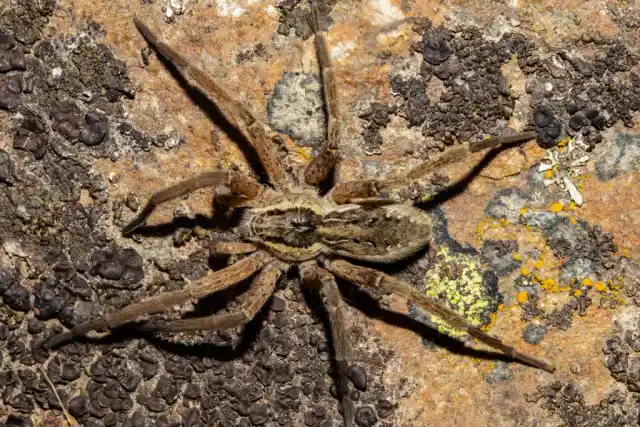

The biggest spider you’ll find in Virginia is generally the dark fishing spider. Virginia Cooperative Extension says fishing spiders “are some of the largest spiders found in Virginia.” They reach up to about 3 inches in length. With their legs spread, they look much bigger than that. After the fishing spider come the Joro, our large wolf spiders, and a handful of heavy-bodied orbweavers.
Below is each one with a picture, a real measurement, and where you actually run into it around a Virginia home. One thing to know up front: here in Virginia, the biggest spiders are not the dangerous ones. That relationship runs backwards, and I’ll show you why further down.
The Biggest Spiders in Virginia at a Glance
| Spider | Size | Where you see it |
|---|---|---|
| Dark fishing spider | Up to ~3 in.; female body 15-26 mm | Wooded yards, siding, decks, basements |
| Joro spider | Female body 17-30 mm; leg span near 4 in. | Rare here; tall webs between trees and eaves |
| Wolf spiders (Tigrosa) | Robust, palm-covering with legs spread | Ground level, mulch, garages, basements |
| Yellow garden spider | Large, heavy-bodied female | Gardens, tall plants, sunny web sites |
| Barn spider | Big-bodied orbweaver | Porches, sheds, eaves, railings |
| Spotted orbweaver | Bulky, reddish-brown | Porch lights, doorways, siding |
| Marbled orbweaver | Big orange-marbled abdomen | Shrubs, woods edges, damp yards |
1. Dark Fishing Spider: Virginia’s Biggest Spider
This is the one. Mottled brown and gray, heavy-bodied, with distinctly banded legs. It is the largest spider in Virginia and the one homeowners send us photos of most often when they are genuinely alarmed.
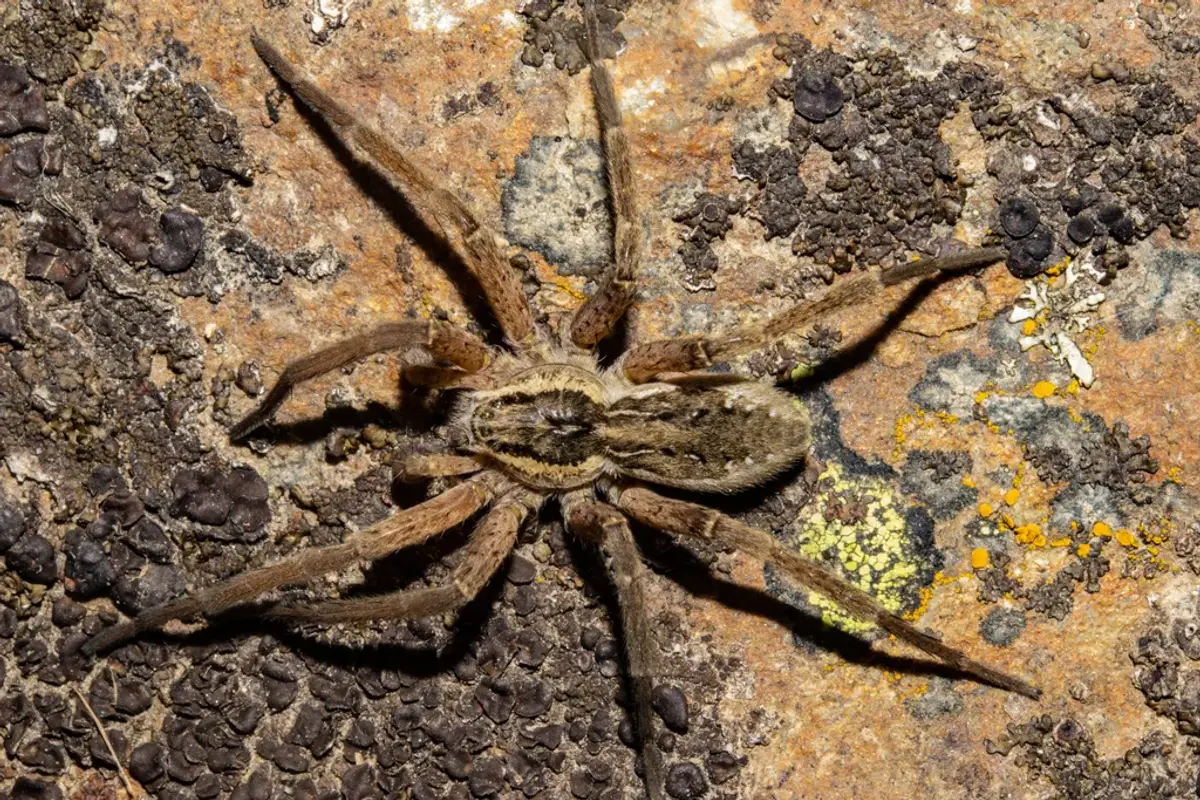
Despite the name, dark fishing spiders are often nowhere near water. Penn State Extension puts females at 15 to 26 millimeters in body length and describes the species as “a common household invader” in wooded settings. That describes an enormous amount of Northern Virginia, which is why these turn up on basement walls and behind siding in tree-heavy neighborhoods.
They are also remarkably timid. Penn State notes they are “quite shy and generally run from humans at the slightest movement.” In practice, the spider is far more interested in leaving than in anything else.
Read more on our fishing spider library page, and on the closely related nursery web spiders they are grouped with.
2. Joro Spider: The Biggest Leg Span, Barely Here
The Joro spider gets the headlines, and by leg span it beats everything else on this list. But the honest Virginia answer is more limited than most articles admit.
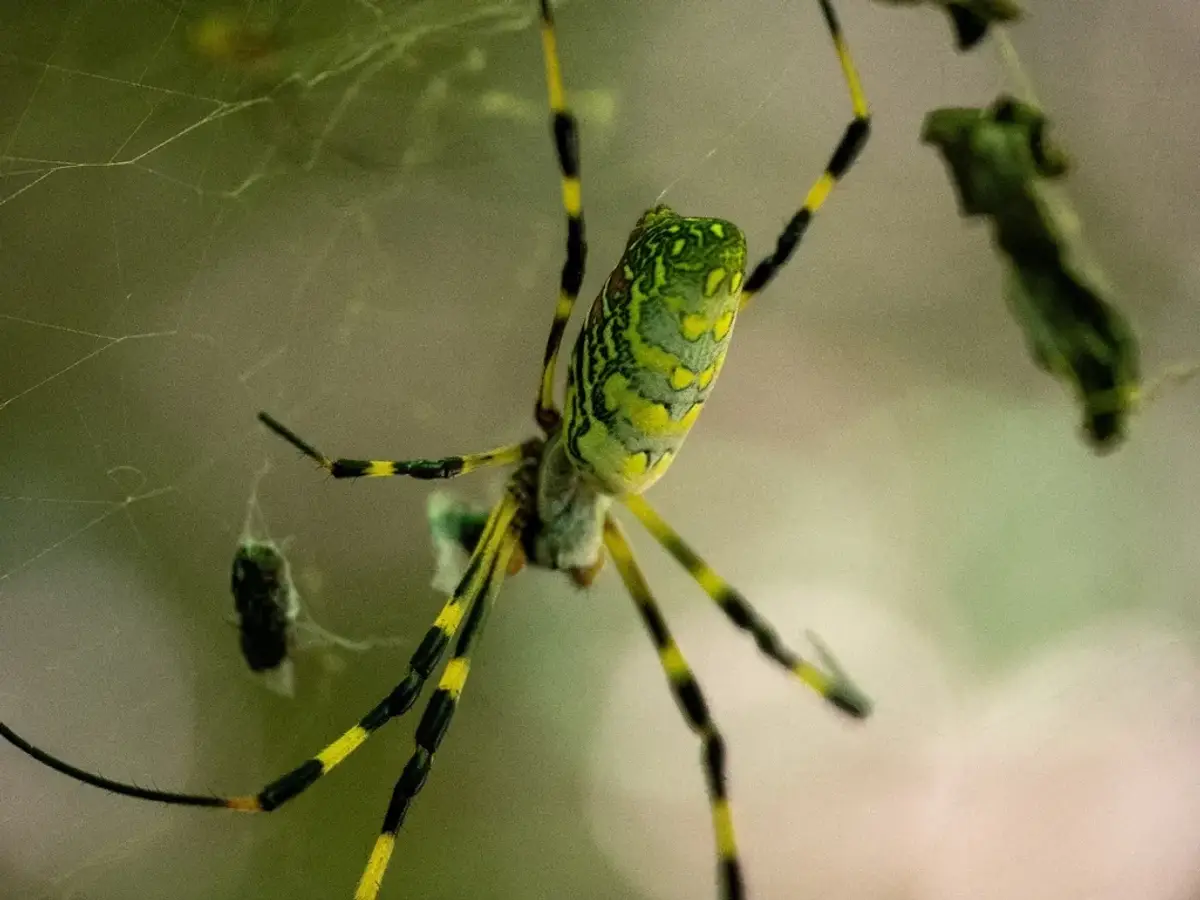
UGA Extension gives the female Joro a body length of 17 to 30 millimeters, bright yellow with broad bluish-green bands across the abdomen and red markings underneath. Her legs are long enough that a big female spans close to 4 inches.
Virginia has confirmed Joro records, not established populations. The first Virginia records turned up on the Eastern Shore in 2024. A small number have since been confirmed farther inland, including in Fairfax County. Maryland is further along, with at least one population that looks established. So Joro spiders are genuinely arriving here. But anyone telling you Virginia is overrun is getting ahead of the data.
They are also harmless. NC State Extension is blunt about it: “these spiders do not bite people or pets.”
Scale matters when you compare records. Verified Virginia sightings of the dark fishing spider vastly outnumber verified Virginia sightings of the Joro. That gap is the whole story. The Joro is the bigger spider on paper. But the fishing spider is by far the bigger spider you will actually run into in a Virginia yard.
3. Wolf Spiders: Virginia’s Biggest Ground Hunters
Wolf spiders do not build webs. They run prey down, which is exactly why they startle people so badly. A large female crossing a garage floor at speed reads as much bigger than she measures.
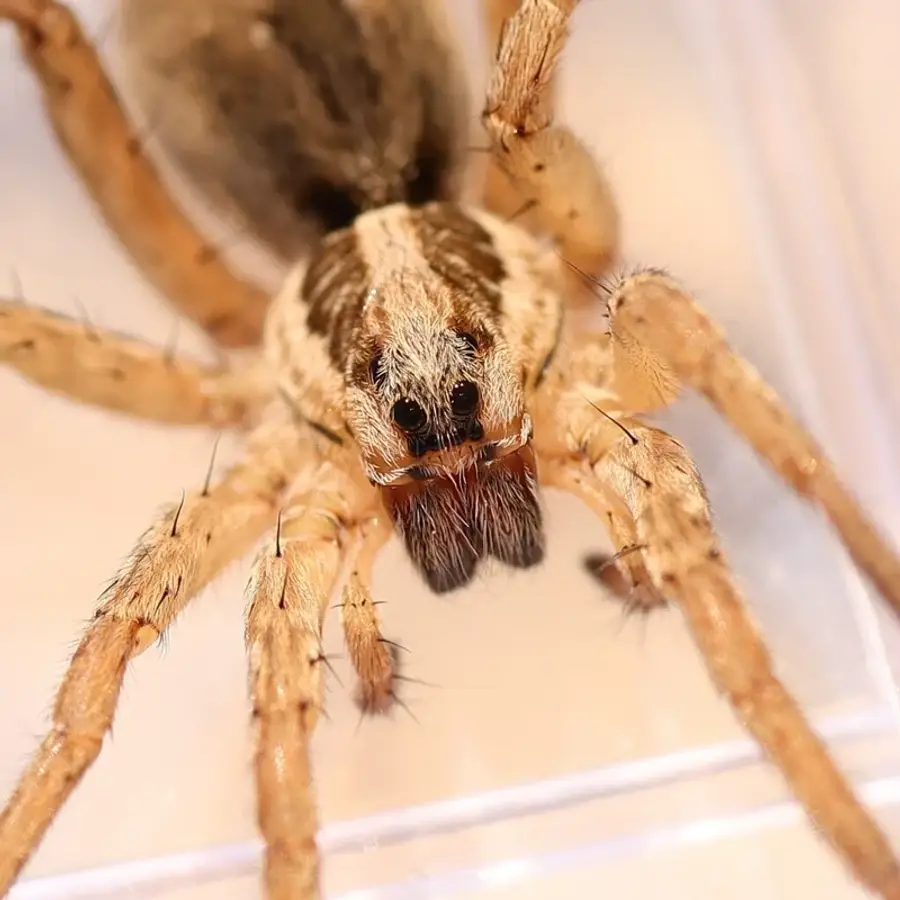
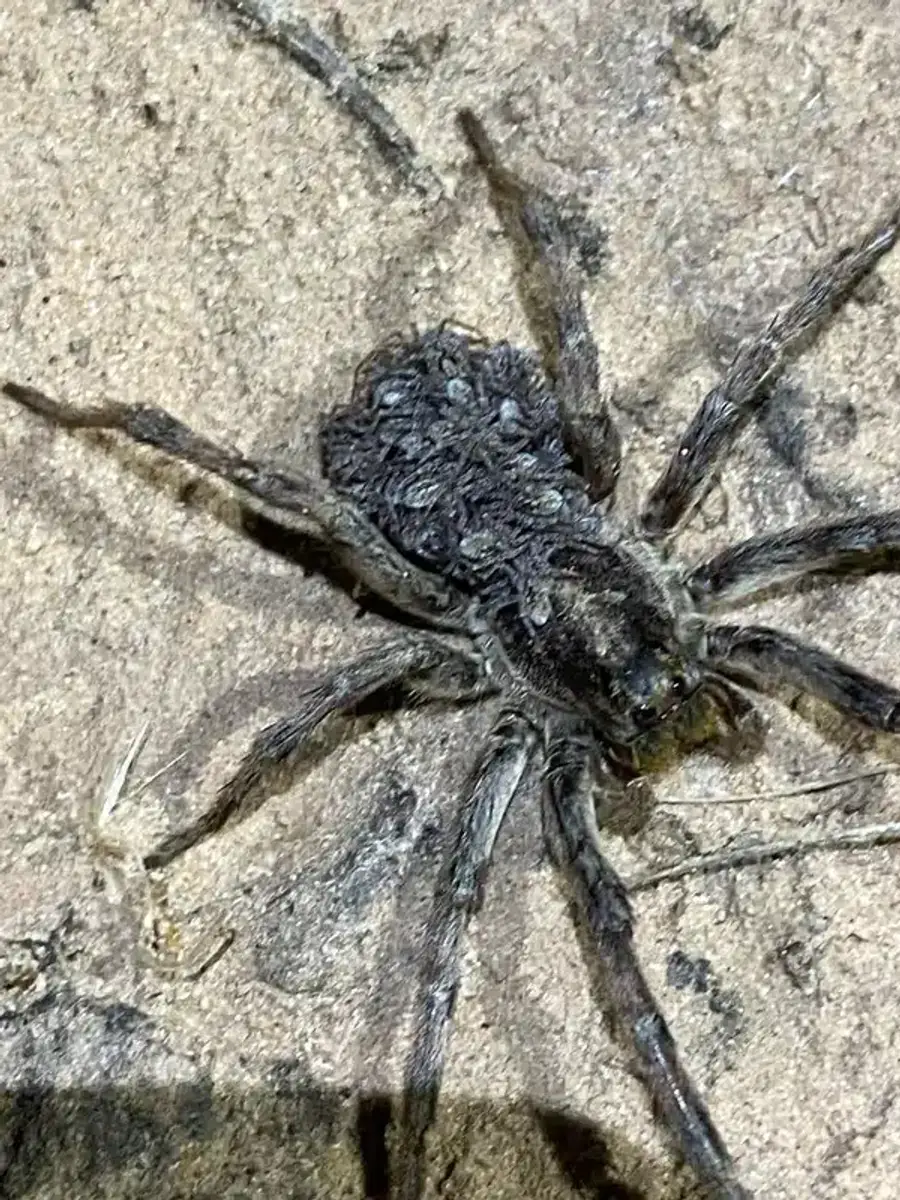
Here is a correction worth making. Almost every national list of giant spiders leads with the Carolina wolf spider, Hogna carolinensis, the largest wolf spider in North America. It is rarely if ever documented in Virginia. The large wolf spiders you actually meet here are Tigrosa aspersa and Tigrosa helluo. They are still impressive animals, just not the record-holder people expect.
Virginia Cooperative Extension groups wolf spiders and fishing spiders together and is clear on the risk: neither is “considered particularly venomous or medically important.”
If you are trying to rule out something worse, our brown recluse vs wolf spider guide walks through the differences side by side.
4. Yellow Garden Spider: The Biggest Web You’ll See
The black and yellow garden spider builds the most dramatic web of any Virginia spider, complete with a heavy zigzag band of silk down the middle. Females are large, boldly patterned, and completely uninterested in you.
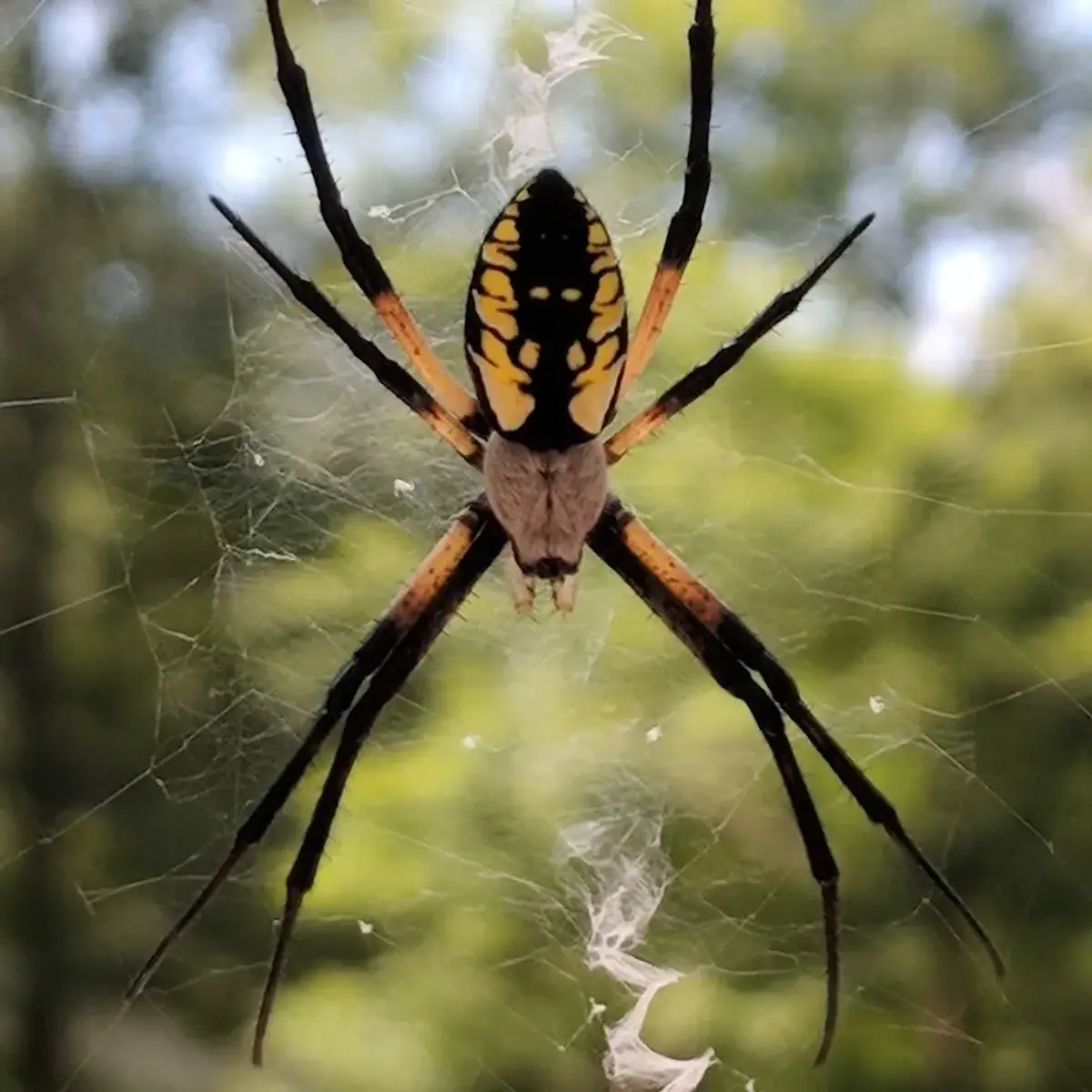
These are garden residents, not home invaders. They set up in tall plants and sunny gaps and hold the same spot for weeks. More detail on our black and yellow garden spider page.
5, 6 and 7: The Big Orbweavers
Three heavy-bodied orbweavers round out Virginia’s biggest spiders. These are the ones responsible for the webs across your front door in September.
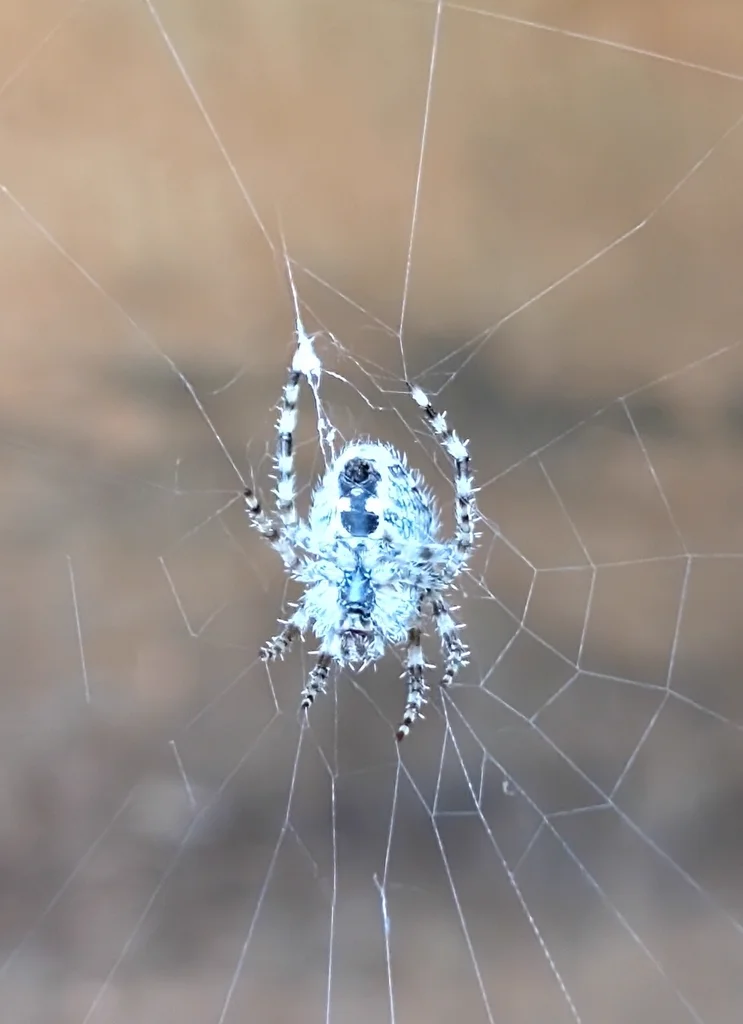
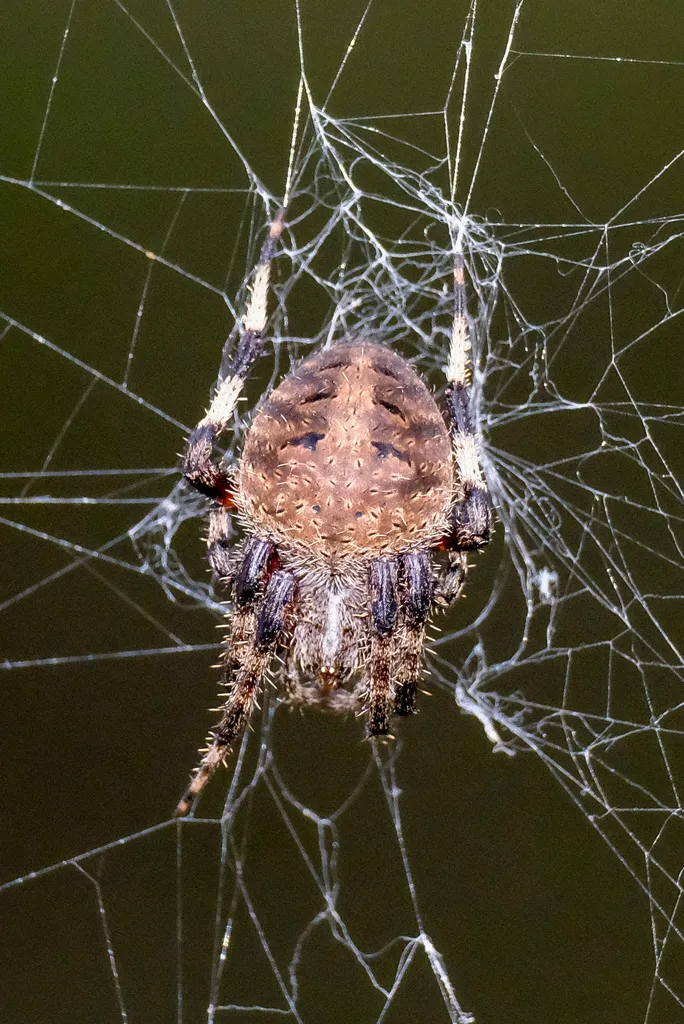
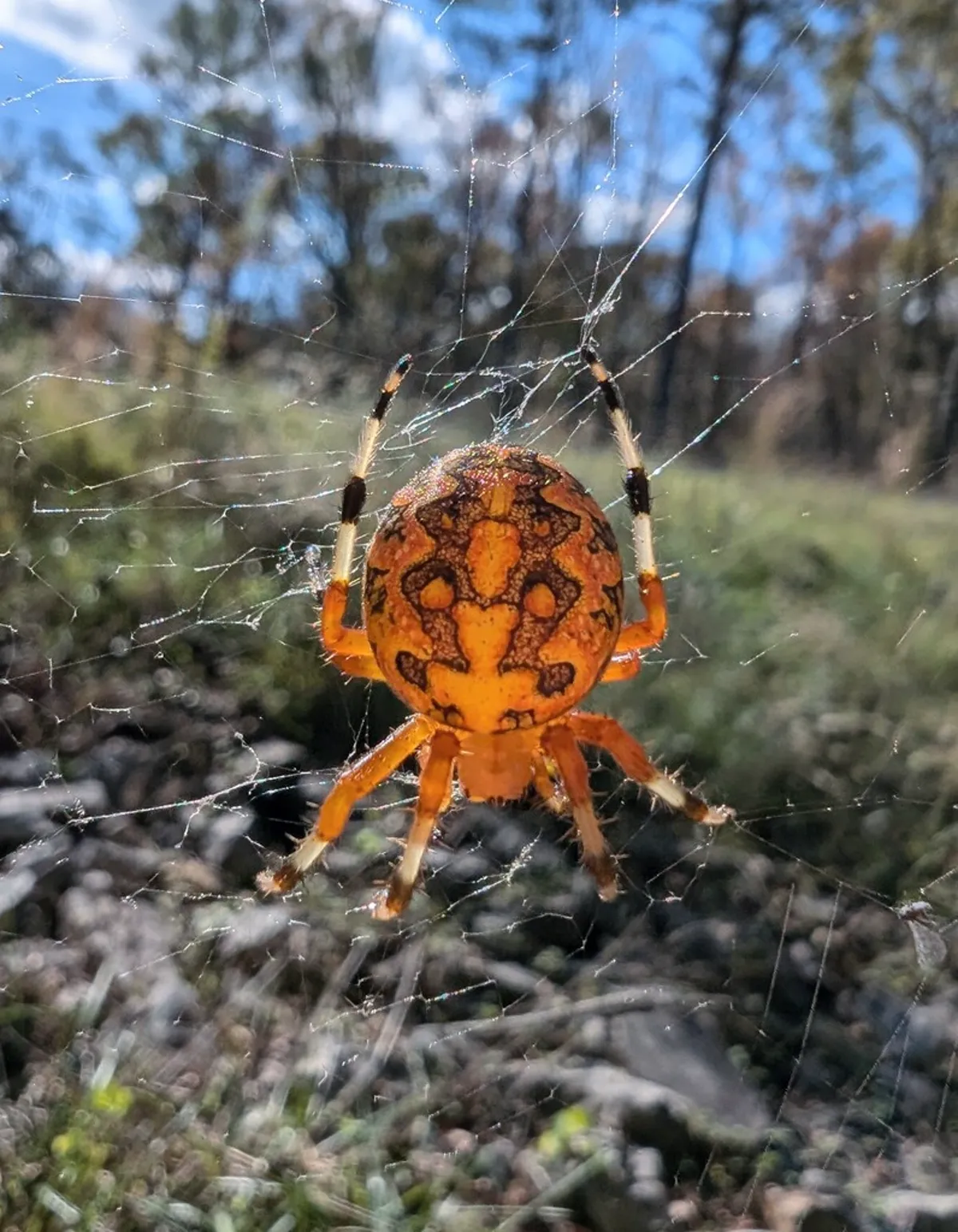

Barn spiders are classic porch spiders with big round abdomens. Spotted orbweavers are bulky and reddish-brown, and they concentrate around exterior lights. Marbled orbweavers have a strikingly swollen orange abdomen that regularly gets reported to us as something exotic.
All three are outdoor, web-building spiders. Their size peaks late in the season, which is why they seem to appear overnight. Our library pages cover barn spiders, spotted orbweavers, and marbled orbweavers in more depth.
One more worth naming indoors is the giant house spider. It has a long leg span and turns up in basements and garages. Its body, though, is far lighter than a fishing spider’s.
In Virginia, the Biggest Spiders Are the Least Dangerous
This is the part most size lists skip, and it is the most useful thing on this page.
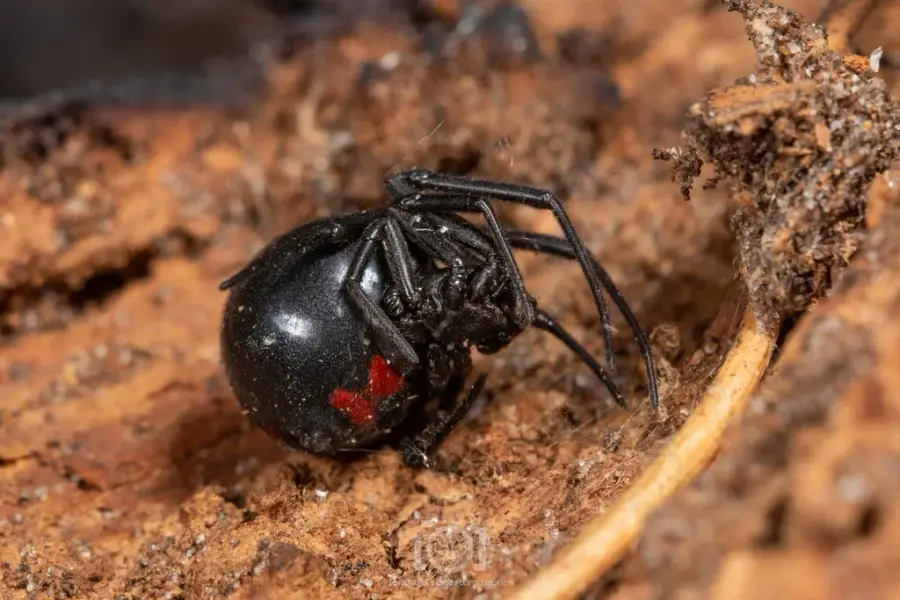
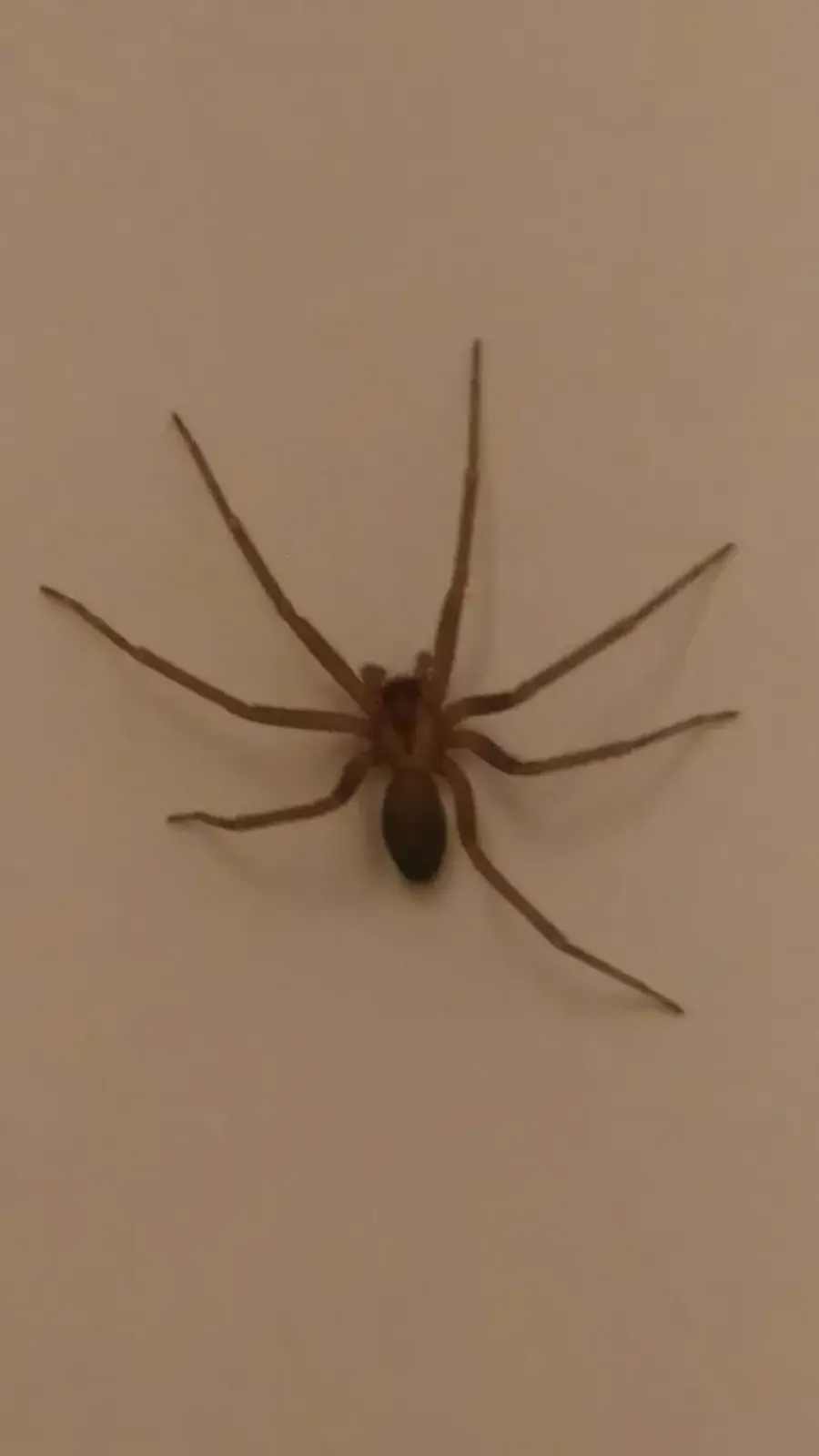
So if you are sizing up a spider to decide how worried to be, size is the wrong input. Black widows turn up in woodpiles, window wells, and garages. Brown recluses are rare outside the far southwest of the state. Both are small enough to overlook entirely.
When Virginia’s Big Spiders Show Up
Spiderlings hatch and are far too small to notice. Fishing spiders that overwintered under bark and in structures mature and become active again.
Growth season. Orbweavers are building webs but remain small enough that most people walk past them without a second look.
Webs get noticeably larger and the spiders in them get heavier. This is usually when the first “what is this giant spider” calls start.
Peak size, peak complaints. Orbweavers reach full size, and cooler nights push wandering hunters toward warm foundations, garages, and basements.
Most of the big outdoor spiders die off. Fishing spiders hibernate under stones, loose bark, and inside structures until spring.
If you are finding them below grade specifically, we go deeper on that in our guide to spiders in the basement.
What Actually Works on Big Spiders
Spiders are one of our top pests in this area. The wooded neighborhoods we service, like Mount Vernon near Alexandria, have a lot of trees and moisture. Those are the areas where we see the highest spider populations in Northern Virginia. The webs build up fast in the eaves of homes there.
Our approach there is two-pronged. First we remove the existing webs with a long-handled web brush called a webster, because leaving old webbing up invites the next spider to move in. Then we apply a non-repellent perimeter treatment along the foundation. Treating the outside is the part that matters, because that is where the spiders and their food are coming from.
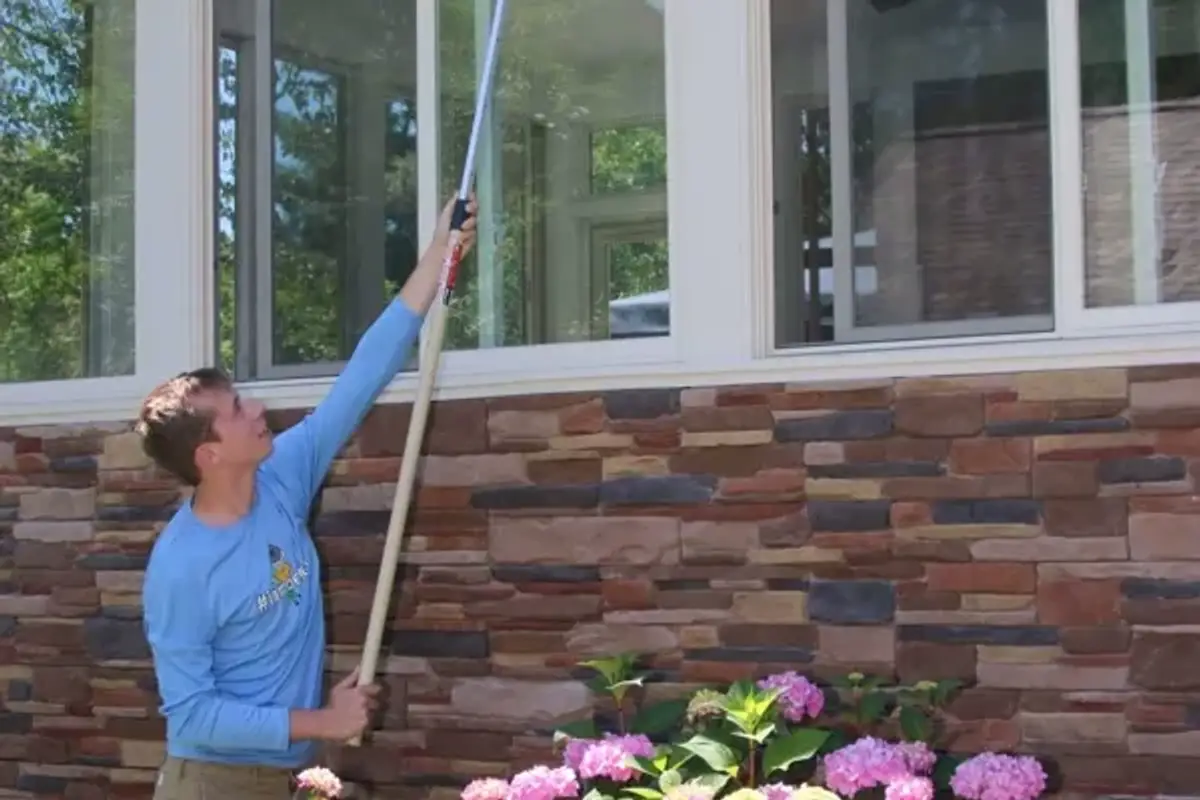
A few things you can do yourself make a real difference:
- Knock webs down regularly, especially around eaves, porch ceilings, and light fixtures.
- Switch porch bulbs to yellow, so fewer night-flying insects gather and the orbweavers lose their food supply.
- Seal gaps around doors, windows, and utility lines. Our exclusion services handle the larger openings.
- Move firewood and rock piles off the foundation, which is where widows and wolf spiders hide.
- Wear gloves when reaching into sheds, window wells, and woodpiles.
When that is not keeping up, our spider control service handles it as part of a recurring plan. It is also included in our general pest control plans. Those start around $49 a month for an average DMV home, plus a one-time $200 setup fee on the first visit. There is a full walkthrough of the DIY side in our guide to getting rid of spiders.
Final Thoughts
Virginia’s biggest spider is the dark fishing spider, and it is one of the most harmless animals you will ever be frightened by. The Joro has a longer leg span but is still only scattered across the state in confirmed records. Our large wolf spiders and orbweavers are impressive and entirely benign. The two spiders here that deserve genuine caution are both small.
Our family has been handling pests across the DMV for 58 years, with over 1,800 reviews and licensed technicians who deal with spiders every week. If you have a photo you want a second opinion on, or you want an estimate, call us at 703-683-2000 or email info@bettertermite.com.