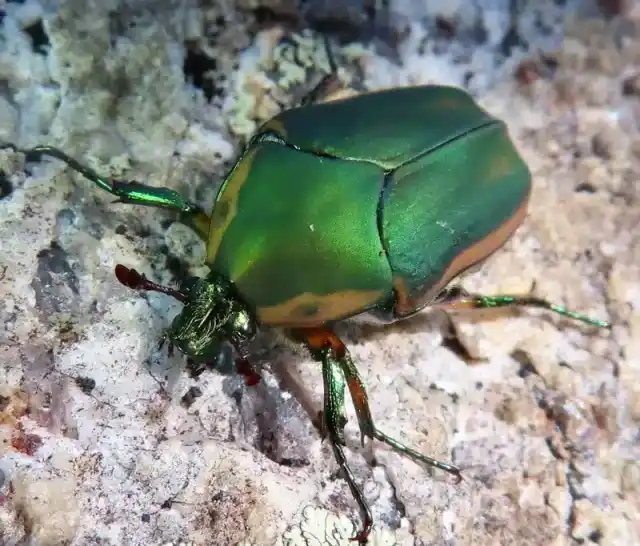

Virginia beetles sort into a handful of groups. Carpet beetles live in the closet. Pantry beetles live in the kitchen. Powderpost beetles and old house borers live in the wood. Ground beetles and Asian lady beetles wander in from outside. The garden crowd is led by Japanese beetles, and the yard also holds a few showpieces like the eastern Hercules beetle.
Only three of those groups can actually damage your home. The full table is right below. I’ve been a licensed technician here since 2015, and beetle calls taught me one thing above all: where you found it narrows the identification faster than what it looks like. A small dark oval on a wool rug and a small dark oval in the flour cabinet are different problems with different fixes.
Types of Beetles in Virginia at a Glance
| Beetle | Size | Where you find it | Does it matter? |
|---|---|---|---|
| Carpet beetles | 2–6 mm | Closets, wool rugs, windowsills | Yes — larvae eat fabric |
| Pantry beetles | 2–4 mm | Kitchen cabinets, flour, cereal | Yes — ruins stored food |
| Powderpost beetles | 2–7.5 mm | Hardwood floors, trim, framing | Yes — tunnels in wood |
| Old house borer | 18–25 mm | Pine framing and crawl spaces | Yes — tunnels in softwood |
| Foreign grain beetle | ~2 mm | New homes, windows, late summer | No — a moisture signal |
| Ground beetles | 1/4 to 1-1/2 in | Basements, ground floors, spring | No — harmless predator |
| Click beetles | 6–19 mm | Porch lights, summer nights | No — nuisance only |
| Asian lady beetles | ~7 mm | Sunny siding, wall voids, October | No — but they stain |
| Japanese beetles | ~10 mm | Roses, linden, grapevines, June | Yes — plant damage |
| Green June beetle | ~25 mm | Lawns and ripe fruit, July–August | Minor — turf grubs |
| Emerald ash borer | ~13 mm | Ash trees only | Yes — kills the tree |
| Eastern Hercules beetle | Up to 3 in | Porch lights, rotting hardwood | No — completely harmless |
One quick structural test before you use that table. Beetles have hard front wings that meet in a straight seam down the middle of the back. If the wings cross in an X and the body is shield-shaped, you’re holding a true bug instead.
Beetles That Damage Virginia Homes
These are the three groups worth taking seriously, plus the pantry crowd that ruins groceries rather than structure.
Carpet Beetles
If you own a wool rug, a good suit, a felt hat or a taxidermy mount, this is the beetle on this page that should hold your attention. Adults are small, oval and harmless. The larvae do every bit of the damage, grazing through wool, fur, feathers, silk and anything else spun from animal fiber.
Virginia Cooperative Extension describes adults as generally under 6 mm, oval and convex, and notes they’re often mistaken for seeds. Indoors, the adults congregate at windows, drawn to light. The larvae are somewhere else entirely — in carpets, closets, wall voids, attics, or around a dead animal or abandoned bird nest.
Extension also flags a detail that trips people up constantly. The larvae shed their skins as they grow, and those cast skins are often mistaken for live larvae, which makes an infestation look far bigger than it really is. When someone tells me they have hundreds of them, we usually find a much smaller live population and a lot of old skins.
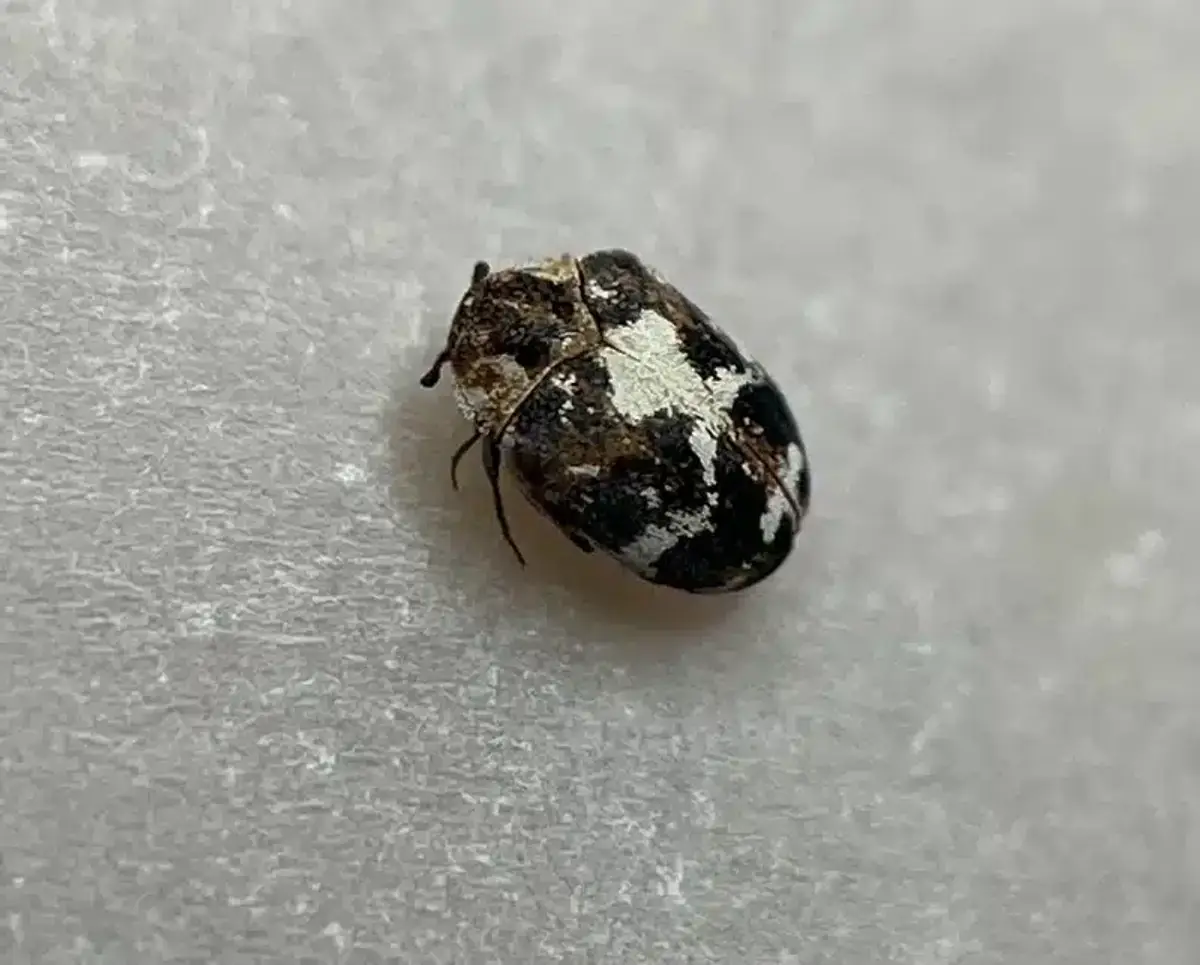
The good news is that most of the fix is a vacuum and a laundry cycle. Heat kills every life stage, so a hot wash or a run through the dryer resolves an infested garment. Then vacuum carpet edges, baseboards, closet floors and under furniture, because that’s where the lint and hair the larvae feed on collects. Once it has moved past a single closet, our carpet beetle control service pairs that cleanup with targeted treatment of the harborage areas. The black carpet beetle and the varied carpet beetle are the two species I see most in Northern Virginia.
Pantry Beetles
Nobody wants to hear this, but you carried these in yourself. University of Maryland Extension notes these insects are typically brought home inside packages already contaminated with eggs that slipped past milling or packaging. Housekeeping has nothing to do with it. I’ve found pantry beetles in spotless kitchens and none at all in messy ones.
The sawtoothed grain beetle is the one I find most often — about a tenth of an inch, narrow, brown, with six saw-like teeth along each side of the thorax. Flour beetles are slightly larger and reddish-brown. And the cigarette beetle deserves special mention here: Virginia Cooperative Extension calls it one of the most common household insect pests in Virginia, a small oval beetle covered in fine hairs that give it a silky yellowish-brown look. It gets into spices, seeds, dried flower arrangements and pet food, not just tobacco.
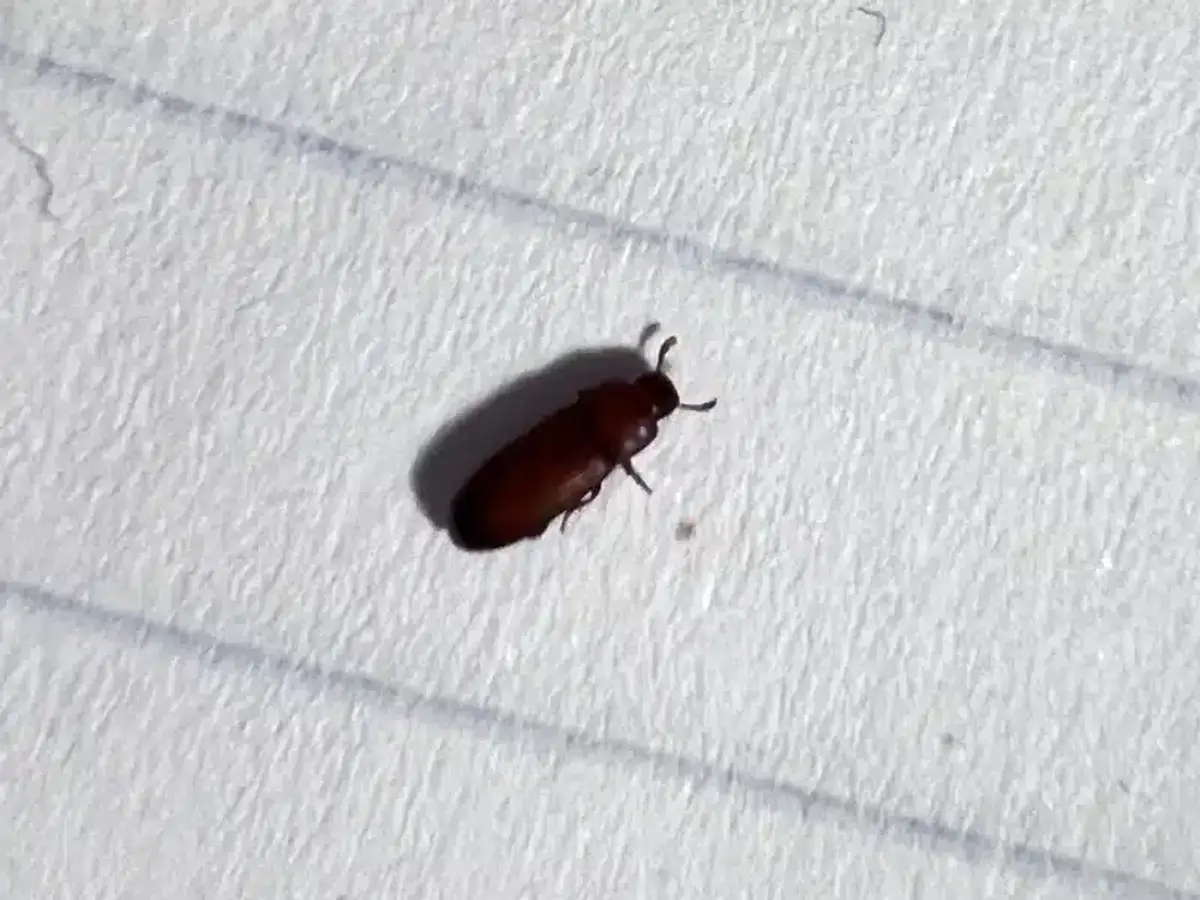
Sorting out which one you have matters less than people expect, because the cleanout is the same for all of them.
Sawtoothed and merchant grain beetles. Look for six saw-like teeth along each side of the thorax under magnification. That is the whole identification. The flat body is what lets them work into poorly sealed boxes and wedge into cabinet cracks, so sealed glass or hard plastic containers shut them out entirely.
Red and confused flour beetles. Both are slim reddish-brown beetles around 3 to 4 mm, and the antennae tell them apart. The red flour beetle’s last three segments swell abruptly into a club. The confused flour beetle’s widen gradually instead. Practically speaking they infest the same flour and respond to the same cleanout.
Cigarette and drugstore beetles. Small, oval, hairy and yellowish-brown to reddish. These are the pantry beetles most likely to turn up in spices, birdseed, dried decorative arrangements and pet food. The cigarette beetle is among the most common household insects in Virginia.
Powderpost Beetles and Old House Borers
These two tunnel through wood, and they’re the ones that overlap most with the termite and wood-destroying insect work that makes up the core of our business.
Powderpost beetles leave small round exit holes with fine powder streaming out, usually noticed in spring. Old house borers are much bigger insects. Virginia Cooperative Extension puts the adults at three-quarters of an inch to a full inch, black to dark brown, attacking seasoned softwood. Larvae take about five years to mature, and adults emerge in June and July through oval exit holes. Extension is also blunt about the misleading name: despite being called old house borers, they attack new houses as well.
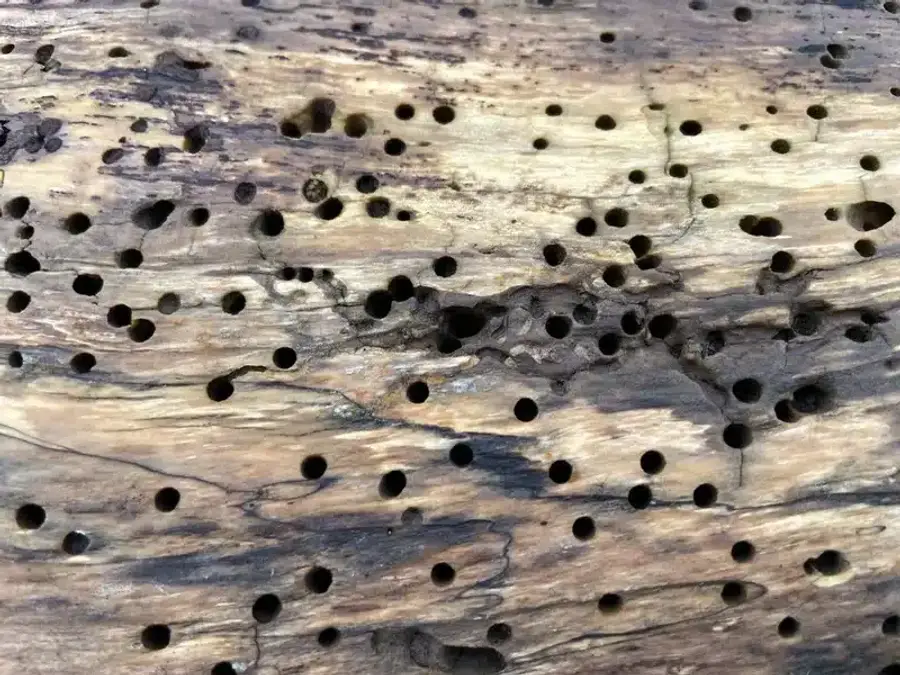
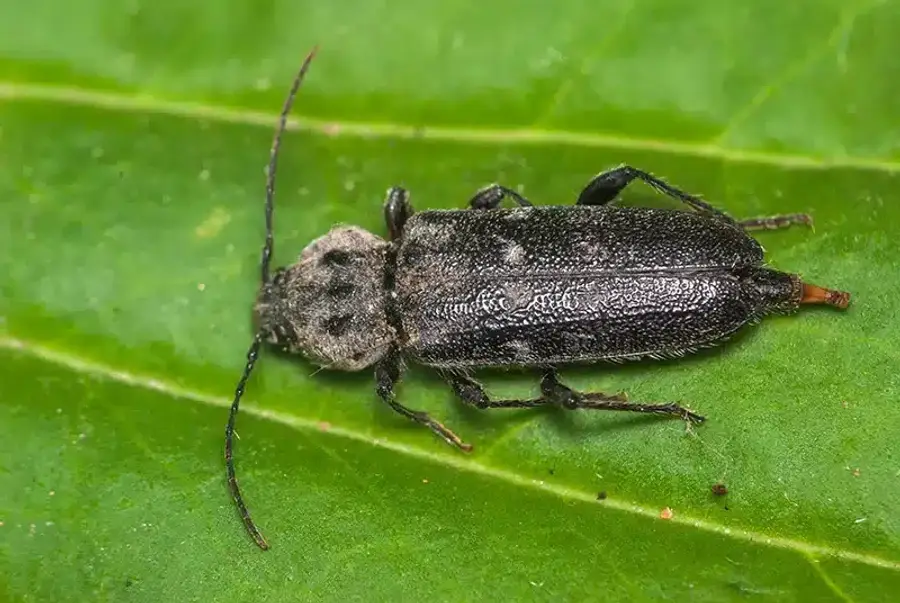
Hole size is the fastest sorting tool. Powderpost holes are small and round, roughly pinhead to an eighth of an inch. Old house borer holes are much larger and oval with ragged edges. The powder itself is a second clue. NC State Extension notes that lyctid frass looks and feels like talcum powder, while anobiid frass is powdery but has a gritty texture.
The Alexandria house I still think about was a termite job rather than a beetle job, but the lesson carries over. There had never been a known problem. What tipped the homeowners off was a small bulge in a window sill on an addition, where insects had eaten up to the paint and were starting to break through. Once we got into the crawl space we found years of feeding and a lot of difficult, expensive repair.
That’s why I don’t take a single exit hole at face value, and why I go into the crawl space on wood-boring calls instead of diagnosing from the living room. The visible damage is almost never the whole picture.
Telling Active Wood Damage From Old Damage
This is the most valuable test in this entire article, and you can run it yourself for free.
Clear away every bit of powder beneath the holes. Mark or seal the existing holes so new ones stand out. Note the date. Then check again over the next few weeks. University of Kentucky frames the active signs clearly: fresh powder the color of newly sawed wood, and emergence holes that lack the weathered look of the surrounding wood. Old, inactive damage leaves frass that is yellowed, caked, or covered in dust and debris.
I run this test before quoting anyone on wood-boring beetle work. A house can carry exit holes from an infestation that died out decades ago, and treating that is spending money on a problem that already resolved itself. Our wood-boring beetle library page covers the species involved in more depth.
Beetles That Just Wander In
None of these damage a Virginia home. They’re identification problems, not pest problems.

Ground Beetles
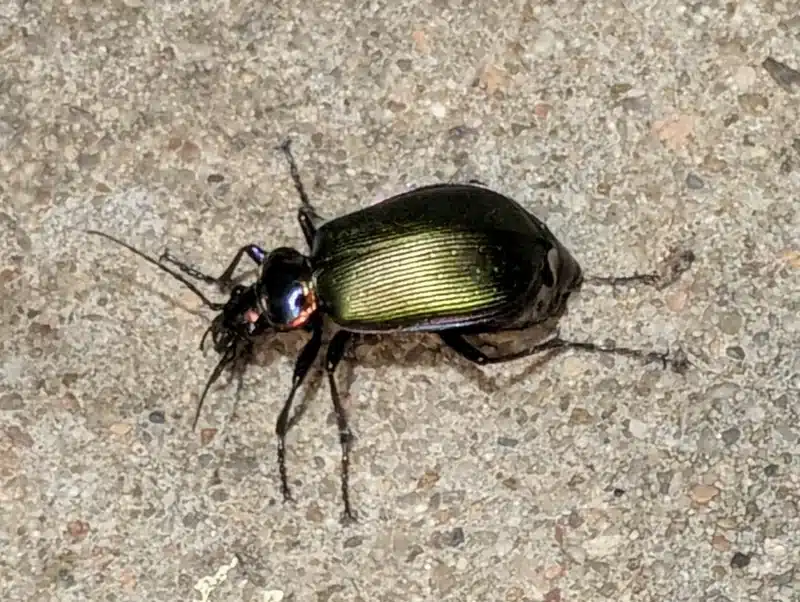
If someone calls about a big shiny black beetle in the basement in spring, this is almost always the answer. Virginia Cooperative Extension puts them at a quarter inch to an inch and a half, mostly black, commonly found in Virginia houses in spring crawling around basements and ground-floor rooms or flying to bright lights. Extension is reassuring about it: there’s no need to worry about them permanently infesting a house, because both adults and larvae are beneficial predators.
The fix is exclusion, not chemistry. In my experience the entry points people never think of are utility line penetrations, the trim at the bottom of a garage door, crawl space vents, weep holes, and the hole left around an old dead cable line. More on this in our guide to ground beetles in the house.
Click Beetles
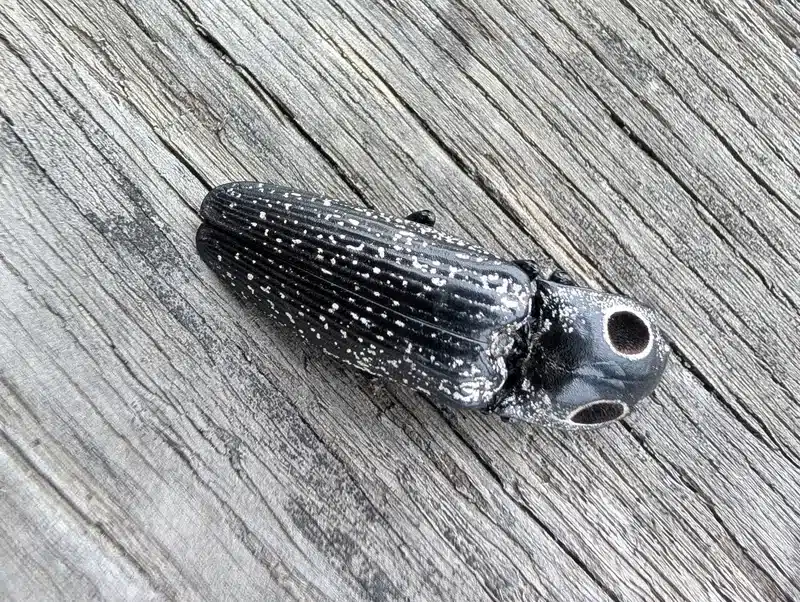
Elongated brown or black beetles that snap into the air with an audible click when flipped over. Virginia Cooperative Extension puts them at roughly a quarter to three-quarters of an inch, attracted to bright lights at night and turning into household nuisances in mid to late summer. The mechanism is a peg on the underside of the thorax snapping into a groove.
The eastern eyed click beetle is the spectacular one — one to two inches long with large false eyespots on the thorax. Extension also debunks the folklore directly: despite the stories, those eyespots do not glow in the dark.
Foreign Grain Beetles
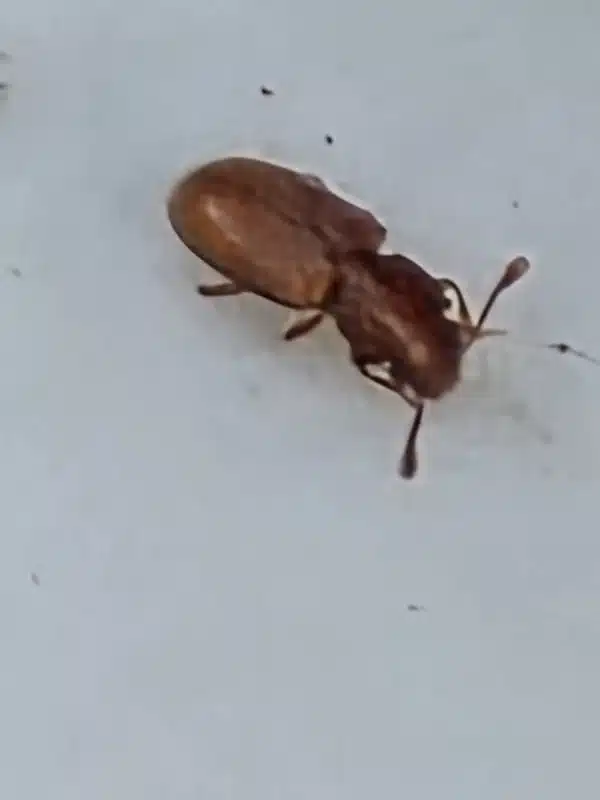
If you have a newer home and tiny beetles suddenly appear at the windows in late summer, this is usually it. University of Kentucky describes them as fungus beetles feeding on the molds that grow on poorly seasoned lumber and damp plaster or wallboard, and notes they’re frequently a problem in new houses, where they move out of wall voids in late summer toward windows and lights. A second group of tiny mold feeders, plaster beetles, shows up in new and damp homes the same way and for the same reason.
The important part is the fix. Extension recommends drying the wood out and eliminating the moisture source rather than spraying, adding that most new homes dry out naturally within the first few years and the mold and beetles disappear together.
This is the one call where I’m happiest to talk someone out of a treatment. The beetle is not the problem; the drying lumber is, and that problem has a deadline built into it. A dehumidifier and better ventilation beat anything I could spray, and the population collapses on its own once the framing gives up its moisture. Foreign grain beetles are the clearest example on this list of a pest you outlast rather than fight.
Asian Lady Beetles
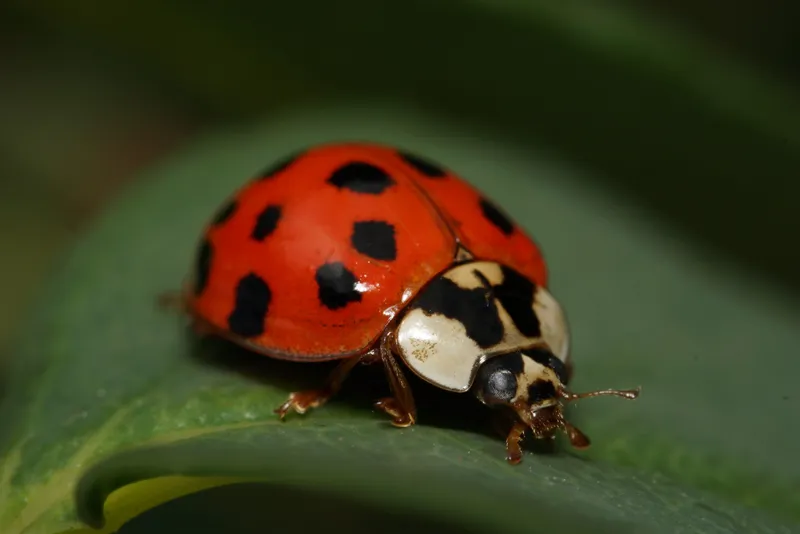
The orange ladybug lookalikes that pile onto sunny siding every fall. This is where Virginia gets a genuinely precise number. Virginia Cooperative Extension reports an obvious peak of activity around October 15 in Virginia, with a second peak in late March as they try to get back outside. They cluster in wall voids and crawl spaces but do not reproduce or establish inside the house.
Extension gives one piece of practical advice worth repeating: do not use a flyswatter or otherwise crush them, because they leave an unsightly orange stain on carpets, drapes and walls. Vacuum them instead. Exclusion before October beats anything you can do in November, and our lady bug control work is built around sealing the gaps rather than treating the wall voids. If you’re trying to tell them from the native ones, we compare them directly in ladybugs vs. Asian lady beetles.
Beetles in the Virginia Yard
Japanese Beetles
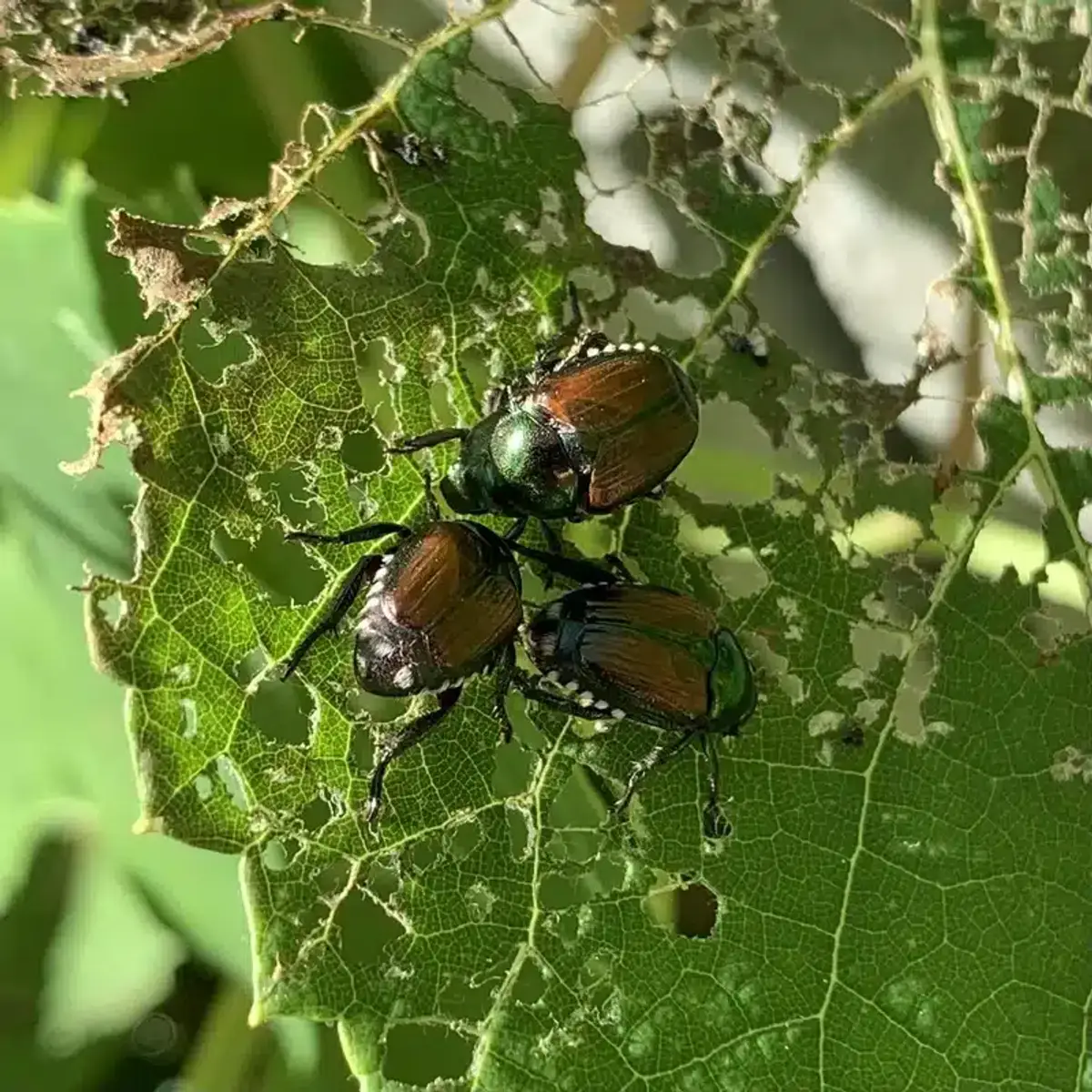
The metallic green beetle with coppery wing covers that skeletonizes roses, linden and grapevines every summer. Virginia Cooperative Extension puts adults at about 10 mm with a series of white tufts of hair along the sides, and gives the Virginia timing clearly: adults emerge starting in late June, with most having emerged by mid-July.
On traps, Extension is more nuanced than the internet usually is. Traps baited with lures can be effective, but they can also draw additional beetles into the yard from surrounding areas, which is why Extension advises placing them at least 30 feet away from the plants you want to protect. Hanging a trap next to the roses you’re trying to save is the classic mistake.
Green June Beetles and June Bugs
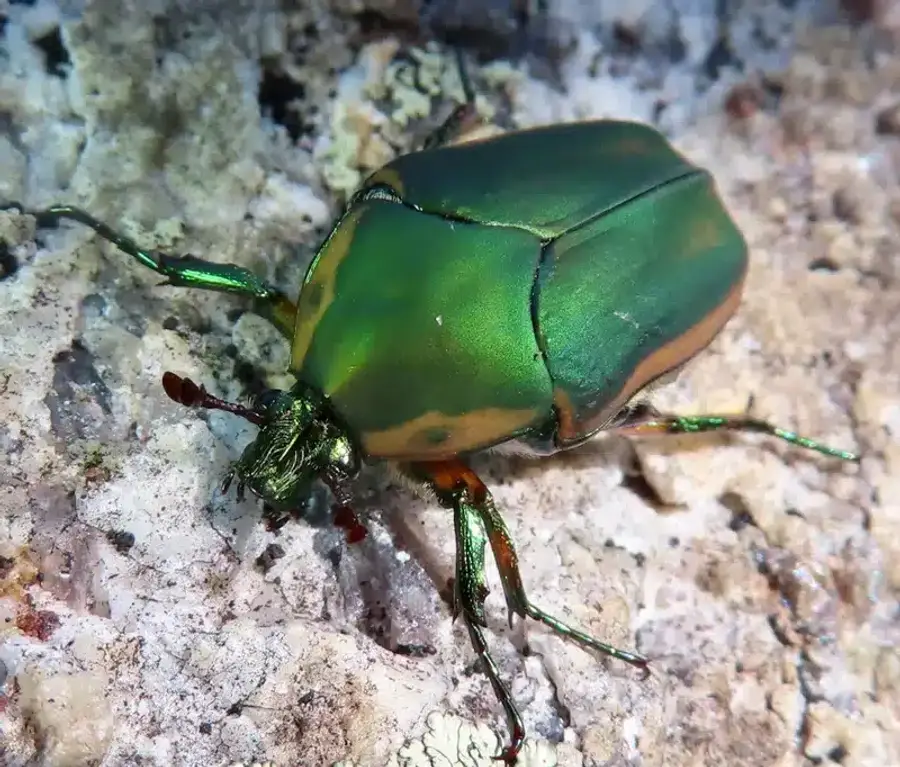
The other big summer beetle, and a frequent case of mistaken identity. Virginia Tech’s fruit entomology program describes green June beetles at about an inch long and half an inch wide, flat on top, dull velvety green above with deep yellow to bronze margins and metallic green below, with adults emerging in early July and August in Virginia.
So the two separate cleanly. A Japanese beetle is small, brilliantly metallic and peaks in late June. A green June beetle is roughly two and a half times longer, dull and velvety, and peaks in July and August. We break the comparison down further in June bug vs. Japanese beetle.
Emerald Ash Borer
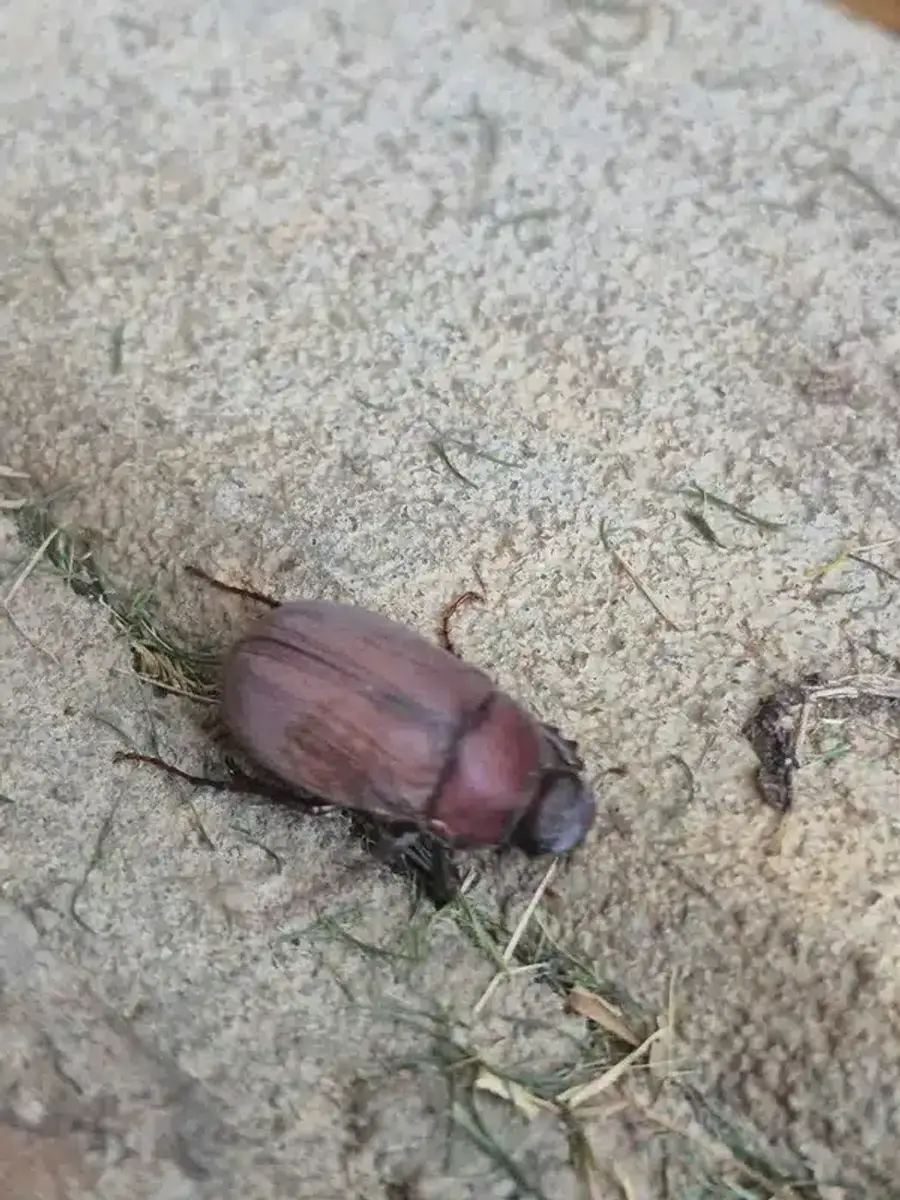
Worth knowing because it kills trees rather than bothering houses. USDA APHIS describes adults as metallic green and about half an inch long, first detected in North America in 2002 in southeast Michigan and since confirmed in 38 states and the District of Columbia.
It only attacks ash. Penn State Extension notes that heavy infestations can kill trees in as little as three years, and that trees will die after three to four years of heavy infestation — which is why Extension stresses beginning treatment on large trees before they become infested. If you have mature ash on the property, that’s an arborist conversation, not a pest control one. Our emerald ash borer page covers what to look for.
Virginia’s Most Impressive Beetle
The Eastern Hercules Beetle
Every summer I get photos of this one, usually with a message along the lines of “what IS this and should I be worried.” It’s the eastern Hercules beetle, and no, you should not be worried.
A 2020 paper published in Banisteria by the Virginia Natural History Society calls the species very distinctive and widespread in Virginia, with records from roughly 80 Virginia counties and independent cities — Alexandria, Arlington, Fairfax, Falls Church, Loudoun, Prince William and Fauquier among them. Adults turn up at lights at night, mostly June through August, and feed on tree sap and decaying fruit.
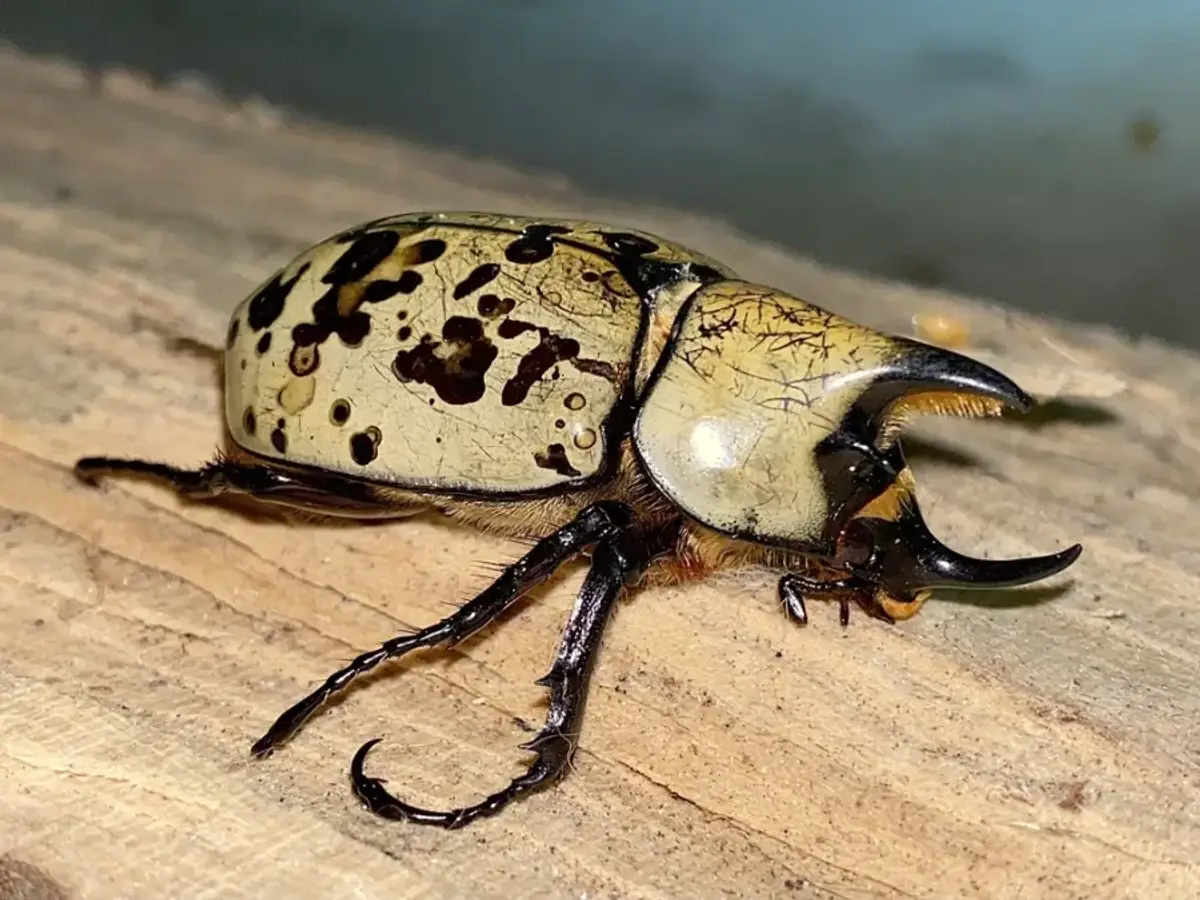
Clemson confirms the reassuring part: adults can approach three inches, tan to greenish with black spots, and despite the appearance they don’t bite and don’t use the horns as weapons against people. They aren’t pests and cause no structural damage, because the larvae develop in rotting hardwood stumps rather than living wood or framing.
Two details from that Virginia paper are genuinely remarkable. First, the elytra change color reversibly — yellow-green when dry, deep brown when wet — as water fills a spongy internal layer. Second, Virginia’s Hercules beetles feed and mate on ash trees, and the paper’s authors flag the expanding range of emerald ash borer as a possible threat to the species. Two beetles on this page are connected in a way almost nobody expects.
Fireflies Are Beetles Too
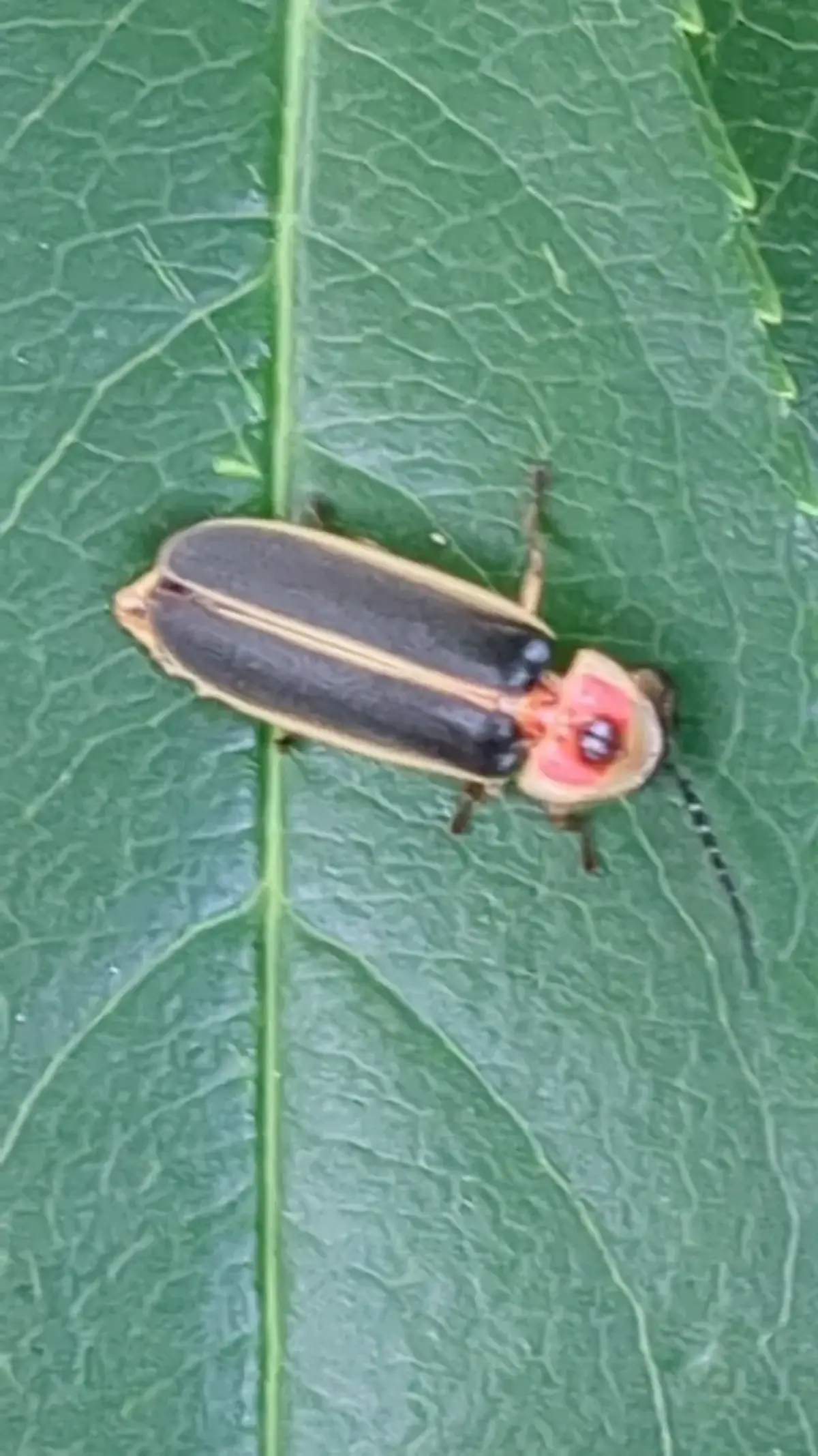
This surprises people every time. Fireflies belong to the family Lampyridae, which sits squarely inside the beetle order. The Xerces Society reports that based on IUCN Red List assessments, roughly one in three assessed North American firefly species may be at risk of extinction, with habitat loss, light pollution and pesticide use among the primary threats.
I bring this up on nearly every yard treatment conversation. Broad, indiscriminate spraying of a whole yard doesn’t just miss the point, it costs you the insects you actually want. Identifying the beetle first and treating the specific problem is the entire reason we ask what you found before we quote anything.
Things Virginians Call Beetles That Aren’t
Two corrections come up constantly in Northern Virginia.
The spotted lanternfly is not a beetle. Virginia Cooperative Extension places it in the family Fulgoridae, the planthoppers, and records it in Virginia since 2018 with adults about an inch long and half an inch wide. It gets called a beetle, a moth and a butterfly depending on who’s describing it.
The brown marmorated stink bug is not a beetle either. It’s a true bug with a shield-shaped body and wings that cross in an X rather than meeting in a straight seam.
There’s one more look-alike worth knowing. Virginia Cooperative Extension publishes an entire guide to recognizing Asian longhorned beetle in Virginia, a shiny black beetle with white spots and black-and-white banded antennae. Extension wrote that guide because residents keep reporting native look-alikes instead. The eyed click beetle above is one of the insects people mistake for it.
None of this should feel discouraging. Beetles make up the order Coleoptera, the largest order of insects on earth. NC State University counts more than 400,000 described species worldwide and about 25,200 in North America. But the Virginia beetles that actually bring a homeowner to the phone belong to maybe a dozen groups, and they’re all in the table above.
Virginia’s Beetle Calendar
The Asian lady beetles that spent winter in your wall voids wake up and head for the light, which means interior windowsills rather than the outdoors. At the same time ground beetles start showing up in basements, and spring is when fresh powderpost powder is easiest to spot under trim.
Japanese beetles emerge in late June and most are out by mid-July, so this is the four-week window when roses and linden take their damage. Old house borer adults also emerge in June and July, which is when their oval exit holes appear.
Virginia’s spectacle season. Green June beetles peak, eastern Hercules beetles and eyed click beetles come to porch lights, and fireflies work the lawn at dusk. Indoors, this is when foreign grain beetles pour out of wall voids in newer homes.
The single most predictable date on the Virginia beetle calendar. Asian lady beetles hit their peak flight to buildings, so any sealing you plan to do needs to happen in September, not November. Carpet and pantry beetles carry on quietly year-round in heated houses.
What To Do Next
Here’s the honest summary after all of that. Out of the dozen or so types of beetles in Virginia you’re likely to meet, most of them need nothing from you at all. The ground beetle in the basement, the click beetle at the porch light, the Hercules beetle that scared the kids, the fireflies over the lawn in June — those are all just Virginia being Virginia.
The short list that does need attention is fabric, food and wood. If it’s fabric or food, you can very often handle it yourself, and this article has told you how. If it’s wood, the stakes are higher and the diagnosis is harder, which is the one place I’d rather you call than guess.
And before anyone treats anything, confirm the problem is live. Cast skins are not larvae. Old exit holes are not an active infestation. A beetle at the window in October is a visitor, not a resident. I’ve talked people out of treatments more than once because the evidence turned out to be a few years old, and I’d rather do that than sell work that fixes nothing.
Better Termite & Pest Control has worked in this area for 58 years, with more than 1,800 reviews and a team carrying roughly 300 years of combined field experience. We’re members of the Virginia Pest Management Association, the National Pest Management Association and the Maryland Pest Management Association. Our office is at 2647 Duke Street in Alexandria, Virginia, and we serve homes throughout Northern Virginia, DC and Maryland. Every product we use is EPA registered and reviewed by our internal team first. Each one is something we’d be comfortable using in our own homes.
Ongoing pest plans start around $49 a month plus a one-time $200 setup fee on the first visit. If you found a beetle you can’t place, call 703-683-2000 or email info@bettertermite.com. Send a photo and we’ll tell you what you’re dealing with before anybody schedules anything.