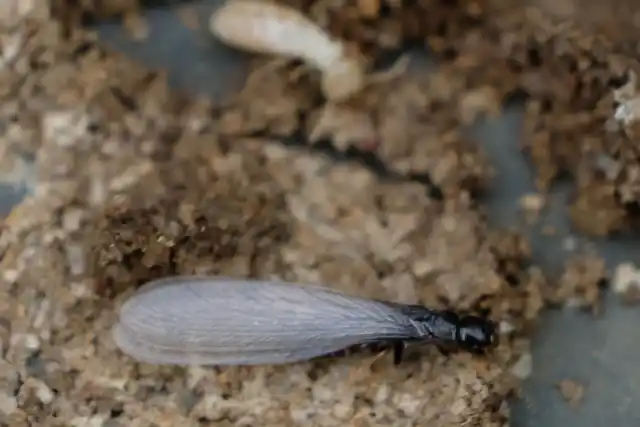

Nearly every termite problem in Maryland comes from one insect: the eastern subterranean termite. It lives in the soil, builds mud tubes into homes, and swarms in spring, usually from March through May on warm days after a rain. Termites live in every part of Maryland. But the warmer central and southern counties have a longer active season than the mountains out west.
I’m George Schulz, a third-generation licensed technician at Better Termite & Pest Control. I’ve personally helped more than 100 customers with termite problems, from early protection to severe damage. Below, I’ll cover which termites live here and when they swarm. I’ll also explain how risk changes across the state and what to do if you find them.
Types of Termites in Maryland
Here’s the quick answer on which termites you’ll actually find in Maryland.
| Termite | In Maryland? | Where It Lives | What to Know |
|---|---|---|---|
| Eastern subterranean termite | Yes, native and widespread | Soil, then up into wood | The main cause of home damage here |
| Other Reticulitermes subterranean termites | Yes, less common | Soil, then up into wood | Look almost the same; treated the same way |
| Formosan subterranean termite | Not established | Southern states | A warm-climate invasive species |
| Drywood termites | Not established | Warm coastal states | Live inside dry wood with no soil contact |
| Dampwood termites | Not a home pest here | Very wet, rotting wood | Mostly a West Coast and Florida problem |
Eastern Subterranean Termites
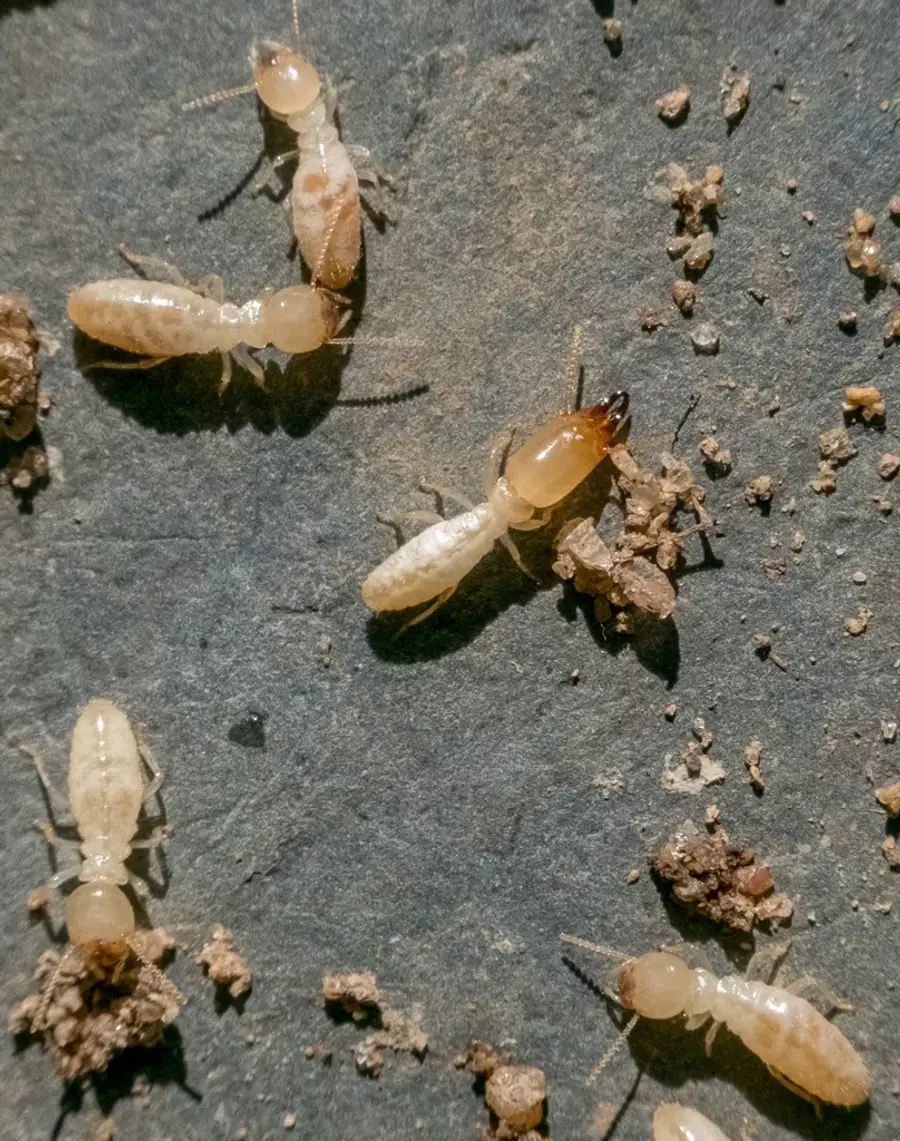
According to the Maryland Department of Agriculture, the eastern subterranean termite (Reticulitermes flavipes) is the termite species native to Maryland. As the name suggests, it lives underground. Colonies have workers, soldiers, a queen, and winged swarmers.
The workers do all the damage. They are about 1/4 inch long, soft, and creamy white. They dry out fast in open air, so they travel inside mud tubes and wood. So you rarely see them unless you break into damaged wood. You can learn more on our eastern subterranean termite page.
Other Native Subterranean Termites
Eastern subterranean termites have a few close relatives in the same genus. For example, a 2007 study in Zootaxa confirmed a look-alike species, Reticulitermes malletei, in Maryland and other Atlantic states. Researchers needed DNA testing to separate it.
For a homeowner, this detail doesn’t change much. These termites live in soil, build mud tubes, and respond to the same treatments. In short, if it’s a termite in a Maryland house, you’re dealing with a subterranean termite.
Formosan and Drywood Termites
You may read about Formosan termites or drywood termites online. They cause big problems in places like Florida, Louisiana, and parts of California. However, they are warm-climate species, and they aren’t an established problem in Maryland homes. If you’re curious how the two main groups differ, see subterranean termites vs. drywood termites.
When Termites Swarm in Maryland
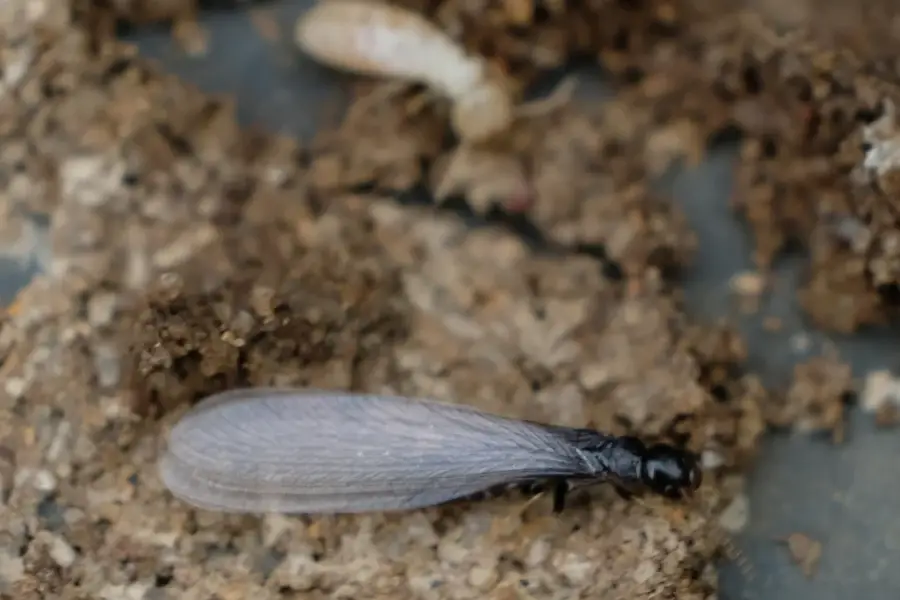
For most Maryland homeowners, a swarm is the first sign of termites. A mature colony sends out winged swarmers to start new colonies. They fly for a short time, drop their wings, and pair up.
The Fluvanna County Master Gardeners, part of Virginia Cooperative Extension, say eastern subterranean termites usually swarm in spring, from March to May, during daylight hours on warm days after a rain. Our mid-Atlantic weather follows the same pattern. University of Maryland entomologist Mike Raupp once watched a swarm pour out on a sunny spring morning. It was the first day the air passed 70 degrees.
Outdoor colonies slow down in the cold soil. However, termites under a heated basement or slab can keep feeding. An indoor swarm this early usually means the colony is under or inside the house.
Peak swarm season in Maryland. Watch for swarms on warm, sunny days after rain, especially around windows, doors, and basements. Piles of shed wings on sills are a common clue.
Swarms taper off, but workers are at their busiest. Warm, moist soil means heavy feeding. Mud tubes on foundations and in crawl spaces are easier to spot now.
Feeding continues until the soil cools. Fall is a good time to fix moisture problems and pull mulch and firewood away from the house before next spring.
Activity outside slows again. This is a quiet month to schedule an inspection, since damage doesn’t stop just because you can’t see termites.
For more on this stage, see our guide to termite swarmers and why flying termites suddenly appear.
Termite Risk Across Maryland
Termites live all over Maryland. Still, the risk isn’t identical in every county. Climate is the biggest reason why.
The Maryland State Climatologist Office says the Garrett County area averages about 48°F a year. Near the lower Chesapeake Bay, the average is closer to 58°F. The freeze-free season is under 130 days on the Allegheny Plateau, compared with more than 230 days in the south. Subterranean termites feed more in warm, moist soil. So a longer warm season gives them more time to work.
Maryland’s building codes also take termites seriously. Anne Arundel County’s residential code lists homes there as subject to moderate to heavy termite damage.
This covers Montgomery, Howard, Anne Arundel, and Prince George’s counties, plus the Baltimore area. Mild winters, lots of rain, and plenty of older homes with basements and crawl spaces add up to steady termite pressure. Mulch beds and wooden decks around newer homes give termites easy cover too. We offer termite protection in communities like Gaithersburg, Kensington, and Laurel.
Charles, St. Mary’s, and Calvert counties sit on the warm, low-lying Coastal Plain. Warmer soil and high humidity near the water favor a long feeding season. Wooded lots, where termites already feed on fallen logs and stumps, are common. We serve homeowners here in areas like Waldorf and Accokeek.
Garrett and Allegany counties are colder, with a much shorter warm season. Termites still live here, and a heated home can shelter a colony year-round. However, the short season means activity outdoors is more limited than in the rest of the state.
Wherever you live in Maryland, the house itself matters more than the county. Wood touching soil, leaky gutters, and damp crawl spaces raise the risk on any street.
The biggest myth I run into is that some houses just don’t get termites. In my experience, most houses in this area will deal with termites at some point.
The worst damage I’ve seen was in a single-family home where termites tubed up from under the back deck into the bay window. When I tapped the sill with a screwdriver, I went right through the paint. The owners had to replace the whole window. It had been going on for at least a year, and nobody noticed until a deck contractor recognized the signs. That’s typical of subterranean termites. They stay hidden until the damage is already done.
Signs of Termites in a Maryland Home
Because subterranean termites stay out of sight, you have to look for what they leave behind. University of Maryland Extension notes that a single colony can hold several million termites and feed on wood more than 200 feet apart. So one sign often points to a much bigger picture.
Here’s what to look for:
- Mud tubes about 1/4 inch wide running up foundation walls, piers, or wood
- Piles of shed wings, all the same size, on window sills or floors
- Bubbling or blistered paint on trim, sills, and baseboards
- Soft or hollow wood near the foundation, band board, or sill plate
- Termites in mulch or wood touching the house
I find termites most often in mulch beds around the house, then at the band board and sill plate in the basement, then in the garage. Outside, chimneys and stoops are the two spots I check first.
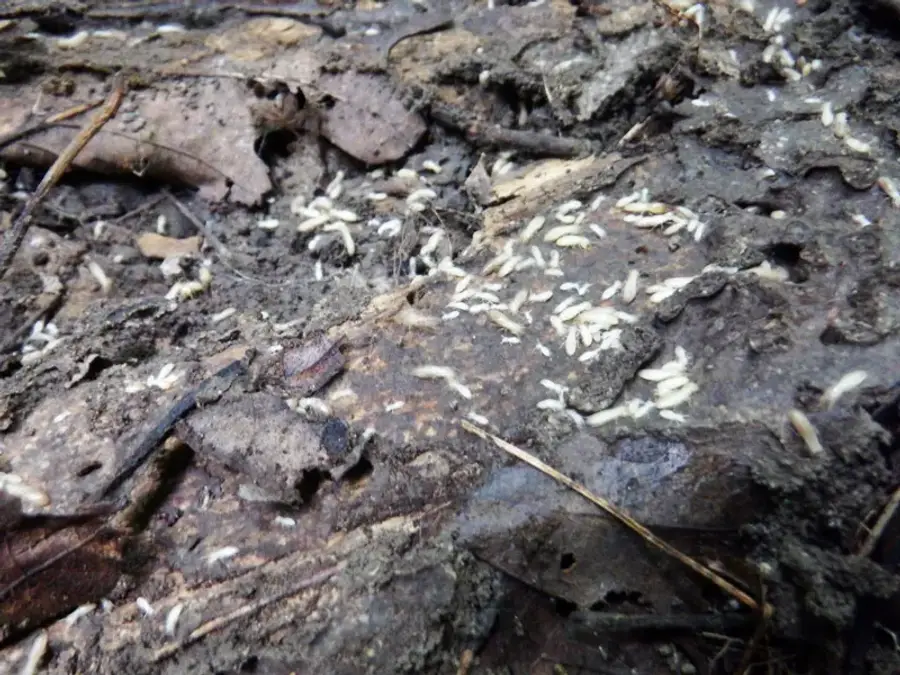
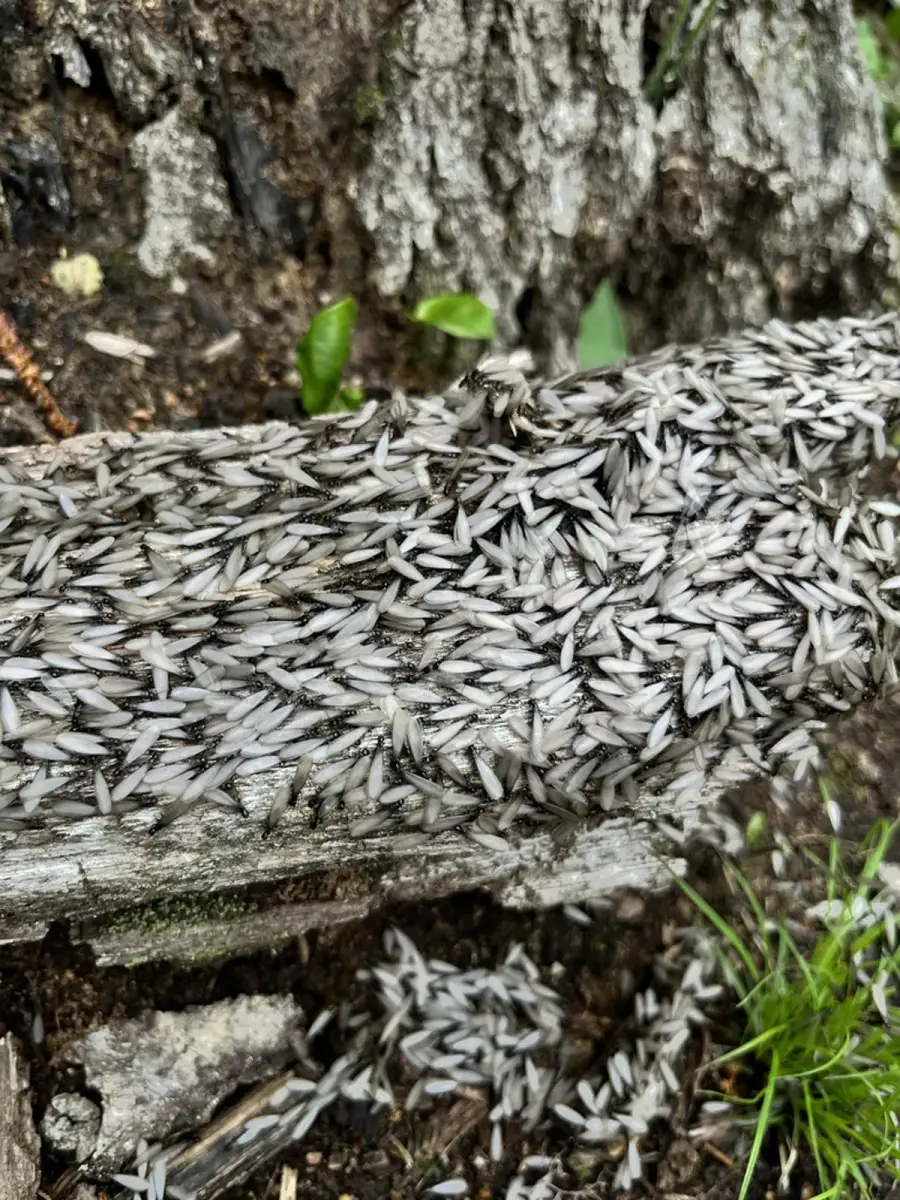
For photos and more detail, check out termite mud tubes, signs of termites in your yard, and termites in mulch. And not all soft wood is termites. Our guide on termite damage vs. wood rot explains the difference.
The National Pest Management Association estimates termites cause about $6.8 billion in property damage in the U.S. each year. In its March 2026 release, the group also noted that standard homeowners insurance policies almost always exclude termite damage.
Subterranean termites need moisture, so workers stay inside soil, wood, and mud tubes. That keeps them hidden while they feed on the inside of framing, sill plates, and trim. By the time paint bubbles or wood gives way, the feeding has usually gone on for a long time.
If you’ve spotted any of these signs, don’t wait for a spring swarm to confirm it. A licensed technician can usually tell you what you’re dealing with in one visit.
How to Protect a Maryland Home From Termites
You can’t make a house termite-proof. But you can make it much less inviting and catch problems early.
- Pull mulch back. Keep mulch a few inches away from the foundation, and don’t pile it against siding.
- Fix moisture problems. Clean gutters, extend downspouts, and repair leaks near the foundation.
- Break wood-to-soil contact. Move firewood, lumber, and cardboard away from the house.
- Get an inspection. A trained eye can spot tubes and damage that most people miss.
- Consider ongoing protection. Treating before damage shows up is usually cheaper than repairs.
Our termite prevention tips go deeper on each of these.
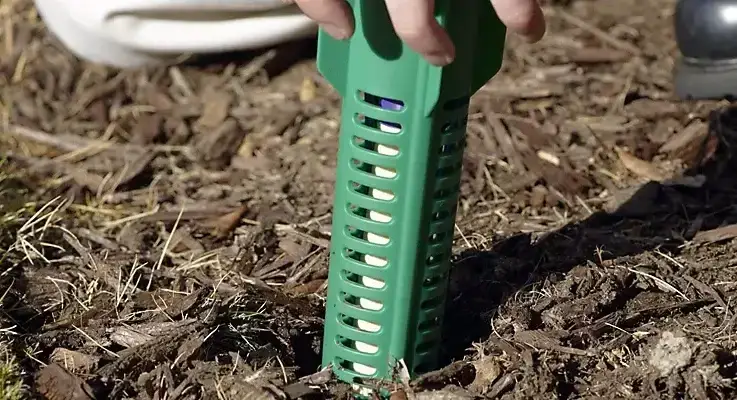
In my experience, it’s often cheaper and less stressful to put in Sentricon before there’s a problem. For severe infestations, termites sometimes can’t find the stations fast enough. In those cases, we add a targeted liquid treatment with a product like Premise or Termidor. Our termite control plans start around $35/month for an average DMV home, plus a one-time $200 setup fee on the first visit. You can also read what it typically costs to get rid of termites.
If you’re buying or selling, keep in mind that Maryland real estate termite inspections use the state’s MD-1 form. We cover that process in our guide to termite inspections in Maryland.
Keeping Maryland Termites Out
Maryland termites are almost always eastern subterranean termites. They swarm in spring, feed quietly the rest of the year, and live in every part of the state. Central and southern Maryland see the longest active season. So the best move is to know the signs, keep wood and moisture away from your foundation, and get your home checked.
Our family has been in this industry for 58 years. We’re members of the Maryland Pest Management Association, the NPMA, and the VPMA, and we’re Certified Sentricon Specialists. If you have questions or want a free termite inspection, call us at 703-683-2000 or email info@bettertermite.com. One of our licensed technicians will walk you through your options.