
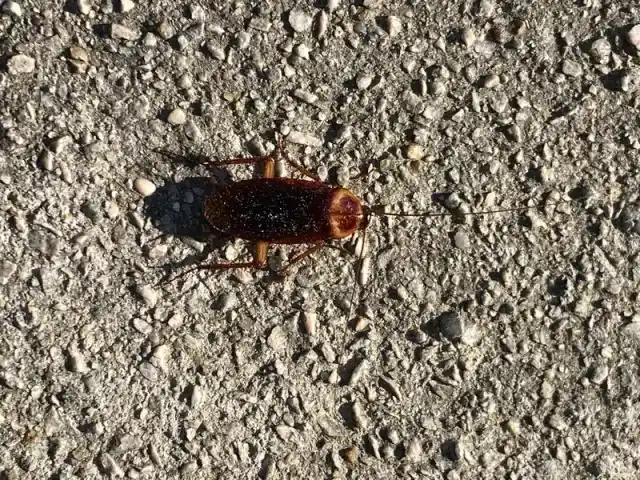

Five cockroach species show up in Maryland homes: the German cockroach, the brown-banded cockroach, the American cockroach, the Oriental cockroach, and the Pennsylvania wood cockroach. Only two of those actually breed indoors. The other three are outdoor insects that wandered in, and that difference decides everything about what you should do next.
I’ve been a licensed technician since 2015, working homes across Maryland, Northern Virginia and DC. Roaches are the pest people misidentify most. As soon as somebody sees a roach, they assume German cockroach and assume the worst. Nine times out of ten the big brown one in the basement is an outdoor roach with a moisture problem behind it, not an infestation.
The Two Groups That Actually Matter
Before you worry about species names, sort what you found into one of two piles.
Indoor breeders. German and brown-banded cockroaches live their whole lives inside. They do not need your yard, they do not come and go, and they multiply in wall voids and cabinet corners. Finding one means there are more you have not seen.
Outdoor wanderers. American, Oriental and Pennsylvania wood cockroaches live outside. They come in through gaps, drains and firewood. They can be unpleasant in numbers, but they are a symptom of a condition around the house, usually moisture, rather than a self-sustaining population in your kitchen.
That one distinction changes the entire response. The first group needs a real treatment program. The second group usually needs a dehumidifier, a door sweep, and a fix to whatever is staying wet.
The most common roach I see across this area is American and Oriental. Every house has them on the outside. They are also the biggest misidentification, because the second a customer spots a roach they think German roach. A big brown-red or black roach is almost always an outdoor roach. Tiny roaches all through the cabinets and bathrooms are German roaches, and that is a real issue.
I had a house I serviced for years with a heavy American and Oriental problem. Nothing I did permanently fixed it. Then the homeowner finally had their water pipe replaced, and the roaches went from a constant problem to almost non-existent. That is how much of this comes down to moisture.
The 5 Roaches in Maryland Homes
University of Maryland Extension names five species that commonly infest homes and buildings in Maryland. Here they are in the order you are most likely to run into them.
German Cockroach
This is the one that matters. Adults run about 5/8 to 2/3 of an inch, light brown, with two dark parallel stripes running down the shield behind the head. Those stripes are the fastest ID in the group. You find them in kitchens and bathrooms, near dishwashers, stoves, sinks and cabinet hinges, and University of Maryland Extension calls it the most common cockroach species found in residences.
The reproduction is what makes it urgent. Penn State Extension reports each egg capsule holds up to 48 eggs, and that a single German cockroach population can produce over 10,000 descendants in one year. That is why a couple of small roaches in March turns into a genuine infestation by fall.
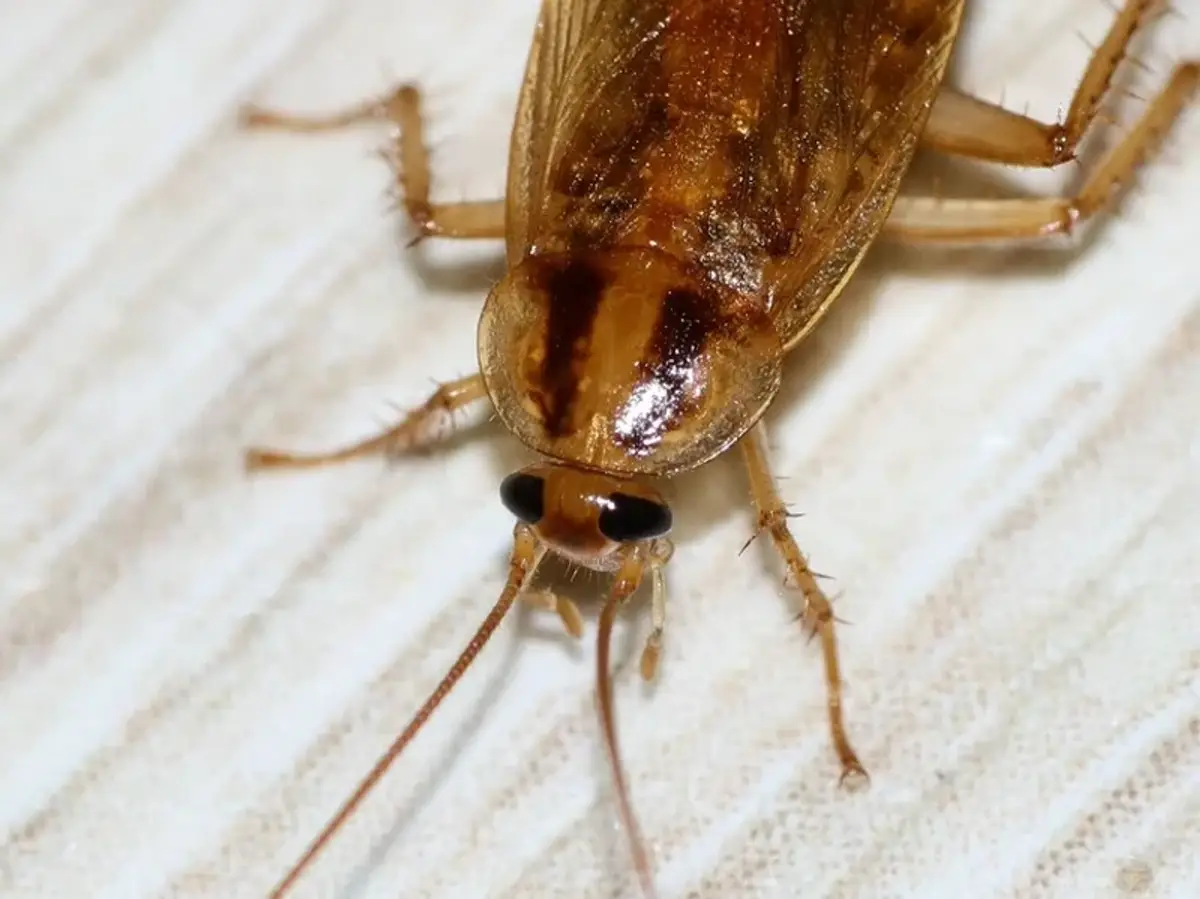
Full identification detail lives on our German cockroach page, and the step-by-step removal process is in how to get rid of German roaches.
Brown-Banded Cockroach
Same size as a German cockroach or slightly smaller, light brown to brown, with faint V-shaped lighter bands across the wings. The behavior is what separates them. Brown-banded roaches like warmth and dryness, so instead of clustering under the sink they turn up high in the room, in televisions, radios, clocks, picture frames and furniture. Males fly. Females do not.
They are much less common here than German cockroaches, but they get missed because nobody thinks to check a bedroom bookshelf. If you have roaches showing up in upstairs rooms with no water source nearby, this is the species to consider. We cover it in detail on the brown-banded cockroach page and in how to get rid of brown banded cockroaches.
American Cockroach
The big one. About an inch and a half long, reddish brown, with a pale band around the edge of the shield behind the head. This is what most people in Maryland are talking about when they say they found a huge roach in the basement. It also collects nicknames, which is where palmetto bug and water bug come from.
Two details surprise people. First, University of Maryland Extension notes American cockroaches do not fly in Maryland, despite having full wings. Second, they are more common in commercial buildings than in houses, and they live in sewers, garbage dumps and warehouses. UF/IFAS Featured Creatures describes them migrating into houses and apartments from sewers by way of the plumbing, or in from trees and shrubs planted right alongside a building.
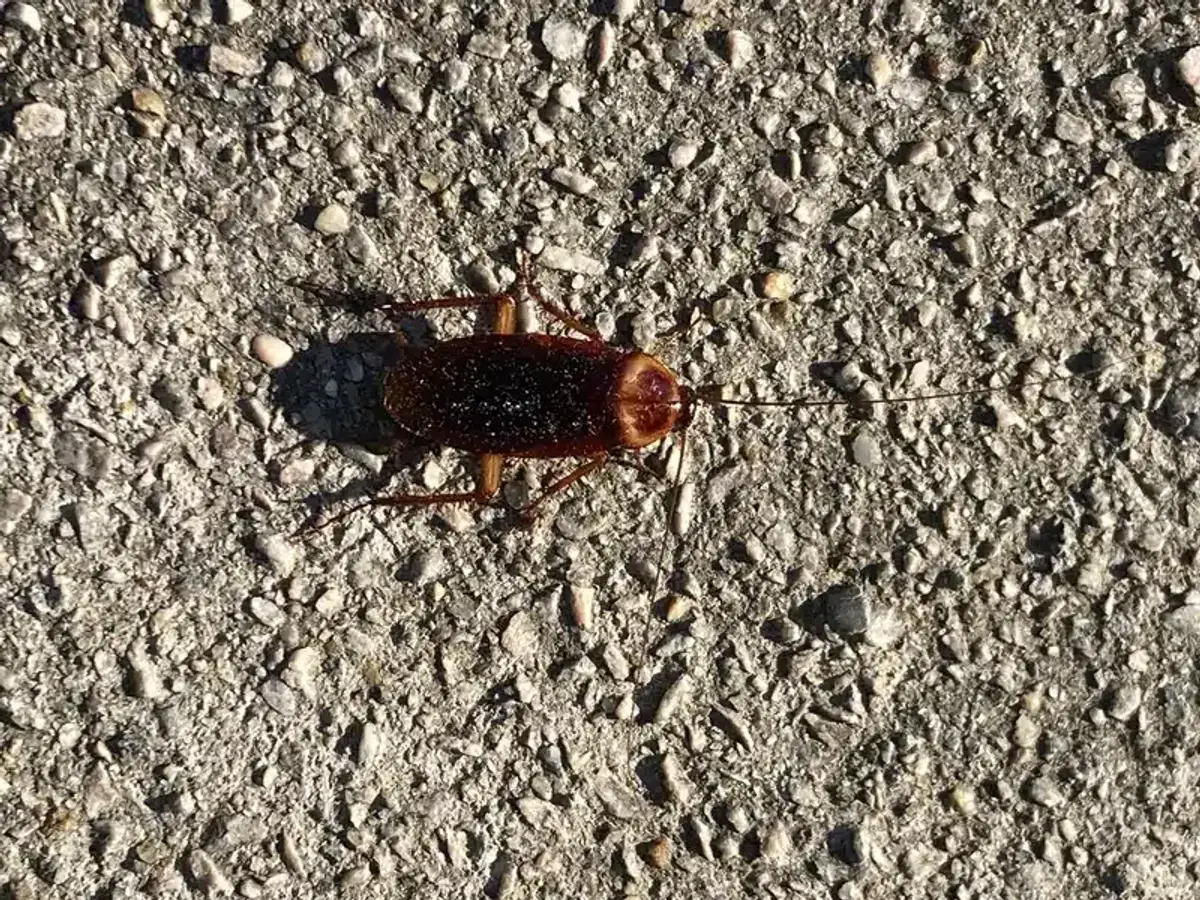
Our full profile is on the American cockroach page, and if you are trying to separate the big species from each other, big roach identification walks through it side by side.
Oriental Cockroach
About an inch long, dark brown to glossy black, and noticeably stockier and shinier than an American cockroach. Neither sex flies. University of Maryland Extension places them in moist spots: damp basements, shaded yards and basement drains, moving into homes from outside.
In practice this is the roach I associate with older housing stock. Rowhouses, stone foundations, floor drains, crawlspaces that never fully dry out. The Oriental cockroach does not need your house to be dirty. It needs your house to be wet. More detail on the Oriental cockroach page.
Pennsylvania Wood Cockroach
This is the Maryland roach that causes the most unnecessary panic, and it is completely harmless. Males run 7/8 to about an inch and a quarter. Females are shorter, at a half to three quarters of an inch. Both are chestnut brown, with the shield and the front wing edges outlined in a pale cream band. That pale outline is the giveaway.
Virginia Cooperative Extension is blunt about it: wood cockroaches sometimes wander indoors, but they die within days because the air inside a house is too dry, and they cannot survive or reproduce indoors. Extension also notes that perimeter treatments with residual insecticides are generally unnecessary for them.
The timing catches people out. Males fly to lights during their May and June mating season, so on a warm spring evening you get roaches circling the porch light and slipping in every time the door opens. Houses in wooded parts of Maryland see far more of them. They also ride in on firewood.
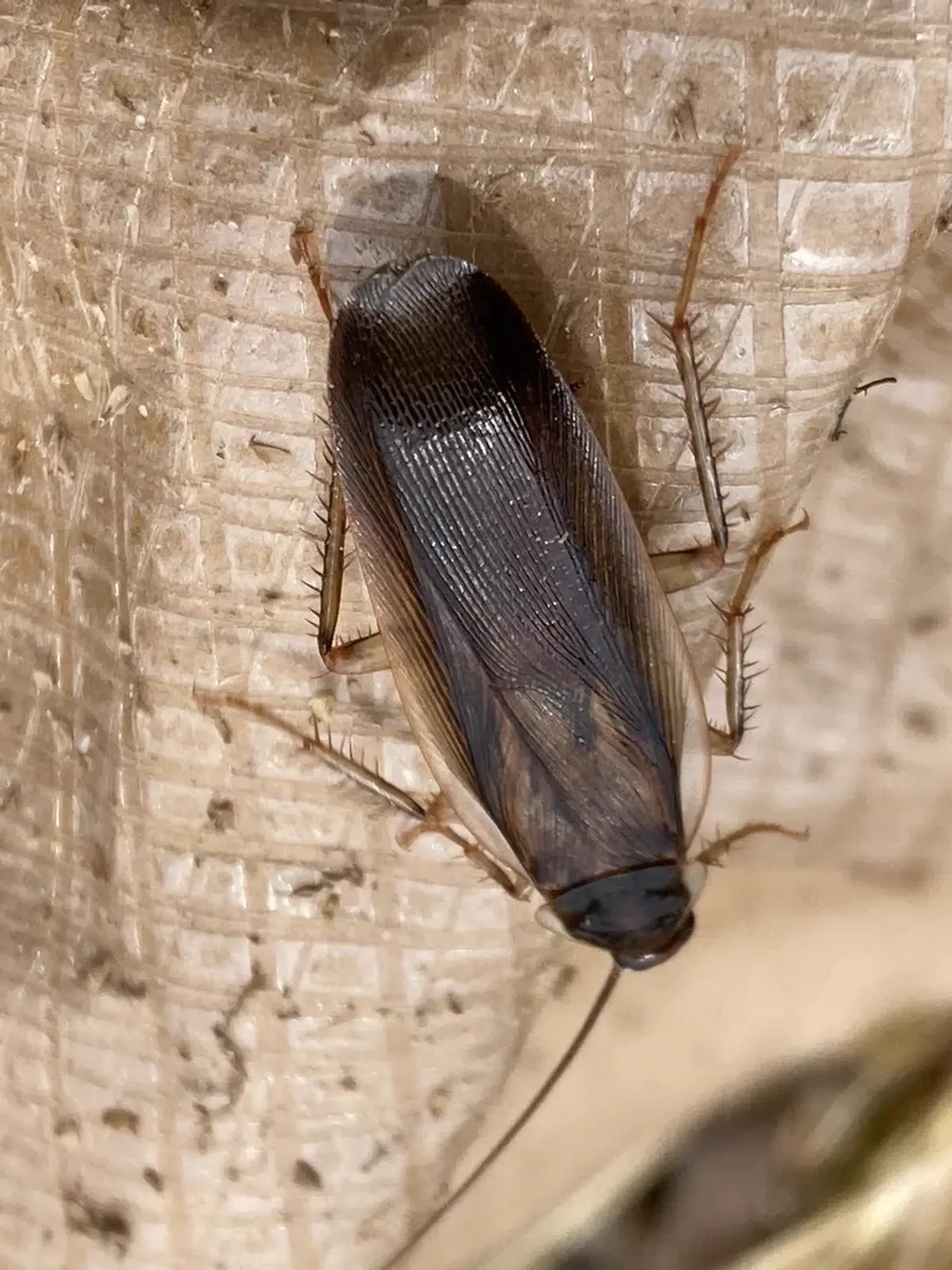
If this sounds like what you found, read wood cockroach next, or the direct comparison in wood roaches vs German roaches. The fix is yellow bug lights, better door sweeps, and stacking firewood away from the house rather than treatment.
Where in the House Each One Shows Up
Location narrows an ID faster than appearance does. This is how I sort them before I even get a good look at the insect.
Most likely: German cockroach. Small, light tan, two dark stripes. Check cabinet hinges, the motor compartment under the fridge, the dishwasher side panel, and the gap behind the sink. Small roaches in these rooms are the sighting that should prompt a call. Related reading: German cockroach bait guide and bathroom bug identification.
Most likely: Oriental or American cockroach. Larger, dark or reddish, usually near a floor drain, sump area, water heater or damp foundation wall. Look for a moisture source first. A leaking supply line, a clogged gutter dumping against the foundation, or a crawlspace with no vapor barrier explains most of these calls.
Most likely: brown-banded cockroach. Warm, dry, high locations. Televisions, cable boxes, clock radios, the underside of shelves, behind hanging picture frames, and inside furniture joints. If roaches are appearing in a bedroom or living room with no water nearby, stop assuming German and look at this one.
Most likely: Pennsylvania wood cockroach, especially in May and June. Chestnut brown with a pale edge, often near the door it just flew through. Also check any firewood you carried in. These die on their own indoors. No treatment needed.
If the room and the insect do not line up with any of those four patterns, that is worth a second look rather than a guess.
Maryland’s Roach Calendar
Outdoor roaches start moving as the ground warms and spring rain saturates foundations. Oriental cockroach activity picks up around damp basements and yard debris. German cockroach populations indoors have been breeding all winter and are building quietly.
Pennsylvania wood cockroach males fly during their mating season and hit porch lights. This is the single biggest month for harmless roach calls in Maryland, especially in wooded neighborhoods. Almost none of these turn into a treatment.
Peak season for American cockroaches around sewers, drains, mulch beds and shrubs planted tight against the foundation. Humid Maryland summers keep basements above the moisture level these species need. German cockroach populations hit their largest numbers of the year.
Outdoor roaches push toward warmth as it cools, and Virginia Cooperative Extension notes that thick foundation mulch encourages populations that may move indoors in colder weather. German and brown-banded cockroaches are unaffected by season since they live entirely in heated space.
Roaches and Health in Maryland Homes
This is the part worth taking seriously, and it has less to do with bites than with breathing. Cockroach allergen is a well-documented asthma trigger, and it does not go away when the roaches do.
Research published in Environmental Health Perspectives, based on the National Survey of Lead and Allergens in Housing, found detectable cockroach allergen in at least one location of an estimated 63 percent of U. S. homes. Among children sensitized to cockroach, those exposed to bedroom levels above 8.0 U/g had asthma hospitalization rates 3.7 times higher than sensitized children with lower exposure. Elevated allergen levels concentrated in urban settings, high-rise apartments, lower-income households, and homes built before 1940.
That last detail matters here. Much of Baltimore’s and DC’s rowhouse stock predates 1940. Closer to home, a Johns Hopkins study of 144 Baltimore children with persistent asthma found 41 percent were both sensitized to cockroach allergen and exposed to it based on bedroom floor sampling. That same study found mouse allergen was more strongly linked to poor asthma outcomes than cockroach allergen. So roaches are one piece of a bigger indoor picture rather than the whole story.
The practical takeaway is that cleanup is part of the job, not an afterthought. Virginia Cooperative Extension advises continuing to clean thoroughly even after an infestation is eliminated, because the allergens persist after the cockroaches are gone.
Allergen persistence is the reason a German cockroach job is not finished the day the glue boards come back empty. The allergen load is made up of proteins in cockroach droppings, shed skins and body fragments, and those materials stay embedded in carpet fibers, cabinet seams and dust long after the live population is gone. For a household with an asthmatic child, that means the treatment plan and the cleaning plan run together: vacuuming with a HEPA filter, wiping down cabinet interiors and shelf liners, and washing bedding. We tell customers this up front, because a family that stops cleaning the moment the roaches disappear can keep seeing symptoms and reasonably conclude the treatment failed when it did not.
What Actually Works, and What Doesn’t
The gap between what people buy and what changes the outcome is wider with roaches than with almost any other pest.
Bug bombs do not work. This is not opinion. A 2019 study out of Coby Schal’s lab at NC State tested four commercial total release foggers in 20 roach-infested homes. The populations showed no decline from pre-treatment numbers at either two weeks or one month. Gel baits eliminated populations in the comparison homes over the same window. The foggers also raised pesticide residue on kitchen surfaces to a median of 85 times baseline. So you get the exposure without the result.
There is a clean reason why. The same research group measured German cockroach resistance to cypermethrin, a common fogger active ingredient, at roughly 202 times that of a susceptible lab population. Resistance to fipronil, a common bait active ingredient, ran about 14 times. The can is loaded with the thing they have already beaten.
Ultrasonic repellers do not work either. Virginia Cooperative Extension states that many research studies have shown ultrasonic devices do not repel or kill cockroaches as claimed, and that their use is not recommended.
What does work is baiting, moisture correction, exclusion, and for a real German cockroach infestation, a program that rotates products rather than repeating one.
My longest struggle was a house down in Fort Hunt that took about a year and a half. The homeowner had gotten it under control once, then it exploded again. Turned out he had bought a refrigerator and kept hauling home cardboard boxes. Roaches travel in the corrugations of cardboard, and appliances move them between homes during transit. Once I finally got him to break the boxes down outside and get them away from the house, it took another six months, but we got it under control.
The other lesson from that era: you have to switch your chemicals up every single service. Using the same product over and over will not get you control. My approach is a non-repellent in every crack and crevice, let it dry about 15 minutes, come back with a growth inhibitor, then set bait stations and glue boards. The glue boards are a must every service, because they are the only way to know whether the population is going up or down.
Here are the five species side by side, with the field mark to look for on each one.
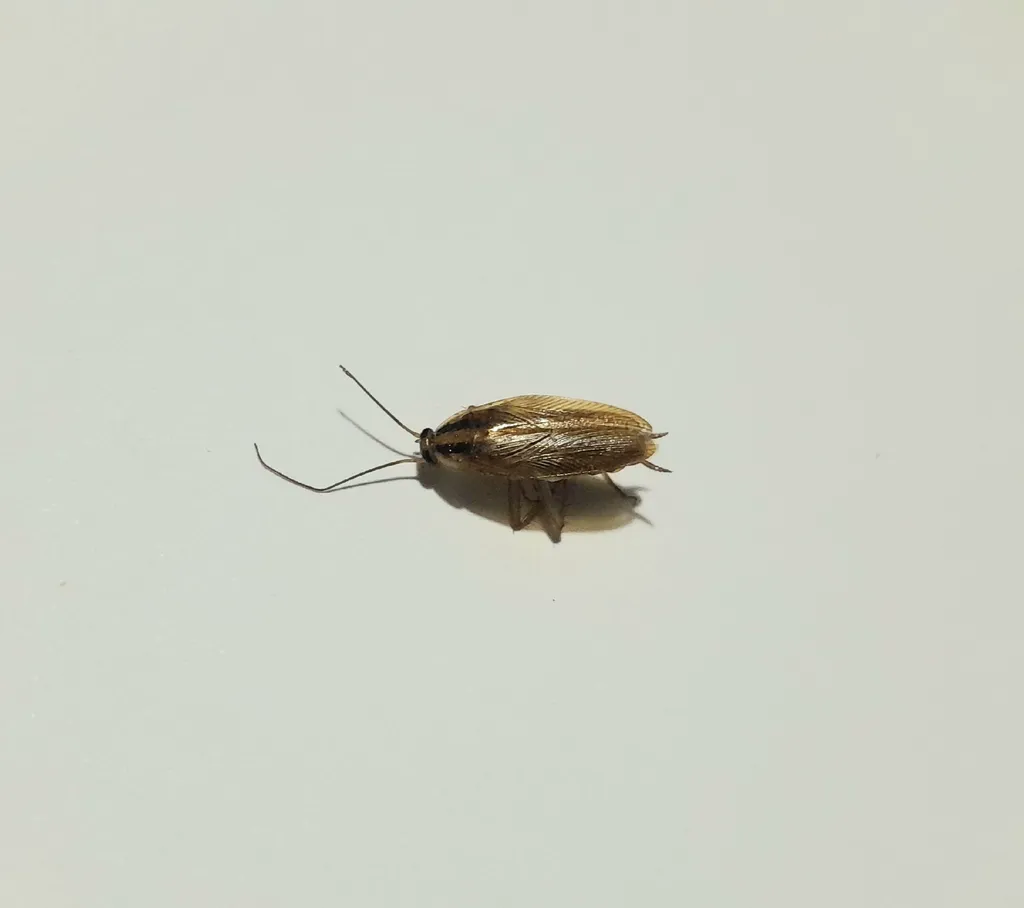
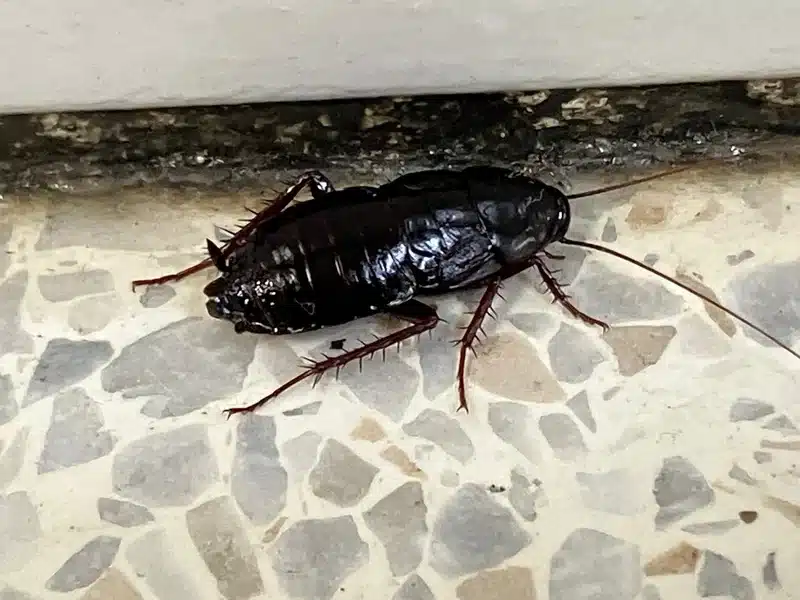
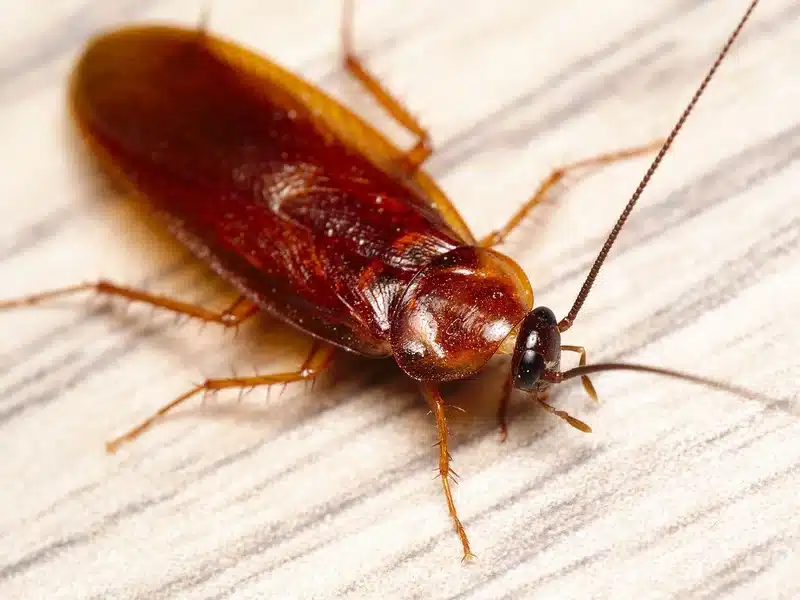
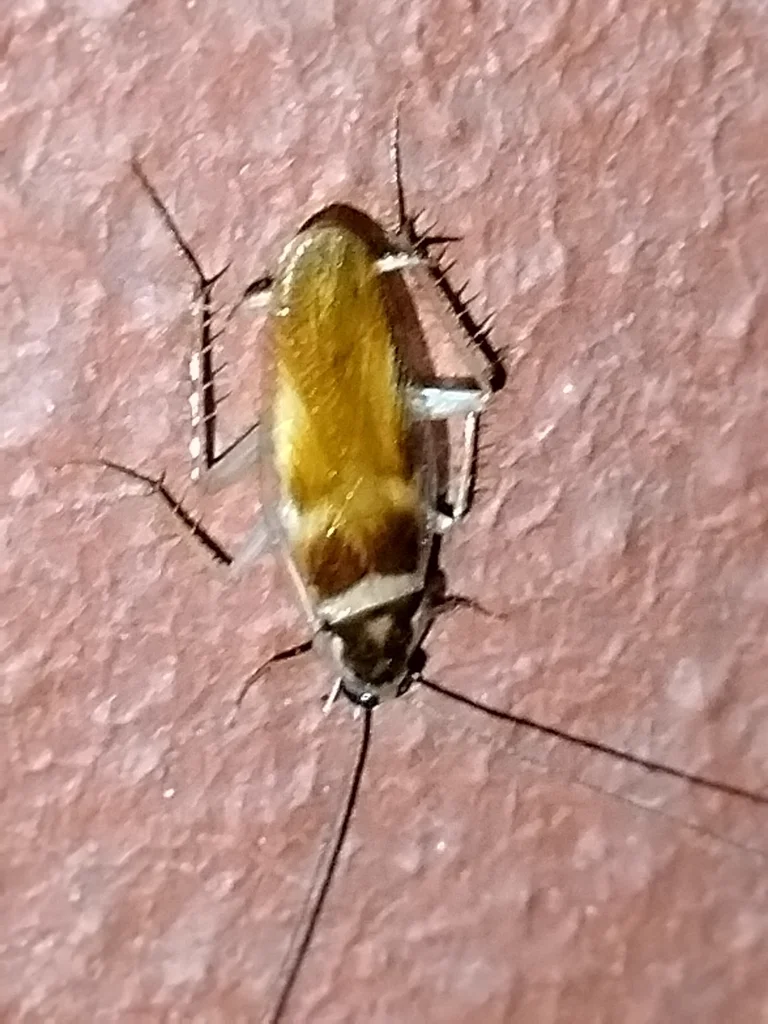
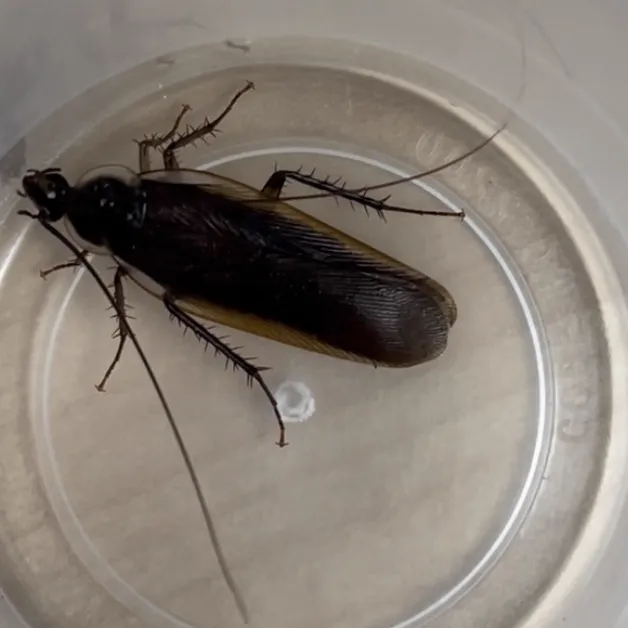
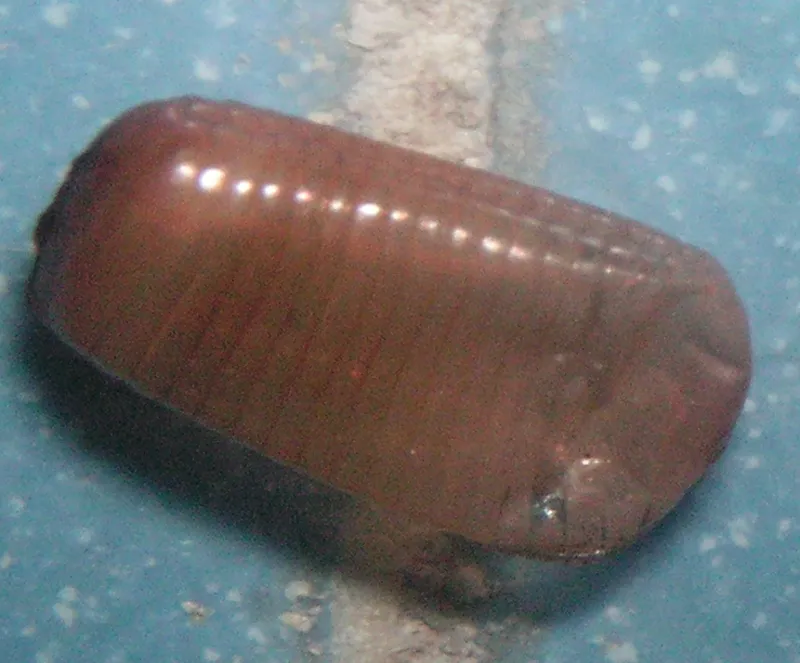

Photos only get you so far, though. Size is hard to judge from an image, and nymphs of several species look alike.
What To Do Next
Start with where you found it. Kitchen and bathroom, small and striped, means German cockroach and a real plan. Basement, drain or crawlspace, large and dark, means an outdoor roach and a moisture question. Upstairs in electronics means brown-banded. Porch light in May means a wood roach you can ignore.
Then confirm whether it is actually breeding inside. For German cockroaches, look for the small ones. Nymphs mean reproduction on site. For the outdoor species, count how many you find and where, then go looking for the water.
Finally, match the response to the species. A dehumidifier, a door sweep and pulling mulch back from the foundation solve most Oriental and American cockroach calls. A wood roach solves itself. A German cockroach infestation needs baiting and a rotating program, which is what our cockroach control service is built around. We also run species-specific programs for German cockroaches, American cockroaches and Oriental cockroaches.
Better Termite & Pest Control has been working in this area for 58 years, with more than 1,800 reviews and a team carrying roughly 300 years of combined field experience. We are members of the Maryland Pest Management Association, the Virginia Pest Management Association, and the National Pest Management Association. Our office is at 2647 Duke Street in Alexandria, Virginia, and we serve homes throughout Maryland, Northern Virginia and DC, including Columbia, Silver Spring, Bethesda, Rockville and Waldorf. Every product we use is EPA registered and reviewed by our internal team first. Each one is something we would be comfortable using in our own homes.
If you found a roach and want to know which one it is, call 703-683-2000 or email info@bettertermite.com. Send a photo and we will tell you what you are dealing with before anybody schedules anything.