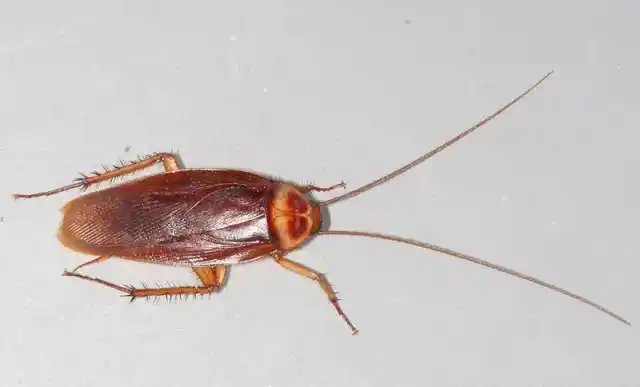

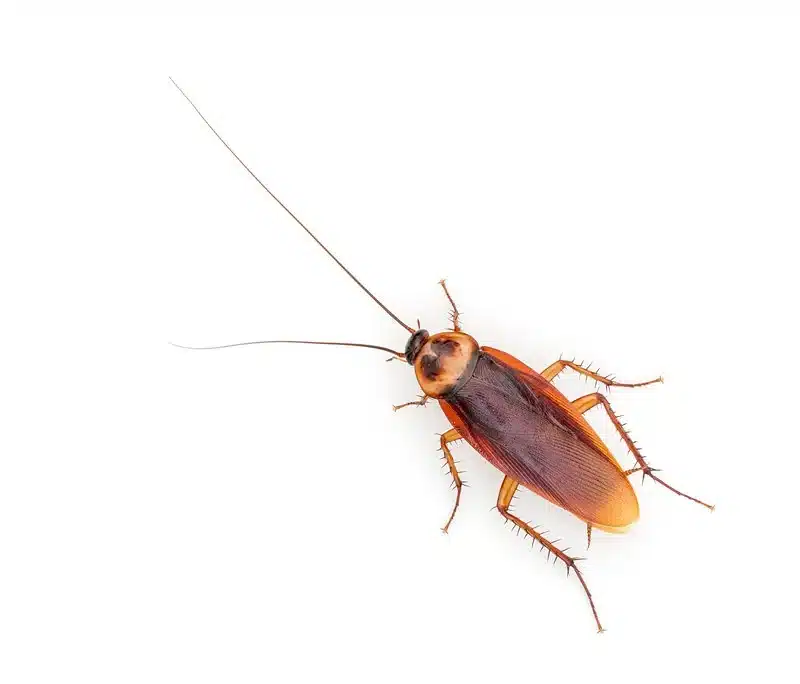
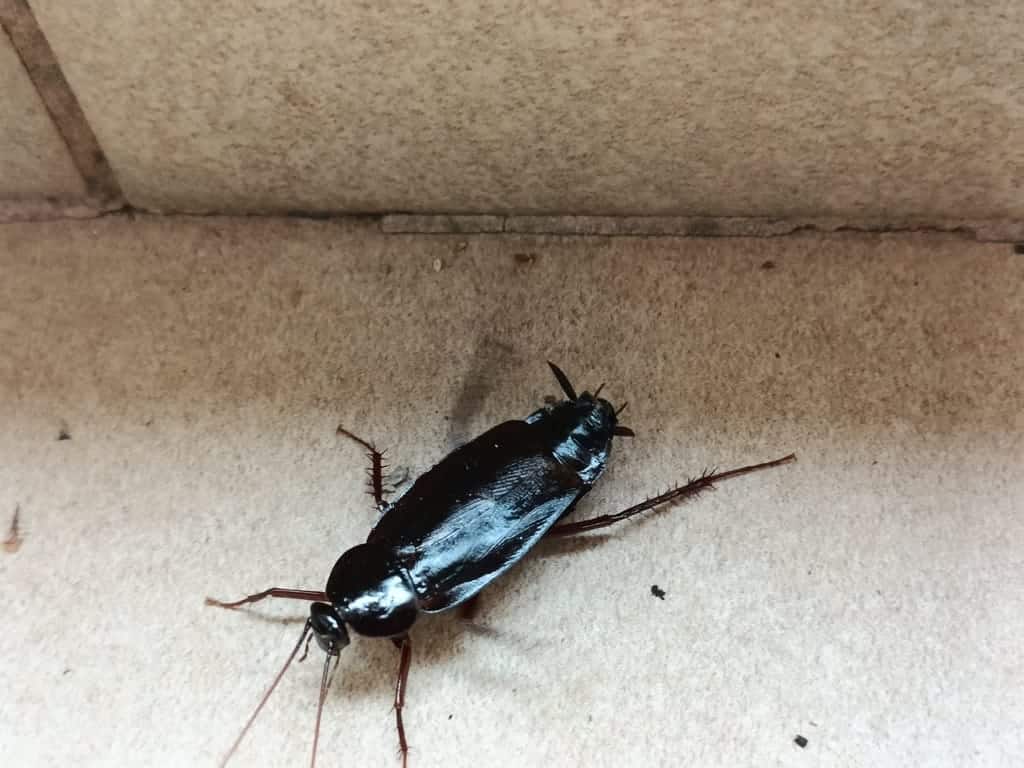
If you just saw a big cockroach run across your floor, it is most likely an American cockroach. Adults are 1.5 to 2 inches long, reddish-brown, with a pale yellow band around the shield behind the head. If it was shorter, about an inch, and shiny black, it was probably an Oriental cockroach. I’ve been on a lot of calls in the DC metro area where a homeowner found one of these in a kitchen or coming out of a drain. Both are outdoor roaches that got in, which is a different problem from small roaches breeding in your cabinets.
Big Roach Size Chart: Which Roach Did You See?
Measure the body, not the antennae. Here’s how the big roaches around Northern Virginia and Maryland compare to the small one people worry about most.
| Roach | Adult length | Color and marks | Flies? | Where it lives |
|---|---|---|---|---|
| American cockroach | 1.5 to 2 in | Reddish-brown, pale yellow band behind head | Glides short distances | Sewers, drains, basements, mulch |
| Oriental cockroach | About 1 in | Shiny black or very dark brown | No | Damp basements, drains, crawl spaces |
| Smokybrown cockroach | 1 to 1.25 in | Solid dark mahogany | Yes, drawn to lights | Tree holes, wood piles, gutters, attics |
| Wood cockroach | Males 7/8 to 1 1/8 in | Brown with pale edges on the front of the body | Males fly to lights | Leaf litter, bark, wood piles |
| German cockroach (small) | About 1/2 in | Tan with two dark stripes behind head | Rarely | Indoors: kitchens and bathrooms |
Sizes come from University of Florida, University of Maryland Extension, and Virginia Tech. Male American roaches look a little longer than females because their wings reach past the tip of the abdomen.
How Big Can Cockroaches Get?
The biggest roach you’ll find in a Virginia house is the American cockroach, at about 2 inches. NPMA puts it at 1.5 to 2 inches, about the size of a cucumber slice. Nothing that lives in or around homes here gets bigger than that.
The giant roaches you see in videos are tropical species:
- Longest: Megaloblatta longipennis, from Peru, Ecuador, and Panama. The record specimen is 3.8 inches long and 1.75 inches wide, and the species can have a wingspan of up to 8 inches (Guinness World Records).
- Heaviest: the giant burrowing cockroach of Australia. It is up to about 3 inches (80 mm) long, weighs around 30 grams, has no wings, and can live up to 10 years (Bush Heritage Australia).
- Best known: the Madagascar hissing cockroach, 2 to 4 inches long (Oakland Zoo). People keep them as pets. They are not house pests.
What about the “18-inch cockroach” people search for? It doesn’t exist. No living cockroach is anywhere near that size. The biggest wingspan on record is about 8 inches.
What Does a Big Roach Look Like?
American Cockroach
This is the huge cockroach most people find. It’s reddish-brown, with a pale brown or yellow band around the edge of the shield behind the head. The University of Florida says it lives mainly in basements, sewers, steam tunnels, and drains, and outdoors in mulch, wood piles, and hollow trees. Adults can live up to a year. It runs fast and can glide short distances in warm, humid weather.
According to the University of Florida’s American cockroach profile, a female makes about one egg case a month for ten months, with about 16 eggs in each case. Growing from egg to adult takes about 600 days. That slow cycle is why American roaches build up in sewers and steam tunnels over time instead of exploding in a kitchen the way German roaches do.
Oriental Cockroach
People call it the “waterbug.” It’s about 1 inch long and dark brown to black. Females can’t fly. Males have short wings that don’t work well. University of Maryland Extension describes it living in damp basements, shaded yards, and basement drains. Across the river, the same species turns up constantly in older housing stock, which we cover in roaches in Maryland. If you’re not sure whether you saw a waterbug or a roach, our water bug vs cockroach guide shows the difference.
Smokybrown Cockroach
It’s a solid dark mahogany, about 1 to 1.25 inches long. Both males and females are strong fliers and head for porch lights. The University of Florida finds it outdoors in tree holes, wood piles, and attics. It’s more common farther south but does turn up here.
Wood Cockroach
Wood roaches are native to Virginia. Males are about an inch long and fly to lights. Virginia Tech notes they wander in but die within days because houses are too dry for them. They can’t breed indoors.
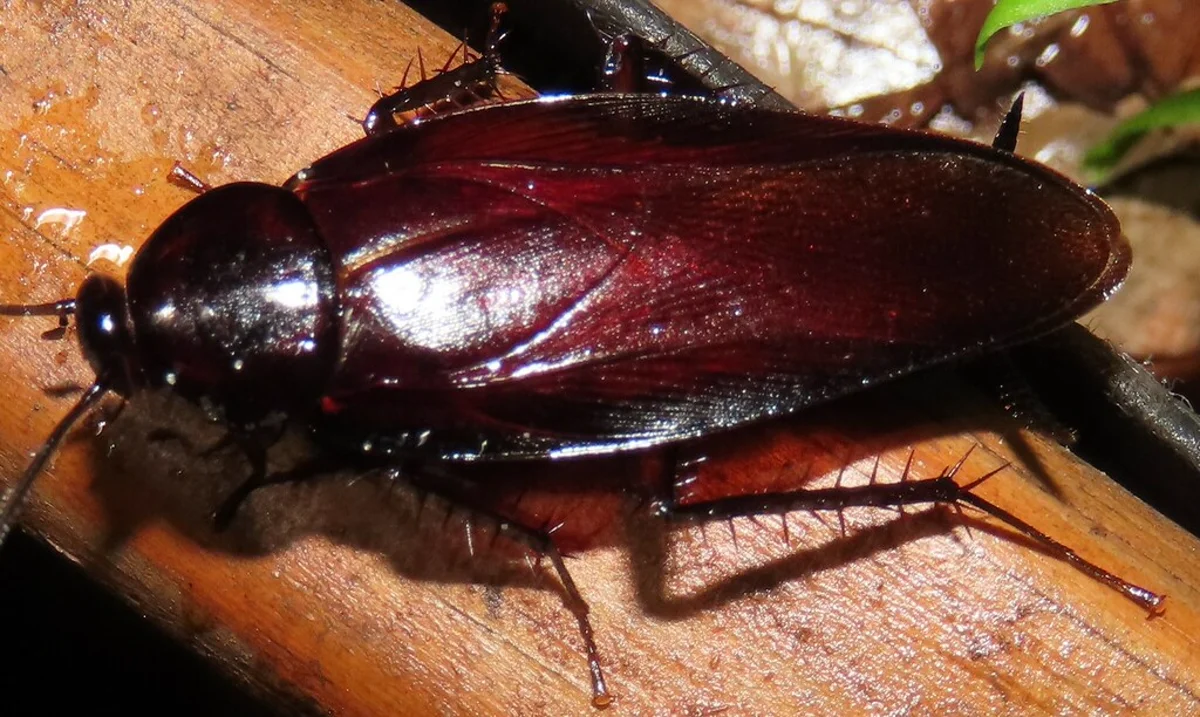
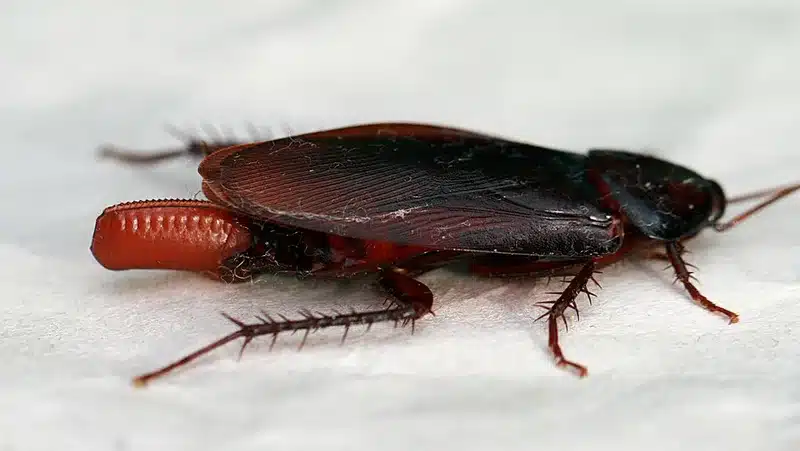

Knowing the species tells you where to look for the source.
Where Do Big Roaches Come From?
Big cockroaches live just outside and slip in when conditions push them:
- Sewers and drains: American roaches thrive in sewer lines and come up through floor drains with dry traps
- Yards: smokybrown and wood roaches hide in thick mulch, leaf piles, gutters, and wood piles
- Damp spots: Oriental roaches live under stones, in crawl spaces, and near sump pits
So yes, big roaches are usually from outside. Daren, one of our registered technicians, sees this mix-up more than any other roach question. As he puts it, every house has American and Oriental roaches on the outside. A big brown-red or black roach is almost always an outdoor roach. It’s tiny roaches all through the cabinets and bathrooms that point to German roaches, and that’s the real indoor issue. If yours were small, see our guide to small roaches.
Why Am I Seeing Big Roaches All of a Sudden?
Most sudden sightings follow weather. Heavy rain floods sewers and soaks mulch beds, and the roaches move to higher, drier ground, which is often your basement. A hot, humid stretch in July or August does the same thing. A floor drain or unused shower that has dried out gives them an open pipe into the house. Pour water down unused drains once a week to keep the trap full.
Why Big Roaches Stay Inside: Moisture
Big roaches come in for food, water, and shelter, but water is the one that keeps them.
- Seasonal patterns: roach activity starts in spring and peaks in humid summer
- Entry routes: floor drains with dry traps, gaps around pipes, garage doors, and weep holes
- Moisture issues: a leaky sink, a sweating pipe, or a damp basement gives them everything they need
Daren says that if American or Oriental roaches are heavy inside a house, there’s a moisture issue, and it’s the answer to a lot of questions. Old Town Alexandria has so many of them because the older homes hold so much moisture. When a customer swears the house is dry, he has them set up a hygrometer, a cheap humidity gauge. Plenty of times it reads 72% relative humidity when you want 45 to 50%. One house he serviced for years finally had a water pipe replaced, and the American and Oriental roaches went from a heavy problem to almost none.
Big Roaches vs Small Roaches
Big roaches like American and Oriental roaches are very different from German roaches, which are only about half an inch. Small roaches nest indoors and breed fast. Big roaches usually come from outdoors, drawn in by moisture and warmth.
- American cockroach: 1.5 to 2 inches, reddish-brown, pale yellow band behind the head
- Oriental cockroach: about 1 inch, shiny black, often called “waterbug”
- German roach: 0.5 inch, tan with two dark stripes (German roaches)
One big roach in the basement after a storm is usually a stray. A dozen small roaches in the kitchen at night is a colony. The first needs a moisture fix. The second needs treatment. For a side-by-side look, see German roach vs American roach. For baby roaches, see what baby roaches look like.
Health Risks
Big roaches travel from sewers to kitchen counters, so they are more than unpleasant.
- Cockroaches pick up Salmonella and other bacteria in sewers and drains and can carry them onto food surfaces
- Their droppings and shed skins trigger asthma and allergies
- A musty odor often means a large population
Cockroach allergens can linger long after the roaches are gone, so clean up droppings once the roaches are under control.
DIY Control for Big Roaches
You can start on big roaches yourself:
- Fix the water first: repair leaks, run a dehumidifier in the basement, and keep drain traps full
- Bait stations: place near walls, under sinks, and by floor drains. Roaches eat the bait and carry it back to hiding spots.
- Boric acid dust: apply a thin layer in wall voids, under appliances, and in cracks. It works as a stomach poison and drying agent.
- Gel bait: squeeze into crevices and behind baseboards
- Monitoring: use glue boards to see if numbers are dropping
- Kitchen hygiene: wipe counters, clean spills, and store food in airtight containers
Avoid spraying all over food prep surfaces. Baits and dusts target roaches where they hide.
Professional Treatment
Call a licensed technician if you notice:
- Daytime sightings (the roaches are crowded or stressed)
- Roaches in multiple rooms
- DIY methods haven’t worked after a few weeks
A good treatment plan combines several steps:
- Exclusion: seal gaps around pipes and utility lines, screen drains
- Moisture: point out leaks, drainage, and humidity problems that keep roaches coming back
- Treatment: targeted dusts, baits, and growth regulators
- Monitoring: follow-up visits and trap checks
At Better Termite & Pest Control, our technicians offer unlimited callbacks until we reach a good baseline. No binding contracts. Cancel with 30 days’ notice. We cover Arlington, Alexandria, Ashburn, Northern Virginia, Herndon, and Lorton.
Prevention
To keep big roaches out:
- Seal cracks in foundations and gaps around pipes with caulk or foam
- Screen sink and floor drains. Keep drain traps full of water.
- Pull mulch, leaf litter, and wood piles away from the foundation
- Run a dehumidifier in basements and aim for 45 to 50% humidity
Big Roaches vs Other Bugs
It’s easy to mix up bugs. Quick guide:
- American and Oriental roaches: flat bodies, long antennae, spiny legs, run fast
- Palmetto bugs: a nickname for big roaches, mostly American and Florida woods roaches (palmetto bug vs cockroach)
- Beetles: hard wing covers that meet in a straight line down the back, short antennae, and slower movement
Getting rid of big roaches takes fixing moisture, sealing the obvious gaps, and targeted treatment. Call us at 703-683-2000 or email info@bettertermite.com if they keep showing up.