

Rats in Maryland come down to four species, and only two of them care about your house. The Norway rat and the roof rat are introduced species that live wherever people live. The Allegheny woodrat and the marsh rice rat are natives that stay out in western rock slides and Chesapeake marsh.
I’ve worked in pest control since 2015, and I’m third generation at Better Termite. Most of my rodent work is in the DC suburbs on both sides of the line, from Old Town over to Silver Spring, Bethesda, and Hyattsville. Below is the whole list, how to tell them apart, where rat pressure is actually worst in this state, and what works on the two that get inside.
The 4 Rats You’ll Find in Maryland
Here’s the whole list at a glance. The first two are the ones that end up in walls, crawl spaces, and garages.
| Rat | Where in Maryland | Gets Inside? | Quick Tell |
|---|---|---|---|
| Norway rat | Statewide, wherever people are | Yes, most common | Heavy body, blunt nose, short tail, burrows at ground level |
| Roof rat | Scattered, far less common | Sometimes | Sleek, big ears, pointed nose, tail longer than the body |
| Allegheny woodrat | Western mountains, cliffs and rock slides | Almost never | Soft gray-brown coat, big black eyes, state Endangered |
| Marsh rice rat | Chesapeake and coastal wetlands | Almost never | Semi-aquatic, nests in grasses above the tide line |
Maryland DNR groups the first two as mammals introduced to Maryland, alongside the house mouse and nutria. The woodrat and the rice rat are natives that belong here.
1. Norway Rat
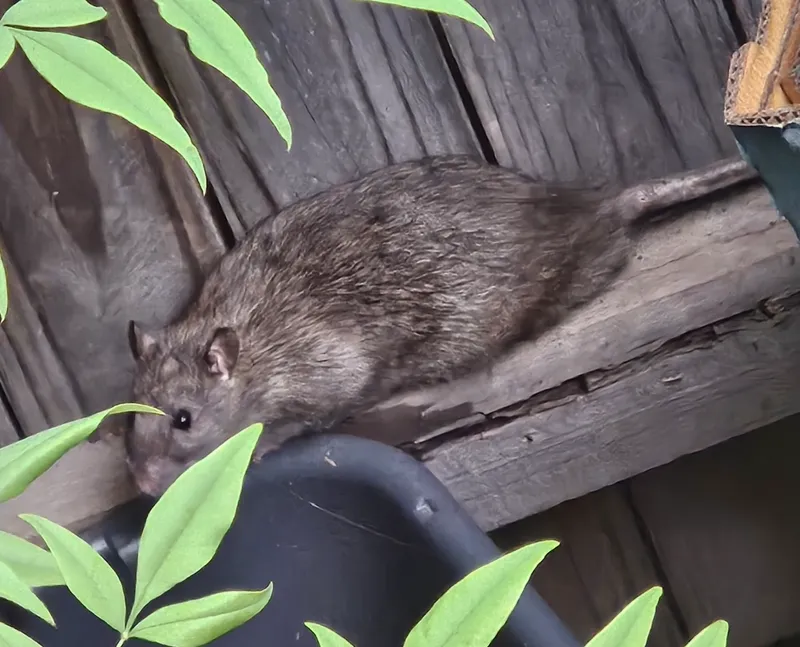
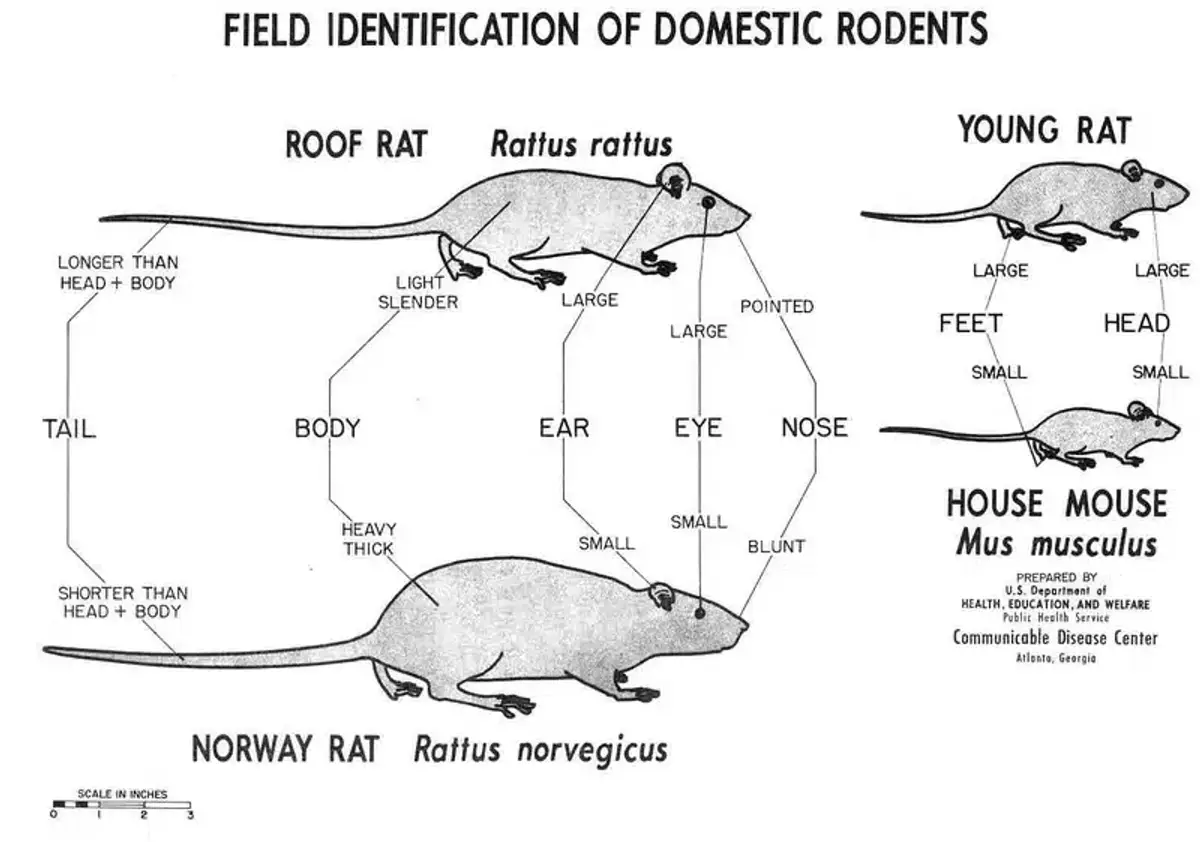
The Norway rat is the rat behind nearly every residential call I run. People also call it the brown rat or the sewer rat. It is heavy and robust, with a blunt muzzle and a tail shorter than its head and body.
That build tells you where to look. Norway rats are diggers, not climbers. They tunnel under sheds, stoops, woodpiles, and thick foundation plantings, then work their way in at ground level through a utility penetration, a bad door sweep, or a rotted sill plate.
2. Roof Rat
The roof rat, also called the black rat, is the climber. University of California researchers describe it as sleek and agile. It has a pointed muzzle and a tail longer than its head and body combined. The same guidance says to seal every hole bigger than a quarter inch to keep rats and mice out.
Roof rats are far less common than Norway rats in Maryland. When they do turn up, it is usually in an outbuilding, a barn, or a structure with heavy vine cover and overhanging limbs, not in a typical suburban house.


If you want the full breakdown, our Norway rat vs roof rat guide covers size, color, droppings, and nesting spots side by side.
3. Allegheny Woodrat
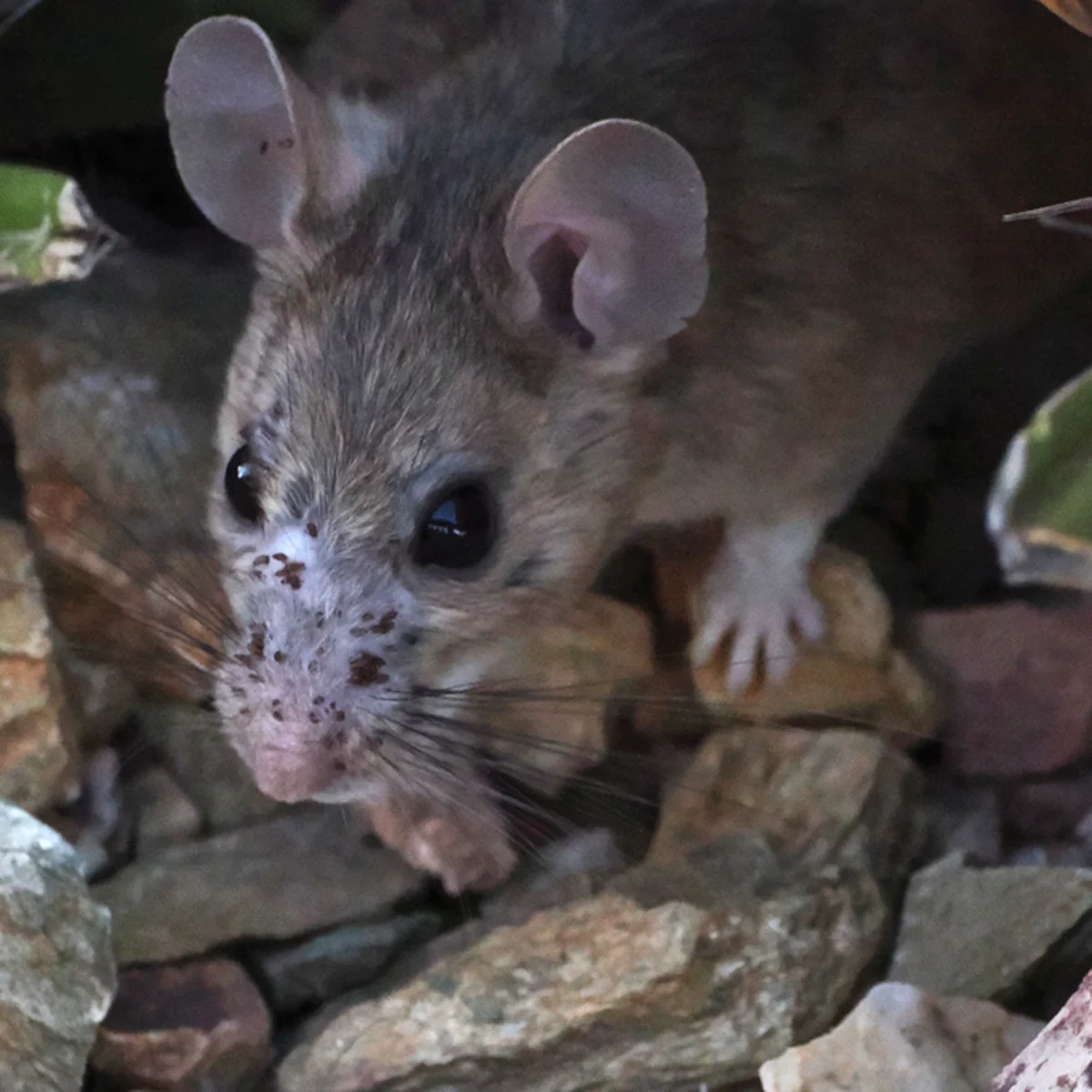
This one is a native, and it is genuinely a nice animal. The Allegheny woodrat is soft gray-brown with a white belly and big black eyes. It lives in cliffs, caves, and rock slides in far western Maryland.
It is also in trouble. Maryland’s Natural Heritage Program lists it on the state’s rare, threatened, and endangered animal list as S1 and Endangered, which is the most critical state rank there is. It is not the thing in your kitchen wall in Gaithersburg, and it should be left alone.
4. Marsh Rice Rat
The marsh rice rat is our most specialized native rat. It is semi-aquatic, swims well, and weaves nests out of grasses and sedges above the tide line in Chesapeake and coastal wetlands.
If you’re on the water on the Eastern Shore and something small and gray swims past the dock, that’s likely this. It is not a structural pest.


A quick note on look-alikes. Plenty of Maryland homeowners call in about a “giant rat” by the water that turns out to be a muskrat, and plenty of yard tunnels blamed on rats belong to voles. Our mouse vs vole guide sorts that second one out.
Where Rats Are Worst in Maryland
Rat pressure in Maryland isn’t spread evenly. It follows people, food, and older construction.
- Baltimore City. This is the state’s rat capital, and it has the research to prove it. Johns Hopkins researchers estimated the city’s outdoor residential rat population at roughly 48,420, plus or minus 14,883 in 2004. That is essentially unchanged from city surveys done in 1949 and 1952.
- The inner DC suburbs. Takoma Park, Silver Spring, and Hyattsville have the mix rats want: alleys, dense housing, restaurants, and a lot of pre-war building stock with gaps at the sill.
- Row house blocks. In older attached housing, the firewall between units isn’t always intact. Rats work their way unit to unit, which is why one neighbor’s problem becomes four neighbors’ problem.
- Yards backing onto creeks and storm drains. Norway rats travel sewer and storm lines, then come up into yards and work toward the house.
We run rodent jobs across the Maryland suburbs, including Silver Spring, Bethesda, Rockville, and Hyattsville, plus general pest control across Montgomery County and Prince George’s County.
The worst rat infestation I ever handled was in an old row house block, right when Covid hit. The music theater behind those houses shut down, so the rats lost their food source overnight and moved into the homes.
It got bad. Toward the end we were going out every week. I had 15 to 20 snap traps down in the crawl space, and every week there’d be nothing but skin and bones left from where the rats were eating the other rats. There was a dominant female I could never catch. She had orange, brown and black coloring, so I really think she was somebody’s escaped pet that started her own brood. We killed at least 40 or 50 down there, probably closer to 60 or 70.
The lesson I took from it applies directly to Baltimore and the inner suburbs: when a nearby food source disappears, the rats don’t disappear with it. They move indoors. So when a restaurant near you closes or a block gets cleaned up, that’s the month to check your foundation.
What Maryland Counties Actually Do About Rats
This is the part homeowners get wrong most often. People assume the county handles rats. In most of Maryland, the county handles you.
Baltimore City is the exception, and even there it’s limited. Residents can request the Rat Rubout program by calling 311 or filing online, and crews will inspect and bait. But that only happens with a signed right-of-entry form, and only where an actual burrow is present.
Montgomery County works the other way around. Its vector control page states that rat control is the responsibility of the property owner and that it is unlawful to let your property become infested or contribute to an infestation. The county inspects, writes up what it found, and sets a deadline to fix it. It says plainly that it does not bait or provide bait to property owners.
So in most of the state, a rat problem is a homeowner problem with a legal clock attached to it. That’s worth knowing before you wait one out.
Signs You Have Rats, Not Mice
Rats and mice get confused constantly, and the fix for each is different. Here’s how to sort it out.
Rat droppings are big. They run roughly half an inch to three quarters of an inch, about the size and shape of a raisin. Mouse droppings are closer to a grain of rice, maybe a quarter inch.
You’ll usually find them in runs rather than scattered: under sinks, behind the stove, along a crawl space wall, or on top of floor joists. Volume matters too. One rat produces a lot of droppings in a night, so a heavy pile does not automatically mean a heavy population.
Look for greasy rub marks. These are dark smudges along baseboards, joists, and pipe runs where rats travel the same route every night. Mice leave these too, but fainter and lower.
Then look at gnaw damage. Rats chew through plastic, wood, soft metal, and wiring. The tooth marks are wider and deeper than mouse damage, and you’ll often see a chewed hole with fresh, light-colored shavings around it. Fresh shavings mean active, not historic.
This is the clearest rat tell there is. Norway rats dig burrow openings two to four inches across, usually at the base of a foundation, shed, stoop, deck, or dense shrub bed. Mice don’t do this.
Check for smooth, packed runways in the grass between the burrow and a food source, and for dirt fanned out at the hole. Poke a wad of newspaper in the opening. If it’s pushed back out in a day or two, the burrow is live.
Mice sound like light scratching and scurrying. Rats sound like something with weight. Customers describe it as “someone moved a shoe” or a heavy drag across a ceiling or crawl space.
Both are mostly nocturnal, so the first hour or two after dark is when you’ll hear the most. Daytime activity out in the open usually means the population has outgrown its harborage.
If you have a specimen or a clear photo, the physical comparison settles it fast. A house mouse tops out around an ounce. A Norway rat runs ten to sixteen times that weight, with a thicker tail and proportionally smaller ears for its head.
One more warning about reading the evidence. Not everything that leaves a pellet behind is a rodent.
Once you have confirmed rats, the next question homeowners ask is how worried they should be. That part is well studied in this region.
Rat-borne disease is not a hypothetical here. In that same Baltimore work, roughly half of the rats trapped in the city carried detectable antibody against Seoul virus, a hantavirus that rats shed in urine, droppings, and saliva.
It has reached people locally. In 2022 the CDC published the first reports of locally transmitted Seoul hantavirus infection in the District of Columbia, covering two cases from 2018. One patient was a maintenance worker with frequent rodent sightings on the job, and the report noted that rodent overpopulation in DC is well documented through rodent complaints to the city’s call center.
The practical takeaway for a homeowner: don’t sweep or vacuum dry droppings. That puts particles in the air. Wet them down with a disinfectant first, then wipe them up with disposable towels while wearing gloves.
When Rat Pressure Peaks in Maryland
Rats breed year round in Maryland, so there’s no true off season. But the call volume follows a clear pattern.
Burrow openings become visible as yards green up, and litters born over winter start dispersing. This is the best window to seal a house, because you can still see the holes before vegetation hides them.
Outdoor food is everywhere right now: trash, gardens, bird feeders, fallen fruit. So rats mostly stay outside. Populations build quietly all summer, which is what sets up the fall.
Our heaviest rodent call volume of the year. Nights cool off, outdoor food drops away, and rats push toward warm harborage. Anything you didn’t seal in spring gets found now.
Activity moves indoors and concentrates in crawl spaces, wall voids, and attached garages. Rats stay put and keep breeding, so a small January problem is rarely small by March.
That pattern is also shifting. A 2025 study out of the University of Richmond analyzing complaint data from 16 cities found that rat numbers are rising in 11 of them, with Washington, DC showing the strongest increase of any city studied. The researchers tie it to warming temperatures, urbanization, and human population density. Warmer years give rats more weeks of activity aboveground. A couple of extra weeks can mean another litter.
How to Keep Rats Out of a Maryland House
Order matters here. Trapping without sealing just opens a vacancy for the next rat.
This is 80 percent of the job. The rule from the University of California guidance is a quarter inch. Anything bigger gets sealed. A rat can also slip under a door with just a half-inch gap. My own rule is simpler. If I can fit my thumb into the gap, a rat can use it.
Walk your foundation and check utility penetrations, dryer vents, garage door sweeps, crawl space vents, and the seam where siding meets the sill plate. Seal with hardware cloth, copper mesh, and mortar. Steel wool alone rusts out and fails within a season, and lightweight chicken wire is useless here. Rats go right through the openings.
Secure trash in hard-sided cans with lids that latch. This matters more in Maryland’s older neighborhoods than almost anything else you can do. Pick up pet waste and fallen fruit, and either pull bird feeders or clean up the spill underneath them.
Then take away the cover. Keep a weed-free strip a few feet wide against the building, move woodpiles off the ground and away from walls, and pull mulch back from the foundation. Thick mulch against the house brings everything. Rodents will nest right under it.
Rats are neophobic, meaning they avoid new objects for days. Set traps along their runways, tight against walls, behind appliances, and along joists. Leave them unset for a few nights so the rats get used to them. Then set them all at once.
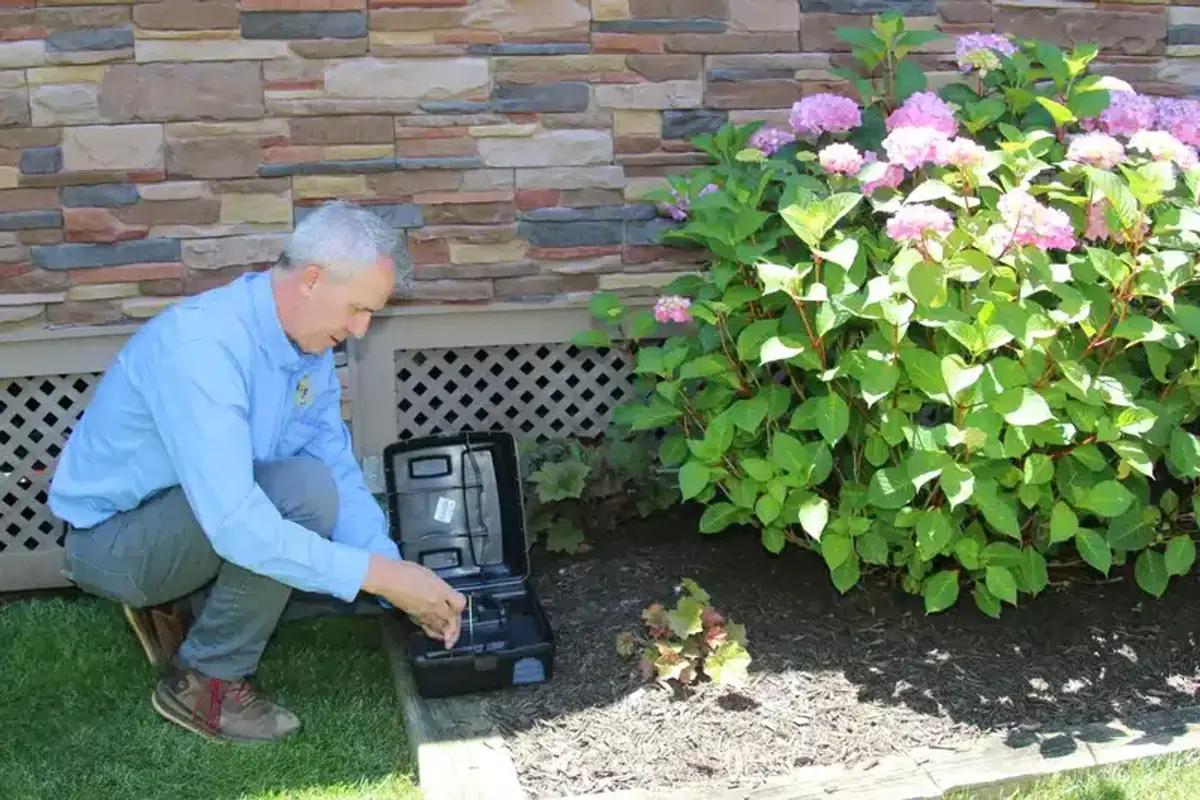
For exterior work, we use tamper-resistant bait stations secured in place along travel routes rather than loose bait. That keeps the material where it belongs and out of reach of kids and pets.
Re-check your seals after a month. Rats reopen weak repairs, and new gaps show up as houses settle and door sweeps wear down. If activity comes back in the same spot, the entry point you fixed wasn’t the one they were using.
Our general pest and rodent plans run on a tri-annual schedule, three visits a year. That is what keeps the exterior stations current and catches new openings before they turn into a population.
Step three is where most DIY rat jobs go sideways, usually because of what people buy at the hardware store.
A secured station does two jobs at once. It holds the bait where the rats actually travel, and it keeps that material out of reach of everything else in the yard.
Professional Rat Control in Maryland
Our licensed technicians run a four-step rodent protocol we built out of years of work in the older neighborhoods around DC: inspect and identify the species, seal the entry points, place secured exterior stations and interior devices, then come back and verify.
One thing worth saying, because Maryland homeowners hear it constantly: you usually do not need a huge, expensive structural overhaul to solve a rat problem. In our experience a lot of what gets proposed isn’t even that effective. The lower-level work is what makes rodent control hold: sealing at grade and baiting the travel routes.
On pricing, we don’t sell one-off visits. Ongoing rodent control starts around $49 per month for an average DMV home, plus a one-time $200 setup fee on the first visit. Every product we use is EPA approved and has been through our internal research team, which removed nine of the harshest products from our programs. Each one is something we’d feel comfortable using in our own homes.
The Bottom Line
Rats in Maryland come down to four species, but only the Norway rat and the roof rat are a building problem. Across the state it’s the Norway rat by a wide margin. The woodrat belongs to the western cliffs and the rice rat belongs to the marsh, and neither one is what’s in your wall.
The other thing to take away: in most Maryland jurisdictions, rats are legally your problem to fix, not the county’s. Sealing beats trapping, fall is when it gets urgent, and a quarter-inch gap is all it takes.
Better Termite & Pest Control has been protecting homes in the DC area for 58 years, and we’ve earned 1800+ reviews along the way. If you’re hearing something heavy under the floor or finding raisin-sized droppings under the sink, call us at 703-683-2000 or email info@bettertermite.com. A licensed technician will walk your property, name the species, and find the way in.