Wasps
Vespidae (Family)
Wasps are stinging insects known for their aggressive defense of nests. Wasps near homes pose a significant sting risk, especially for those with allergies.
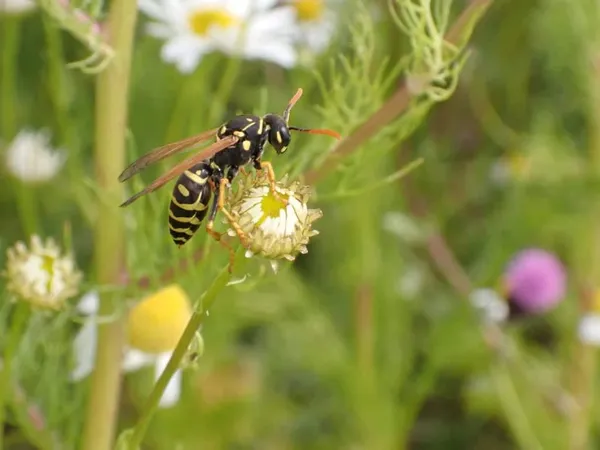
Wasp Identification Guide
Physical Characteristics
Wasps have slender bodies with a narrow “waist” between the chest and belly. They have smooth, shiny bodies unlike fuzzy bees. Wasps have two pairs of wings and strong jaws. Most have black and yellow or black and white colors. Their long legs hang down when they fly.
Common Species
-
Paper Wasps: Brownish wasps with long legs. They build open, umbrella-shaped nests under eaves and overhangs.
-
Yellowjackets: Aggressive black and yellow wasps that nest in the ground or wall voids. Common at outdoor gatherings.
-
Bald-Faced Hornets: Large black and white wasps. They build large, enclosed paper nests in trees and on structures.
-
European Hornets: Large brown and yellow hornets that nest in hollow trees or wall voids. Active at night.
Wasp Behavior and Biology
Wasps are social insects that build new colonies each year. In spring, a queen starts a new nest and raises the first workers. Colonies grow all summer and can reach thousands of wasps. The colony dies each winter. Only mated queens live through winter to start new nests in spring. Wasps hunt other bugs to feed their young. Some species like mud daubers and cicada killers are solitary hunters that pose little threat to people.
How We Treat for Wasps
Effective wasp control requires professional expertise:
-
Identification and Assessment: We identify the species and locate all nests. Different species require different approaches. Some nests may be hidden in wall voids or underground.
-
Treatment: We apply products directly to nests. We treat in early morning or evening when wasps are less active. For ground nests, we treat the entry and exit points. For nests high up, we use special tools to reach and treat them.
-
Removal: Once the colony is eliminated, we remove accessible nests. This prevents other pests from using them and discourages new wasp activity. Learn more about different types of wasp nests and how to identify what you are dealing with.
-
Prevention: We can treat common nesting areas to deter future wasp activity. We also advise on changes to reduce attractants around your home. Read our guide on wasps vs. bees to understand the differences between these stinging insects.
Types of Wasps
Click on any species below to learn more about identification, behavior, and control methods.
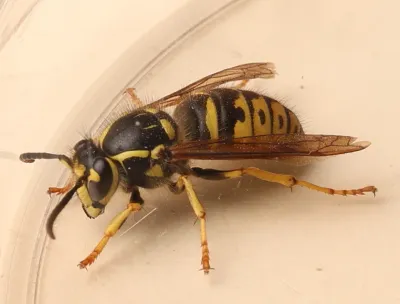
Aerial Yellowjackets
Dolichovespula arenaria
Aggressive stinging insects that build distinctive paper nests in trees, shrubs, and on buildings rather than underground.
View identification guide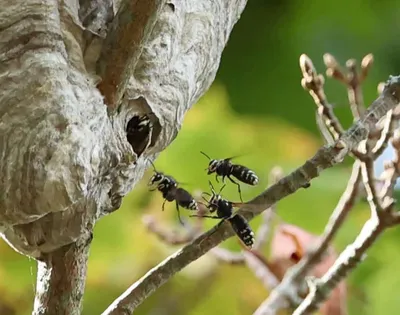
Bald-Faced Hornets
Dolichovespula maculata
Bald-faced hornets are large, aggressive black and white wasps known for building large, enclosed paper nests in trees and on structures. Despite their name, they are technically aerial yellowjackets, not true hornets.
View identification guide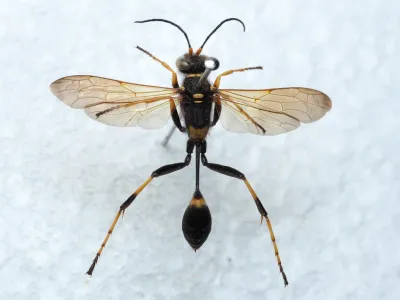
Black and Yellow Mud Daubers
Sceliphron caementarium
The black and yellow mud dauber is a solitary wasp that builds tube-shaped mud nests on homes. Learn how to identify and manage these common wasps.
View identification guide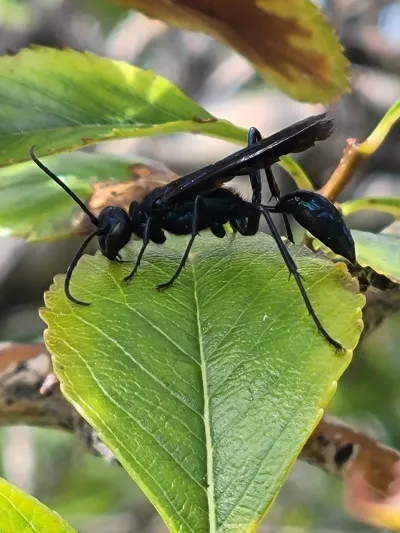
Blue Mud Daubers
Chalybion californicum
Blue mud daubers are metallic blue solitary wasps known for hunting black widow spiders. These non-aggressive wasps reuse abandoned mud nests and help control spider populations around homes.
View identification guide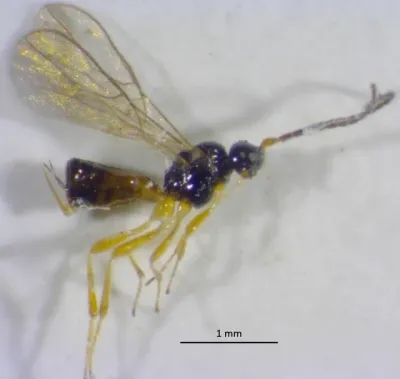
Braconid Wasps
Braconidae (Family)
Braconid wasps are small parasitic insects that target caterpillars and aphids. Learn to identify these harmless wasps and understand their behavior around your home and garden.
View identification guide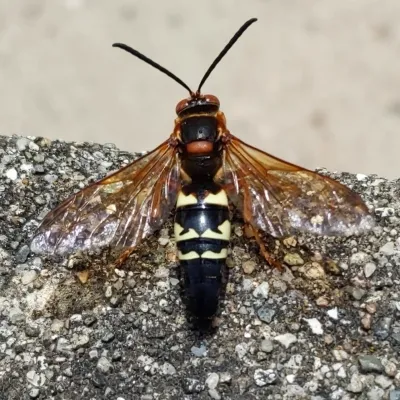
Cicada Killers
Sphecius speciosus
Large solitary wasps that dig burrows in lawns and hunt cicadas. Despite their intimidating size, cicada killers are not aggressive toward humans.
View identification guide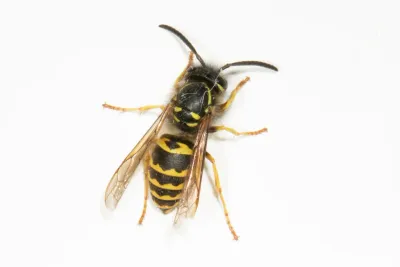
Common Yellowjackets
Vespula alascensis
A widespread native yellowjacket found throughout North America, known for aggressive nest defense and scavenging behavior around human food and outdoor gatherings.
View identification guide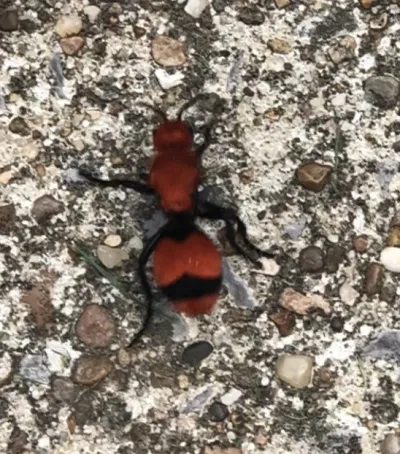
Cow Killers
Dasymutilla occidentalis
Cow killers, also known as red velvet ants, are actually wingless female wasps famous for their extremely painful sting. Despite their alarming name, they pose minimal threat to humans and do not cause property damage.
View identification guide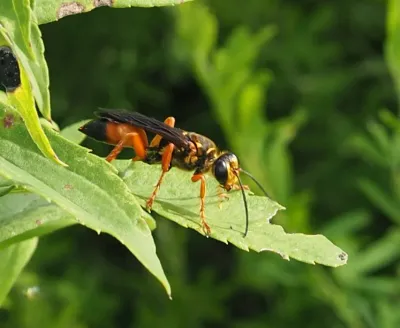
Digger Wasps
Sphex spp.
Large solitary wasps that dig burrows in sandy soil and hunt grasshoppers and crickets. Despite their size, digger wasps are not aggressive toward humans.
View identification guide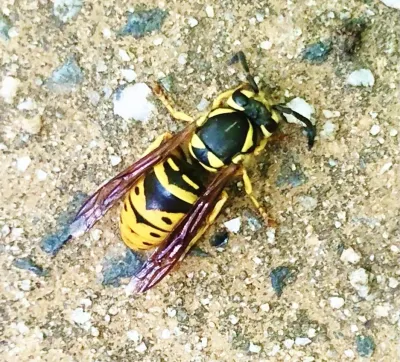
Eastern Yellowjackets
Vespula maculifrons
The most common yellowjacket species in eastern North America, known for building underground nests and aggressively defending their colonies.
View identification guide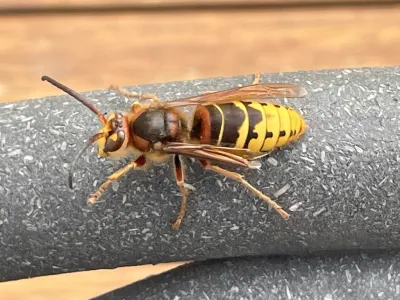
European Hornets
Vespa crabro
European hornets are large, social wasps that build paper nests in hollow trees, wall voids, and attics. As the only true hornet established in North America, they are notable for their nocturnal activity and can deliver painful stings when their nest is threatened.
View identification guide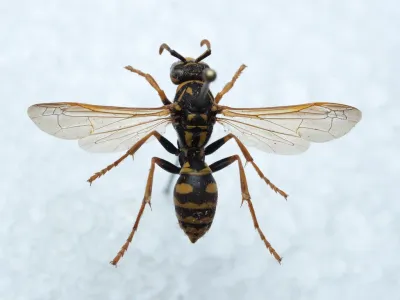
European Paper Wasps
Polistes dominula
The European paper wasp is an invasive social wasp species now widespread across North America. Distinguished by its bright orange antennae, it builds umbrella-shaped nests on buildings and structures.
View identification guide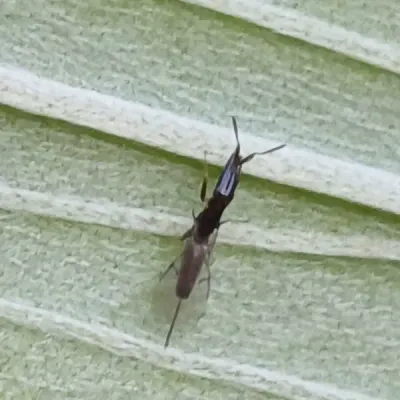
Fig Wasps
Agaonidae (Family)
Fig wasps are tiny pollinating insects with an ancient mutualistic relationship with fig trees. Learn how to identify these minute wasps, understand their unique biology, and know when they may appear around your home.
View identification guide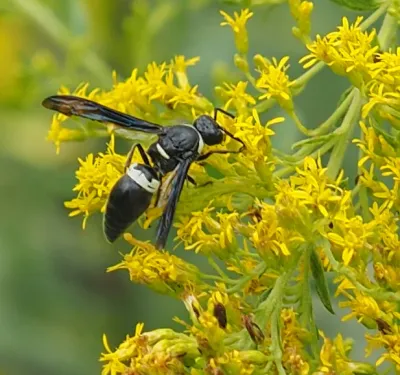
Four-Toothed Mason Wasps
Monobia quadridens
Four-toothed mason wasps are solitary wasps that nest in pre-existing cavities like old carpenter bee holes. These non-aggressive wasps prey on caterpillars and are beneficial to gardens.
View identification guide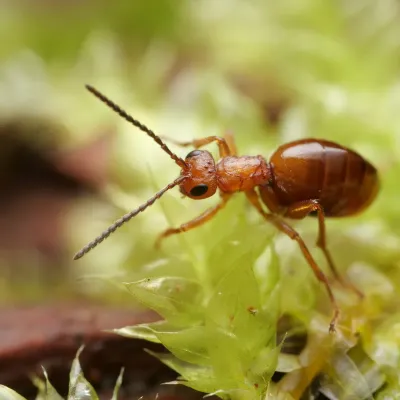
Gall Wasps
Cynipidae
Gall wasps are tiny wasps that cause distinctive growths on oak trees, roses, and other plants. While the galls can look alarming, these insects rarely pose a threat to healthy, mature trees.
View identification guide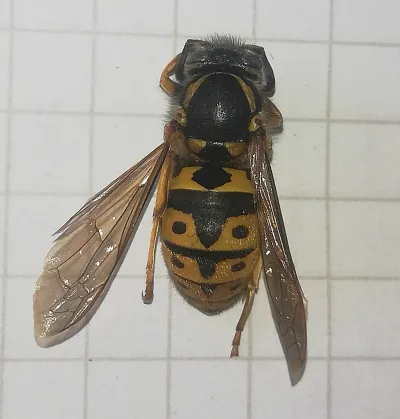
German Yellowjackets
Vespula germanica
An invasive, aggressive yellowjacket species that commonly nests in wall voids and structures, known for bold scavenging behavior around food and outdoor gatherings.
View identification guide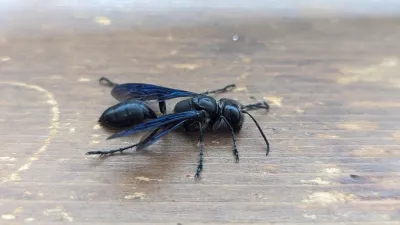
Grass Carrier Wasps
Isodontia spp.
Grass carrier wasps are solitary wasps named for their habit of carrying long blades of grass to line their nests. These non-aggressive insects prey on crickets and katydids.
View identification guide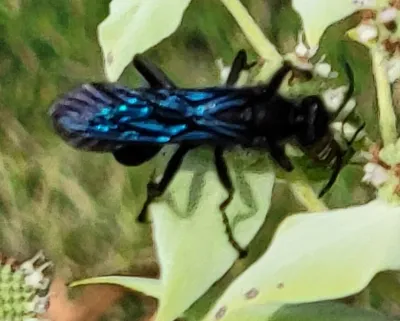
Great Black Wasps
Sphex pensylvanicus
The great black wasp is a large, solitary digger wasp with iridescent blue-black coloring. Despite its intimidating size, this wasp is not aggressive toward humans and rarely stings.
View identification guide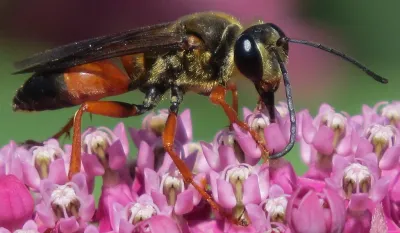
Great Golden Digger Wasps
Sphex ichneumoneus
Large solitary wasps with golden hairs and orange legs that dig burrows in sandy soil. These wasps are docile and rarely sting humans.
View identification guide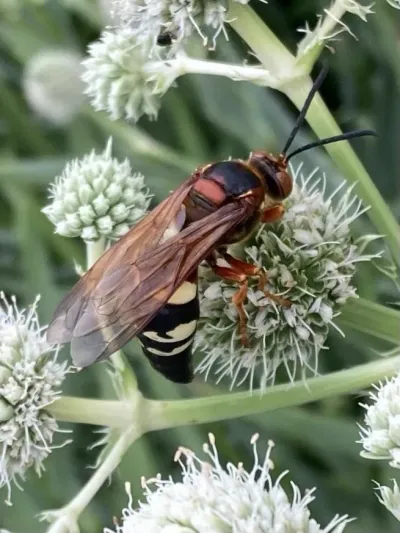
Ground Nesting Wasps
Various species (Sphecidae, Crabronidae, Vespidae)
Ground nesting wasps dig burrows in soil to raise their young. Most species are solitary, but some, like yellowjackets, can be aggressive. Learn to identify different ground-nesting wasps and when treatment is needed.
View identification guide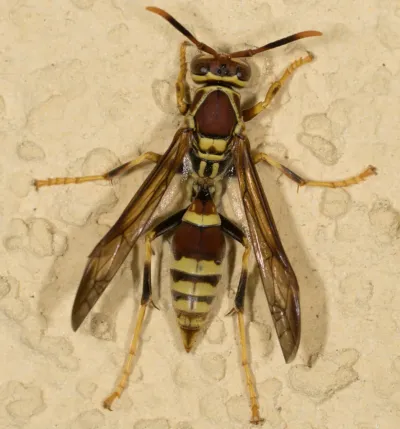
Guinea Wasps
Polistes exclamans
Guinea wasps are common paper wasps found throughout the southern and eastern United States. They build small, open-comb nests near human structures and can sting when their nest is disturbed.
View identification guide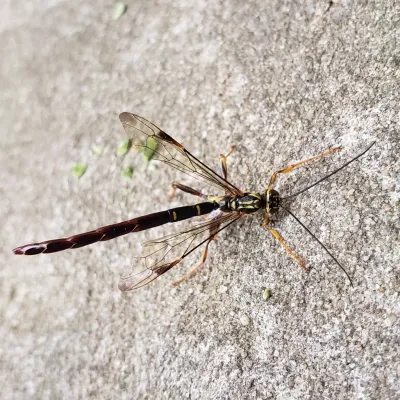
Ichneumon Wasps
Ichneumonidae (Family)
Ichneumon wasps are parasitic insects with long, needle-like ovipositors often mistaken for stingers. Learn to identify these wasps and manage their presence around your home.
View identification guide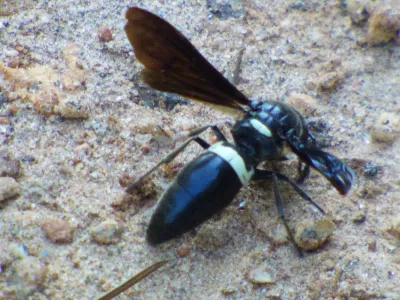
Mason Wasps
Subfamily Eumeninae
Mason wasps are solitary wasps that build small mud nests in crevices, holes, and mortar joints. They hunt caterpillars and rarely sting humans.
View identification guide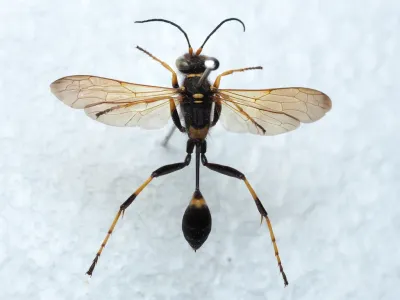
Mud Daubers
Sceliphron, Chalybion, and Trypoxylon spp.
Mud daubers are solitary wasps that build distinctive tube-shaped nests from mud. These non-aggressive wasps prey on spiders and other insects around homes.
View identification guide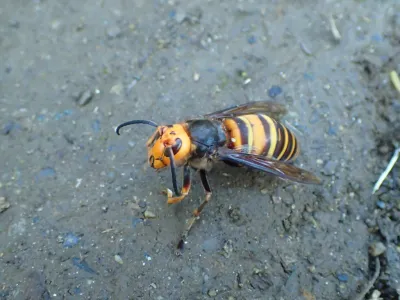
Northern Giant Hornets
Vespa mandarinia
The northern giant hornet is the world's largest hornet. Queens can grow up to 2 inches long. This invasive pest from East Asia has been found in the Pacific Northwest and threatens honeybee colonies.
View identification guide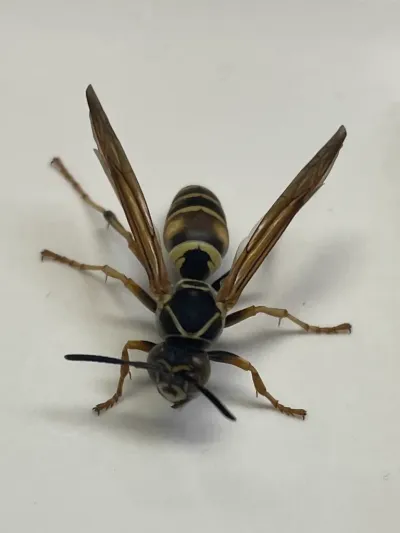
Northern Paper Wasps
Polistes fuscatus
Northern paper wasps are social insects that build distinctive umbrella-shaped nests from chewed wood fibers. They are common across eastern North America and often nest near human structures.
View identification guide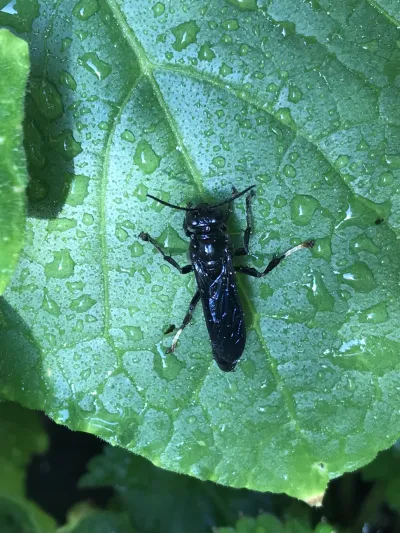
Organ Pipe Mud Daubers
Trypoxylon politum
Organ pipe mud daubers are solitary wasps that build cylindrical mud tubes resembling organ pipes. These wasps prey on spiders and rarely sting humans.
View identification guide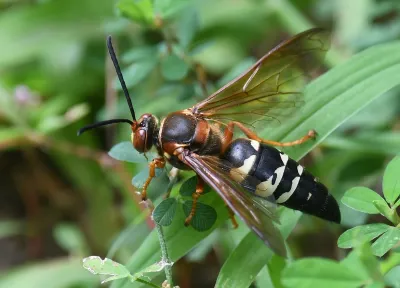
Pacific Cicada Killers
Sphecius convallis
Large solitary wasps native to the Pacific coast that dig burrows in sandy soil and hunt cicadas. Despite their intimidating size, Pacific cicada killers are docile and rarely sting.
View identification guide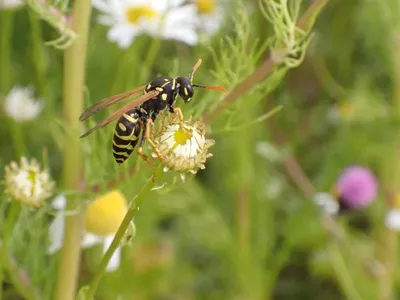
Paper Wasps
Polistes spp.
Paper wasps are social insects that build distinctive umbrella-shaped nests from chewed wood fibers. They become a nuisance and sting risk when nesting near human activity.
View identification guide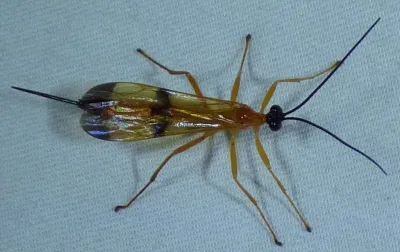
Parasitic Wasps
Ichneumonidae and Braconidae (Families)
Parasitic wasps are helpful insects that control pest populations naturally. These tiny wasps lay eggs inside or on pest insects, providing natural pest control without stinging humans.
View identification guide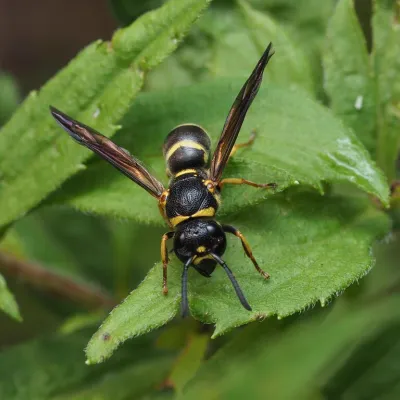
Potter Wasps
Eumenes spp. (Subfamily Eumeninae)
Potter wasps are solitary wasps named for the small, pot-shaped mud nests they construct. These insects prey on caterpillars and rarely sting humans.
View identification guide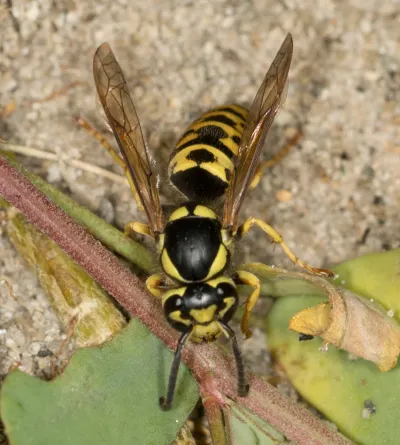
Prairie Yellowjackets
Vespula atropilosa
A ground-nesting yellowjacket found in prairies and grasslands of western and midwestern North America, known for hunting live prey rather than scavenging.
View identification guide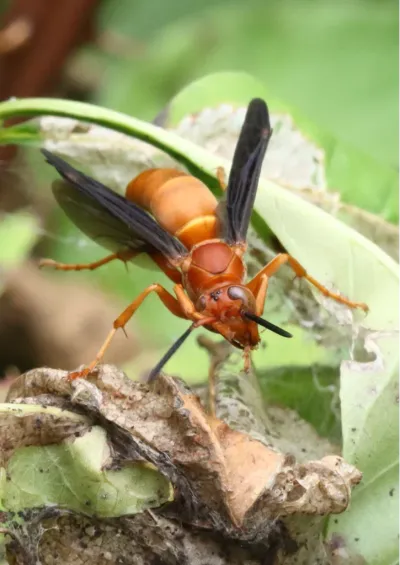
Red Paper Wasps
Polistes carolina and Polistes rubiginosus
Red paper wasps are social stinging insects with distinctive rust-red coloring. They build open, umbrella-shaped nests in sheltered locations and can become a concern when nesting near homes.
View identification guide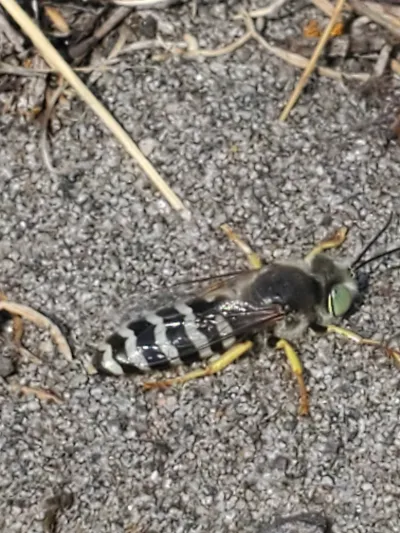
Sand Wasps
Bembix americana and Ammophila spp.
Sand wasps are solitary ground-nesting wasps that dig burrows in sandy soil to raise their young. They often hover near people while catching flies, which can be alarming, but they rarely sting unless handled.
View identification guide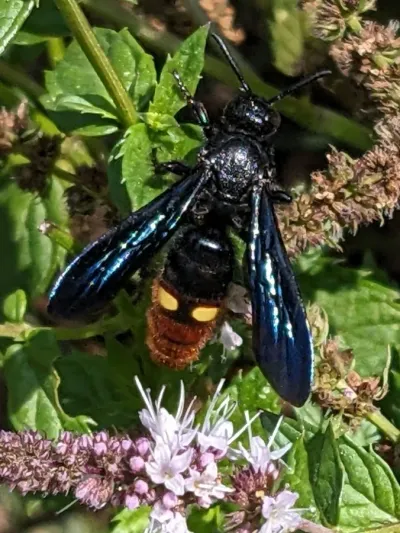
Scoliid Wasps
Scoliidae
Scoliid wasps are large, hairy solitary wasps that hunt scarab beetle grubs in the soil. They are often seen hovering low over lawns or visiting flowers in late summer.
View identification guide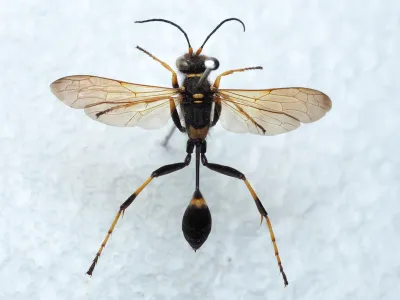
Solitary Wasps
Sphecidae and Crabronidae families
Solitary wasps are non-aggressive hunting wasps that live alone rather than in colonies. Despite their size, these beneficial insects rarely sting and help control pest insect populations.
View identification guide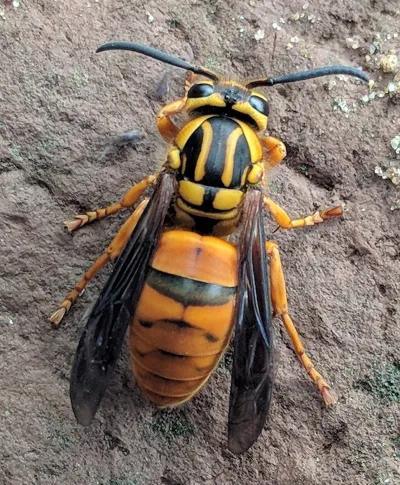
Southern Yellowjackets
Vespula squamosa
A large, aggressive yellowjacket species known for building massive underground colonies that can persist year-round in warm climates.
View identification guide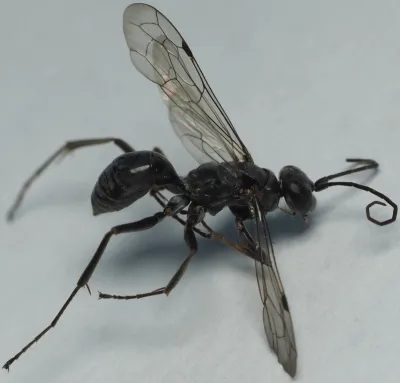
Spider Wasps
Pompilidae
Spider wasps are solitary wasps that hunt and paralyze spiders to feed their larvae. These large, long-legged wasps are found throughout North America and deliver one of the most painful insect stings.
View identification guide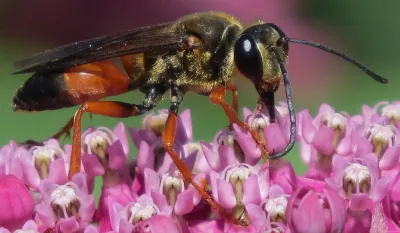
Thread-Waisted Wasps
Sphecidae (Family)
Thread-waisted wasps are solitary insects named for the extremely thin waist connecting their thorax and abdomen. These non-aggressive wasps hunt caterpillars, grasshoppers, and spiders to feed their young.
View identification guide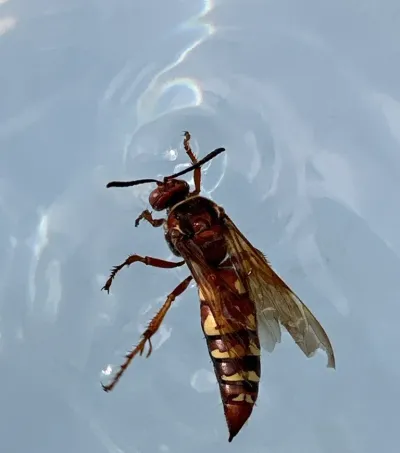
Western Cicada Killers
Sphecius grandis
Large solitary wasps of the western United States and Mexico that dig burrows in dry, sandy soil and hunt cicadas. Despite their imposing size, western cicada killers are docile and rarely sting.
View identification guide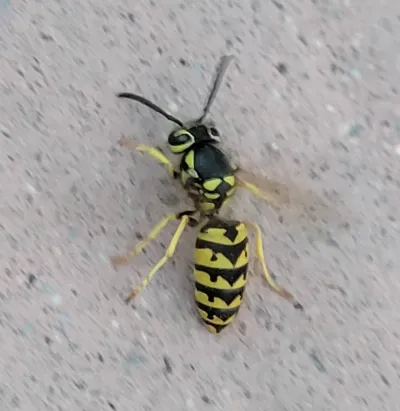
Western Yellowjackets
Vespula pensylvanica
An aggressive stinging insect native to western North America, known for its persistent foraging behavior and large underground colonies.
View identification guide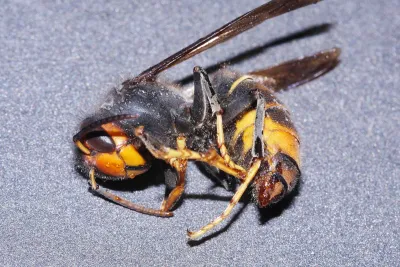
Yellow-Legged Hornets
Vespa velutina
The yellow-legged hornet is an invasive species from Southeast Asia that poses a serious threat to honey bees and native pollinators. First detected in the United States in 2023, this predatory hornet is under active eradication efforts by federal and state agencies.
View identification guide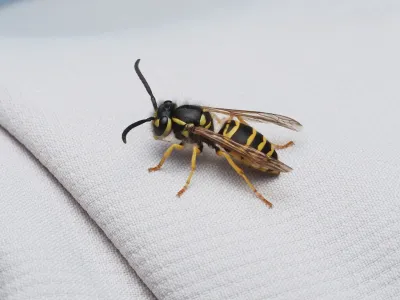
Yellowjackets
Vespula spp.
Aggressive stinging insects that build large colonies and are highly defensive of their nests.
View identification guideCommon Questions about Wasps
How dangerous are wasps?
+
Wasp stings are painful and can be deadly for people with allergies. Unlike bees, wasps can sting many times. Disturbing a nest can lead to a group attack. Some wasps release a scent that calls other wasps to join in.
What's the difference between wasps and hornets?
+
Hornets are a type of wasp. True hornets are larger and have more black coloring. In the US, the bald-faced hornet is technically a yellowjacket despite its name. European hornets are the only true hornets in North America.
Should I remove wasp nests myself?
+
DIY nest removal can be risky, especially for large nests or yellowjackets that nest in the ground. You may get stung many times. We can remove the full colony and reduce the chance of stings.
When are wasps most aggressive?
+
Wasps become more aggressive in late summer and fall. This is when colonies are largest and food sources decline. They are also more defensive during hot weather and when their nest is disturbed.
Will wasps return to the same spot?
+
Wasps typically do not reuse old nests. However, they may build new nests in the same spot. After removal, we can treat the area to discourage rebuilding.
What attracts wasps to my property?
+
Food sources like outdoor trash, ripe fruit, sugary drinks, and protein attract wasps. They also seek sheltered spots for nesting. Common spots include eaves, wall voids, and underground burrows.
Explore Other Pest Categories
Browse our comprehensive pest library for identification guides and control information.



With five years of hands-on experience in the pest control industry, George Schulz is a registered technician with the Virginia Pest Management Association and a proud third-generation professional in a family business that's been protecting homes for over 57 years.
Find Local Wasp Control Services
We provide professional wasps control throughout Virginia, Maryland, and the DC Metro area.