
There are seven types of wasp nests you’re likely to find around a house in Virginia or Maryland: paper wasp combs, yellowjacket ground and wall nests, bald-faced hornet footballs, European hornet cavity nests, mud dauber tubes, cicada killer burrows, and great black wasp burrows. The quickest way to tell them apart is what the nest is made of (paper, mud, or bare soil) and where it sits.
The second thing most people want to know is whether a nest is still active. Short answer: watch it on a warm afternoon. If nothing flies in or out for 10 to 15 minutes, it’s probably empty. I walk through the full check further down.
Wasp Nest Types at a Glance
| Nest type | Where you’ll find it | What it looks like | How many wasps (late summer) | Sting risk |
|---|---|---|---|---|
| Paper wasp | Eaves, porch ceilings, deck railings, shutters | Open grey comb on a stalk, cells visible | A few dozen | Moderate |
| Yellowjacket | Ground holes, wall voids, under shrubs | Hidden; you see a hole with steady traffic | Several hundred to thousands | High |
| Bald-faced hornet | Trees, shrubs, sometimes eaves | Grey paper football, one hole near the bottom | About 100 to 400 | High |
| European hornet | Hollow trees, attics, sheds, wall voids | Brown paper nest inside a cavity | 300 to 500, sometimes 1,000 | Moderate |
| Mud dauber | Walls, porch ceilings, garages, attics | Mud tubes or lumps | One female per nest | Low |
| Cicada killer | Bare, sunny soil, lawn edges | Finger-sized hole with a U-shaped dirt mound | One female per burrow | Low |
| Great black wasp | Loose soil, sheltered garden spots | Small hole in the ground | One female per burrow | Low |
Common Types of Wasp Nests
Paper Wasp Nests (Open Umbrella Comb)
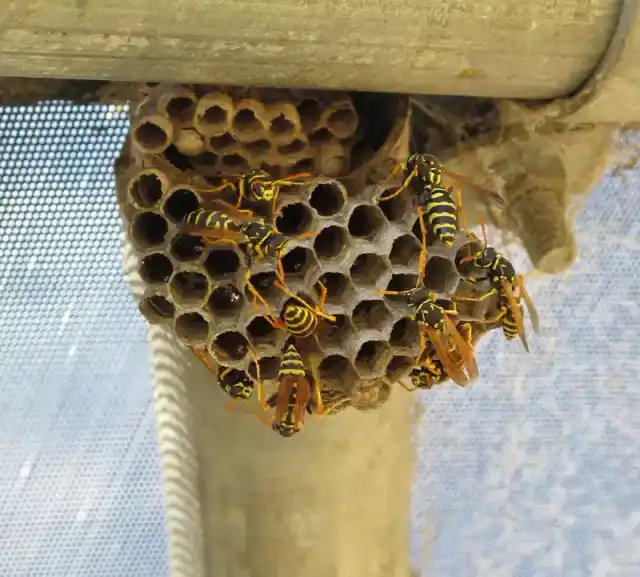
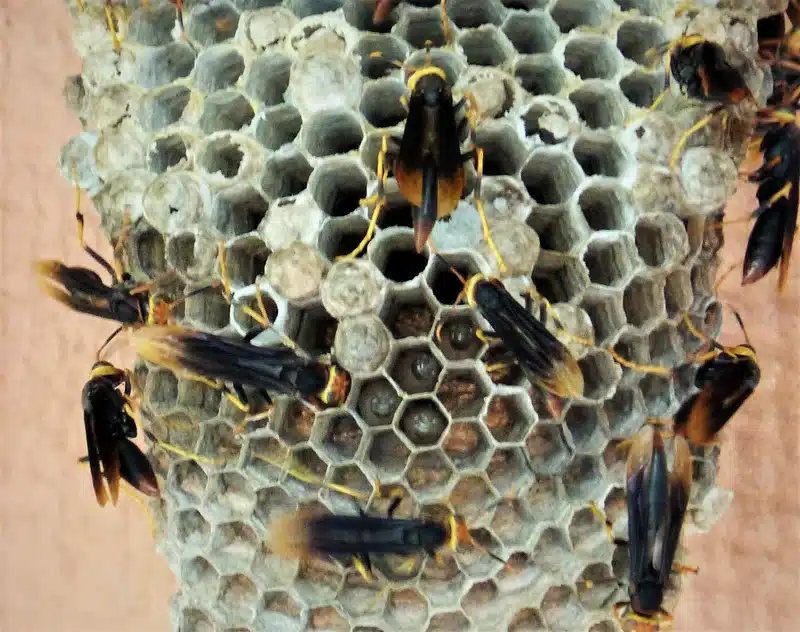
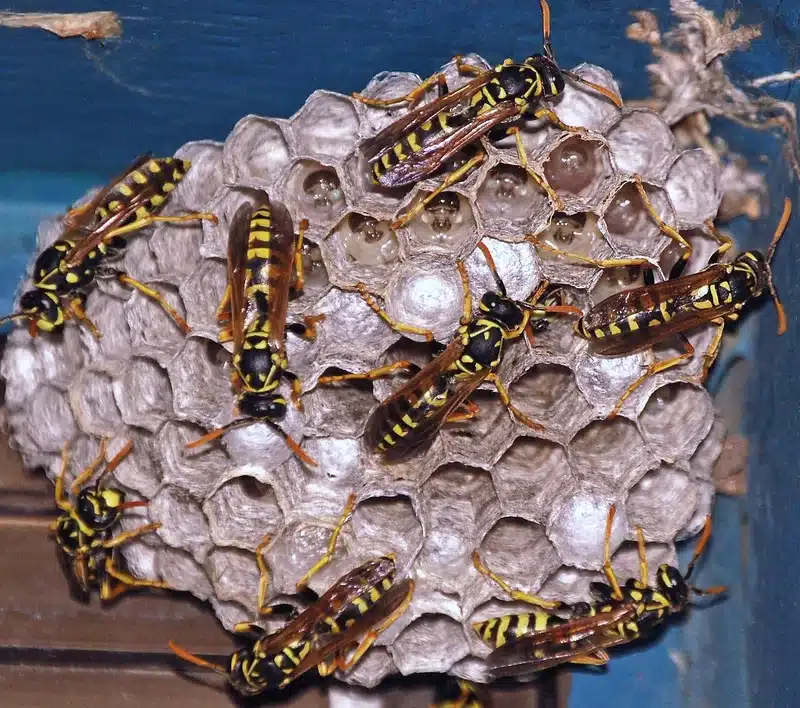
Paper wasps build an open, grey comb that hangs from a single stalk, like an upside-down umbrella. You can see the six-sided cells because there’s no outer paper shell. According to NC State Extension, they put them under eaves, overhangs, window sills, awnings, and deck railings, and a nest usually tops out around 6 to 8 inches across with several dozen wasps.
These are the nests I see most, along with yellowjackets and mud daubers. They also get mistaken for yellowjackets more than anything else. If you can see the cells, it’s not a yellowjacket nest. For a side-by-side, see our yellow jacket nest vs paper wasp nest guide.
Yellowjacket Nests (Ground and Wall Voids)
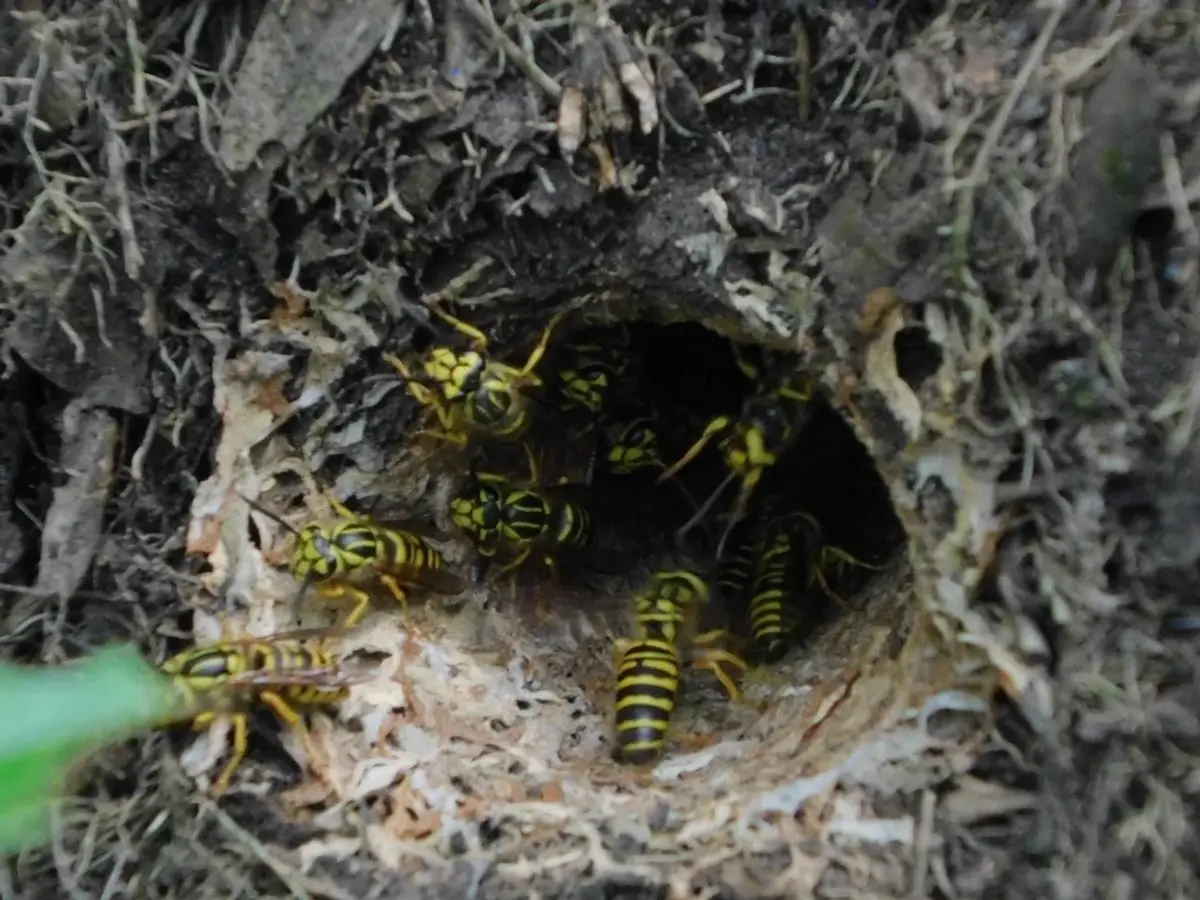
Yellowjackets wrap their comb in layers of tan paper and hide it in old rodent burrows, under shrubs, or inside wall voids. You almost never see the nest itself. What you see is a steady line of wasps going into one hole. The University of Maryland Extension notes that large nests can hold thousands of workers at their peak.
A nest inside a wall is its own problem, because the wrong treatment can push them into the living space. Our guide to a wasp nest in a wall covers that case.
Bald-Faced Hornet Nests (Aerial Football)
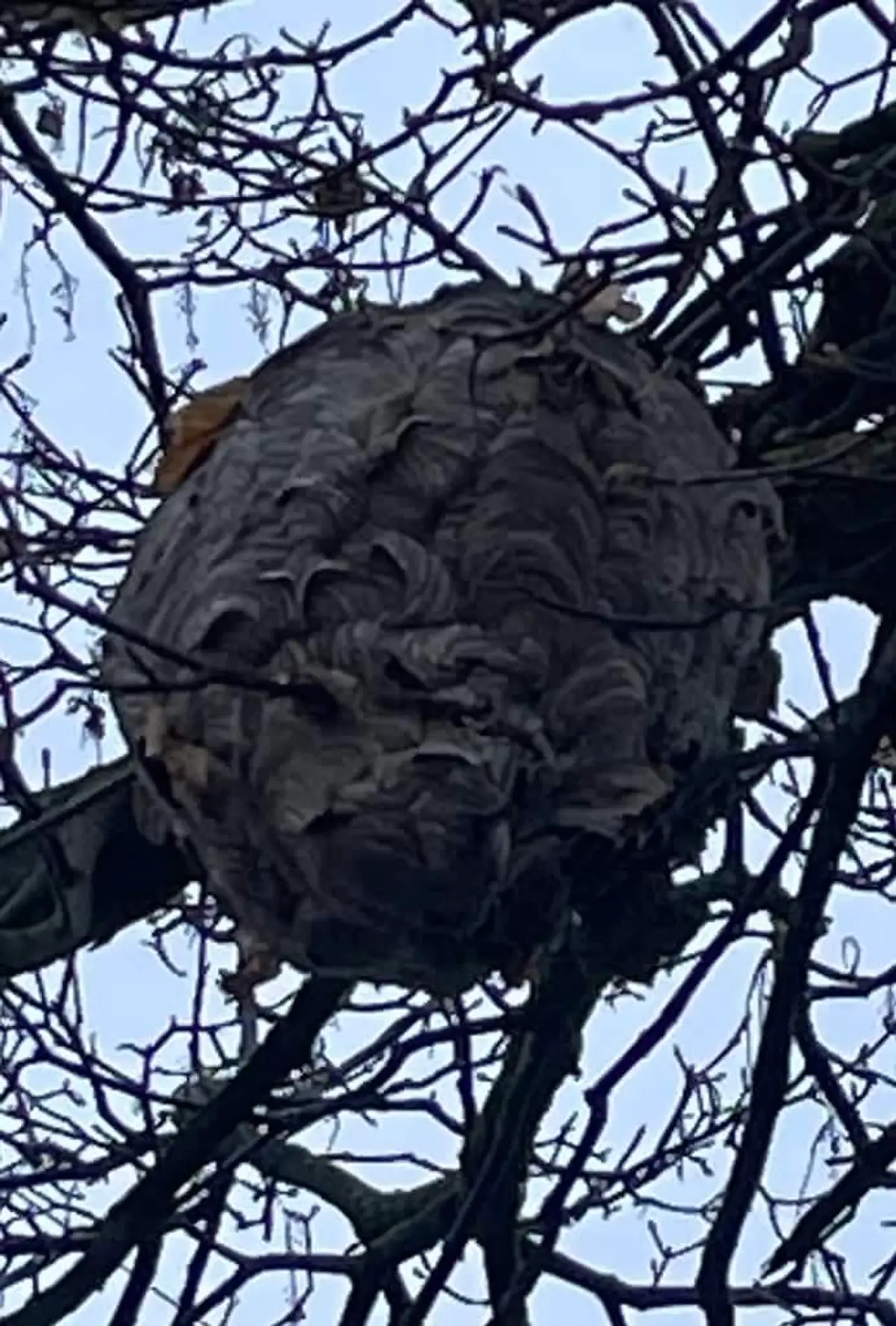
Bald-faced hornets build the big grey paper footballs you see in trees and shrubs. The comb is fully wrapped in paper with one entrance hole near the bottom. Penn State Extension says these nests can reach 24 inches tall and hold 100 to 400 workers.
Daren, one of our technicians, put it simply. A hornet nest 40 feet up in a tree “can stay there. It’s not bothering anybody.” The ones that need treating are the nests close to the house, near a door, or low enough that someone mowing will bump the shrub.
European Hornet Nests (Tree and Wall Cavities)
European hornets build brown paper nests inside cavities: hollow trees, sheds, attics, and wall voids. NC State Extension puts a fall colony at 300 to 500 workers, sometimes up to 1,000. They’re the one hornet you’ll find inside a house, often near an attic vent or a gap in the soffit. They also fly at night and bump into lit windows. Our post on the European hornet nest has more photos.
Mud Dauber Nests (Mud Tubes on Walls)
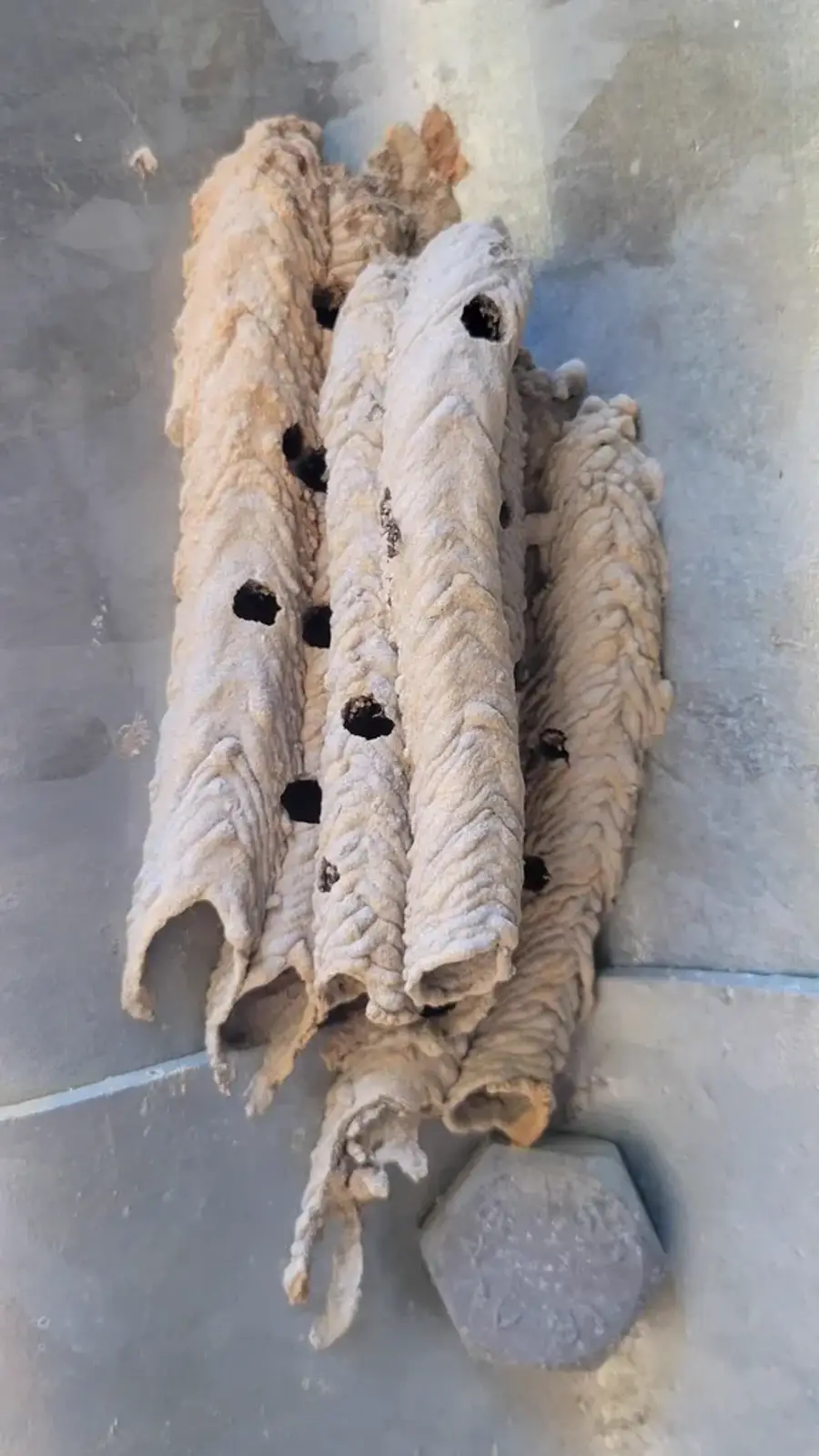
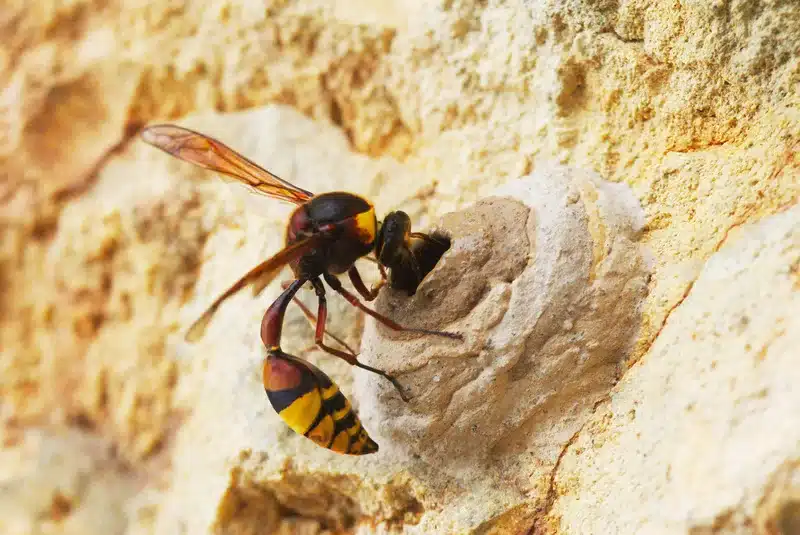
Mud daubers build mud tubes or lumps on walls, under porch ceilings, and in garages. Each female works alone and packs her cells with paralyzed spiders for her young. They are not defensive, and the Utah State University Extension notes that empty tubes can simply be scraped off. Small round holes in the mud mean the young wasps have already chewed their way out.
Cicada Killer Nests (Soil Burrows)
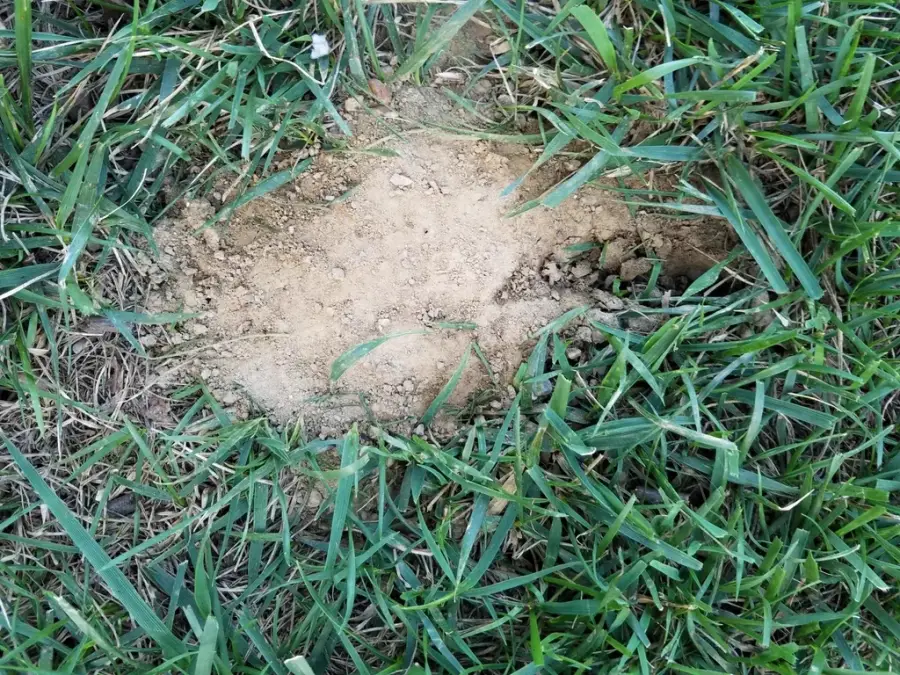
Female cicada killers dig a burrow about an inch wide in bare, sandy soil and leave a U-shaped mound of dirt at the entrance. They hunt cicadas for their young and rarely sting people. The burrows often cluster in sunny lawns (see the Smithsonian Institution). NC State Extension adds that if you have them this year, you’ll likely have them again next year, because the young overwinter in the same tunnels.
Great Black Wasp Nests (Soil Burrows)
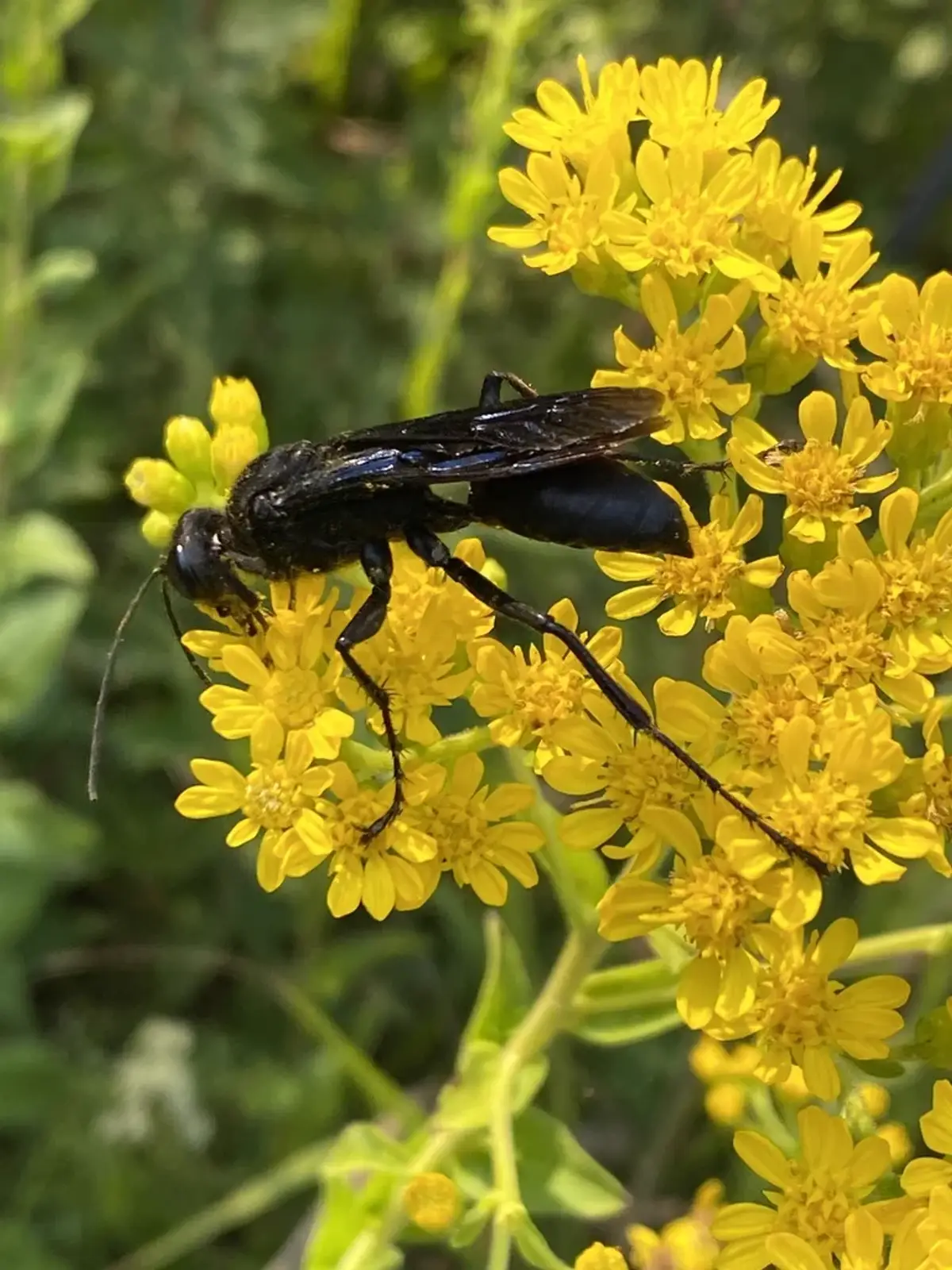
If you searched for “great black wasp nest” pictures, there isn’t much of a nest to see. Great black wasps are large, shiny blue-black solitary wasps. The female digs a burrow in soft, loose soil, usually in a sheltered spot, and stocks it with katydids for her young. The University of Michigan insect collection describes a slanted burrow with several cells and 2 to 6 katydids in each one. From the surface, you’ll just see a small hole. They are not aggressive, and nesting ends on its own by fall.
Seasonal Activity and Aggression
Queens start new nests in spring. In my experience, nests are very common in spring, and again at the end of summer in August, when they’re at their most aggressive. Nests grow fast through June and July as workers hatch. By late summer the colony is at its biggest and most defensive. After the first hard frost the workers die, and only the new queens survive the winter.
How to Tell If a Wasp Nest Is Empty
A nest is probably empty when you watch it on a warm, sunny afternoon for 10 to 15 minutes and see no wasps flying in or out, and none walking on the outside. Watch from a few feet back and don’t touch it. Then check it against the signs below.
Step 1: Check the Calendar
Season tells you most of what you need. A papery nest you find after the leaves drop in November is almost always dead. One you find in July is almost always active. Colonies here run from spring to the first hard frost.
According to the University of Maryland Extension, social wasp colonies only last one year and die off each winter. Only a handful of fertilized queens survive to start new nests in spring, and old nests are not reused. NC State Extension says the same for paper wasps, yellowjackets, and European hornets.
Step 2: Watch for Traffic at the Right Time
Do the watching during the warm part of the day, when foragers are out. At dusk most of the colony is already inside, so a quiet nest at dusk doesn’t prove anything. For a ground or wall nest, watch the hole, not the area around it. One wasp landing on a nest isn’t a colony; a steady stream of them is.
Step 3: Look at the Nest Itself
- Paper wasp comb: Look into the open cells from a few feet back. White larvae or cells capped with white silk mean it’s alive. Empty, open cells and faded grey paper mean it’s done.
- Hornet or yellowjacket paper nest: A live nest has a clean, intact shell. An empty one starts to tear, sag, and fall apart over the winter.
- Mud dauber tubes: Small round holes in the mud mean the adults have left.
- Ground nests: No traffic at the hole on a warm afternoon, and no fresh dirt kicked out around it.
How to Tell If a Hornet’s Nest Is Empty
Hornet nests are the easiest to judge because you can see them. A grey football still hanging after the leaves come down is almost always empty. The workers die by the first hard frost, and Penn State Extension notes only the new queens leave to overwinter. If you see holes or tears in the paper and no hornets at the entrance on a warm day, the colony is gone. In late summer, assume it’s active until you’ve watched it.
Active vs. Inactive Wasp Nest: Side by Side
| Sign | Active nest | Inactive (empty) nest |
|---|---|---|
| Traffic | Wasps flying in and out every few seconds | None over 10 to 15 minutes on a warm day |
| Surface | Wasps walking on the comb or shell | Bare surface |
| Cells (open combs) | White larvae or white caps | Empty, open cells |
| Paper | Fresh, intact, still growing | Faded, torn, sagging |
| Season | Spring through early fall | After the first hard frost |
| Sound | Buzzing from inside a wall or the ground | Silent |
Do Wasps Come Back to an Old Nest?
Not to the old nest itself. But a good spot tends to get used again, because next spring’s queens look for the same kind of shelter. So knock an empty nest down and seal the gap it was built in, especially if it was under an eave by a door.
On one yellowjacket job I helped with, there was a ground nest in an HOA, and the residents were worried about getting stung. We treated the nest at intervals, then came back a few days later to dig up the dead nest. That way we knew it was actually empty and nothing had moved back in.
Health Risks and Allergies from Wasp Stings
Most stings mean a few days of pain and swelling. A few people react much worse, which is why an active nest by the back door matters more in some homes than others.
Tools and Protective Gear
Our technicians wear protective suits, gloves, and face shields on active nests. They use long-reach poles, insecticide dust for wall and ground voids, and sprayers for exposed nests.

If you do take down an empty nest yourself, the right gear still matters.
DIY Removal for Empty Nests
Once you’re sure a nest is empty, knock it down with a broom or long stick. Slide it into a bag, tie it shut, and put it in the trash. Scrape off any paper left where it was attached, and seal the gap or crack behind it if there is one.
Professional Wasp Nest Removal
When a nest is active, high up, or hidden in a wall or the ground, that’s the time to call a pro.
We start by figuring out which wasp it is, because that changes the treatment. Open nests like paper wasps can usually be treated and knocked down. Wall and ground nests get dusted at the entrance. Wasps, hornets, and yellowjackets are covered on our home pest plans, which come with free callbacks between visits.
Prevention Tips: How to Keep Wasps Away
Seal gaps in soffits and siding, and screen attic vents. Re-seal around utility lines where they enter the house; that’s a common way yellowjackets get into a wall. Keep trash cans closed and pick up fallen fruit. Check your eaves and porch ceiling in April and May, when new paper wasp nests are still the size of a golf ball.
To deter cicada killers, overseed bare soil and water the lawn. For mud daubers, scrape off old tubes each year.
When to Call a Pest Control Expert
Call us if an active nest is near a door, walkway, deck, or play area. Also call if it’s in a wall or the ground, or too high to reach from the ground. Always call if anyone in your home has a venom allergy. Penn State Extension suggests nests within about 10 feet of an entrance are the ones worth treating. A nest far out in the yard can often be left until frost. We serve Arlington, Alexandria, Bethesda, Potomac, and Ashburn.
Better Termite and Pest Control’s Expert Insights
Over three generations, our family built an in-house research team to vet every product we use. We removed nine high-risk pesticides and chose alternatives like Essentria and Alpine.
If you’re looking at a nest right now and can’t tell what it is, send us a photo or give us a call.
Related Guides
If you’re not sure what’s nesting on your house, or whether it’s still active, call us at 703-683-2000 or email info@bettertermite.com.