Rove Beetles Identification Guide
Staphylinidae
Rove beetles are slim, fast-moving beetles with very short wing covers that leave most of the abdomen bare. They live in damp soil and leaf litter, and they sometimes wander into basements, where people often mistake them for earwigs.
Taxonomy
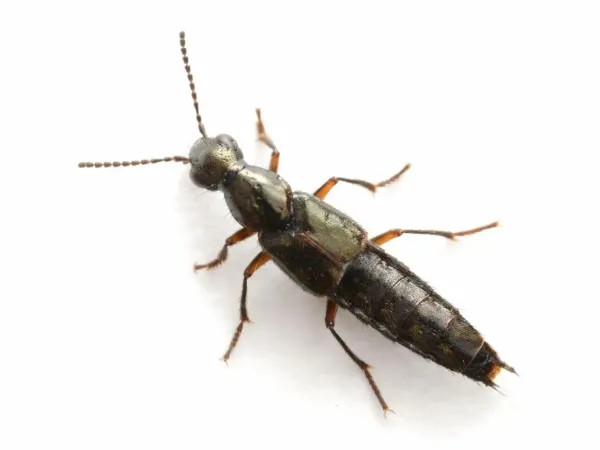
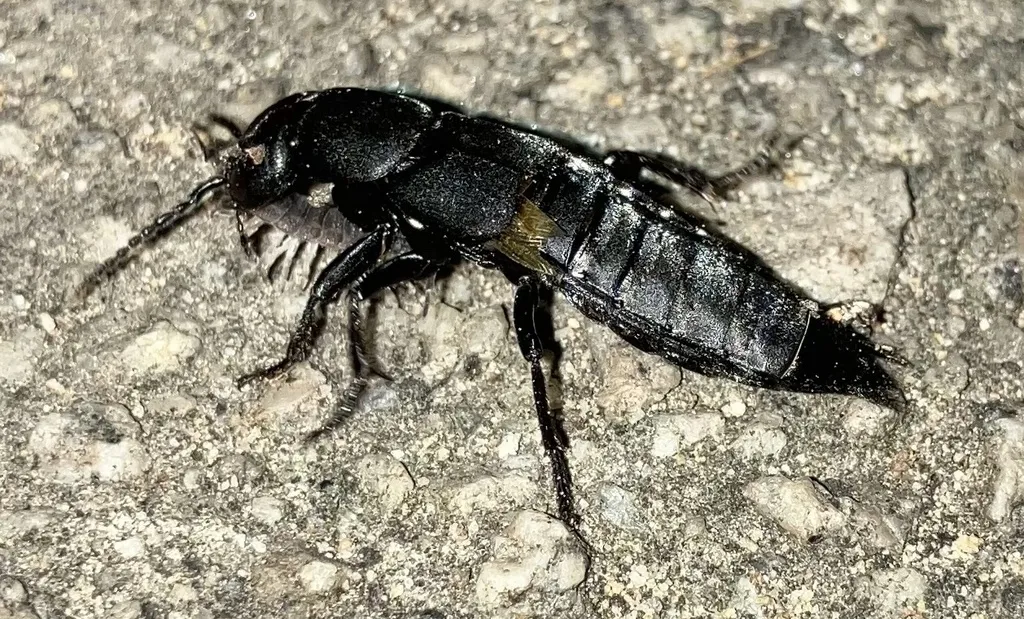
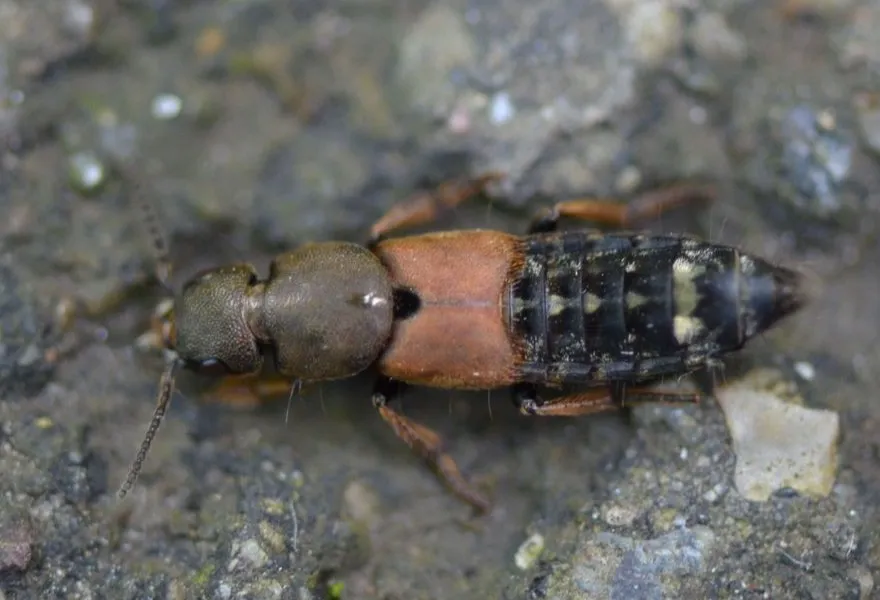
Rove Beetles Coloration
Common color patterns to help identify rove beetles
Rove Beetles
Seasonal Activity
When rove beetles are most active throughout the year

Where Rove Beetles Are Found
Hover over states to see their names. Green regions indicate where rove beetles have been reported.
Rove Beetle Identification Guide
Physical Characteristics
Rove beetles make up the family Staphylinidae. It is the largest beetle family in the United States and Canada. Scientists know of more than 63,000 species worldwide (UF/IFAS). Some are smaller than a grain of rice. Others are over an inch long. The ones people notice are often 1/8 to 1 inch (about 3 to 25 mm).
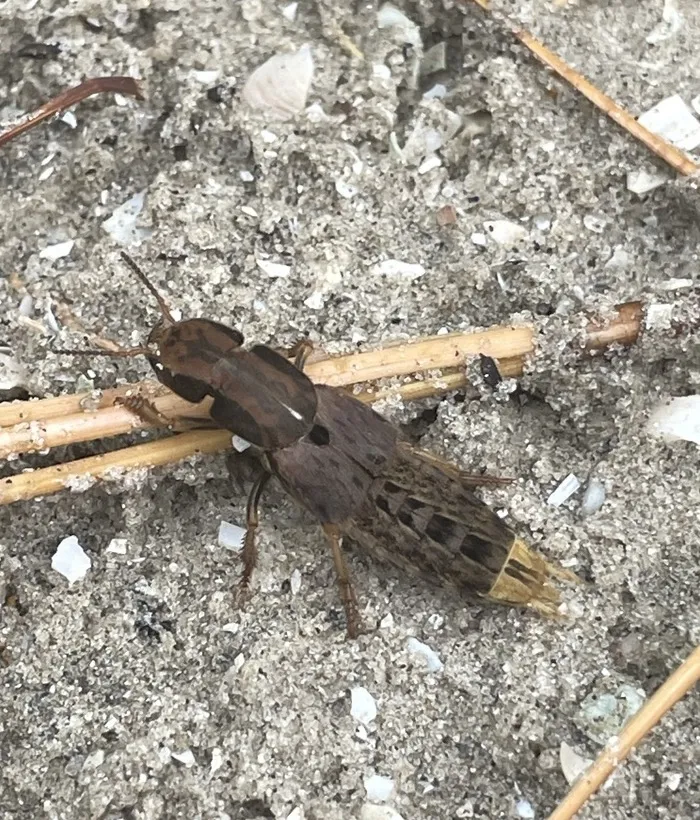
Short wing covers are the key feature. On most beetles, the hard wing covers (elytra) cover the whole belly end. On rove beetles, they cover only the front part. Several bendy body segments stay bare. This gives rove beetles a long, “unfinished” look.
Body shape is long and slim, with nearly straight sides. The head is often as wide as the body. It has strong, curved jaws.
Color is usually black, brown, or dark reddish-brown. Some species have orange, gold, or gray bands. Paederus species are orange and black.
Behavior clue: when bothered, many rove beetles run fast and curl the tail end up like a scorpion. They cannot sting. It is a bluff.
Wings: most rove beetles have full flight wings folded under the short covers. Many fly well.
How to Tell Rove Beetles From Look-Alikes
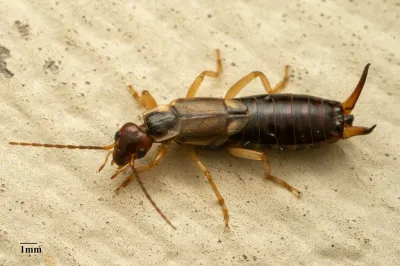
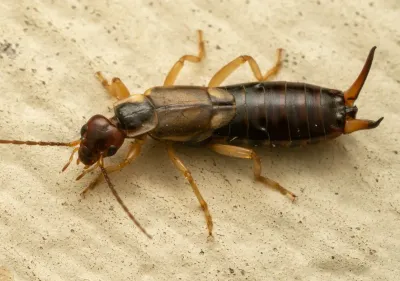
- Earwigs: Earwigs have a pair of curved pincers at the tail end. Rove beetles have none. Both like damp basements, so check the tip of the abdomen.
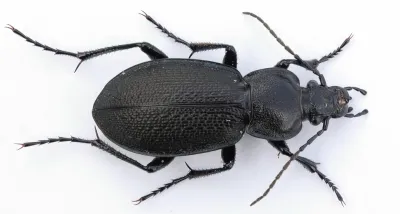
- Ground beetles: Ground beetles have long wing covers that reach the end of the abdomen, often with lengthwise grooves. Rove beetles show bare abdominal segments.
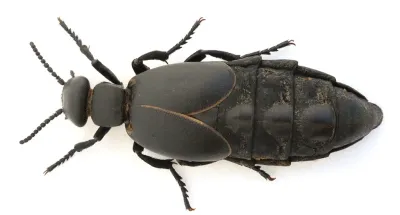
- Blister beetles: Blister beetles have soft, full-length wing covers and a narrow “neck.” Like Paederus rove beetles, they can blister skin, so do not crush either one.
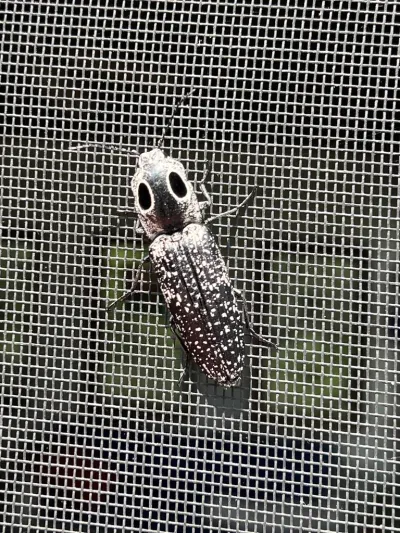
- Click beetles: Click beetles have long, hard wing covers and snap into the air when flipped over. Rove beetles cannot click.
Common Species
- Hairy rove beetle (Creophilus maxillosus): Black with a band of gray-yellow hair across the wing covers and abdomen, about 1/2 to 1 inch. It hunts fly maggots at carcasses and dung.
- Brown rove beetle (Platydracus maculosus): Mottled brown and one of the largest rove beetles in eastern North America, often close to an inch long.
- Gold-and-brown rove beetle (Ontholestes cingulatus): Brown with golden hairs near the tail tip. It is common on fungi and decaying matter.
- Paederus rove beetles (Paederus species): Small, about 1/4 to 1/3 inch, with bold orange and black bands. Their body fluid contains a blistering toxin.
- Devil’s coach horse (Ocypus olens): A large black European species, up to about 1 1/4 inches, now established in parts of western North America. It raises its tail and may bite if handled.
- Dalotia coriaria: A tiny brown species sold to greenhouses as a natural enemy of fungus gnats and thrips.
Rove Beetle Behavior and Biology
Habitat
Rove beetles live wherever it is damp and there is decay. Look for them in:
- Leaf litter, mulch, compost piles, and moist soil
- Under rocks, logs, and boards
- Rotting fungi, dung, and animal carcasses
- Stream banks, lake shores, and beach wrack
- Potting soil in houseplants and greenhouses
Indoors, they turn up in basements, crawl spaces, laundry rooms, and near floor drains. Most arrive by accident. They crawl under doors and through gaps in the foundation. Some fly to porch lights at night. Heavy rain and dry spells both push more of them inside.
A sudden crowd of rove beetles inside can point to a hidden source. It might be soggy debris in a crawl space or an overwatered planter. It might also be a dead animal in a wall, where fly maggots give them food.
Diet
Most rove beetles are predators. Adults and larvae hunt mites, springtails, fly maggots, fungus gnat larvae, aphids, and other small soil animals. Others feed on fungi or decaying matter. They do not eat wood, fabric, or stored food.
Life Cycle
Rove beetles go through complete metamorphosis: egg, larva, pupa, and adult.
- Eggs are laid in soil, leaf litter, or decaying material.
- Larvae are slim and active, with six legs. Most species hunt as larvae too.
- Pupae form in a small cell in the soil.
- Adults often live for months, and many species spend the winter as adults under bark, logs, or litter.
Most species in temperate areas produce one or two generations a year.
Health Concerns
Rove beetles do not sting or spread disease. Large ones can nip if you pick them up. The main health issue is a skin rash from Paederus beetles. They carry a toxin called pederin. If one is crushed on the skin, a red, blistering rash shows up 12 to 48 hours later. The rash is often shaped like a line. A few Paederus species live in North America. Most outbreaks happen in warmer parts of Africa, Asia, and South America.
If one lands on you, blow or brush it off. If you crush one, wash the skin with soap and water right away and avoid touching your eyes. See a doctor for a painful or spreading rash, or for any eye contact. This is general information, not medical advice. Always ask a doctor about skin or eye reactions.
How to Control Rove Beetles
Rove beetles do not damage homes. Control aims to keep them out and dry up the damp spots they need. A professional treatment for rove beetles and similar invaders usually follows these steps.
- Inspection: Find where they are coming from. Check basement and crawl space moisture, door sweeps, foundation cracks, window wells, and houseplant soil. Rule out a dead animal or rotting debris if numbers climb suddenly.
- Perimeter treatment: An EPA-registered product is applied around the foundation, doors, and other entry points. It stops many beetles before they get inside. Granules in mulch beds can cut the numbers living next to the house.
- Indoor crack-and-crevice treatment: Where beetles keep turning up, a light treatment along baseboards and gaps near floor drains can help. It works best with moisture fixes.
- Moisture control: Run a dehumidifier in damp basements, fix leaks, clean gutters, and grade soil so water drains away from the foundation.
- Exclusion: Seal gaps around doors, windows, pipes, and utility lines. Install door sweeps and repair screens.
- Habitat reduction: Keep mulch, leaf litter, firewood, and compost several feet from the foundation. Let houseplant soil dry between waterings.
- Lighting: Use yellow “bug” bulbs or warm LEDs by entry doors, and close blinds at night.
- Removal: Vacuum or sweep up beetles indoors. Do not crush them with bare hands.
Treatment alone will not hold if the basement stays damp. Moisture control and sealing gaps are what keep the numbers down over time.
The same damp conditions often bring in earwigs, millipedes, and springtails. If you are seeing a mix of these moisture pests in the Northern Virginia, DC, or Maryland area, our home pest control plans cover those common invaders.
References
- Rove Beetles (Staphylinidae) from Missouri Department of Conservation
- Family Staphylinidae from NC State University General Entomology
- Rove Beetle Look-a-likes from NC State Extension, Biological Control Information Center
- Rove Beetles from Washington State University PestSense
- Rove Beetles of the World, Staphylinidae from University of Florida IFAS Extension
- Biological Control of Fungus Gnats from UConn Extension
- Paederus Beetles: The Agent of Human Dermatitis from National Library of Medicine (PubMed Central)
Other Other Pests
Explore other species in the other pests family
Commonly Confused With
Rove Beetles are often mistaken for these similar pests
Where Rove Beetles Are Found
Hover over states to see their names. Green regions indicate where rove beetles have been reported.
Common Questions about Rove Beetles
Are rove beetles harmful to people?
+
Most rove beetles are harmless. They do not sting, spread disease, or damage homes. A few large species can give a pinch with their jaws if you pick them up. Beetles in the genus Paederus contain a toxin that can cause a blistering skin rash if one is crushed against the skin, so brush them off instead of swatting them.
Why do I have rove beetles in my basement?
+
Rove beetles live in damp soil, mulch, leaf litter, and decaying plant or animal matter. They come inside through gaps around doors, windows, and the foundation, often when it is very wet or very dry outside. Damp basements and crawl spaces suit them, and they are drawn to lights at night.
What is the difference between a rove beetle and an earwig?
+
Both are long, slim, and fast. The quickest check is the tail end. Earwigs have a pair of curved pincers at the tip of the abdomen. Rove beetles have no pincers, though many species curl the tip of the abdomen upward when disturbed, which can look similar at a glance.
Can rove beetles fly?
+
Yes. Most rove beetles have full-size flight wings folded tightly under their short wing covers, and many fly well, especially on warm evenings. Some species have reduced wings and cannot fly.
Do rove beetles damage anything in the house?
+
No. Rove beetles do not chew wood, fabric, wiring, or stored food. They are predators and scavengers. Indoors they are a nuisance only, and they usually die within days because a dry home lacks the moisture and prey they need.
What do rove beetles eat?
+
Many rove beetles hunt mites, springtails, fly maggots, fungus gnat larvae, and other small pests in soil and compost. One species, Dalotia coriaria, is raised and sold to greenhouses to help control fungus gnats and thrips.
How do I get rid of rove beetles in my house?
+
Vacuum or sweep up the beetles you see. Then fix the conditions that draw them in: run a dehumidifier in damp basements, seal gaps around doors and the foundation, pull mulch and leaf litter back from the house, and swap bright outdoor bulbs for yellow or LED lights. If they keep showing up, a perimeter treatment around the foundation and entry points can cut down how many get inside.

With five years of hands-on experience in the pest control industry, George Schulz is a registered technician with the Virginia Pest Management Association and a proud third-generation professional in a family business that's been protecting homes for over 58 years. He manages and trains a team of service pros while also leading internal research efforts—recently spearheading a deep-dive review of thousands of documents on pest control materials to hand-pick the most kid and pet friendly, most effective solutions tailored specifically for homes in the DC metro area.
Local Other Pests Help
Dealing with other pests at home? Our licensed technicians provide pest control across Northern Virginia and Maryland.
