Convergent Lady Beetle Identification Guide
Hippodamia convergens
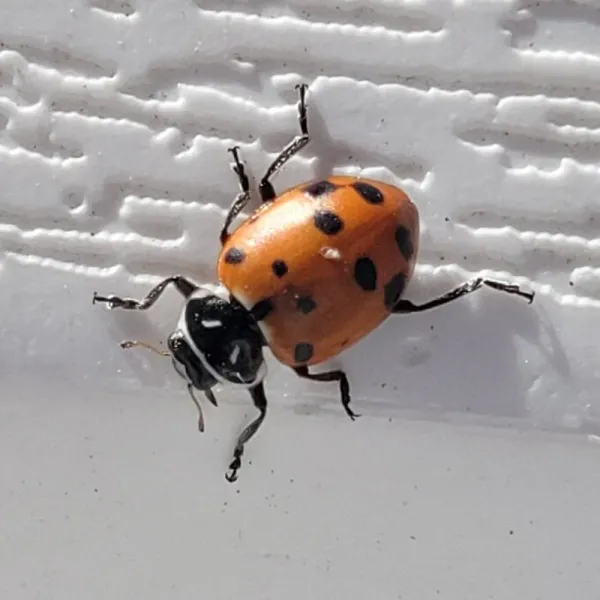
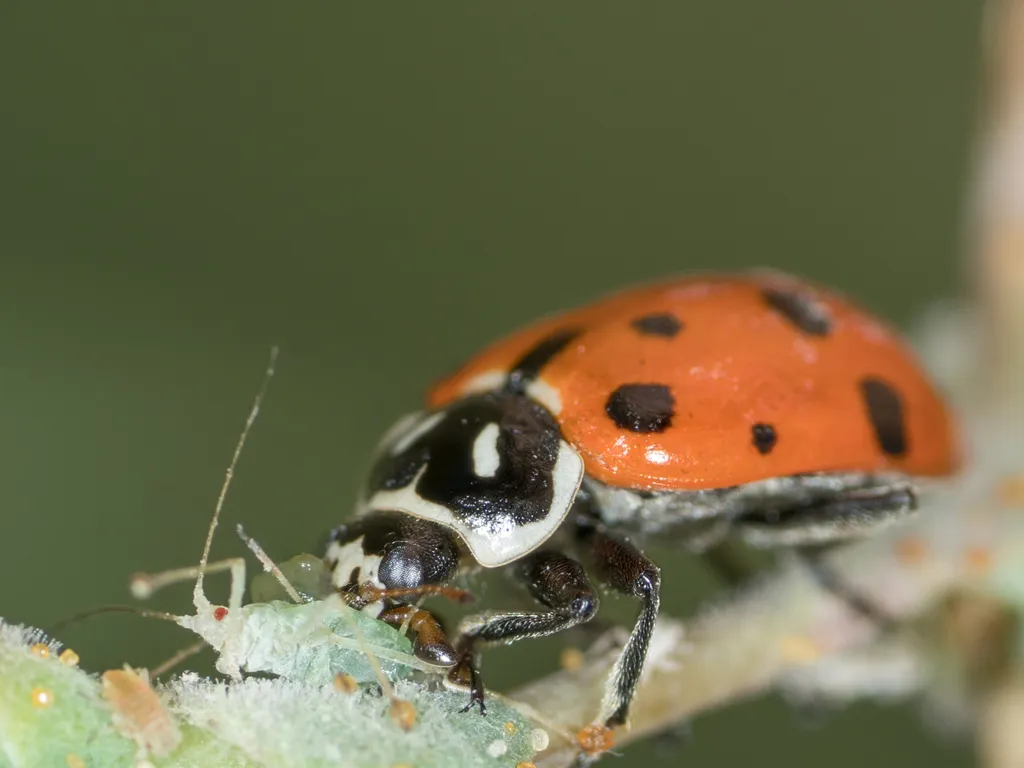
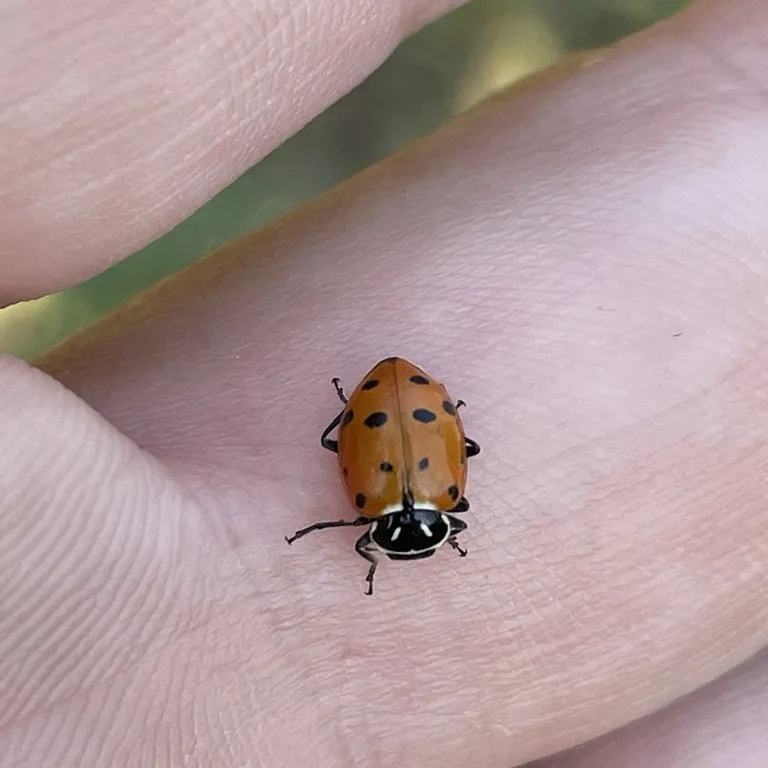
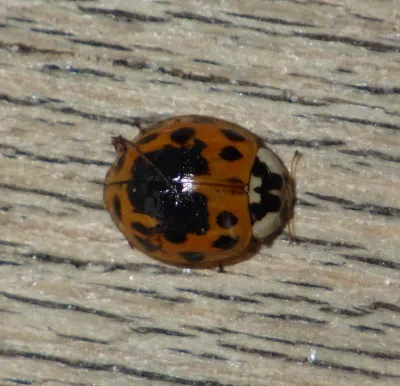
The convergent lady beetle is a native, orange ladybug with up to 13 black spots and two white lines behind its head that slant toward each other. It hunts aphids and rarely comes indoors in large numbers.
Taxonomy
Convergent Lady Beetle Coloration
Common color patterns to help identify convergent lady beetle
Convergent Lady Beetle
Seasonal Activity
When convergent lady beetle are most active throughout the year

Where Convergent Lady Beetle Are Found
Hover over states to see their names. Green regions indicate where convergent lady beetle have been reported.
Convergent Lady Beetle Identification Guide
The convergent lady beetle (Hippodamia convergens) is one of the most common native ladybugs in North America. It is also the ladybug most often sold in bags and tubs for garden aphid control. Its name comes from two short white lines behind its head that slant toward each other, or “converge.”
Most people run into it in gardens and fields. People often mix it up with the Asian lady beetle, the species that swarms houses in the fall. Telling the two apart shows you if you have a real problem.
Physical Characteristics
Adults are 4 to 7 mm long, or about 1/6 to 1/4 inch. They are a little slimmer and more oval than most ladybugs.
What to look for:
- Two slanted white lines on a black pronotum (the plate behind the head). The pronotum also has a thin white border. This is the best field mark.
- Orange to red wing covers, usually with 12 or 13 small black spots. Spot count varies, and a few beetles have almost no spots.
- A black head and black legs.
- A shell that is domed on top and flat underneath.
Convergent vs. Asian lady beetle at a glance:
| Feature | Convergent lady beetle | Asian lady beetle |
|---|---|---|
| Area behind the head | Black, with two slanted white lines and a white border | White or cream, with a black M- or W-shaped mark |
| Spots | Usually 12 or 13, small | 0 to 19 or more |
| Color | Orange to red | Pale yellow to deep red |
| Size | 4 to 7 mm, slim and oval | 5 to 8 mm, rounder |
| Where it spends winter | Mostly outdoors in leaf litter and low plants | Often inside walls, attics, and rooms |
Common Species
Several beetles are easy to confuse with the convergent lady beetle:
- Asian lady beetle (Harmonia axyridis). The main look-alike and the one that invades homes. Check for the M-shaped mark on a pale pronotum.
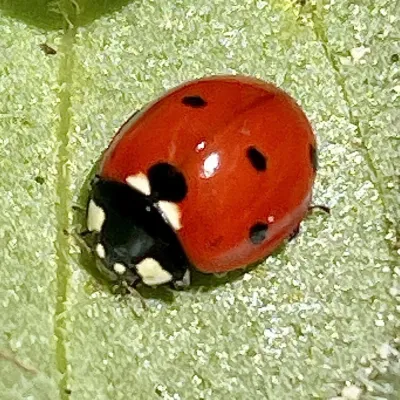
- Seven-spotted lady beetle (Coccinella septempunctata). Larger and rounder, with exactly seven bold spots. Its black pronotum has a white patch on each front corner instead of slanted lines.
- Spotted pink lady beetle (Coleomegilla maculata). Pinkish and longer, with 12 spots. It is common in Mid-Atlantic crop fields.
- Variegated lady beetle (Hippodamia variegata). A close cousin from Europe with a more variable spot pattern.
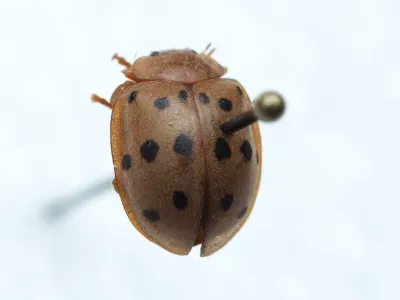
- Mexican bean beetle (Epilachna varivestis). A copper-colored plant eater with 16 spots. It chews bean leaves instead of eating aphids.
Convergent Lady Beetle Behavior and Biology
Habitat and Range
The convergent lady beetle is native to the Americas. It lives in every one of the lower 48 states, across southern Canada, and through Mexico into South America. It is common in Virginia, Maryland, and DC.
You will find it in gardens, meadows, crop fields, and suburban yards. It likes low plants where aphids gather, such as grasses, alfalfa, and wheat.
Diet
- Adults and larvae hunt aphids. One adult can eat about 100 aphids a day.
- They also eat mites, thrips, scale insects, mealybugs, and insect eggs.
- When prey runs low, adults feed on pollen and nectar.
It does not eat plants, wood, fabric, or stored food.
Life Cycle
It has four life stages: egg, larva, pupa, and adult. There are one or two generations a year in most areas, and more where it stays warm.
- Eggs. Females lay several hundred small, yellow, oval eggs in clusters near aphids. The eggs hatch in five to seven days.
- Larvae. The larvae are dark and spiny with orange patches. They look like tiny alligators. They grow through four stages while eating aphids.
- Pupae. The larva attaches to a leaf or stem and forms a pupa. This stage lasts about a week.
- Adults. From larva to adult takes three to six weeks, depending on heat and food. Adults live for about two months during the growing season.
Overwintering and Mass Gatherings
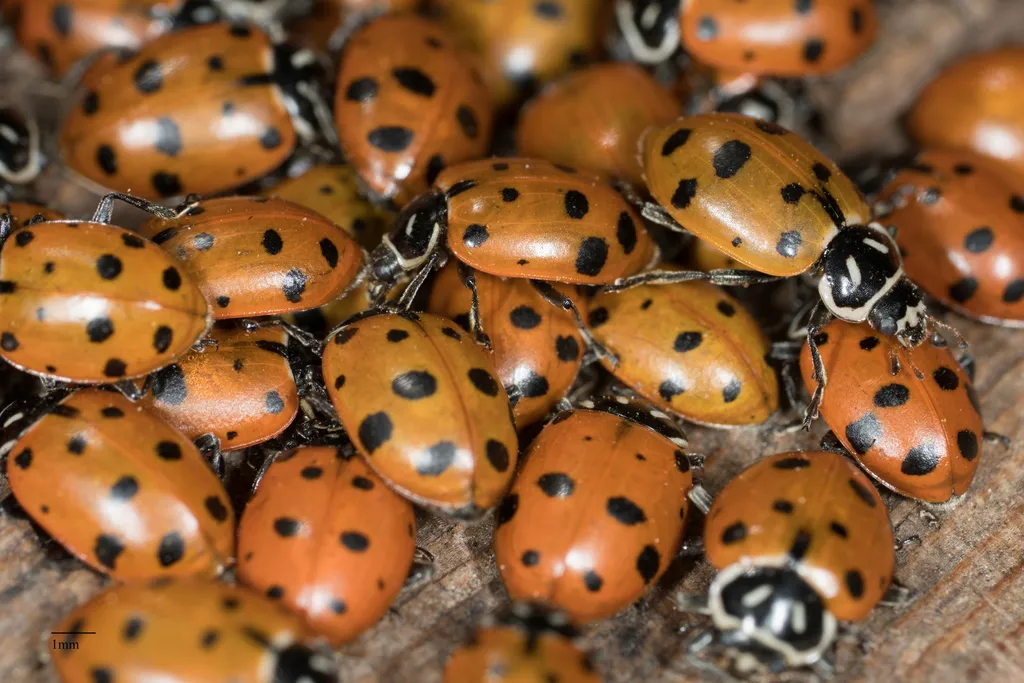
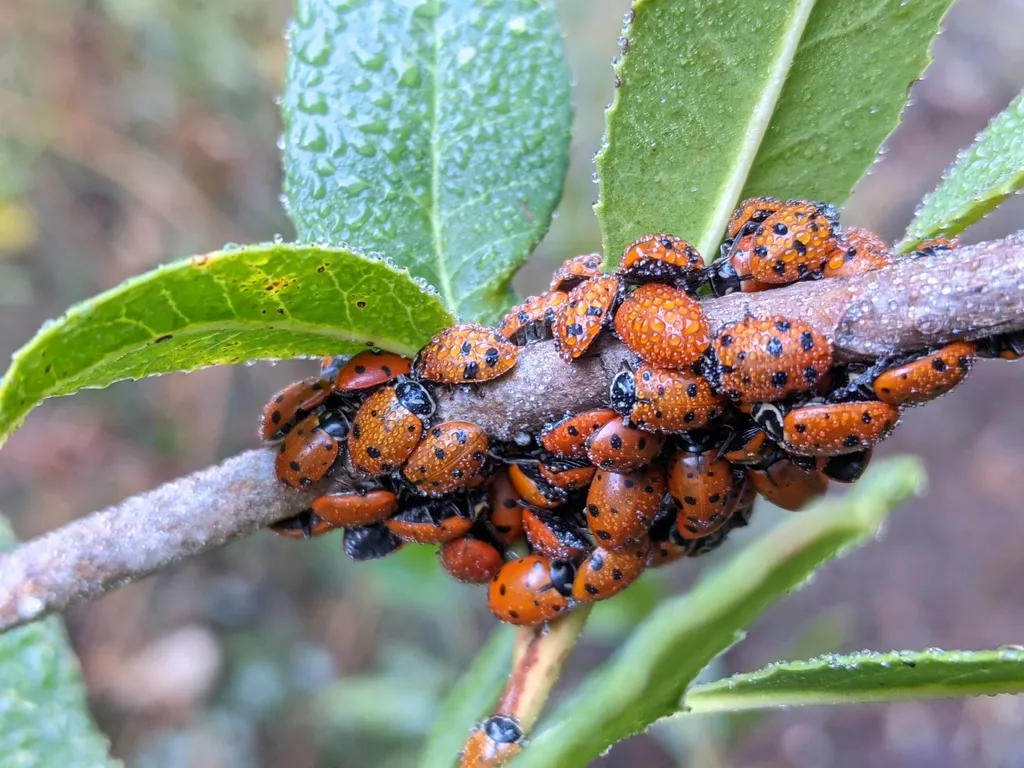
In the West, convergent lady beetles fly up into the mountains and rest in huge groups. These clusters can hold millions of beetles. Companies collect them from these sites and sell them to gardeners. Most purchased beetles fly away within a day or two of release.
In the East, they spend the winter in smaller groups under leaf litter, logs, and ground plants. Now and then a few slip into a home. This is the key difference from the Asian lady beetle, which lands on sunny walls in October and crawls inside by the hundreds.
How We Treat for Convergent Lady Beetles
Convergent lady beetles do not damage homes or spread disease. If lady beetles show up inside, first find out which kind you have. Then find out how they get in.
- Inspection and identification: We check the pronotum to confirm the species. A black pronotum with two slanted white lines means convergent lady beetles. A pale pronotum with an M-shaped mark means Asian lady beetles, which cause most fall invasions. We also look for gaps around windows, doors, siding, utility lines, and the roofline.
- Removal of beetles already inside: Vacuum them with a stocking inside the hose. Do not crush them. Crushed beetles release a yellow fluid that stains and smells.
- Fall exterior treatment: When lady beetles gather on your home every year, we treat them as an overwintering pest through our lady bug control service. Before the weather turns cold, usually in October, we apply dust to exterior voids like weep holes, behind siding, and around windows and doors. We can add a repellent treatment around the outside perimeter.
- Interior treatment when needed: If beetles are already getting in through gaps or wood rot, we treat around window seals, door frames, and baseboards. In severe cases, we may dust wall voids where beetles cluster.
- Exclusion: Sealing gaps is the long-term fix. It also keeps out stink bugs and boxelder bugs.
For a side-by-side guide to the most common home invader, read ladybugs vs. Asian beetles.
References
- Convergent Lady Beetle - UC Statewide IPM Program
- Predatory Beetles: Convergent Lady Beetles - Washington State University HortSense
- Convergent Lady Beetle - Washington State University Small Grains
- Hippodamia convergens - Animal Diversity Web, University of Michigan
- Convergent Lady Beetle - University of Florida EDIS
- Multicolored Asian Lady Beetle - Penn State Extension
Other Other Pests
Explore other species in the other pests family
Commonly Confused With
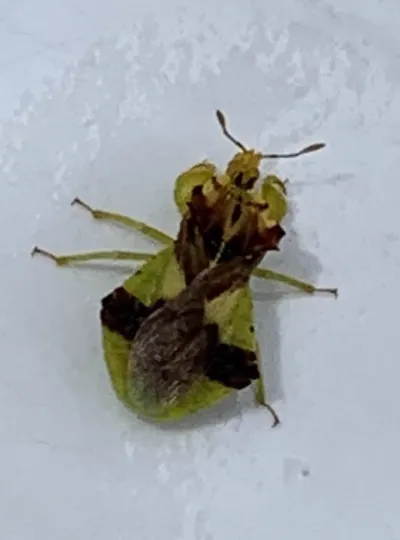
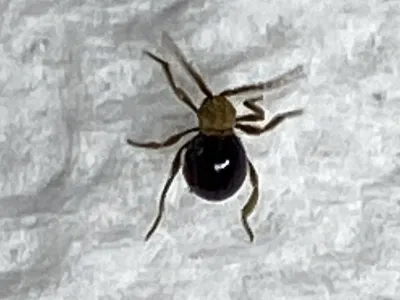
Convergent Lady Beetle are often mistaken for these similar pests
Where Convergent Lady Beetle Are Found
Hover over states to see their names. Green regions indicate where convergent lady beetle have been reported.
Common Questions about Convergent Lady Beetle
How do I identify a convergent lady beetle?
+
Look behind the head. The convergent lady beetle has a black pronotum with a white border and two short white lines that slant toward each other. That is where the name 'convergent' comes from. Its wing covers are orange to red, usually with 12 or 13 small black spots, though some have fewer or none.
What is the difference between a convergent lady beetle and an Asian lady beetle?
+
The Asian lady beetle has a white or cream pronotum with a black M- or W-shaped mark. The convergent lady beetle has a black pronotum with two slanted white lines. Convergent lady beetles are also a bit smaller and slimmer. The Asian lady beetle is the one that crowds onto sunny walls and into homes every fall.
Do convergent lady beetles come inside houses?
+
Not often. Most spend the winter outdoors in groups under leaf litter, logs, and low plants. A few may wander inside through gaps around windows and doors. If you see hundreds of lady beetles on and in your home in October, they are almost always Asian lady beetles.
Do convergent lady beetles bite?
+
They can give a light pinch if one lands on your skin, but it rarely breaks the skin. They do not carry disease. Like other lady beetles, they can release a yellow, bad-smelling fluid when crushed, which can stain fabric.
Are the ladybugs sold at garden centers convergent lady beetles?
+
Usually, yes. Most ladybugs sold for aphid control are convergent lady beetles collected from large groups in the mountains of California. Many fly away within a day or two of release, so store-bought beetles often do not stay where you put them.
Is the convergent lady beetle native to North America?
+
Yes. It is one of the most widespread native lady beetles in North America. It lives from southern Canada through the United States and Mexico and into South America.
What do convergent lady beetle larvae look like?
+
The larvae look like tiny, dark alligators. They are long and flat with spines and orange patches on the back. They grow through four stages while eating aphids, then form a pupa on a leaf or stem.

With five years of hands-on experience in the pest control industry, George Schulz is a registered technician with the Virginia Pest Management Association and a proud third-generation professional in a family business that's been protecting homes for over 58 years. He manages and trains a team of service pros while also leading internal research efforts—recently spearheading a deep-dive review of thousands of documents on pest control materials to hand-pick the most kid and pet friendly, most effective solutions tailored specifically for homes in the DC metro area.
Local Other Pests Help
Dealing with other pests at home? Our licensed technicians provide pest control across Northern Virginia and Maryland.
