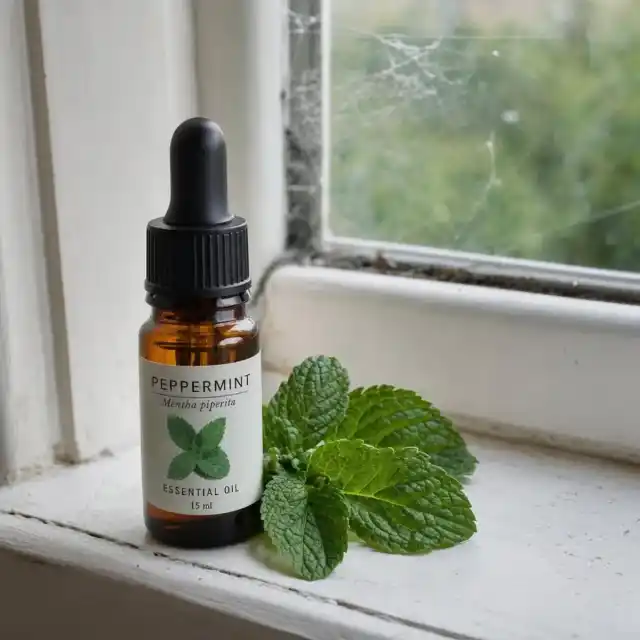

Yes, peppermint oil repels some spiders, but not all of them, and not for long. In the best study we have, mint oil kept two of three spider species away from treated spots. The third species barely noticed. Additionally, the scent fades within days, and it does nothing about the bugs that brought the spiders to your house in the first place.
As a licensed technician in Northern Virginia, I hear about peppermint oil more than any other spider remedy. It smells nice, it’s easy to find and it feels gentler than a spray. It can make a window sill a little less inviting for a while. But if your eaves fill up with webs every few weeks, a peppermint spray won’t keep up with that.
What the Research Says About Peppermint Oil and Spiders
Compared with ants and roaches, spiders have barely been tested with essential oils. However, there is one study that went straight at the peppermint question, and its results are more mixed than most recipe blogs let on.
Mint oil repelled 2 of 3 spider species
In 2018, researchers published a study called “Natural Compounds as Spider Repellents: Fact or Myth?” in the Journal of Economic Entomology. They gave female spiders a simple choice: a spot treated with a natural substance, or an untreated spot. Then they watched where the spiders settled.
They tested three common home remedies on three species:
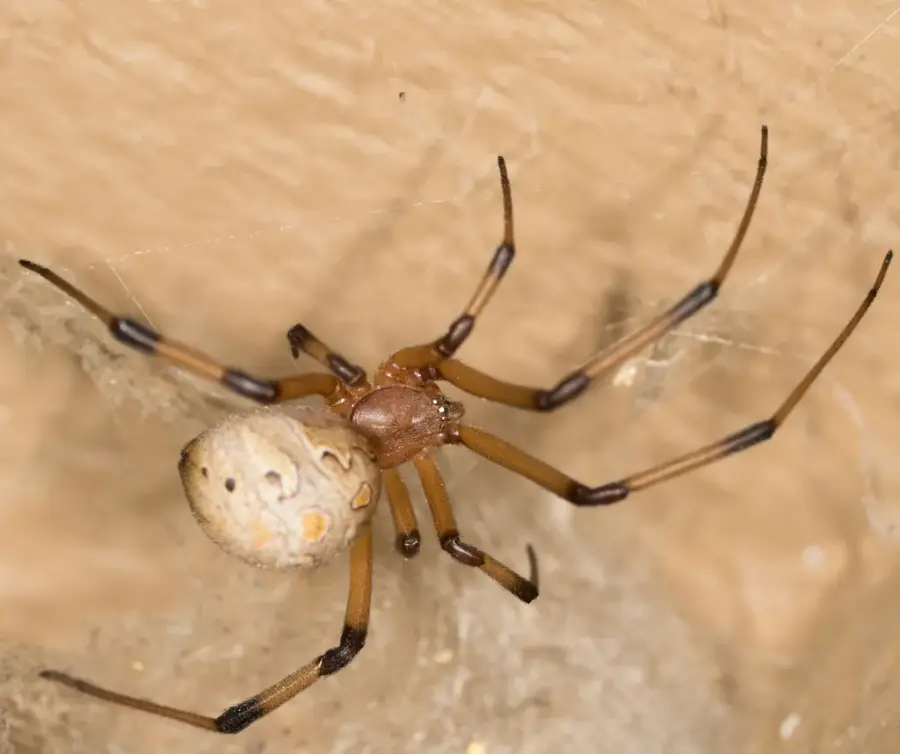
- Mint oil strongly repelled the brown widow and the European garden spider.
- Chestnuts also repelled those two species.
- Lemon oil had no effect on any of the three spiders.
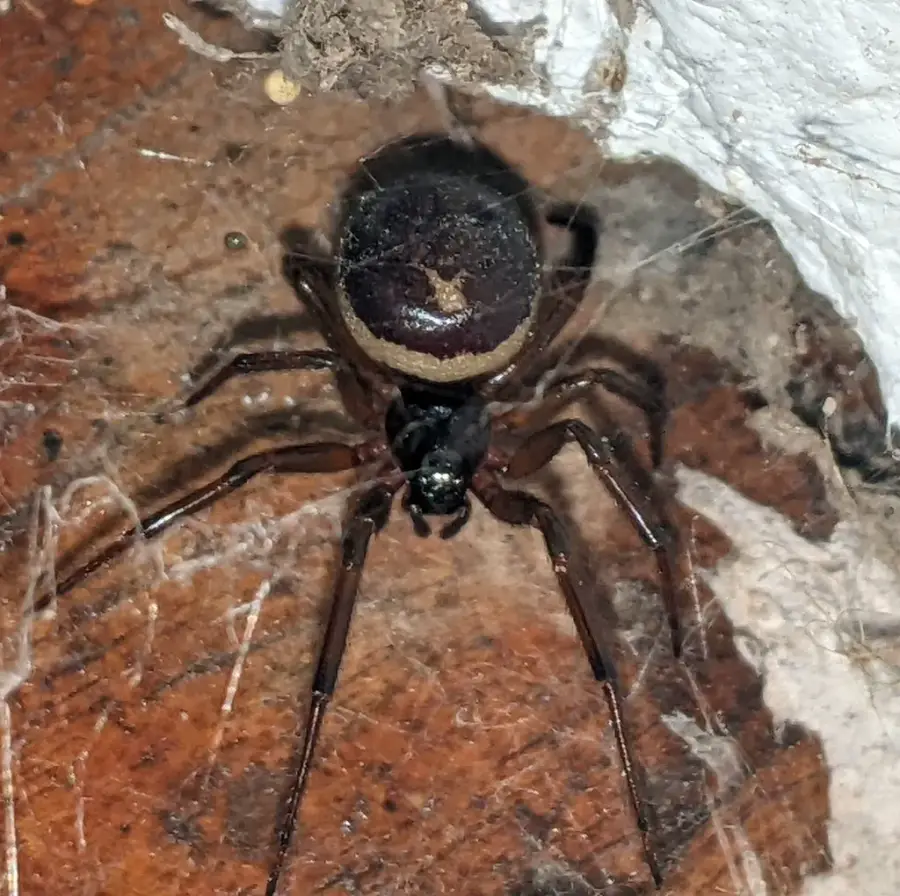
The third spider was the false widow (Steatoda grossa), a cobweb spider that often lives in garages and basements. It was much less sensitive. It barely reacted to mint oil and showed only a slight tendency to avoid chestnuts.
Why the results come with an asterisk
According to Entomology Today’s write-up, the brown widow and the garden spider avoided peppermint in more than 75% of the choice tests. That’s a real effect. Still, a few details matter:
- It only keeps spiders from moving in. The study tested where spiders chose to settle. That doesn’t mean a spider already living behind your couch will pack up and leave.
- Only three species were tested. There are dozens of spiders around DMV homes, and they don’t all react the same way.
- The test was a small, clean choice. In a real house, a spider has hundreds of untreated corners to pick from.
Basically, peppermint oil passed a narrow test. It didn’t prove that a spray bottle can clear spiders out of a house.
So why would a spider care about a smell at all? It comes down to how spiders sense the world.
Spiders don’t have noses. Instead, they pick up chemicals through tiny hairs on their legs and on the small leg-like parts near their mouths, called pedipalps. A 2025 study in Communications Biology found that these taste-sensing hairs sit in large numbers on all of a spider’s walking legs. They’re mostly on the parts of the leg that touch surfaces, and they may also help with smell.
That helps explain why a spider might avoid a surface coated in a strong oil. It’s essentially “tasting” the oil with its feet.
Researchers have also tested other oils on spiders, and peppermint wasn’t among the oils that worked in those studies. A 2022 study tested 15 essential oils on the yellow sac spider, which is common inside homes around here. Clove, pineapple and banana oils repelled it. Caraway oil actually seemed to attract it. Meanwhile, a 2025 study on a garden wolf spider found catnip, cedarwood, cinnamon, citronella and clove oils deterred it. The authors noted that the results need more testing across other species.
The takeaway is that every spider species reacts differently. No single scent works on all of them.
Does Peppermint Oil Kill Spiders?
No, at least not in any way the research supports. The spider studies on peppermint oil measured whether spiders avoided a treated spot. They didn’t test whether the oil kills spiders. You’ll find studies showing peppermint oil kills spider mites, but spider mites are tiny plant pests, not true spiders.
A heavy squirt of straight oil right on a spider might stress it. But a diluted peppermint spray on a window frame is a mild deterrent, not a spider killer. If you want a spider gone right now, a vacuum works better.
Which Spiders Around DC Might Peppermint Oil Affect?
According to University of Maryland Extension, the spiders most commonly found indoors here are jumping spiders, yellow sac spiders, wolf spiders and, rarely, black widows. In my experience, the ones homeowners call us about most are common house spiders, orb weavers on the eaves and wolf spiders in basements. Here’s how peppermint oil lines up with each.
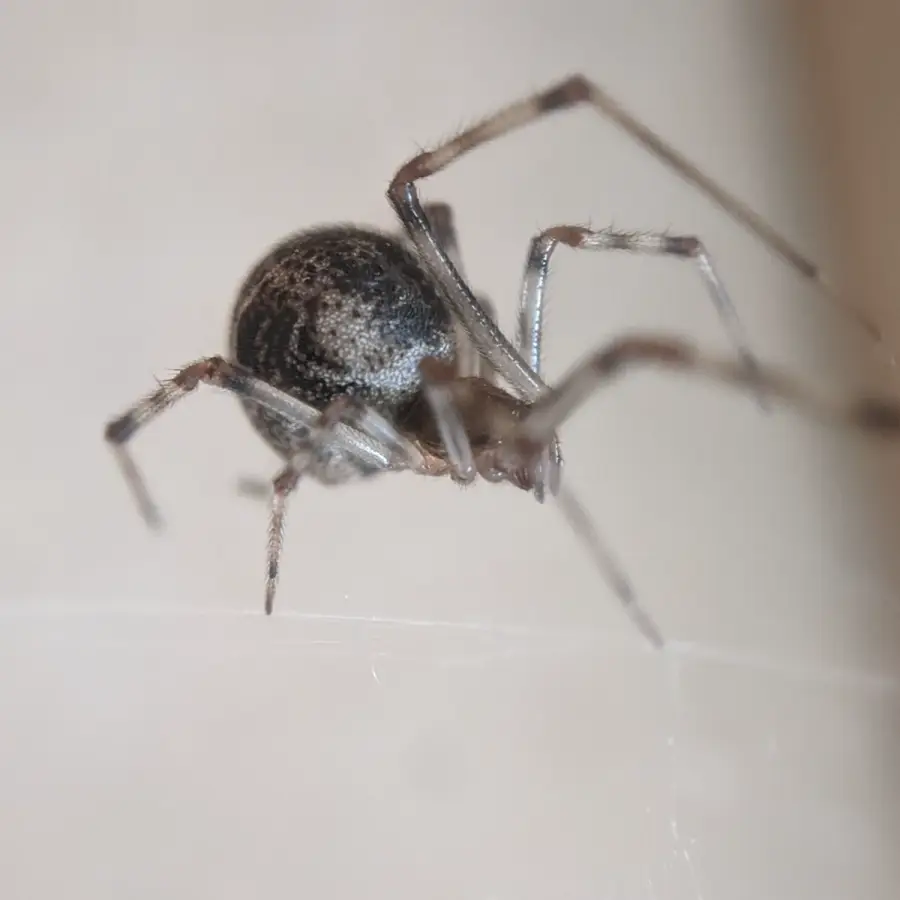
Common house spiders and false widows. Messy webs in corners, garages and basements.
This group is the weakest case for peppermint oil. The false widow, a cobweb spider, barely reacted to mint oil in the 2018 study. The good news is that cobweb spiders are easy to handle another way. University of Maryland Extension notes that regular cleaning and dusting is usually enough to control them. See our house spider guide to confirm the ID.
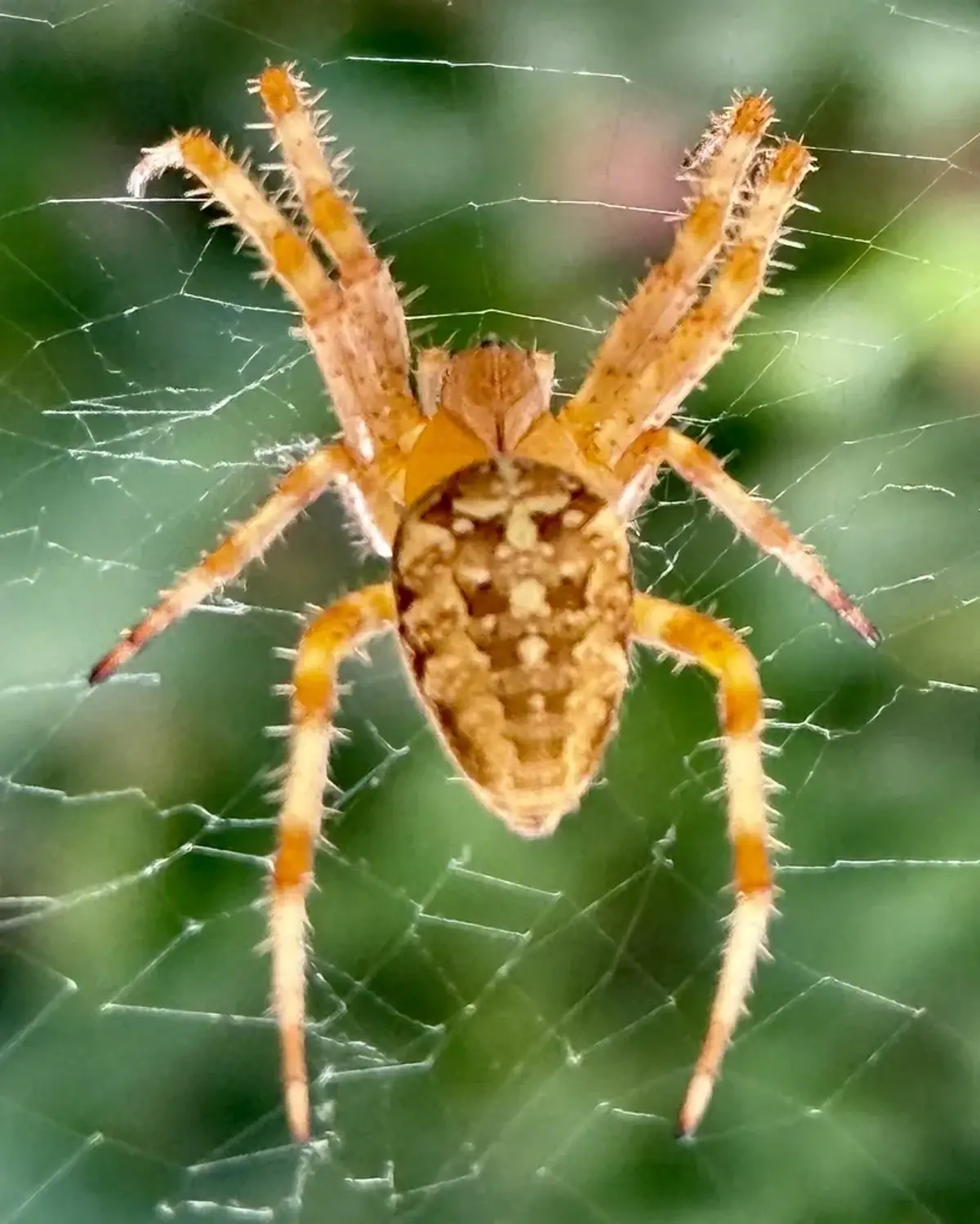
Garden spiders and other orb weavers. Big round webs on eaves, porches and window frames.
This is where peppermint oil has its best shot. The European garden spider strongly avoided mint oil in lab tests. A fresh coat on a porch light or window frame may discourage a new web for a few days. However, orb weavers rebuild webs constantly, so you’d have to keep up with it. Learn more about cross orbweavers.
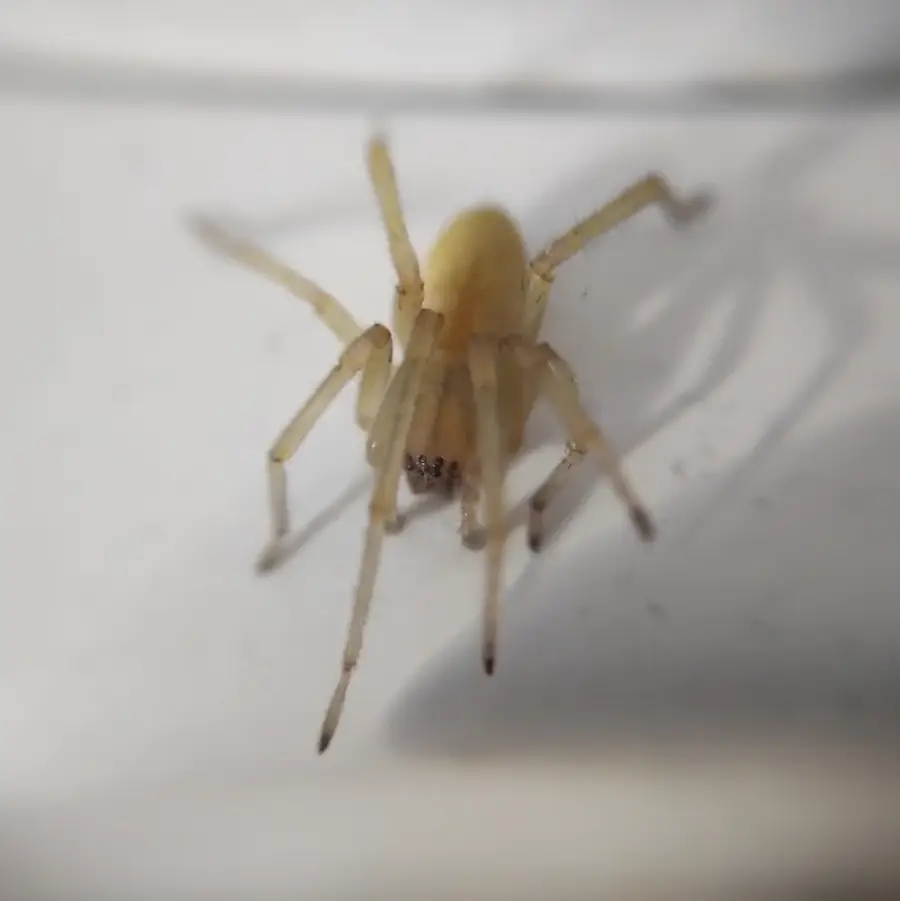
Wolf spiders and yellow sac spiders. No webs; they roam floors and walls at night.
Peppermint oil wasn’t among the oils that repelled either one in the studies I found. Clove oil did better on both. These spiders wander in from outside, so sealing gaps at ground level matters more than scent. See our pages on wolf spiders and yellow sac spiders.
Black widows and brown widows. Shiny bodies, tangled webs in woodpiles, sheds and meter boxes.
Brown widows avoided mint oil in the study, and black widows are close relatives. But black widows weren’t tested, and these are venomous spiders. Don’t trust a scent to protect you. Wear gloves when you reach into woodpiles or stored boxes. Our guide on whether you should kill a black widow spider covers what to do if you find one.
The two spiders below are the ones I see most often inside homes. Neither one is a strong case for peppermint oil.
Also, a quick note on brown recluses, since people often ask. According to Virginia Tech Extension, the brown recluse’s natural range reaches only the very tip of southwestern Virginia. Isolated finds elsewhere usually came in with furniture or firewood. So a brown spider in your Northern Virginia basement is almost always something else. Our brown recluse vs. house spider comparison can help you tell them apart.
Why Peppermint Oil Won’t Fix a Spider Problem
Even for the species it repels, peppermint oil has three big problems in a real home.
First, the scent doesn’t last. Peppermint oil is volatile, which means it evaporates. The National Pesticide Information Center notes that vapors from citronella, a similar plant oil, break down in a matter of hours. So a spray that smells strong today is mostly gone in a day or two.
Second, spiders go where the food is. Spiders don’t come inside for the decor. They come because insects are there to eat. As long as moths, flies and other bugs gather near your lights and doors, spiders will keep showing up, scent or no scent.
Third, it doesn’t touch egg sacs. One house spider egg sac can hold a lot of spiderlings. A scent on the window frame does nothing to the egg sacs already tucked into a corner of the garage.
Spiders are one of our top pests in the area. In my experience, wooded neighborhoods with lots of trees and moisture, like Mt. Vernon, have the highest spider numbers in Northern Virginia. Webs build up quickly in the eaves of those homes.
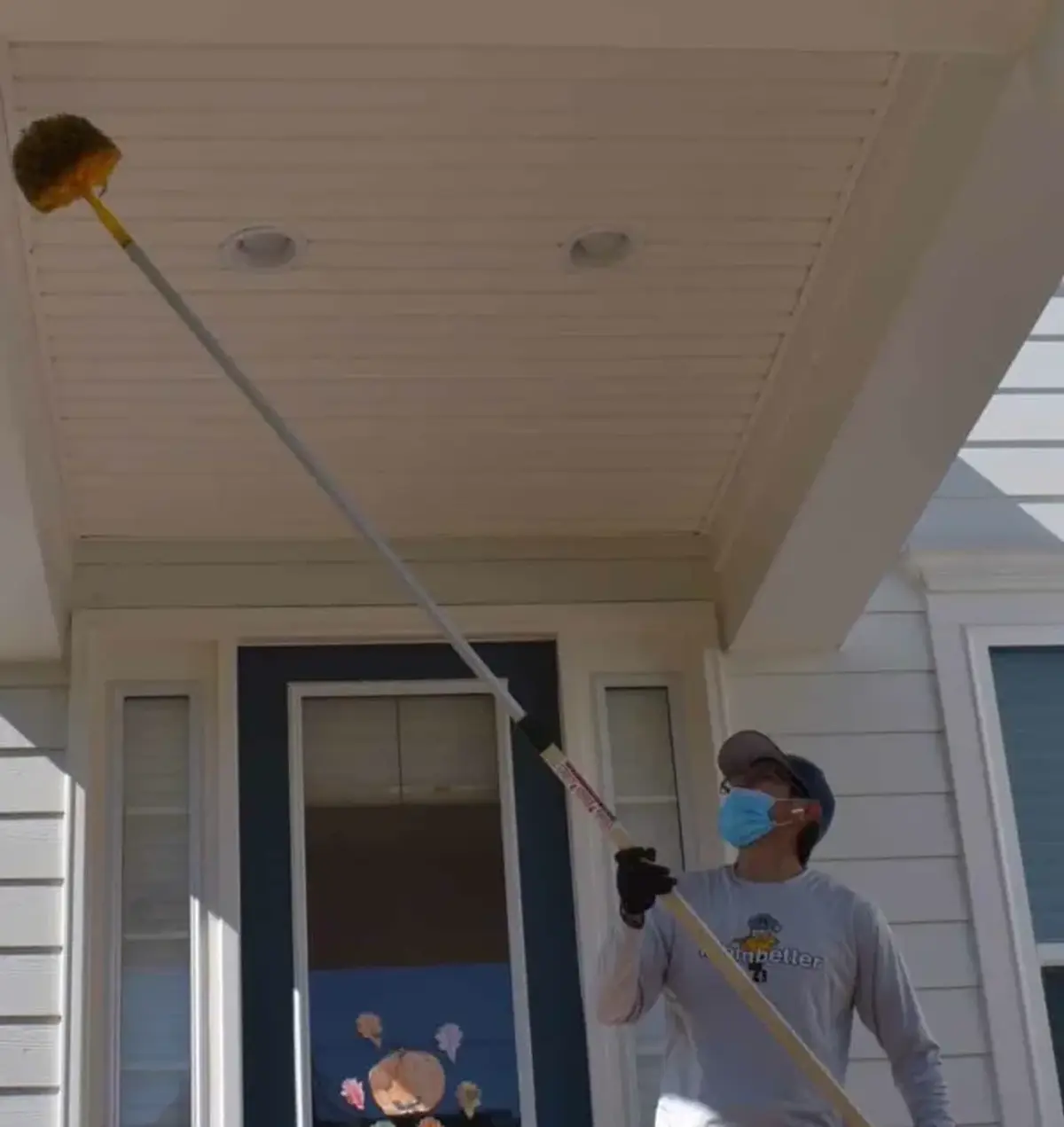
When that happens, we use a two-part approach. First, we remove the current webs with a long-handled brush called a Webster. Second, we apply a non-repellent product as a perimeter treatment along the foundation.
Daren, one of our technicians, adds that spider webs can tell you a lot about a house. More than once, he’s had an ant problem nobody could figure out. Then he looked at the spider webs, saw they were full of ants or swarmers, and that pointed him right to the source. It’s a good reminder that spiders are there because something else is.
Web removal is a big part of why professional spider control works when sprays don’t.
Still, plenty of homeowners want to try a natural option first. That’s fine, as long as you know what to expect.
How to Use Peppermint Oil for Spiders (If You Want to Try It)
To be clear, no study has tested a household peppermint spray in a real home. So treat it as a short-term deterrent for light spider activity, not a treatment. If you’d still like to try it, this approach lines up best with what the research shows.
Vacuum up webs, spiders and egg sacs first. Peppermint oil may stop spiders from settling in a spot, but it won’t evict the ones already there. Cleaning handles that part.
Most recipes mix 10 to 20 drops of peppermint oil into a 16-ounce spray bottle of water, plus a drop of dish soap so the oil blends in. Shake it before each use.
Spray window frames, door thresholds, porch light fixtures and the corners where webs keep showing up. These are the spots where orb weavers and other web builders settle. Test a hidden spot first, since oil can stain some finishes.
Because the oil evaporates, reapply every few days. Reapply after rain on outdoor surfaces.
If you still find fresh webs every week, peppermint oil isn’t keeping up. That usually means there are plenty of insects around the house feeding the spiders.
You may also see ready-made peppermint sprays at the hardware store.
Before you spray anything, think about your pets.
What Works Better Than Peppermint Oil for Spiders
If peppermint oil is a speed bump, these are the steps that actually cut down on spiders. University of Maryland Extension sums it up well: “If you control the spiders’ prey, you will control the spiders.”
- Cut down on their food. Dim or switch off outdoor lights at night, or use yellow bug bulbs, so fewer insects gather by your doors. Close blinds at night, too.
- Seal gaps at ground level. Caulk cracks in the foundation and around pipes, and tighten up doors and windows. Virginia Tech Extension also recommends checking screens and weather stripping.
- Clear clutter. Move firewood, leaf piles and stored boxes away from the house. Pull mulch back from the foundation.
- Vacuum regularly. Get behind furniture, under beds and into basement corners. Toss the vacuum bag or empty the canister outside.
- Dry out the basement. A dehumidifier helps, since damp basements draw the insects spiders eat. Our guide to spiders in the basement covers this in more detail.
For a full step-by-step plan, see our guide on how to get rid of spiders in your house. And if peppermint oil sounds familiar, we’ve looked at the same remedy for other pests. It has similar short-term results when we checked whether peppermint oil repels ants and whether peppermint oil repels roaches.
When to Call a Professional
Peppermint oil is fine for a few webs on a window sill. However, it’s time to call a pro if:
- Webs cover your eaves, porch or deck again within a week or two of cleaning.
- You’re finding spiders inside every day, especially in bedrooms or living areas.
- You see black widows or brown widows around woodpiles, sheds or meter boxes.
- You’re finding lots of egg sacs in the garage or basement.
- The spiders’ webs are full of other insects, like ants or termite swarmers. That points to a second problem worth checking.
Our spider control service starts with an inspection to figure out which spiders you have and what’s drawing them in. Then we remove webs from the eaves and porches and apply a non-repellent treatment around the exterior, with visits three times a year. Ongoing spider protection is part of our home pest plan, starting around $49 a month for an average DMV home, plus a $200 setup fee on the first visit. All the products we use are EPA approved and have passed through our internal research team. Each one is something we’d feel comfortable using in our own homes. If you prefer a lower-impact approach, ask about our eco-friendly pest control options.
We’ve been in the pest control business for 58 years and have earned 1,800+ reviews across our locations. Our licensed technicians help homeowners with spiders across Northern Virginia and Maryland, including Alexandria, Reston, Fairfax, Sterling, Rockville and Gaithersburg.
The Bottom Line on Peppermint Oil and Spiders
Peppermint oil does repel some spiders. In the lab, brown widows and garden spiders avoided it, while false widows barely cared and lemon oil did nothing at all. But the scent fades fast, it won’t evict spiders that already live in your home and there’s no good evidence it kills them. Use it, if at all, as a short-term barrier on window frames and porches. For lasting results, cut down on the insects spiders eat, seal gaps and clear the webs regularly.
If you have questions about spiders around your home or want an estimate, call us at 703-683-2000 or email info@bettertermite.com. We’re happy to help.