

Yes, you can survive hantavirus, and most people in the US do. Even so, it is a serious illness. The CDC says about 38% of people who develop the lung form, called hantavirus pulmonary syndrome (HPS), may die. So roughly 6 in 10 patients survive. Fast hospital care, especially intensive care for the lungs and heart, is what moves those odds.
I’m George Schulz with Better Termite & Pest Control. I work in pest control, not medicine. However, homeowners across Northern Virginia and Maryland ask me about hantavirus whenever they find mouse droppings in a shed or garage. Below I’ll share what the CDC and state health departments say about survival rates, treatment and recovery. I’ll also cover the part I do know well: keeping wild mice out so you never have to wonder.
The good news is that you can lower your odds of ever facing this. Hantavirus comes from wild mice, and keeping them out of your shed, garage and home is the part we can help with.
Hantavirus Survival Rate: The Numbers
Here’s what the official sources say. According to the CDC’s hantavirus overview, 38% of people who develop respiratory symptoms may die from the disease. The CDC’s own case tracking gives a similar picture. Its US case data counts 890 cases reported from 1993 through the end of 2023, and 35% of them ended in death.
Basically, that means about 62% to 65% of patients survive. Those are the people sick enough to be diagnosed and reported, so they skew toward serious cases. Additionally, the average patient in that data was 39 years old, and 62% were men. Hantavirus isn’t a disease that only threatens the very old or very young.
| Type of hantavirus illness | Where it’s found | Share of patients who die |
|---|---|---|
| Hantavirus pulmonary syndrome (HPS), lung form | The Americas, including the US | About 35% to 38% |
| HFRS from Hantaan or Dobrava virus, kidney form | Mostly Asia and Europe | 5% to 15% |
| HFRS from Seoul or Puumala virus, kidney form | Seoul worldwide, including the US; Puumala in Europe | Less than 1% |
The table shows why the lung form gets so much attention. It’s the one people in the US mostly get, and it’s the most dangerous. The milder kidney form tied to Seoul virus is carried by Norway rats worldwide. Even so, fewer than 1% of those patients die, according to the same CDC overview.
What Decides Whether Someone Survives
Since there’s no antiviral that cures hantavirus, survival comes down to how well doctors can support the body until the virus runs its course. A few things make the biggest difference.
1. How Fast You Get Care
Hantavirus can turn quickly. The CDC notes that without adequate treatment, most deaths happen within 24 to 48 hours after the breathing phase starts. That’s why health agencies give the same advice: don’t wait it out. The Virginia Department of Health says there’s no specific treatment for HPS. However, it adds that early care at a facility with an intensive care unit can improve survival.
2. Telling Your Doctor About the Mice
Early hantavirus looks a lot like the flu. Fever, aches and fatigue don’t point to anything specific on their own. Mentioning that you recently cleaned out a shed or found mouse nests gives your doctor the clue they need. That one sentence gives your doctor a reason to consider hantavirus. The CDC and the Virginia Department of Health both tell patients to mention any rodent exposure.
3. Access to Advanced Heart-Lung Support
In severe cases, fluid floods the lungs and blood pressure drops. Patients may need a breathing tube and a ventilator. The sickest may need ECMO, a machine that takes over for the heart and lungs. According to the CDC’s clinician guidance, starting ECMO at the earliest sign of decline is linked to an 80% survival rate, even in patients whose heart and lungs are failing. That’s a big jump from the overall average.

If you’re reading this because you found droppings, the next step is figuring out where the mice are getting in.
How Hantavirus Is Treated
There’s no pill or shot that kills hantavirus. The CDC is clear that there is no specific treatment, cure or vaccine. Instead, hospitals use supportive care. That includes:
- Oxygen to help with breathing
- Careful fluids, because too much can worsen the fluid in the lungs
- Breathing support, such as a breathing tube and ventilator
- Heart support and, for the sickest patients, ECMO
- Antibiotics early on, before hantavirus is confirmed, in case it’s a bacterial infection instead
- Fever and pain relievers
You may read online about the antiviral drug ribavirin. The CDC says it was tested in HPS patients and was not shown to be effective. For the kidney form of hantavirus, some patients need dialysis while their kidneys recover.
The Stages of Hantavirus Illness and Recovery
Hantavirus pulmonary syndrome tends to follow a pattern. Doctors describe a flu-like start, a dangerous lung phase, then recovery. Here’s how the stages line up, based on the CDC and published research.
Someone breathes in dust from infected wild rodent urine or droppings, often while sweeping out a shed, cabin or garage. Symptoms usually start 1 to 8 weeks later.
Fever, deep fatigue and muscle aches, especially in the thighs, hips, back and shoulders. Some people also get headaches, chills, dizziness, nausea or stomach pain. This stage looks like the flu, which is why mentioning rodent exposure matters.
About 4 to 10 days after the first symptoms, coughing and shortness of breath set in as fluid fills the lungs. This is the most dangerous stage. Most patients need intensive care.
Patients who make it through the lung phase often start passing large amounts of urine as the body clears the extra fluid. According to the CDC, survivors then tend to improve quickly.
Breathlessness with exercise is common for 3 to 4 weeks. In some survivors it lingers for a year or two, but it goes away in almost all patients.
Life After Hantavirus: Long-Term Effects
Survivors usually get back to normal. However, recovery isn’t always instant. A study in the journal Lung followed HPS survivors in New Mexico and Panama for up to 8 years after their illness. Here’s what the researchers found:
- Short-term breathlessness is common. Shortness of breath with exercise typically lasts 3 to 4 weeks during recovery.
- Some survivors notice it longer. Breathlessness with exertion lasted 1 to 2 years in 77% of the New Mexico survivors surveyed and 43% of the Panama group.
- Lung tests can show changes. Reduced airflow in the small airways and lower oxygen transfer were common in both groups.
- It usually resolves. In the Panama group, symptoms were gone within 3 years for most but not all patients. Overall, the authors concluded these problems resolve in almost all patients.
That was a small study of 23 survivors, so it’s not the last word. If you or a family member had hantavirus and still feel winded, your own doctor is the person to check your lungs.
Hantavirus pulmonary syndrome isn’t dangerous because the virus destroys lung tissue. Instead, the body’s response makes the tiny blood vessels in the lungs leak. Fluid pours into the air sacs, and blood pressure drops. The Lung study describes this as a massive capillary leak in the lungs.
That’s also why survivors can improve so fast. Once the leak stops and the body sheds the extra fluid, the lungs can recover. The CDC’s clinician guidance lists warning signs doctors watch for, such as a high blood lactate level or weak heart output. Those markers help them decide when to start ECMO.
Interestingly, the same Lung study noted that HPS in Panama, caused by Choclo virus, had a mortality rate of about 10%. In comparison, most hantaviruses that cause HPS carry mortality rates of 25% to 35%. The strain matters.
How Worried Should You Be in Virginia, Maryland and DC?
Hantavirus is rare here. The Virginia Department of Health says HPS is rarely reported in Virginia, and most cases happen west of the Mississippi River. Similarly, the Maryland Department of Health says HPS is a rare disease and most people are not at risk. You can see the exact counts in our breakdown of hantavirus cases by state.
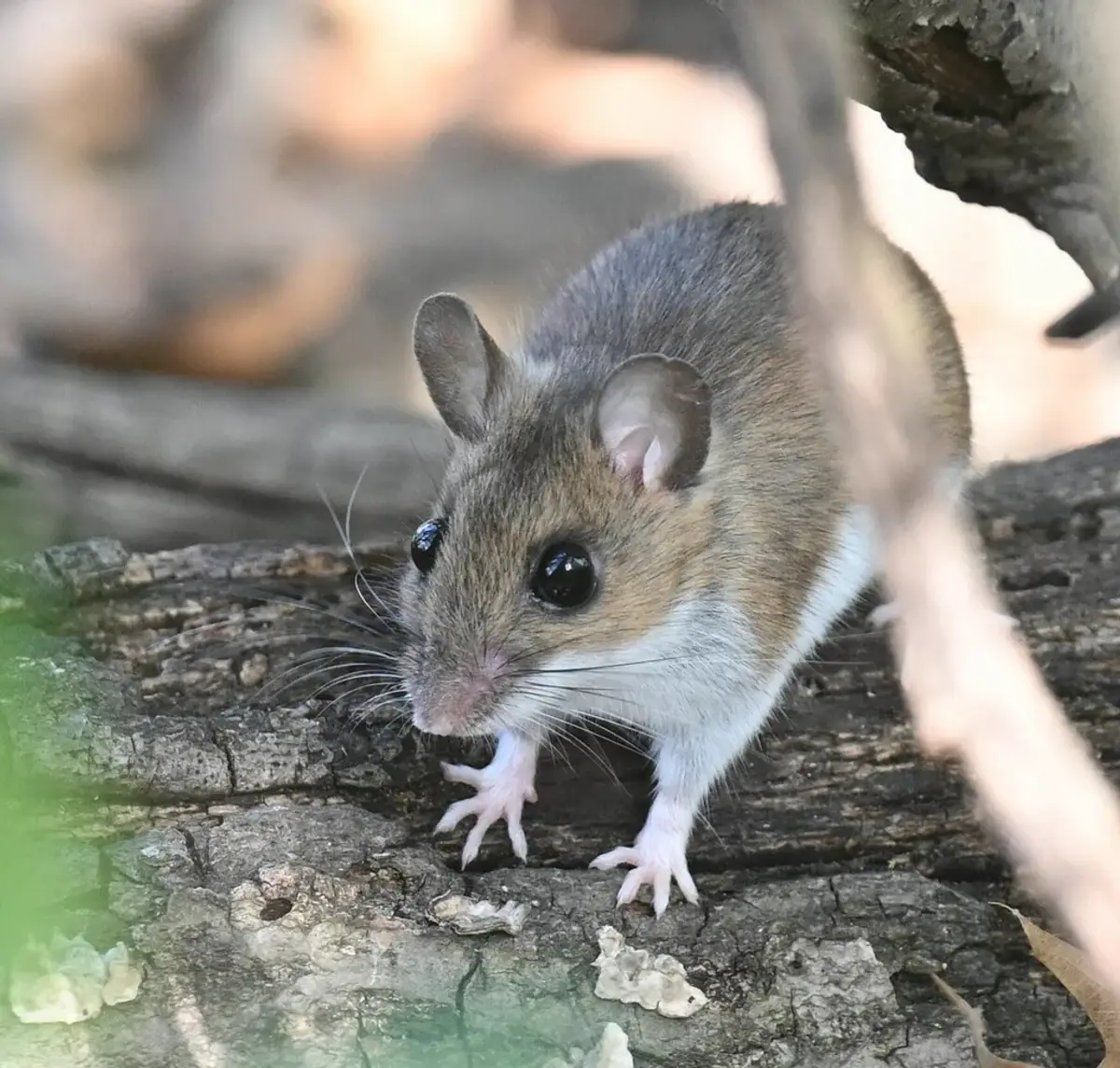
The local carrier to know is the white-footed mouse, a wild mouse with a brown back and white belly. Out West, it’s mostly the deer mouse. The common house mouse is not a listed US carrier. Still, you can’t tell which mouse left droppings by looking at them. Our guide on how hantavirus is spread covers exactly how people get exposed.
The 2026 cruise ship outbreak made a lot of people nervous. That outbreak was caused by Andes virus, a South American hantavirus and the only type known to spread between people. The hantaviruses found in the US don’t spread person to person.
Cleaning up is only half the job. If mice are still getting in, the droppings will come back.
The Best Odds Come From Never Getting Exposed
You can survive hantavirus, but nobody wants to test those odds. The real protection is keeping wild mice out of the places you spend time. That means sealing gaps, removing nesting spots and handling droppings the right way. It also means not ignoring a mouse problem because it seems small. For a realistic look at the risk, read our guide to the chances of getting sick from mouse droppings.
Sealing a house against mice takes patience. I once took over a home where the previous company had used only snap traps and glue boards, with no bait stations. Once we set bait, it was all eaten by the follow-up visit, with droppings everywhere. Finding every entry point took a long time. I even got on a ladder and sealed around the soffit.
We had four straight months with no activity. Then the mice came back. I kept looking and finally spotted a gap higher up, past where I’d sealed. Squirrels had chewed a hole in the soffit, birds had moved in, and the mice were using the same opening. Once we sealed it, the house went quiet.
The lesson for homeowners is simple. If droppings keep showing up, there’s an opening you haven’t found yet. Cleaning up without sealing up just resets the clock.
Our rodent control program combines lower-level baiting with sealing entry points. For homes with lots of gaps, our exclusion services close them up, and our mouse control plan targets mice specifically. We serve Northern Virginia, DC and suburban Maryland, including rodent control in Reston, rodent control in Fairfax and rodent control in Silver Spring.
The Bottom Line
So, can you survive hantavirus? Yes. Most people in the US do, and the odds are best for patients who get to a hospital early. Still, about 35% to 38% of people with the lung form die, and there’s no cure or vaccine. If you have fever, aches or trouble breathing after rodent exposure, see a doctor right away and mention the mice. Better yet, keep wild mice out so the question never comes up.
If you have questions or want an estimate, call us at 703-683-2000 or email info@bettertermite.com. With 58 years in the business and 1,800+ reviews, we’re glad to help you get ahead of a mouse problem.