
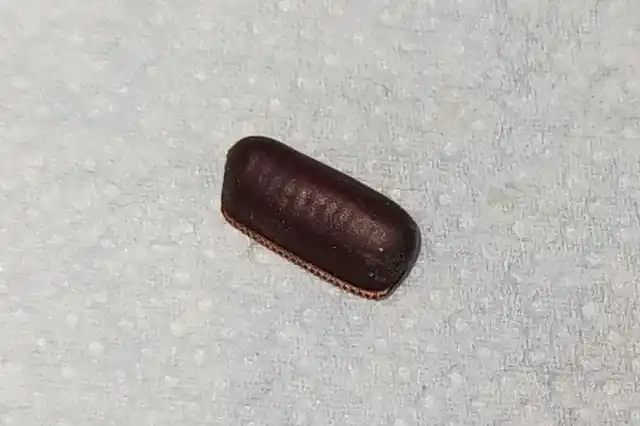

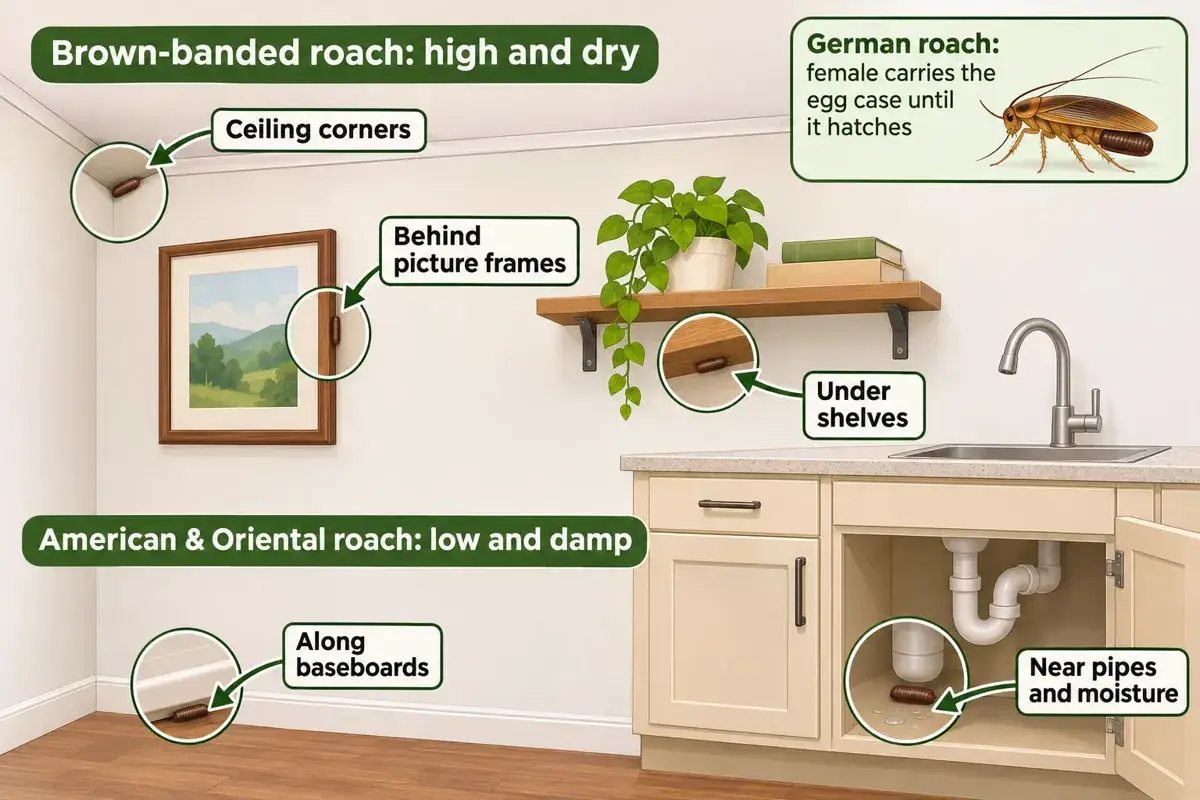
If you found roach eggs on a wall, you are most likely looking at a small brown capsule about 1/4 inch long, glued flat to the surface. That capsule is an egg case, not a single egg. If it is up high, like a ceiling corner, behind a picture frame, or under a shelf, it is usually from a brown-banded cockroach. If it is down low near pipes or a damp baseboard, think American or oriental roach. German roaches, on the other hand, almost never leave eggs on walls.
I’m George Schulz, a licensed technician and the third generation at Better Termite & Pest Control. When customers send me a photo of “roach eggs on the wall,” about half the time it is a real egg case. The other half, it’s something else entirely, like a spotted lanternfly egg mass on the siding. So below, I’ll show you how to tell which one you have and what to do about it.
What Roach Eggs on a Wall Look Like
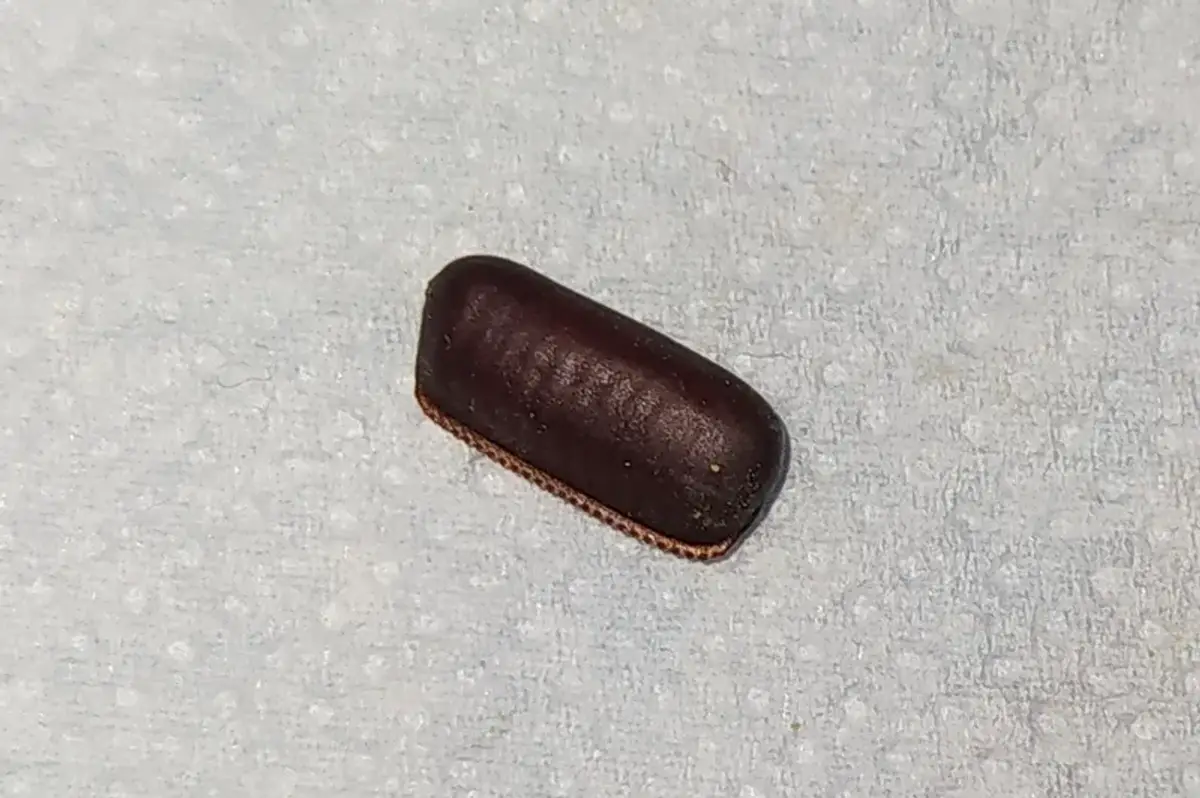
Cockroaches don’t lay loose eggs. Instead, the female packs them into a hard, protective case called an ootheca. It’s usually brown, shaped like a tiny purse or a bean, and has faint ridges running along the side. Basically, if you see a tidy little capsule stuck to the paint, that’s the shape you’re looking for.
Size and color vary a little by species. For example, Penn State Extension describes American cockroach egg capsules as dark brown, symmetrical, and about 5/16 inch long, with 14 to 16 eggs inside each one. Brown-banded cases are a bit smaller. University of Missouri Extension says they are less than 1/4 inch long and barrel-shaped, with 15 to 20 eggs inside.
Roach Egg Case vs. Common Look-Alikes
Here’s a quick way to sort out what’s on your wall before you do anything else.
| What you see | Size | Texture | Where it shows up | Most likely |
|---|---|---|---|---|
| Brown capsule with a ridged seam | 1/4 to 5/16 inch | Hard, smooth, glued down | Indoors: ceilings, frames, shelves, cabinets | Cockroach egg case |
| Black specks or smears | Pepper-sized | Flat or slightly raised | Cabinet hinges, corners, along edges | Roach droppings |
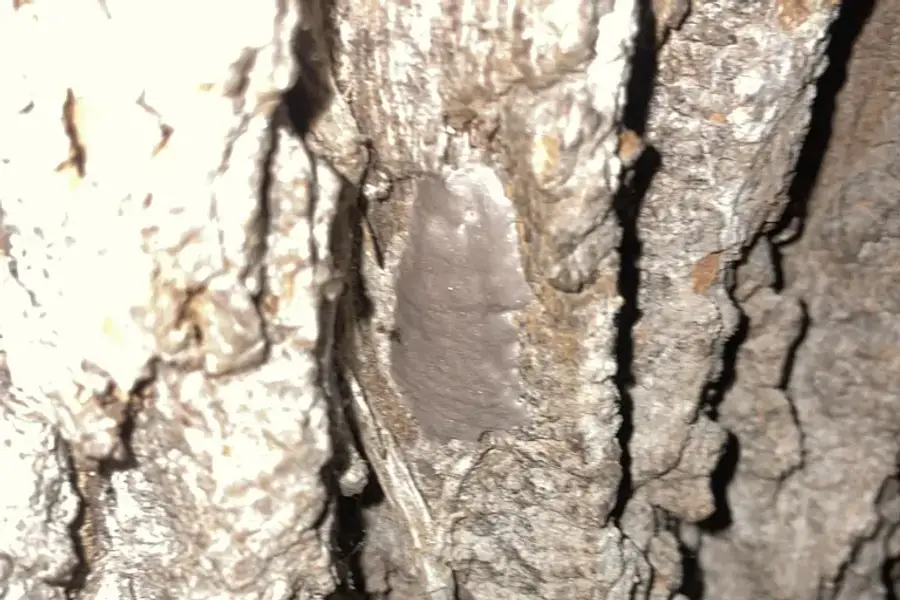
| Gray smear like dried mud | About 1 inch | Smooth, cracks as it dries | Outside: siding, stone, grills, trees | Spotted lanternfly eggs |
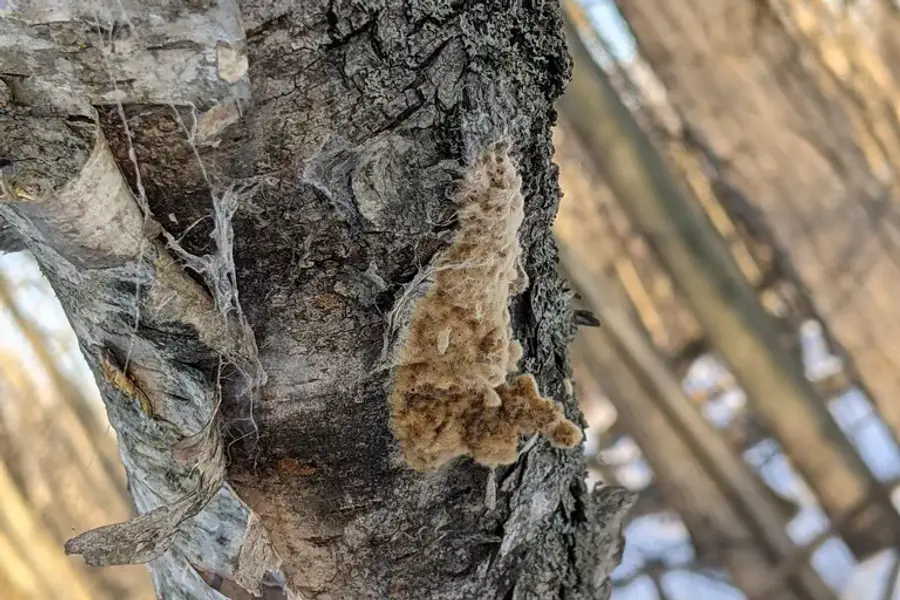
| Tan, fuzzy patch | 1 to 3 inches | Soft and velvety | Outside: siding, fences, sheds, furniture | Spongy moth eggs |
| Round white or tan ball of silk | Varies | Silky, papery | Corners, eaves, behind furniture | Spider egg sac |
Which Roach Glues Its Eggs to Walls?
The location of the egg case tells you a lot about which roach left it. In the DC area, we mostly deal with four household species: German, brown-banded, American, and oriental. Each one handles its eggs differently.
Brown-Banded Roaches: High on the Wall
If your egg case is up high, the brown-banded cockroach is the first suspect. According to the University of Maryland Extension, the female “glues her egg case to ceilings, behind drawers, under furniture, or in closets or other dark places.” They also like warm spots, so they often turn up in TVs, radios, and furniture.
Also, brown-banded roaches don’t stay in the kitchen and bathroom like German roaches do. You’ll find them behind picture frames and clocks, under tables and chairs, and in bedrooms and living rooms. A single female can produce 10 to 15 egg cases over her life, and the eggs develop for nearly a month before hatching. So one case behind a frame is worth a closer look around the whole room.
American and Oriental Roaches: Low and Damp
American cockroaches and oriental cockroaches are bigger, outdoor-type roaches. The American female carries her egg case for a short time. Then she drops it or glues it to a hidden spot near food. A female usually makes about one capsule a week, and at room temperature the eggs hatch in 50 to 55 days. The oriental female also leaves her case in a sheltered spot.
In practice, I find these cases low on the wall. Think behind the washing machine, under the sink, along a basement baseboard, or near a leaky pipe. That’s because these roaches follow moisture. In fact, if American or oriental roaches are heavy inside a house, there’s almost always a moisture problem behind it.
German Roaches: Rarely on the Wall
Here’s the good news. If you’re finding egg cases glued to your walls, you are probably not looking at German cockroaches. The German female carries her egg case on the tip of her abdomen until it’s almost ready to hatch. As a result, you’ll usually see the case attached to her, not stuck to a wall.
That said, German roaches are the most common indoor roach in homes and apartments. So if you’re also seeing small, tan roaches with two dark stripes behind the head, read our guide to German cockroach eggs, because that’s a different and more urgent situation.
It comes down to protection versus speed. A German cockroach female keeps her ootheca attached until the eggs are close to hatching, which protects them from drying out and from predators. That’s one reason German roaches multiply so fast indoors. By contrast, brown-banded, American, and oriental females drop or glue their cases and move on. Those eggs take longer to develop. The University of Maryland Extension puts brown-banded development from egg to adult at anywhere from 95 to 276 days, depending on conditions, compared with 55 to 68 days for German roaches.
Things That Look Like Roach Eggs on a Wall
Before you panic, rule out the look-alikes. Outside walls in Northern Virginia and Maryland collect a lot of egg masses that have nothing to do with roaches.
Spotted Lanternfly Egg Masses
These are the most common “roach eggs on the outside wall” I get asked about from fall through spring. The University of Maryland Extension’s lanternfly guide says females lay eggs on any flat vertical surface. That includes stones, cars, grills, and outdoor furniture. Fresh masses show up from September through December. Each one is about an inch long, with a gray, mud-like covering that cracks as it dries. Underneath are 30 to 50 seed-like eggs in rows. Scrape them into a bag with rubbing alcohol or hand sanitizer to kill them. Learn more on our spotted lanternfly page.
Spongy Moth Egg Masses
Spongy moth (formerly called gypsy moth) egg masses are tan and fuzzy instead of smooth. Virginia Cooperative Extension says they’re usually 1 to 3 inches long, look velvety from the female’s body hair, and can hold up to 1,000 eggs. They turn up on houses, fences, grills, and lawn furniture, from July until they hatch the next spring. See our spongy moth profile for more.
Roach Droppings
Small black specks or brown smears on a wall are often roach droppings, not eggs. They’re much smaller than an egg case, with no shape or seam. Still, droppings near an egg case tell you roaches are active in that spot.
Spider Egg Sacs
Spider egg sacs are round and made of silk. They’re often white, cream, or tan, and usually tucked into a web in a corner. Roach egg cases, on the other hand, are hard, shiny, and capsule-shaped, with no silk at all. If you’re seeing a lot of webs and egg sacs, our spider control service may be the better fit.
What to Do When You Find Roach Eggs on a Wall
Once you’re fairly sure it’s a roach egg case, act on it the same day. Here’s the process I walk customers through.
Take a clear photo next to a coin for scale. Note exactly where it was: high or low, warm or damp, inside or outside. That location is your biggest clue to the species.
Scrape the case into a zip-top bag with a putty knife or an old card, or vacuum it up. Seal the bag and put it in an outdoor trash can. If you vacuum, empty the canister or bag outside right away. Don’t just knock it onto the floor, because the eggs inside can still hatch.
Wipe the spot with soapy water. The EPA notes that droppings or body parts of cockroaches can trigger asthma, so cleaning up the residue matters, especially if anyone in the home has allergies.
Look behind picture frames and clocks, under shelves and tables, inside cabinet corners, and around electronics. Also check the back of furniture near where you found the case. Set a few sticky glue boards in those spots for a week. They’ll tell you if the population is growing or shrinking.
For American and oriental roaches, that’s usually moisture. Fix leaks and run a dehumidifier in damp basements. For any roach, cut down on clutter and get cardboard boxes out of the house, since roaches hide in the corrugations.
Those five steps handle the case you found. However, the bigger question is what that case tells you about the rest of the house.
In my experience, the egg case is rarely the real problem. Instead, it points to something in the house that keeps roaches coming back, like cardboard, clutter, or moisture. Here are two jobs that show what I mean.
The case that kept coming back. One of my longest roach jobs was a house in Fort Hunt. It took about a year and a half. We’d get the population down, and then it would explode again. It turned out the homeowner had bought a refrigerator, and the roaches probably rode in during transit. On top of that, he kept bringing all his delivery cardboard into the house. A lot of times that’s how roaches travel, tucked into the corrugations of the boxes. Once he started breaking down boxes outside and throwing them away from the house, it took another six months, but we got it under control.
Moisture is usually the answer. With American and oriental roaches, so many questions get answered with “moisture.” Older homes in Old Town Alexandria are a great example. When a customer swears their house is dry, I have them set up a hygrometer. Plenty of times the relative humidity comes back at 72%, when you really want to be around 45 to 50%. In one house I serviced for years, the owners finally replaced a water pipe, and their roach problem went from heavy to almost nothing.
When to Call a Professional
A single egg case you found and tossed doesn’t always need a pro. However, I’d call if any of these sound familiar:
- You keep finding new egg cases after you’ve removed the first one.
- You’re finding cases in more than one room, especially bedrooms and living rooms. That’s classic brown-banded spread.
- You’re seeing live roaches during the day, which usually means a heavy population.
- You moved in used furniture or appliances recently. Brown-banded roaches travel easily that way.
- You’re seeing small, striped roaches in the kitchen or bathroom, which points to German roaches.
Our roach control service starts with an inspection. First, we figure out which species you have, because each one needs a different plan. For German roaches, I treat cracks with a non-repellent, then add a growth inhibitor and bait stations. I also set glue boards to track the population. And I switch products every visit, so the roaches don’t build up resistance. For outdoor roaches, our American cockroach control and oriental cockroach control plans focus on the perimeter and the moisture problems that pull them inside.
All the products we use are EPA approved, and they’ve passed through our internal research team. Each one is something we’d feel comfortable using in our own homes. We’re a family business with 58 years in the industry and 1,800+ reviews across our locations. Our licensed technicians serve homes across Northern Virginia and the Maryland suburbs of DC, including pest control in Alexandria and Fairfax.
Final Thoughts on Roach Eggs on Your Wall
A small brown capsule glued to your wall is a real warning sign, but it also tells you a lot. High up and in warm spots usually means brown-banded roaches. Low and damp usually means American or oriental roaches. And a gray mud smear or a fuzzy tan patch on an outside wall probably isn’t roaches at all. Remove the case, clean the area, check the hiding spots nearby, and fix the conditions that drew them in.
If you’re still not sure what you found, or you keep finding more, give us a call at 703-683-2000 or email info@bettertermite.com. We’re happy to answer questions or set up an estimate.