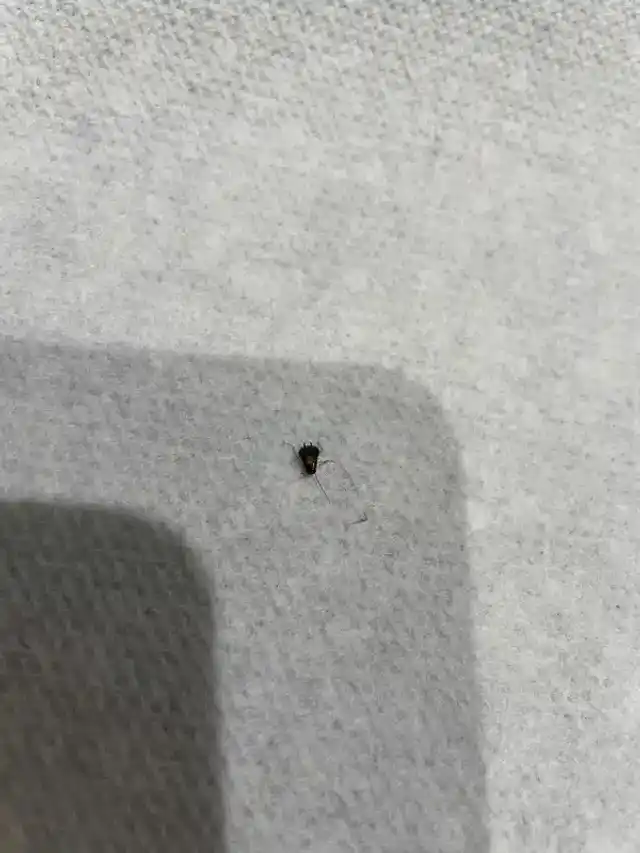

Finding baby roaches in your home isn’t just a small pest problem. It’s proof that cockroaches are breeding on your property, not just wandering in, and spotting these tiny nymphs early can save you from a full-blown problem that costs far more to fix.
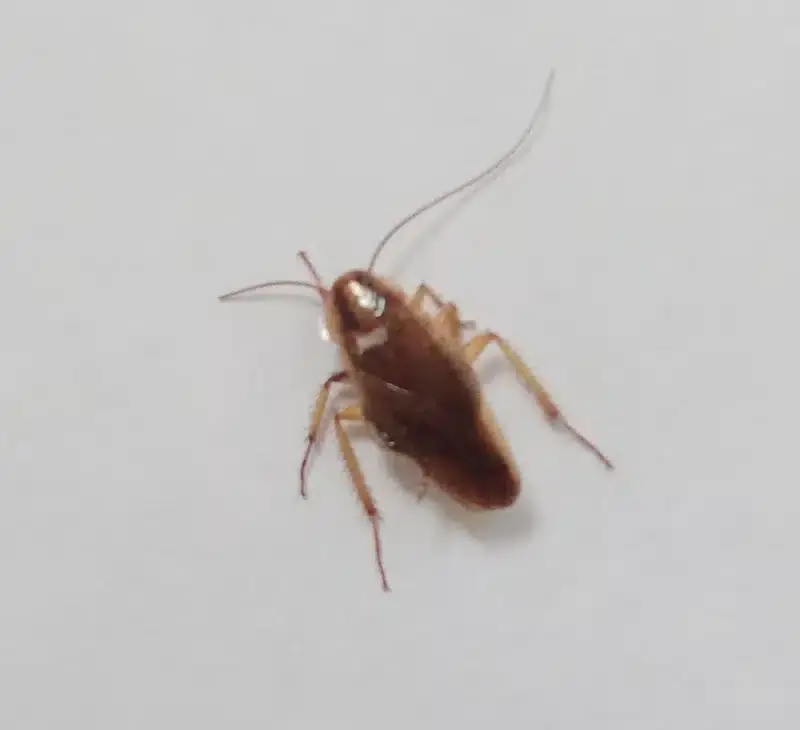
A baby cockroach looks like a small adult with no wings. It has two long antennae, six spiny legs, and a flat body, and it is about 1/8 inch long when it hatches. It is white for a short time after hatching, then turns tan, brown, or black depending on the species. In a kitchen or bathroom in our area, it is usually a German roach. If you see one, there are likely dozens more hiding in your walls, cabinets, and other dark spots.
What Baby Cockroaches Look Like
Baby cockroaches look like smaller, wingless versions of adults. They share the same body shape but lack fully grown wings and darker coloring. Depending on the species, a baby roach can range from the size of a grain of rice to about half an inch long.
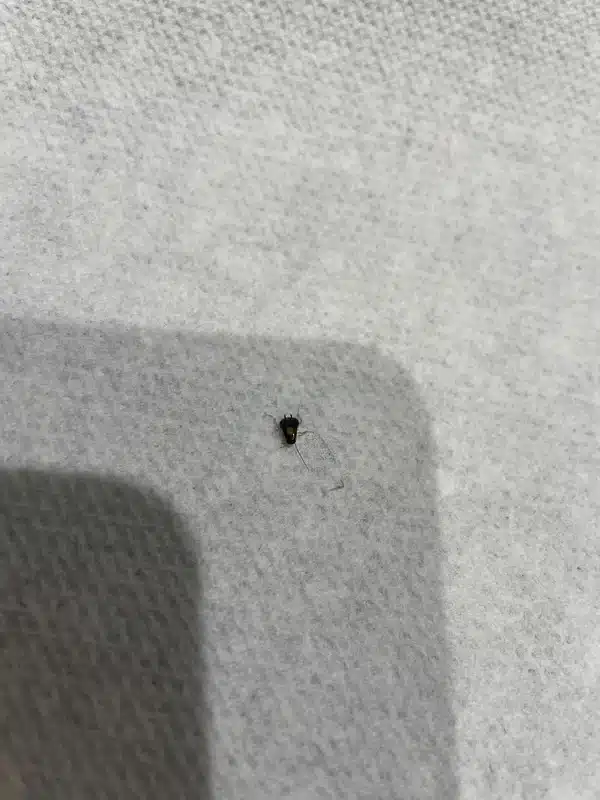
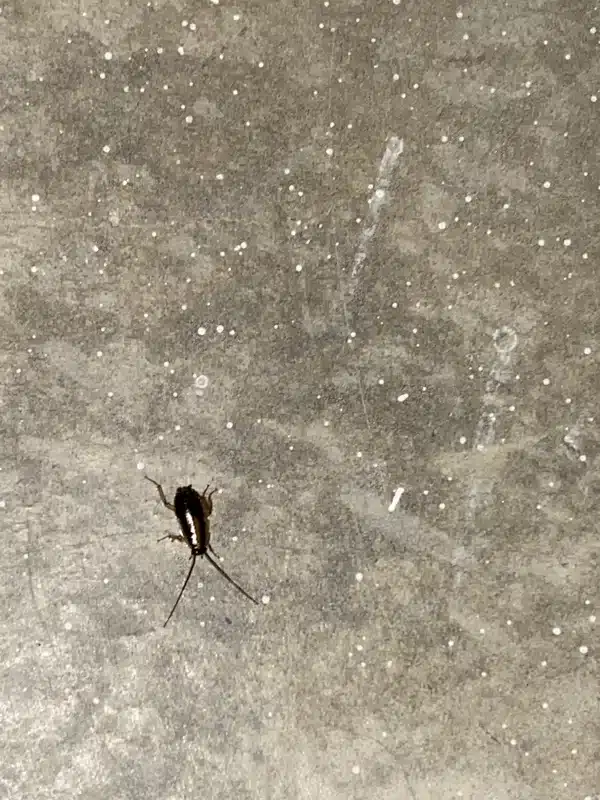
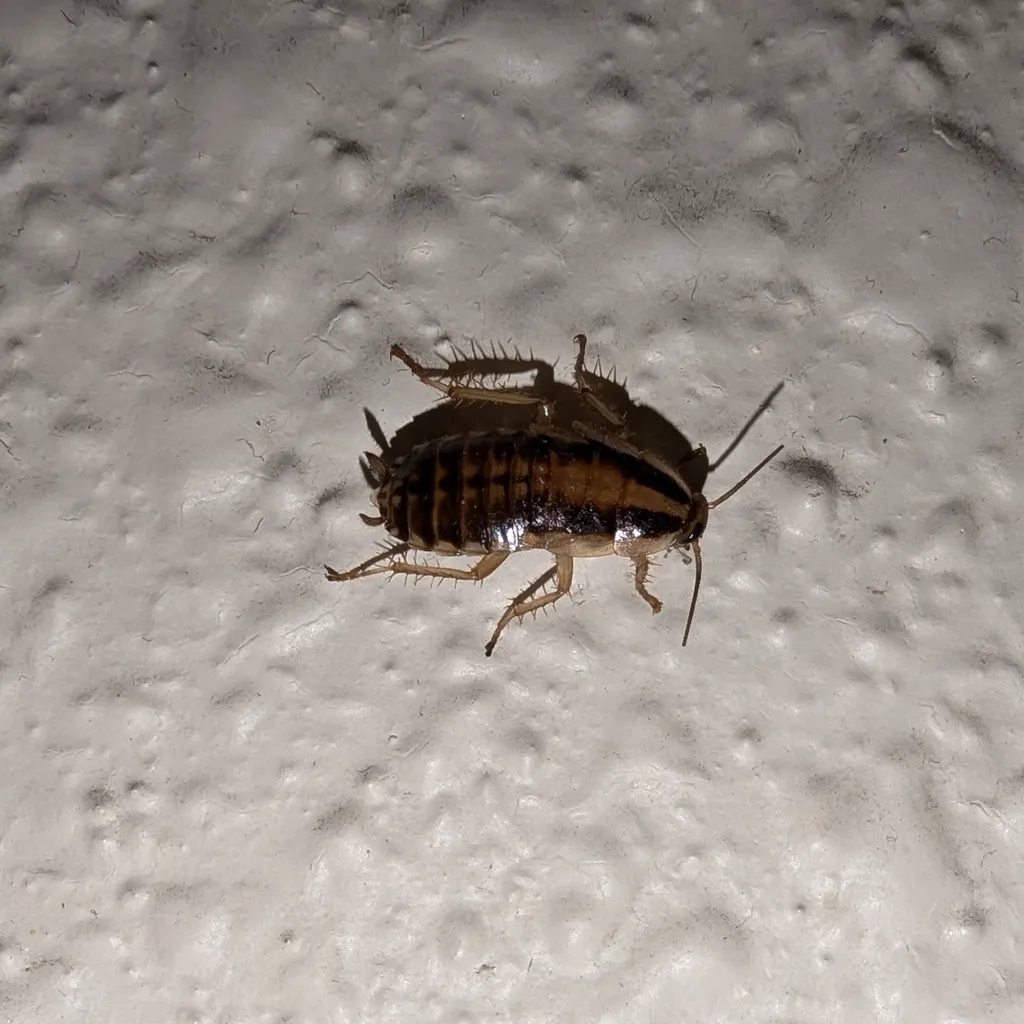
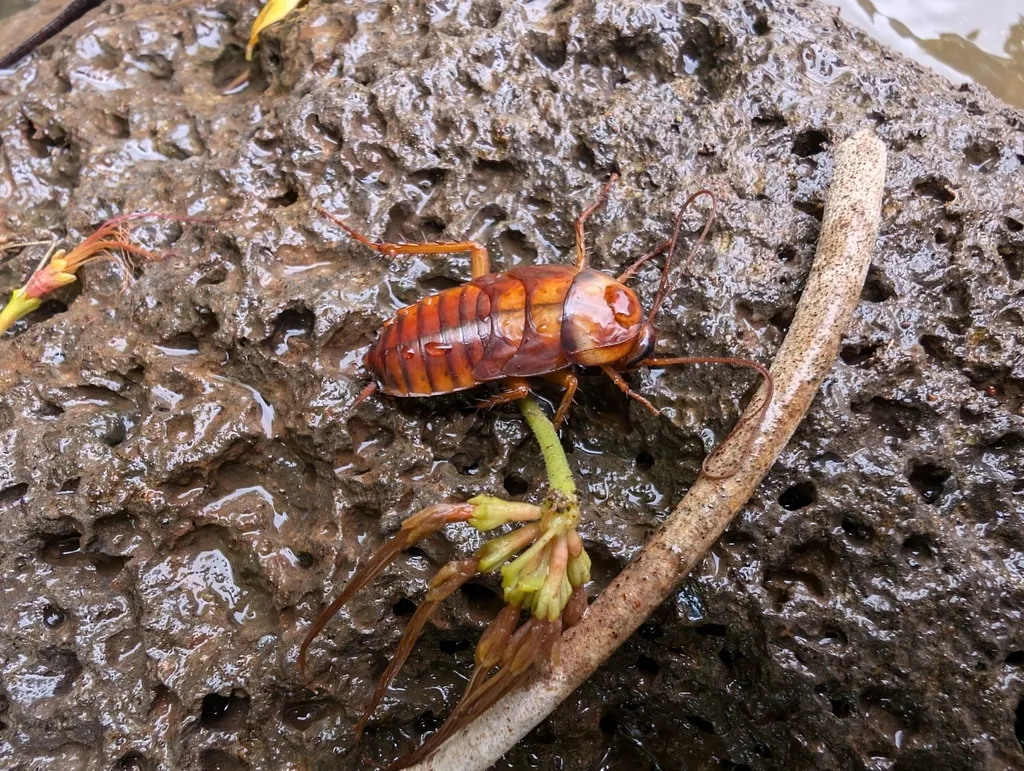
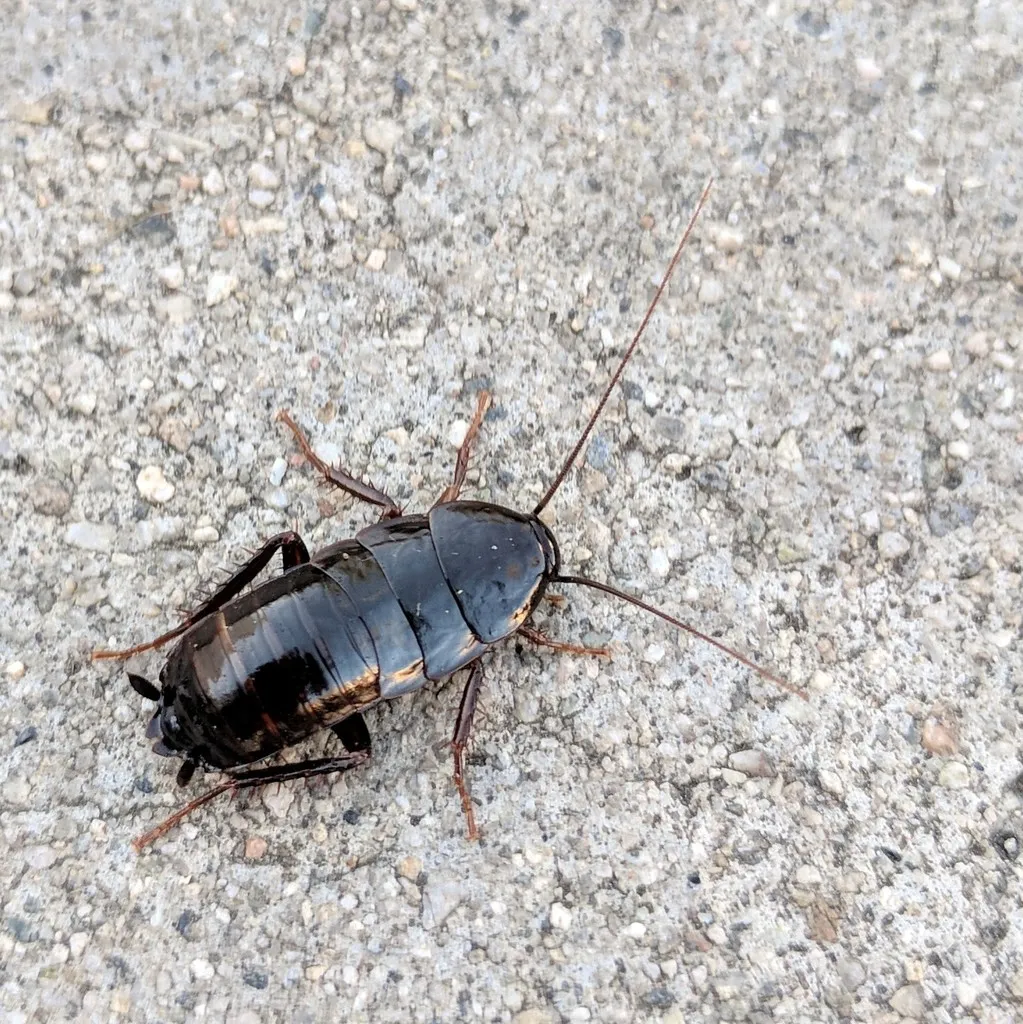
How baby cockroaches look depends a lot on their age and species. A newborn German cockroach is about 3mm long, nearly black, with a pale stripe down the middle of its back. American cockroach nymphs start grayish-brown and turn reddish-brown. Baby oriental cockroaches are dark brown to shiny black and stout from the start.
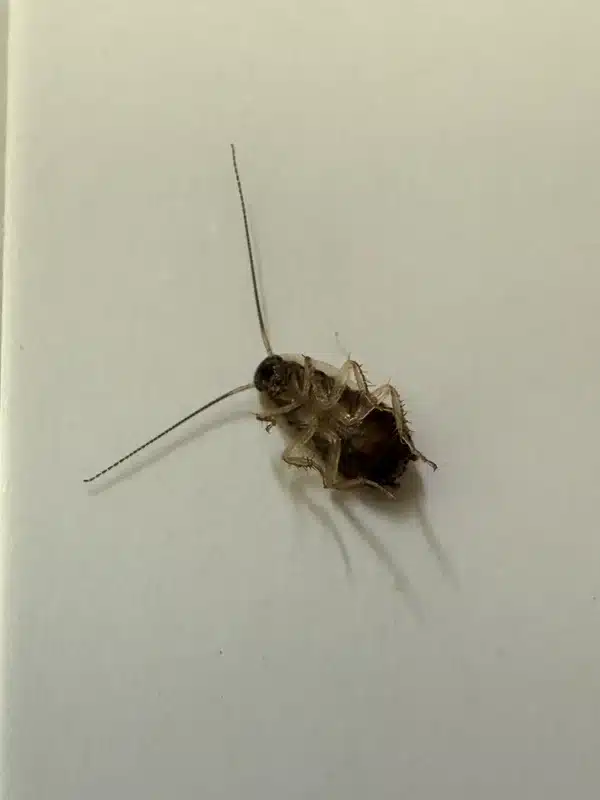

Baby Cockroach Identification Chart
These are the four roaches whose babies we find in Northern Virginia, DC, and Maryland homes.
| Species | Size | What the baby looks like | Where you find it | Egg to adult |
|---|---|---|---|---|
| German | About 1/8 inch (3mm) at hatch | Nearly black with one light stripe down the middle of the back | Kitchen cabinets, under the sink, behind the fridge, bathrooms | About 2 to 5 months |
| American | Larger than a German nymph | Grayish brown at first, then reddish brown; no stripe | Basements, drains, crawl spaces, boiler rooms | Well over a year |
| Oriental | Larger than a German nymph | Dark brown to black, shiny, stout | Damp basements, floor drains, near leaks | About a year |
| Brown-banded | Similar to a German nymph | Two bands across the body, visible at every stage | High, warm, dry spots: upper cabinets, closets, behind picture frames, inside electronics | About 3 to 10 months |
Sources for the chart: Rutgers NJAES and Virginia Tech (German), UF/IFAS (American), UF/IFAS (Oriental), and Penn State Extension (brown-banded).
Color Differences from Adults
One of the clearest ways to spot baby cockroaches is their color. Baby roaches are much lighter than adults right after they hatch and right after each molt. During this light phase, nymphs are almost see-through before their outer shell hardens and darkens.
Adult German roaches are tan with two dark stripes behind the head, but their nymphs are darker, close to black, with a single pale stripe down the back. American cockroach nymphs start grayish and slowly turn reddish-brown. Baby oriental cockroaches stay dark brown to glossy black, and brown-banded nymphs show their two light bands from the first stage.
Key Physical Features
Baby cockroaches have six spiny legs that make them very fast. Their legs are longer compared to their body than adult roaches, which is why nymphs can dart away so quickly when disturbed. The spines on their legs help them grip surfaces and move through tight gaps.
The biggest difference between nymphs and adults is the lack of wings. Nymphs stay wingless as they grow. Late-stage nymphs show small wing buds that get bigger with each molt, but the wings don’t work until adulthood.
Antennae and Movement
Cockroaches have long antennae that move all the time as they explore. Baby roaches tend to be more active than adults. They dart fast from one hiding spot to the next. This quick movement often surprises homeowners because nymphs move faster for their size than adults.
Baby roaches start exploring right after hatching. They follow scent trails left by adult cockroaches to find food and water. Their antennae pick up vibrations and chemical signals just like adults.
What Does It Mean If You See a Baby Roach?
It means roaches are breeding in the house, not just wandering in. Baby roaches don’t travel far. North Carolina State Extension notes that small German roach nymphs tend to stay at their aggregation sites, the cracks where the colony lives. So a nymph on your counter usually means the colony is within a few feet of it. Seeing nymphs of different sizes means they’ve been reproducing over time, not a single hitchhiker from outside.
Which roach it is changes what it means. Daren, one of our registered technicians, says the most common mistake he sees is calling every roach a German roach. His rule of thumb: a big reddish-brown or black roach is almost always an outdoor American or Oriental roach. Tiny roaches all through the cabinets and bathrooms are German roaches, “and that’s a real issue.”
- Tiny, dark nymphs with a stripe, in the kitchen or bathroom: German roaches. They breed fast indoors and live in cracks a spray can’t reach.
- Larger reddish or black nymphs in the basement: American or Oriental roaches. These point to moisture. When a customer swears the basement is dry, Daren has them set up a hygrometer. He has seen those readings come back at 72% relative humidity. He wants it around 45 to 50%.
- Seeing baby roaches at night: Normal roach behavior. They feed in the dark. Turn the kitchen light on after 10 p.m. and count what runs.
- Seeing baby roaches during the day: A worse sign. NC State notes roaches come out by day when the population is too crowded.
- Seeing baby roaches but no adults: Common early on. Adults hide deeper in the wall or cabinet voids, and the small nymphs are the ones you spot first. It doesn’t mean the problem is small.
- A baby roach in your bed: Less common. Check it against a bed bug nymph first (see the look-alikes below). A bed bug is flat, oval, and slow. A roach is long and fast.
If you’re not sure it’s a roach at all, our guide to kitchen insects similar to cockroaches covers the adult look-alikes, and why you might have roaches covers what draws them in. You can also browse our pest library.
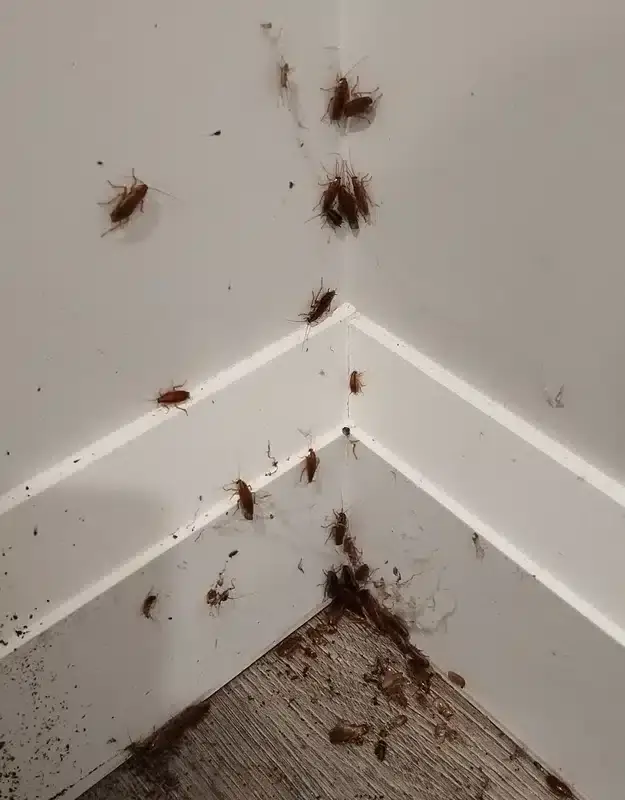
According to Virginia Tech’s Department of Entomology, each German roach egg case holds 30 to 40 eggs. The eggs hatch in 28 to 30 days, and the nymphs grow into adults in 40 to 125 days. That adds up to three or four generations a year, more than any other house roach.
Growth Timeline: What Nymph Size Tells You
The size of the baby cockroach you find tells you roughly how long the problem has been active.
| Species | Molts | Egg to adult |
|---|---|---|
| German | 5 to 6 (Rutgers NJAES) | About 40 to 125 days as nymphs, after a 28 to 30 day egg stage (Virginia Tech) |
| Oriental | About 7 | About a year (UF/IFAS) |
| American | 6 to 14 | About 600 days (UF/IFAS) |
A very small German nymph means an egg case hatched recently. Because the eggs take about a month to hatch, the female that carried it has been in your home at least that long. A German nymph about half the size of an adult means the colony has been going for well over a month. For American cockroaches, a large nymph points to a problem that’s many months old.
Seeing nymphs of different sizes is the clearest sign of ongoing breeding. When I find baby roaches of varying sizes during inspections, I know the colony has been reproducing for several cycles.
Molting and Shed Skins
Baby roaches molt many times as they grow. Each time, the nymph leaves behind a see-through shell called an exuvia. These shells pile up in hiding spots and can help you find an infestation even if you haven’t seen live bugs.
Look for these papery shells in drawer corners, behind appliances, or in cabinet voids. Shed skins also raise allergen levels in homes, and the EPA lists cockroach droppings and body parts as asthma triggers. That matters most in a home with kids who have asthma.
Right after molting, baby cockroaches look white before their new shell hardens and darkens within hours. This “ghost roach” phase is where most albino roach sightings come from. It isn’t a different bug.
Bugs That Look Like Baby Roaches
Baby cockroaches vs bed bugs is one of the most common mix-ups I see. Bed bug nymphs are wider, more oval, and move much slower than baby roaches. Baby cockroaches have long antennae and spiny legs, while bed bugs have shorter antennae and rounder bodies.
- vs Bed Bugs: Baby roaches are longer, flatter, and have antennae as long as their bodies. Bed bugs are oval and move slower.
- vs Carpet Beetles: Cockroach nymphs are wingless. Carpet beetles have hard wing covers and can fly.
- vs Booklice: Baby roaches are larger (3mm+) with harder shells. Booklice are under 2mm and soft-bodied.
- vs other beetles: Beetles have hard wing covers that meet in a line down the back and much shorter antennae. Our bugs that look like roaches guide covers the common ones.
- vs a “white roach”: Not a different bug. It’s a roach that just molted, and it darkens within hours.
- Movement: Baby cockroaches dart fast toward dark spaces when disturbed.
To identify a baby cockroach, look for six long, spiny legs, antennae that move all the time, and a flat body shape. Size alone isn’t enough. Watch how the insect moves. Baby roaches dart in quick bursts toward dark cracks.
Where Baby Roaches Hide
Baby cockroaches hide in the same areas as adults but can fit into even smaller spaces. They prefer tight cracks with high humidity, warmth, and darkness. Common spots include under fridges, behind dishwashers, and in wall voids behind kitchen backsplashes.
Baby German roaches stay close to food and water in kitchens and bathrooms. They often hide inside the motor housing of appliances, in cabinet hinges, and around plumbing fixtures. They prefer warm, tight spaces where they can touch surfaces above and below them. See our baby German cockroach guide for more.
Baby American and oriental cockroaches prefer cooler, damper spots. Basements, crawl spaces, and areas around floor drains are their go-to hiding places. They can also be found in utility rooms and near water heaters. Indoors, they usually point to a damp basement, crawl space, or drain line.
Brown-banded nymphs are the exception: unlike German roaches, they stay away from water and hide up high, per Penn State Extension. Check upper cabinets, closets, behind picture frames, and inside electronics.
I’ve found baby roaches in some surprising spots during inspections: inside electronics, behind picture frames, and in tiny gaps around plumbing.
Why Professional Treatment Is Critical
When baby cockroaches show up, DIY products usually aren’t enough. Over-the-counter sprays may kill the adults you see, but they rarely reach the hidden spots where nymphs grow. Products like boric acid or diatomaceous earth can help, but they fall short against breeding colonies.
According to UC Davis research, treatment plans that combine multiple methods (baits, growth regulators, and residual sprays) show 90%+ success rates against cockroach populations. Single-method approaches only reach 40-60%. Using several tools at once targets different life stages at the same time.
Professional treatment works because trained techs can access wall voids, find all hiding spots, and use baits that nymphs carry back to the colony. Breaking the breeding cycle takes professional-grade products and know-how. That is the point where professional roach treatment earns its keep: we identify the species first, treat the cracks the nymphs are actually living in with baits and growth regulators, and schedule follow-up visits to check the monitors and adjust. For German roaches specifically, see how our German cockroach control service works.
The longer you wait after spotting baby roaches, the harder and pricier treatment gets. With three or four generations a year and 30 to 40 eggs per case, a German roach colony grows fast. Acting early when nymphs first appear stops this growth.
What to Do When You Find Baby Roaches
The moment you spot a baby roach, write down where and when you found it. Then check nearby for more signs: shed skins, pepper-like droppings, brown egg cases under cabinets, or a musty, oily smell. Remove any food left out, store pantry items in sealed containers, and fix leaks.
Put glue boards down in corners and under appliances, even if you’re also using bait. Daren puts glue boards down on every German roach service. The count on them is how he knows whether the population is going up or down. Write down how many nymphs you catch each week. If the number isn’t falling after two weeks, the colony is winning, and it’s time for a professional inspection. Our McLean pest control team handles calls like this every week.
Don’t rely on seeing roaches to judge how big the problem is. Baby roaches are great at hiding. For every one you see, there are likely many more tucked away.
Finding baby roaches means you have an active, breeding population that needs professional treatment. Early action makes all the difference.
If you’ve spotted what you think might be baby cockroaches, don’t wait. Our family business has been helping local homeowners get rid of cockroach problems for over 50 years. Call us at 703-683-2000 or email us at info@bettertermite.com for an inspection and treatment plan.