Blue-Black Spider Wasp Identification Guide
Anoplius spp.
Blue-black spider wasps are slender, long-legged solitary wasps with a blue sheen that run across lawns and patios flicking their wings while they hunt wolf spiders and grass spiders. Only females sting, and only when handled or trapped.
Taxonomy
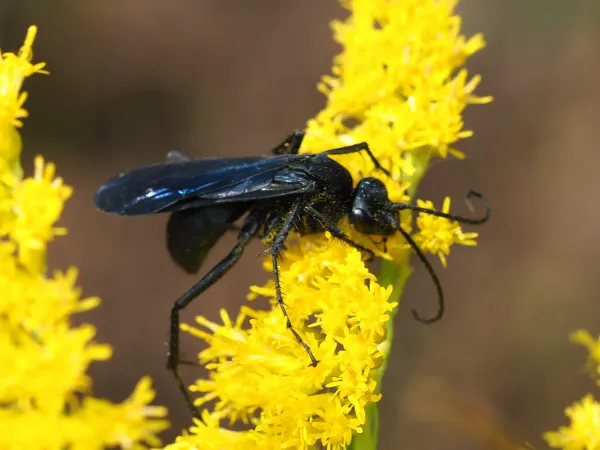
Blue-Black Spider Wasp Coloration
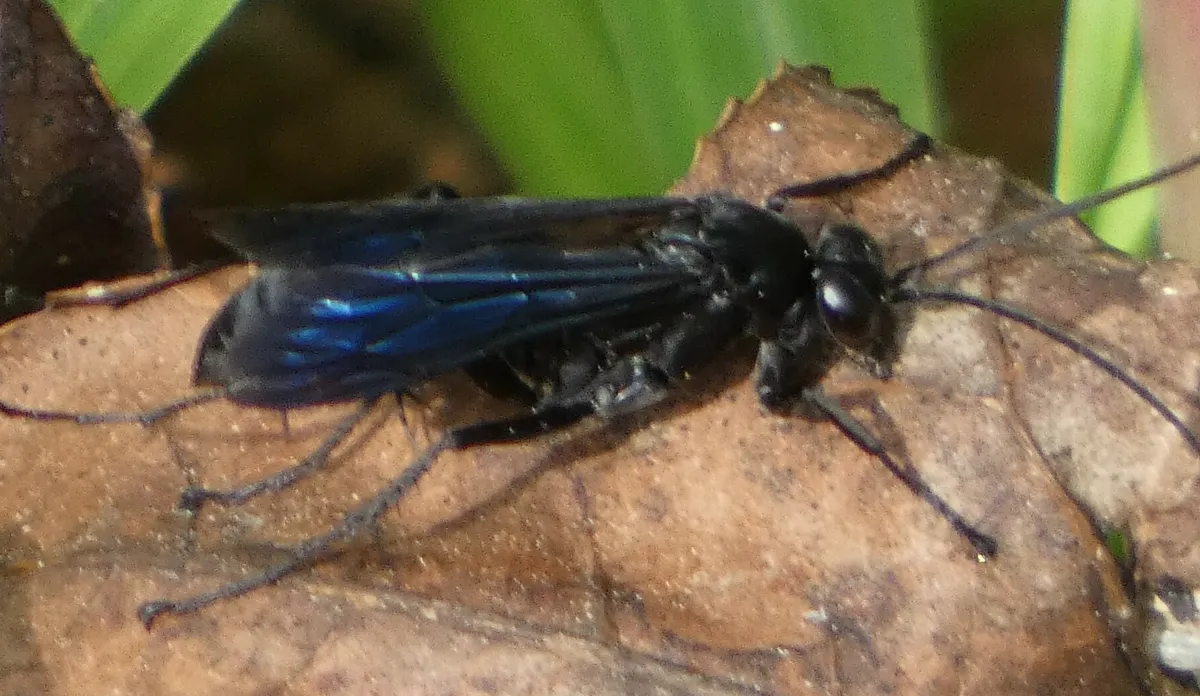
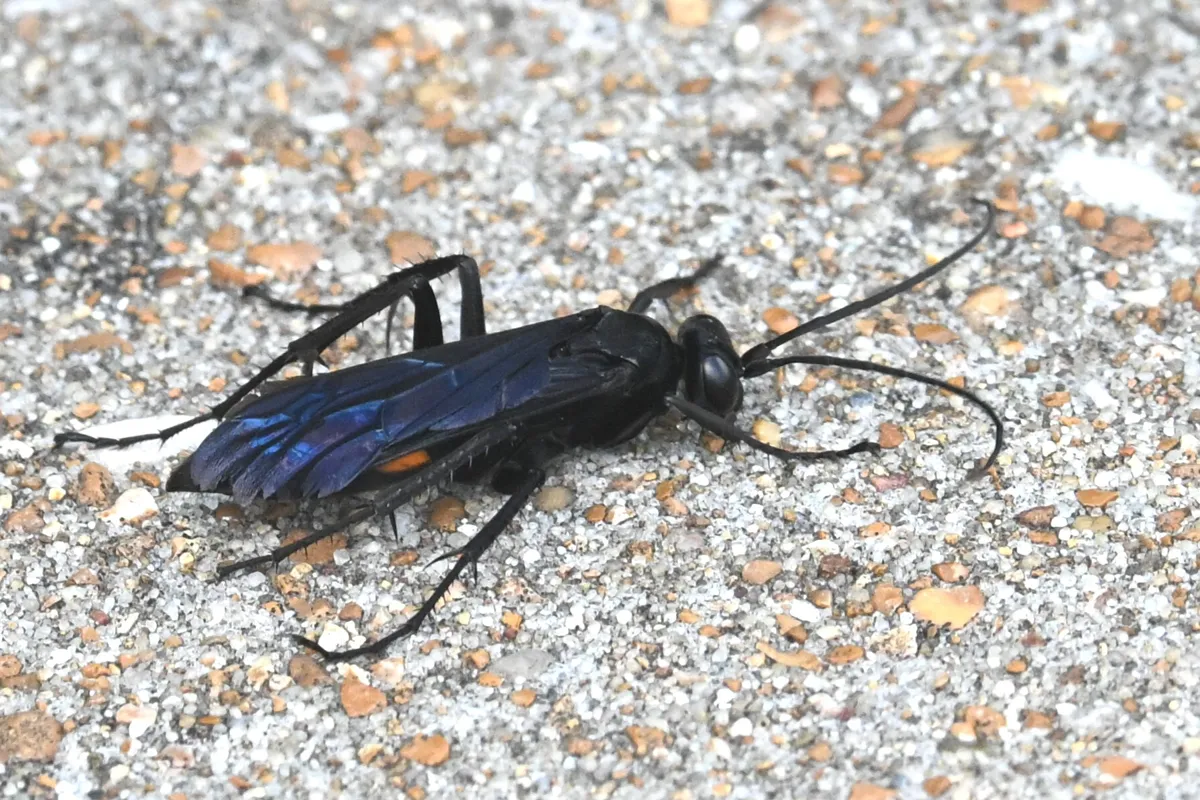
Common color patterns to help identify blue-black spider wasp
Blue-Black Spider Wasp
Seasonal Activity
When blue-black spider wasp are most active throughout the year

Where Blue-Black Spider Wasp Are Found
Hover over states to see their names. Green regions indicate where blue-black spider wasp have been reported.
Blue-Black Spider Wasp Identification Guide
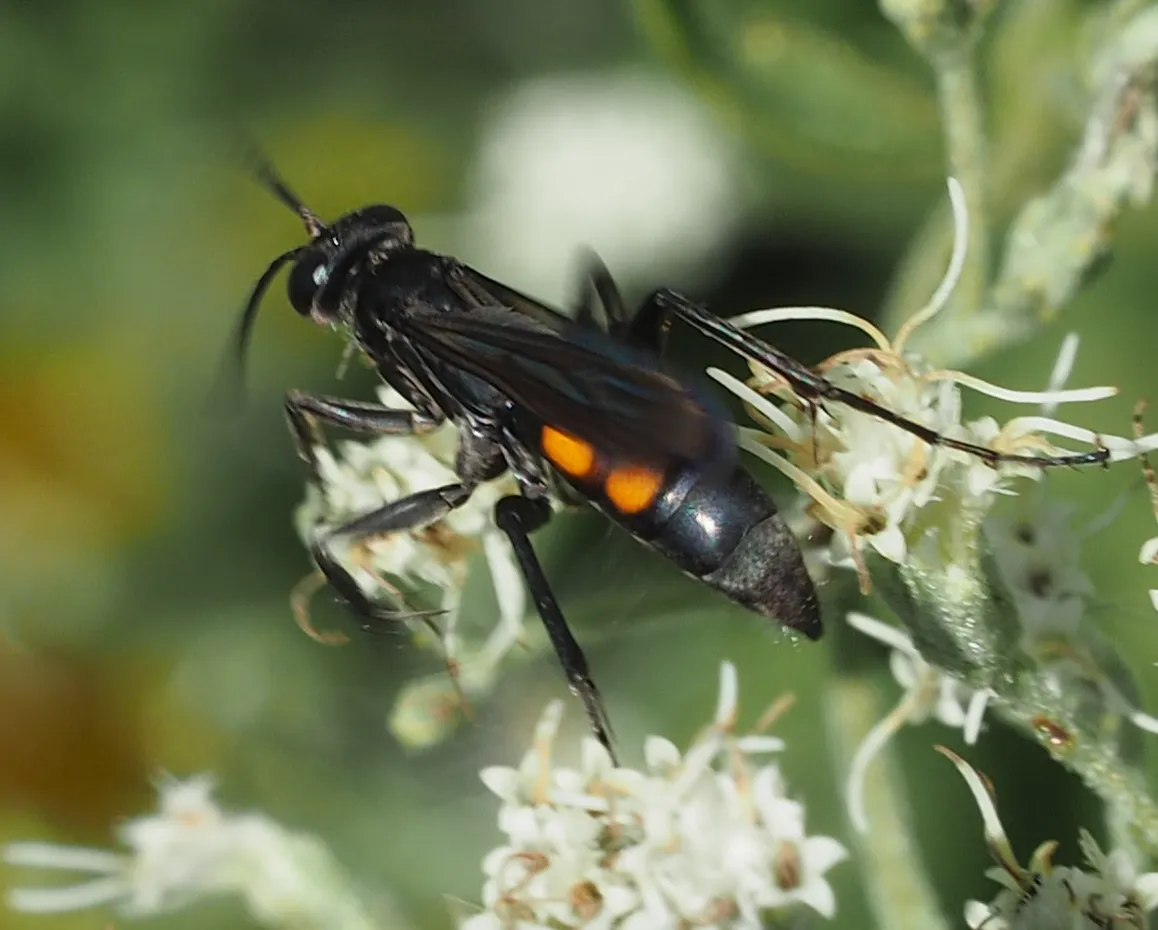
Blue-black spider wasps belong to the genus Anoplius, part of the spider wasp family (Pompilidae). Nearly 50 species live in North America. Most people notice them in summer. A dark wasp runs across a sidewalk, flicking its wings. Or it drags a spider bigger than itself.
Physical Characteristics
- Size: About 8 to 20 mm long (roughly 1/3 to 3/4 inch). Females are usually larger than males.
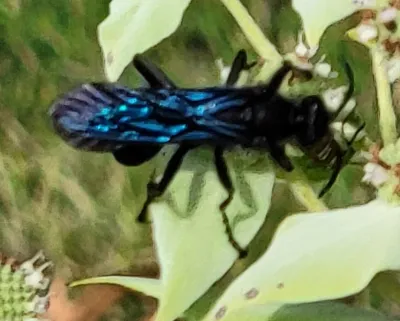
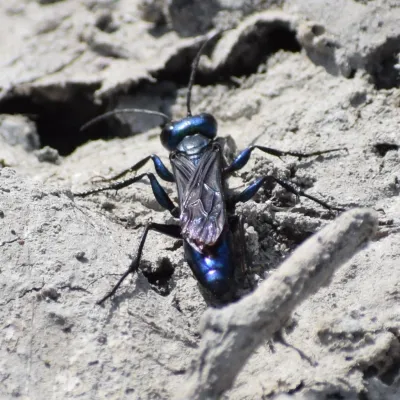
- Color: Many species are entirely black with a blue or violet shine. Others have orange or red bands near the base of the abdomen.
- Wings: Smoky dark wings that flash blue in sunlight. At rest, the wings fold flat over the back.
- Legs: Long and spiny. The hind legs reach past the tip of the body. Stout spines help the wasp dig and grip prey.
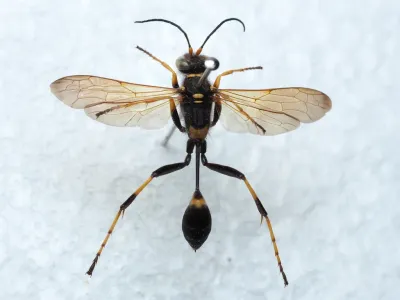
- Waist: Short. You won’t see the long, stalk-like waist of a mud dauber.
- Antennae: Females often hold their antennae curled at the tips.
The best field marks are behavior, not color. A female runs over the ground in fast, jerky bursts and flicks her wings almost constantly. She pokes into leaf litter, cracks and grass clumps looking for spiders.
Common Species
- Anoplius americanus: A widespread eastern species. Black with a blue sheen, often with a red-orange band on the abdomen. Color varies by region.
- Anoplius illinoensis: An all-black species common in the East and Midwest.
- Anoplius depressipes: A specialist that hunts fishing spiders. Its flattened, fringed front feet let it skim across water while towing prey.
- Lophopompilus atrox and L. aethiops: Larger blue-black spider wasps once placed in Anoplius. They are often called by the same common name.
The name “blue-black spider wasp” is loose. Several other spider wasp genera look similar, and an expert often needs a specimen to name the species.
Blue-Black Spider Wasp Behavior and Biology
Habitat
These wasps like open, sunny ground. Look for them on sandy soil, bare lawn patches, garden beds, gravel paths and stream banks. Around homes, they show up on patios, driveways, mulch and window screens. Adults visit flowers such as goldenrod, Queen Anne’s lace, wild parsnip and mountain mint.
Diet
Adults drink nectar from flowers. Females hunt spiders only to feed their young. Favorite prey includes:
- Wolf spiders
- Grass spiders and other funnel weavers
- Fishing spiders and nursery web spiders (for water-hunting species)
Why They Drag Spiders
A female finds a spider, wrestles it and stings it. The venom paralyzes the spider but doesn’t kill it. She then grabs it by a leg or near its jaws and drags it backward over the ground. Unlike most wasps, many spider wasps catch the prey first and dig the nest second. She may stash the spider on a leaf or in a crevice while she digs.
Her nest is a short burrow in loose soil. She may also use a crack in pavement, a gap in siding or an old insect hole. She pulls the spider in, lays one egg on it and seals the cell. The larva hatches and feeds on the still-living spider for about a week or two, then spins a cocoon.
Life Cycle
- Egg: One egg per spider, glued to the spider’s abdomen.
- Larva: Feeds on the paralyzed spider, then spins a silk cocoon in the cell.
- Pupa: Most species spend the winter underground as a mature larva or pupa.
- Adult: New adults emerge in late spring to summer. In the Mid-Atlantic, activity peaks June through August. A few species overwinter as mated adult females.
Sting and Defensive Behavior
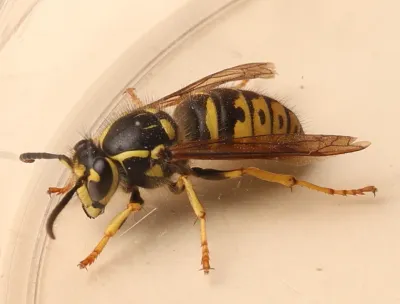
Only females can sting. Males look the same but are harmless. Blue-black spider wasps are solitary, so there is no colony to defend. They don’t chase people the way yellowjackets do. Stings happen when a wasp is handled, stepped on barefoot or trapped in clothing.
The sting is sharp and painful but brief. It is far milder than the famous sting of the tarantula hawk, a giant southwestern spider wasp. Watch for signs of an allergic reaction. Hives, swelling away from the sting, or trouble breathing call for emergency care. This is general information, not medical advice.
Blue-Black Spider Wasps vs. Look-Alikes
- Steel-blue cricket hunter (Chlorion aerarium): Larger and shinier, with a metallic blue-green body. It hunts crickets, not spiders, and doesn’t flick its wings as constantly.
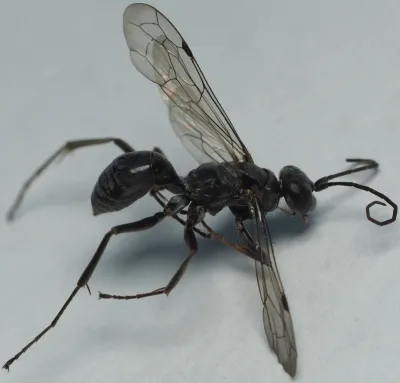
- Blue mud dauber (Chalybion californicum): Also blue and also hunts spiders. It has a long, thread-thin waist and reuses old mud nests on buildings.
- Great black wasp (Sphex pensylvanicus): Much bigger (up to about 1 1/2 inches), matte black, and hunts katydids.
- Tarantula hawk (Pepsis and Hemipepsis): A huge spider wasp with bright orange wings. It lives in the Southwest and Texas, not the Mid-Atlantic. See our spider wasps guide.
- Mud daubers: Build mud tubes or pots on walls and eaves. Spider wasps never build with mud.
How We Treat for Blue-Black Spider Wasps
Blue-black spider wasps are solitary. Each burrow holds one spider and one larva, so there is no big nest to remove. Control focuses on the spots where they nest and the spiders that draw them in.
- Inspection: If a wasp keeps showing up near a door, deck or play area, a technician confirms what it is. Many “blue wasp” calls turn out to be mud daubers or other solitary wasps. Those need a different plan.
- Treatment: When a burrow sits in a high-traffic spot, a technician can treat that entrance as part of our wasp control service. Treating the soil and cracks they reuse cuts down repeat nesting.
- Reduce the spiders: Hunting females go where spiders are plentiful. Our spider control service treats the outside of the home around windows, doors and corners. We also remove webs we can reach from the ground. The treatment is kept up on recurring visits.
- Prevention & customer guidance:
- Fill bare, sandy patches with grass seed or mulch. Females prefer loose, dry, open soil.
- Water bare soil in nesting areas. Damp ground is less appealing for digging.
- Seal cracks in foundations, siding and steps that females can use as ready-made nest holes.
- Wear shoes outdoors in summer, and don’t grab a wasp that is dragging a spider.
References
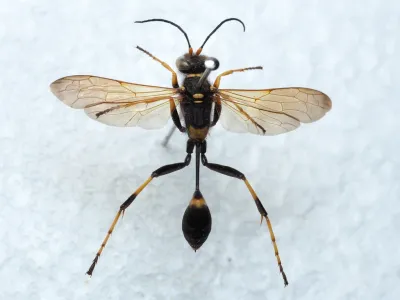
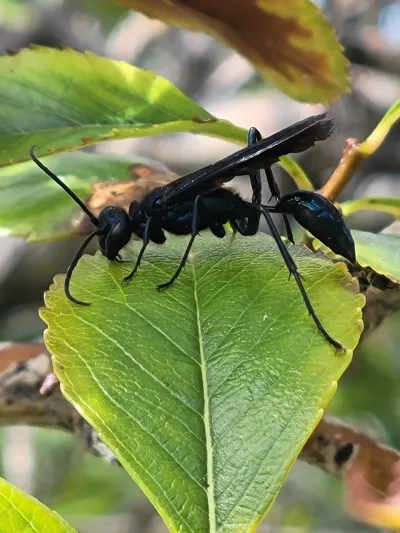
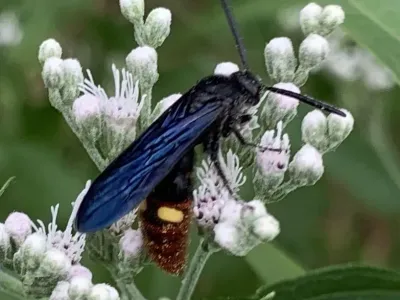
Other Wasps
Explore other species in the wasps family
Commonly Confused With
Blue-Black Spider Wasp are often mistaken for these similar pests
Where Blue-Black Spider Wasp Are Found
Hover over states to see their names. Green regions indicate where blue-black spider wasp have been reported.
Common Questions about Blue-Black Spider Wasp
Do blue-black spider wasps sting people?
+
Only females can sting, and they rarely do. Stings almost always happen when someone grabs one, steps on one barefoot, or traps one against their skin. The sting is sharp and painful but usually fades within minutes. Anyone with a known allergy to insect stings, or anyone who has trouble breathing or swelling away from the sting site, should get medical care right away.
Why is a wasp dragging a spider across my patio?
+
That is almost certainly a female spider wasp. She stung the spider to paralyze it and is hauling it to a burrow, crack or hidden spot where she will lay one egg on it. The spider becomes food for her single larva. She is focused on her prey and is very unlikely to bother you.
Why do spider wasps constantly flick their wings?
+
Female blue-black spider wasps run over the ground in quick, jerky bursts while flicking their wings nervously. It is one of the best ways to recognize them. Scientists are not certain of its exact purpose, but it is typical behavior for hunting females searching for spiders.
Are blue-black spider wasps aggressive?
+
No. They are solitary wasps, so there is no colony or nest to defend the way yellowjackets and hornets defend theirs. Each female works alone, and she would rather run or fly away than sting.
Do blue-black spider wasps damage homes or lawns?
+
No. Their burrows are small, single-use holes in bare soil or sand, and some females simply use an existing crack or gap. They do not chew wood, build paper nests or damage turf.
How do I tell a spider wasp from a blue mud dauber?
+
Blue mud daubers have a very long, thread-thin waist and a shiny metallic blue body, and they are often seen near old mud nests on buildings. Blue-black spider wasps have a short waist, longer spiny hind legs, and spend much of their time running on the ground while flicking their wings.
Should I get rid of blue-black spider wasps?
+
Start by making your yard less inviting. Fill bare soil with grass or mulch, water dry patches, and seal cracks they use as nest holes. Since they hunt spiders, cutting down spiders around the house also helps. If they keep nesting where kids or pets play, call us and a technician can inspect and treat the problem spots.

With five years of hands-on experience in the pest control industry, George Schulz is a registered technician with the Virginia Pest Management Association and a proud third-generation professional in a family business that's been protecting homes for over 58 years. He manages and trains a team of service pros while also leading internal research efforts—recently spearheading a deep-dive review of thousands of documents on pest control materials to hand-pick the most kid and pet friendly, most effective solutions tailored specifically for homes in the DC metro area.
Local Wasps Help
Dealing with wasps at home? Our licensed technicians provide pest control across Northern Virginia and Maryland.
