Spitting Spiders Identification Guide
Scytodes thoracica
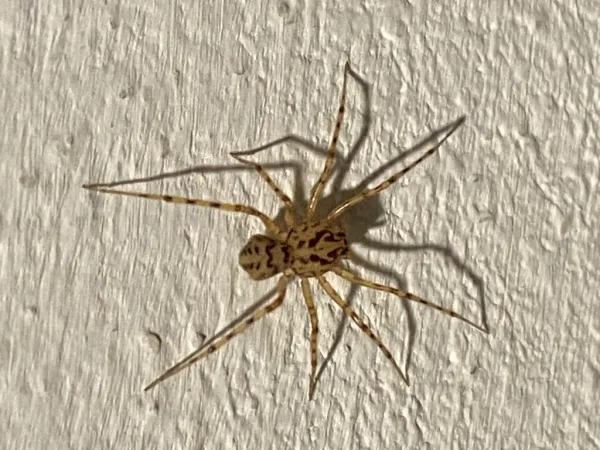
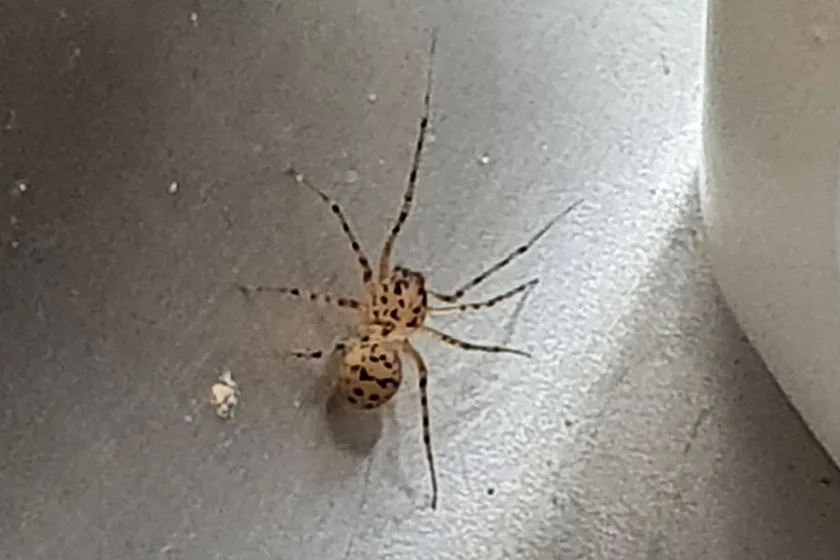
Spitting spiders are small, slow, spotted house spiders with six eyes and a domed head. They catch prey by spitting a sticky mix of silk, glue, and venom. They are often mistaken for brown recluses but are harmless to people.
Taxonomy
Spitting Spiders Coloration
Common color patterns to help identify spitting spiders
Spitting Spiders
Seasonal Activity
When spitting spiders are most active throughout the year

Where Spitting Spiders Are Found
Hover over states to see their names. Green regions indicate where spitting spiders have been reported.
Spitting Spider Identification Guide
Physical Characteristics
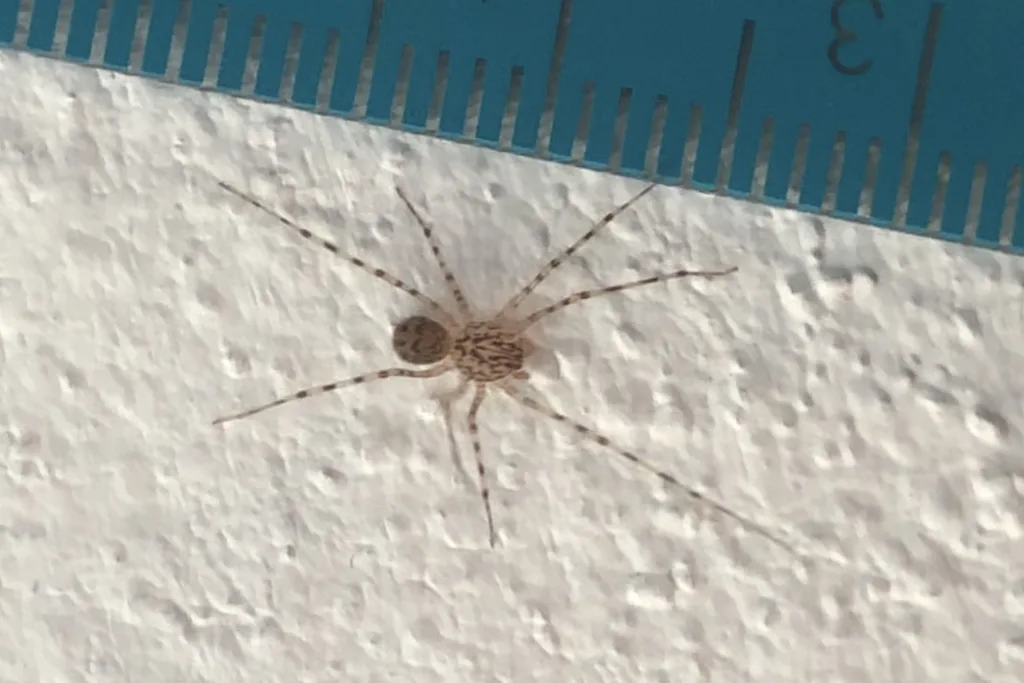
Spitting spiders (Scytodes) are small. The common spitting spider (Scytodes thoracica) has a body just 3.5 to 5.5 millimeters long, which is under 1/4 inch. Females are a little larger than males. The long, thin legs make the spider look bigger than it is.
Look for these features:
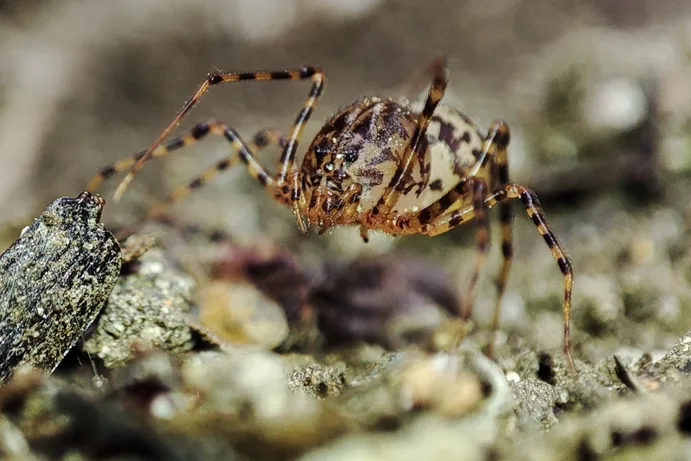
- Domed front body. The front body section is tall and rounded. It slopes up toward the back, and it is nearly as large as the abdomen. This hump holds the big glands that make the spider’s spit.
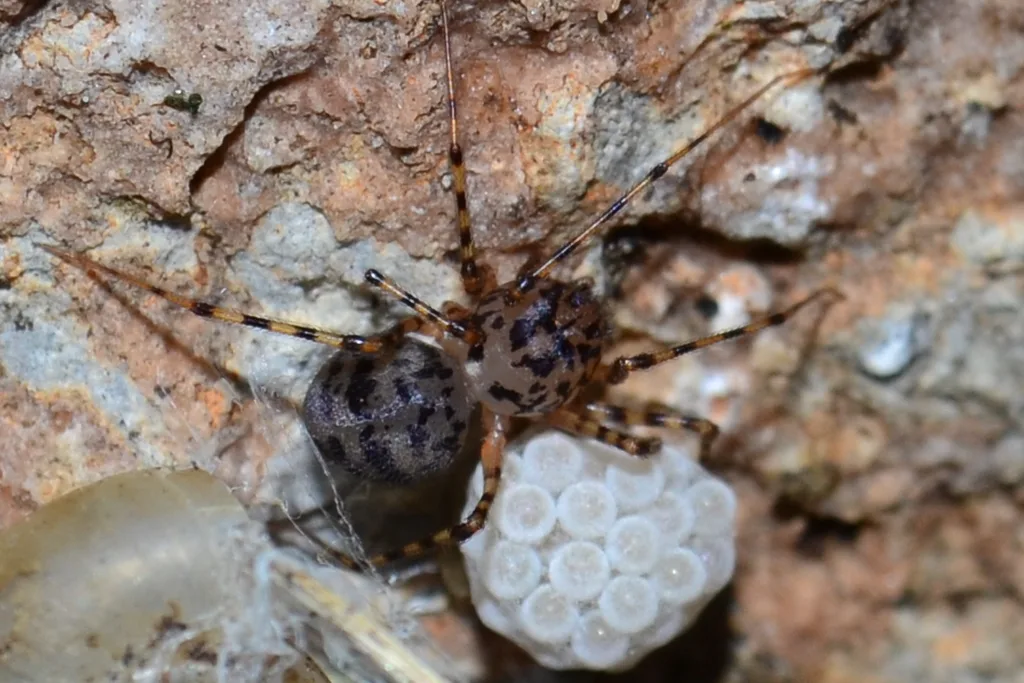
- Spots and bands. The body is pale yellow to tan with black spots and dashes. The legs have dark bands.
- Six eyes. Most spiders have eight eyes. Spitting spiders have six, set in three pairs.
- Smooth look. The body has very few hairs, so it looks clean and shiny.
- Slow walk. These spiders creep along walls and ceilings. They often hold the front legs up to feel their way.
Spitting Spider vs. Brown Recluse
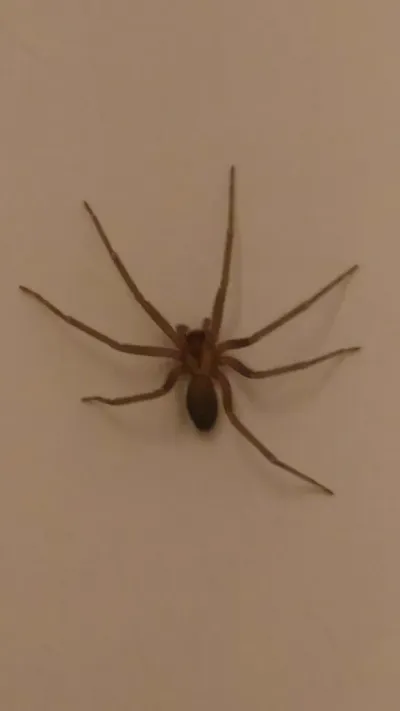
This is the mix-up that worries people most. Both spiders have six eyes in three pairs, and that eye pattern is often used to spot a brown recluse. Spider experts at UC Riverside note that spitting spiders have a similar eye pattern. But they have no violin mark, and their legs and abdomen show more than one color.
Here is how to tell them apart:
- Legs: A spitting spider has dark bands on its legs. A brown recluse has plain legs in one color.
- Abdomen: A spitting spider is spotted. A brown recluse abdomen is one plain color.
- Front body: A spitting spider is tall and domed with many dark marks. A brown recluse has one dark violin shape behind the eyes.
- Body length: A spitting spider is under 1/4 inch. A brown recluse is about 3/8 inch.
If your spider has banded legs or a spotted abdomen, it is not a recluse. Range helps too. Penn State Extension notes that brown recluses live in sixteen central and southern states. Outside that range they are extremely rare and are almost always carried in by people.
Other Look-Alikes
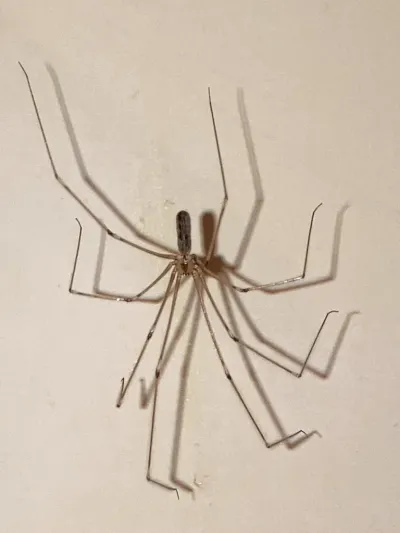
- Cellar spiders also have long, thin legs. They hang upside down in loose webs and have a narrow body with no dome.
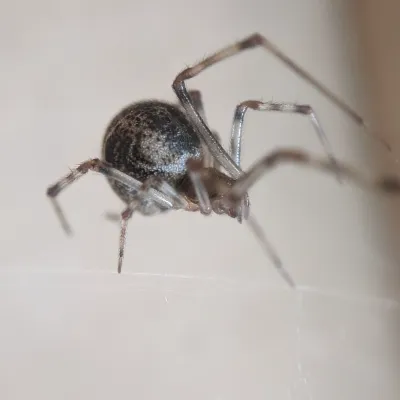
- Common house spiders have a round, mottled abdomen and sit in messy cobwebs.
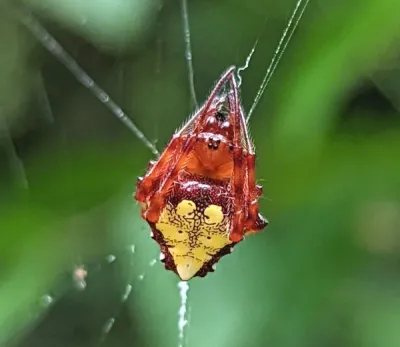
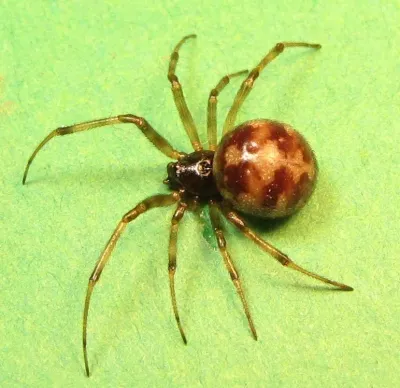
- Triangulate cobweb spiders have a zigzag pattern on a round abdomen and also live in webs.
Common Species
- Common spitting spider (Scytodes thoracica): the species most often found inside homes in the Northeast, Midwest, and West Coast.
- Scytodes atlacoya: recorded mostly from Texas through the Southeast and north into Virginia.
- Scytodes univittata: found mainly in Texas and the Southwest.
- Brown spitting spider (Scytodes fusca): a warm-climate species seen in Florida and Mexico.
Spitting Spider Behavior and Biology
Habitat
Most spitting spiders come from warm, tropical places. In cooler areas they get by because they live inside heated buildings. Indoors they stay in dark corners, cellars, cupboards, and closets. Outdoors in warm regions they hide under bark, rocks, and leaf litter.
Because they live inside, you can find them in any month. Sightings rise in the warm months, when the spiders are most active and when mating takes place.
How the Spit Works
Spitting spiders hunt at night. Their eyesight is poor, so they find prey by touch. When the front legs brush an insect, the spider turns to face it and spits.
The spit is a mix of silk, glue, and venom. The fangs swing from side to side as it comes out, so it lands in a zigzag that pins the prey down. High-speed video clocked the spit at up to about 28 meters per second. A full spit took less than 30 milliseconds. The threads then shrink by about half in a fraction of a second, which pulls the prey tight to the surface.
Once the prey is stuck, the spider bites it, wraps it in silk, and feeds. A study of the venom glands found sticky fibers and toxins in the mix.
Diet
Spitting spiders eat moths, flies, mosquitoes, and other spiders. Much of their prey is larger than they are. The spit lets a slow, tiny spider catch fast insects from a short distance away.
Life Cycle
- Females lay only 20 to 35 eggs in each sac and make two or three sacs a year.
- The female does not hang the sac in a web. She carries it under her body or in her jaws for two to three weeks until the eggs hatch.
- The young stay with the mother until their first molt, then leave to live alone.
- Growth is slow. Females can take two to three years to mature and may live up to four years.
Low egg numbers and slow growth mean spitting spiders rarely build up to large numbers in a home.
Are They Harmful?
Spitting spiders do not damage homes, food, or fabric. They have venom, but the Animal Diversity Web notes their fangs are too small to break human skin. They do not spit at people.
This page is not medical advice. If you have a bite or skin wound that concerns you, see a doctor.
How We Treat for Spitting Spiders
Spiders are covered under our regular pest control plan. Spitting spiders wander and do not sit in webs, so our work focuses on entry points, hiding spots, and the insects they feed on.
- Inspection: We look for where spiders are active and what is drawing them in. Common causes are bright outdoor lights that attract insects, moisture problems, and cluttered storage areas.
- Exterior treatment: We apply a non-repellent product around windows, doorways, corners, and other spots where spiders and insects get in. Spiders cannot detect it, so they walk across treated areas.
- Interior spot treatment: Indoors we treat corners and entry points where spiders have been seen. Spraying large indoor surfaces does little for spiders, so we keep it targeted.
- Web removal: We knock down the webs of other spiders that we can reach from the ground around eaves and porches.
- Follow-up: Our plan includes tri-annual visits to renew the exterior treatment, plus unlimited free callbacks if pests return between visits.
What You Can Do
The University of California lists simple steps that help with any indoor spider:
- Vacuum up spiders when you see them.
- Keep clutter off the floor in closets, basements, and garages.
- Seal cracks in the foundation and gaps around windows and doors.
- Check that window and door screens fit tightly.
- Turn off outdoor lights you do not need, and close blinds at night so indoor light does not draw insects to the windows.
Not sure what spider you have? Browse our spider library or compare the brown recluse and common house spider.
References
- Scytodes thoracica species account (University of Michigan, Animal Diversity Web)
- How to Identify and Misidentify a Brown Recluse Spider (University of California, Riverside)
- Brown Recluse Spiders (Penn State Extension)
- Spitting Performance Parameters and Their Biomechanical Implications in the Spitting Spider, Scytodes thoracica (Suter and Stratton, Journal of Insect Science)
- Spit and Venom from Scytodes Spiders: A Diverse and Distinct Cocktail (Zobel-Thropp et al., Journal of Proteome Research)
- Spiders (University of California Agriculture and Natural Resources)
Other Spiders
Explore other species in the spiders family
Commonly Confused With
Spitting Spiders are often mistaken for these similar pests
Where Spitting Spiders Are Found
Hover over states to see their names. Green regions indicate where spitting spiders have been reported.
Common Questions about Spitting Spiders
Are spitting spiders dangerous to people?
+
No. Spitting spiders do have venom, but the University of Michigan's Animal Diversity Web notes that their fangs are too small to pierce human skin. They also do not spit at people. The spit is used on small insects and other spiders. This is general information, not medical advice. See a doctor about any bite or skin wound that worries you.
Is a spitting spider a brown recluse?
+
No. Both spiders have six eyes in three pairs, which is why they get mixed up. A brown recluse has plain, one-color legs and a plain abdomen with a single dark violin mark behind the eyes. A spitting spider is covered in dark spots, has dark bands on its legs, and has a tall, domed front body. It is also about half the size.
How far and how fast can a spitting spider spit?
+
The spit only works at close range, so the spider has to creep up on its prey first. It is very fast, though. High-speed video research measured the spit leaving the fangs at up to about 28 meters per second, and the whole event took less than 30 thousandths of a second.
Why do I have spitting spiders in my house?
+
They come indoors for warmth and food. Spitting spiders hunt moths, flies, mosquitoes, and other spiders. A home with plenty of small insects, cluttered storage areas, and quiet corners gives them what they need. In colder states they live almost entirely inside heated buildings.
Do spitting spiders make webs?
+
They do not build webs to catch prey. They wander slowly at night and hunt by touch. They can still make silk, and they use it to wrap prey after spitting on it. You will not see the messy cobwebs that house spiders or cellar spiders leave behind.
Where do spitting spiders hide during the day?
+
Indoors they rest in dark, still places such as closets, cupboards, basement corners, the gap behind furniture, and where walls meet ceilings. Outdoors in warm regions they shelter under bark, stones, and leaf litter.
How do I get rid of spitting spiders?
+
Vacuum up the spiders you see, clear clutter from closets and basements, and seal gaps around doors, windows, and pipes. Cut down on the insects they eat by fixing moisture problems and using fewer outdoor lights at night. A regular pest control plan that treats entry points and lowers insect numbers helps keep them from coming back.

With five years of hands-on experience in the pest control industry, George Schulz is a registered technician with the Virginia Pest Management Association and a proud third-generation professional in a family business that's been protecting homes for over 58 years. He manages and trains a team of service pros while also leading internal research efforts—recently spearheading a deep-dive review of thousands of documents on pest control materials to hand-pick the most kid and pet friendly, most effective solutions tailored specifically for homes in the DC metro area.
Local Spiders Help
Dealing with spiders at home? Our licensed technicians provide pest control across Northern Virginia and Maryland.
