Arrowhead Spider Identification Guide
Verrucosa arenata
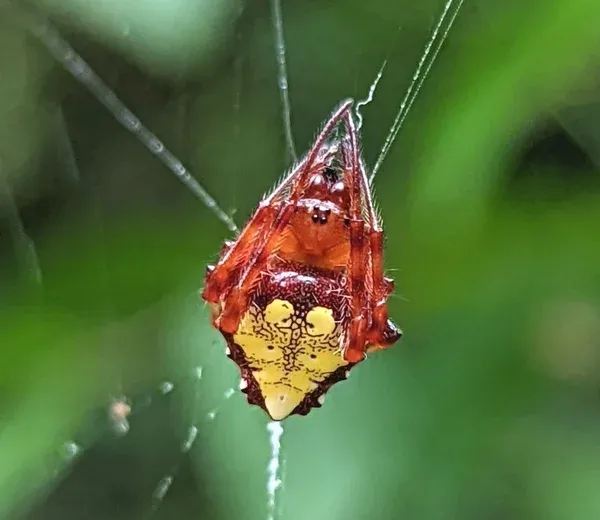
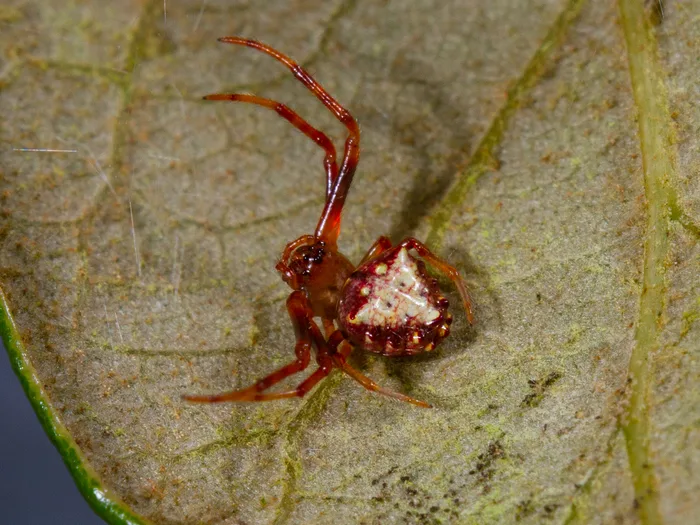
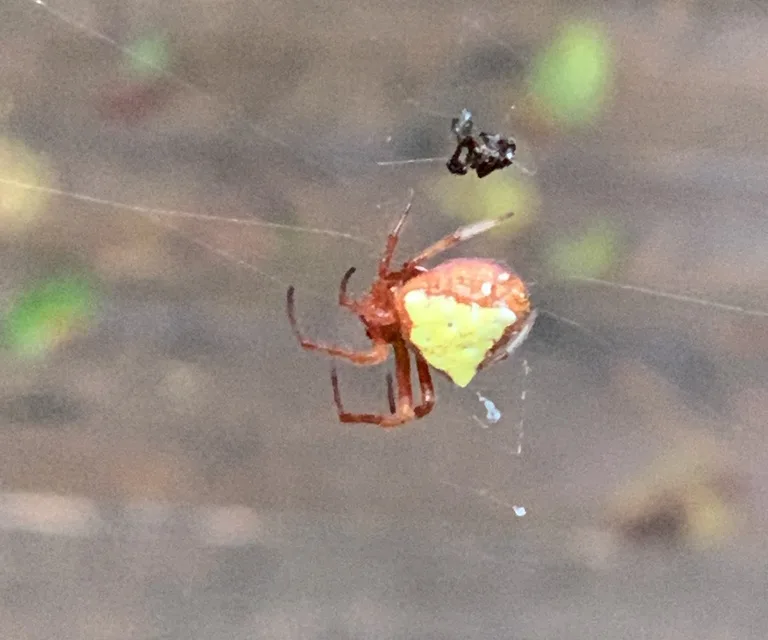
The arrowhead spider is a small, harmless orb weaver with a triangular abdomen marked by a shiny white or yellow triangle. Unlike most orb weavers, it rests head-up in its web, usually along wooded trails and yard edges in late summer.
Taxonomy
Arrowhead Spider Coloration
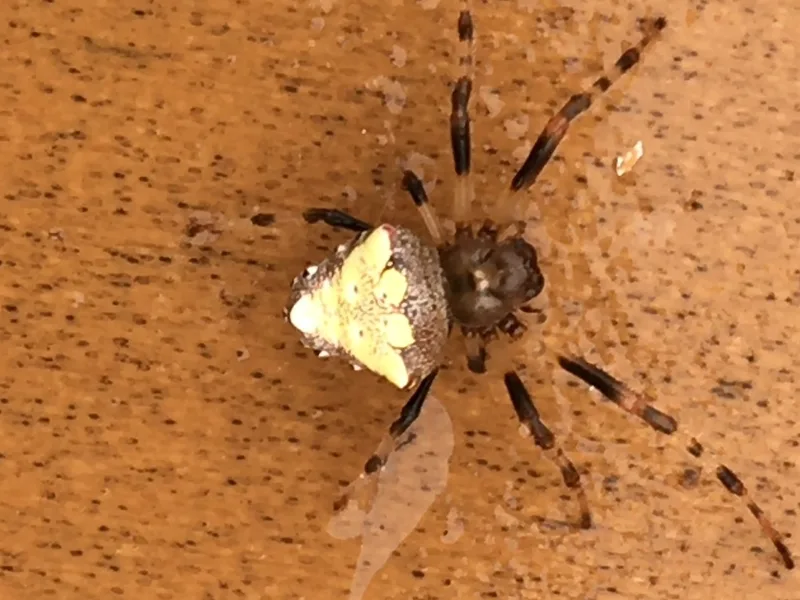
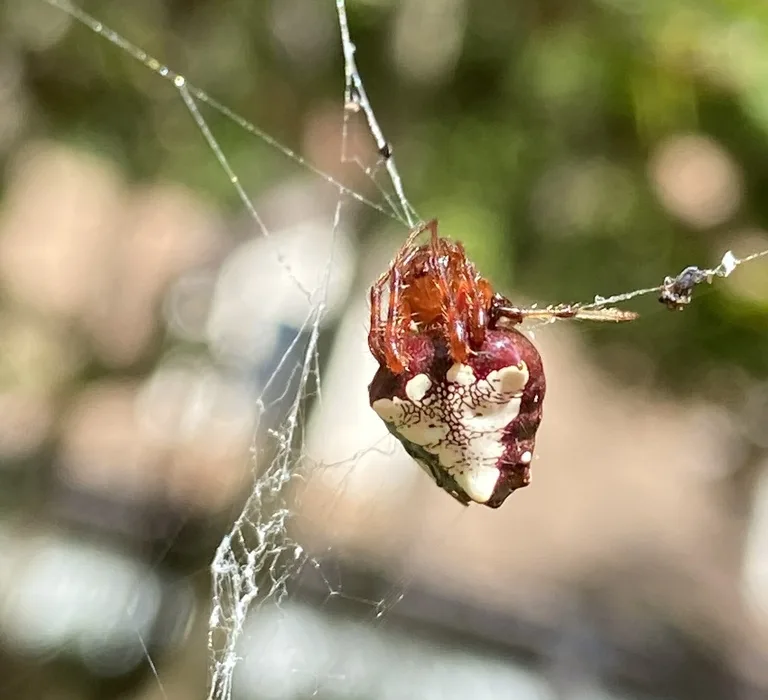
Common color patterns to help identify arrowhead spider
Arrowhead Spider
Seasonal Activity
When arrowhead spider are most active throughout the year

Where Arrowhead Spider Are Found
Hover over states to see their names. Green regions indicate where arrowhead spider have been reported.
Arrowhead Spider Identification Guide
Physical Characteristics
The arrowhead spider (Verrucosa arenata) is a small orb weaver. It lives in wooded areas of eastern North America. It is also called the arrowhead orbweaver or the triangle orbweaver. Its name comes from its abdomen, which is shaped like the tip of an arrow.
Females are the ones most people notice. The Missouri Department of Conservation lists females at about 3/8 inch (roughly 9 mm) long, not counting legs. Published body lengths range from about 5 to 14 mm. Males are smaller, about 4 to 6 mm, and lack the bright triangle.
Key features of an adult female:
- Triangle-shaped abdomen: Wide at the front and pointed at the rear. It has small, wart-like bumps. The genus name Verrucosa means “warty.”
- Shiny triangle marking: A white, yellow, or pinkish triangle on top of the abdomen. It looks like a flattened drop of glossy glue.
- Dark front end: The head, body, and legs are red-brown, rusty, or nearly black.
- Head-up posture: It rests in the center of its web with its head pointing up and its legs folded close to the body. Most other orb weavers hang head-down.
- Two color forms: Researchers have studied both a white-triangle form and a yellow-triangle form of this species. The color does not change how you should treat it.
How to Tell Arrowhead Spiders Apart from Look-Alikes
- Spined micrathena: Another small woodland orb weaver that builds webs at face height on trails. The micrathena has a hard, pale abdomen covered in sharp spines. It also hangs head-down. The arrowhead spider has small bumps, not spines, and a shiny triangle on top.
- Arrow-shaped micrathena (Micrathena sagittata): Its name sounds similar, but its yellow and red abdomen ends in two long rear spines.
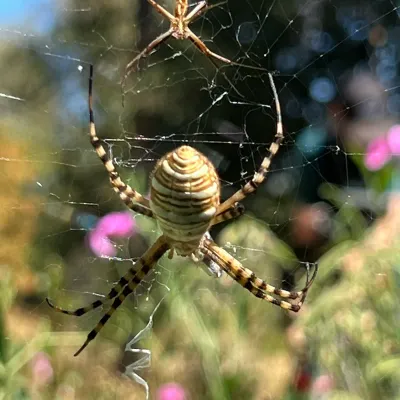
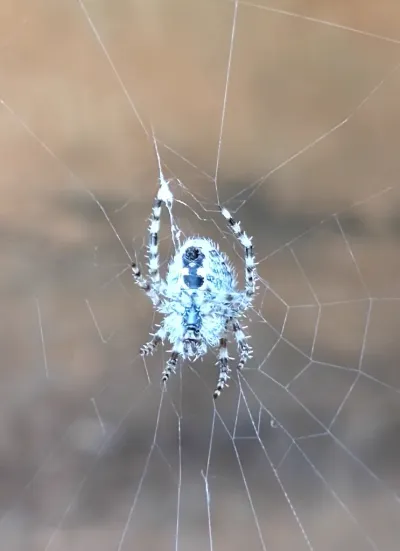
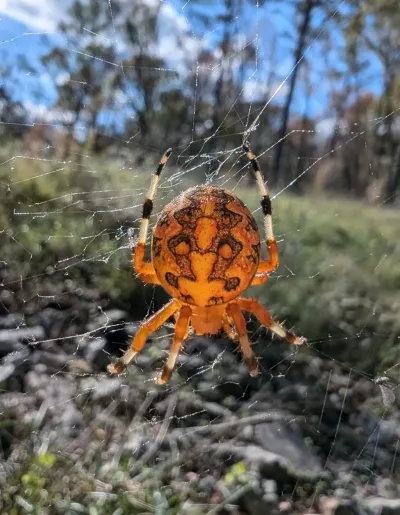
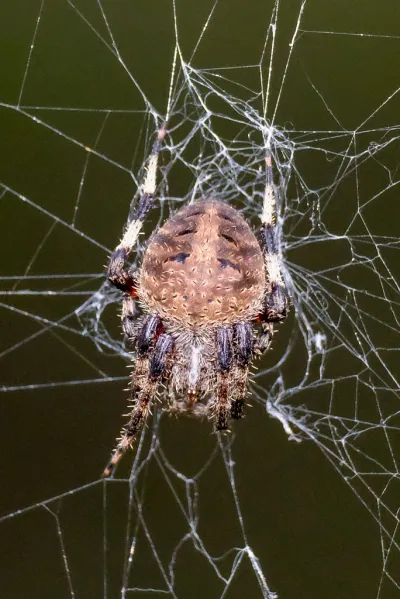
- Spotted orbweaver and marbled orbweaver: Both are larger, with round, bulging abdomens and patterned backs. They hang head-down and often build bigger webs on houses.
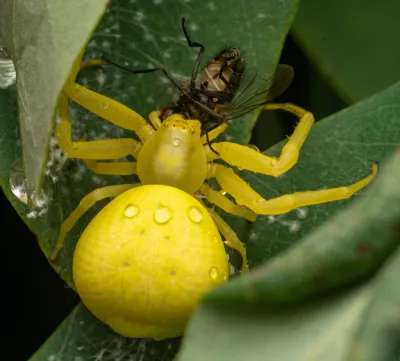
- Crab spiders: Some have a similar wide, angular abdomen. Crab spiders do not build orb webs. They wait on flowers and leaves with their front legs held out to the sides.
Common Species
Verrucosa arenata is the only Verrucosa species in the United States. Other members of the genus live farther south in the tropics, and V. arenata itself ranges south into Central America and the Caribbean.
Arrowhead Spider Behavior and Biology
Habitat
Arrowhead spiders live in deciduous woods, along hiking trails, and in yards with trees and shrubs. They need open gaps between branches to stretch a web. Webs are usually built low in trees and shrubs, which is why people walk into them on trails.
The species ranges across the eastern United States, from New York and southern Ontario south to Florida and west to Kansas, Oklahoma, and Texas. It continues south through Mexico to Central America. Public sighting records on GBIF rank Virginia and Maryland near the top. It is a very common spider in the DC area.
Diet
The web is small and vertical, with closely spaced rings of sticky silk. That tight spacing catches tiny flying insects:
- Mosquitoes
- Gnats and midges
- Small flies
- Tiny wasps and other small flying insects
The spider waits at the center of the web. When it feels prey hit the silk, it rushes over and wraps it. Its silk is tough and stretchy, and it often rebuilds torn webs.
Life Cycle
In temperate areas, the arrowhead spider lives for one season:
- Spring: Spiderlings hatch from egg sacs that spent the winter outdoors.
- Summer: Young spiders feed, molt, and grow. Only females build the familiar webs.
- Late summer and fall: Adults mate. Females keep producing egg sacs as long as the weather allows.
- First hard freeze: Adult females die. The egg sacs survive the winter and hatch the next spring.
In Virginia and Maryland, sightings climb in July and peak in August and September, then drop off through October and November.
Predators
Birds, lizards, and small mammals eat arrowhead spiders and their eggs. Hummingbirds and small songbirds also take spider silk to build their nests.
How We Treat for Arrowhead Spiders
Arrowhead spiders do not damage homes and rarely come indoors. Most homeowners only call when webs keep showing up across walkways, porches, or decks near trees. Our spider control service handles them along with other web-building spiders.
- Inspection: We look for spider hot spots around your home and for what draws them in. Bright outdoor lights pull in the small insects these spiders eat. Trees and shrubs close to the house give webs a place to anchor.
- Exterior treatment: We apply a non-repellent product to the outside of the home where spiders are active, such as windows, doorways, eaves, and corners.
- De-webbing: We knock down webs around the eaves and front porch that we can reach from the ground, up to about 6 to 8 feet.
- Ongoing service: Follow-up visits renew the outside treatment and clear new webs. You also get unlimited free callbacks between visits, and the same plan covers other common household pests.
Webs out in the trees, far from the house, are handled differently. Spider products work best on and near the home itself. For webs along wooded trails and back-yard tree lines, regular web removal is the most practical fix.
Prevention and Customer Guidance
- Sweep webs off railings, doorways, and paths with a broom
- Trim branches and shrubs that hang over walkways or touch the house
- Switch porch lights to yellow bug bulbs to draw fewer insects
- Close blinds at night so indoor lights do not pull insects to windows
- On wooded trails, wave a stick in front of you to clear webs
References
- Arrowhead Spider (Triangle Orbweaver) - Missouri Department of Conservation field guide
- Verrucosa arenata - Integrated Taxonomic Information System (ITIS)
- Verrucosa arenata occurrence records - Global Biodiversity Information Facility (GBIF)
- Arrowhead Orbweaver (Verrucosa arenata) - iNaturalist
- Spiders: Management Guidelines - University of California Agriculture and Natural Resources
Other Spiders
Explore other species in the spiders family
Commonly Confused With
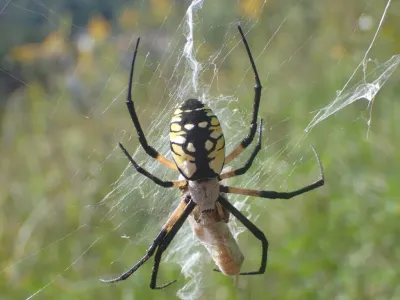
Arrowhead Spider are often mistaken for these similar pests
Where Arrowhead Spider Are Found
Hover over states to see their names. Green regions indicate where arrowhead spider have been reported.
Common Questions about Arrowhead Spider
Are arrowhead spiders poisonous or dangerous?
+
No. Arrowhead spiders are harmless to people and pets. Like nearly all spiders they have venom for subduing insects, but they are small, shy, and not known to cause medical problems. The Missouri Department of Conservation lists them as harmless to people.
How do I identify an arrowhead spider?
+
Look for a small orb weaver with a triangular abdomen that comes to a point at the rear. The top of the abdomen has a shiny white, yellow, or pinkish triangle that looks like a drop of glue. The head and legs are red-brown to black. The spider usually sits head-up in the center of its web with its legs pulled in.
Why does the arrowhead spider sit upside down in its web?
+
It actually sits right-side up. Most orb weavers hang head-down at the center of the web, but the arrowhead spider rests with its head pointing up. That head-up posture is one of the fastest ways to tell it apart from other orb weavers.
When are arrowhead spiders most active?
+
In Virginia and Maryland, most sightings happen from July through October, with a peak in August and September. Females die when freezing weather arrives, and their egg sacs carry the next generation through winter.
Do arrowhead spiders come inside the house?
+
Rarely. They are outdoor spiders that build webs in trees and shrubs, often along trails and wooded yard edges. You may find webs on porches, decks, or railings near trees, but they do not set up indoors.
Is the arrowhead spider the same as the triangle orb weaver?
+
Yes. Arrowhead spider, arrowhead orbweaver, and triangle orbweaver are all common names for *Verrucosa arenata*. It is the only *Verrucosa* species in the United States.
How do I keep arrowhead spider webs off my walkways?
+
Knock webs down with a broom, trim branches that hang over paths, and switch porch lights to yellow bug bulbs so fewer insects gather. If web-building spiders keep coming back around your home, our spider control service treats and de-webs the outside of the house.

With five years of hands-on experience in the pest control industry, George Schulz is a registered technician with the Virginia Pest Management Association and a proud third-generation professional in a family business that's been protecting homes for over 58 years. He manages and trains a team of service pros while also leading internal research efforts—recently spearheading a deep-dive review of thousands of documents on pest control materials to hand-pick the most kid and pet friendly, most effective solutions tailored specifically for homes in the DC metro area.
Local Spiders Help
Dealing with spiders at home? Our licensed technicians provide pest control across Northern Virginia and Maryland.
