Basilica Spiders Identification Guide
Mecynogea lemniscata
Basilica spiders, also called basilica orbweavers, are small striped spiders that build a dome-shaped web in shrubs and hang a string of egg sacs above it. They are common in yards and wood edges across the eastern and southern United States in summer.
Taxonomy
Basilica Spiders Coloration
Common color patterns to help identify basilica spiders
Basilica Spiders
Seasonal Activity
When basilica spiders are most active throughout the year

Where Basilica Spiders Are Found
Hover over states to see their names. Green regions indicate where basilica spiders have been reported.
Basilica Spider Identification Guide
Physical Characteristics
The basilica spider (Mecynogea lemniscata) is a small member of the orb weaver family. It is also called the basilica orbweaver. Most people notice its web or its egg sacs before they ever see the spider.
Females are about 6 to 9 mm long, or roughly a quarter to a third of an inch. Males are smaller at 4 to 6.5 mm. NC State Extension describes the body as about half an inch long at the large end.
Look for these features:
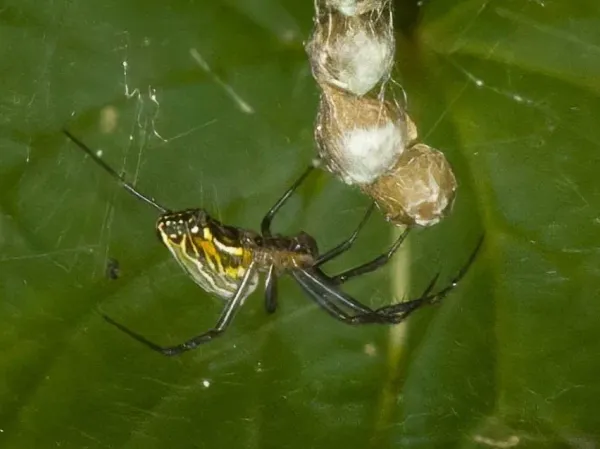
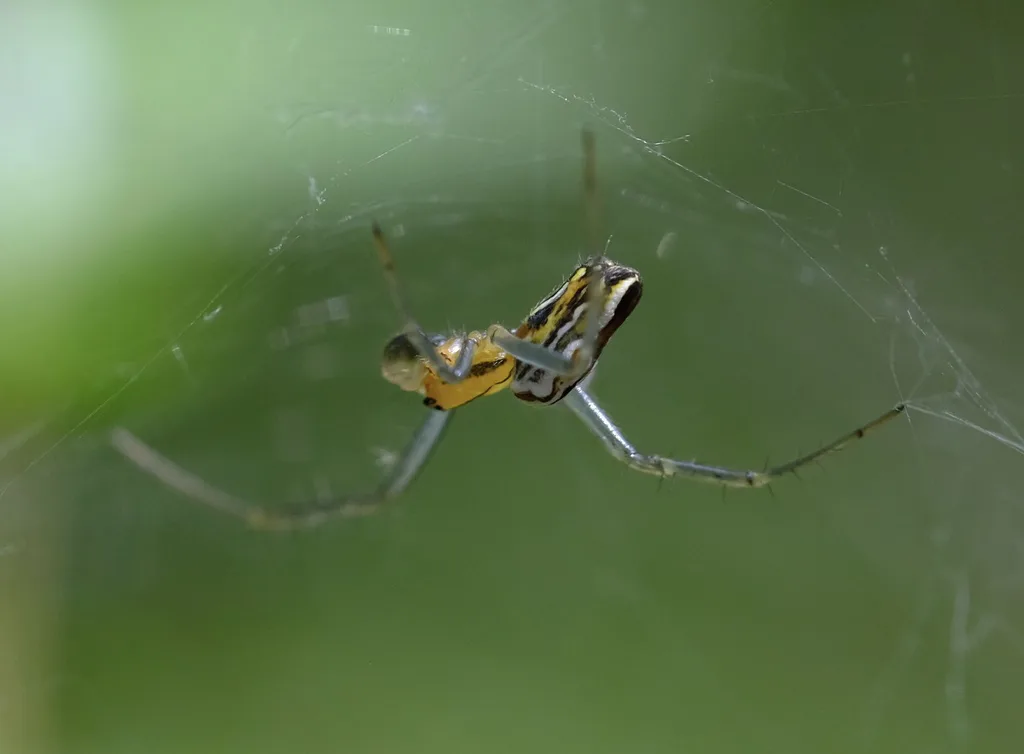
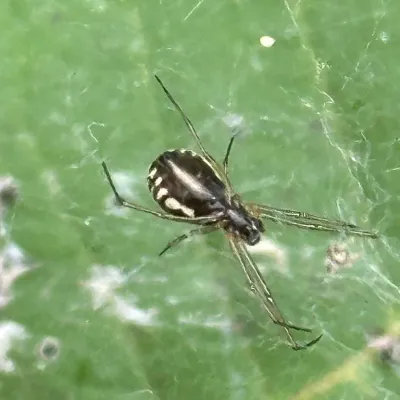
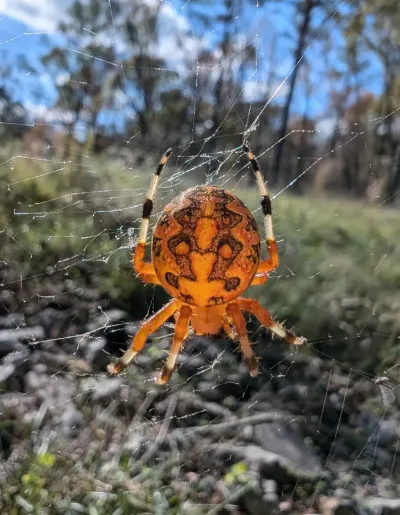
- Long, narrow abdomen. It is shaped more like a capsule than a ball. Most yard orb weavers have a round, plump abdomen.
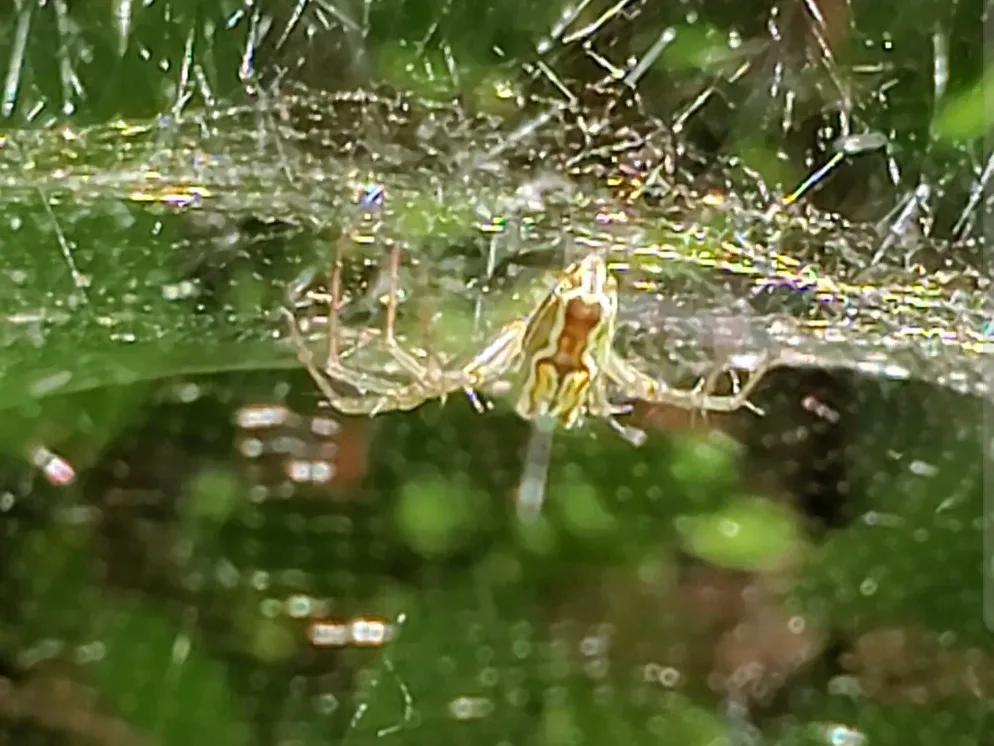
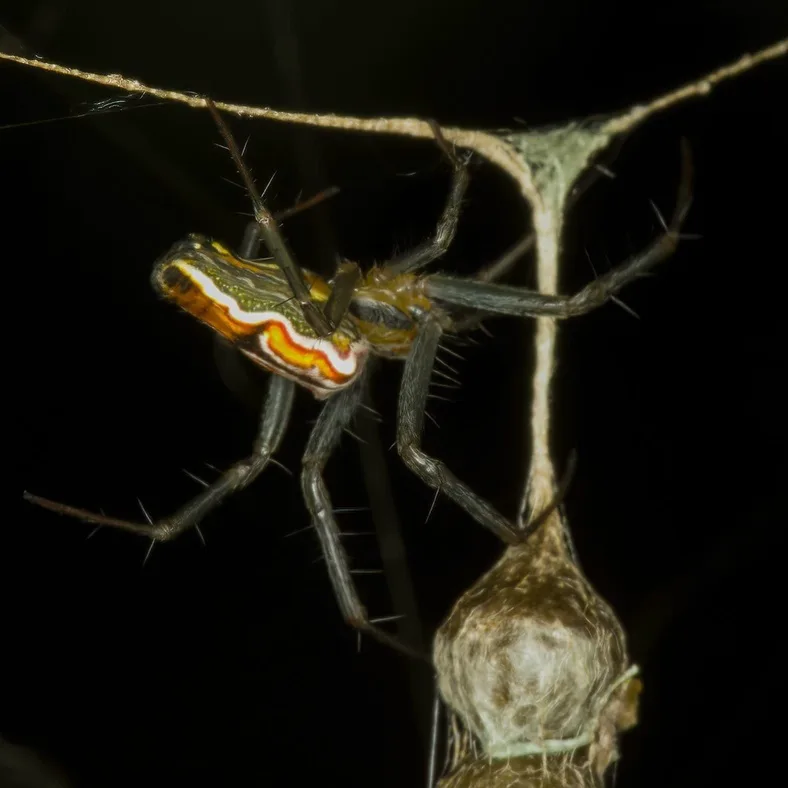
- Wavy white lines. One runs down each side of the top of the abdomen.
- Yellow, orange, or red bands. These sit just inside the white lines. Some spiders are mostly yellow and others show bright red-orange.
- Dark center stripe. A black or dark brown band runs down the middle of the back.
- Thin gray-green legs. The legs are long and slim with fine spines and no bold bands.
The spider hangs upside down under its web, so you often see the striped back from the side.
The Dome Web
The web is the best clue. Most orb weavers build a flat, upright wheel. The basilica spider builds its web level with the ground and pulls the center up into a dome. The whole web can be up to 20 inches across.
The dome is made of a very fine, tight mesh. A loose tangle of silk lines sits above and below it. The spider hangs under the peak of the dome and waits.
The Egg Sac String
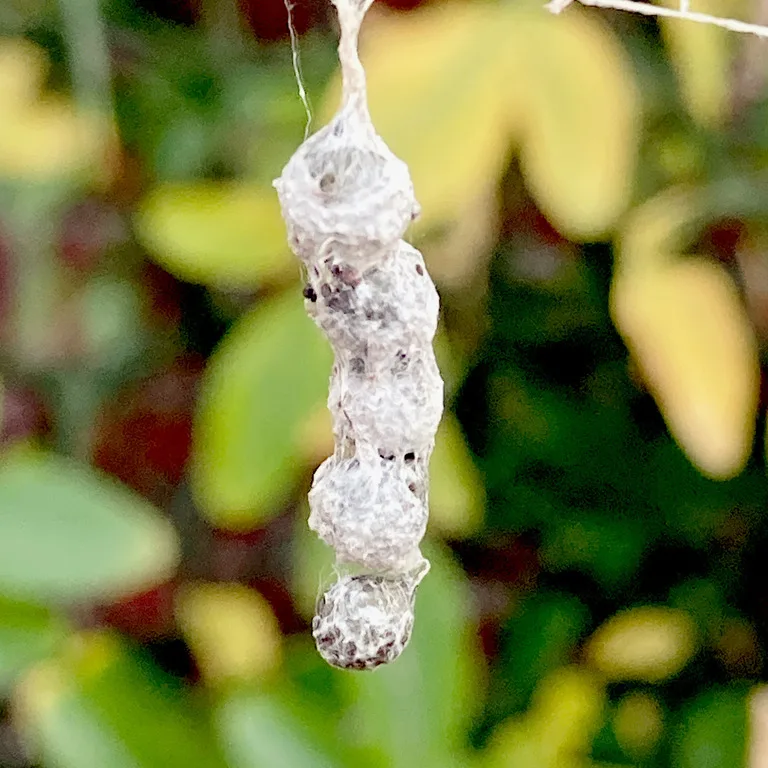
In mid to late summer, the female hangs her egg sacs in a line above the center of the dome. Each sac is round, papery, and tan to gray-white. Stacked together they look like beads on a cord. A string usually holds several sacs by the end of summer.
The string is tough. It can stay in a shrub through fall and winter after the web has fallen apart.
Similar Species
These spiders are often mixed up with basilica spiders:
- Bowl and Doily Spider (Frontinella pyramitela): Builds a silk bowl over a flat sheet in the same kinds of shrubs. The bowl opens upward, while the basilica dome peaks upward. Bowl and doily spiders are much smaller and never hang a string of egg sacs.
- Spotted Orbweaver (Neoscona crucifera): A larger, hairy, tan to rust-colored spider with a round abdomen. It builds a flat, upright wheel web on porches and eaves.
- Cross Orbweaver (Araneus diadematus): Has a round abdomen with a white cross of dots and builds an upright web.
- Marbled Orbweaver (Araneus marmoreus): Has a large, round, orange or yellow abdomen and shows up later in fall.
- Orchard Orbweaver (Leucauge venusta): A slim green and silver spider that also hangs under a tilted web. Its web is an open wheel with clear spokes, not a fine dome, and it does not make an egg sac string.
Basilica Spider Behavior and Biology
Habitat
Basilica spiders live outdoors in shrubs, hedges, vines, and low tree branches. They like spots with some shade and plenty of twigs to anchor silk. Around homes, webs turn up in:
- Foundation shrubs and ornamental plantings
- Hedges and vines along fences
- Plants beside porch rails, decks, and steps
- Wood edges and brushy borders at the back of a yard
In North America, the species is found mostly in the eastern and southern United States. Records are heaviest from New York and New Jersey south to Florida and west to Texas and Oklahoma. It also lives in parts of Mexico and south into South America. The World Spider Catalog lists the full range as the USA to Argentina.
Diet
Basilica spiders eat small flying and jumping insects. Common prey includes:
- Gnats, midges, and small flies
- Mosquitoes
- Leafhoppers and small moths
- Winged ants and tiny beetles
Insects fly into the tangle of lines around the dome and end up on the mesh. The spider feels the shaking through the silk, since orb weavers see poorly and hunt by vibration. It then moves in to subdue the prey.
Life Cycle
Basilica spiders live about one year.
- Spring: Young spiders leave the old egg sacs and spread out. NC State notes that the young first spin plain round orb webs. They switch to the dome shape as they grow.
- Early summer: Spiders reach adult size and build full dome webs.
- Mid to late summer: Females lay several batches of eggs and add a new sac to the string each time. NC State reports that the female wraps old web silk tightly around each egg mass.
- Fall and winter: Adults die. The young stay inside the egg sacs until the next spring.
Are They Harmful?
Basilica spiders do not damage plants, wood, or homes. They are shy and stay in their webs. Bites are rare and are not considered medically important. This is general information and not medical advice. Talk to a doctor about any bite that causes strong pain, swelling, or other symptoms.
The real problem is the mess. Webs span gaps between shrubs at arm and face height, and people walk into them. Egg sac strings and old silk also make tidy hedges and porch plantings look dirty.
How We Treat for Basilica Spiders
Basilica spiders are covered under our general pest control plan along with other spiders. Web-building spiders can be harder to control than crawling pests because they drift in from nearby trees and shrubs. Steady upkeep matters more than any single visit.
- Inspection: We look for where webs are building up on and near the house. We also look for what is feeding them. Bright exterior lights, moisture problems, and thick plants touching the siding all draw the small insects that spiders eat.
- Web removal: We knock down webs and egg sac strings we can reach from the ground on eaves, porches, window frames, and entry areas. Removing the egg sacs matters with this species, since each string holds next year’s spiders.
- Exterior treatment: We apply a non-repellent spray to the outside areas where spiders are active. This includes window and door frames, corners, and eave lines. Indoor work is limited to spot treatments at entry points, since broad indoor spraying does little for web builders.
- Ongoing service: We return three times per year to renew the exterior treatment and remove new webs. If spiders come back between visits, callbacks are free and unlimited.
Webs deep in a hedge or along a wood line away from the house are best handled by hand. A broom or web duster takes down the dome and the egg sacs in a few seconds.
Prevention Tips
- Trim shrubs and vines back from doors, steps, and porch rails
- Keep plants from touching the siding
- Switch porch bulbs to yellow “bug lights” that draw fewer insects
- Close blinds at night so indoor light does not pull insects to windows
- Knock down egg sac strings in late summer and fall and put them in the trash
Learn more about our spider control service.
References
- Basilica Orbweaver Spider - NC State Extension fact sheet on appearance, the dome web, and the egg masses
- Mecynogea lemniscata Species Page - BugGuide, hosted by Iowa State University Entomology, with size, season, and range notes
- Mecynogea lemniscata (Walckenaer, 1841) - World Spider Catalog taxonomic record and range
- Orb Weavers of Kentucky - University of Kentucky Entomology overview of orb weaver biology
- Eliminating Spiders Around Homes and Buildings - University of Kentucky Extension guide to spider management
- Spiders - University of California guidance on web removal, sealing gaps, and habitat changes
Other Spiders
Explore other species in the spiders family
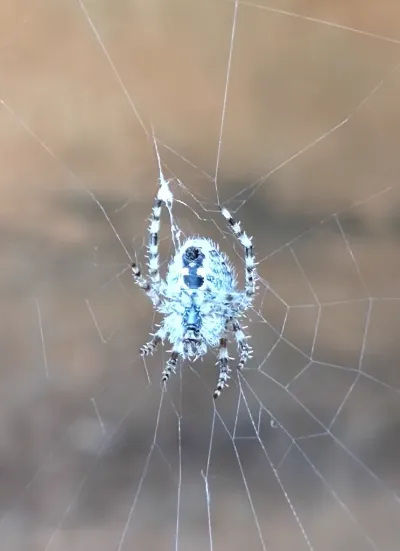
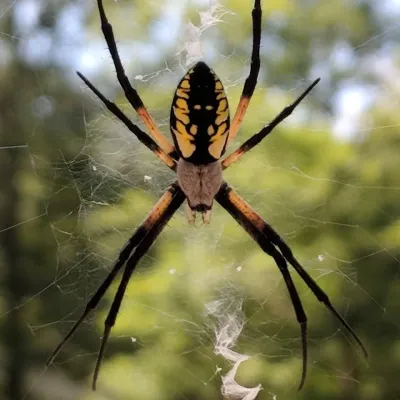
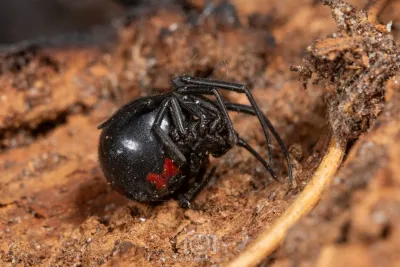
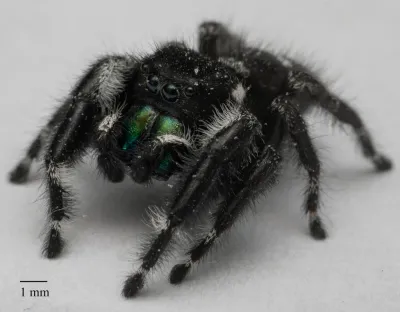
Commonly Confused With
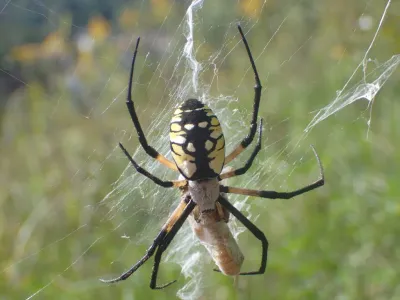
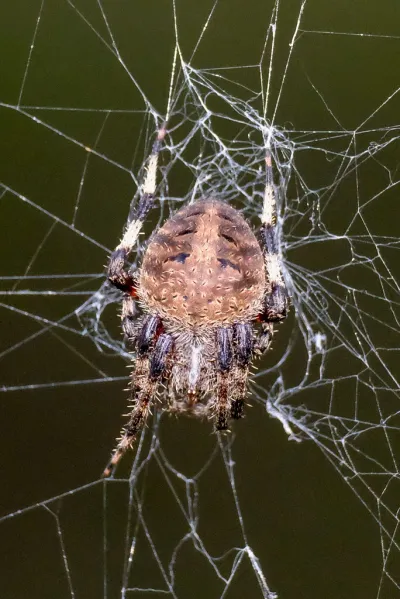
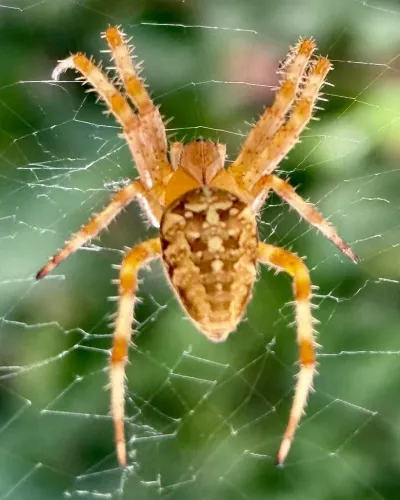
Basilica Spiders are often mistaken for these similar pests
Where Basilica Spiders Are Found
Hover over states to see their names. Green regions indicate where basilica spiders have been reported.
Common Questions about Basilica Spiders
What does a basilica spider look like?
+
A basilica spider is a small orb weaver with a long, narrow abdomen. The top of the abdomen has wavy white lines along the sides, yellow to orange-red bands inside those lines, and a dark stripe down the middle. The legs are thin and gray-green. Females are about a quarter to a third of an inch long, and males are smaller.
Are basilica spiders poisonous or dangerous?
+
Basilica spiders are not considered dangerous to people or pets. Like nearly all spiders they have venom for subduing insects, but they are shy, stay in their webs, and bites are rare and minor. This is general information and not medical advice. See a doctor if a bite causes strong pain, swelling, or other symptoms that worry you.
What is the string of white balls hanging in my shrub?
+
A hanging string of round, papery sacs that looks like beads on a cord is the egg sac string of a basilica spider. The female adds a new sac each time she lays eggs, so the string grows through the summer. It often stays in place long after the web and the spider are gone.
Why is it called a basilica spider?
+
The name comes from the web. Most orb weavers build a flat, upright wheel. The basilica spider pulls its web up in the middle into a dome, which reminded early naturalists of the domed roof of a basilica.
Do basilica spiders come inside the house?
+
Rarely. Basilica spiders need shrubs, vines, or low branches to hang their dome webs, so they live outdoors. One that turns up inside most likely came in on a plant, firewood, or through an open door, and it will not set up a web indoors.
How do I get rid of basilica spider webs?
+
Knock the dome web and the egg sac string down with a broom or web duster and put the egg sacs in the trash. Trim shrubs and vines back from doors, walkways, and porch rails so there are fewer places to anchor a web. If webs keep coming back on the house itself, a recurring exterior spider treatment with web removal will help.
When are basilica spiders most active?
+
In the Mid-Atlantic, young spiders show up in spring and adults are most common from June through August. Egg sac strings appear in mid to late summer. The adults die off in fall, and the next generation waits out the winter inside the egg sacs.

With five years of hands-on experience in the pest control industry, George Schulz is a registered technician with the Virginia Pest Management Association and a proud third-generation professional in a family business that's been protecting homes for over 58 years. He manages and trains a team of service pros while also leading internal research efforts—recently spearheading a deep-dive review of thousands of documents on pest control materials to hand-pick the most kid and pet friendly, most effective solutions tailored specifically for homes in the DC metro area.
Local Spiders Help
Dealing with spiders at home? Our licensed technicians provide pest control across Northern Virginia and Maryland.
