Banana Spiders (Golden Silk Orbweavers) Identification Guide
Trichonephila clavipes
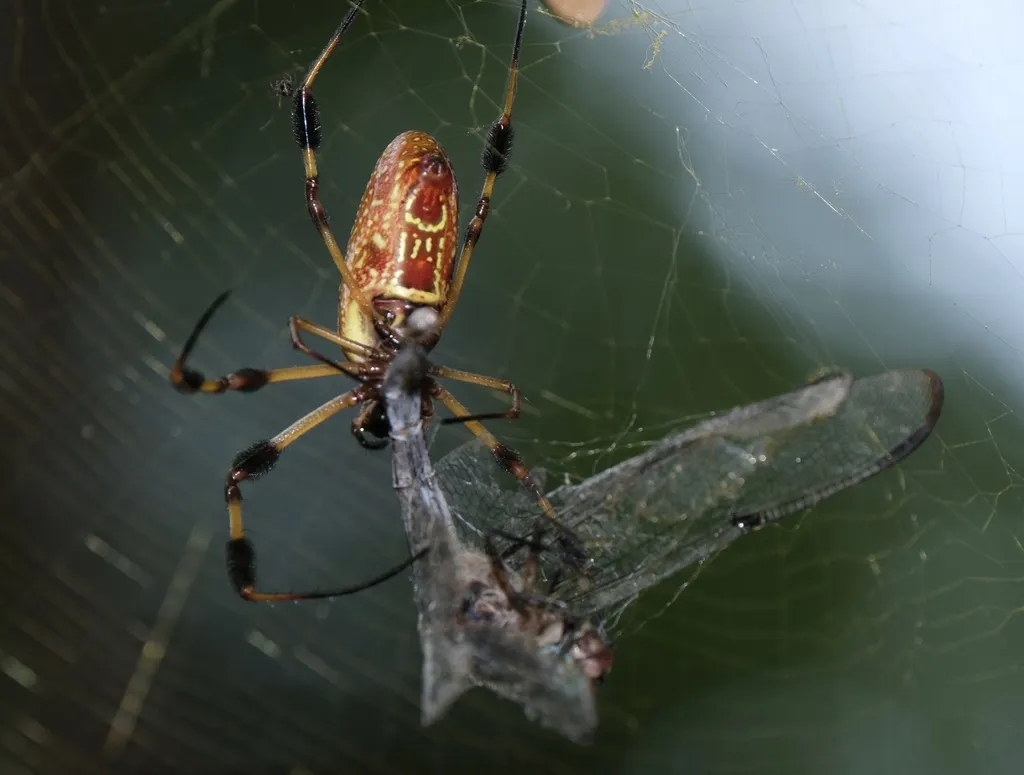
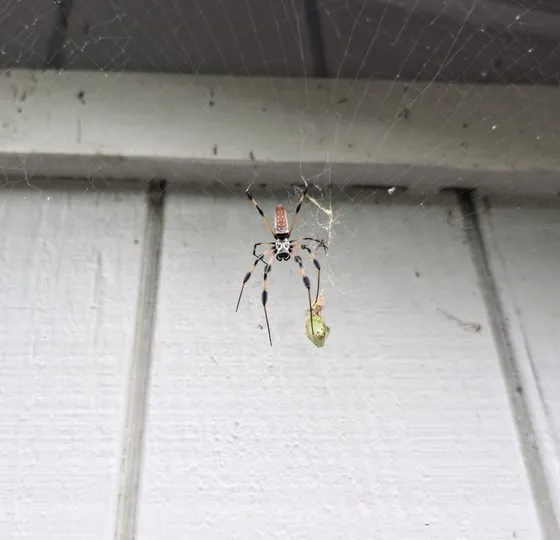
In the United States, "banana spider" usually means the golden silk orbweaver, a large orange and yellow spider with feathery leg tufts that spins huge golden webs across the Southeast. It is shy and its bite is milder than a bee sting.
Taxonomy
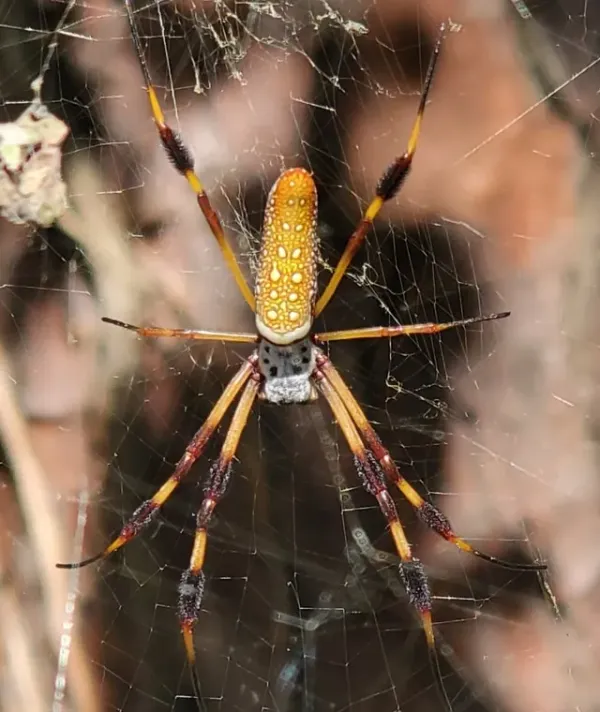
Banana Spiders (Golden Silk Orbweavers) Coloration
Common color patterns to help identify banana spiders (golden silk orbweavers)
Banana Spiders (Golden Silk Orbweavers)
Seasonal Activity
When banana spiders (golden silk orbweavers) are most active throughout the year
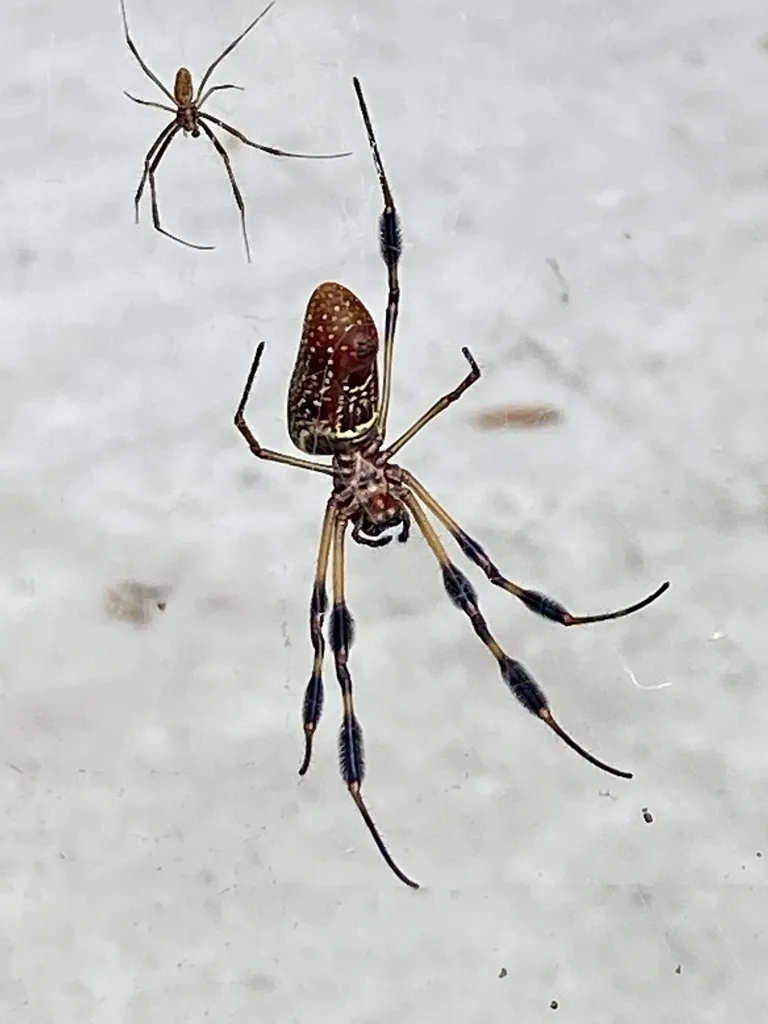
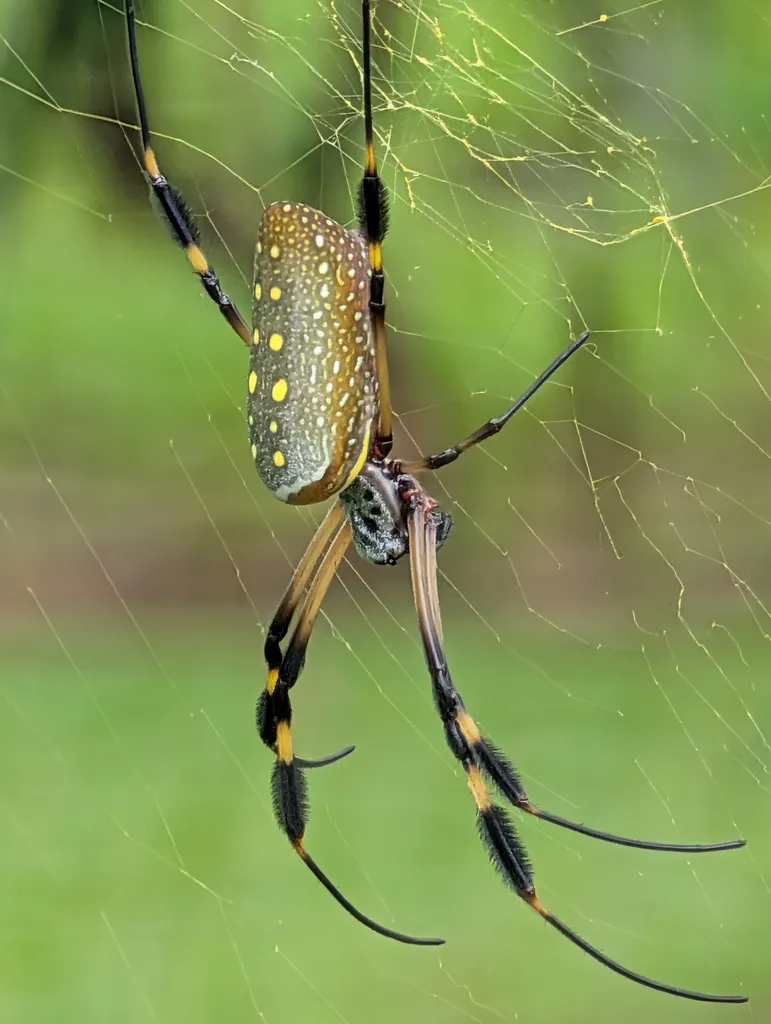

Where Banana Spiders (Golden Silk Orbweavers) Are Found
Hover over states to see their names. Green regions indicate where banana spiders (golden silk orbweavers) have been reported.
Banana Spider Identification Guide
“Banana spider” is a nickname, not one species. In the United States, it almost always means the golden silk orbweaver (Trichonephila clavipes). This big web-building spider lives in the Southeast. Older books call it Nephila clavipes. The genus name changed in 2019. Other common names are golden silk spider, golden orb weaver, and calico spider.
Physical Characteristics
The adult female is one of the largest web-building spiders in North America.
- Size: The University of Florida lists a female body length of about 1 to 1.6 inches (24 to 40 mm). With her legs spread, she can span 3 to 4 inches.
- Abdomen: Long and shaped like a tube. It is dull orange, tan, or yellow, with rows of white or yellow spots.
- Head: Covered in short silver hairs.
- Legs: Long and banded orange or yellow and brown. The best clue is the furry black tufts on several legs. No other common US orb weaver has them.
- Males: Tiny and dark brown, only about 1/4 inch (6 mm) long. They often sit near the edge of a female’s web.
The Web
The web is the giveaway. It is big and finely woven, often 3 to 6 feet across. The center sits near the top, not the middle. The silk has a yellow tint that glows gold in the sun. Extra tangles of silk often hang in front of and behind the main web. The female fixes her web instead of building a new one each day. So one web can stay in the same spot for weeks.
Other Spiders Called “Banana Spiders”
- Brazilian wandering spider (Phoneutria): A South American hunting spider with a bite that needs medical care. It does not spin webs, and it does not live in the US. UC Riverside researchers found that spiders found in fruit boxes are most often harmless Cupiennius spiders from Central America. People often mistake them for Phoneutria.
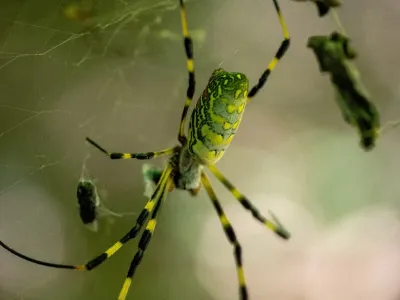
- Joro spider (Trichonephila clavata): A close relative from Asia with the same golden webs. It has a bright yellow abdomen with wide blue-gray bands and red marks underneath. Its legs are banded black and yellow, with no tufts. Unlike the banana spider, the Joro now lives in Maryland and is spreading in Virginia.
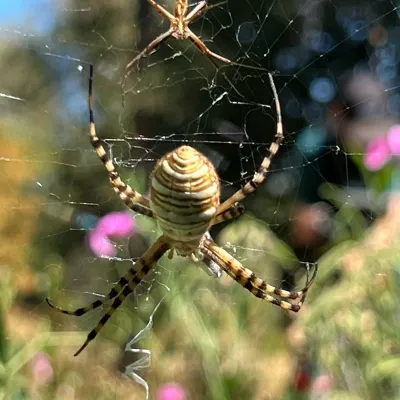
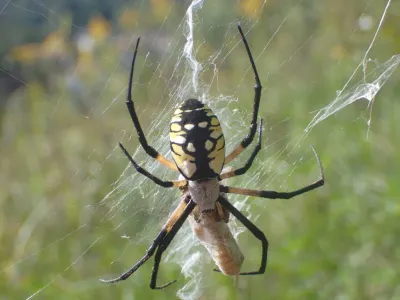
- Black and yellow garden spider (Argiope aurantia): Some people call it a banana spider because it is yellow. Its web is smaller, with a thick white zigzag down the middle. Its legs have no tufts.
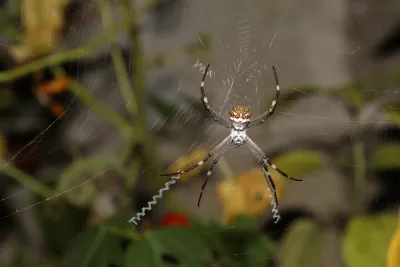
- Banded garden spider and silver garden spider: Smaller Argiope spiders with striped or silver bodies and zigzag webs.
For more side-by-side help, see our orb weaver spiders guide.
Banana Spider Behavior and Biology
Where Banana Spiders Live
Golden silk orbweavers live from the southeastern US through Mexico and Central America, down to Argentina. In the US, they are common in Florida. They are also common near the coast from Texas to North Carolina. They are much less common inland, in places like Tennessee and Arkansas.
Virginia: Verified iNaturalist records (as of October 2026) are few. Most come from the southeast corner of the state, such as Virginia Beach, York County, Gloucester Point, and Cape Charles. A few come from near the North Carolina line.
Northern Virginia and suburban Maryland: The banana spider does not live here. There are only a couple of one-off reports, such as one from Bethesda in 2026. There is no sign of a breeding population. If you see a huge golden web in the DC area, it is much more likely a Joro spider.
Habitat
Look for webs in sunny gaps in the woods, along trails, and at the edges of forests. They also show up in yards with big trees and shrubs. Webs are often strung between trees, or from a tree to a house eave, fence, or porch.
Diet
Banana spiders eat flying insects that hit the web. That includes flies, mosquitoes, bees, wasps, small moths, butterflies, beetles, and even dragonflies.
Behavior
These spiders are shy. They hang in the center of the web and drop or move away when bothered. The University of Florida says they bite only when held or pinched. The bite hurts less than a bee sting. This page is not medical advice. Talk to a doctor if you have a reaction to any bite.
Life Cycle
In the US, banana spiders have one generation per year:
- Spring: Baby spiders hatch from egg sacs and spread out. They are small and easy to miss.
- Summer: Young spiders grow and their webs get bigger. Males grow up and show up from July to September.
- Late summer and fall: Most females are full grown by August. Each one lays at least two egg sacs. Each sac holds several hundred eggs wrapped in yellow silk.
- Winter: Adults die when hard frost hits. The eggs live through the winter and hatch in spring.
How Banana Spiders Are Treated
Banana spiders do not harm homes, and they are not a health threat. The problem is their big webs on porches, eaves, and walkways. Where these spiders are common, pest control for them usually works like this:
- Inspection: A technician walks around the home to find where webs build up. They also look for what draws spiders in, such as bright lights that attract flying insects.
- Exterior treatment: A product is applied to the outside of the home where spiders are active. That includes eaves, window and door frames, porch ceilings, and railings.
- Web removal: Webs and spiders that can be reached from the ground are knocked down.
- Repeat visits: New spiders move in from nearby trees, so the outside of the home is treated again during the season.
Banana spiders are not found in our Northern Virginia and suburban Maryland service area. Here, large webs around a home are usually from Joro spiders, garden spiders, or other orb weavers. Our regular spider service covers them. We come back three times a year to renew the outside barrier and clear webs. If spiders come back between visits, callbacks are free.
Tips for Homeowners
- Use a broom or pole to clear webs from doors and walkways.
- Switch porch lights to yellow “bug” bulbs to draw fewer insects.
- Trim branches and shrubs that touch the house. This removes places to anchor webs.
- In late fall, look for egg sacs on eaves and siding and remove them before spring.
References
- Golden Silk Spider, Trichonephila clavipes (EENY229) - University of Florida IFAS Extension
- Deadly Banana Spiders! Or Not - Rick Vetter, University of California, Riverside
- Golden Silk Orb Weaver - National Park Service
- Joro Spider: Trichonephila clavata (Circular 1273) - University of Georgia Extension
- Golden Silk Spider observations - iNaturalist
Other Spiders
Explore other species in the spiders family
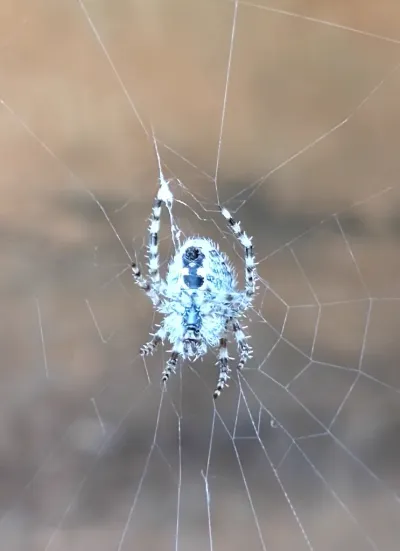
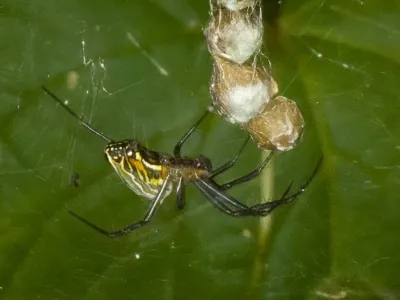
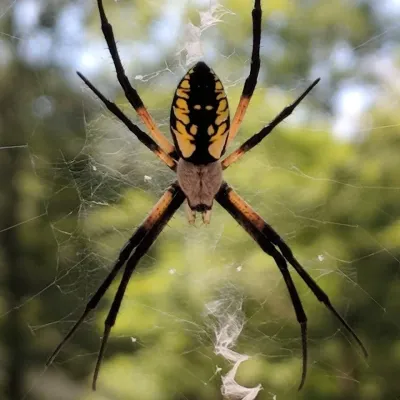
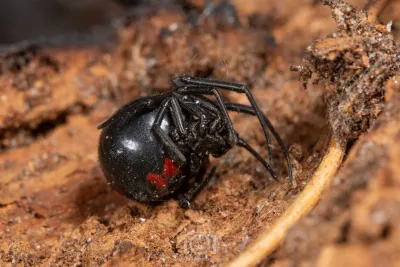
Commonly Confused With
Banana Spiders (Golden Silk Orbweavers) are often mistaken for these similar pests
Where Banana Spiders (Golden Silk Orbweavers) Are Found
Hover over states to see their names. Green regions indicate where banana spiders (golden silk orbweavers) have been reported.
Common Questions about Banana Spiders (Golden Silk Orbweavers)
Are banana spiders poisonous or dangerous?
+
The banana spider found in the US, the golden silk orbweaver, is not dangerous. Like almost all spiders it has venom, but the University of Florida says it bites only when held or pinched. The bite causes local pain and redness that fade quickly and is milder than a bee sting. This is not medical advice; see a doctor if you have a reaction to any bite.
Are there banana spiders in Northern Virginia or Maryland?
+
No established population. Golden silk orbweavers live mainly from the North Carolina coast south. Virginia has a few verified records, mostly around Virginia Beach and the lower Chesapeake Bay. Northern Virginia and suburban Maryland have only a couple of isolated reports and no known breeding population. A big golden-web spider in the DC area is far more likely to be a Joro spider.
Is the banana spider the same as the Brazilian wandering spider?
+
No. The Brazilian wandering spider (genus Phoneutria) is also called a banana spider, but it is a hunting spider from South America that does not build webs and does not live in the United States. Spiders found in boxes of bananas are usually harmless Central American species, according to University of California, Riverside spider researchers.
How is a banana spider different from a Joro spider?
+
They are close relatives with similar golden webs. The banana spider has an orange-tan to yellow abdomen with white or yellow spots and furry black tufts on its legs. The Joro has a bright yellow abdomen with wide blue-gray bands, red marks underneath, and no leg tufts. Joros are now in Maryland and Virginia; banana spiders mostly stay in the Deep South.
Why are banana spider webs gold?
+
The silk has a natural yellow pigment. In sunlight the web looks golden, which is how the species got its name. The webs can be several feet across and are often repaired rather than rebuilt, so they stay in place for weeks.
When do you see banana spiders?
+
Young spiders hatch in spring but are tiny. Females grow large and become easy to see from late July through October, when their webs cross trails, yards, and porches. Most adults die with the first hard frost, though in Florida some last into early winter.
Do banana spiders come inside the house?
+
Rarely. They build big webs outdoors between trees, shrubs, fences, and the eaves of homes. A spider may anchor a web to your house, but it does not live indoors.

With five years of hands-on experience in the pest control industry, George Schulz is a registered technician with the Virginia Pest Management Association and a proud third-generation professional in a family business that's been protecting homes for over 58 years. He manages and trains a team of service pros while also leading internal research efforts—recently spearheading a deep-dive review of thousands of documents on pest control materials to hand-pick the most kid and pet friendly, most effective solutions tailored specifically for homes in the DC metro area.
Local Spiders Help
Dealing with spiders at home? Our licensed technicians provide pest control across Northern Virginia and Maryland.
