Northern House Mosquitoes Identification Guide
Culex pipiens
Northern house mosquitoes are the common brown, night-biting mosquitoes of the northern and mid-Atlantic United States. They breed in stagnant, dirty water and are the main carriers of West Nile virus.
Taxonomy
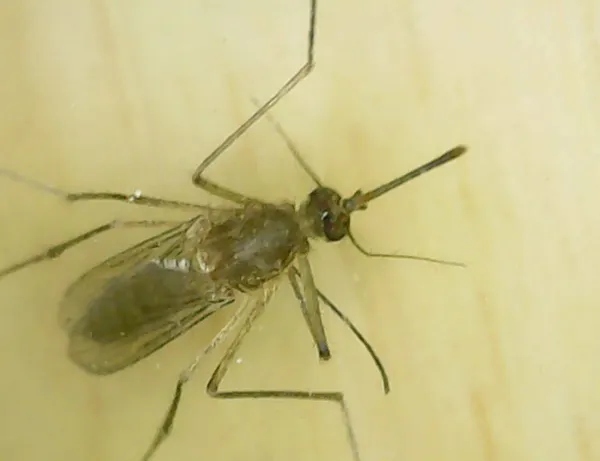
Northern House Mosquitoes Coloration
Common color patterns to help identify northern house mosquitoes
Northern House Mosquitoes
Seasonal Activity
When northern house mosquitoes are most active throughout the year


Where Northern House Mosquitoes Are Found
Hover over states to see their names. Green regions indicate where northern house mosquitoes have been reported.
Northern House Mosquito Identification Guide
Physical Characteristics
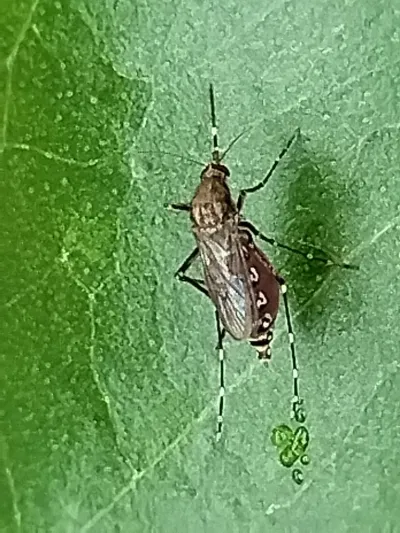
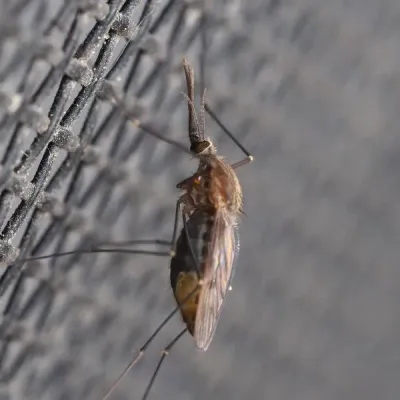
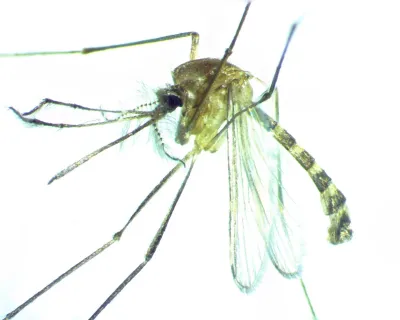
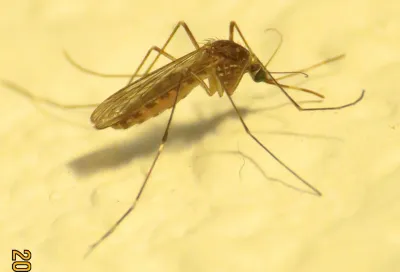
The northern house mosquito (Culex pipiens) is a small brown mosquito. Adults are about 3 to 7mm long. Females are the larger ones. The body is light to medium brown. Narrow gold-brown scales cover the top of the mid-section. They give the mosquito a dull, dusty look instead of a shiny one.
The clearest mark is on the belly. Each segment has a pale band at its base, so up close the belly looks lightly striped. There are no bold white marks on the legs or back, and the legs are long and plain.
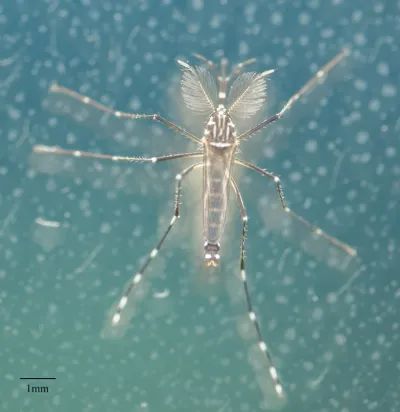
Females have short palps, the small feelers next to the mouthpart, and thin antennae. Males have bushy, feather-like antennae. Males never bite and feed on nectar only.
Common Species
Culex pipiens belongs to a group of close relatives called the Culex pipiens complex. Several of them live in North America:
- Culex quinquefasciatus: the southern house mosquito. It takes over in the South. The two species cross-breed in a band across the middle of the country, from about northern Virginia down to central North Carolina.
- Culex restuans: a northern species that looks almost the same. It shows up earlier in spring. Telling the two apart takes a microscope.
- Culex salinarius: another look-alike from eastern marsh areas.
- Culex tarsalis: the western encephalitis mosquito. It has banded legs and plays a similar role out west.
Because these species overlap and cross-breed, a firm species ID takes an expert or a lab test. A photo is rarely enough.
How to Tell It From Look-Alikes
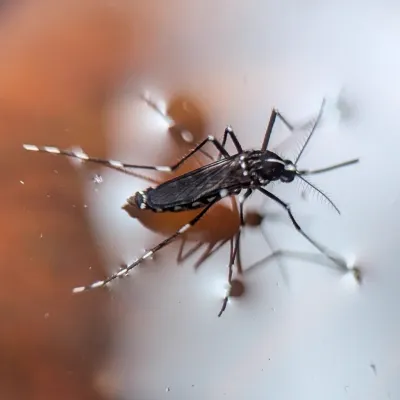
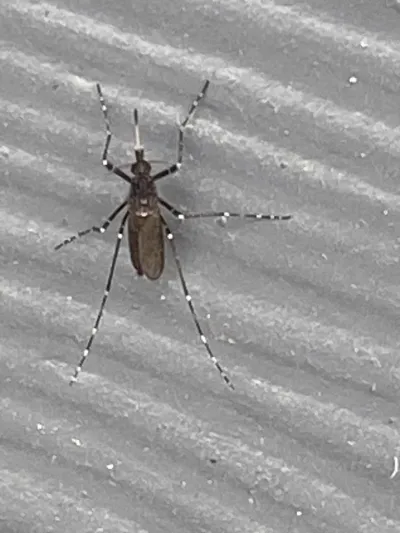
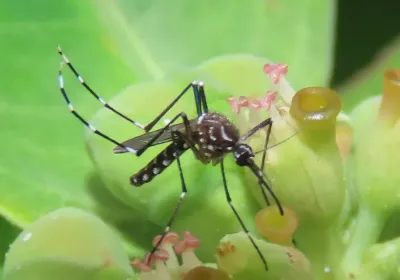
- Asian tiger mosquitoes: black with bold white leg bands and one white stripe down the back. They bite in daylight. Northern house mosquitoes bite at night.
- Asian bush mosquitoes: dark, with golden markings on the mid-section. They breed in tree holes and containers, not in dirty ground water.
- Yellow fever mosquitoes: small and dark, with a lyre-shaped white pattern on the back and white leg bands. They bite during the day and breed in containers.
- Anopheles mosquitoes: they tilt their body up at an angle when resting. The northern house mosquito rests flat.
- Crane flies: much bigger, with no biting mouthpart. They do not bite.
Northern House Mosquito Behavior and Biology
Habitat
This is the mosquito that lives with people. Most adults stay within a few hundred yards of the water they grew up in. You will find them around homes, alleys, storm sewers, and older neighborhoods where drainage sits still.
Larvae need stagnant water with a lot of organic matter in it. Common breeding sites include:
- Clogged gutters and downspout splash pans
- Storm drains, catch basins, and roadside ditches
- Neglected pools, hot tubs, and pond edges
- Buckets, wheelbarrows, tarps, and toys
- Bird baths, plant saucers, and pet dishes
- Leaking septic lines and sewage-fed puddles
During the day, adults rest in cool, shaded, damp spots. Look in dense shrubs, ivy beds, under decks, in garages, and along shaded fence lines.
Diet
Both males and females drink nectar and plant sugars for energy. Learn more about what mosquitoes eat and how males and females differ.
Only females bite. They need the protein in blood to make eggs. This species prefers birds, especially robins and other backyard songbirds. It will also feed on people, dogs, and horses.
That mixed diet is why this mosquito matters for public health. It picks up viruses from birds and passes them to people and pets.
Females hunt from dusk to dawn. They follow carbon dioxide, body heat, and skin odor. At night they gather at porch lights and lit windows.
Life Cycle
This mosquito goes through four stages: egg, larva, pupa, and adult. Females lay eggs in a floating raft. Each raft holds 100 to 300 eggs packed into an oval. Rafts hatch in one to two days in warm weather.
Larvae, often called wigglers, filter bits of organic matter out of the water. They pass through four growth stages in five to ten days. The pupa stage lasts one to three days.
In summer, egg to adult can take as little as a week. A forgotten bucket can produce biting adults before you notice the water in it. Read more about how long mosquitoes live.
Overwintering
This is one of the few mosquitoes you may see indoors in January. Mated females stop feeding in fall and build up fat. Then they enter a resting state called diapause.
They spend winter in basements, crawl spaces, culverts, sheds, and storm drains. In spring they come out and lay their first eggs. Females that carry West Nile virus through the winter help restart the cycle the next year.
Health Concerns
Culex pipiens is the main carrier of West Nile virus in the northern and mid-Atlantic states. It also spreads St. Louis encephalitis and dog heartworm. In wild birds, it spreads bird malaria.
Most people who get West Nile virus never feel sick. About one in five get a fever, headache, and body aches. About one in 150 get a serious illness that affects the brain and spine. Adults over 60 and people with weak immune systems face the highest risk.
This section is for general education and is not medical advice. Call a doctor if you get a fever or a bad headache after mosquito bites.
How We Treat for Northern House Mosquitoes
Mosquitoes are one of the pests our team treats across DC, Northern Virginia, and Maryland. Our mosquito control program goes after two things at once: the adults resting in your landscaping and the water making the next batch.
- Inspection: Every visit starts with a walk of the property. We look for shaded resting spots and standing water. For this species we pay close attention to gutters, downspouts, drainage swales, low spots, containers, and any water near foundations or crawl space vents.
- Treatment: Our technicians use a backpack mist blower. They apply an EPA-registered product to the shaded places where adults spend the day. That means under shrubs, ivy patches, thick brush, fence lines, and the underside of decks and porches. The product has two parts. One knocks down adults fast. The other is a growth regulator that keeps young mosquitoes from ever reaching the biting adult stage. We work around blooming flowers, fruits, and vegetables. If you want a lower-impact option, we also offer the In2Care station system as an add-on or on its own. Mosquitoes that enter a station pick up a larvicide and a fungus, then carry both back to nearby breeding water.
- Prevention and customer guidance: We show you the breeding sites we found and what to do about each one. Empty and scrub containers weekly. Clear your gutters. Fix grading that holds water. Keep pool circulation running. Repair torn screens. Sealing gaps in the crawl space and basement also cuts down the spots where females spend the winter. Treatments every three to four weeks from April through October match this mosquito’s local season, and every service comes with unlimited free callbacks. Read more about our mosquito control process.
References
Other Mosquitoes
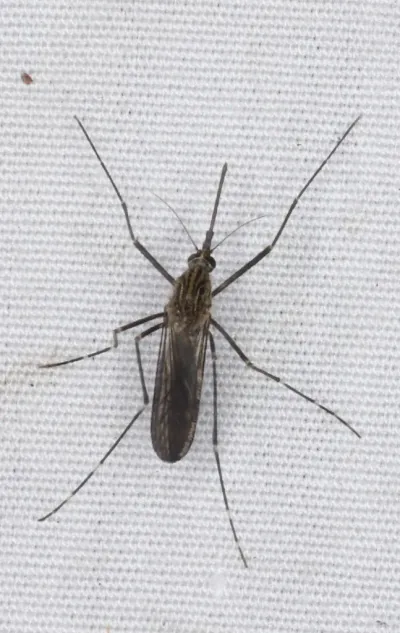
Explore other species in the mosquitoes family
Commonly Confused With
Northern House Mosquitoes are often mistaken for these similar pests
Where Northern House Mosquitoes Are Found
Hover over states to see their names. Green regions indicate where northern house mosquitoes have been reported.
Common Questions about Northern House Mosquitoes
What is a northern house mosquito?
+
The northern house mosquito (Culex pipiens) is the common brown mosquito found around homes in the northern and mid-Atlantic states. It bites at night and breeds in stagnant water near buildings. It is also the main carrier of West Nile virus in this part of the country.
When do northern house mosquitoes bite?
+
They feed from dusk until dawn. Biting peaks in the first few hours after sunset and again before sunrise. If you get bitten on the patio at night, this species is a likely suspect. Mosquitoes that bite in the afternoon are usually Asian tiger mosquitoes.
Where do northern house mosquitoes breed?
+
They prefer stagnant water with a lot of organic matter in it. Clogged gutters, catch basins, storm drains, neglected pools, buckets, tarps, bird baths, and pet dishes are all common breeding sites. Water that has sat for a week or more is ideal for them.
Do northern house mosquitoes carry disease?
+
Yes. Culex pipiens is the main carrier of West Nile virus in the northern and mid-Atlantic states. It also spreads St. Louis encephalitis and dog heartworm. Most people bitten by an infected mosquito never feel sick, but a small number get seriously ill. Call a doctor if you feel sick after being bitten.
How can I tell a northern house mosquito from an Asian tiger mosquito?
+
Northern house mosquitoes are plain brown with faint pale bands on the abdomen and they bite at night. Asian tiger mosquitoes are black with bold white stripes on the legs and a single white stripe down the back, and they bite aggressively during daylight hours.
Why am I seeing mosquitoes in my basement in winter?
+
Female northern house mosquitoes survive winter as adults. They shelter in basements, crawl spaces, culverts, and sheds, and they will fly around on warm days. Sealing crawl space vents and basement gaps cuts down on these overwintering sites.
How long do northern house mosquitoes live?
+
In summer a female usually lives two to four weeks. She can lay several egg rafts, each with 100 to 300 eggs. Females that shelter for the winter can live six months or more before laying eggs in spring.
What is the fastest way to reduce them in my yard?
+
Dump and scrub anything holding water once a week, clean your gutters, and keep pool and pond water moving. Pairing that with a professional exterior treatment of the shaded spots where adults rest during the day gives the biggest drop in biting pressure.

With five years of hands-on experience in the pest control industry, George Schulz is a registered technician with the Virginia Pest Management Association and a proud third-generation professional in a family business that's been protecting homes for over 58 years. He manages and trains a team of service pros while also leading internal research efforts—recently spearheading a deep-dive review of thousands of documents on pest control materials to hand-pick the most kid and pet friendly, most effective solutions tailored specifically for homes in the DC metro area.
Local Mosquitoes Help
Dealing with mosquitoes at home? Our licensed technicians provide mosquito control across Northern Virginia and Maryland.
