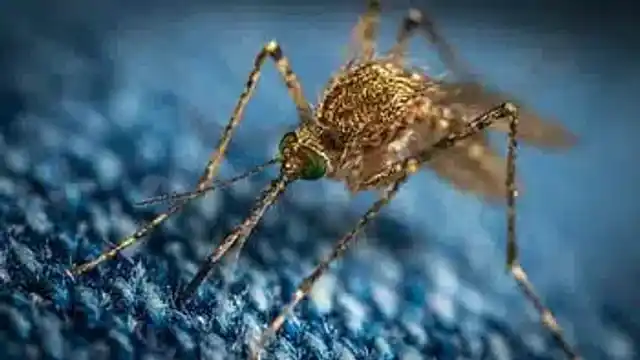

Adult mosquitoes eat sugar: flower nectar, fruit juice, plant sap, and honeydew. Female mosquitoes also drink blood, but only because they need its protein to make eggs. Males never bite. Mosquito larvae eat algae, bacteria, and bits of decaying plants in standing water.
That’s the short answer. The longer one explains where mosquitoes hide in a Northern Virginia yard, and why some yards are so much worse than others.
In my family’s own backyard, dense shrubs and standing water fed swarms that drove us indoors all season. That yard is a big part of how we treat mosquitoes for customers today.
What Do Adult Mosquitoes Eat?
Every adult mosquito runs on sugar. The CDC notes that both males and females use their proboscis to feed on flower nectar and fruit juices. That sugar is the fuel for flight. Blood is a separate, female-only meal for making eggs.
What Do Male Mosquitoes Eat?
Male mosquitoes eat nectar, fruit juice, and other plant sugars. Nothing else. The CDC puts it plainly: “The male’s proboscis is not strong enough to pierce skin.” So a male can’t bite you, and he can’t pass along West Nile or anything else. He spends his short adult life around flowers and leaves, looking for sugar and for females.
If you want to tell the two apart, the antennae are the giveaway. Our guide to male vs female mosquitoes shows the difference up close.
What Do Female Mosquitoes Eat?
Female mosquitoes eat the same plant sugars as males. They also take blood. Per the CDC, “Female mosquitoes need a blood meal to produce eggs.” Blood isn’t her everyday food. It is the protein for one batch of eggs.
She finds a host by sensing carbon dioxide, body heat, and skin odors. After she feeds, she rests while the eggs develop. Then she lays them on or near water and goes looking for her next host.
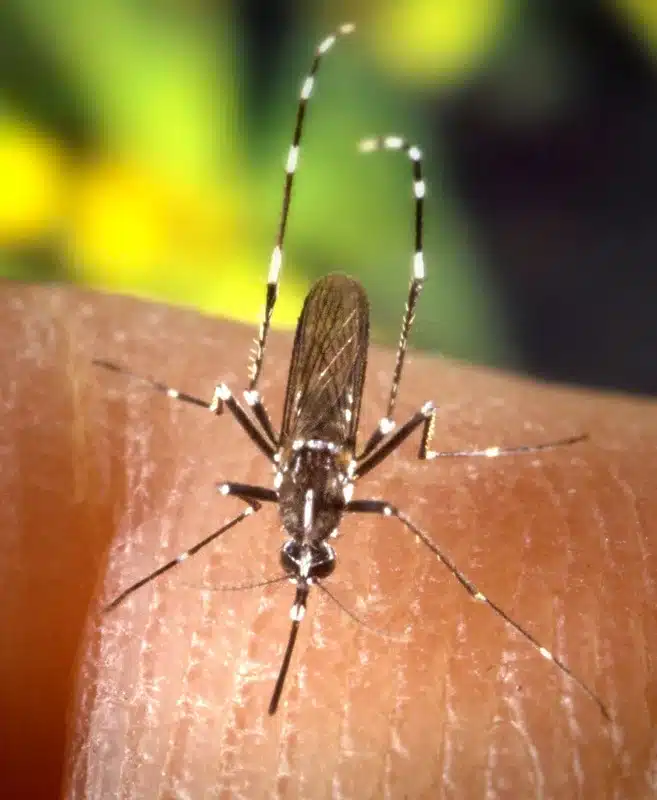
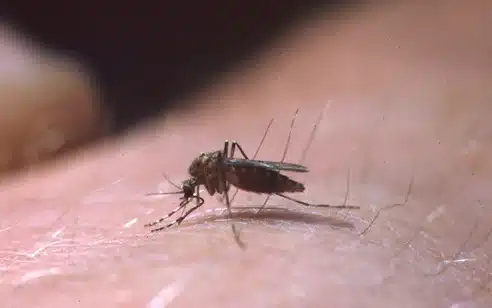
These photos show what mosquito feeding looks like up close.

How Do Mosquitoes Eat?
Mosquitoes can’t chew. They drink everything through the proboscis, a long, straw-like mouthpart. On a female, it holds thin, needle-like parts that slide through skin to reach a small blood vessel. A male’s version is only good for sipping.
Inside, the mosquito sorts its meals. A 2024 study in Scientific Reports describes how Aedes aegypti sends sugar to the crop, a storage pouch, while blood skips the crop and goes straight to the midgut to be digested. Sugar gets used a little at a time for flying. Blood gets turned into eggs.
What Animals Do Mosquitoes Bite?
People are only one item on the menu. Female mosquitoes take blood from a wide range of animals, and some species are picky.
- Birds. The northern house mosquito, one of our most common species, is a bird feeder. In a study published by the CDC, birds made up 92.9% of its blood meals in New York, with northern cardinals as the main host. That bird habit is why West Nile matters: the CDC explains that mosquitoes pick up the virus when they feed on infected birds.
- Mammals. People, dogs, deer, and other mammals. The Asian tiger mosquito is the one biting your ankles in the afternoon.
- Frogs and toads. Some mosquitoes skip warm-blooded hosts. Uranotaenia lowii feeds only on frogs and toads, according to the same University of Florida research described below.
- Earthworms and leeches. University of Florida researchers found that Uranotaenia sapphirina feeds on worms and leeches. All 72 blood meals they identified in Florida came from annelids, according to the study in Communications Biology.
Do Mosquitoes Drink Water?
Yes. Mosquitoes drink water, and nectar and fruit juice give them moisture too. When they can’t find water, they behave differently.
In a 2018 study in Scientific Reports, University of Cincinnati researchers found that dehydrated northern house mosquitoes were more likely to land on a host and bite. According to the university’s summary, normally only 5 to 10 percent of females feed at any time, but dehydration pushed as many as 30 percent to seek a blood meal.
So a dry stretch in August doesn’t always mean fewer bites. The mosquitoes that make it through may treat you as a drink.
How Often Do Mosquitoes Feed?
Sugar meals happen often. Adults of both sexes sip nectar through their whole adult life.
Blood meals follow the egg cycle. A female takes blood, rests while the eggs develop, lays them, then hunts again. The CDC says adult mosquitoes live about 2 to 4 weeks, depending on species, humidity, and temperature. That’s enough time for one female to bite more than once. For more on lifespan, see how long mosquitoes live.
What Do Mosquito Larvae Eat?
Mosquito larvae live in standing water and feed at the surface. They eat algae, bacteria, and bits of decaying plants. According to Virginia Tech, larvae feed nonstop to fuel their growth.
Do mosquito larvae eat algae? Yes. Algae is a staple, along with the bacteria and tiny organisms that grow in still water. That is why a green birdbath or a clogged gutter can raise so many of them.
Larvae molt four times as they grow. LSU research shows that what larvae eat affects how big the adults get.
Not every larva is a grazer. The elephant mosquito (Toxorhynchites rutilus) has predatory larvae. UF/IFAS describes them as aquatic predators that eat other small water insects, including mosquito larvae, across the eastern half of the U.S. The adults don’t feed on blood at all. Gallinipper larvae also eat other mosquito larvae, but gallinipper adults are fierce biters.
During the pupal stage, mosquitoes stop eating entirely. They rest and use up energy stored from their larval phase. Adults come out in a few days.
The Mosquito Life Cycle and Food
The mosquito life cycle has four stages:
- Eggs: Laid on water or damp surfaces. When they hatch, larvae start feeding right away.
- Larvae: Grow in standing water for 4-14 days, eating algae and bacteria.
- Pupae: Don’t eat. They rest for a few days before becoming adults.
- Adults: Drink sugar (nectar) to fuel flight. Females then seek blood meals.
Mosquito Species in Our Area
Different species feed and breed in different ways.
Aedes mosquitoes breed in containers and floodwater. Species like Aedes albopictus (Asian tiger mosquito) feed on nectar and bite during the day. Some can carry La Crosse encephalitis.
Learn more in our guide on common mosquito types in DC.
Culex species breed in polluted, stagnant water. They bite at dusk and are the main carriers of West Nile virus in our region.
Anopheles mosquitoes breed in ponds and wetlands. They bite at dusk and can carry malaria, though this isn’t a risk in our area.
What Affects Mosquito Feeding
Temperature: Mosquitoes feed most on warm nights. As fall nights cool off, they slow down.
Humidity: High moisture helps mosquitoes avoid drying out. They feed more on humid days.
Wind: Strong wind stops mosquitoes from flying well, which cuts down bites.
Time of day: Many species prefer dawn and dusk. Aedes bite during the day. Culex and Anopheles bite at night.
Season: By October, northern house mosquito females are getting ready for winter, and their diet changes. A 2005 study in PNAS found that females heading into winter dormancy shut down the genes for digesting blood and feed on sugar to store fat. They wait out the cold in sheltered spots and go looking for blood again in spring.
How Their Diet Shapes Our Treatment
Knowing what mosquitoes eat helps us target treatments at the right life stage.
Larvicides in standing water: Products like Bti kill larvae while they feed. According to the Extension Service, Bti works well around ponds and birdbaths.
Barrier sprays on plants: We spray shrubs and ivy where mosquitoes rest and feed on nectar. When they land on treated leaves, they pick up the product and die. Research on attractive toxic sugar baits shows sugar-based lures can kill adult mosquitoes very effectively.
In2Care system: We use In2Care traps that contaminate adult mosquitoes with larvicide and fungus. They then spread these agents to other breeding sites on their own.
That reliance on plants cuts both ways. Daren, one of our registered technicians, has probably treated more mosquito yards than anyone on our team. The worst one he remembers wasn’t overgrown at all. It was a perfectly kept lawn, just grass. As Daren puts it, mosquitoes don’t hang out in open sun, so there was almost nothing in that yard to treat. Both neighbors had heavy plantings, and behind the house was a thick strip of woods with a creek, which he had to stay about 25 feet back from. The mosquitoes rested and fed next door, then flew over to bite. He never got that yard fully under control.
See our full mosquito control process.
Tips to Reduce Mosquito Bites
A few simple steps make a big difference in how many bites you get.
- Dump standing water weekly: flower pots, birdbaths, gutters, pet bowls
- Mow your lawn and trim dense shrubs where mosquitoes rest
- Wear light clothing and use EPA-registered repellents (DEET, picaridin)
- Stay inside at dawn and dusk when many species are most active
- Fix screens on windows and doors to keep mosquitoes out of your home
Here’s what worked in our own backyard.
Our mosquito service goes after both ends of the diet: larvae feeding in standing water and adults resting and sipping nectar in shrubs. We treat yards across Alexandria, Reston, and Herndon, where the stream valleys along Sugarland Run keep breeding sites full all summer (see Herndon mosquito treatment). Falls Church yards along Four Mile Run and Tripps Run deal with the same creek-fed breeding, and our Falls Church mosquito service covers those neighborhoods.
If mosquitoes are taking over your yard, call us at 703-683-2000 or email info@bettertermite.com for a free estimate.