Common Malaria Mosquitoes Identification Guide
Anopheles quadrimaculatus
Common malaria mosquitoes are brown, spotted-wing mosquitoes of the eastern United States. They rest at a steep head-down angle and breed in still freshwater swamps, ponds, and ditches.
Taxonomy
Common Malaria Mosquitoes Coloration
Common color patterns to help identify common malaria mosquitoes
Common Malaria Mosquitoes
Seasonal Activity
When common malaria mosquitoes are most active throughout the year

Where Common Malaria Mosquitoes Are Found
Hover over states to see their names. Green regions indicate where common malaria mosquitoes have been reported.
Common Malaria Mosquito Identification Guide
Physical Characteristics
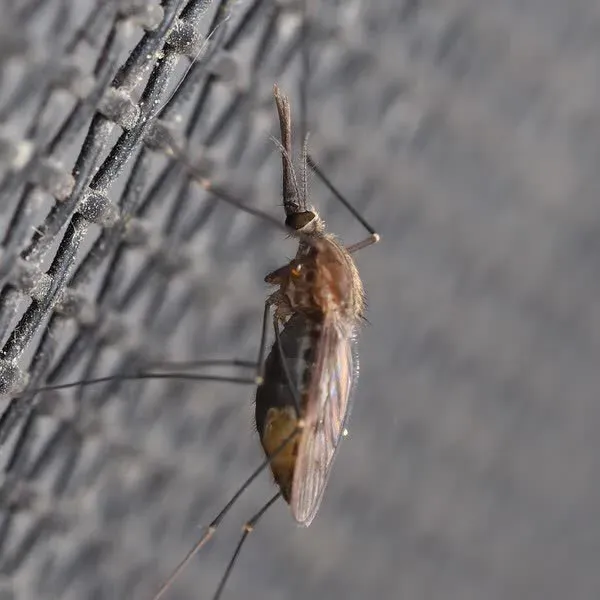
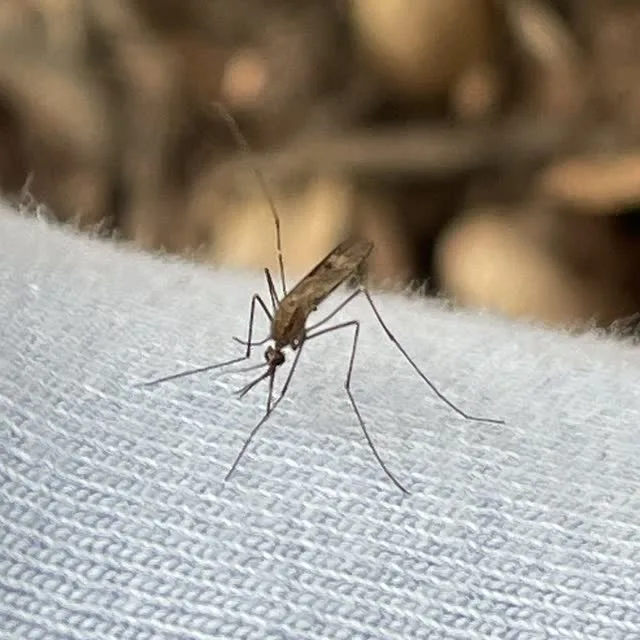
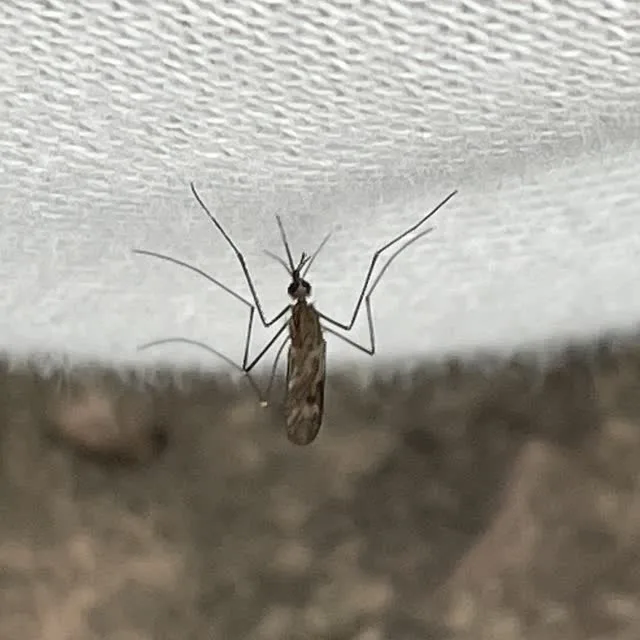
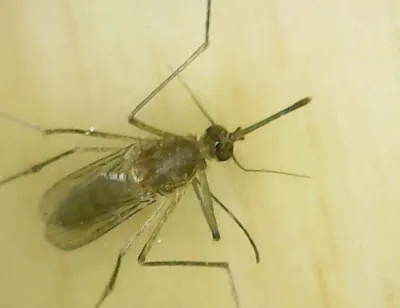
The common malaria mosquito (Anopheles quadrimaculatus) is a medium-sized brown mosquito that measures about 4 to 7mm long. The body is dark brown to golden brown with no bright banding on the legs or abdomen. From a few feet away it just looks like a plain brown mosquito.
Three features separate it from almost everything else you will see in a Mid-Atlantic backyard:
- Spotted wings. Dark scales cluster into blotches along the wing veins. Classic descriptions count four of them, which is where the species name quadrimaculatus comes from. Worn older females may show three or five.
- Steep resting angle. It rests head-down with the abdomen tilted up roughly 45 degrees off the surface. Culex and Aedes mosquitoes sit nearly flat.
- Long palps. The female has two palps running alongside the proboscis that are nearly as long as it is. In most other mosquito groups the female’s palps are short stubs.
The larvae are just as distinctive. Anopheles larvae have no breathing siphon, so they lie flat and parallel against the water surface. Culex and Aedes larvae hang head-down at an angle from a snorkel-like tube.
Common Species
Several related Anopheles mosquitoes live in North America:
- Common malaria mosquito (Anopheles quadrimaculatus) — the dominant anopheline of the eastern and central United States, and the one covered on this page.
- Woodland malaria mosquito (Anopheles punctipennis) — widespread across the continent, breeds in shaded stream pools rather than open marsh.
- Walker’s anopheles (Anopheles walkeri) — a northern marsh species overlapping the same range.
- Western malaria mosquito (Anopheles freeborni) — the western counterpart, found in California and the interior West.
There is a limit to what a backyard ID can tell you. An. quadrimaculatus is really a group of several sibling species that look nearly the same. Experts often need wing-scale keys or DNA testing to tell them apart. Spotting one as an Anopheles is realistic. Naming the exact sibling species is not.
Common Malaria Mosquito Behavior and Biology
Habitat
This is a permanent-water mosquito, not a container mosquito. Females lay eggs in still or very slow fresh water. The water has to last long enough to grow algae and marsh plants, and it needs at least some sun. Typical sites include:
- Freshwater swamps, marsh edges, and bottomland woods
- Farm ponds, impoundments, and stormwater retention basins
- Slow creek backwaters and oxbows
- Clogged roadside and drainage ditches
- Weedy lake margins
If you are finding mosquito larvae in a bucket, tire, or plant saucer, you are probably looking at Asian tiger mosquitoes or northern house mosquitoes instead.
Adults spend the day in cool, damp, shaded spots. Think dense ivy, thick shrubs, under decks, inside culverts, and in crawl spaces, sheds, and garages. On most home lots, those daytime resting spots matter more for control than the water does.
Diet
Males never bite. They feed on plant nectar for the energy to fly and mate.
Females also drink nectar, but they need a blood meal to develop each batch of eggs. This species is strongly mammal-feeding. Blood-meal studies find deer, livestock, dogs, and people making up the large majority of meals, with birds a small share. That preference is why it is a competent malaria vector and a poor West Nile virus vector.
Feeding runs from dusk through the night. Females will enter homes to find a host, and they bite readily indoors.
Life Cycle
Development runs egg, larva, pupa, adult, like all mosquitoes.
Females lay 100 to 200 eggs singly on the water surface. Each egg carries a pair of side floats that keep it from sinking, unlike the tidy rafts that house mosquitoes lay. Eggs hatch in two to three days in warm weather.
Larvae pass through four instars over roughly 7 to 14 days, grazing on algae, bacteria, and detritus in the surface film. The non-feeding pupal stage lasts two to three days. In Mid-Atlantic summer heat the whole cycle finishes in about two weeks, and the species runs several generations per season.
Winter Survival
Unlike mosquitoes that overwinter as eggs, An. quadrimaculatus rides out winter as mated adult females. In fall they look for damp, sheltered spots: crawl spaces, basements, culverts, animal burrows, and sheds. They stay dormant there until spring warmth brings them out to lay the first eggs of the year. A mosquito bumping around a basement in March is often one of these.
Health Risk in the Mid-Atlantic
This mosquito was the main carrier of malaria in the eastern United States. Malaria was a real public health problem here into the early 1900s. Drainage work, window screens, and mosquito control programs ended the spread. The CDC considers malaria wiped out in the United States since 1951.
The mosquito never left, though. Spread can restart when it bites someone who caught malaria abroad. In 2023 the CDC reported the first locally caught cases in twenty years. Seven were in Sarasota County, Florida. One was in Cameron County, Texas. One was in the National Capital Region of Maryland in August 2023.
Keep that in proportion. That is nine cases nationwide in a year, against about 2,000 cases brought in by travelers. The real risk from a backyard bite in Virginia, Maryland, or DC is very low. Normal bite prevention is the right response, not alarm. If you get a fever, chills, or flu-like illness after visiting a country where malaria is common, see a doctor and mention the trip.
This page is general information, not medical advice.
How We Treat for Common Malaria Mosquitoes
Mosquitoes are one of the pests we cover from our Springfield, Virginia office. The approach is the same whether the biters on your property are Anopheles or container species.
- Inspection: We walk the property to find where mosquitoes rest and breed. That means shaded ivy beds, dense foliage, under decks and porches, low spots that drain poorly, and any standing water that has sat long enough to matter. For this species, the shaded daytime cover usually matters more than any one water source. The marsh or pond they hatched in is often off your lot entirely.
- Treatment: Treatments focus on the outside of the home. A technician uses a backpack sprayer on the shaded foliage, ivy patches, and brush where adults rest during the day. The EPA-registered product pairs an adulticide for quick knockdown with a growth regulator that breaks the life cycle. Technicians skip blooming flowers, fruits, and vegetables to limit the impact on pollinators and edible plants. If you would rather not spray, the In2Care station system works as a swap or an add-on. Mosquitoes pick up a larvicide and a fungus inside the station, then carry the larvicide back to the water where they breed.
- Prevention and customer guidance: Treatments work best when you also remove breeding spots. We walk customers through dumping water out of toys, tarps, buckets, and clogged gutters. Keeping the lawn and shrub line trimmed cuts down on resting cover. Patching torn screens keeps night-biting females outside. Mosquitoes drift back in from nearby property, so treatments repeat through the season. Callbacks between visits are unlimited and free.
Bigger breeding sites are not a private job. Public marshes, retention ponds, and drainage ditches fall to your county or city mosquito control program. If the source sits off your property, call your local health department or mosquito control district.
References
- CDC MMWR — Locally Acquired Mosquito-Transmitted Malaria, National Capital Region, Maryland, August 2023
- CDC Health Advisory — Locally Acquired Malaria Cases Identified in Florida, Texas, and Maryland (2023)
- CDC — Mosquito Control Resources
- University of Florida IFAS — Anopheles quadrimaculatus, Common Malaria Mosquito
- Rutgers Center for Vector Biology — Malaria Mosquitoes in New Jersey
- EPA — Mosquito Control
Other Mosquitoes
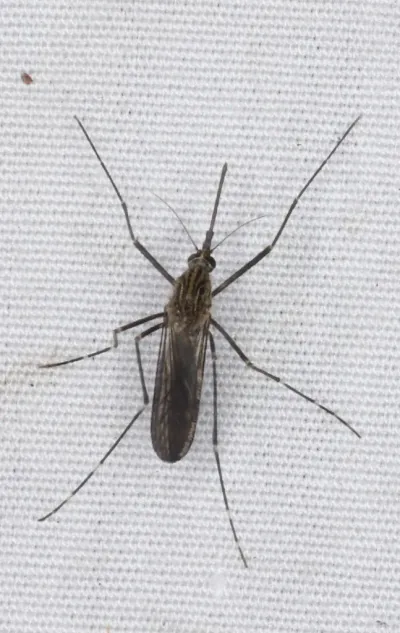
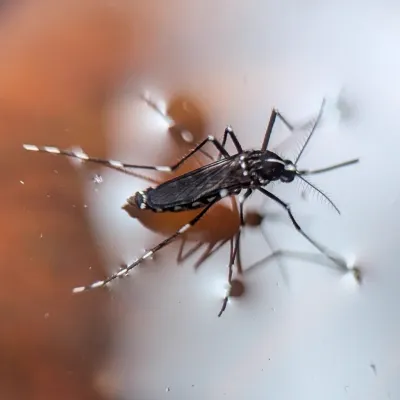
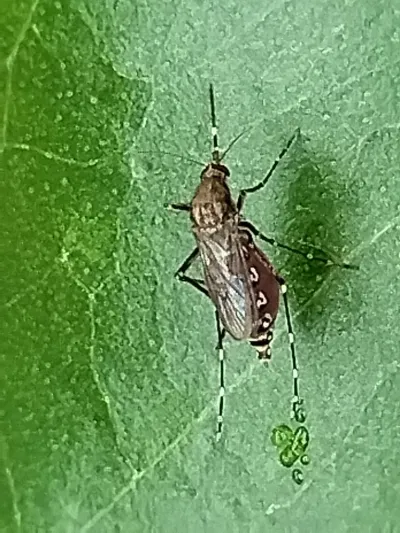
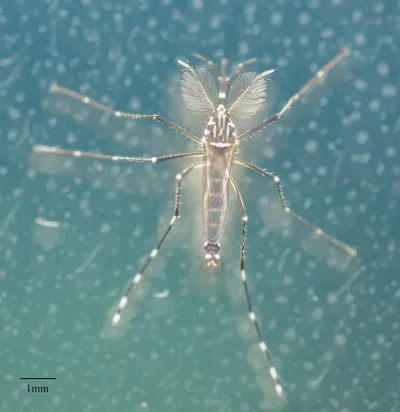
Explore other species in the mosquitoes family
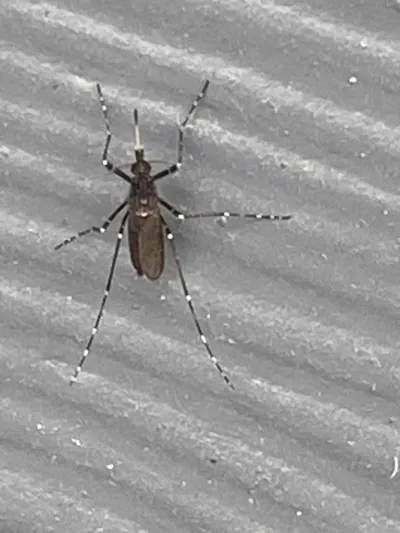
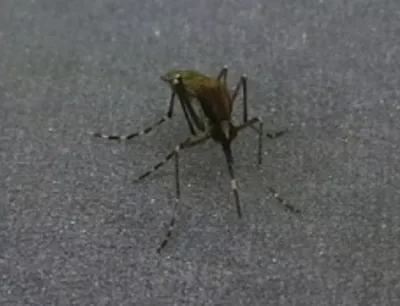
Commonly Confused With
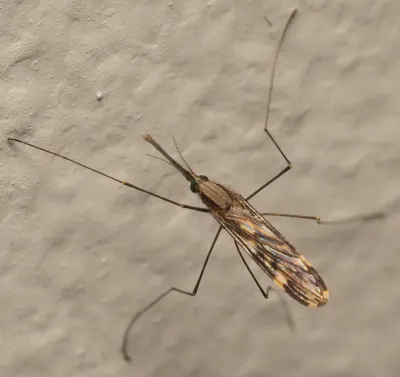
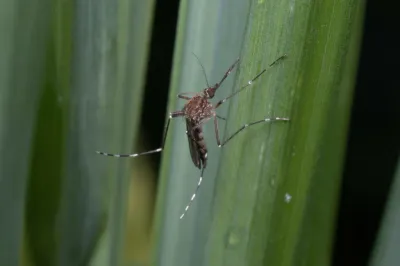
Common Malaria Mosquitoes are often mistaken for these similar pests
Where Common Malaria Mosquitoes Are Found
Hover over states to see their names. Green regions indicate where common malaria mosquitoes have been reported.
Common Questions about Common Malaria Mosquitoes
How do I know if a mosquito is a common malaria mosquito?
+
Look at how it sits. Anopheles mosquitoes rest with the head down and the abdomen tipped up at a steep angle, almost like a dart stuck in the wall. Most other mosquitoes sit flat. Under good light you can also see dark blotches of scales on the wings, which is where the name quadrimaculatus, or four-spotted, comes from.
Can I get malaria from a mosquito bite in Virginia, Maryland, or DC?
+
The odds are very low. Malaria has not circulated regularly in the United States since the 1950s. The mosquito that used to carry it still lives here, so a case can occur if the mosquito bites someone who caught malaria abroad. The CDC confirmed one locally acquired case in the National Capital Region of Maryland in August 2023, the first in the area in decades. A bite in a DMV backyard is overwhelmingly likely to be nothing more than an itchy welt.
Where do common malaria mosquitoes breed?
+
They need standing fresh water that sits long enough to grow plants, and they like some sunlight on it. Think swamp edges, farm ponds, stormwater retention basins, slow creek backwaters, and clogged roadside ditches. Unlike container mosquitoes, they are not the species breeding in your flowerpot saucer.
When are they most active?
+
Biting picks up in late spring, peaks in July and August, and tapers through October in the Mid-Atlantic. Females feed mainly from dusk through the night and will keep biting after dark, which sets them apart from daytime biters like the Asian tiger mosquito.
Do they come inside the house?
+
Yes. Females readily fly indoors to feed and will rest in dark, humid corners such as crawl spaces, basements, and garages. Mated females also shelter in those same places over the winter instead of dying off in the fall.
What is the difference between this and the mosquito that carries West Nile virus?
+
West Nile virus is spread mostly by Culex mosquitoes, especially the northern house mosquito. Common malaria mosquitoes feed heavily on mammals such as deer, livestock, and people rather than on birds, which makes them poor spreaders of West Nile virus.
What can I do to cut down mosquito numbers in my yard?
+
Drain or dump anything holding water, clear leaf packs out of ditches and gutters, thin heavy shade and ivy where adults rest during the day, and keep ponds moving or stocked with fish. Use an EPA-registered repellent when you are outside at dusk, and patch torn window screens.

With five years of hands-on experience in the pest control industry, George Schulz is a registered technician with the Virginia Pest Management Association and a proud third-generation professional in a family business that's been protecting homes for over 58 years. He manages and trains a team of service pros while also leading internal research efforts—recently spearheading a deep-dive review of thousands of documents on pest control materials to hand-pick the most kid and pet friendly, most effective solutions tailored specifically for homes in the DC metro area.
Local Mosquitoes Help
Dealing with mosquitoes at home? Our licensed technicians provide mosquito control across Northern Virginia and Maryland.
