Tropical Rat Mite Identification Guide
Ornithonyssus bacoti
The tropical rat mite is a blood-feeding parasite of rats and mice that bites people when its rodent host disappears. It is the rodent mite most often linked to itchy indoor bites in homes across North America.
Taxonomy
Tropical Rat Mite Coloration
Common color patterns to help identify tropical rat mite
Tropical Rat Mite
Seasonal Activity
When tropical rat mite are most active throughout the year

Where Tropical Rat Mite Are Found
Hover over states to see their names. Green regions indicate where tropical rat mite have been reported.
Tropical Rat Mite Identification Guide
Physical Characteristics
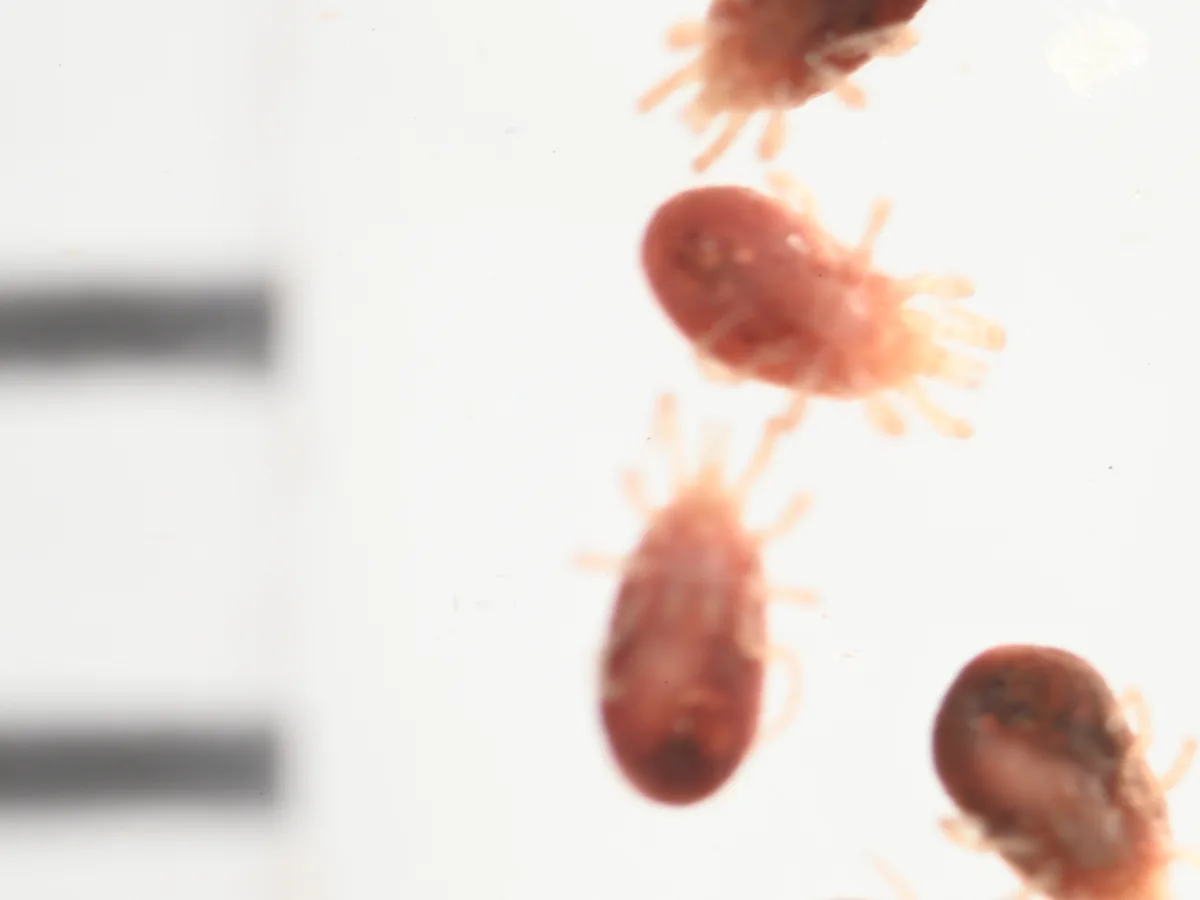
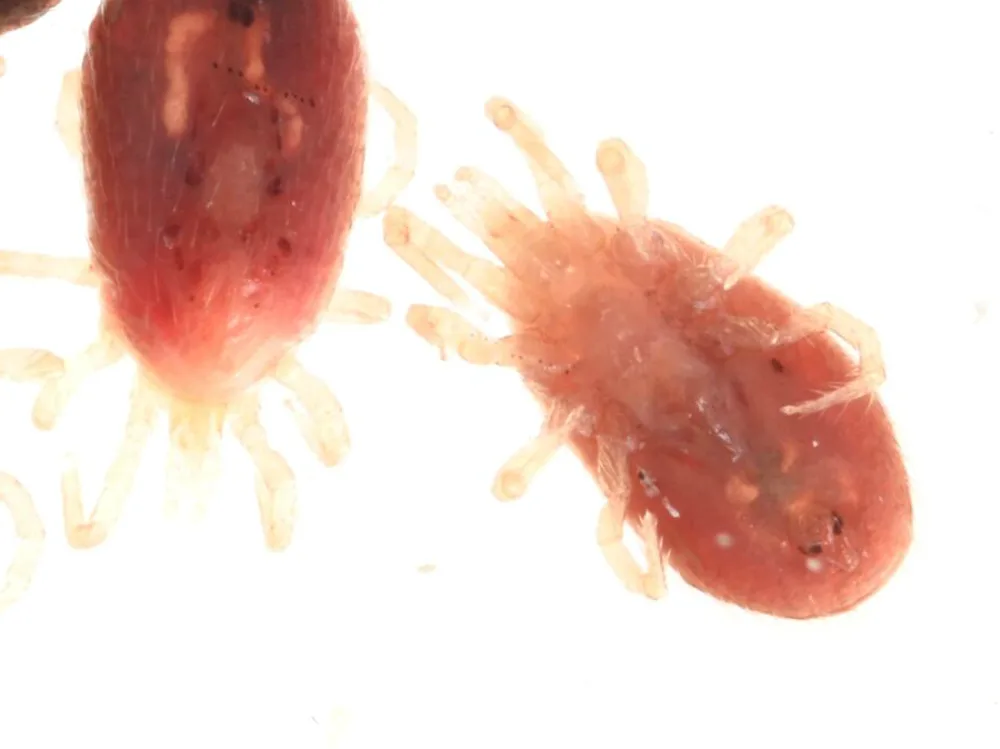
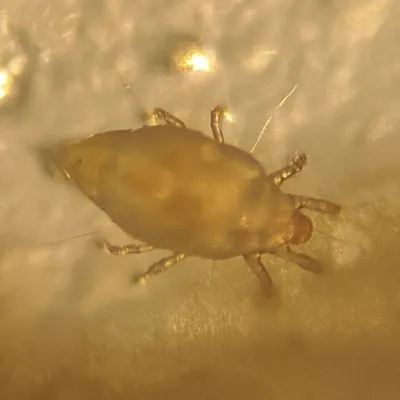
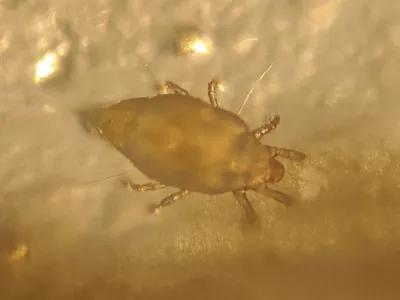
The tropical rat mite is a blood-feeding parasite that measures about 0.7 to 1.4 millimeters long. That is roughly the size of a poppy seed. Females are larger than males. Like all mites, adults have eight legs, no wings, and a single oval body section with no separate head.
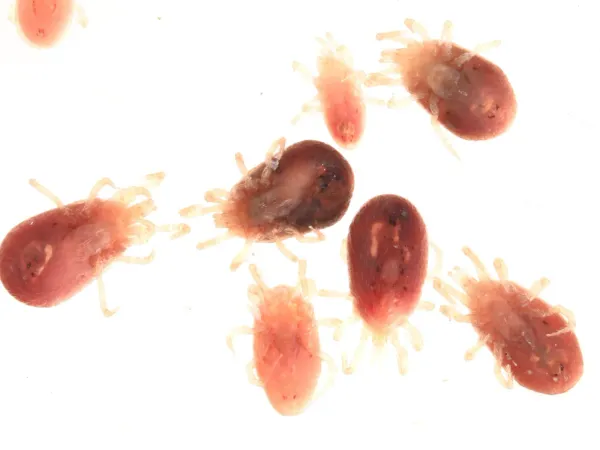
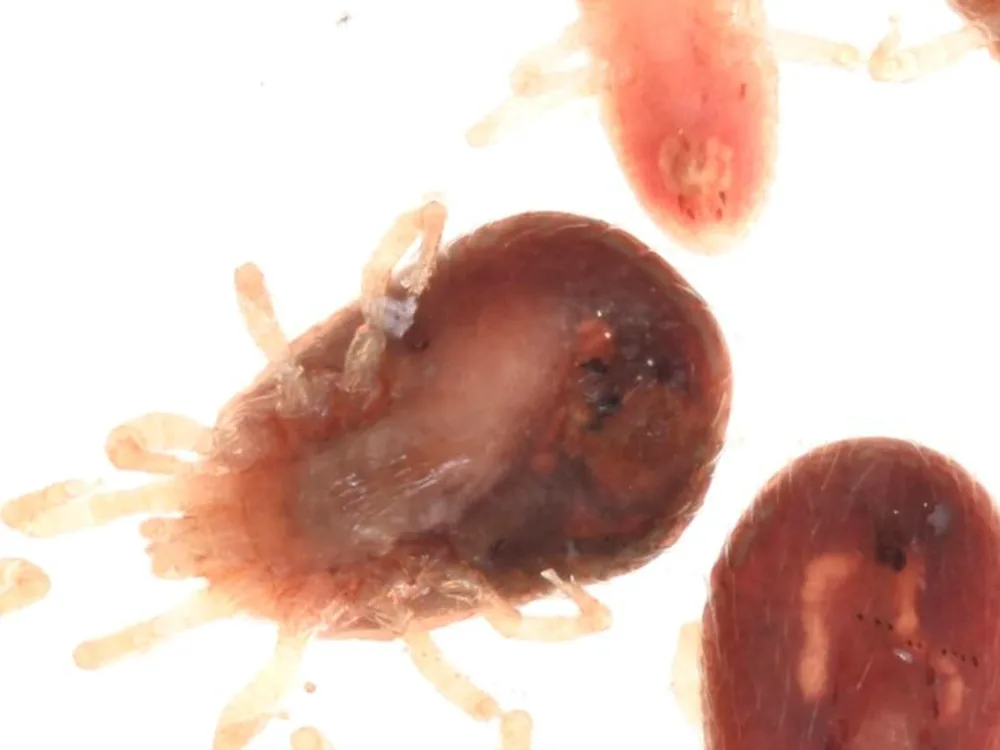
Color is the feature most people notice first. An unfed mite is pale gray, cream, or tan. It is almost invisible on light surfaces. After a blood meal the body swells and turns reddish. It then darkens to brown or near-black as the meal is digested. Under magnification you can see fine hairs on the body and a soft point at the rear end.
Two details separate the tropical rat mite from look-alikes:
- It moves. Flecks of dirt stay put. Tropical rat mites crawl, usually along walls, baseboards, bedding, and counters.
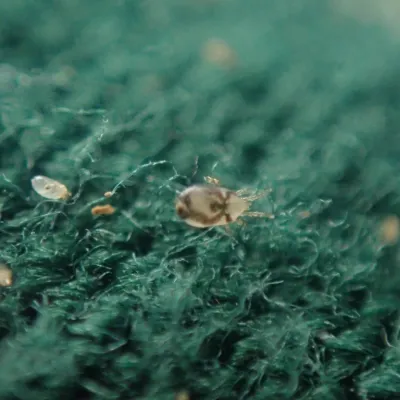
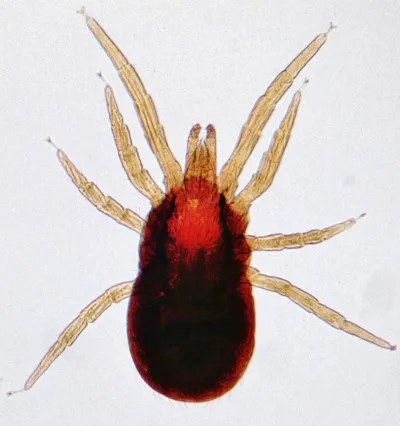
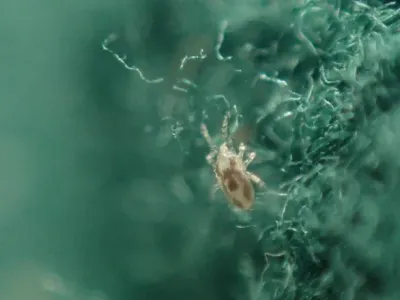
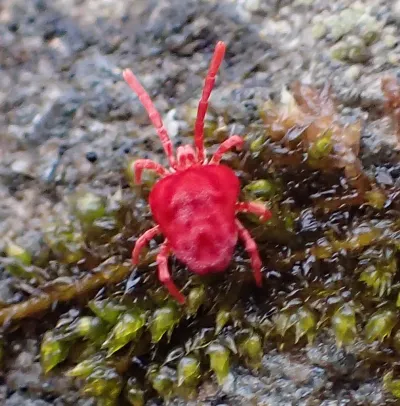
- It has no hard shell or clear head. Ticks are larger and have visible mouthparts. Clover mites are bright red plant feeders with a very long first pair of legs.
Common Species
Several blood-feeding mites bite people in North America. They are easy to mix up:
- Tropical rat mite (Ornithonyssus bacoti): The species on this page. It is found worldwide. It prefers rats, but it also feeds on mice, pet rodents, and people. This is the mite found most often in cases of rat mite dermatitis.
- House mouse mite (Liponyssoides sanguineus): Prefers house mice. It is the mite that spreads rickettsialpox. Its body is rounder and its legs look longer.
- Spiny rat mite (Laelaps echidninus): A larger mite of Norway rats that rarely bites people.
- Bird mites (Ornithonyssus sylviarum and Dermanyssus gallinae): Close relatives that live on birds. They cause the same kind of indoor biting problem after a nest is left empty. That usually happens in spring and summer.
These species can only be told apart under a microscope. The practical step is to catch a few on clear tape and have an entomologist or a pest professional look at them. Our rodent mites overview covers the whole group.
Tropical Rat Mite Behavior and Biology
Habitat and Hosts
Tropical rat mites live in and around rodent nests, not permanently on the animal. They feed for a few minutes at a time, then drop off and hide in cracks, wall voids, insulation, cluttered storage, and the debris of the nest itself. Common indoor spots include attics, crawl spaces, the space behind appliances, and wall voids where roof rats or house mice were active.
Pet rodents are a second common source. Rats, mice, gerbils, and hamsters from a breeder or store can carry mites into a home that never had a wild rodent problem.
Diet
The mites feed only on blood. Adult females take a meal every two to three days. Each meal leads to a batch of eggs. Protonymphs and adults feed. The larval stage does not feed at all.
Life Cycle
The life cycle has five stages: egg, larva, protonymph, deutonymph, and adult. Indoors, where it is warm, the whole cycle can finish in 11 to 13 days. A female lays roughly 100 eggs in her life. She lays them in the nest or in nearby hiding places, not on the host. Eggs hatch in one to four days.
That speed is why one rodent nest can hold thousands of mites by the time anyone notices bites. Adults can also live for weeks without feeding. The problem does not end the moment the rodents do.
Why They Bite People
People are accidental hosts. Biting starts when the mites lose their normal food source. That happens when:
- Rodents are trapped, baited, or die inside a wall
- A rat or mouse population moves out of a building on its own
- A pet rodent dies, is rehomed, or its cage is cleaned out
- Nest material is disturbed during construction or cleaning
The mites then spread out through the building. They can travel a long way indoors. They bite whoever is closest, usually at night. The result is called rat mite dermatitis: small red bumps, often in clusters, that itch. Bites alone cannot confirm the species. Only a captured mite can.
Treatment Methods for Tropical Rat Mites
Tropical rat mites are not a pest Better Termite & Pest Control treats directly. The rodent problem underneath them is. Rodent control is the step that ends the mite problem, and it is a service we provide across Northern Virginia and Maryland. These are the methods that work:
- Remove the host. Mite numbers drop fast once the rats or mice are gone. Our rodent program starts with a full inspection to find hot spots. We place tamper-resistant stations and snap traps in those areas. We follow up early, often at one week and three weeks, to confirm activity is dropping. After that, triannual visits keep the stations maintained so a new rodent population does not restart the cycle.
- Clear out the nest. Old nesting material holds the eggs and the unfed mites. Wear gloves and a mask to remove nests from wall voids, attics, and crawl spaces, then clean the area.
- Vacuum and launder. Careful vacuuming of floors, baseboards, and cracks removes mites. Washing bedding and clothing on a hot cycle kills the ones that reached living space. Throw the vacuum bag away outdoors.
- Targeted crack-and-crevice treatment. Where mites keep showing up, EPA-registered residual products or drying dusts labeled for mites go into voids and hiding places, not across open living areas.
- Seal entry points. Closing gaps around pipes, utility lines, and doors keeps the next rodent population, and its mites, from moving in. This is a long-term step. It comes after the current rodents are under control.
- Handle pet rodents through a veterinarian. If the source is a caged pet, a veterinarian should treat the animal and advise on cage sanitation. Do not apply pest control products to or near an animal.
For bites, over-the-counter antihistamines and anti-itch creams usually help. The rash clears once the biting stops. This page is educational, not medical advice. See a healthcare provider or dermatologist about bites that get worse or come with other symptoms.
References
- Biting Mites - Texas A&M AgriLife Extension
- Mesostigmatid Mites - University of Missouri College of Veterinary Medicine
- Identification of the tropical rat mite (Ornithonyssus bacoti) - National Library of Medicine
- Ornithonyssus bacoti dermatitis incorrectly diagnosed as delusional parasitosis - National Library of Medicine
- Rat and Fowl Mite Ecology - Orange County Mosquito and Vector Control District
Other Mites
Explore other species in the mites family
Commonly Confused With
Tropical Rat Mite are often mistaken for these similar pests
Where Tropical Rat Mite Are Found
Hover over states to see their names. Green regions indicate where tropical rat mite have been reported.
Common Questions about Tropical Rat Mite
What does a tropical rat mite look like?
+
A tropical rat mite is a tiny eight-legged mite. It is about 0.7 to 1.4 millimeters long, or about the size of a poppy seed. Unfed mites are pale gray or tan and hard to see. After they feed on blood they swell and turn reddish or dark brown. That is when most people spot them moving across a wall, a sheet, or a counter.
Why am I getting bitten after the mice or rats were removed?
+
Tropical rat mites live in the rodent nest, not on the rodent full time. When the rats or mice die or move out, the mites lose their food source and spread through the building looking for another warm-blooded animal. People are not preferred hosts, but hungry mites will bite anyone nearby. Bites usually start within days of the rodents disappearing.
What do tropical rat mite bites look like?
+
Bites look like small red bumps that itch a lot. They often show up in clusters on the arms, chest, neck, or waistline. They can be mistaken for mosquito or flea bites. See a doctor or dermatologist about any bite that blisters, spreads, or comes with a fever.
How long can tropical rat mites live without a host?
+
Adults can live several weeks without a blood meal. In cool, damp spots, some live past a month. That is why bites can keep going for weeks after the rodents are gone, especially if the nest and clutter are never cleaned out.
Can tropical rat mites live on people or infest my hair?
+
No. Tropical rat mites cannot breed on people. They do not burrow into skin or live in hair. They bite, feed for a few minutes, then drop off and hide in cracks. That makes them different from scabies mites, which do live in human skin.
Do tropical rat mites spread disease?
+
Studies show the mite can carry some bacteria. Still, proven human illness from its bite is rare in North America. The usual result is rat mite dermatitis, an itchy rash. Call a healthcare provider if you get a fever, a headache, or a spreading rash after bites.
How do I get rid of tropical rat mites for good?
+
The mites die out once the rodent population is gone and the nesting material is removed. Rodent control, sealing entry points, removing nests, vacuuming thoroughly, and laundering bedding on high heat are the steps that end the problem. Treating bites alone will not stop new ones.
Are tropical rat mites only found in tropical places?
+
No. Despite the name, this mite lives worldwide wherever rats and mice live. That includes heated buildings in cold climates. Cases turn up across the United States and Canada in homes, apartments, labs, and rooms where pet rodents are kept.

With five years of hands-on experience in the pest control industry, George Schulz is a registered technician with the Virginia Pest Management Association and a proud third-generation professional in a family business that's been protecting homes for over 58 years. He manages and trains a team of service pros while also leading internal research efforts—recently spearheading a deep-dive review of thousands of documents on pest control materials to hand-pick the most kid and pet friendly, most effective solutions tailored specifically for homes in the DC metro area.
Local Mites Help
Dealing with mites at home? Our licensed technicians provide pest control across Northern Virginia and Maryland.
