Northern Fowl Mites Identification Guide
Ornithonyssus sylviarum
Northern fowl mites are tiny blood-feeding parasites that spend nearly their whole life on birds, especially around the vent feathers of chickens and wild songbirds. They will bite people who handle infested birds or live near an active nest.
Taxonomy
Northern Fowl Mites Coloration
Common color patterns to help identify northern fowl mites
Northern Fowl Mites
Seasonal Activity
When northern fowl mites are most active throughout the year
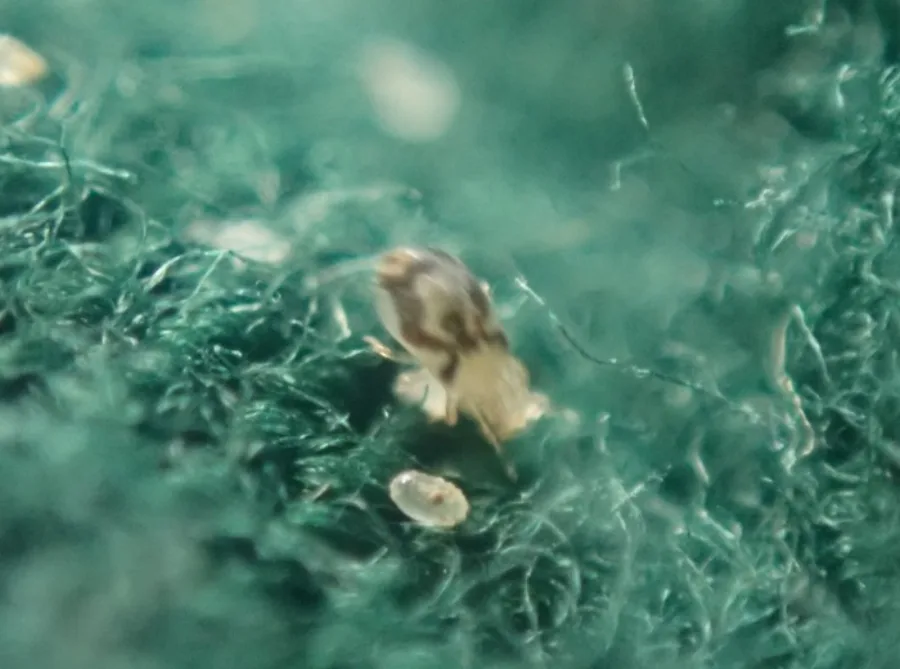

Where Northern Fowl Mites Are Found
Hover over states to see their names. Green regions indicate where northern fowl mites have been reported.
Northern Fowl Mite Identification Guide
Physical Characteristics
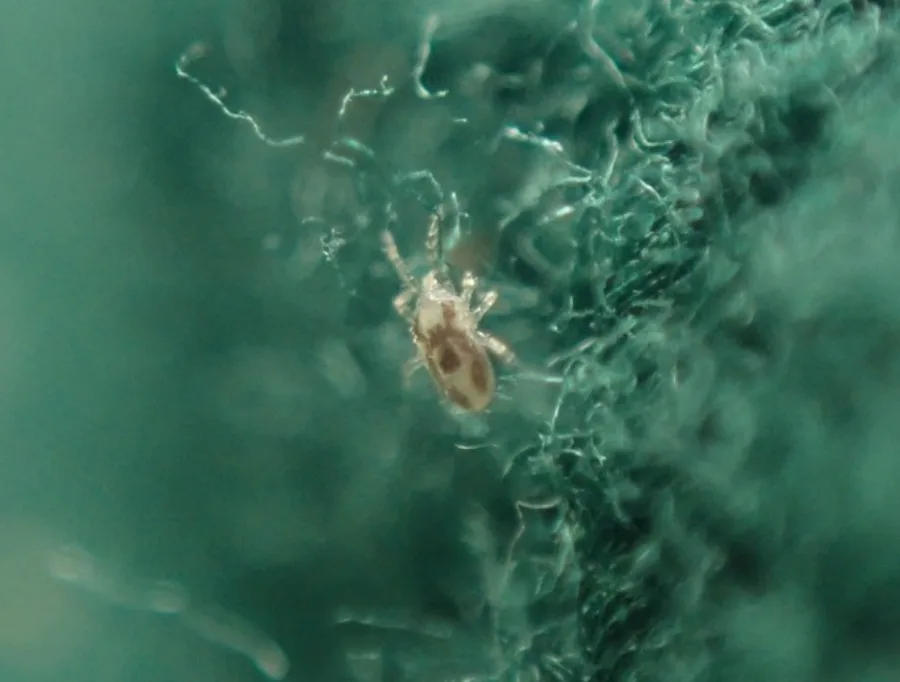
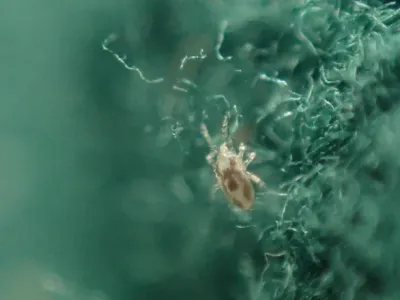
Northern fowl mites are small enough to be easy to miss. Adults are about 0.6 to 1.0 millimeters long. That is roughly the size of a grain of ground pepper. Under a hand lens you can see an oval body, eight legs, and a shield on the back that narrows toward the rear.
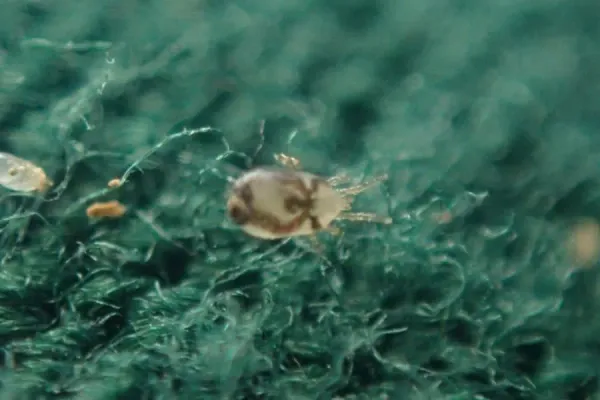
Color depends on when the mite last fed. Unfed mites look pale, cream, or almost clear. After a blood meal they turn red, then darken to reddish-brown or near black as the meal is digested.
The clearest clue is where you find them. This mite lives on the bird around the clock, and it concentrates near the vent. In a bad case, the vent feathers look grimy and clumped. Mite droppings, shed skins, and eggs stick to the feather shafts. Part the feathers and you will see tiny specks moving.
Northern fowl mites are far smaller than ticks and do not burrow into skin the way scabies mites do. They also have eight legs as adults, which separates them from six-legged chicken lice.
Common Species
Several look-alike mites feed on birds or small mammals in North America:
- Ornithonyssus sylviarum (northern fowl mite): the species on this page. Temperate range, lives on the bird, most common on poultry and songbirds across the United States and southern Canada.
- Ornithonyssus bursa (tropical fowl mite): nearly identical without a microscope, but centered in the Gulf states and subtropics. It spends more time in the nest.
- Dermanyssus gallinae (poultry red mite): the chicken mite, which hides in coop cracks by day and feeds at night. Homeowners often lump both under the label bird mites.
- Ornithonyssus bacoti (tropical rat mite): the tropical rat mite uses rodents instead of birds and bites people after a rat or mouse population is removed.
- Liponyssoides sanguineus: the house mouse mite, another indoor biter tied to rodent mites and mouse nests.
Northern Fowl Mite Behavior and Biology
Habitat
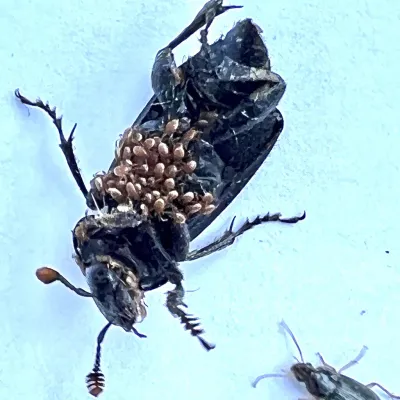
The host bird is the habitat. Chickens and turkeys are the usual domestic hosts, and house sparrows, starlings, pigeons, and swallows keep the mite going in the wild. Problems around homes usually start with a nest in an eave, a dryer vent, a gutter, or a soffit gap above a porch.
Off the bird, they do not last long. Mites left in bedding or nest material die within a few days to about three weeks. How warm and humid the room is changes that window. The source bird, not the room, decides how long a problem lasts.
Diet
All feeding stages take blood from the skin near the base of the feathers. One hen can carry tens of thousands of mites. That is enough to drain a real share of her blood every day. When birds leave or die, the mites disperse and will bite whatever warm-blooded animal they reach, including people and pets. They cannot complete a generation on human blood.
Life Cycle
The cycle runs egg, six-legged larva, protonymph, deutonymph, adult. Eggs are laid on feather shafts near the vent. The larva does not feed; the protonymph and adults do. Under warm conditions the whole cycle finishes in about five to seven days, and up to twelve in cooler weather.
That speed is why populations explode. A single fertilized female introduced into a flock can start an infestation, and numbers can go from unnoticeable to severe in two or three weeks.
Seasonal Activity
Outdoor numbers usually peak in spring and again in fall, when temperatures are mild. Hot, dry midsummer weather kills mites that are off the bird. Cold winter weather slows reproduction. Inside heated coops or barns, the mite can stay active all year.
Treatment Methods for Northern Fowl Mites
Northern fowl mites are a bird problem. Control works on the birds and at the nest, not through general household pest treatment.
Confirm the source
Take a flashlight, part the vent feathers of any bird you can handle, and look. Moving specks on the bird point to northern fowl mites. If the bird looks clean by day but specks crawl the roost bars at night, you have chicken mites instead, and treatment goes into the coop rather than onto the bird. Around a house with no poultry, look for a bird nest in a vent, eave, gutter, or wall gap near the room where people are being bitten.
Treat the birds through a veterinarian
Any product used on poultry should be handled under veterinary guidance and applied exactly to the label, including egg and meat withdrawal times. A generation takes about a week, so a second application about seven days later is standard practice. Switching to a different product class over time also helps, since some mite populations no longer respond to older sprays and dusts.
Clean and exclude at the source
- Remove and bag old nest material and heavily soiled bedding, then clean and disinfect the coop between flocks.
- Screen vents, exhaust openings, and gaps in soffits so wild birds cannot nest on the structure. Check local and federal rules first: the Migratory Bird Treaty Act protects many wild birds while eggs or young are in the nest.
- Keep new birds separate and inspect them before adding them to the flock. Avoid moving crates, egg flats, or boots between flocks.
- Wash clothing worn in an infested coop in hot water and dry on high heat, and vacuum any rooms where mites were tracked in.
Relief for bites
Wash the skin after handling infested birds, use over-the-counter anti-itch products for irritation, and keep bites clean so scratching does not cause infection. See a healthcare provider for anything that spreads, blisters, or does not settle down. This page is general information, not medical advice.
Where our service fits
Better Termite & Pest Control does not service birds, poultry flocks, or bird nests, so a northern fowl mite problem belongs with a veterinarian and, where nests are involved, a bird control or wildlife specialist. We do handle the household mites that get confused with them, including clover mites along sunny exterior walls, and our general pest control service covers the perimeter insects that often show up in the same rooms. If you are unsure which mite you have, our pest library walks through the differences.
References
- Tropical Fowl Mite, Ornithonyssus bursa (UF/IFAS Ask IFAS)
- Northern Fowl Mite Management (Mississippi State University Extension)
- External Parasites of Poultry (eXtension Poultry)
- Key Characters for Identifying Dermanyssus gallinae and Allied Mites (NIH / PMC)
- Migratory Bird Treaty Act (U. S. Fish and Wildlife Service)
Other Mites
Explore other species in the mites family
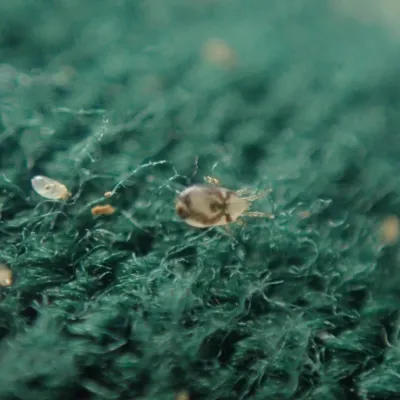
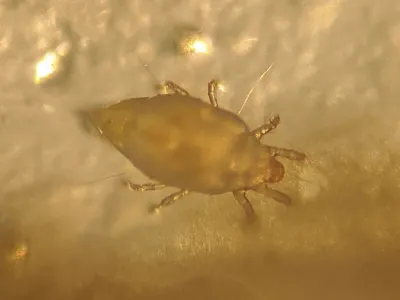
Commonly Confused With
Northern Fowl Mites are often mistaken for these similar pests
Where Northern Fowl Mites Are Found
Hover over states to see their names. Green regions indicate where northern fowl mites have been reported.
Common Questions about Northern Fowl Mites
What is a northern fowl mite?
+
The northern fowl mite (Ornithonyssus sylviarum) is a blood-feeding mite about the size of a grain of ground pepper. It is the most common external parasite of chickens in North America and also lives on sparrows, starlings, pigeons, and many other wild birds. Unlike most bird mites, it spends nearly its entire life on the bird rather than in the nest.
Do northern fowl mites bite humans?
+
They will. People who handle infested chickens or clean out a nest often get itchy red bumps on the hands, forearms, and neck within hours. The mites cannot feed long-term on human blood and cannot reproduce on people, so the biting stops once contact with infested birds ends.
How do I tell northern fowl mites from chicken mites?
+
Location is the quickest test. Northern fowl mites stay on the bird day and night and cluster around the vent, where the feathers look dirty, greasy, or blackened. Chicken mites, also called poultry red mites, hide in coop cracks during the day and only climb on birds at night, so you find them by checking roost bars after dark.
Can northern fowl mites live in my house?
+
Not for long. Away from a bird, most stages die within a few days to about three weeks depending on temperature and humidity. They can ride indoors on clothing after you work in a coop, or spread from a nest tucked into a vent or soffit, but they cannot build a population inside a home without birds.
How did my backyard flock get northern fowl mites?
+
Usually from wild birds nesting in or over the coop, or from new birds added to the flock before anyone checked them. Mites also ride in on used gear, egg flats, crates, and boots moved between flocks.
Are northern fowl mite bites dangerous?
+
Bites on people cause itching and irritation rather than illness, and this mite is not considered a disease carrier for humans. Scratching can break the skin and lead to infection, so keep bites clean and ask a healthcare provider about anything that worsens or spreads.
Do northern fowl mites hurt chickens?
+
Heavy infestations can. Thousands of mites on a single hen cause skin irritation, scabbing, anemia, lower weight gain, and reduced egg production, and severe cases can kill young birds. Weekly vent checks catch problems while the numbers are still small.
How long does it take to clear an infestation?
+
The mite completes a generation in about a week. Treatments handled through a veterinarian usually need a second application about seven days later, which catches the mites that hatched after the first round. Blocking wild birds from the coop is what keeps the problem from returning.

With five years of hands-on experience in the pest control industry, George Schulz is a registered technician with the Virginia Pest Management Association and a proud third-generation professional in a family business that's been protecting homes for over 58 years. He manages and trains a team of service pros while also leading internal research efforts—recently spearheading a deep-dive review of thousands of documents on pest control materials to hand-pick the most kid and pet friendly, most effective solutions tailored specifically for homes in the DC metro area.
Local Mites Help
Dealing with mites at home? Our licensed technicians provide pest control across Northern Virginia and Maryland.
