Cheyletiella Mites Identification Guide
Cheyletiella yasguri, C. blakei, C. parasitivorax
Cheyletiella mites are surface-dwelling parasites of dogs, cats, and rabbits that cause heavy flaking known as walking dandruff. They can crawl onto people and cause a short-lived itchy rash, but they cannot complete their life cycle on humans.
Taxonomy
Cheyletiella Mites Coloration
Common color patterns to help identify cheyletiella mites
Cheyletiella Mites
Seasonal Activity
When cheyletiella mites are most active throughout the year

Where Cheyletiella Mites Are Found
Hover over states to see their names. Green regions indicate where cheyletiella mites have been reported.
Cheyletiella Mite Identification Guide
Physical Characteristics
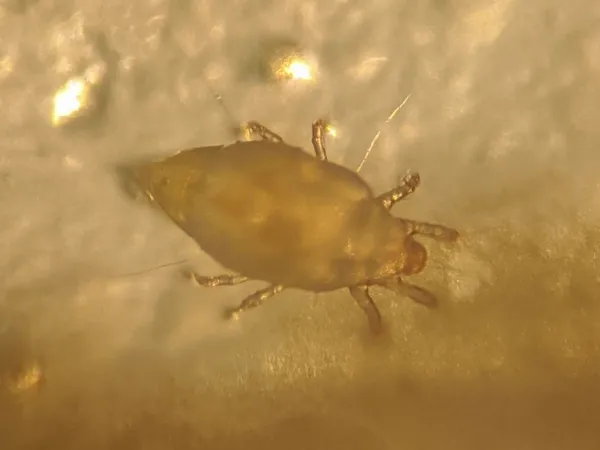
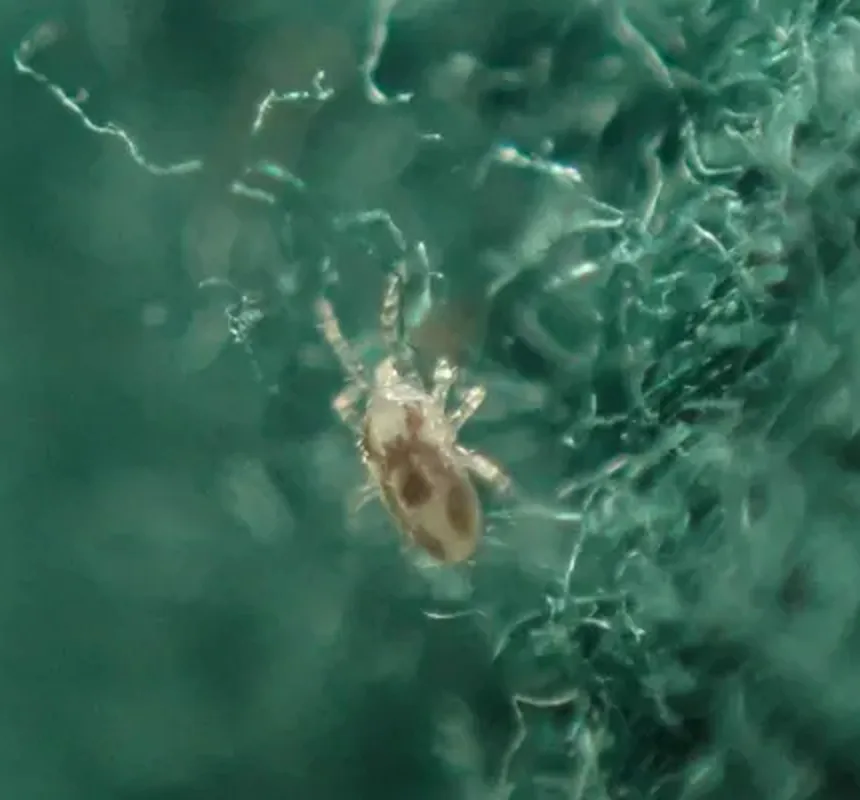
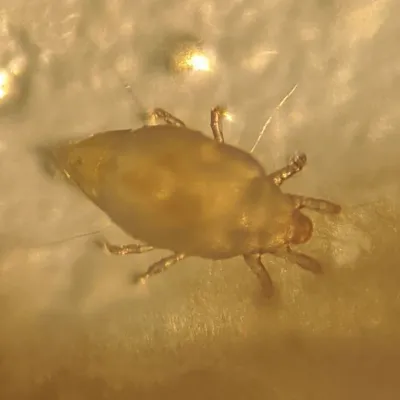
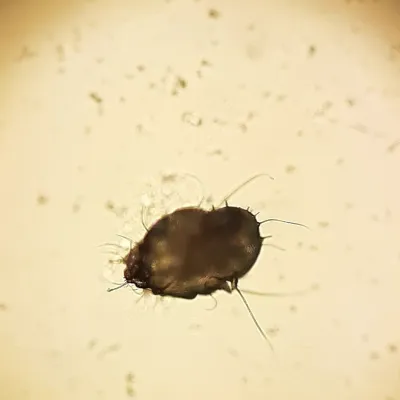
You can just barely see a Cheyletiella mite. Adults are 0.3 to 0.5 millimeters long, about the size of a grain of salt. On a pet’s coat they look like pale white or cream specks sitting among the flakes. In strong light they can look faintly tan or light brown.
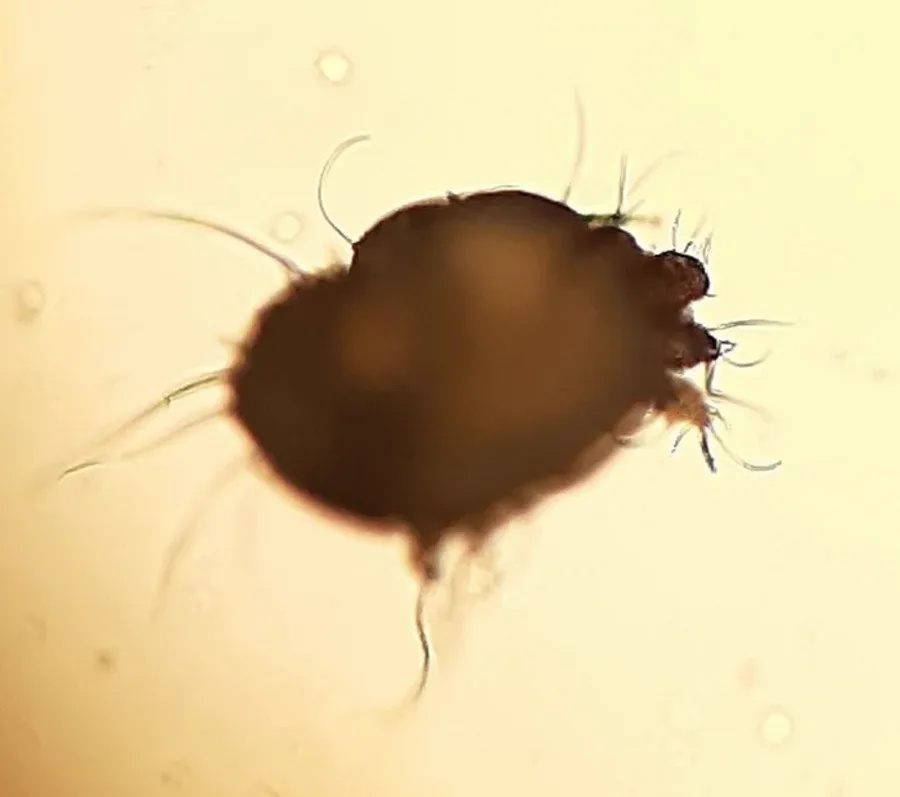
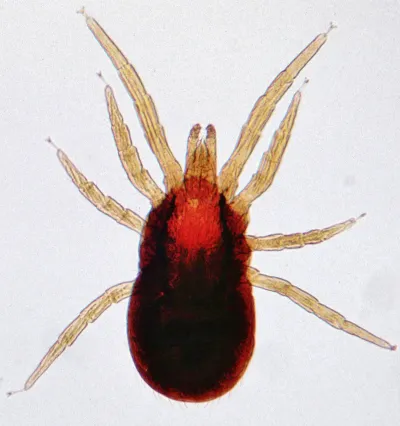
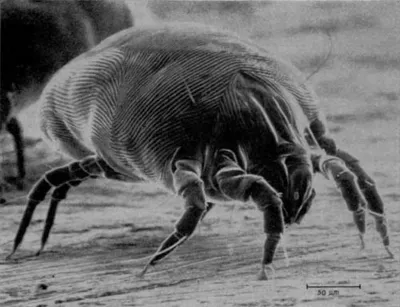
Under a microscope, one feature settles it: a pair of large curved hooks on the mouthparts. No other mite you are likely to find on a pet has them. The body is shield-shaped with a clear waist between the front and back. All eight legs end in tiny combs instead of claws. That is how the mite grips hair rather than skin.
The field test is movement. Dandruff sits still. Cheyletiella drifts. Comb the coat over a sheet of dark paper and watch the flakes for half a minute. Specks that travel are mites.
Common Species
Three species cause nearly all North American cases. Vets tell them apart by host and by the shape of a sense organ on the first leg.
- Cheyletiella yasguri: the dog species. Its sense organ is heart-shaped. It will move onto cats and people, but it does not last there.
- Cheyletiella blakei: the cat species. Its sense organ is cone-shaped. Cases are easy to miss, because cats groom away most of the evidence.
- Cheyletiella parasitivorax: the rabbit species, first described in 1878. Rabbit cases usually show the heaviest flaking. It gathers along the back and the back of the neck, where the animal cannot reach.
A fourth species, Cheyletiella mexicana, turns up in the region but rarely in household cases. All of them move between host species easily. In a home with more than one pet, every animal needs a look, not just the one that seems sick.
Cheyletiella Mite Behavior and Biology
Habitat and Feeding
These are surface mites. They never burrow. They live in the loose outer layer of skin and among the hair, moving through shallow paths in dead skin cells. They pierce the surface to feed on skin debris and tissue fluid. That feeding irritates the skin, so it sheds faster. The dry scale this creates is what most owners notice first.
Because the mites stay on top, a vet can find them with a shallow sample: a flea comb, a tape prep, or a light scraping. Deep scraping is needed for sarcoptic mange mites, but not for these. That difference is one reason the two get mixed up.
Life Cycle
The whole cycle happens on the animal and takes about three weeks.
- Egg: the female glues each egg to a hair with a fine thread. Eggs are oval and about 0.1 to 0.2 millimeters long. They stay attached even while the pet grooms.
- Larva: a six-legged stage that hatches and starts feeding on skin debris.
- Nymph: two eight-legged stages, each one larger than the last.
- Adult: eight legs, able to breed, and living about two to three weeks.
A three-week cycle means an untreated animal builds a heavy population fast. It also means treatment has to run long enough to outlast eggs that survive the first round. That is why a vet’s plan usually stretches over several weeks.
How It Spreads
Direct contact between animals does most of the work. Mites pass during nursing, mutual grooming, and play, and they spread quickly where animals are housed together at kennels, shelters, groomers, and pet stores.
Shared bedding, brushes, combs, and carriers move mites too. An adult female can last up to about ten days away from a host. Other stages die within about two days.
People pick mites up by holding an infested animal or sleeping near one. The result is a patch of itchy red bumps on the forearms, chest, and stomach. The mites cannot breed on people, so the rash fades on its own once the animal is treated. That usually takes about three weeks. A doctor can treat the itch in the meantime.
Signs to Watch For
In pets, look for heavy dry flaking along the spine and shoulders. The coat may look dull. You may see mild to moderate scratching, some thinning hair, and pale specks that move. Rabbits and dogs show it plainly. Cats often show almost nothing while still carrying and spreading mites.
In people, look for itchy red bumps grouped where your skin touches the animal. You will not see a mite on your own skin. If several people in a home break out in an itchy rash and a pet has flaky skin, the two are worth connecting.
How We Treat for Cheyletiella Mites
We do not treat Cheyletiella mites, and no pest control company can. These mites live on the animal. The problem ends at the vet’s office, not with a treatment of your house. Anyone who offers to clear walking dandruff with a home treatment is selling you the wrong thing.
Here is what to do instead.
- See a vet, and bring every pet. Diagnosis takes a comb sample or tape prep under a microscope. Flaking, allergies, ringworm, lice, and other mites all look alike from across the room. Every dog, cat, and rabbit in the home needs treatment at once, including the ones that look fine. Untreated carriers are the usual reason the problem comes back.
- Finish the full course. Vets use dips, spot-on products, and oral medications, chosen around the species, age, and breed. Several of these products are harmful to rabbits or to cats, and some carry breed-specific cautions in dogs. This is not a place for store-shelf products or home remedies. Treatment usually runs for weeks to outlast the egg stage.
- See a doctor about your own rash if the itching bothers you. Human cases clear up once the animal is treated, but a doctor can confirm the cause and calm the symptoms.
- Handle the household side yourself. Wash pet bedding and blankets weekly in hot water and dry them on high heat while the pet is being treated. Vacuum carpets, upholstery, and pet resting spots, then empty the canister outdoors. Clean crates, carriers, brushes, and combs. The mites die off the animal within about ten days, so this cleaning closes the gap. No chemical treatment is needed.
This page is general information, not medical or veterinary advice. Always talk to a doctor about your own skin symptoms, and to a veterinarian about your pet’s diagnosis and treatment.
Cheyletiella causes no property damage. It does not feed on wood, fabric, or stored food, and it leaves nothing behind in the structure.
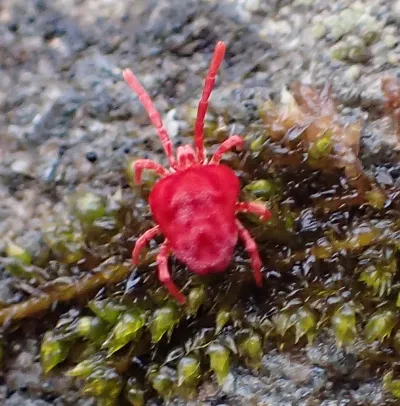
A pest that does live in your house is a different problem with a different answer. Dust mites in bedding, clover mites coming in around windows in spring, and fleas cycling through carpet and pet bedding are all handled very differently from a mite that lives on the animal. Fleas in particular are often the real answer when an itchy pet and an itchy owner turn up together. Our pest control service covers the structural side of that list, and we are glad to tell you when what you are looking at belongs to your vet instead.
Species Commonly Confused With Cheyletiella Mites
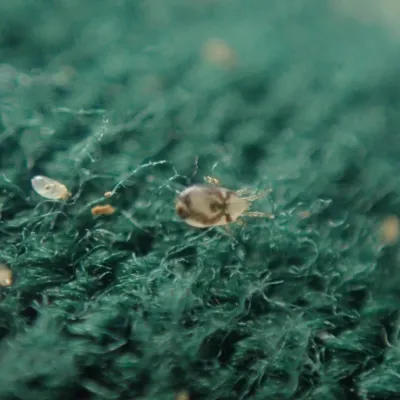
- Fur mites: the broader everyday name for this group. Start there if you are researching coat parasites and flaking in general.
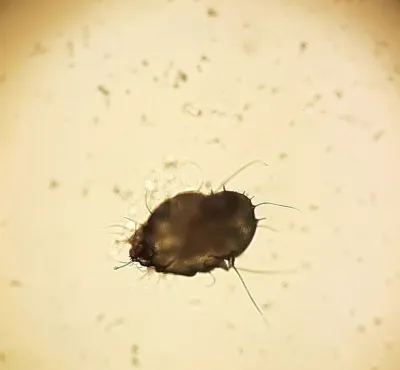
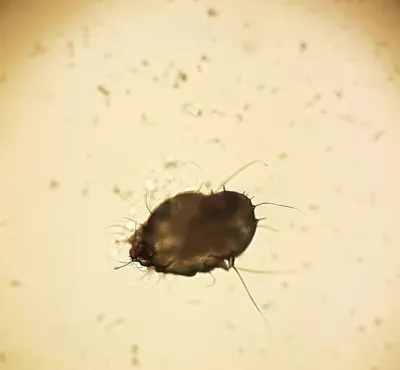
- Sarcoptic mange mites: these burrow into skin. They cause intense itching and crusting rather than dry flaking, and a vet needs a deep scraping to find them.
- Notoedric mange mites: also burrowers, gathered on a cat’s head, ears, and neck with thick gray crusts.
- Ear mites: these live inside the ear canal. They cause a dark crumbly discharge and head shaking, not flaking along the back.
- Dust mites: these live in bedding and upholstery and never on the animal. They trigger allergies rather than bites or flaking.
- Ordinary dandruff, lice, and flea dirt: dandruff flakes do not move, lice are larger and cling to hair with eggs glued in place, and flea dirt is black and turns reddish in water.
References
Other Mites
Explore other species in the mites family
Commonly Confused With
Cheyletiella Mites are often mistaken for these similar pests
Where Cheyletiella Mites Are Found
Hover over states to see their names. Green regions indicate where cheyletiella mites have been reported.
Common Questions about Cheyletiella Mites
What does walking dandruff actually look like?
+
It looks like ordinary dandruff along your pet's back and shoulders until you watch it closely. Real skin flakes stay put. Cheyletiella mites are pale specks about the size of a grain of salt that drift slowly through the coat, which is why the flakes appear to move. Combing the coat over a sheet of dark paper makes the movement much easier to see.
Can Cheyletiella mites live on humans?
+
They can crawl onto people and bite, but they cannot complete their life cycle on human skin. People are a dead-end host. The itchy red bumps usually appear on the forearms, chest, and stomach where you hold the animal, and they typically clear within about three weeks once the pet is treated.
Can Cheyletiella mites infest my house?
+
Not in the way roaches or fleas do. These mites need a live animal host. Adult females may survive up to about ten days off the animal in bedding or carpet, and other stages die within roughly two days. That window is long enough for bedding and grooming tools to pass mites between pets, but the population cannot sustain itself in a home without an infested animal.
Will a pest control treatment get rid of Cheyletiella mites?
+
No. The mites live on the animal, so the infestation ends when a veterinarian treats every pet in the household. Household cleaning during that treatment is supporting work, not a cure. Treating a home without treating the animal leaves the source untouched.
How is it different from mange or scabies?
+
Sarcoptic mange mites burrow into the skin and cause intense itching with crusting, usually on the ear margins, elbows, and belly. Cheyletiella stays on the skin surface under the scales, causes heavy dry flaking along the back, and often produces only mild itching. A veterinarian tells them apart with a skin scraping or tape prep under a microscope.
Why does my cat have it but show almost no symptoms?
+
Cats groom constantly and swallow many of the mites, so an infested cat can look nearly normal while still spreading mites to other pets and to people in the home. Quiet carrier cats are a common reason a household problem keeps coming back after the visibly affected dog or rabbit is treated.
Do I need to throw out pet bedding?
+
Usually not. Washing bedding in hot water and drying it on high heat is generally enough, because the mites cannot survive long away from an animal. Repeat the laundering weekly through the course of the veterinary treatment, and clean carriers, crates, brushes, and combs at the same time.
Which pets are most at risk?
+
Puppies, kittens, and rabbits, especially those from shelters, kennels, catteries, breeders, and pet stores where animals are housed close together. Rabbits are affected often enough that flaking along the back and neck should prompt a veterinary exam.

With five years of hands-on experience in the pest control industry, George Schulz is a registered technician with the Virginia Pest Management Association and a proud third-generation professional in a family business that's been protecting homes for over 58 years. He manages and trains a team of service pros while also leading internal research efforts—recently spearheading a deep-dive review of thousands of documents on pest control materials to hand-pick the most kid and pet friendly, most effective solutions tailored specifically for homes in the DC metro area.
Local Mites Help
Dealing with mites at home? Our licensed technicians provide pest control across Northern Virginia and Maryland.
