Moisture Ants Identification Guide
Lasius spp. (incl. Lasius pallitarsis)
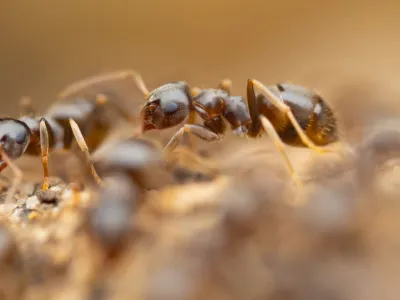
Moisture ants are small brown to yellow Lasius ants that nest in damp soil and rotting wood. They rarely harm sound lumber, but finding them inside a home usually points to a leak, wood rot, or poor drainage nearby.
Taxonomy
Moisture Ants Coloration
Common color patterns to help identify moisture ants
Moisture Ants
Seasonal Activity
When moisture ants are most active throughout the year

Where Moisture Ants Are Found
Hover over states to see their names. Green regions indicate where moisture ants have been reported.
Moisture Ants Identification Guide
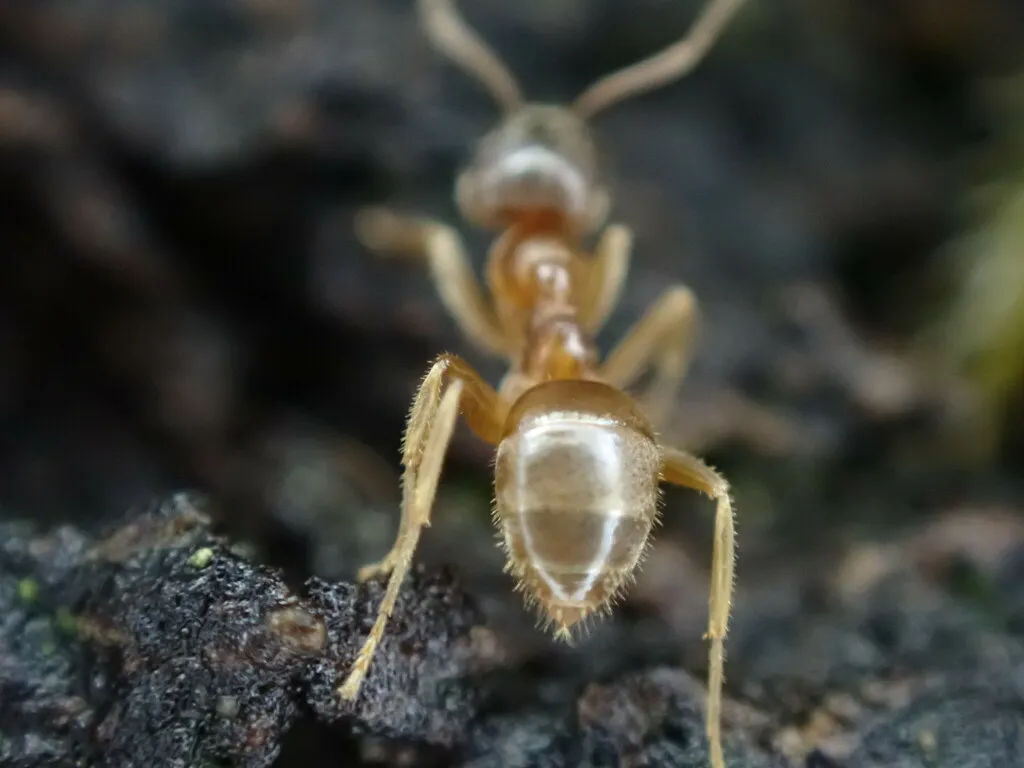
Moisture ants are small ants that live where things stay wet. They nest in damp soil, rotting logs, and water-damaged wood. When they show up inside a home, they are usually telling you something: there is a leak, a rotted sill plate, or soil that stays soaked against the foundation.
“Moisture ant” is a common name, not a single species. Most sources use it for ants in the genus Lasius. In the Pacific Northwest and much of Canada, the name usually means Lasius pallitarsis. In the eastern U.S., including Virginia, Maryland, and DC, people often use it for yellow ants that are also sold as citronella ants.
Physical Characteristics
- Size: Workers are about 3–4 mm (roughly 1/8 inch). Winged queens can reach 8–9 mm.
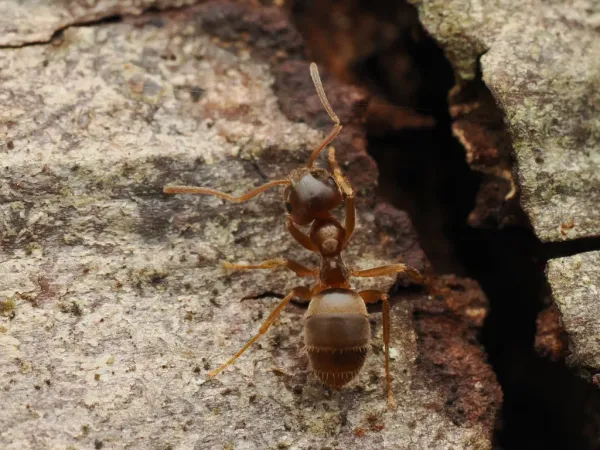
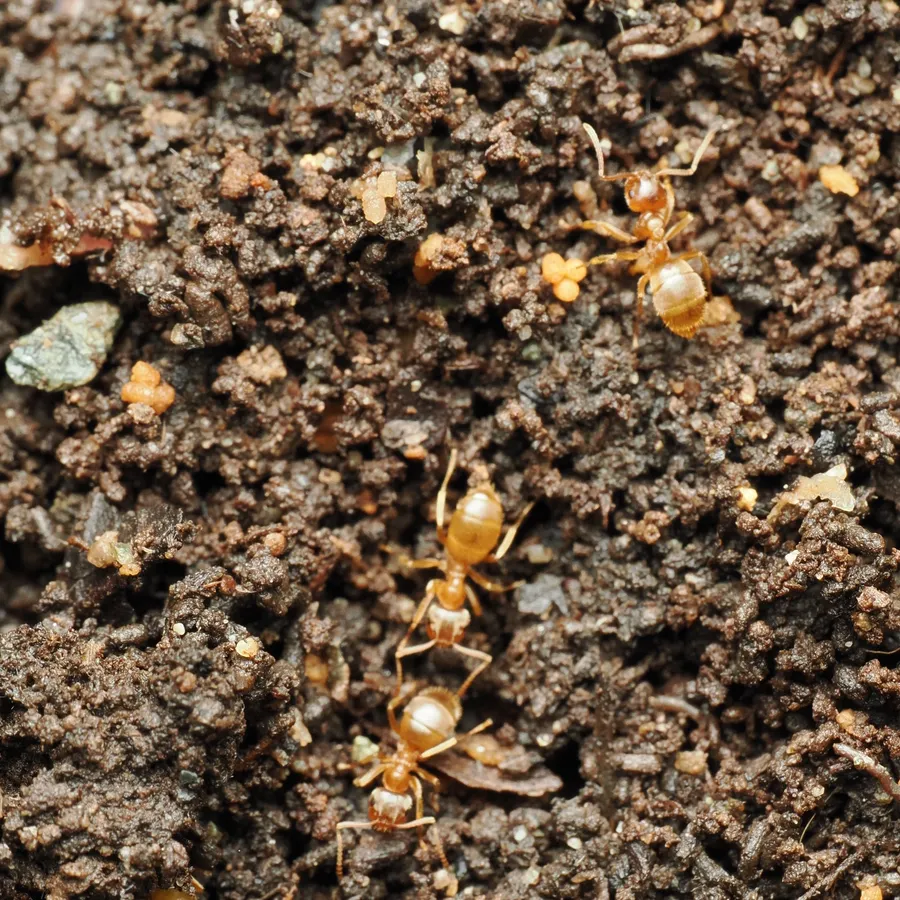
- Color: Western moisture ants are light to medium brown with pale yellow legs. Eastern yellow species range from golden yellow to light reddish-brown.
- Body: One node (small bump) at the waist, elbowed antennae, and an evenly rounded thorax.
- Workers are all about the same size. Carpenter ant colonies have workers in many sizes.
- Smell: Some yellow species release a lemon or citronella odor when crushed.
Winged males and queens (swarmers) appear seasonally. Their front wings are longer than their hind wings, which is one way to rule out termites.
Common Species
- Pale-legged moisture ant (Lasius pallitarsis): The classic “moisture ant” of Washington, Oregon, Idaho, and British Columbia, found across Canada and the northern and mountain states.
- Larger yellow ant (Lasius interjectus): A yellow, lemon-scented species common in the eastern and central U.S.
- Smaller yellow ant (Lasius claviger): Another eastern species known for swarming late in the fall.
- Other Lasius species: Relatives like the cornfield ant (Lasius neoniger) nest in lawns and are sometimes lumped in with moisture ants.
Species Commonly Confused with Moisture Ants
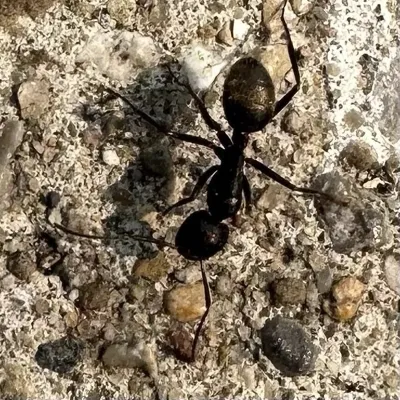
- Carpenter ants are much larger (1/4 to 1/2 inch) and carve smooth galleries in wood, leaving piles of clean sawdust. Moisture ant nests are full of soil and crumbly, rotted wood.
- Subterranean termites swarm in spring and eat sound wood. Termite swarmers have straight antennae, no pinched waist, and equal-length wings.
- Dampwood termites live in the same kind of wet, decaying wood, which is why the two get mixed up. Dampwood termites are much larger and have no narrow waist.
- Citronella ants are the eastern yellow members of this same group, so many homeowners hear both names used for the same ant.
Moisture Ants Behavior and Biology
Habitat
Outdoors, moisture ants nest under stones, in rotting stumps and logs, and in soil around plant roots. Around homes, look for them:
- In water-damaged wood near leaky plumbing, tubs, and showers
- In rotted sill plates, rim joists, and window frames
- Under concrete slabs and in damp crawl spaces
- In soil under mulch, firewood, or landscape timbers against the foundation
Oregon State University notes that nests are often found in moist or decaying wood and in soil near foundations. They do not eat sound wood. But they will dig tunnels in wood that rot has already softened.
Diet
Moisture ants are aphid farmers. Workers tend root-feeding aphids and mealybugs underground and collect the sugary honeydew they produce. They also eat small insects and will take other sweets. Most of their food is underground. That is why you rarely see them marching across counters the way odorous house ants do.
Life Cycle
Like all ants, moisture ants go through egg, larva, pupa, and adult stages. A colony has one or more queens and can hold several thousand workers. Oregon State University reports average Lasius pallitarsis colonies of about 4,000 to 7,000 workers.
Mature colonies send out winged swarmers to mate and start new nests. In the Pacific Northwest, swarms happen in late summer and fall. In the Mid-Atlantic, yellow ants swarm in spring and fall, and some species fly as late as November. A swarm inside the house is often the first sign of a nest nearby. See our guide to flying ants in the house for more help sorting swarmers.
Nesting and Damage
Moisture ants are mostly a nuisance and a warning sign. They are not aggressive and do not sting. The real risk is what drew them in: a long-term leak or wood rot that can weaken framing if it is not repaired. When our technicians find moisture ants in a wall or subfloor, we treat that area as a moisture problem as well as an ant problem.
How We Treat for Moisture Ants
Moisture ants are covered under our general pest control plans. These ants nest out of sight and often skip baits. So we focus on finding the nest and the water source.
- Inspection: A licensed technician checks the interior hot spots where ants or swarmers were seen, such as bathrooms, kitchens, and basements. Outside, they inspect the foundation, crawl space, mulch beds, and wood that touches soil. We look for rotted wood, leaks, and drainage problems that support the colony, and we confirm the ants are not termites or carpenter ants.
- Treatment: We apply a non-repellent insecticide to cracks, crevices, and voids where ants travel, plus a perimeter treatment around the foundation. Non-repellent products don’t scare ants away. Workers carry the material back and share it through the colony.
- Prevention & customer guidance: We point out the conducive conditions we find, including plumbing leaks, clogged gutters, poor grading, damp crawl spaces, and mulch or firewood piled against the house. Replacing rotted wood and drying out the area removes the nest site, which matters more for long-term control than any product.
Recurring maintenance visits keep the exterior barrier in place, and if ants come back between visits, we return with unlimited free callbacks. For bathroom-specific issues, see ants in the bathroom, or learn more about our ant control service.
References
- Integrated Pest Management for Ants in Schools (PNW 761), Oregon State University Extension
- Yellow Ant, Lasius (Acanthomyops) spp. (ENTO-458), Virginia Cooperative Extension, Virginia Tech
- Citronella Ants, Penn State Extension
- Ants, University of Minnesota Extension
Other Ants
Explore other species in the ants family
Commonly Confused With
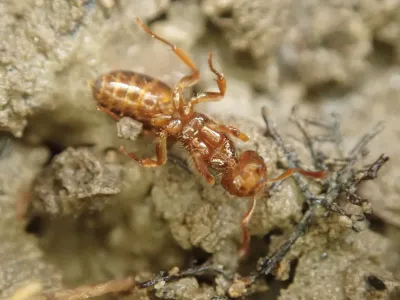
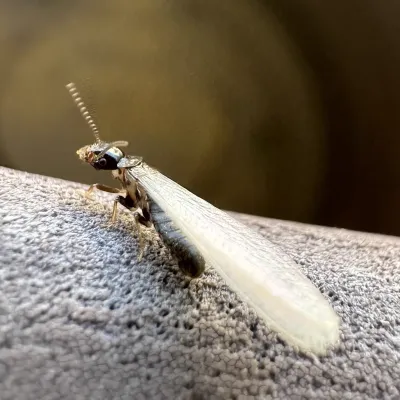
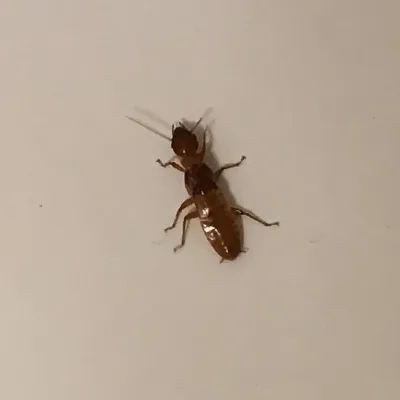
Moisture Ants are often mistaken for these similar pests
Where Moisture Ants Are Found
Hover over states to see their names. Green regions indicate where moisture ants have been reported.
Common Questions about Moisture Ants
What are moisture ants?
+
Moisture ants is a common name for several small Lasius ants that nest in damp soil and decaying wood. In the Pacific Northwest it usually means the pale-legged Lasius pallitarsis. In the East, the name is often used for yellow ants, also called citronella ants. They all share one habit: they follow moisture.
Do moisture ants damage wood?
+
Moisture ants do not eat wood, and they rarely tunnel into sound, dry lumber. They move into wood that is already soft from water damage or rot. The ants are a warning sign rather than the main problem. The leak or rot they found is what can weaken your home over time.
How can I tell moisture ants from carpenter ants?
+
Size is the quickest clue. Moisture ant workers are about 1/8 inch long, while carpenter ant workers are usually 1/4 inch or longer. Carpenter ants push out piles of coarse, clean sawdust as they carve galleries. Moisture ant nests are packed with soil and bits of rotted wood instead.
Are moisture ants the same as termites?
+
No. Winged moisture ants often swarm in late summer and fall and can look like termite swarmers. Ants have elbowed antennae, a pinched waist, and front wings longer than their back wings. Termites have straight antennae, a thick waist, and four wings of equal length.
Why do I see moisture ants in my bathroom or kitchen?
+
These rooms have plumbing, and slow leaks under sinks, tubs, or dishwashers can soften subfloors and wall framing. Moisture ants often nest in that wet wood or in damp soil under the slab. Seeing them indoors, especially swarmers, is a good reason to check for hidden water damage.
Do moisture ants bite?
+
Moisture ants are not aggressive and do not sting. Workers may pinch if handled, but they pose little health risk to people or pets. Some eastern species give off a lemon-like smell when crushed, which is a harmless defense.
Will ant bait get rid of moisture ants?
+
Often not. Moisture ants feed mostly on honeydew from aphids that live on plant roots underground, so they ignore many sweet or protein baits. Virginia Tech notes that yellow ants typically do not respond well to baits. Finding the nest, fixing the moisture, and using targeted non-repellent treatments works better.

With five years of hands-on experience in the pest control industry, George Schulz is a registered technician with the Virginia Pest Management Association and a proud third-generation professional in a family business that's been protecting homes for over 58 years. He manages and trains a team of service pros while also leading internal research efforts—recently spearheading a deep-dive review of thousands of documents on pest control materials to hand-pick the most kid and pet friendly, most effective solutions tailored specifically for homes in the DC metro area.
Local Ants Help
Dealing with ants at home? Our licensed technicians provide ant control across Northern Virginia and Maryland.
