Black Carpenter Ants Identification Guide
Camponotus pennsylvanicus
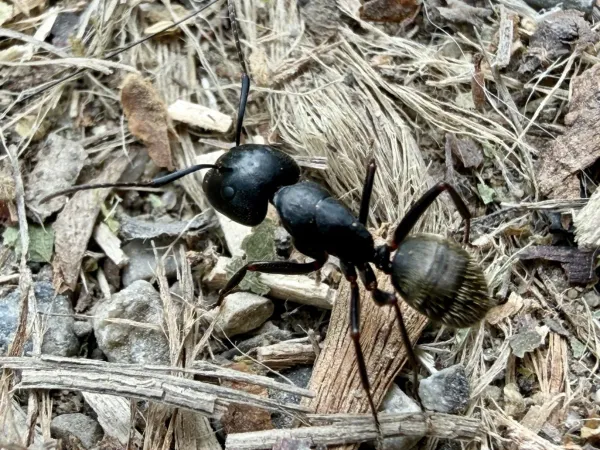
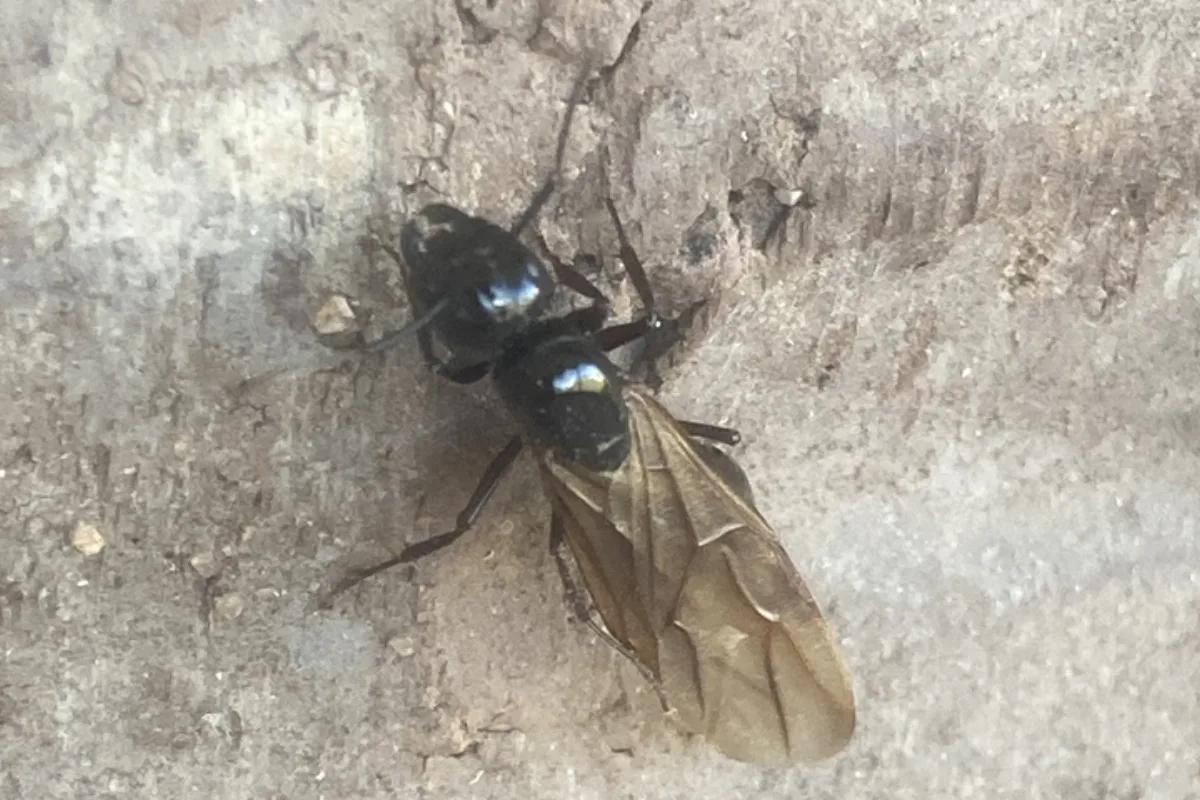
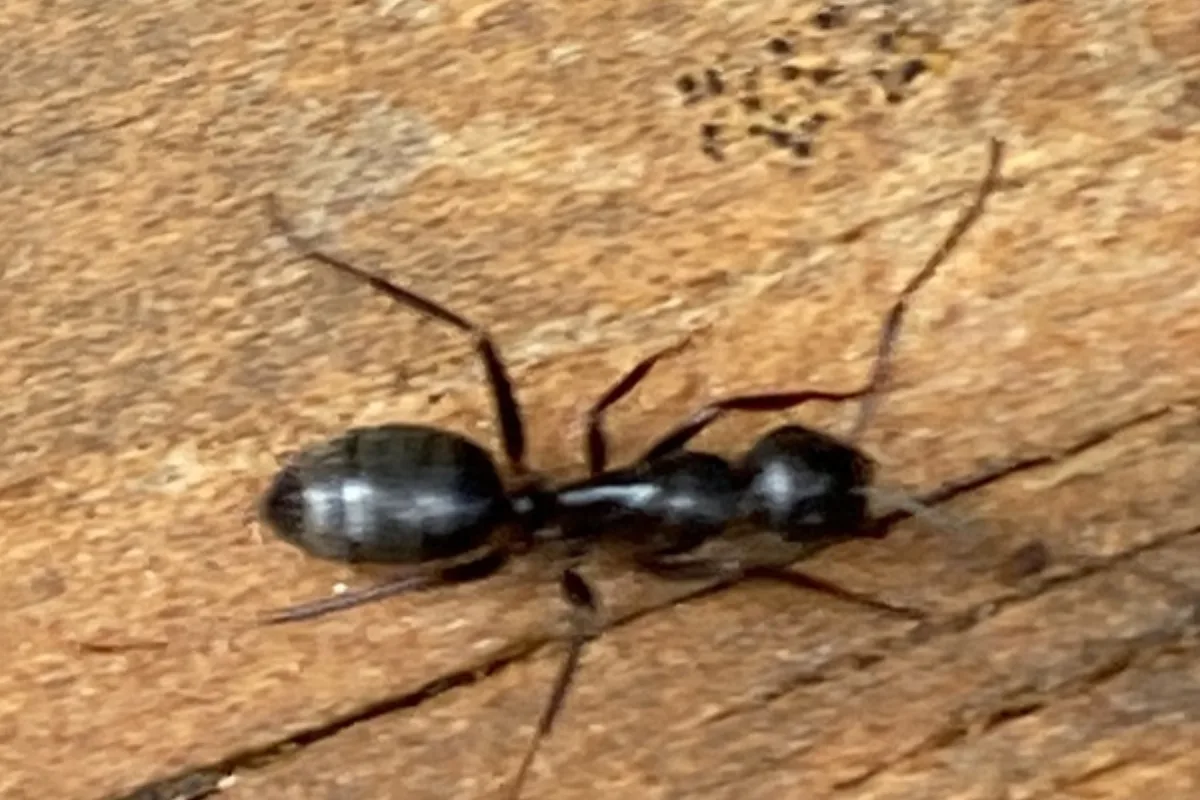
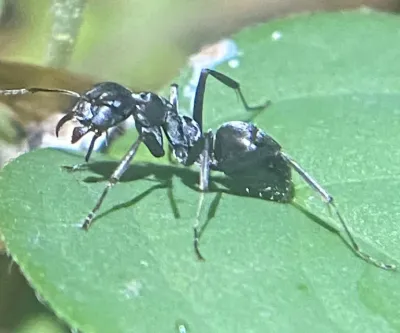
The black carpenter ant is the large, all-black carpenter ant of eastern North America. Workers are 1/4 to 1/2 inch long with pale hairs on the abdomen. They nest in damp or rotting wood and are the species most often found in homes in the eastern United States.
Taxonomy
Black Carpenter Ants Coloration
Common color patterns to help identify black carpenter ants
Black Carpenter Ants
Seasonal Activity
When black carpenter ants are most active throughout the year

Where Black Carpenter Ants Are Found
Hover over states to see their names. Green regions indicate where black carpenter ants have been reported.
Black Carpenter Ant Identification Guide
The black carpenter ant (Camponotus pennsylvanicus) is the big black ant most people in the eastern United States picture when they hear “carpenter ant.” It is also called the eastern black carpenter ant. This page covers what sets this one species apart. For frass, damage signs, and general prevention, see our main carpenter ants guide.
Physical Characteristics
- Size: Workers are 1/4 to 1/2 inch long (6 to 13 mm). One colony has small “minor” workers and large “major” workers with wide heads. Queens reach about 3/4 inch.
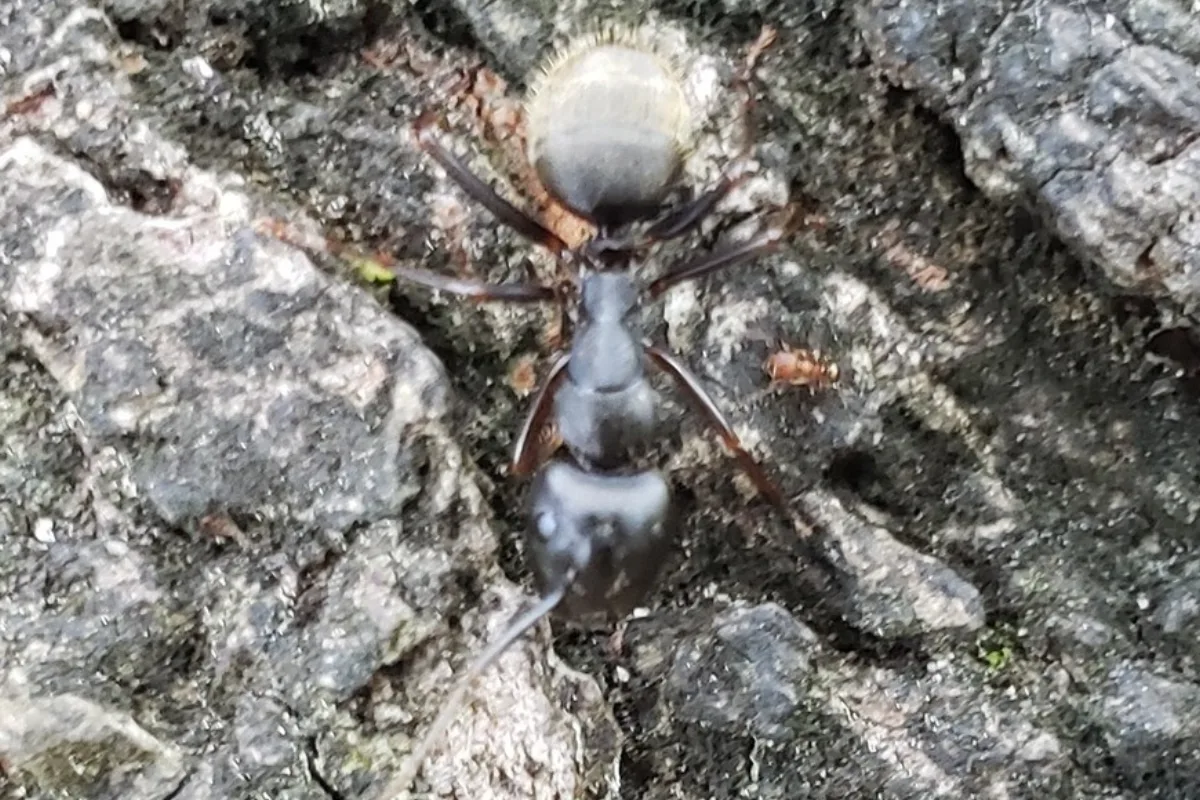
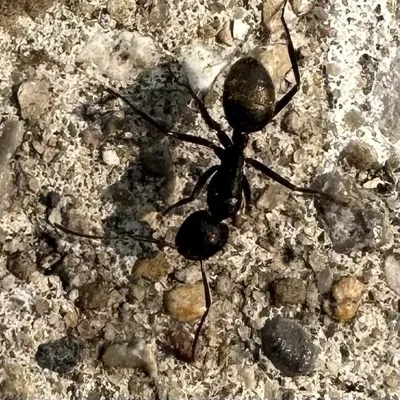
- Color: Dull black to blackish all over. Some have a dark red-brown tint on the legs or at the base of the abdomen.
- Abdomen hairs: Long, pale hairs lie flat on the abdomen. They look silvery to yellowish and give the black abdomen a faint sheen. This is the best species clue.
- Thorax: Smooth and evenly rounded from the side, with no spines.
- Waist: One upright node between the thorax and abdomen.
- Antennae: Elbowed, like all ants.
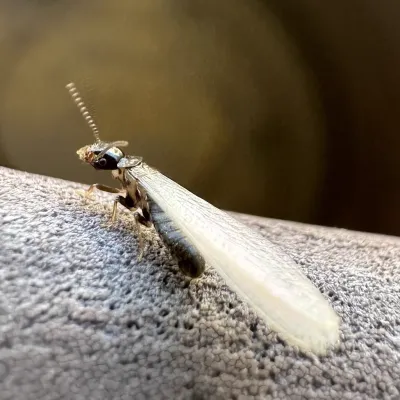
Winged queens and males match the workers in color. Their front wings are longer than their hind wings. That is one way to tell them from winged eastern subterranean termites, which have four wings of equal length, straight antennae, and a thick waist. Our guide to carpenter ant swarmers has more on winged ants.
Black Carpenter Ants vs. Other Carpenter Ants
Several Camponotus species share the same range. Color and range sort out most of them.
| Species | Color | Where it lives |
|---|---|---|
| Black carpenter ant (C. pennsylvanicus) | All black with pale abdomen hairs | Eastern and central U.S., southeast Canada |
| Red carpenter ant (C. chromaiodes) | Black with a reddish rear thorax, waist, and legs; golden abdomen hairs | Eastern U.S. |
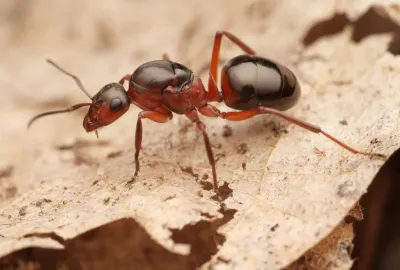
| New York carpenter ant (C. novaeboracensis) | Black head and abdomen, red thorax | Northern U.S. and Canada |
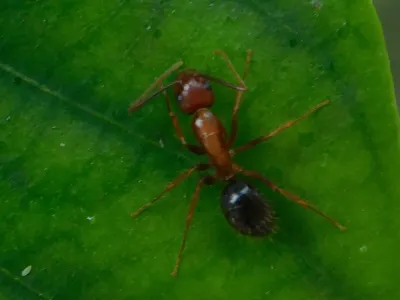
| Florida carpenter ant (C. floridanus) | Orange-red head and thorax, black abdomen | Southeast, mainly Florida |
| Western black carpenter ant (C. modoc) | Black with dark red legs | Western U.S. and Canada |
The red carpenter ant is the hardest to separate. Dark ones look almost the same as black carpenter ants. The Mississippi Entomological Museum notes that its abdomen hairs are golden, thicker, and longer. It takes a hand lens to see the difference. Both species nest in wood and are treated the same way.
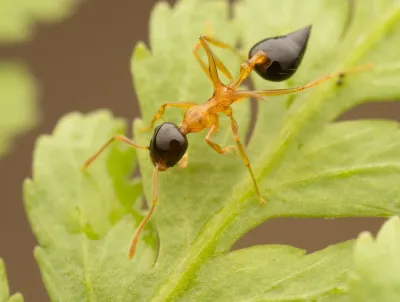
Large black field ants also get mistaken for this species. From the side, a field ant’s thorax has a dip in the middle. A carpenter ant’s thorax is one smooth curve. Field ants nest in soil, not wood. Our carpenter ant vs. black ant guide compares them with smaller house ants.
Where Black Carpenter Ants Live
This species is native to eastern North America. It ranges from New England south to Florida and west to the Dakotas and Texas. In Canada it lives in Ontario, Quebec, the Maritime provinces, and Manitoba. The Animal Diversity Web calls it the most common Camponotus in the central and eastern United States. West of the Great Plains, other carpenter ant species take its place.
Black Carpenter Ant Behavior and Biology
Nesting
In the wild, black carpenter ants nest in logs, stumps, and hollow trees. They favor hardwood trees. The main nest, called the parent nest, holds the queen, eggs, and young larvae. It needs damp wood to keep the eggs from drying out.
As the colony grows, workers set up satellite nests nearby. These hold workers, older larvae, and pupae, so they can be in drier spots. Penn State Extension notes that the parent nest is often in a tree, log, or waste wood within 100 yards of the house, while the nest inside the home is often a satellite. Indoors they pick wall voids, hollow doors, foam insulation, and wood softened by leaks. They can tunnel through sound wood to reach a void, but they seldom nest in dry, solid wood.
Diet and Foraging
These ants do not eat wood. They eat:
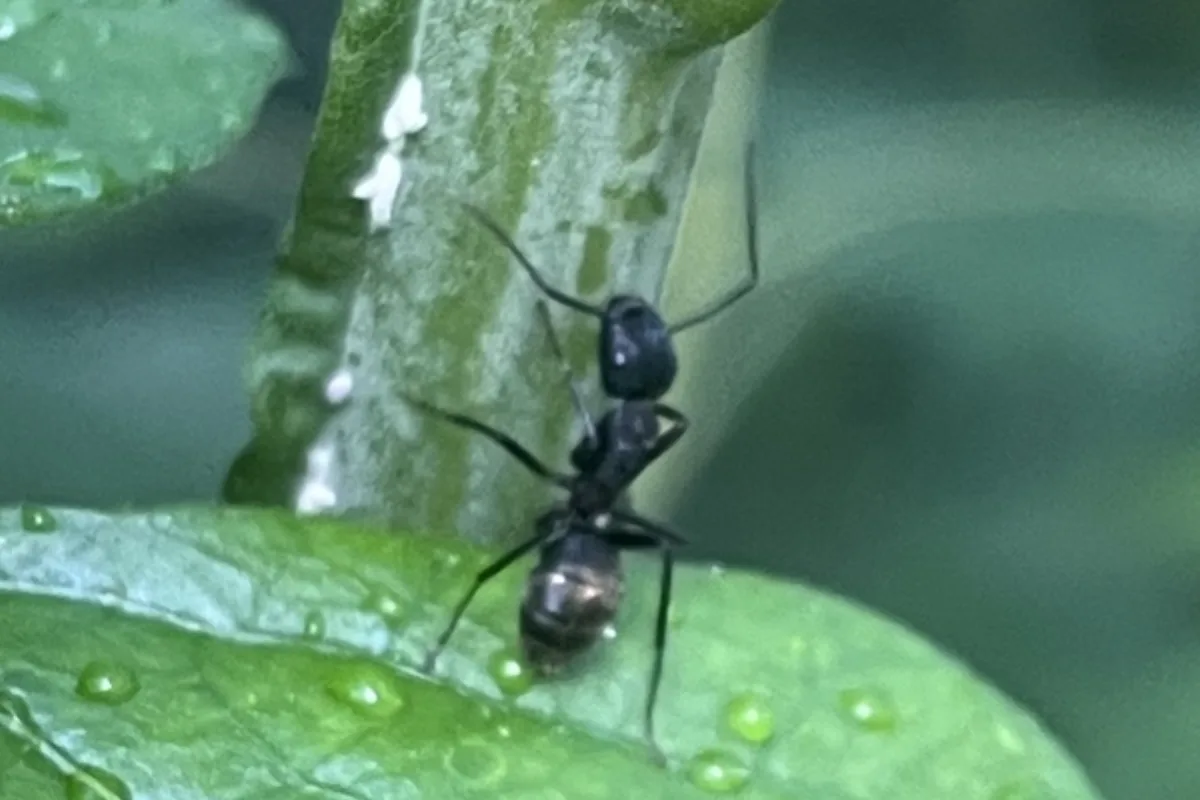
- Honeydew from aphids and scale insects
- Live and dead insects
- Plant sap, nectar, and fruit juice
- Sweets, meats, and greasy foods indoors
Workers forage mostly at night. They follow set trails along fence rails, tree limbs, and utility lines. Branches that touch the house make an easy bridge indoors.
Colony Size and Life Cycle
Each colony has one queen. She starts alone in a small hole in damp wood and lays about 15 to 20 eggs. Egg to adult worker takes at least 60 days. The first workers are small because the queen feeds them from her own body stores.
Growth is slow at first. Penn State Extension reports that a colony usually does not make winged ants until it is several years old and has 2,000 to 3,000 workers. Winged ants grow in summer, stay in the nest over winter, and fly the next spring or early summer. Queens can live more than 10 years.
Colonies rest through winter. Nests in heated walls can stay active, which is why black ants seen indoors in January often mean an indoor nest.
How We Treat for Black Carpenter Ants
Black carpenter ants are the carpenter ant we see most in Northern Virginia, Maryland, and DC. They are covered under our ant control service.
- Inspection: Our technician checks inside first. We focus on kitchens, bathrooms, basements, and any spot where you have seen ants. We look for trails, entry points, and damp or damaged wood. Then we check the outside along the foundation.
- Interior treatment: We apply a non-repellent product to cracks, crevices, and voids where the ants travel and nest. Ants cannot detect it. They walk through it and pass it to nest mates, so it spreads through the colony instead of just pushing the ants to a new spot.
- Exterior treatment: We apply a non-repellent product around the foundation and at entry points. This reaches workers moving between an outdoor parent nest and the house.
- Moisture and access: We point out wood rot, leaks, and branches touching the house. Fixing these matters as much as the treatment, because damp wood is what draws this species in.
- Follow-up: Our plans include tri-annual visits (three times per year) to renew the exterior treatment. If ants come back between visits, so do we, with unlimited free callbacks.
References
- Penn State Extension: Carpenter Ants - Species profile of Camponotus pennsylvanicus, life history, and nest locations
- Mississippi Entomological Museum: Camponotus pennsylvanicus - Identification, measurements, range, and comparison with C. chromaiodes
- Animal Diversity Web (University of Michigan): Camponotus pennsylvanicus - Range, lifespan, diet, and behavior
- University of Minnesota Extension: Carpenter Ants - Parent and satellite nests and foraging times
- University of Maryland Extension: Carpenter Ants - Damage, nest sites, and moisture problems in Mid-Atlantic homes
- University of Kentucky Entomology: Carpenter Ants - Identification and seasonal activity
Other Ants
Explore other species in the ants family
Commonly Confused With
Black Carpenter Ants are often mistaken for these similar pests
Where Black Carpenter Ants Are Found
Hover over states to see their names. Green regions indicate where black carpenter ants have been reported.
Common Questions about Black Carpenter Ants
How do I know if I have black carpenter ants?
+
Look for big, dull black ants that are 1/4 to 1/2 inch long and come in mixed sizes. Under a hand lens, the abdomen has long, pale hairs that lie flat. You will mostly see them after dark, often near sinks, dishwashers, and windows. Piles of coarse sawdust with insect parts in it point to a nest nearby.
Are black carpenter ants the same as regular carpenter ants?
+
The black carpenter ant is one species of carpenter ant. There are many others in North America, and some are red and black or brown. In the eastern United States, this is the species most people mean when they say carpenter ant.
Do black carpenter ants bite or sting?
+
They do not have a stinger. A large worker can pinch with its jaws if you handle it or disturb the nest, and it may spray a little formic acid, which can sting for a moment. They are not known to spread disease. This is not medical advice, so see a doctor if a bite causes a strong reaction.
How much damage can black carpenter ants do?
+
Damage is slow. These ants do not eat wood. They chew it out to make room for the nest, and they favor wood that is already damp or rotting. A nest left in place for years can weaken the wood around it. The nest is also a strong sign of a moisture problem that needs fixing.
When do black carpenter ants swarm?
+
Winged ants leave mature colonies on warm days in spring and early summer. In the Mid-Atlantic that is most often May and June. A colony usually needs several years and a few thousand workers before it makes swarmers. Many winged ants at an indoor window point to a nest inside the house.
Why do I only see black carpenter ants at night?
+
Workers do most of their food hunting after sunset. University of Minnesota Extension notes they search for food between sunset and midnight in spring and summer. A flashlight check of the kitchen, basement, and outside walls late in the evening is a good way to spot their trails.
Does seeing one black carpenter ant mean I have a nest indoors?
+
Not always. Workers can walk up to 100 yards from a nest in a tree or stump to find food, so a few ants in spring or summer may be visitors. Ants seen indoors in winter, steady numbers night after night, sawdust piles, or winged ants inside are stronger signs of an indoor nest.

With five years of hands-on experience in the pest control industry, George Schulz is a registered technician with the Virginia Pest Management Association and a proud third-generation professional in a family business that's been protecting homes for over 58 years. He manages and trains a team of service pros while also leading internal research efforts—recently spearheading a deep-dive review of thousands of documents on pest control materials to hand-pick the most kid and pet friendly, most effective solutions tailored specifically for homes in the DC metro area.
Local Ants Help
Dealing with ants at home? Our licensed technicians provide ant control across Northern Virginia and Maryland.
