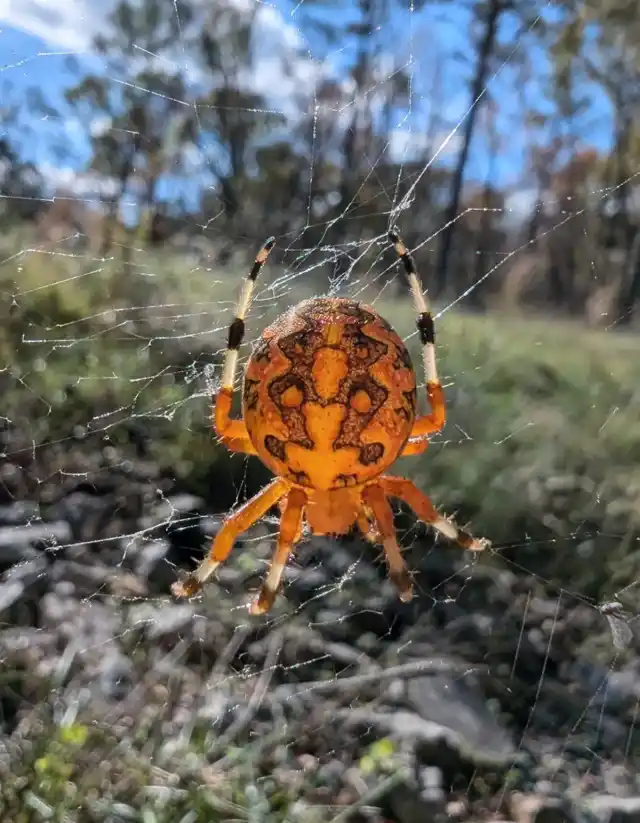

Found an orange spider in Virginia? It is almost certainly one of six. In a web outside, it’s usually the marbled orbweaver (the “pumpkin spider”), the cross orbweaver, the shamrock orbweaver, or a rusty-orange spotted orbweaver. On the ground or in a basement, it’s the woodlouse spider. And if it’s small, fuzzy, black, and hopping, with an orange patch on its back, it’s a jumping spider. None of these are spiders of medical concern.
I’m George Schulz, a licensed technician at Better Termite & Pest Control. Spiders are one of the top pests we handle across Northern Virginia, and every fall I get photos of big orange spiders from worried homeowners. Below is how to tell these six apart quickly, plus one orange “spider” that is actually a wasp.
Quick ID Chart: Orange Spiders in Virginia
Start with where you found the spider. Then match the most obvious feature.
| Spider | Where you see it | Key orange feature | Tell-tale sign | Bite risk |
|---|---|---|---|---|
| Marbled orbweaver | Webs in trees, shrubs, tall weeds | Big, round orange abdomen | Brown or purple marbling | Low |
| Cross orbweaver | Webs on houses near lights | Orange to tan abdomen | White spots forming a cross | Low |
| Shamrock orbweaver | Webs in low shrubs and wet, grassy areas | Orange, red, or yellow abdomen | Black-and-white banded legs | Low |
| Spotted orbweaver | Porch and eave webs at night | Rusty orange-brown body | Banded legs, hides by day | Low |
| Woodlouse spider | Basements, crawl spaces, under stones | Orange-red front half and legs | Smooth tan abdomen, big fangs | Low |
| Jumping spiders | Siding, deck rails, plants in daylight | Orange stripe or spots on black | Hops, big front eyes, no web | Negligible |
Orange Spiders in Webs: The Orb Weavers
Most orange spiders people notice in Virginia are orb weavers. They build the classic round web, often across a doorway, between shrubs, or under the eaves.
1. Marbled Orbweaver (Pumpkin Spider)
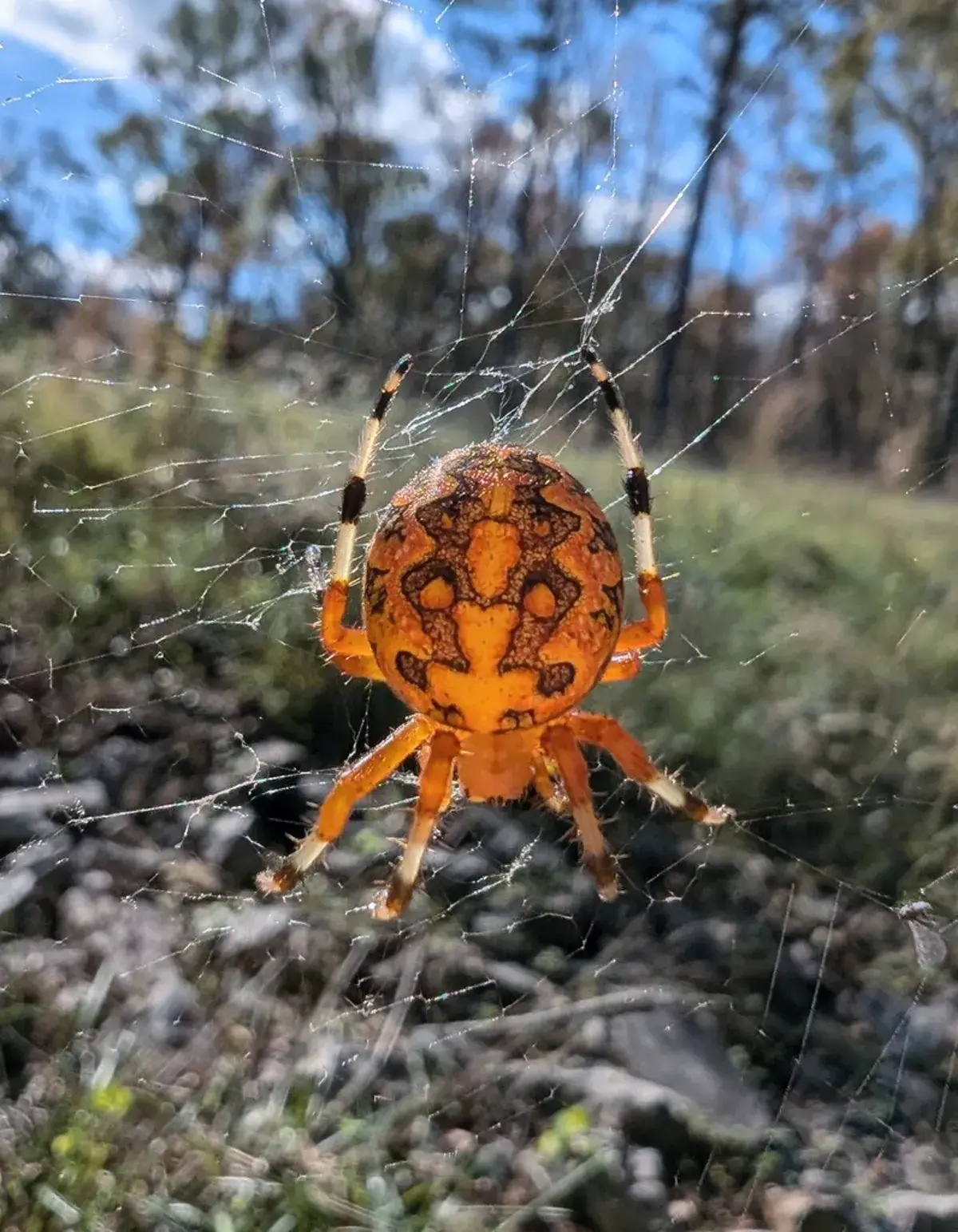
This is the classic orange spider of a Virginia fall. The female has a big, round abdomen that looks like a tiny pumpkin. According to Penn State Extension, adult females are 9 to 20 millimeters long, and the abdomen is mostly orange with brown to purple markings and pale yellow spots. Some individuals are nearly white, so color alone isn’t everything.
Basically, look for three things. First, a big round orange abdomen. Second, a web in trees, shrubs, or tall weeds, especially near woods or a creek. Third, the time of year. Adults show up from mid-summer until the first hard freeze. See our marbled orbweaver page for more photos.
2. Cross Orbweaver
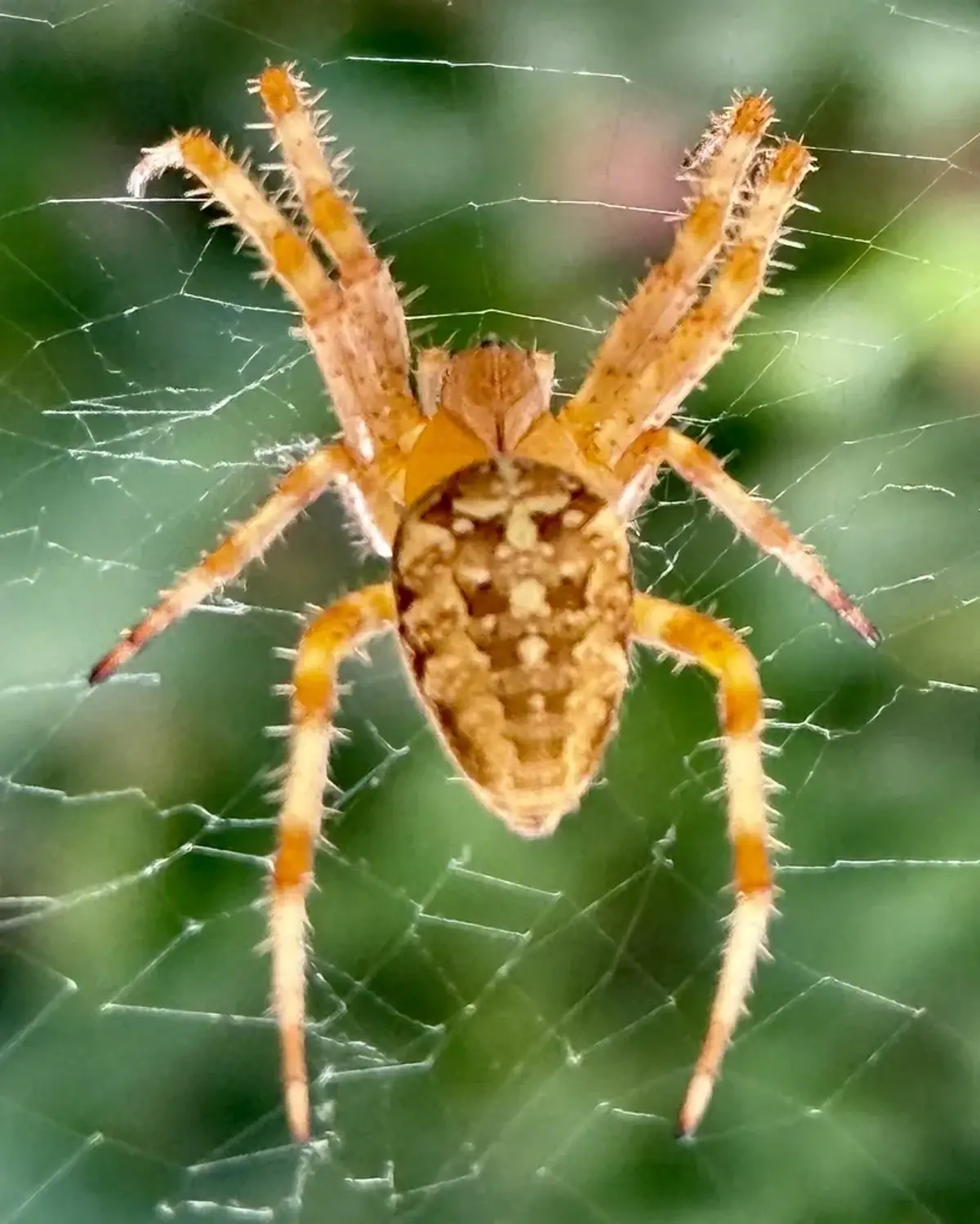
The cross orbweaver can be tan, gray, or a surprisingly bright orange. The key mark is a group of white spots on the top of the abdomen that form a cross. The Penn State cross orbweaver fact sheet notes that color varies a lot from one spider to the next, and that this species is common on or next to buildings with outdoor lights.
That’s why this is the orange spider you’re most likely to find right on your house. It likes porch lights, lit stairwells, and window corners, because insects gather there. It was most likely introduced from Europe, and adults are out from late summer through autumn. More photos are on our cross orbweaver page.
3. Shamrock Orbweaver
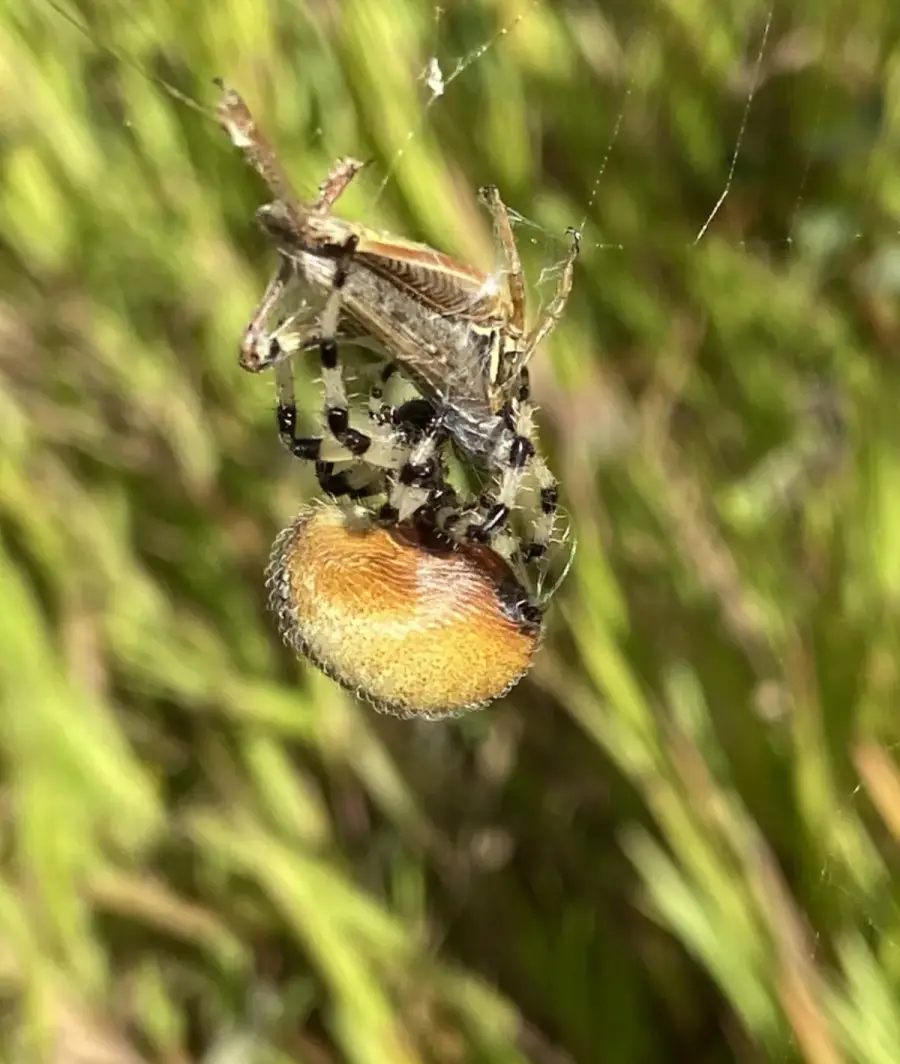
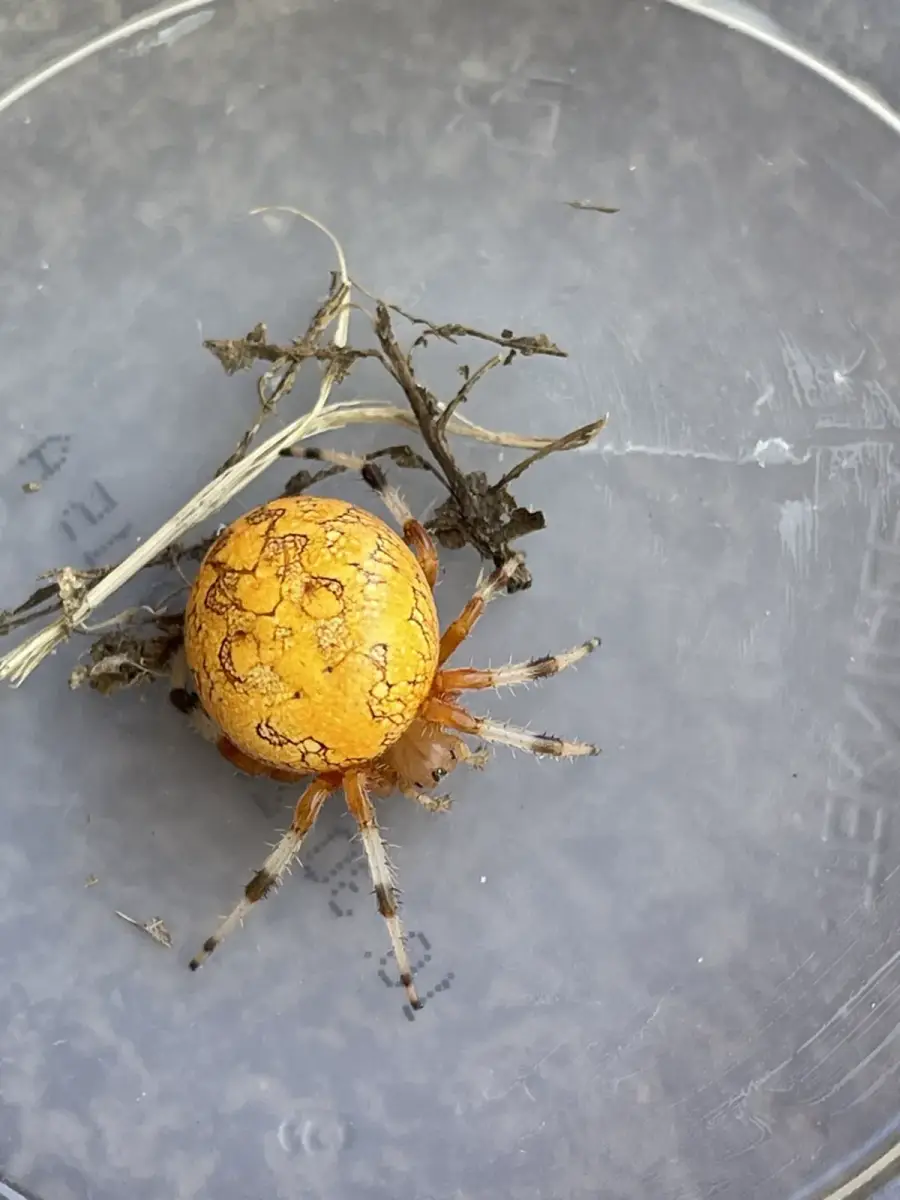
The shamrock orbweaver is the marbled orbweaver’s look-alike. Its abdomen can be orange, red, yellow, tan, or even greenish. So it’s easy to confuse the two when both are orange.
The best way to tell them apart is the legs. Shamrock orbweavers usually have sharp black-and-white bands on each leg. Marbled orbweavers have more orange legs with softer banding. Shamrocks also like low shrubs and grassy, damp areas, and they often hide in a curled leaf at the edge of the web instead of sitting in the center.
4. Spotted Orbweaver
This one surprises people. Spotted orbweavers are usually described as tan or brown. However, many are a rusty orange-brown, especially in porch light at night. They have banded legs and a triangular abdomen with dark markings.
The habit is the real giveaway. Spotted orbweavers build a fresh web at dusk, often near porch lights and eaves, then hide during the day. If you walk face-first into an orange-brown spider’s web on your front steps at night, this is usually why. See our spotted orbweaver page for the color range.
Orb weavers don’t appear out of nowhere in September. Most hatch in spring and spend the summer small and hard to notice. They molt and grow all season. By late summer, the females are full-size with swollen abdomens full of eggs, and their webs are big enough to stretch across a walkway.
That’s also when males leave their webs to look for mates. Our spider mating season article covers that timing. After the first hard freeze, most adult orb weavers die off, and the egg sacs carry the next generation through winter.
Orange Spiders on the Ground or in Basements
5. Woodlouse Spider
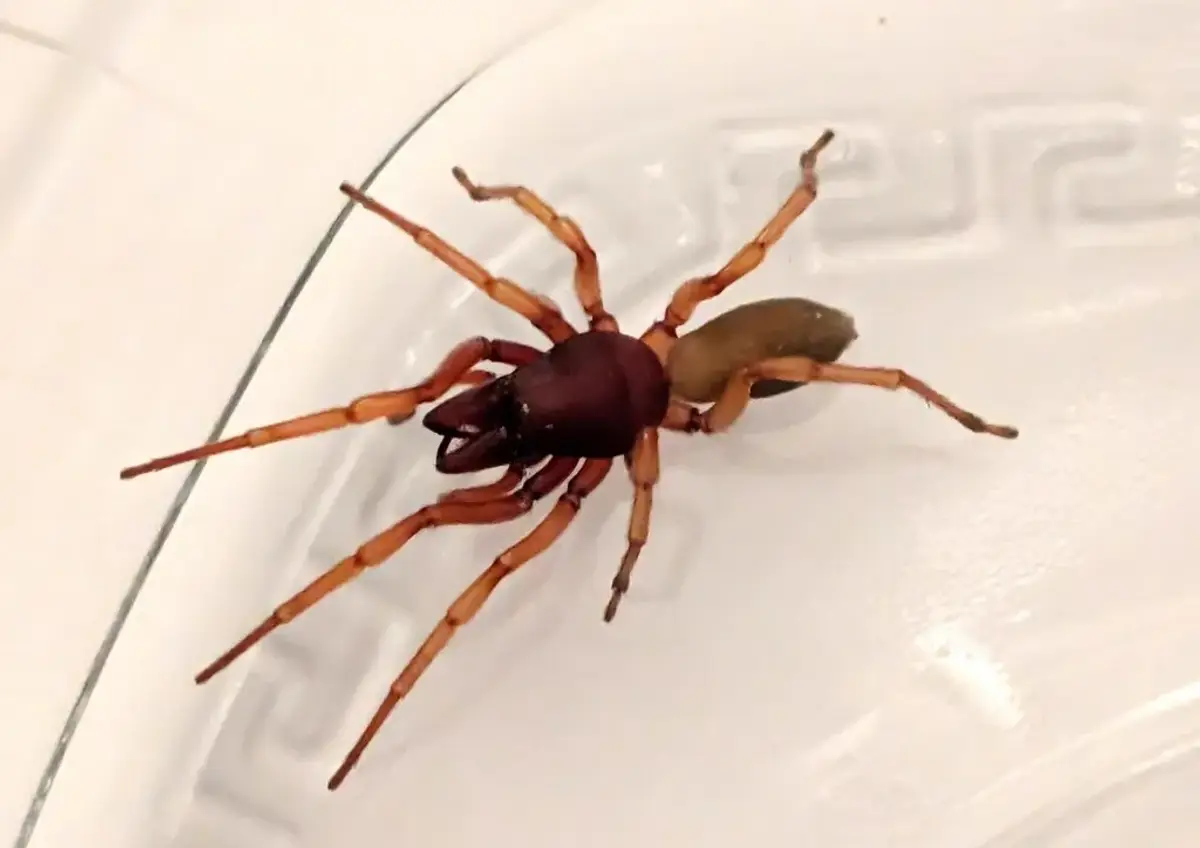
If you found an orange spider on the basement floor, in the garage, or under a flowerpot, this is probably it. The woodlouse spider has a reddish-orange front half and orange legs. The abdomen is smooth, shiny, and pale tan to gray. Its most striking feature is a pair of very large fangs that stick forward.
Those fangs look scary, but they’re built for one job. This spider hunts pill bugs and sow bugs, which have hard shells. That’s why it lives where pill bugs live: damp basements, crawl spaces, mulch beds, and under stones.
It can bite if you pick it up. However, a study published in Toxicon reviewed verified woodlouse spider bites and found the main symptom was minor pain, typically lasting less than an hour. Learn more on our woodlouse spider page.
Small Black Spiders With Orange Markings
6. Jumping Spiders
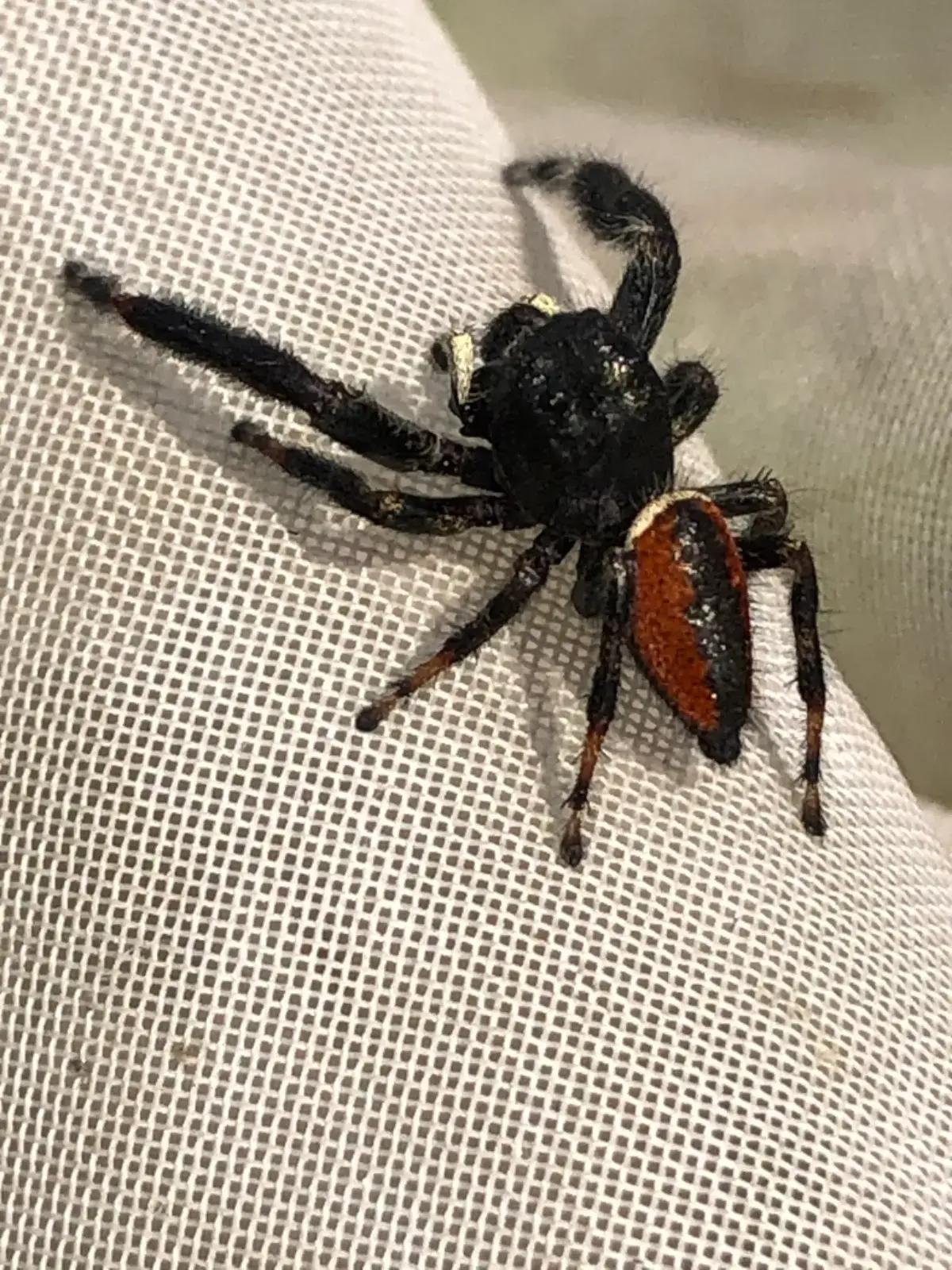
Sometimes the “orange spider” is mostly black. Two jumping spiders cause most of these sightings in Virginia.
- Brilliant jumping spider. Adult males have a black body and a red-orange abdomen with a black stripe down the middle. Females look completely different, with tan and brown coloring. You’ll find them on plants in fields and gardens.
- Bold jumping spider. This is the common fuzzy black jumper on siding, windowsills, and deck rails. It has white, yellow, or orange spots on its back. Young ones often show brighter orange. Our bold jumping spider page has close-ups.
Jumping spiders hunt in daylight and don’t build webs to catch food. They have large front eyes and will often turn to look at you. They are shy, and one or two outside is actually a good sign that they’re eating other insects. For more dark-colored species, see our guide to black spiders in Virginia.
Not a Spider: The Orange “Velvet Ant”
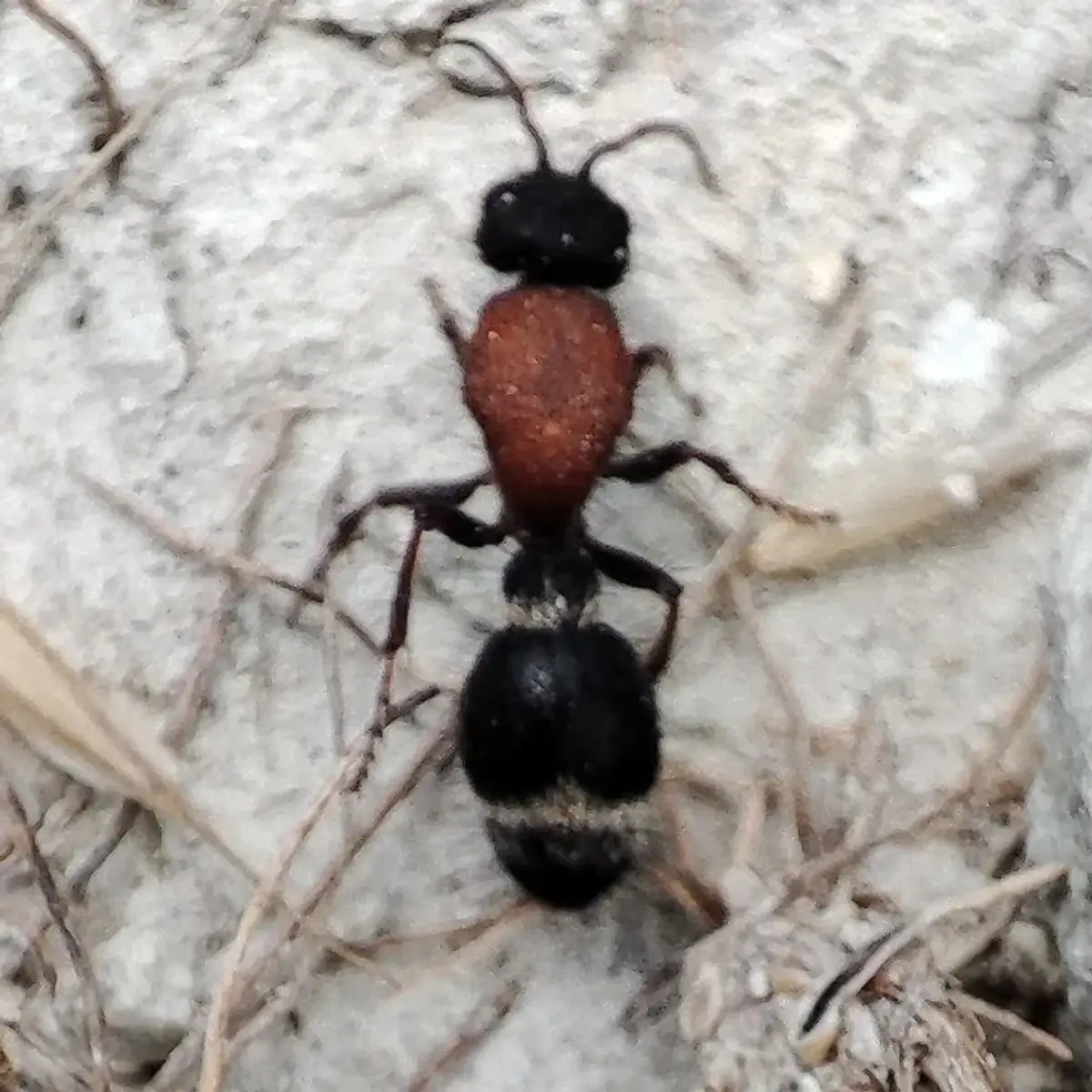
Every summer, someone sends me a photo of a “fuzzy orange spider” that turns out to be a velvet ant. Count the legs first. Spiders have eight legs. Velvet ants have six, plus antennae.
According to Clemson Extension, velvet ants are not ants at all but wasps. The wingless females can give a severe sting that is extremely painful, though rarely dangerous. That’s where the nickname “cow killer” comes from. So this is the one orange critter on this page that you really should not pick up. Our velvet ant page has more detail.
Are Orange Spiders in Virginia Dangerous?
No. The orange spiders you’re likely to find here are not dangerous to people. Virginia Cooperative Extension lists the spiders of medical concern in the state: the black widows and the brown recluse. Yellow sac spiders are also covered, although Extension says they don’t deserve their bad reputation. None of these are orange.
Black widows are shiny black with red, not orange, markings on the underside. The brown recluse is a plain tan to brown spider, and its natural range only reaches the far southwest tip of Virginia.
For a full list of the common species here, including the ones that aren’t orange, see our field guide to spiders in Virginia.
What to Do About Orange Spiders Around Your Home
A few orange orb weavers in the garden are a good thing. They eat flies, mosquitoes, and moths all season. The problem starts when webs cover your doors, eaves, porch, and windows and come back every morning.
In my experience, wooded areas with lots of trees and moisture, like the Mount Vernon area near Alexandria, have the highest spider populations in Northern Virginia. Orb weaver webs build up quickly in the eaves of homes there. Our approach is two-pronged. First, we remove the existing webs with a long-handled web brush called a webster. Then we apply a non-repellent perimeter treatment along the foundation.
Webs can also tell you a lot about a house. More than once, I’ve had an ant problem nobody could figure out. Then I looked at the spider webs, found them full of ants or swarmers, and it pointed me right to the real issue.
Here’s what makes a real difference on your own:
- Knock down webs regularly with a broom, especially around eaves, doors, and light fixtures.
- Switch porch lights to yellow bulbs. Fewer insects gather, so orb weavers like the cross and spotted orbweavers have less reason to build there.
- Trim shrubs back from the house so webs can’t anchor between plants and siding.
- Dry out damp spots along the foundation and in the basement to cut down on pill bugs, which feed woodlouse spiders.
- Seal gaps around doors, windows, and utility lines. Our exclusion services handle the bigger openings.
When DIY isn’t keeping up, our spider control service handles it as part of a recurring plan. It’s also part of our general pest control plans for homes across Fairfax County, Arlington, and the rest of Northern Virginia. All the products we use are EPA approved and have been reviewed by our internal research team.
Final Thoughts on Orange Spiders in Virginia
Most orange spiders in Virginia are orb weavers, and the big round one in your fall garden is almost always a marbled orbweaver. Check the web, the legs, and the markings, and you can name it in seconds. The woodlouse spider and jumping spiders cover most of the rest. None of them are dangerous, and the only orange look-alike that really hurts is the velvet ant, which isn’t a spider at all.
Our family has been handling pests in the DMV for 58 years, with over 1,800 reviews and licensed technicians who deal with spiders every week. If you have questions about a spider you found or want an estimate, call us at 703-683-2000 or email info@bettertermite.com.