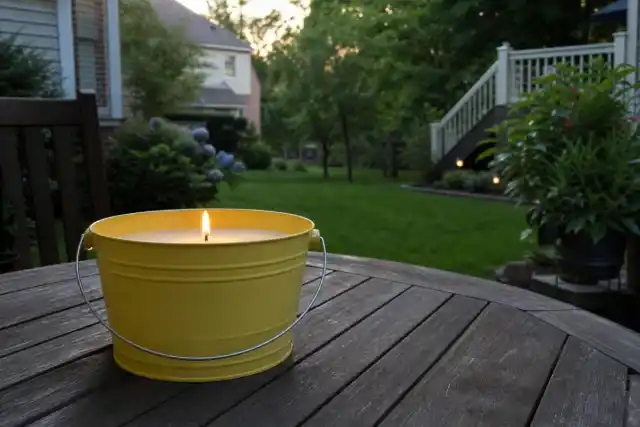

Yes, citronella repels mosquitoes, but only a little and only for a short time. Citronella oil on your skin works for minutes, not hours. Citronella candles do only slightly better than a plain candle. And the potted “citronella plant” from the garden center doesn’t repel mosquitoes at all.
My family’s own backyard in Northern Virginia had a serious mosquito problem, so I’ve tried a lot of the popular fixes myself. Citronella is usually the first thing people reach for, because it smells nice and feels natural. However, around here our worst biter is the Asian tiger mosquito, and it bites all day long. A candle on the patio table doesn’t stand much of a chance against it.
Does Citronella Repel Mosquitoes? The Short Answer by Product
Citronella comes in a lot of forms, and they don’t all work the same way. Here’s how each one held up when researchers actually tested it.
| Citronella product | Does it repel mosquitoes? | How long it lasts |
|---|---|---|
| Citronella oil or spray on skin | Yes, weakly | Roughly 20 to 30 minutes in most tests |
| Citronella candles and torches | A little, only up close and with no wind | While burning, if you sit in the smoke |
| Citronella diffusers | Better than candles indoors, weak outdoors | While running |
| ”Citronella” or “mosquito” plant | No | No measurable protection |
| Citronella wristbands | No | No measurable protection |
So the honest answer is “sort of.” The oil does bother mosquitoes. The problem is that it evaporates fast, and most citronella products spread it too thin to matter.
Citronella Oil on Skin: It Works, but Not for Long
Citronella oil comes from two kinds of grass. They are called Ceylon citronella and Java citronella. The oil has been around a long time. According to the EPA’s fact sheet, oil of citronella was first registered in the U.S. in 1948 as a repellent for mosquitoes and gnats on skin and clothing.
So citronella oil isn’t a myth. However, the big issue is how fast it wears off.

Head-to-head with DEET, citronella falls short
The best-known test comes from a 2002 study in the New England Journal of Medicine. Volunteers put on different repellents. Then they put their arms into cages of mosquitoes. A 23.8% DEET product protected for about 301 minutes, or about five hours. Meanwhile, most plant-based repellents lasted less than 20 minutes on average. Only a soybean-oil product did better. The wristbands in that study offered no protection at all.
Canada took it a step further. In 2004, Health Canada proposed phasing out citronella repellents applied to skin unless more health data came in. The same review noted they only repel insects for about 30 minutes. So people have to put them on again and again.
Researchers have tried to make citronella last longer. A 2011 review of 11 studies found that in cage tests against Aedes mosquitoes, citronella oil protected for about 253 fewer minutes than DEET. The same review noted that adding vanillin to citronella oil can stretch its protection time.
That’s why you’ll see some “natural” sprays that combine citronella with vanilla. They’re an improvement over plain citronella oil. Still, they don’t match the active ingredients the CDC recommends, and the protection depends a lot on the product and the mosquito species.
Bottom line for skin products: citronella can buy you a few quiet minutes. It just won’t last through a whole evening.
Do Citronella Candles Repel Mosquitoes?
Citronella candles are the most popular form, and they’re also where expectations are furthest from reality.
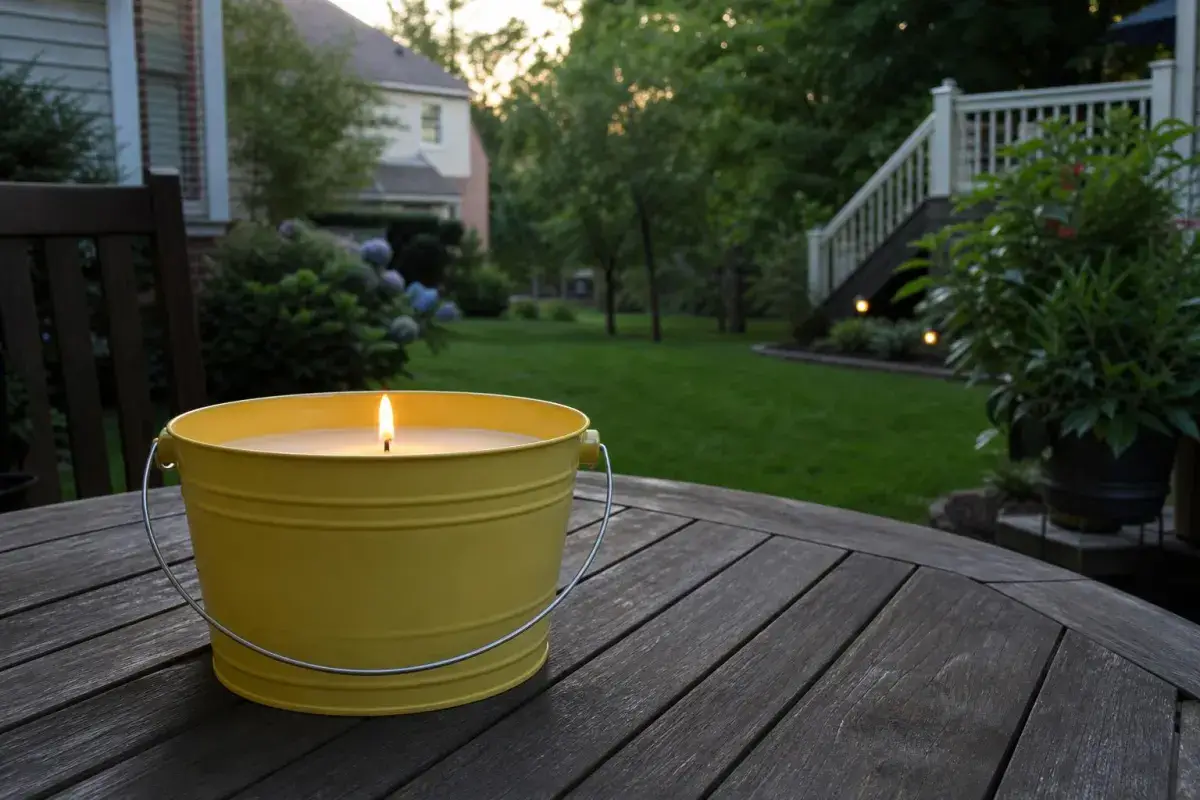
In a 1996 backyard field study in Ontario, people near citronella candles got about 42% fewer bites than people with no candle. That sounds decent. But people near plain candles with no citronella also got about 24% fewer bites. So a lot of the benefit comes from any burning candle. The heat, smoke and carbon dioxide do part of the work, not just the citronella.
The American Mosquito Control Association puts it plainly. It says citronella candles have a mild effect. But they don’t protect you much more than any other smoky candle. It also says candles, torches and coils only help outdoors when there’s no wind.
What about citronella diffusers?
Diffusers beat candles in one test. But that was mostly indoors. In a 2009 study in the Journal of Vector Ecology, citronella candles repelled only 14% of mosquitoes indoors, while citronella diffusers repelled 68%. Outdoors, a diffuser about 20 feet away repelled just 22%. The scent spreads out and fades in open air.
In short, if you love the smell of a citronella candle, go ahead and light one. Just don’t count on it to keep you from getting bitten.
Does the Citronella Plant Repel Mosquitoes?
Unfortunately, no. And there’s a good reason.
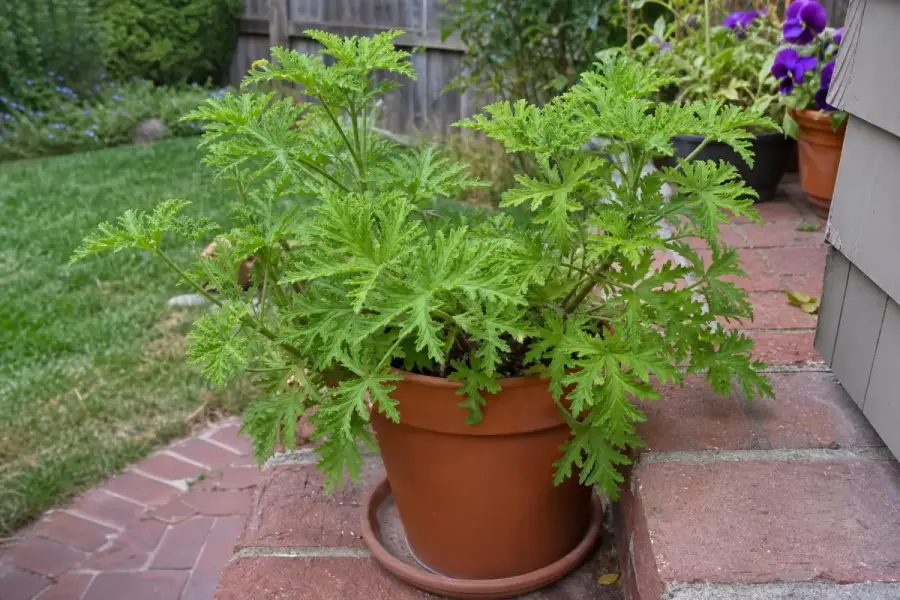
Most potted “citronella plants” or “mosquito plants” sold at garden centers are a scented geranium called Pelargonium citrosum. It smells lemony when you crush a leaf. However, it isn’t the grass that citronella oil comes from.
Researchers tested this plant directly in a 1996 field study. The plant didn’t have the oil of true citronella grass. More importantly, people near the plants got bitten just as much as people with no plants. In the same trial, a DEET repellent cut bites by more than 90% for up to eight hours.

Even real citronella grass won’t protect a patio just by growing there. The oil is locked inside the leaves until it’s crushed or distilled. The University of Maryland Extension says no plants have been proven to keep mosquitoes away. It also says citronella candles don’t work very well.
Also, look closely at that photo of the potted plant. A drainage saucer that holds rainwater can actually breed mosquitoes. A “mosquito plant” sitting in a full saucer may be helping the problem.
Why Citronella Struggles Against DMV Mosquitoes
Our local mosquitoes make citronella’s job even harder. Here in Northern Virginia and suburban Maryland, two species cause most of the trouble.
Black and white stripes. Bites all day, not just at dusk.
The Asian tiger mosquito is the one biting your ankles in the middle of the afternoon. The Maryland Department of Agriculture says adults are out from May through October. They peak from June through September. They bite in the daytime and rarely at night. They breed in small containers that hold water, like buckets, toys, gutters and plant saucers.
Because they bite during the day, a citronella candle lit at dinner time misses most of their activity anyway.
Plain brown. Bites mostly at dusk and at night.
The northern house mosquito matters for a different reason: disease. According to the Virginia Department of Health, West Nile virus is the most common mosquito-borne disease in Virginia, and most cases are tied to this one species. Cases usually happen in summer and early fall.
This year, Fairfax County found its first West Nile-positive mosquitoes of 2026 in mosquitoes collected in late June and early July. When disease is in the picture, a repellent that wears off in 20 minutes isn’t the right tool.
To learn more about the species that live here, see our guides to mosquitoes in Virginia and mosquitoes in Maryland.
What Works Better Than Citronella
If citronella isn’t cutting it, here’s what actually moves the needle. I’d start with the first two, because they’re cheap and they work.
1. Use a CDC-recommended repellent on your skin
The CDC recommends EPA-registered repellents with one of these active ingredients:
- DEET
- Picaridin
- IR3535
- Oil of lemon eucalyptus (OLE)
- Para-menthane-diol (PMD)
- 2-undecanone
If you want a plant-based option, oil of lemon eucalyptus is on that list. Plain citronella oil is not.
2. Dump standing water every week
This is the single biggest thing you can do at home. Asian tiger mosquitoes breed in small containers that hold water for about a week or more. Walk your yard at least once a week, and twice a week in the heat of summer. Tip out or toss anything holding water:
- Plant saucers and empty pots
- Buckets, watering cans and kids’ toys
- Clogged gutters and downspout extensions
- Tarps, grill covers and pool covers
- Bird baths (change the water weekly)
- Yard drains and catch basins that don’t empty
3. Treat where mosquitoes rest and breed
Adult mosquitoes rest in shady, damp plants like shrubs, ivy and ground cover. That’s where a yard treatment goes. We pair it with breeding-site traps like In2Care. It won’t wipe out every mosquito, because some fly over from next door. However, it cuts the number way down.
My family’s backyard had a serious mosquito problem. We have a lot of vegetation and moisture back there, which is exactly what mosquitoes love. We actually built our mosquito program by testing different approaches on our own yard first.
What finally worked was a combination of In2Care traps and a treatment sprayed on the vegetation where mosquitoes rest. Together, those helped stop the breeding happening right in our yard.
Daren, one of our registered technicians, has a story that shows why the breeding sites matter so much. He had one house he just couldn’t get under control. It turned out the yard had drainage catch basins so overgrown with grass that nobody could see them. He only found one because he stepped on it. The pipes were clogged solid with grass and roots and full of standing water. Once the homeowner had them cleared and repaired, the mosquito problem went away. No candle would have fixed that.
The lesson is simple. Find the water, and you find the mosquitoes.
When to Call a Professional
Citronella is fine for a little extra comfort on the deck. But if you’re getting bitten every time you step outside, the mosquitoes are likely breeding close by. That’s when a professional plan makes sense.
Our mosquito control service is a recurring plan through mosquito season. Our licensed technicians walk the yard to find breeding spots. Then they treat the shrubs and low, damp areas where mosquitoes rest. All the products we use are EPA approved, having passed through our internal research team. Each one is something we’d feel comfortable using around our own homes. You can read how a visit works in our mosquito control process guide.
We serve homes across Northern Virginia and suburban Maryland from our Alexandria and Reston offices, including Alexandria, Reston and Loudoun County.
The Bottom Line on Citronella and Mosquitoes
So, does citronella repel mosquitoes? A little. The oil works on skin for a short time. Candles help only slightly more than any smoky candle. And citronella plants don’t help at all. For real protection, use a CDC-recommended repellent. Dump standing water every week. Then treat the spots where mosquitoes rest.
If mosquitoes are taking over your yard, give us a call at 703-683-2000 or email info@bettertermite.com for a free estimate. We’re happy to answer questions, even if you just want to know what’s breeding in your yard.